How I came back stronger after ACL surgery | Volleyball player shares emotional ACL story
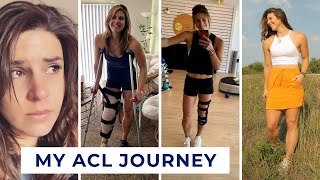
Victoria S. Dorsano tore her ACL playing volleyball in February 2020, then fractured her kneecap during surgery. She describes the emotional toll, the physical rehab, and how mental resilience and her support network got her back stronger.
Chapters
What's up everyone, Victoria S. Dorsano here, and for those of you guys that don't know me, I'm a certified health coach with an evidence-based approach so you don't have to wonder what's real and what's not on the internet. Today I'm actually going to share something a little bit different than my normal style of educational videos. I wanted to share something a lot more personal and just get real, and I'm gonna try not to get super emotional about it because this was a really difficult process for me and a really difficult time, but I wanted to share a little bit about my ACL process when I went through surgery, the ups and the downs of all of it. I wanted to share that whole process, especially as somebody who's athletic. You know, I'm not currently— I wouldn't say I'm a, I'm like a current athlete by any means, but I've always considered myself athletic and involved in sports in one way or another, and I've grown up playing sports. So to have something like an ACL rupture and then have to go through surgery and recovery is honestly an athlete's like worst nightmare. It's, it's the one injury that you pray you don't have. And I want to share some of the things that I learned from that whole process too, because as much as it was a really tough time in my life, um, there was so much that I learned that I want to share with others that hopefully anybody else going through this process can learn from too, because it can feel really lonely and really isolating to go through that, especially if you're an athlete, if you're currently, you know, an athlete in your school, or even an ex-athlete like myself. So I'm going to share that today. But if you could take just a quick minute before I dive in to give this video a thumbs up and a subscribe, I would be super grateful so I can continue putting out content like this. The actual injury happened in late February of 2020, and if we back up a few months before that to about September of 2019, I had been kind of having some calf issues leading up to that point in September of 2019, like a little bit of tightness but nothing crazy, you know, something where I was like, I'll just roll it out or massage it out and, and get through it. And at the end of one day where I was teaching multiple classes in a row, I went to kind of go show somebody a move on this Power Plate and kind of do this step down, step up motion, and I felt like somebody shot me in the back of my calf. It was the most powerful, awful sensation in my leg that I had ever experienced at that point. Um, and I couldn't put my foot down on the ground. I couldn't even touch my toes down to the ground without extreme pain. And it turned out that I ruptured my calf muscle. Decided to go through a lot of physical therapy to get back to where I wanted to, you know, be. And I started playing recreational volleyball again, which That's like, I was so excited because it's honestly, it's like where my happy place is, is to be on a volleyball court. That's where like my inner child comes alive. And it's where I just, that's like my sport growing up, right? I was super excited to get back to playing volleyball. And you know, this calf injury kind of set me back. I couldn't play for a while. And then I did all this rehab, all this work, you know, really had worked up to the point where I could go and play again. And that was probably by like, January of 2020, that my calf was rehabbed, I could play again. I probably got 2 good weekends in of playing before this next incident happened. Bum bum bum. I was playing on the court, and actually that day I kind of got a weird feeling, like I didn't really want to play. And I rarely get those feelings in my gut where it's like, I don't really want to be here, like I want to go home, I'm not really feeling this. And I kind of pushed that down. I was like, you know what, you're here, Victoria, let's go play, let's have some fun. Um, my, uh, he was my boyfriend at the time, he's my now husband, Chris, was with me. And, you know, we were playing together, so I was like, I'm not gonna ask him to come home, like, let's just keep playing. And we were just about to leave, there was a few points left in our last game, and I go to up to the net to block a ball. Somebody on the other side of the net is hitting, and I go to jump up and block the ball. And because it was recreational volleyball, there's, there's players there that don't necessarily have the best form. So you're supposed to jump up and down, not forward, because then you'll collide with the other person. Well, this person didn't have like a background in volleyball. They jumped forward into the net, into me. So as I was coming down— so if you imagine this is my, like, this being my knee joint and this being let's say this is his knee joint. So as I was coming down like this, he was coming up and he went straight into right the soft spot of my side of my knee and literally kneed as all my weight was coming down. And mid-air I felt this really hard pop, like really hard pop, and it like again felt like again somebody shot me in the knee. I was like— and kind of from having that sensation, my calf, I like the first thing in my head was, oh no, please don't let this be an ACL injury. And within that second, I landed on my other leg that wasn't injured because I knew something was wrong with this leg. And I tried to put my foot down, my injured leg's foot, my right foot, and I immediately fell down to the ground and was in the most excruciating pain I think I've ever experienced in my life. Because it was a traumatic ACL, you know, rupture. And he also managed to bruise both my femur and my tibia from that knee-to-knee action that we had. But at that time, was pretty positive that that was my ACL. I— what else could it be, you know, that big of a pop? And I was on the ground and I was just rolling on the ground in pain. And, and everybody stopped, like 3 courts of volleyball players stopped and they came and surrounded me and I could not stop. Wailing. And it makes me emotional to even talk about it because I just remember, like, what was going through my head was like, not again, not again. Like, I just felt like I had my joy back, like my sport back. And even though that particular day I wasn't having a good time, I was like, again? Like, this is getting taken away from me again? And I was so mad. Literally, as I was rolling on the ground on my back in so much pain, I looked at my husband. I saw his face there because there was like 20 faces surrounding me at one time, and I looked at his face and I just kept shaking my head, like, and he knew without me even saying anything, like, like, she, she knows what this is, like, this is probably her worst fear. I had to go to my primary care to get, you know, referral to go to my orthopedic doctor to check out the knee, and he actually didn't think I tore my ACL either. He did something called the Lachman's test, and it's like basically where they kind of move your knee and see if it gives. And my knee didn't give. Um, but he's like, you know, you know your body. Do you think you should get an MRI? And I was like, I think I should. And lo and behold, we got the results back on Christopher's dear birthday. And, um, on his birthday, I literally got the report saying that I had a full ACL rupture. And I was so sad. Like it just confirmed again the feeling that I already knew, and it, um, confirmed how long of a journey this was going to be and how long this was going to be until I could actually be back to my full self again. So I decided to get the surgery, and, you know, at this point, again, it was end of February 2020 when the knee injury happened. Decided to get surgery. Surgery got scheduled for March I think 10th or 11th, and that's when stuff started going down with COVID So surgery got canceled and canceled and pushed back further and pushed back further. And I just want to get this process started. I just want to start healing. I just want to get the surgery done and start actually recovering. And I couldn't do that. I had 93 days to wait until I could get surgery because that's actually how long it took for the surgery to actually get set scheduled in May and when elective surgeries could happen again. I did the best I could. I spent time strengthening my leg before surgery, ended up going into surgery and coming out and remembering like, oh, this day, it's finally here. I finally am getting the surgery. I'm going through it. You know, I don't care about the pain after surgery. I'm moving forward. And I was really, like at that point super excited to move forward. I wanted to do as much as I could the day of, started doing stuff the day of surgery, like after I finished surgery and coming out, like starting to get my knee moving as much as I could even though it was painful, really starting to be proactive. And my physical therapist was even like, wow, you're healing so fast, like what's going on? You're doing so well. Um, it's remarkable how fast you're healing. I'm like, yeah, go me, this is great! I've been really trying because I just really wanted this to be all over, full well knowing that this would be a year-long process. And on day 14, so 2 weeks post-op to the day, I go back into physical therapy. And again, my mindset is like, yes, we're moving forward, we're doing good. And he had me starting doing some stuff that was a little bit more advanced, and I started to get this knee pain right at the front of my knee. And I was like, what is this pain? This hurts. But he's like, it's probably scar tissue, don't worry about it. So we proceed forward and we do one exercise, and I'm single leg loading, and this is again just 2 weeks fresh out of ACL surgery, and I feel this— my whole leg give underneath me. Suddenly, and I immediately start crying because again, the worst, the worst fear of the worst fear of the ACL is like having your ACL graft tear immediately. And I thought that's what happened. I thought it completely tore in half because my leg just gave out and I couldn't move it anymore. I couldn't bend it or straighten it. I couldn't. It was just dangling there. And he's like, it's probably just scar tissue, don't worry about it. I'm like, I don't know, that was a really forceful, like, and it, it was a sound like a crack. Like everybody in the PT room heard it, it was a huge crack. Anywho, come to find out I broke my kneecap in half. Yay. Apparently this happens in a very small chance, it was a very small percent of ACL cases. So if you're thinking about going through ACL surgery, if that's your journey, don't worry about this being a huge like risk of surgery. This happens in a very small amount of cases. But my, my quad was so strong that it literally just broke my kneecap in half from, from doing that one move. So I had a broken kneecap, was bawling my eyes out and thought the world is over. God doesn't want me to heal. Why is this happening? Why is this part of my journey that I just can't move forward? And again, all these negative thoughts, all of this heaviness back on my shoulders again. It felt like for the third time in such a close amount of months, you know, that I've experienced these, like, these injuries happening over and over again. I was like, why is my body falling apart? And why can't, like, why can't I trust my body anymore? And that's never been something I've thought about. I've always been somebody who's relied on my body for being there. And I felt really betrayed, you know, by God, by my own body, and super scary. So the only thing I could do was, you know, have a good cry for a few days and say the only direction is to move forward and continue to get support from groups. And that's something I can't recommend enough was I reached out to the ACL Club, on Instagram and found the ACL Club Facebook page and just like kind of dumped everything I was going through and saying like, any suggestions? This is really hard. I didn't think about the mental side of this journey as much. I always thought I was very mentally strong, but this started to break me at that point. But the rehab was really like just a crucial thing. Like it was the thing I could focus on that I knew I could control, that I knew I could put my energy into, and then I knew I could just again move forward in. So I did my best in staying diligent with the rehab. And again, if you're going through this, like just finding the community, number one, and being diligent on your rehab, number two, those were two things that kept my head on straight and really acknowledging that even though, you know, I'm doing the best I can, there's some days that are gonna feel and look really good. And there's some days that are gonna feel like I'm moving backwards sometimes, even though I'm keeping my mindset forwards. So I just was really proactive with that and strengthened my knee the best I could, got support in the group, reached out to friends to go on very slow walks outside and get outside when I could, and just kept my head down and moved forward. And slowly but surely, my knee started getting better. I could do more and more. Not saying it was the, the easiest thing even in the like 6-month to 12-month mark because there's still so much healing that has to be done. But just surrounding yourself with good people that you can, you know, do your rehab with. Even my husband, you know, my now husband was doing it with me all the time. I had a girlfriend of mine who's a personal trainer who's like, let's just do arm day. We'll just do arm days together. It's all good. So just focusing on what I could do and focusing on noting all the progress that I was making and being like, you know, 2 weeks ago I couldn't even lift my leg up and now I can do this. And really just looking at all the things that I could do and seeing it as a challenge that I had the opportunity to overcome. And I learned so much resilience in that process and how to push myself forward when something, you know, felt like it got a big part of me felt like it got taken away and learned how to really acknowledge the parts of me that were left that I really could appreciate and pour into that and also pour into others in the process. Like the more I shared my videos of my recovery process, I kept having people reaching out to me, messaging me and asking me, you know, what I was doing, how I got through it, sharing that they're nervous about their surgery. And I got to just be there for other people. And that was something that really took me out of my own head and put my heart toward others. My focus toward others too, and it really helped me in the process acknowledge that I could be a voice that could be a positive light in such a dark time because going through it's not easy, but you will get through it and you, you find the right people to help you through it. I'm actually really grateful that I went through that, and if I had the choice at the moment that this all happened to choose to have it happen again or to choose to you know, maybe not to play volleyball that day, I would choose to have it happen again. And that's not an easy thing to say because it was painful. But the person I am today and the perspective that I have now and the resilience that I have to handle challenge, like, I wouldn't have that without this. So at the end of the day, even though I was extremely mad and couldn't understand, like, why God would put me through this, I understand that, you know, everything, everything that he allows us to experience and go through is made for good. And I was able to see the good in the end of it and see how and why these skills were so important for me to develop. And it's just taught me how to respect my body in a completely different way as I enter into my 30s. Like, it's just different, and you have to obey kind of different, different aches and pains or nudges, as you will, in your body and just kind of making sure you're respecting that. I also wanted to share one of my tools that I use to really help heal faster and help with the pain a lot and just helping recover with the tissue healing was Incrediwear. I was tipped off to by Incrediwear just from doing a lot of research because I wanted a knee sleeve that wasn't going to be super compressive but something that was just going to help with the pain. And I came across Incrediwear. I actually have my knee sleeve, my handy knee sleeve that's been with me for, for all of this. But, um, I cannot say enough good things about IncrediWear. Like, this thing helped so much. I would wear it 24/7. You can wear it while you're sleeping. I would wake up in the morning and like a lot of my knee pain would be gone. And even during the recovery process, like with PT and even after that, being discharged and cleared for sport again, just on days where you kind of maybe overuse your knee a little bit, I wear this and it helps so much. It just, I can't even. You can check out the science on their website. I'll drop a discount link down below if you want to order one of these, but they have a ton of different products. They have a full leg sleeve, they have gloves, shoulder, back, hips, hip kind of sleeves and braces, all sorts of things, elbow braces. And the pain relief that I got with this was just incredible. And again, I think this was a huge component of how my ACL healed so well. Even despite having a broken kneecap in the process. That's my story. That's how I've made it through. And it wasn't easy, especially going through this during COVID But again, I would choose it again. My husband would probably say differently because he was the one wheelchairing me around and helping me so much. But my whole family too. I mean, again, your support system's everything in this process. So I hope this helps just kind of share a light on, you know, maybe if you don't have or haven't had complications like that after ACL and you could be like, oh man, I'm lucky I didn't break my kneecap. I'm glad to provide you with that relief. Or if you're considering, you know, going through the surgery and you've had your ACL tear or, you know, are still kind of going through the mental struggle of that, just to know that somebody relates to that and that there's ways to move forward and, uh, really come out on the other side a better person. But if you want to hear more about the specifics of, of my ACL journey and maybe some other tools and tips that I, I use to really help accelerate my healing both mentally and physically, drop a comment below and let me know because I'm more than happy to make a separate video on that. Until then, have a great day!
More from Victoria






3 things you should do to make sure you get the most out of your fish oil #legion
