How I Feel More Athletic at 35 Than 25 (Post-ACL Surgery)
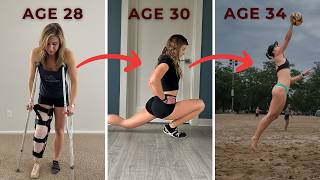
Victoria S. Dorsano tore her ACL at 28 and now feels more athletic at 35 through systematic mobility training, not just stretching. Mobility adds strength and control to flexibility work, delivering injury prevention, better performance, and less pain. Her case shows deeper squats, higher jumps, and elite volleyball performance.
Chapters
I tore my ACL at 28, and honestly, I thought my athletic days were over. Doctors told me that recovery was gonna be very, very long and that I'd always have some sort of limitation and that my knee would never feel 100% back to normal. Fast forward to today, 5 years later, and my joints feel stronger and more resilient than they ever have, even before the injury. The secret? It wasn't just physical therapy or doing extra yoga and stretching. It was targeted mobility training. Joint pain and stiffness, whether it's from an injury or not, can be a huge limiting factor in being able to feel athletic, especially as we age. So if you feel like you're stiff and your joints are just aging faster than they should, or they're not where you'd like them to be, then mobility training might be exactly what you're missing from your routine. Oh guys, and before we start the video, I have a super exciting announcement. We are doing a $100 gift card giveaway for today's sponsor, ProZzz, where you can get an array of high protein, nutritious snacks, supplements, and fitness gear. Here's how you can enter. Watch this video and listen for when I say the secret ProZzz code good word. You'll know when you hear it. Go to the link down in the description and enter into the giveaway there. All right, back to the main video. Okay, so what is mobility training exactly? You might be thinking, oh yeah, stretching, right? Well, not really. Mobility is actually your ability to actively move a joint through its full range of motion and control the strength in that full range of motion. Let me say that again: actively, with control and strength. This is flexibility. I'm just letting gravity passively guide me into a stretch and just holding here statically. Now this would be mobility. I'm taking that same hip joint and I'm adding strength actively through that range of motion. Okay, so now you see the difference. Mobility essentially has 3 main components. Flexibility is one of those because yes, you need some baseline to go off of as far as range of motion goes. Strength is the second component because you need to be able to have strength through that range. And then the third component would be your motor control because your brain and your body need to be able to communicate efficiently through that range of motion. So essentially, it's not just about being in a position, it's about having the strength and control to use that motion in real life. So why does mobility training actually matter? Well, there's 4 big reasons to this. Number 1, injury prevention. When you can move a joint through its full range with control, you have options. You're not going to just tweak something when you reach for something off of a high shelf or throw out your back when you bend down to pick up something off the floor. With proper mobility training, your body knows how to handle a variety of these positions safely. The second reason mobility training is so important is for performance. Whether you're an athlete or just want to feel athletic in your life, mobility training unlocks a lot of power and efficiency. You can access more range safely and generate more force and move with less wasted energy. The third reason why mobility training is so important is pain reduction. So much of joint pain comes from compensation patterns. When one joint doesn't move well, another joint seems to pay the price. So mobility training addresses this at the root. And the fourth reason why mobility training is so important is for just longevity. I wanna be that 70 to 80-year-old who is still hiking, still active, still doing the things that they love to do and still living a full life. Mobility training is truly a key to being able to maintain independence and a great quality of life as you age. It's like thinking about the difference between a door with rusty hinges and a door that's well-oiled. One sticks and squeaks and eventually breaks down, and the other glides smoothly for decades. Your joints are essentially the same, and mobility training is how you oil the hinges. Okay, so you might be saying, Victoria, I already stretch a ton. Do I really need to add mobility onto that? Like, is it really gonna provide it that much more of a difference of a benefit than what I'm already getting from stretching? Yes, absolutely. What good is your elongated position that you're creating from your stretch if you're not able to control that range of motion you're getting from your flexibility training? Flexibility and passive stretching is a great foundation to build into mobility training, but I'd argue in a lot of ways you can get a lot of the same lengthening results from mobility training only on top of getting the strength and range of motion with mobility training versus just doing stretching. So you might find if you start to incorporate mobility training, you might not even need your stretching routines. That's not to say that there won't be some situations where passive stretching might feel good or might actually be, you know, more beneficial in certain situations, especially if you're already muscularly fatigued and you just really don't feel like working through any strength in a range of motion. You just kind of want to like get some active recovery, then yeah, stretching will be okay. So why is mobility training something I'm personally passionate about and something that I educate all of my health coaching clients on? Well, like I said in the beginning of this video, I tore my ACL about 5 years ago. Up to that point, I was a very fit and very flexible person. I'd done tons of strength training, lots of yoga, lots of stretching. The whole experience was really devastating because as an athlete, I had always been really confident and trusted in my body and really active and loved doing those activities, and then suddenly I couldn't do any of those things and I didn't trust my body. And physical therapy helped me get back to somewhat of normal, but normal felt limited. I was still moving cautiously, I was avoiding certain positions, and I could tell that my body was protecting itself. That was when I personally started to discover what mobility training was and really dove into some programming around building back athletic mobility into not only my knee but all of my joints. And after I progressed with my mobility training week after week, I started to notice that my knee was starting to feel more and more back to where it was pre-surgery. I started to trust my body again. All of a sudden I was able to squat deeper than I ever have before. A lot of the odd sensations and weird pains, not only in my surgical knee, but my non-surgical knee and other joints started to just go away. And I started to feel pretty invincible. And to be honest, 5 years later, I still do. I'm 34 years old and I'm playing some of the best volleyball that I ever have in my life. I've been able to move faster, jump higher, and recover better than I ever have before. And I'm not the only story like this. This is common across thousands of people who start to do mobility training and really start to feel the difference between what they were doing before and how they feel now. Honestly, as much as tearing your ACL sucks, I'm grateful for the experience because it led me to learning about what true mobility training looks like and how I can age really strong and well as an athlete without all the unnecessary wear and tear of joints that aren't properly ready for certain types of movements, but now with mobility, they are. But having your joints age well isn't only about mobility training. While that's a very large key component to things, it's also really important to make sure that you're getting quality sleep, reducing your stress, and of course nourishing your body well. I can't stress how important it is to have really solid nutrition to help build joint resiliency. Strong, stable joints require proper nutrition, and that's why I've been personally drawn to a lot of the delicious foods that are super nutrient-dense from ProZis, who happens to be today's sponsor. They always make hitting my protein targets so much easier, which helps me recover faster and be ready for my next training session. They have a huge variety of delicious high-protein foods and supplements that you'll never get bored of. Two of my favorites that I consistently order on repeats are their high-protein wraps, which make lunches such a breeze, and their dessert protein wafers, which are so delicious. They make such a great protein-packed sweet treat. So if you want to support your training with the right fuel, then make sure to check out ProZis, and you can use the code on the screen for a discount or a surprise bonus gift, click above here in the links in the video to shop now, or I'll link some of my favorites in the description. And for those of you guys who stuck around for the code word to enter into the $100 Prosis giveaway, the code word is mobility. Big surprise, right? Enter down below, link is in the description, and you'll be prompted to enter the code word there. So all in all, guys, feeling pain-free and athletic at any age is very attainable, and mobility is a huge component to getting there. And a holistic approach that ties in all different components of your wellbeing can really get you there even faster. And that's exactly what my team of coaches help you to do. So if you want to learn more about our approach, then head to our website, bevictoriouscoaching.com. Or if you just want to start small, you can check out our full mobility routine linked down below. Before we formally wrap up, I want to leave you with a few mindset things. So number 1, when you're working on your mobility, just start where you are. There's no judgment. A lot of people start mobility training and they're not really great at it because it's not something that they've really done before. Your body's current state isn't anything wrong. It's just information. It's your starting point, not your end point. Point number 2, consistency beats intensity. 10 minutes every day of practiced mobility training is better than doing it once in a while for an hour. Try making it a non-negotiable part of your routine. Number 3: focus on your limitations. Whatever feels stiff, weak, or uncomfortable, that's where you need to spend time. Don't just practice what you're already good at. And number 4: this should feel good. Mobility training isn't a punishment, it's a gift to your body. If something feels wrong or immediately very sharp and painful, you should back off. You should be exploring ranges of motion, not forcing them. Look, your body is designed to move. Age, injuries, years of sitting and stiffness might have convinced you otherwise, but I'm living proof that with the right approach, you can feel better, more flexible, more athletic than you did years ago. Mobility training is just the foundation that makes everything else work that much better. So I'd love to hear from you. What are your thoughts on mobility training? I'd love to hear your opinion down below in the comments. And guys, as always, if you like this video and found it helpful, please give this video a thumbs up, subscribe to the channel. I greatly appreciate it, and I will catch you guys on the one. Bye!
More from Victoria






3 things you should do to make sure you get the most out of your fish oil #legion
