How I Healed My Muscle Strain in ONLY a Week // How To Heal A Muscle Injury Fast
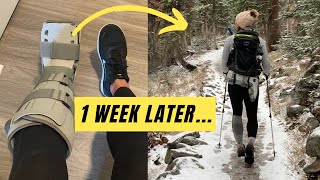
In this video, Victoria S. Dorsano shares a personal case study of two calf strains she suffered in 2019 and 2021, contrasting the traditional RICE (Rest, Ice, Compression, Elevation) protocol with the newer POLICE (Protect, Optimal Load, Ice, Compression, Elevation) approach. She explains that RICE led to prolonged recovery, muscle atrophy, and incomplete strength return, while POLICE—emphasizing early, gentle loading and protection—allowed her to walk within three days and hike 20 miles a week after a grade‑2 strain. The video details the biological reasoning behind early loading (realigning disorganized collagen fibers, promoting blood flow, and preventing atrophy), outlines practical steps such as isometric contractions, band‑resisted movements, gradual range‑of‑motion work, and progressive strengthening, and notes exceptions for severe ruptures that may require surgery. Throughout, she urges active individuals to move away from “babying” injuries, adopt POLICE, and seek clarification on exercise terminology if needed. The video concludes with a call to like, subscribe, and stay tuned for more health and rehab content.
Chapters
Would you believe me if I told you that I had a method that helped heal my calf strain within 7 days, going from not being able to walk at all to hiking 20 miles through the mountains in Colorado within a week's time span? Well, you better believe me because I'm going to talk about that approach that I took in today's video, and I'm going to debunk some of the old stuff that really doesn't work anymore and give you this new approach to help heal any kind of pulled muscle, muscle strain, soft tissue injury in a much better trajectory, much faster time period than you have before. So you've probably heard of the RICE method before, right? You have a pulled muscle or a strained muscle or a soft tissue injury, and you go to a doctor or you talk to somebody, your physical therapist, and they say just follow the RICE protocol, which is to rest, ice, compress, and elevate, right? We've all heard that. But what if I told you that there's a better method out there now, that RICE is kind of outdated, and there's actually a lot of evidence showing that there's a new method called the POLICE method that can drastically improve your healing in that acute phase of an injury? Well, you better believe it because I've actually experienced it myself. And I have a real live example of both using just the RICE protocol and then the POLICE protocol and the difference in each calf, because I've had two calf tears in my lifetime. Yay. And I use the RICE protocol on one of them and I use the POLICE protocol on the other. And the difference between the two is Astronomical. So if we know what RICE stands for, what does the police stand for? We have our protect, we have optimal load, and then we have ice, compression, elevation. So the ice, compression, elevation stays the same roughly, right? The two key components that are new and that have shown to be really, really effective in new research for treating acute soft tissue injuries is the protect and optimal load. And those two kind of go together. We're protecting the injury by providing an optimal load in the time frame that it's healing in, meaning we're not overloading the joint, we're not overloading the muscle. We're trying to just carefully load it in a way that's going to protect it and give it optimal load. So why would protected optimal load give such a great result, especially when it's absolutely contrary to what we've been told before of resting after an acute injury, right? We've always been told if you pull the muscle, rest, you know, if you don't, don't do anything to it, don't, don't do anything that's going to irritate it more, right? We've always been taught to kind of baby it. This is exactly the opposite in a sense. I mean, we're not trying to go gung-ho in the, in the strained muscle or the soft tissue injury, but we're trying to add some optimal load to it. And the reason is, if you think about when you have a muscle strain or a sprain or any kind of connective tissue or soft tissue that's been injured in that acute phase, basically what happens is those connective tissue fibers kind of look like spaghetti that's been boiled in water. It's kind of all over the place and they're disorganized and they're not really aligned well, right? Well, you kind of have to try to coerce those muscle fibers to realign in a kind of striated way. That's a normal muscle pattern, a normal connective tissue tissue pattern. And to do that, you have to reeducate them. You have to kind of teach them the way you want to make them go. And by doing some optimal loading, meaning loading the muscle or the connective tissue very gently to the point where there's not extreme pain, where you're— you might experience some discomfort, but you're not experiencing, you know, horrible pain where you're going to set yourself back further. You're actually reeducating the muscle tissue and strengthening the connective tissue and helping realign those connective tissues so that they are being prepared to be strengthened later. So you're kind of going from like boiled pasta in a pot to pasta that's neatly organized in its box still and uncooked, right? We're trying to bring it from this tangled mess and actually put it back into its box and bring it into those straight, nice, neat kind of spaghetti lines. So this is why it's important to reintroduce movement as tolerated as soon as you can after a soft tissue injury. Now, obviously there's exceptions to this where if you have like a full rupture of muscle of sorts like that, that may require surgery. Surgery that may require you to, to see a surgeon. This is if talking about like a, you know, a calf strain or an ankle sprain or something like that where it's a mild grade 1, grade 2, um, mild to moderate grade 1, grade 2 kind of sprain or strain. So it's really important to reintroduce movement sooner and start to reeducate that tissue, get it used to some loading. And over time, you're delivering blood flow, number 1. You're realigning those connective tissue fibers, number 2, to prepare it for strength training later on, but you're also starting to rebuild collagen fibers, and a lot of other things are kind of laying the groundwork for really strong tissue as you continue the healing process. So all this might kind of sound vague as I'm describing it and not really giving you that much context, so that's why I want to give you actually the real-life example of my two calf injuries. So in October of about, I think it was 2019, I had a pretty awful calf injury. Honestly, it was my own fault. I was dehydrated. I had been teaching group fitness classes back to back to back, and I was using something called a Power Plate, which actually accentuates a lot of the muscles' contractions already. So I had a bunch of things not going for me at that point in the day, and I was demonstrating a movement and I stepped back funny and I did this like loading and stretching movement into my calf. And I remember it feeling like somebody shot me in the back of the leg. It was not fun. It's not a, not a fun sensation, like a slingshot being shot into the back of my leg, um, like with a, like a just, oh, it was awful. Um, and I remember like all of a sudden noticing, feeling kind of something like kind of pop up in my calf. And I was so scared. It was painful to put my foot down on the ground. I could not really bear weight on it well at all. So I decided to kind of baby it and walk around, just hop around on one foot. I refused to put my foot down. It hurt too much. And I had waited several days before seeing anybody professionally about it because I was scared to know what it was. I was hoping it wasn't a ruptured Achilles. So multiple days have gone by. I really just avoided putting any weight into it. I followed the RICE protocol with my right calf and I, I rested it, I elevated it, I iced it. I compressed it, did all those things, and I really refused to activate the muscle because I was just— it— I was just scared to. And I hadn't seen any research about that, about the police protocol, which I wish I had known about. So weeks later, went to go see a calf specialist, got it checked out, got an MRI. It was confirmed that it was a grade 2 calf strain, so a partial tear. So I did physical therapy for, I want to say, about 6 weeks. Um, got it somewhat strong enough to get back to my sport again. It was going okay, but I never really felt like I gained full strength back no matter how much I pushed through physical therapy. And weirdly enough, the calf actually started to atrophy after physical therapy. Like, it actually started to create an indent in the middle of my calf, and my calf muscle actually never really fully came back. And I believe a lot of this is because I followed the Rice Protocol and I babied it and I immobilized it for a lot of that acute stage of the injury. And I can contrast that very directly with my other calf because in October of 2021— gosh, what is with Octobers and me tearing calves? That's a weird coincidence. But anyways, in October of 2021, so 2 years later, I tore my left calf and had like a partial strain. It wasn't a full tear. Similar thing, I stepped back, I was dehydrated, I was playing a lot of volleyball that day. It was the last game of the day, um, and my calf just— I felt the same feeling that I felt in my right calf. So I immediately knew what it was, and I was pretty dead set on like refusing to let this calf injury be as bad as my previous one, even though it the pain was as bad, um, because I had a hiking trip coming up in a week where I was gonna be hiking in the mountains for like 25 miles in Colorado, in the Rocky Mountains, like with snow and ice and everything. And I was like, I'm not missing that trip. I'm gonna do everything in my power to get this calf feeling better, to get my left calf better. And I went home, I did a bunch of research. I was reading a bunch of different research papers on the best protocols for rehabbing soft tissue. And I came about this police protocol where you start to activate the muscle tissue a lot sooner than you normally would in the RICE protocol. So the day of my injury, I started doing some isometric contractions of the calf muscle, and then I started using— so then I started using this, uh, like a band around my foot and pushing into the band and gradually starting to gain some strength. And no, it wasn't 100% comfortable, um, you know, because you feel those little twinges of pain. But the important part is to not push through the pain to an extent where it's excruciating or, you know, where you feel like you're re-injuring the area. So I kept activating the calf muscle, activating the calf muscle little by little, gaining range of motion, gradually stretching it into dorsiflexion, continuing to work on that, continuing to strengthen it the best I could each day, even though I really couldn't even do a calf raise. That whole first week, you know, standing up, I had to do them sitting down with my weight partially taken off. So I was safely loading it, I was protecting it, I was still icing, I was compressing, I was elevating. And I noticed I was able to walk. I was able to walk after the first 3 days. I was able to do things that I was not able to do prior with my other leg. And lo and behold, by the time a week came around, I was able to go to Colorado to still hike 20 miles, to use my calf. Was I walking with a full great gait? No, probably not. I sure— I had a little short step because again, I was trying to protect some of the range of motion still. But I will say the results were pretty magnificent. The fact that I was able to in one week still manage to go through the mountains and hike 20 miles through the Rocky Mountains a week after having a grade 2 strain in my calf is pretty remarkable. And I have that direct comparison with how that was not the case with my other calf and how I babied it and immobilized it and rested it, and how that was a whole like 2-month-long process at least. So it makes a huge difference, and I can tell you guys that from my personal story that It makes a huge difference. So I highly recommend if you have had a pulled muscle or if you're experiencing any kind of muscle strain to follow the police protocol, to keep that in the back of your mind that you don't need to baby the injury always. Now, again, this can— the degrees of severity of your injury can, can be quite, um, you know, different, right? You can have mild to moderate, but if you have something that's severe, like you've really fully torn or ruptured something significant, that's a different story. But for the most part with tissue injuries, you really want to try to mobilize it, get some blood flow in there, start to activate the muscles around and surrounding, and the actual muscle that you've injured, or, or tendon or tissue, you know, if we're talking about connective tissues in general. But it's so, so important, and I've lived the difference. And this was just something that I felt like needed to be talked about more because there's really not that much about it. I still hear RICE protocols being thrown out left and right. I still hear, oh, you should rest. You shouldn't be— you shouldn't be doing anything. And it kind of bothers me because for people that are active like myself, for people that are athletes, for people that want to get back out there and live their lives and do what they want to do, it's important to get this information out there because it meant the world to me that I was still able to do that hiking trip. I was still able to, to go and do that. After having such a bad injury. And I know for other athletes that can be a game changer too. That could be the matter of them making their last, you know, their senior game, their last game of the year or their season. It can make the difference of being able to, again, do a race or competition that you've been training all summer for. So it can really make a big difference when you know that you're not supposed to baby that soft tissue injury and that you're supposed to actually activate some of the connective tissue and get it going, get some movement in there. And I just felt like I needed to share that because again, I haven't seen that much of it. Um, so I really hope this is helpful, that you guys can utilize some of this information. Um, and again, there's, there's a lot of information out there on like what specific exercises you should do to try to, you know, re-educate the muscle tissue, but you always want to start gently loading and again in a protected manner, doing some isometrics, then some isotonic exercises, and If all of that is like not making sense to you and you have no idea what I'm talking about, drop some comments down below and I will clarify what I'm talking about in terms of the terminology around isometrics, isotonics, all that stuff. But just think gradual loading of the muscle over time, right? So anyways, I hope you guys found this useful. And if you did, I would love, love, love if you like this video and subscribe to my channel and stay tuned for more awesome content that I will be providing. I post a new video every week so you can stay up to date with all things health, wellness, joint rehab, all the good things that I've talked about on this channel so far. So I hope you guys stay tuned. And until then, I will see you guys later. Bye.
More from Victoria






3 things you should do to make sure you get the most out of your fish oil #legion
