How I Improved My Flexion After ACL Surgery // Common Flexion Issues and How to Fix Them
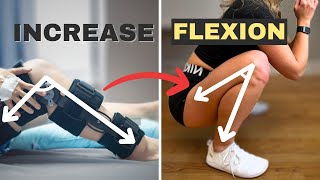
In this video, Victoria S. Dorsano shares her personal experience recovering from ACL reconstruction, focusing on why many patients struggle to regain knee flexion and what practical steps can help. She begins with a disclaimer to follow orthopedic surgeon guidelines and notes that protocols differ based on concurrent injuries. She outlines the primary reasons for limited flexion: post‑surgical swelling (both from the trauma of surgery and from overloading during rehab), heightened pain sensitivity, reduced patellar mobility (especially after patellar‑ or quadriceps‑tendon grafts), and arthrofibrosis (scar‑tissue formation). For each factor she explains the underlying mechanism and how it restricts the joint capsule or tracking. She then provides a detailed, step‑by‑step rehab plan. Early on, she emphasizes controlling pain and swelling through elevation, gentle effleurage massage, frequent icing (with recommendations for ice machines, reusable straps, and a specific RE‑VIX ice pack), compression sleeves (Incrediwear), and optional home TENS/Stim units. Once inflammation is managed, she advocates early mobilization: weight‑bearing as tolerated, frequent small knee bends, heel slides, hamstring curls, quad stretches, stationary biking, and patellar mobilization exercises. She also stresses soft‑tissue work for the patella and the importance of listening to pain signals. Throughout, she acknowledges the non‑linear nature of recovery, encouraging a mindset of incremental 1% improvements and reminding viewers that occasional setbacks are normal. The video concludes with a call to action to like, subscribe, and comment with questions.
Chapters
You know what sucks? Not being able to bend your knee after ACL surgery. Getting back your range of motion after ACL surgery, and especially flexion, can be really challenging. And there's a lot of videos that talk about getting your extension back, but not too many videos about getting flexion back. So today I want to dive into several of the reasons why you might not be getting the flexion that you want to be getting after ACL surgery and what you can do to fix it. Now, first things first, please listen to your orthopedic surgeon's guidelines on range of motion before implementing anything that I suggest. Not every knee surgery is the same. And, you know, there's a big difference between the precautions needing to be taken from talking about an ACL reconstruction isolated by itself versus an ACL reconstruction with a meniscus injury versus, you know, other ligament injuries. After certain surgeries, you may want to push the range of motion to what is tolerable, and after other surgeries, you may not want to push that range of motion at all because you could be damaging the tissue and the surgical procedure that was just done. So it all depends. The information I share is purely from my own research, my own experience with my ACL reconstruction and all that good stuff, and is for educational purposes only and is not intended for medical advice. Now that we have all that fun medical and legal jargon out of the way, let's go ahead and dive in. So let's start off with the possible reasons why your range of motion, and in particular your flexion, isn't where you'd like it to be right now. So the first and most obvious reason that I want to bring up is just swelling from the trauma of the injury or the trauma of surgery itself. Just like the initial injury is trauma to the knee, surgery is also trauma to the knee. There is a lot of stuff going on. You are having your knee, you know, pretty much cut into, and they are putting in new tissues and, you know, crafting out different sections of grafts from other tissues. And there's a lot of trauma going on to the knee, and your body's response to trauma is swelling. And the thing about the knee is it kind of has this like capsule. It's called the joint capsule inside of the knee, which if you think about it is like a balloon. And when you fill that balloon with fluid from the swelling of, you know, having the surgery and the trauma of surgery, that balloon becomes really, really full. And think of— if you think about like a balloon on the inside of your knee becoming so full, it's really hard to bend and move because it's creating all this internal pressure inside of that joint capsule. So that's first and foremost One of the main reasons why people tend to struggle with range of motion right after surgery, or, you know, within those first few weeks after surgery, is that swelling due to the trauma of surgery. But there's another aspect of swelling that I want to talk about which also can limit your range of motion, and that is just swelling from overloading the knee too fast, too soon during your ACL rehab protocol. Throughout your recovery journey, you may very well have noticed this if you are a few weeks in or a few months in or even a year in. Myself, you know, being a couple years out, I still have moments where I incur some swelling due to overload. You may notice there's some times where you push yourself a little harder than you normally would have, or you just do more activities than what your knee is capable of handling at that point in time. And because of that, it's going to swell. It's going to kind of try to protect the knee. It's going to say, hey, chill out, we're doing too much, um, you're a little inflamed, we're not quite ready to handle all this activity yet, and it swells. And I like to think of it as my body's way of saying like, hey, slow down, Victoria, take a chill pill, let's address some of this swelling, um, you're doing too much. So I've learned, as much as it can be a nuisance and kind of irritating to incur swelling after you've already gone through that initial bout of swelling, After surgery, I've kind of learned to like it in some way and be like, hey, thanks body, you're awesome, I appreciate you sending me those signals. Now I know it's still really frustrating, I know, because you feel like, man, I wasn't swollen last week, why am I swollen now? Am I going backwards? And it's just a sign that you've overdone it, you've overtrained, you've put too much load onto your knee cumulatively over the course of, you know, exercise time, or, you know, multiple days in a row even. And of course, like I mentioned, any type of swelling is going to limit your range of motion, and especially that flexion. It's going to increase the pressure in that joint capsule, and you're not going to be able to bend the knee as well as you'd like to. Okay, so another reason why you might be experiencing limited range of motion after your ACL surgery and not able to get the flexion that you feel like you should be getting is because of pain sensitivity. Unfortunately, we all have a different level of pain sensitivity, and that's what makes pain medicine so difficult, and chronic pain in particular so difficult to address, is because everybody has a different experience of it. And that also pertains to, you know, surgery and surgery outcomes. So some people might have very little pain after surgery and be able to jump into some physical therapy and rehab right away, whereas other people feel a lot more pain after surgery and they're a little hesitant to get moving. They feel like they just want to rest their leg and they don't necessarily want to dive into doing any kind of flexion exercises. And because of that hesitation to dive into some flexion exercises due to the pain after surgery that some people might experience, they can also experience a lot of stiffness because of that very same thing. So not having your pain under control after surgery can be a big factor as to why you're not able to get the flexion that you feel like you should be getting right now. Another reason you might be feeling like you have limited flexion right now is because of a lack of patellar mobility. Now, your patella is the kneecap, and if it is not moving around well, your knee is not able to bend and extend like it should. The patella should kind of move in alignment with the knee as your knee is bending and extending. And if the patella is kind of not tracking appropriately or stuck at any kind of junction due to some adhesions or scar tissue, it's going to limit that range of motion that you have, and in particular, that flexion. Now, this lack of patellar mobility is especially true for people that have had the patellar tendon graft or the quadriceps tendon graft. So that's just something to be aware of. And the last reason you can be having issues with flexion in your knee after ACL surgery is due to arthrofibrosis. Now, arthrofibrosis is basically just the formation of scar tissue in the knee after your surgery, and this can come from a variety of reasons. One of the main findings is that this tends to happen more often to people who who have had their ACL reconstruction surgery close to the timing of their initial injury. And that's why it's typically recommended to have some time between the initial injury and when you get the surgery, so you can get the knee to calm down a little bit, reduce the swelling, get some solid range of motion back, get the muscles all firing up appropriately before going into surgery, so your risk of having that scar tissue formation decreases. Arthrofibrosis can also happen because there may have been some issues with range of motion before surgery too. Maybe you didn't have the best range of motion, you were already really stiff before going into surgery. That can definitely be a factor. And it can also happen due to a badly positioned graft. Now, that doesn't happen too frequently, but you know, surgeons are people, sometimes mistakes happen, and the graft tissue can be placed at not an ideal angle, not an ideal way. Sometimes it doesn't fit into the intercondylar notch appropriately, and it can cause some issues with scar tissue formation. So, you know, at the bottom, you know, the bottom of the reasons, this is kind of the last one you want to come to for there being limitations to flexion, but it is a possibility. So, you know, as always, trying to eliminate those other ones first before you come to the reason that it might be arthrofibrosis. And of course, that can be confirmed confirmed with your orthopedic surgeon. But that is one of the last things that can really limit your range of motion, and in particular your flexion. Okay, so now that I've gone through all the reasons why you might be having issues with your flexion after ACL surgery, let's talk about what to do and how you can get that flexion back. And again, these are things I've all done from my own experience of having issues with getting my flexion back, working through that, figuring out how to, you know, best learn my body. This is a very individual journey, so you have to see what works best for you, but these were some recommendations that I had from my healthcare team that really worked for me, and I want to share with you guys. So first things first, when you get out of surgery and you have that swelling that happens, the first thing you need to do is to reduce your pain and swelling. Reduce your pain and swelling, that is the name of the game, and you have to do it and do it well and do it often. This means elevating your knee. I have a super awesome wedge pillow, I will throw that down in the description. It really helped keep keep my knee elevated when I was just chilling. I could put that wedge pillow on my bed. That helped me to keep my knee elevated most of the day. And what that does is it helps just the fluid kind of move from the joint capsule and go towards the heart and help to drain out of that, that joint capsule slowly but surely. You can also help kind of assist that fluid out while your knee is elevated and do some effleurage technique where you are kind of gently massaging the fluid down out of your knee towards the heart, again encouraging that fluid to be removed and drained from your knee. And for pain, icing, icing, icing helps with the pain a ton. So I had ice on my knee every 20 minutes, you know, on and off throughout the day, at least for that first 2 weeks. I was very religious with my icing because it helped me so much with the pain, and it helped me, um, be able to get to my exercises sooner. It helped me be able to resolve that pain, so I wasn't hesitant to start with my exercises. Now, as far as icing goes, there's several ways to ice your knee, right? There's the ice machines. Sometimes your insurance will cover those. I was lucky enough to have mine, uh, an ice machine get covered for the first week, which was awesome. So I could have ice circulating through, um, you know, this ice machine, and it would stay cold consistently, um, and it wasn't leaking water everywhere, which was great. But then, you know, they take that back. It's a rental, so I didn't get to keep it very long. And I wanted to still ice my knee, but it was a pain in the butt to keep something like held on to my knee. And I wanted to be able to work and to move around, and I'm not a very, um, sit-still type of person. So I needed something to really adhere onto my leg and stay there, which is where this Reevix ice pack came from. So highly recommend this guy. It has these straps that wrap around the ice pack. And the cool thing is, is it has a soft cushy side and it has a colder side that's not as soft and cushy. So you can kind of like adjust depending on if you are putting this on bare skin or if you're putting it over clothing. You can do the colder side or the not as cold side, and it wraps around, it stays in place. I've moved around with this thing on, I've cooked with it. It's great. It continues to be a part of my everyday rehab as I'm continuously learning how to adjust to my knee and, you know, icing it on the days that I do overload it. So this RE-VIX ice pack has been awesome. I highly recommend getting something that you can just strap around and forget about and not have to just hold there for most of the day, 'cause that's really annoying. The other thing about the RE-VIX ice pack in particular that I really like is that the gel is 30% thicker. So I can actually leave this on for a longer amount of time than my other ice packs. It stays cold for about 30 minutes, which is great. Other ones tend to kind of warm up around the 15-minute mark. So you can get your full 20 to 30 minute ice cycles on with this guy and have it cold the whole time. And I'll put the link down below for that as well if you're interested in checking that out. Now, some other things you can do to help with the pain and swelling initially is getting something like an Incrediwear knee sleeve, which I've talked about in several of my other YouTube videos. I absolutely love the Incrediwear knee sleeve. I sleep in a full leg sleeve of theirs every single night. Whenever my knee is being cranky, I put on the knee sleeve on and it just helps so much with the pain and the inflammation. So I highly recommend that. Another recommendation would be like a home stim unit. So if you really want to get fancy with it and you're really experiencing a lot of pain, you can always get a stim unit, and that just helps to kind of calm down the nerves a little bit and get them to chill so you can engage in your physical therapy exercises. Most likely when you go to PT, they will have a stim machine that they're going to be using, but it's always nice to have the option at home too for those days that it's feeling just a little bit extra cranky. Now once the pain and the swelling is under control, that's when you really want to get into some mobility, some exercises. Getting the knee moving can really, really help to, uh, prevent any issues with your flexion range of motion later on throughout recovery. So you want to start to do that as early as possible if you just have an isolated ACL injury. Again, if you have ACL meniscus or any other combination of knee stuff going on, you should follow your orthopedic surgeon guidelines first before any of these recommendations. But in general, with ACL reconstruction only, it has been found to be best to get early mobilization, get the knee moving as much as possible, weight bear as tolerated as soon as you can. So for me, that was, you know, the day after surgery. I did not have any meniscus issues. I was cleared to start weight bearing as I possibly could. And I was just cleared to start doing my flexion exercises the day of surgery if I wanted to, very gently. But I was very religious with keeping my knee moving and trying to do, you know, a few, you know, 10 to 15 knee bends every 10 minutes, every hour, constantly trying to keep my knee moving and not keeping it in a constant position for too long to really just help gain some of that flexion back. And that really, really did help in my recovery, starting to do that earlier than later. But that was only possible because I was also working on getting my pain and swelling under control, which is why that's so important. And yes, there usually is some pain when you are doing these exercises early on, but it should be, you know, tolerable. It will be painful, but it should be tolerable. It shouldn't be like you want to tear your hair out kind of pain. It should be uncomfortable. So, you know, it makes sense that it's going to be uncomfortable. There's going to be swelling that you're pushing through a little bit. There's going to be some just tension that you have in your knee. So expect to have some sort of discomfort going through some of these exercises, but not to the point where you are screaming. Like I said, things that helped me were doing like 10 knee bends every hour, doing some biking, trying to weight bear is tolerated and really doing some great flexion exercises like heel slides and these hamstring curls and knee flexion exercises and quad mobility and quad stretches. Those all really, really helped me to maintain good flexion throughout my recovery process. And the last thing is working some soft tissue mobilization for your patella to make sure that your patella is mobilized appropriately. Your PT can show you some patellar mobilization exercises where you slide the patella side to side, you slide it up and down, you make sure it's tracking appropriately. But that can really help to increase your flexion as well. Well, you guys, I hope this video was helpful. I know a lot of you have asked for a video like this talking about flexion exercises, so I hope this spoke to what you're experiencing and can really help get you to that next stage. And just please understand that the ACL recovery process is a journey. There's going to be days where you take a step forward and you feel like you take 2 steps back, and then you take 3 steps forward and then another step back. It's going to feel like that sometimes. So know that, you know, there's going to be times where your flexion gets limited again after you've had full flexion back. It is part of it, and it's part of just learning this new body that you have and the new capabilities of it and growing with it and learning what you can do to keep getting better each day. I always say just 1% better. If you can focus on 1% better each day and find a small win in the process, it's a win. And like always, you guys, if you like this video, if you found it helpful, give this video a thumbs up, subscribe to the channel. I greatly appreciate it. And if you have any questions, comments, leave them down below. And until then, I will see you guys next time. Bye!
More from Victoria






3 things you should do to make sure you get the most out of your fish oil #legion
