How I survived the mental side of my ACL recovery journey (and became stronger from it)
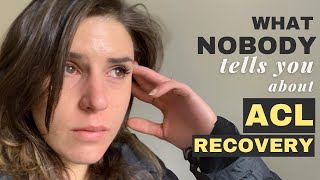
In this first‑person video, Victoria S. Dorsano recounts the emotional roller‑coaster of tearing her ACL and the four‑year recovery that followed. She outlines five distinct emotional phases—discovery/waiting, confirmation, surgery & early post‑op, mid‑to‑late rehab, and long‑term aftermath—detailing the fears, grief, anxiety, boredom, and hope that accompany each stage. For every phase she shares concrete coping tools: present‑moment grounding techniques, therapy (with a BetterHelp sponsorship), online ACL support communities, basic self‑care (sleep, nutrition, hydration, socializing), and personal mottos/positive self‑talk. She also describes a major setback—a fractured kneecap—illustrating how setbacks can destabilize progress and how acceptance and realistic goal‑setting help. The narrative culminates in a reflection on the lasting “emotional scars” that, once integrated, make her more resilient. The video aims to validate viewers’ emotional struggles, provide actionable mental‑health strategies, and encourage perseverance through the long, uncertain ACL recovery journey.
Chapters
When I first felt my ACL pop in my knee, I remember feeling this deep pit in my stomach. There was this despair and dread all swirling in me, and this was just in the milliseconds that I was in the air before I even landed on the ground. And then the pain hit, and man, did it hit hard. And I remember falling to the ground and crying and just holding my knee. But what really made it hard for the tears to stop flowing was not so much the physical pain, which did really hurt, it was more this emotional pain that I felt instantly. and I'll never forget what that felt like. ACL tears are an athlete's worst fear. They are known for their long and finicky rehab process, high retear rates, and pain. But it was in that moment that when I tore my first ACL that I realized what made this injury even more grueling was the emotional roller coaster it sends you on. And that's why I wanted to make today's video. If you haven't followed along with my ACL journey, then I'll just give a quick recap of my ACL story, but I'll put the full link down below of the video explaining my whole ACL story down in the description below. But just to recap, I had been out from playing volleyball for 4 to 6 months prior to my ACL injury because I had had a pretty severe calf strain prior to my ACL injury. And I had just been getting back to playing the sport of volleyball again, which is, you know, the sport I love. It's the sport that makes my soul so, so happy to play. And I had just, just gotten back to it. I think this was my second day back to playing volleyball again when I had my ACL injury. So there were a lot of ups and downs already. So all the emotions of getting injured yet again after just getting the sport that I love back came on very fast and hard. And if you've gone through an ACL injury yourself, then you know how it all hits you. There's often a lot of fear, uncertainty, grief, and loneliness, but there's also joy and purpose and grit in the process too. In the recovery journey, you end up losing yourself and finding yourself again, and who you were you were when you started out the journey ends up being very different than who you were when you finished the journey. It sounds wild, right? Well, it kind of is. So today I wanted to take some time to really address this emotional side of the journey and share with you guys a little bit about each emotional phase that I went through, through different phases of the injury and recovery process, and different tools that I use to help me cope with each of these emotions that bubbled up in the process, in hopes that these can be some helpful tools for you to use as well. Okay, so let's talk about the first phase, which is usually something I call the discovery recovery and/or waiting phase. And this is because when you at first tear your ACL, you usually don't know it's your ACL yet. You typically need to confirm this injury with an MRI to be able to ascertain if it's, you know, a rupture or something else. So usually you have to wait for that appointment. Typically there's an initial visit with your orthopedic who will do some different tests on you and then refer you to get your MRI. So then you're waiting for another appointment after that. In this stage, I remember personally feeling so much anxiety and fear and uncertainty, and even some hope. Hope that it wasn't what I thought it might be. Hope that maybe it was just a really bad sprain or bone bruise or really anything other than the ACL. There's a lot of ruminating about the what-ifs and you kind of just feel like you're in buffering mode. You don't even know what the next steps are to take because you're still waiting to confirm what's the deal. So in this phase of things, what really helped me was something that I know is gonna sound fairly cliché, but it really did help. And that was just simply to try to practice staying in the present moment and not focusing on the future, because there were so many unknowns to consider at that point in time that it wasn't worth me going down any road of possibility and really expending any mental energy trying to think about the what-ifs, at least until I got confirmation about if my ACL was actually ruptured or not. Googling every single symptom that I was experiencing with my knee definitely didn't do me any good. Worrying about what the possibility of surgery would mean for the next 6 to 9 to 12 months did me no good because again, that may have not been the case. So really it was about just staying mindful to where my thoughts were going. Anytime I noticed myself starting to ruminate on a future outcome or the what-ifs or just the unknown in general, I would try to bring myself back to some sort of present sensation or something that I'm presently noticing. There's a few different ways to do this. Obviously there's paying attention to your breath. A lot of people are familiar with that already about breathwork and just paying attention to the sensations of your stomach and chest rising and falling. And all that sort of thing. For me, that wasn't my favorite. I actually like utilizing physical sensations, so I like to rub my two fingers together and focus on the sensations of trying to feel each ridge of my fingertips together. That has always really helped me because it gives me a physical touch sensation point that's isolated to just my fingertips, and that's really nice. Sometimes even I'd call out things in the room to interrupt a thought pattern. So if I started to notice myself spiraling and worrying and getting anxious about the what-if, I would look around to the room or the space that I was in and start to just name things that are there, like chair. Okay, plant, window, just something to break the spiral of future thinking and get myself back into the here and now. And that really helped me in that waiting period/discovery phase of things. The next phase is a really tough one, and that is the confirmation phase. That is when you get the confirmation that you do in fact have an ACL rupture or ACL tear in some capacity. And for me, I remember when I got that news, I remember feeling like all my future plans for the next, again, 6 to 9 to even 12 months came crashing down. Anything that I had as an idea of what I would be doing in the next upcoming months started to crumble in my mind, and I felt like I started to lose touch with all of these things that I was planning that were making me happy and really excited for. Hopes of playing volleyball all summer with my friends, plans of going hiking, travel plans I already had booked. All of these moments that I'd built up in my mind started to disappear in front of me, and I really didn't know what to replace them with. I felt like in this phase I started to grieve a future that never really was mine yet and possibilities that never were really real. They were all just figments of what future Victoria was planning to do. And this is when, for me, and often a lot of ACLers that I talk to, start to experience some feelings of deep sadness and depression. There's there's a lot you feel like you're grieving and losing in this process, especially at this point. I also started to feel like part of my identity was taken away in some aspects. My identity as an athlete, as an active person, started to feel like it was slipping through my fingers because I didn't know how to be that and also have a torn ACL and go through this entire process of surgery and recovery. And then I was just also really worried that I'd never get that part of my identity back. And all of these things start swirling and spinning, and all of these emotions kind of take over your whole body and mind, and you just feel really overwhelmed. Even just thinking about that time in my life makes me emotional because I can, I can remember it like it was yesterday, just how all of that hits you. And if you haven't experienced this injury before, I know this may feel and sound dramatic to you, but for those of you that have and are athletes yourself, to have all these things come crashing down and to be experiencing all these emotions, it's, it's really hard. This stage was one of the hardest ones to go through for me, so it was crucial that this phase of the ACL injury and recovery process that I got some support. For me, having a therapist during this time was absolutely invaluable. I didn't really realize until this phase of the injury that I had so much of my identity tied up as being an athlete, as somebody who looks and is physically strong. I had also always used sports and physical activity as a coping mechanism for stress and other things that were bothering me in my life. So now all of a sudden, one of my main coping mechanisms felt like it got ripped away from me. And I knew I needed to learn some other ways to sort through all of the emotions that I was experiencing. Unfortunately, when you're dealing with an injury like an ACL, it can definitely limit your ability to move or walk or drive around very easily. So going to traditional in-person therapy might not always be an option. And that's why today I've partnered with BetterHelp as this video sponsor, so that even if it is difficult for you to move around, that therapy can still be accessible to you. Here's how BetterHelp can help you get through this phase of the recovery. Process by heading over to BetterHelp's website and answering a few questions. They will match you to a professional who has years of experience helping people through what you're struggling with. And you don't have to go anywhere because BetterHelp offers many ways for you to connect with your therapist. There's phone call, video chat, or messaging. So you don't have to be limited due to your injury. And the whole process happens fairly quickly. You'll usually get matched within 48 hours after signing up. Going through their signup process myself was super, super easy. And I got matched with an amazing therapist who has continued to help me nurture different aspects of my identity outside of just being an athlete. You don't have to struggle through this part of your journey alone. Let BetterHelp connect you to a therapist who can help support you while you heal up. Just head over to betterhelp.com/victoriadorsano or choose Victoria S. Dorsano during signup and enjoy a special discount on your first month. So the next phase is surgery and early post-op. And I know a lot of people kind of dread this phase because it's when a lot of it becomes very real. I know for myself, I was feeling very scared of surgery, but also really excited because because I was finally feeling ready to move forward. But then I remember getting out of surgery, and frankly, I didn't really feel like I was moving forward. You're really just sitting a lot and depending on others a lot, and you're not able to move around very easily. And honestly, just getting up to get like a glass of water was a huge pain in the ass. Everything had to move a lot slower in my day, and I'm notoriously bad at slow. The main emotions that I was experiencing in this phase and that are common to experience in this phase are a mix of boredom. There's some anticipation and anxiety to want to speed the process up. There was definitely a lot of fear that I'm doing something wrong, or I'm— whatever my knee was feeling at the time was wrong, and that I somehow messed up the graft. Kind of a mishmash of all sorts of different emotions happening here, just really a lot of uncertainty. In this phase, two things were really key to helping me regulate and cope with all the emotions I was experiencing. Number one was connecting with different ACL support groups online. This allowed me to understand what other what people were going through, some of the oopsies and uh-ohs that were common, the different sensations that were common. I know ACL can be a very variable injury. We can all feel very different things post-op, but there's definitely some similar worries that ACLers tend to have right after surgery. So it really helped for me to connect with some of these other folks who are going through it too and to just kind of commiserate with them. Misery loves company, right? It makes the process suck less when you can do it with other people. I've mentioned this on other videos of mine, and you guys know I'm a big of Dr. Kiro. He's been on this channel before. We've done a few Q&As, but he has a fantastic ACL community that I highly recommend you guys check out if you're an ACLer and want some support and to be in a community of other ACLers. I'll drop the link down below for you to jump in his community. So the second thing that really helped me in this phase for helping to regulate and process and cope with some of the anticipation and boredom and all the stuff I was dealing with in this phase was really just focusing on the hallmarks of good self-care, trying to sleep well and eat well and hydrate well, get outside and socialize with friends when I could, really just trying to make sure that I'm regulating my body and my nervous system in other ways since I wasn't able to be physically active. And it also just helped me channel all this kind of anxious, nervous energy into something productive that was actually going to make a meaningful impact in helping my knee heal. In this early phase. So the next phase is kind of that mid to later post-op and recovery phase. So after you've already gotten over those first, you know, 2 weeks-ish of early recovery, right? When you're kind of just trying to move a little bit, get some range of motion, swelling down, all that jazz, reduce the pain, and you're actually getting into now like the meat of your recovery journey and the rehab portion of things and actually really putting in some work. Work. I remember in this phase of things, once I was able to start walking with a normal gait and going downstairs and starting to feel a little bit stronger and quad was activating, I remembered feeling like a lot of hope and a lot of excitement, like, hey, maybe I can actually maybe do this. Maybe I can get back to where I was before. I'm actually starting to see progress now. We're moving forward. And maybe, just maybe, I can get back to the sport that I love sooner than later. And then I had my first setback. For some people, that might look like a little trip up up the stairs, a little stumble, or an odd twist that kind of sends some pain zinging up your knee and maybe makes you swell up a little bit more than you had been before, and maybe sets you back a few days in your rehab. You know, something that just really makes you go, oh shit. For me, it wasn't so much a small oh shit, it was a pretty big oh shit, meaning my kneecap cracked in half, and that was pretty significant. I go into more details about my kneecap stuff in that other video I linked down below, so I'm not going to go into that, but But this is the territory of recovery where you are constantly toeing the line of progressing forward and doing enough in your recovery and doing too much in your recovery and maybe slipping back a little bit. There were days in this phase of recovery that I felt like I was taking leaps and bounds forward. And then there were days where I felt like I took 5 to 6 to 7 steps backward. There were days I felt amazing. And there were days like I felt completely off track with my recovery. It's in this phase that I felt really tempted to compare my recovery timeline with other ACLers' recovery timelines. And whether it's a big setback like a kneecap fracture or a little setback where your knee accidentally kind of extends backwards and feels kind of funky for a few days, it can be hard to accept where you're truly at. But what really helped me to manage my emotions in this phase of recovery was to learn to accept that minor setbacks will happen and to expect them, and to learn how set more realistic goals for my recovery with those setbacks in mind. It can be really frustrating when you feel like you're not where you should be in this process, and some of the things that helped me were kind of focusing on some of these mottos that helped me to reestablish the boundaries of where I'm at. Mottos like go with the flow, celebrate the small wins, it's not a race, one day at a time, and do your best, forget the rest. I know it sounds really corny to have a list of mottos that I pulled from in this phase, but genuinely I found myself thinking about them over and over again. Every time I'd feel frustrated about where I was, or if I had a certain little setback, or if my knee was swelling one day and I felt like it shouldn't be, it helped me move into a place of acceptance and really focusing on what I could do in the here and now. I have these little mottos and sayings written on Post-its all around my desk and mirrors. They were really just ways for me to stay grounded in my own reality and not anybody else's. And this phase is really when you learn how to be your own best cheerleader and hone in on some really positive self-talk. All right, so let's flash forward to this moment in time, 4 years post-op for me. Once an ACLer, always an ACLer. And just because I'm back to playing my sports and doing all my activities does not mean that I don't still incur some emotions around my knee. I still have plenty of emotional struggles. That I experienced surrounding my ACL injury. Some days I still feel a little limited by my knee, and some days I can't help but wonder where I would be if I didn't have my ACL injury. But now, after going through this whole process and acquiring all the different skills and tools I've learned to becoming a more emotionally resilient person throughout the injury and recovery process, I'm able to utilize those in this later phase. And be able to better deal with some of those emotions that bubble up even now. And that's the thing with this whole ACL process is you walk away with both physical and emotional scars. And I'm not saying that in a bad way because if you think about scar tissue, it is tough and fibrous and protective. And just like many of us are left with scars physically on our knees from the surgery, we have these emotional scars that are more resilient and tough and fibrous and able to handle more as we grow and evolve as athletes and as people in life. And I don't look at these emotional scars that were developed as a bad thing. They were all there to make us stronger in the end. So you guys, I hope some of these tools will be helpful for you in your ACL journey as much as they were for me. I know, I know, I know this is a difficult process, but I promise you, you will get through it. And the person you will find on the other end of this journey is greater than you've ever imagined. Imagined if you allow the process to transform you. So guys, if you found this video to be helpful, go ahead and give it a thumbs up, subscribe to the channel. I greatly appreciate you guys as always, and I will see you guys next time. Bye!
More from Victoria






3 things you should do to make sure you get the most out of your fish oil #legion
