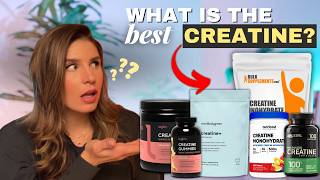
In this video, Victoria S. Dorsano provides a concise, no‑nonsense guide to selecting a creatine supplement. She begins with a brief disclaimer and explains what creatine is—a well‑studied compound that recycles ATP to boost muscular and cerebral energy, improving workout performance and cognitive function. Dorsano then outlines four critical buying factors: (1) product purity and third‑party testing (e.g., USP, NSF, Informed Sport), (2) creatine type (advocating creatine monohydrate as the only necessary form with ~99% absorption), (3) price per serving (aiming for ≤ $0.50 per serving), and (4) micronization (finer powder for better solubility, though not affecting absorption). She debunks common marketing tactics such as “enhanced delivery systems,” alternative creatine forms, and timing myths, emphasizing that total daily intake and consistency matter most. Dorsano recommends three products across price tiers: a budget option (Bulk Supplements monohydrate, third‑party tested, micronized), a premium option (Legion Athletics monohydrate, USA‑made, NSF‑certified, lab‑tested, money‑back guarantee), and a top‑of‑the‑line option (Momentous monohydrate, NSF‑for‑sport and Informed Sport certified, slightly coarser). Finally, she invites viewers to a personalized quiz to match creatine choices to individual goals (e.g., vegan, pre‑workout combos) and encourages likes, subscriptions, and comments.
Chapters
Let me save you some money. So you see this fancy creatine over here? $74 per 60 servings. And this one over here is only $30 per 60 servings. Plot twist, they're basically the same thing. In this video, I'm going to show you exactly what matters when choosing a creatine powder and what is just marketing fluff. Plus, you're going to want to stick around to the end because I've got a quiz that will help you to decide what is the best creatine powder that suits your particular needs. No more guessing and no more wasting money. And before we dive in, there's a quick disclaimer on the screen. Make sure you read that. Basically, just make sure you talk to your doctor before starting any new supplements. So if you don't know what creatine is, it's one of the most well-studied supplements in all of history, with well over 1,000 studies done on this particular supplement. So what does creatine do exactly? Think of creatine as your body's rapid energy recharger. When you're doing anything intense like working out at the gym or performing a sport, your muscles and your brain need to access energy relatively quickly. And what creatine does is it helps to recycle ATP, which we can think of ATP as your body's energy currency. And this whole process can help to give you an extra boost in your workouts, as well as they're finding in your cognition. That's what's really making creatine a game changer of a supplement. Not only is it incredibly well studied and very safe for most people, they're finding it's not just beneficial for building lean muscle mass. More and more studies are coming out about its effects on the brain and how it's really beneficial for increasing our cognitive function. Studies are actually showing that creatine boosts your brain's energy production, much like it does for your muscle tissue, improving things like memory, mental stamina, as well as clarity and focus. And the cool thing is creatine isn't just a synthetic compound. Our bodies naturally make creatine. Taking a supplement just helps us kind of top off our levels. It's akin to like filling up your gas tank in your car instead of running with it half filled. All right, so let's dive into what actually matters when you're buying creatine. So there are really 4 things in my mind that matter the most when you are buying a creatine supplement. Okay, so number 1 is the purity of the product and third-party testing. Now, this is something I'm a stickler for in all supplements across the board, but we're going to talk about it today in particular as it pertains to creatine. Listen, you're putting this into your body. So you want to make sure that what you're taking is actually what it says it is. And because the supplement industry is very unregulated, it's important to have third-party testing or some sort of verification process. So you can look for something like the USP certification or NSF certification on the label of the product. If you're an athlete and you're at risk for drug testing, then you're definitely going to want to select a product that is NSF certified for sport. I believe there's another one called Informed Sport, but I'm more familiar with the qualifications for NSF for sport. Meaning that they've tested for any illegal substances and it's clear. So the second thing that matters when choosing a creatine powder is the type of creatine. And here's the truth: creatine monohydrate is really the only creatine you need. Research shows it has a 99.1% absorption rate, and you really can't get much better than that. All the other types of creatine marketed out there, like creatine hydrochloride, creatine ethyl ester, creatine magnesium chelate, creatine pyruvate— you don't need any of that stuff. Creatine monohydrate is going to be the most effective, and often the cheapest. So save your money. The third thing you want to pay attention to when buying a creatine supplement is the price per serving. Now, to calculate this, it's pretty simple. You're going to look at the total amount of servings and the total cost of the product, and you're going to divide the cost by the total amount of servings. That's how you'll get the price per serving. Really, anything more than 50 cents per serving is going to be a ripoff, and you're probably paying more for the marketing of that product than the actual quality of the product itself. And the fourth thing you're going to want to pay attention to when considering a creatine supplement is the micronization. Micronized creatine means finer powder, means it dissolves quicker, means less gritty texture. Non-micronized creatine basically means that the particles are not quite as fine and it might not dissolve as fast, but still does the same thing. So really it just depends on what you want— something that dissolves faster or something that takes a little longer to dissolve and might be a little grittier. Again, doesn't affect the absorption or how it works in your body at all. Okay, so now let's discuss some of the marketing tactics that a lot of companies will to make their creatine sound like extra fancy and amazing that probably isn't true at all. The first thing you'll see marketed a lot of are these like fancy delivery systems like enhanced absorption technology or advanced nutrient transport system. Guys, it's creatine. It absorbs just fine on its own. You don't need to pay any extra money for whatever fancy delivery systems they're marketing. Second, like I mentioned, you'll see all these like fancy creatine types like creatine hydrochloride or creatine ethyl ester. They'll say things like it's better absorbed or it causes less bloating. The research shows that there's no benefit over creatine monohydrate. Like, none. Zero. So save your money. The third marketing tactic that a lot of companies will put out there is this, like, obsession with timing. They'll be like, pre-workout creatine, and then post-workout creatine, and then creatine you take on full moons, and then all this nonsense that you don't really need. Total daily intake of creatine is what matters. Just take it whenever it's the most convenient for you and stay consistent with it. Nothing fancy. Okay, so given all that information, what should you actually buy? So my budget pick for supplements would be the Bulk Supplements creatine monohydrate powder. It's not necessarily NSF certified, but it is third-party tested. And the product is produced in a facility that is CGMP certified, which basically just means it practices good manufacturing processes. The cost of this one for 200 servings is roughly between $20 and $30-ish depending on if there's a sale going on. And this powder is still micronized, so it'll dissolve pretty quickly. Next, we're gonna go over my kind of premium pick, which is personally what I opt for and I take on a daily basis, which is the creatine monohydrate, which is micronized from Legion Athletics. Now there's a few things that I particularly like about this supplement and this company in general. Number 1, they produce their latest lab results on their website. So if you go to the creatine monohydrate page, you can actually see like the latest lab results for this particular batch that was last sent out. Number 2, the product is made in the USA with FDA-inspected and NSF-certified facilities. And number 3, they have a money-back guarantee. So if you don't like the product, you can get refunded and you don't necessarily have to return the product itself. So they're a great company to start off with, give it a shot. If you like it, you can move on to another product. The cost for this particular one is about $30 for 60 servings, so that comes out to about 50 cents per serving. And then we're moving to the ultimate category. So if you want like the top-of-the-line pick, you want to make sure that is like NSF certified for sport, maybe you're an athlete, again you're trying to really make sure you're dotting your i's and crossing your t's as far as what's going in your body, then I'm going to recommend the creatine monohydrate from Momentous. Now again, what I like about this supplement is that it is NSF for sport certified and it is Informed Sport certified, meaning again if you're an athlete and you just want to make sure that everything is all good with the product and you're not going to get in trouble in case you are drug tested and something mysterious pops up on there, this is the way to go. The cost per serving actually comes in at slightly less than Legion's supplement, but it is not micronized, so it is a little bit more coarse. It's not going to dissolve as quickly, and it may be a little grittier in texture. But again, I'm saying that this is the premium pick as far as, again, dotting your i's, crossing your t's for something that is NSF certified for sport and just making sure you're in the clear. If after listening to this you're still not exactly sure what creatine is best for you, or maybe you're like, hey, what are some good vegan options? Like, what's going to make sense for my particular scenario? What if you want something that is combined with a pre-workout or with something that's recovery-based? There are options out there, and that's exactly why I created a quiz just for you guys to figure out what option is going to be best for you. Because we all get different things going on, we all have different goals and different things that are important to us when we're looking for a supplement. To find that quiz, just click the link down below in the description and it'll take you right to that page. And if you found this video helpful at all, please give this video a thumbs up, subscribe, leave a comment for the algorithm. All of it's greatly appreciated. Make sure to follow along for other videos on no-nonsense supplement nutrition, fitness advice, all that good stuff on my channel, and drop a comment if you have any questions. Catch you in the next one. Bye.