I Tested The BlueVua Reverse Osmosis Water Filter For 2 Years… Here Are My Thoughts
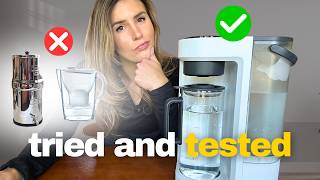
Victoria S. Dorsano tested a Bluevia countertop reverse osmosis filter for two years. The NSF/ANSI-58 certified unit costs more upfront than a Berkey pitcher but delivers better water quality and lower long-term costs. She covers maintenance, filter replacement, and how it handles mineral removal.
Chapters
What are the two most crucial things that humans need to survive? Air and water. Not just any air and water, but clean air and water, preferably. You can go weeks without food, but you can't go that long without water. And we're breathing every single second of our lives. So here's a really important question that I asked myself a few years ago. If these are literally the most important things that I'm putting into my body every single day, multiple times a day, then why am I not taking the quality of them seriously? That question particularly hit me hard during COVID when everything felt out of control. I started to think, what can I actually control as it pertains to my health? What are the things that I have agency over when the world feels chaotic that make the biggest impact to my health? And the answer became obvious to me. It was, you know, what I'm breathing and what I'm drinking. So I started by upgrading my air filters, which many of us did during COVID I got high-quality HEPA filters for my entire apartment, and then I went deep into the water filtration space, and I went way into that rabbit hole because boy, is there a lot of information there. During COVID there was so much uncertainty that felt outside of my control, so this was just another way that I could feel in control. And what was important, both in the air quality and in water quality, was my ability to verify that something was actually working and benefiting my health. I didn't just want to rely on ambiguity or hope. I needed some sense of certainty. So it really wasn't about just buying any other air filter or water filter. It was about finding something that I knew for sure was making a positive impact in my health and that was verifiably making my water and air quality better. So I've actually already made an entire video on my whole water filter journey and what I tried first and what I ultimately ended up settling on, moving from a pitcher filter to a Berkey to eventually my reverse osmosis countertop unit from Bluevia, the one I'm still with nearly 2 years later. That video I will link down below in the description as well if you want to check that out. But long story short, through all of that research and trial and error, I came to learn that reverse osmosis is truly the gold standard when it comes to filtering your water. It's even what most hospitals use. So So it's definitely what you want if you care about comprehensive filtration. But to my knowledge, back during COVID I was only considering reverse osmosis as like an under-the-sink unit that had all this installation or a whole home unit, you know, and I was living in an apartment, so it didn't really make sense for me to have something that needed all that installation. But then later I ended up coming upon the fact that reverse osmosis units exist in a countertop format, which is perfect for apartment dwellers like myself. Who want minimal setup, and I'm still using this unit every single day. So since publishing my initial video when I first got my Bluevia reverse osmosis countertop unit, this one, which is the Ropott Lite, like a year and a half ago, almost 2 years at this point, I started to get a lot of questions about, hey, you know, it's a couple months later, are you still liking it? Hey, it's, you know, a year later, what do you think? So I wanted to make a follow-up video to that because I think it's important, especially in the online review space, you know, we see a lot of these initial reviews. We test things for 30 days, 60 days maybe, but it's very rare that there's like an extended follow-up where you can see if that person or the reviewer is still using that product, if they're still happy with it. Um, and addressing any of the initial questions that came about, you know, in earlier reviews. So that's a little bit about what I wanted to go through today and talk to you guys about why I'm still using my Bluevia Ropod Lite. And again, some of the features that I really, really appreciate from a, like, a verifiable factor and being able to verify my water is getting cleaned, and that certainty component that I told you was really important for me when I was trying to make sure that my water and my air are clean. So first reason why I stuck with this countertop unit is because the company Bluevia specializes in countertop reverse osmosis units. They're not trying to be a jack of all trades. They are truly a master of creating really sleekly designed and well-made, low-maintenance reverse osmosis countertop units like this one. Their units are also NSF and ANSI 58 certified. Those are basically the gold standard for reverse osmosis performance and the features that actually matter to me. They really nailed them. Number one, and I've talked about this in previous videos, is the TDS meter or the total dissolved solids meter. So going back to like verifiably cleaning my water so I can actually make sure that my water is getting cleaned and it is reducing the amount of total dissolved solids in the water. The verification of having the TDS meter on the unit itself and seeing that it actually does its job is really, really helpful. The other thing that I love is that they use a glass carafe, so it is not plastic. We're not having to worry about plastic leaching into the water after it's already been filtered. So that's fantastic too. Going back to the design, the compact design, still fits in with my kitchen really well. We've moved things around as the years have gone, and it still has a nice little nook that it sits into and doesn't get in the way, and it just looks so nice there. And then another thing that I've been loving about this for the past nearly 2 years is that it's portable. Like, if I need to move it, I can move it. For the sake of this video, I moved it close here so you guys can see. It was super easy for me to lift, pick up, bring over here keep in the frame, and then I can pop it back on my kitchen counter, no problem. All right, so I want to also get to some of the common questions, concerns, things like that that I've gotten in my comments from previous YouTube videos where I featured Bluevia. One question I get often is about the wastewater that reverse osmosis units produce. But here's the cool thing: the wastewater from any reverse osmosis unit is technically like reusable, recyclable for different things. Personally, I have used it to mop my floors with. I've also diluted it slightly with normal tap water and then used it to water my plants, and they have been Totally fine. Again, if you were watering your plants with tap water to begin with, then this isn't anything too new to have them have water that has a little bit more total dissolved solids in it. So essentially that's what the like unused water, the wastewater from a reverse osmosis unit is. It's just the water that hasn't gotten filtered. So if you're wanting to be eco-conscious, then you can do that exact same thing. You can still use the water just in a different type of fashion. I've even heard that folks use it for washing their car. There's plenty of options. Another question I get often is about the water reservoir tank and how much that ways to be able to like pull that off, fill that up. Is that something that anybody can do at any age? And my answer is yes, 100%, completely yes. So as we can see, it weighs in about at 9 pounds and 10 ounces roughly. And almost 2 years of daily use, it has never been an issue for me. But if you are concerned and maybe this is like a gift you're getting for somebody who's maybe elderly or maybe you are a little bit older yourself and maybe have like some shoulder issues, you can always, always, always fill up, you know, bottles or smaller glasses, go to the reservoir, dump those in. That's easy to do too. Another question I've gotten, well, reverse osmosis sounds great, but like I've heard it dehydrates you because doesn't reverse osmosis remove all the minerals and, you know, create this whole issue where your body is getting dehydrated because it's pulling minerals and water from your body and yada yada yada. And my short answer is no, there is actually a remineralization filter that you can add to the device. After the reverse osmosis process strips all the contaminants out of the water, the remineralization filter will add in things like magnesium, calcium, zinc, all the healthy minerals that you need back into your water. But even if you were drinking reverse osmosis water without the remineralization filter, the amount of minerals that you get from your water source is so minimal compared to what you're getting from your food sources, so you're not going to get dehydrated from drinking demineralized reverse osmosis water. Another question I get often is how this compares to my experience with the Berkey. Biggest differences are size, because the Berkey was much bigger, took up more space. This is way more compact and much prettier. The speed of filtration— Berkey was much, much slower, and this takes about 3 to 5 minutes to fill up. As far as maintenance goes, Berkey's maintenance was kind of a hassle because the filters, anytime you change them, needed priming, and the priming process was very annoying and difficult. This process for changing out the filter is so much easier. Literally all you have to do is like take out the top, take out the filter, pop a new filter in, run a flush cycle, and you're good to go. There's the remineralization filter, which is about $15 when you need a new one. Super, super easy to change. You replace that about every 6 months or so, so very infrequent. And then you have the main reverse osmosis filter, and that's about $80 every time you need a new one. And the cool thing is it tells you when you need a new one on the top, when it's filtered through enough water and the effectiveness of the filter starts to degrade. It'll let you know before it gets to that point and you can swap it out. So for us, it was about like 9 or 11 months at that point. We were swapping, swapping out the main filter. Both of those things combined take about 5 minutes tops. Super, super easy. From a cost standpoint, there's a little bit more of a buy-in for the initial device, but in total, in the past 18 to 24 months, I've spent maybe around $400 all in all, including the new filters for both remineralization and the main reverse osmosis filter and the unit itself. Of course, it's a little bit more than a pitcher filter. The initial purchase is more than a pitcher filter, but maintenance is much easier. The quality of water you're getting is much, much better, and it's just been such a pleasant experience. But look, hey, it's not for everyone, and I get it. You know, at the end of the day, if you're looking for just your basic, basic requirements of water filtration and you're not really caring if it covers over like PFAS and microplastics and pharmaceuticals and that sort of thing, and you're okay with just a basic pitcher filter, then go for it. But if you want to make sure that your filtration is actually working and that your water tastes good and that you're doing the best you can for your health with, again, like the most cost-effective investment, then a countertop reverse osmosis like this Ropott Lite from Bluevia is where it's at. So remember when I said this all started during COVID right? Controlling the controllables. Clean air, clean water. I got the air filters, I got my awesome countertop RO unit, and nearly 2 years later, I'm still sticking with it because some things are just worth the investment. And when it comes to knowing what I'm putting in my body, and then I'm able to verify exactly what it is, it's not just hope or marketing, that's worth it to me. And that's why I still really value that TDS meter and the quality of water that comes out of this unit every single day. So if you wanna check out Bluevia, I have a link down in the description and you can use code Victoria 15 for 15% off. I promise you will not regret it. It has been such a favorite purchase of mine, and I talk about it all the time with my clients, with my friends, family. It's just been such a solid unit. And if you yourself have been thinking about optimizing your health and figuring out how you can control the controllables in your life and what you can do to really make your health better, I work with folks one-on-one to help support people who want to do that. Myself and my team of other allied health professionals help you to do that. We can even help you figure out what things are worth investing in, what's not, and what are going to be the things that you can do for your health that are going to make the biggest impact with the smallest amounts of effort so that they can feel sustainable in the long run. So if that sounds right for you, book a call with us. Link is down below in the description as well. All right guys, if you have any more questions about my water filter experience with Bluevia, please drop those questions down below. I'm happy to answer them down in the comments. And if you felt like this video was helpful, please, please, please give this video a thumbs up. Drop a comment down below, subscribe to the channel. Anything you can do helps, and I will catch you guys on the next one. Bye.
More from Victoria






3 things you should do to make sure you get the most out of your fish oil #legion
