I Tested the XPOLAR X2 on My Knee for 3 Weeks — Does Contrast Therapy Actually Work?
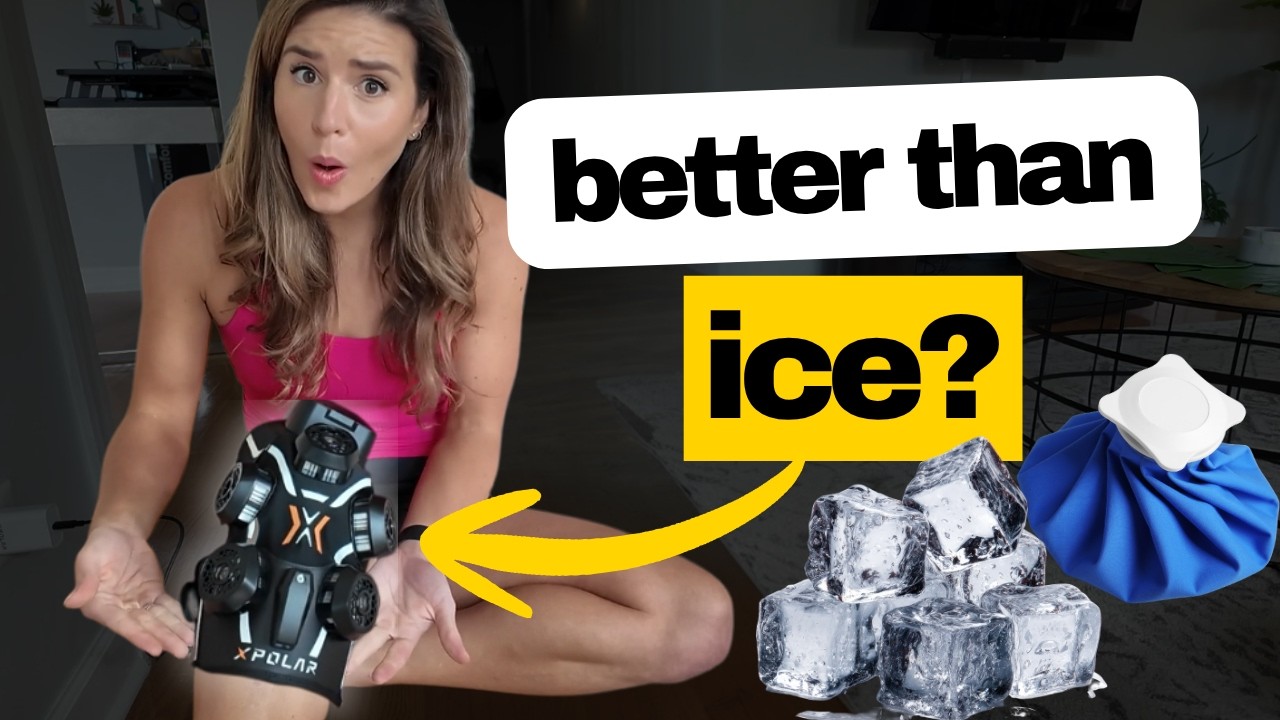
In this YouTube video, Victoria S. Dorsano reviews the XPOLAR X2 localized contrast therapy device, which alternates hot and cold temperatures on a specific body part. She begins with a brief, informal introduction featuring two other speakers who mention cold plunges, setting the stage for a discussion of contrast therapy. Victoria discloses that the device was provided by XPolar and outlines her three‑week hands‑on testing protocol, covering temperature ranges, compression levels, battery life, noise, and comfort. She references clinical studies that compare localized contrast therapy to cold‑only and DIY methods, summarizing the evidence for pain reduction, swelling control, and rehabilitation speed. The video then offers practical guidance on who should consider buying the XPOLAR X2 (post‑operative knee rehab patients, athletes, and frequent users of gel packs) versus who might skip it (casual users, those on a tight budget). Finally, she provides recommended usage patterns (session length, frequency, temperature cycling) and a concluding verdict on the device’s effectiveness and value.
There's a good chance that you've heard about cold plunges.
Just did the cold plunge.
So this is gonna be my very first ever cold plunge. Day 1 of freezing my ass off starts right now.
Oh man. For about 2 years, you couldn't open up your phone without somebody telling you to jump into a cold bucket of water. According to Google Trend Search, cold plunges are down about 55% from their peak, and contrast therapy, which is hot, then cold, then hot again, is up 164% from this year. And the newest version of contrast therapy doesn't even require a tub at all because it's this. A hot and cold contrast therapy device strapped onto one joint. This one is called the XPolar 2. Now, quick note before I start, XPolar did send me this device as something to integrate as part of my contrast therapy video, so I do want to be upfront about that, but all opinions about this remain my own. So is this thing actually better than just doing like a bag of ice on your joint by itself? Better than a cold plunge? Better than whole body contrast therapy? Or is it the same trend just in a smaller package? Well, I've been using the XPolar 2 for about 3 weeks now and going through the research on contrast therapy, so by the end of this video you'll be able to understand if a device like this is actually worth for you, or whether that bag of peas in your freezer is doing the job. So some context first, because I feel like contrast therapy gets sold as being like the fix to everything. Faster recovery, less soreness, less inflammation, fewer sick days, a longer life, better vitality, you name it. Some of that does have real evidence behind it, but almost all of the touted benefits come from whole body contrast therapy, something like doing a plunge tub, then a sauna, then a plunge tub again, or a shower, sauna, shower. Now, soreness and recovery from doing contrast therapy are the best supported claims out there. When researchers pooled all the whole body contrast therapy studies, they found that those who did contrast therapy on their whole body reported that they had a moderate reduction in soreness the next day versus the group who just rested. The dopamine claims just comes from one small study of like 10 people, and that one is just for cold therapy pretty much. And the longer life research is pretty much just referring to sauna use. So here's why all that matters for this video, because the claims tend to fall in 2 buckets. Bucket one is the whole body research, and those claims again are for like mood, metabolism, immunity, and heart health. And those really depend on heating and cooling enough of your body to get a whole systemic response. Unfortunately, a wrap on one knee is not going to give those results. The second bucket of claims falls into more of a local response— pain, stiffness, swelling, soreness, range of motion. Those responses happen where the hot and cold are actually touching your body. That's where shrinking contrast therapy down to the exposure of just one joint might make sense. So can contrast therapy isolated to one joint actually do that? Well, according to research, yes, it can. For example, 180 people with knee osteoarthritis used contrast therapy versus just using cold therapy alone. Those who did contrast therapy came out ahead of the other group for reducing pain and overall quality of life because they were out of pain and therefore able to do more activities. And to quantify that, the contrast therapy group was able to get their pain levels on a 10 scale, 10 being the highest amount of pain you'd experience, From a 7 on average to about a 3.5, which is a pretty measurable difference. Now, why would alternating temperature actually matter? Now, the popular explanation is that alternating between hot and cold is something that creates this like pumping action in the body and helps reduce the swelling in the joint. Now, that is a little bit more theory than proof, but it is still plausible. Now, when looking at the evidence, all of these are fairly small studies on contrast therapy, which is why I thought it was really important to put this device to the test myself and give you guys my personal experience as well, because small studies doesn't necessarily mean it doesn't work. There's just less data across various populations. Now, the next question I wanted to answer in this video is using something like contrast therapy device like the X2 from XPolar actually better than like a DIY version where maybe you're using, you know, again, a cold bag of peas and then a heat wrap or, you know, hot water and going back and forth. Now, interestingly, there is an actual study that compares the two. There were 60 people with knee arthritis. Half of them did a hot and cold bucket of water. So basically like a mini hot and cold plunge. The other used a contrast therapy device wrapped around the knee. And the device group did notably better. They denoted less pain, better range of motion, and they can walk further in 2 minutes than the hot and cold bucket of water group. Now, why might a device like the X2 actually be more effective than doing DIY contrast therapy on your joint at home? One is consistency. The temperature in buckets of water drift. Ice melts, hot water cools off. So in a DIY version, your temperature consistency starts to drop. Second is compression. A bucket of water or a wrap around the knee or a bag of peas on your knee cannot Compress the joint. And honestly, compression plus cold therapy is one of the best supportive mechanisms in this whole space of joint recovery. And more on that in a minute. So honestly, in something like a contrast therapy device that isolates to a single joint, you're paying for the compression, the consistency, and the convenience of just being able to strap it on and have it do its thing without you having to go back and forth microwaving something, filling something up with hot and cold water and all that. So now I want to talk about my experience with this contrast therapy device. As a lot of you guys know from watching other videos on my channel, I have had ACL surgery. I've broken my kneecap, so I've had a lot of trauma specifically in my right knee. So trying something out like the X2 was very intriguing to me. So my first impression of the X2 is that it is really well built. Like, this device feels solid. The Velcro straps are thick and really well built. They have different ridges, so it's really easy to pull through and find the notch that is going to be easiest and fit onto your knee or your other joints as best as possible. And this has 4 distinct functions. First off, you can just use this as a cold therapy device, which is really, really great. It actually reaches down to 0 degrees Celsius, which is 32 degrees Fahrenheit, and it does feel that way. It feels surprisingly cold. I was expecting kind of a mild cold sensation. This is not mild, and that actually matters more than you would think because cold doesn't travel well through tissue. Cold tends to drop off very fast the deeper you go into an area. The second function it has is just heat only. Now this baby can heat up to 50 degrees Celsius or 122 degrees Fahrenheit. So actually hot, like Hot, hot, not just like warm, cozy blanket hot. Now, heat therapy on its own tends to be very underrated, but it actually does so much. Heat has a lot of good evidence for loosening up stiffness, reducing next-day muscle soreness. Now, of course, then there is contrast therapy where it's going to oscillate between cold and hot for you. And that's where that consistency piece comes in, because you are getting a consistent cold temperature and a consistent hot temperature oscillating in cycles and no temperature drift happening. And then lastly, a feature that honestly surprised me the most is their compression technology. This has 3 levels of compression you can turn on to, and the thing is, it's not just a static squeeze either. It pretty much pulses. It fills up to a certain compression point, holds for a little bit, and then releases. And what that is called is intermittent compression, and that's actually really, really well studied. I was honestly so surprised by the 3rd level of compression that this was able to offer. It really does compress. Like, it is not just a little hug around the joint, it is compressing that joint. Not in a painful way, but just in a way where you're like, oh yeah, no, it's really doing something. But the coolest thing is that you can combine the compression therapy with any of the other therapies. So you can have hot and compression running, you can have cold and compression running, or you can have contrast therapy and compression running, which is phenomenal. So if you're having like joint swelling in particular, doing something like cold with the compression at the same time in a session is awesome, especially if you're somebody who's had knee surgery and is post-op and looking to reduce that swelling. Now the other thing is that the X2 from Expolar is not just built for the knee. You can use it on other parts of the body. You can put it on an elbow, you can put it on a calf, on a quad. For example, I recently started to switch up my lifting routine as I'm training for a HYROX, and my hamstrings were absolutely dead one day. I hurt so bad. So I strapped this onto the back of my hamstring and let it do its heat, and it felt awesome. Oh, and you can use it on your shoulder. So if you're having any kind of shoulder issues as well, it fits great there. So a few things to know before purchasing something like the X2 from XPolar. One is that the cooling mechanism uses fans. There are 5 fans built into the device. Now, XPolar describes them as quiet, which I would say kind of, yeah, but they're definitely there. It's not loud, but it's not silent. Now, the second thing is, because those 5 fans are pulling a lot of energy from the device, if you're using the cold therapy often, the battery runs pretty short. Cold mode will get you about 45 minutes of battery life, and the sessions run about 15 minutes. So let's call it 3 sessions of cold therapy. Now, if you just are running heat on that, that's going to last a lot longer, about 2 hours without a charge. Let's say you forget to charge it and you want to use it right away. You can actually use the device while it's charging, but only when using the adapter that comes with the XPuller box. So let's talk about the money component of it, because it's not inexpensive. But one thing that can help that is that the X2 is FSA and HSA eligible, so you're able to use those funds at checkout. But individual HSA and FSA plans vary, so if you've never used yours on something like a device like this, then make sure you check with your plan first. So back to my original question, is a contrast therapy device like the X2 from XPolar better than just using a bag of ice or a heat pack on your knee or any joint? For some of you, yes, and for a lot of you, no. But here's how to tell which camp you'd fall into. I would say buy this if you're coming back from knee surgery or a knee injury. Of course, with your PT's okay to use something like this. As you progress through your knee recovery, you're naturally going to have joint flare-ups. Also buy this if you are an athlete and you're in season and maybe you are frequently tweaking your knee or other joint where this can be used and you need to be back at it pretty quickly. Playing on the field or on the court, or if you're someone like myself who was often pushing themselves pretty hard at the gym, trying different types of lifts, and has had maybe a joint injury in their past, and that joint can get flared up every so often when you push a little too hard. I would say skip this device if you are somebody who just wants basic pain relief and you've already had decent success with like a $15 gel pack in the freezer. And lastly, I'd say skip this if you're expecting it to fix something structural in the body, because it's not going to do that. It's managing symptoms, but not necessarily repairing a joint. Now, how to actually use a contrast therapy device like this. If you have a stiff joint and you're about to do some type of movement like a walk or a workout, then you're going to want to use the heat setting for about 10 to 15 minutes prior to that activity you're about to do. If you have an angry and swollen joint after doing some type of activity, then you're going to want to use the cold plus compression. If you have just a chronic kind of achy joint, nothing distinctly acutely wrong, then that's the contrast therapy for you. And finally, if you are in the rehab process of joint recovery, then you're going to want to do cold therapy first on that joint and then get into your rehab I know that sounds like it contradicts the heat one that I mentioned about joint stiffness, but we're talking about a different goal. Particularly for your knee after surgery or injury to the joint, your quad can actually get kind of deactivated, essentially to help protect the knee, and cold therapy on that joint actually helps to switch it back on. So if you have one joint and this just keeps bugging you and you've been considering contrast therapy but have only seen like the whole body versions, then consider this option. I hope discussing this topic and reviewing a little bit about my experience with the X2 has helped to reframe it a little bit. If you want to check out the X2 for yourself, link is down below in the description. And as always, guys, I hope this video was helpful. And if you enjoyed it, please give it a thumbs up, subscribe to the channel, and I will catch you guys on the next one. Bye!
More from Victoria






3 things you should do to make sure you get the most out of your fish oil #legion
