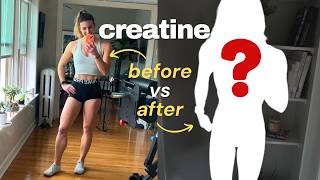
In this video, Victoria S. Dorsano recounts a 365‑day self‑experiment with creatine supplementation while training for beach volleyball. She began with a loading phase of ~20 g/day split into four doses, then maintained a baseline of 5–8 g daily, occasionally increasing to 20 g on high‑stress or low‑sleep days for perceived cognitive benefits. Over the year she tracked body composition, performance metrics, and comprehensive blood work via Vitality Blueprint. Results included 4–5 lb of lean muscle gain, a 2‑inch increase in vertical jump, noticeable speed improvements, and an injury‑free season (no calf strains or cramps). Blood biomarkers (creatinine, eGFR, ALT, AST, GGT) remained within normal ranges, indicating no adverse kidney or liver effects. She also reports sharper mental focus and greater cognitive endurance when taking higher doses, likening the effect to her ADHD medication. Practical advice covers the need for extra hydration, splitting large doses to avoid gastrointestinal upset, and a preference for micronized, NSF‑certified creatine (Legion brand). While acknowledging that training intensity, nutrition, and sleep also contributed, she concludes that creatine provided a meaningful edge and plans to continue its use.
Chapters
Creatine helped me increase my vertical by 2 inches this year, gain 5 pounds of muscle, and stay injury-free throughout my entire beach volleyball season. At least I think it did those things. You see, I took creatine every day for 365 days. Some days just the basic 5 to 8 grams, and some days I took 20 grams. Then I tracked everything— my blood work, my body composition, my performance— and I got results that I did not expect, including having some people call me fast on the volleyball court, which is wild to me because I've never been called fast in my life. I'm more of like the slow and steady type of player, or at least used to be. So backing up the timeline a little bit, last year I made the decision to take my volleyball training much more seriously, and I knew I was going to need to do everything I could do to keep my body healthy. I've had a very unfortunate history of multiple calf strains due to dehydration and overexertion, and I wanted to elevate my body's ability to be able to recover well after big pushes from volleyball training. So that's when I started researching creatine, because I know, yes, it also helps with power and explosivity and recovery, but I also know that it helps to to hydrate the muscle tissue and therefore has been shown to reduce injury risk, because I was not ready for another calf strain. So quick science lesson behind what is creatine and what it actually does for the body. Your body actually already makes creatine, and it's stored in your muscles and used to help your body recycle ATP, which is your body's energy currency. And when you do explosive movements like jumping and sprinting and hitting a volleyball, your muscles burn through ATP fast. Creatine essentially helps you to regenerate that ATP faster, which translates to more power, more reps, and better performance. But the aspect that a lot of people don't talk about, which serves a really great function, is that creatine also pulls water into the muscle cells, helping to provide hydration to the muscle tissue and therefore decreasing likelihood of calf strains or muscle strains in general from dehydration. So I started with a loading phase for about 20 grams for the first week or two, and I split that about, you know, into 4 doses throughout the day. Then I dropped to about 5 grams daily as my baseline. However, on days where I didn't get a lot of sleep or I had a lot of stress going on, when I just felt particularly overwhelmed, I would increase my dose to around 20 grams because there's also significant cognitive benefits that come along with creatine supplementation at higher doses. We'll get into that more later because it's actually wild. All right, so let's talk about my results after a year of consistent creatine supplementation. First off, muscle gain. I did body composition scans throughout the year and found that I gained about 4 to 5 pounds of muscle by the end of the year. Now, was that only due to creatine? No, I mean, I was training harder than ever, but I do think that creatine routine gave me a little bit of an ability to push a little bit harder in my workouts and recover better, and that extra edge compounds over 365 days. Second, my vertical jump increased by 2 inches. 2 inches might not sound like much, but in volleyball, and for me particularly, that is a wild success. It's been the difference between me being able to like potentially touch a ball in a block versus actually being able to like block and get over the net and press. Aside from the vertical increasing, the craziest thing was that my speed increased. Like, people calling me fast on a volleyball court is wild. I've been playing volleyball for over 15 years and no one prior to this year had ever called me fast. I was always, again, like the slow, scrappy power player. Now again, I can't prove that these results are due exactly to creatine. It's not necessarily a causal relationship, again, including the fact that I trained differently and much more rigorously than I had before. But the key here is that even with all that training and given my injury history past, I still was able to prevent injuries this past year. Not a single calf tear and not a single muscle cramp for playing volleyball in the sun, in the hot weather for hours. All of these things combined. I mean, again, it's not pointing to creatine being like the miracle thing, but it's not nothing. There's plenty of studies that show creatine's ability to hydrate the muscle tissue is real. And when your muscle cells are hydrated properly, they function better. All right, so let's talk about blood work because I know this is another concern that people talk about when they are considering taking creatine is like, hey, how is this gonna affect my kidneys? So I tracked my blood work and I used Vitality Blueprint to really get a comprehensive look of what was going on with all my biomarkers. This is my creatinine level around 365 days after taking creatine between 5 and 20 grams daily. It's perfectly normal and in fact it's actually within a performance range. Creatinine is one of the main markers that doctors use to assess kidney function and has helped to calculate something called your estimated glomerular filtration rate. Which essentially is just the rate of like how well are your kidneys filtering through blood. And here is my estimated glomerular filtration rate. Again, well within a normal range. All right, so that's all good. Well, what about your liver? How is your liver processing through all this? 'Cause a lot of people worry about just all the organs that function in detoxification and processing through things. So let's take a peek at some of those biomarkers too. My ALT and AST and GGT all were within normal range. So after a full year of taking creatine, all my organs are functioning normally. All right, so let's dig into some of these cognitive benefits because this is where I found a very, like, more tangible experience to taking creatine. Because honestly, most of the time that you take it, you're really not going to feel any bit of a difference. But the times that I did feel a difference were when I took a larger dose for specific cognitive benefits. So on days where I didn't get great sleep or just had an unusual amount of stress or really just needed to, like, mentally be on my A-game, I would take around 20 grams of creatine spread throughout the day rather than just my normal, you know, 5 to 8 gram dose. And the mental clarity I experienced from that is real. And I'm not somebody who's like sensitive to that type of stuff. Like I can have a cup of coffee and be like not feeling much from that, or pre-workout, not really feeling much from that. And for the record, I have ADHD and take medication, so there's a lot of ups and downs in my mental cognitive abilities. Throughout the month. But when I tell you that I felt like a similar effect from taking a higher dose of creatine to taking my ADHD medication, like, that is pretty crazy. And by no means am I saying like, hey, I'm going to go off my medication and just do creatine. You know, there still needs to be more research about taking that high of a dose consistently, which is why, you know, I only do it periodically as needed. But man, it is— it's been crazy. My focus was sharper. I could think faster. I just had more cognitive endurance throughout the day too, cuz there's some days where I start work at like 5:30 in the morning and don't get finished until like 8 or 9:00 PM. There's more and more research being done on these cognitive benefits of creatine and how this works exactly. But similar to how our, you know, muscles in our body, you know, aside from our brains use creatine, they're finding the same kind of process for our brains. Essentially creatine is creating like brain fuel by this ATP regeneration process. Okay, so I wanna also cover over some like practical realities of taking creatine and some other things that I think are important to discuss. First off, creatine makes you very thirsty because it's pulling water into your muscle tissues. So you're gonna feel like you just need to drink more and definitely drink more so that you do not get dehydrated. Second, you're gonna wanna avoid taking a high dose all at once. Your stomach will probably riot. Spacing it out is gonna be easier for your stomach to digest and just for your body to utilize. And lastly, this is a personal preference, but I only will go with micronized creatine. I do not like non-micronized creatine. It tastes like sand. You end up chewing it at the bottom of your water bottle. It's gross. So I personally only go for micronized creatine that dissolves really well. The brand that I've used consistently over the past year has been from Legion. I like that you can get it flavored or unflavored. You can get it in gummy or capsule form, whichever way you want. But the micronized powder is the one I use, and it just dissolves well, and you're not like chewing it, and it's third-party tested and NSF certified. So you can be assured that it's good quality. Be sure to check them out. I'll put their link down below in the description if you're curious about checking out their products. So all in all, I can't tell you that with like 100% certainty that creatine is the main and only reason for all these results I've had in this past year. In fact, I'm sure it's not. Like I said, I trained harder, I was more consistent with my workouts, I was pretty diligent with my recovery, I ate more protein, and I tried to focus on getting better sleep. All of those things definitely contributed to the success I've had, but I do think creatine still gave me an edge, at least cognitively. It helped me push harder and stay focused in training. It kept me injury-free so I could continue to train consistently. And the great thing is it's a relatively inexpensive supplement. So all in all, I'm pretty convinced that this is gonna be a supplement that I'm gonna continue with for, you know, in perpetuity. I have no reason not to at this point. All right guys, thanks so much for watching. I hope you found this video helpful, and if you did, please give it a thumbs up, subscribe to the channel. I greatly appreciate each and every one of you, and I'll catch you on the next one. Bye!