Is your tap water safe? Here's how to find out.
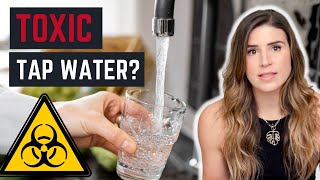
In this video Victoria S. Dorsano warns viewers that many U.S. tap water supplies contain harmful synthetic pollutants called PFAS (per‑ and polyfluoroalkyl substances) and disinfection by‑products (DBPs). She explains why these “forever chemicals” are linked to cancers, liver damage, thyroid issues, and other health problems, and notes that they are largely unregulated. Dorsano then walks through the standard municipal water‑treatment train—coagulation, flocculation, sedimentation, filtration, and disinfection—highlighting where contaminants can persist, especially after the disinfection stage where DBPs form. She advises viewers to check the specific contaminants in their local supply using the Environmental Working Group’s (EWG) tap‑water database, which provides stricter health‑based thresholds than the EPA. Based on the results, she recommends two primary home‑filtration solutions: (1) a portable Berkey countertop filter for renters and outdoor use, which uses carbon‑block media to remove PFAS, DBPs, bacteria, viruses, and other pollutants; and (2) an under‑sink reverse‑osmosis system for homeowners, offering the most comprehensive removal. She contrasts these with pitcher‑style filters (e.g., Brita) and bottled water, noting that bottled water can also contain DBPs, PFAS, and plastic leaching, while generating massive plastic waste. The video concludes with a call to personal advocacy—encouraging viewers to take responsibility for their health by testing water, selecting appropriate filtration, and reducing reliance on bottled water.
Chapters
Your tap water is probably poisoning you. Very slowly, but nonetheless poisoning you. A few days ago, the U.S. Environmental Protection Agency, or the EPA, released new warnings for these synthetic pollutants in our drinking water known as forever chemicals, or PFAS, saying that these toxins can be really harmful at levels that are even so low that they're barely detectable. So the family of toxic chemicals that I'm talking about are known as per- and polyfluoroalkyl substances, or PFAS for short, because that's a mouthful. And these have been used for decades in things like household products, like nonstick cookware and stain and water-resistant textiles, and even in firefighting foam and different kinds of industrial products. So why are these chemicals bad? Well, scientists have actually linked some of these PFAS to cancers, liver damage, low birth weight, thyroid issues, high cholesterol, and a whole myriad of other health issues. But these chemicals, which do not break down easily, are not yet regulated whatsoever. And this isn't the first time that we're hearing about drinking water being contaminated with harmful chemicals either. This is simply just a new chemical, different day. In any given year from 1982 to 2015, somewhere between 9 million and 45 million Americans got their drinking water from a source that was in violation of the Safe Drinking Water Act. Kind of scary, right? And just thinking back to 2015, where there was the Flint water crisis in Flint, Michigan, where tens of thousands of Flint residents were exposed to dangerous levels of lead and other carcinogenic materials, and they suffered outbreaks of various kinds of diseases that killed eventually 12 people and sickened dozens more. Not to mention some of the longer-term effects of the carcinogenic exposure. This incident forced a lot of people to ask themselves, How safe is the water in my community? Well, today I'm going to actually share with you how you can tell what's in your water and why a home filtration system might be a really good thing to incorporate and what kind of filters are out there. But before I dive into those things, I really want to give a brief rundown of how water treatment works and why there are contaminants in the first place. And if that's not of any interest to you and you just want to go ahead and learn about water filters, go ahead and skip ahead to that section. But I'm going to break down what the water treatment process is like so you guys can understand where this is coming from. So public drinking water systems use water treatment methods to provide safe drinking water for their communities, and these systems often use a series of water treatment steps that include something called coagulation, flocculation, sedimentation, filtration, and disinfection. It's a lot of steps, but it makes sense given that, you know, we're treating water and actually making it drinkable. Well, for the most part. All right, so let's talk about coagulation since that's the first step in the water treatment process. So during coagulation, there's chemicals with a positive charge that are added to the water, and this positive charge neutralizes the negative charge of dirt and other dissolved particles that are in the water. And when this occurs, the particles bind with the chemicals to form these slightly larger particles. And common chemicals used in this step often, you know, are some types of salt or aluminum or iron or something like that, um, that basically combine with the sediment to create these larger particles. And then the whole process goes to the flocculation step, which I love that word. I don't know about you guys, I never knew that was a word before learning about water treatment, but flocculation, it's just got a certain like, I don't know, a ring to it, you know? Anyways, flocculation is the gentle mixing of water to form larger, heavier particles called flocs, hence the word flocculation. So often water treatment plants will add additional chemicals during this step to help the flocs actually form into those larger, well, flocs. And then we move to the sedimentation process. And sedimentation is one of the steps that water treatment plants use to separate out solids from the water. And during sedimentation, flocs settle to the bottom of the water because they are heavier than the water, and then they are able to get filtered out in the next step, which naturally the next step is called filtration. And once the flocs have settled to the bottom of the water, the clear water on top is filtered to separate any additional solids from the water. And during filtration, the clear water passes through filters that have different pore sizes and are made of different materials such as sand and gravel and charcoal. And these filters remove dissolved particles and germs and dust and chemicals, parasites, bacteria, viruses, you name it. And usually there's activated carbon filters that also remove any bad odors from the water as well. And then next we move to the disinfection portion of the water treatment. And this is generally speaking where we run into a lot of issues in terms of byproducts from the disinfection process that end up in the water that become carcinogenic could be in excess amounts that we don't necessarily want to be ingesting. Usually it's just a byproduct of the disinfection process and things that combine with other things in the pipes and all of that, which we'll get into a little bit. But really, this is where the big, uh-oh, kind of happens for our health and how this affects us through our tap water. So after the tap water has been filtered, water treatment plants usually add one or typically many different chemical disinfectants such as chlorine or chloramine or chlorine dioxide to kill any any remaining parasites or bacteria or viruses in the water. And to help keep water safe as it travels to homes and businesses, water treatment plants will make sure that the water has low levels of the chemical disinfectant when it leaves the treatment plant. And low levels, I mean, they say low levels, but we're going to get into that in a little bit by why some of these levels actually become a little bit higher than they should be. But basically, they, they allow some of this to still be in the water. So when it's leaving the treatment plant, basically Basically, it makes sure to kill any germs in the pipes as it's leaving the treatment plant and going to your tap. Some water supplies may actually contain additional toxic materials like radionuclides, which are small radioactive particles, and specific chemicals such as nitrates or toxins like cyanobacteria. And sometimes there's specialized methods within a water treatment plant to help control or remove these contaminants, um, and that can also be part of like a specialized water treatment plan. And typically this disinfection process that I was talking about, and this is where we run into trouble. This is where most of the issues arise, and you end up getting a lot of these things called disinfection byproducts or DBPs. And those, in combination with some of those same PFAS chemicals that I was talking about earlier, aka the forever chemicals that don't really leave your system or leave the environment, uh, you get a risky health situation over time. And the EPA tries to do a good job of setting parameters around what amount of chemicals are allowed in the water and what are going to cause there's a certain, you know, threshold to be met and where it's going to become really, really harmful to somebody's health. But mistakes happen. Water treatment plants aren't always compliant, and you get issues again like the Flint, Michigan crisis, or, you know, there's been other, other issues in different communities where water— the water treatment doesn't go quite like it should, or there's too many chemicals pumped in there, or it's not filtering enough, or things aren't up to date. The water treatment plants aren't necessarily using the best equipment. So that's why I say that, yeah, okay, we can trust them, but to an extent. And there's still going to be disinfection byproducts in the water. There's still going to be these PFAS that have just been, you know, that there's just been a plan to try to detect and remove them, like, as of a few days ago. So there's just things that we need to do as consumers to protect our health too. So really, the best way to start with this whole process is to find out specifically what's in your water and then really find the corresponding types of home water filtration systems that you can get to help with those specific things that you're finding in your tap water. And you might be asking, Victoria, how do I even do this? How do I figure out what's in my water? Like, I don't have a home chemistry set. Like, I'm not tinkering around with different chemicals and trying to figure out and test for different things in my water. I get it. That's why there's a lot of cool companies like the Environmental Working Group or the EWG that have actually created a tap water database, and you can just go ahead and enter in your area code. So step one in this process is just heading over to the EWG tap water database. You can literally Google that and it'll come up with the website right away. I'll put the website link down in the description as well. But basically, once you enter in your area code, you'll get a detailed report showing various levels of contaminants detected that are deemed to be over the EWG health guidelines. And just a quick note here, I do want to mention, like, the EWG is its own independent company. The EPA is the one that's the governing body over the actual, like, set allowances of safe amount of chemicals. The EWG has actually created their their own standards kind of based on what they've denoted from different research. So they have a stricter threshold for what they are tolerant of at the EWG versus the EPA. So the EPA might allow, you know, 60 parts per billion of something where the EWG is like, yeah, but latest research has shown that, you know, if you go over 40 parts per billion in the water, you start to get a higher risk of these cancers. So I do want to let you guys know that because you might contrast the EWG with the EPA and be like, wow, these are very different standards. I like to be a little bit more on the edge of caution here and just follow the EWG guidelines the best I can, but not get too overly concerned because they are using stricter guidelines. So just wanted to throw that out there. So back to how you navigate the EWG tap water database. So if you scroll down, you'll be able to see the various types of contaminants and what amount they are detected in your water, as well as the potential risk to your body and like what those contaminants cause, whether that's cancer or endocrine issues or lead poisoning or whatever it might be. You'll also find a link on this website where you'll actually be able to access your area's water utility reports from that EWG site. So it'll take you over to either your consumer reports for your water so you can actually see what the EPA tested for, or you can see what the water utility report is directly from your municipality. So from there, you can actually scroll down even further on this EWG site, and you'll be able to see even different types of filters that they recommend and what they can actually remove from your water, which leads me to step 2. And naturally, step 2 is to pick a water filter. And personally, I'm actually going to only recommend 2 different types of water filters. Obviously, there's way more than that, but just given kind of like if you want to check most of the boxes and you want just to kind of narrow down your options and know that I've done the research because I've done a lot of research on this, like days, these recommendations are going to be my top 2. The first one is like if you're a renter like I am, I'm renting an apartment. I'm not necessarily, you know, in a home where I can install a home unit and kind of have that whole setup. And you're somebody who likes to be active and camping and maybe you need to make sure you have water with you while you're camping. I would highly recommend something called a Berkey water filter. A Berkey, it's a tabletop water filter, so it's not a pitcher. It's more expensive than a pitcher filter. Pitchers are great if you want to start with something like a Brita, that's cool. But it only— pitcher filters don't filter out most of the things that you want them to filter out. That's why the Berkey is kind of like a step up and it's way less maintenance. So, you know, you're going to spend a little bit on the upfront. It's about, I think, close to $300 to $350 for a travel size Berkey, which we usually fill ours up for 2 people maybe once or twice a day and it doesn't take long to filter through the water whatsoever. But you pay that initial price, you get the two filters, they're carbon block, solid carbon block filters that go on the inside. And the Berkey will filter out most of everything that I've mentioned. It'll filter out the PFAS that I was talking about, it'll filter out all of those byproducts of the disinfection process. So it really does a good job of that, filters out all the bacteria, viruses. But the cool thing is you can actually take it camping with you and you can fill it up with like lake water, river water, and it's going to filter through any harmful bacteria, any kind of like things like Giardia, anything really in the water, it's going to be able to filter that through and produce some clean drinking water from it. The use of it is great because, you know, you're paying that a little bit more upfront, right? It's obviously a little bit pricier than getting a pitcher filter, but that, that price that you pay upfront is for the Berkey, like I said, and the two filters that come with it. Those two filters will last you anywhere from 4 to 6 years, and then after that you just pay for the replacement filters, which are $166. So the $166 will last you another 4 to 6 years. So it's really, really economical if you think about it in the long term and just for the use that you get out of it, it's great. Like I've absolutely loved my Berkey and I don't think I'm ever going back. Like I'm always going to have a Berkey. But if you are going to get the next tier of filters, I would highly recommend something called a reverse osmosis filter. And those are the ones that you can actually install underneath the sink. And these are really great for homeowners because you don't have to worry about like uninstalling it and bringing it with you like it's in your home. That's going to offer you the most protection. It's going to filter out the most of those PFAS and those disinfection byproducts and all those things I was mentioning that tend to be the most harmful and most common things that end up in our water supply. So, you know, those are my top 2 recommendations. Again, Brita filters, the pitcher filters are a great way to start with something. But if you really want to level up and get something that's going to be more all-encompassing and really guarantee that it's going to really filter out most of the things that you want it to filter out, either a Berkey or going full-on reverse osmosis filter are going to be your two best bets. And by this point, you might be asking, gosh, why would I do a water filter? Why would I do any of this if I could just get bottled water? What's wrong with bottled water? You know, that's got to be clean, right? Well, kinda, sorta. They also have this issue with the disinfection byproducts, number one, and the PFAS, number two. And they also have plastic leaching from the pet plastics that they make the bottles with. So you're kind of actually in a worse position using bottled water. And not to mention, 70% of plastic water bottles don't get recycled, and they end up in places like the Pacific Garbage Patch. And if you haven't heard of the Pacific Garbage Patch, definitely Google it, because it's a floating patch of trash that is in the ocean about the size of Texas. No joke, it's literally the size of Texas floating in the water of trash. It's pretty crazy. So I mean, let's not make that bigger. We don't need to make it like the size of Alaska. Like, let's just— Texas is big enough. Texas is huge. So let's not, let's not contribute to that. Plus the money of spending on, you know, bottled water too can get expensive as well. So there's all those factors going against it. So just get a Berkey or a reverse most filter and call it a day. So in conclusion, guys, I don't want you freaking out about your water and being like, oh my gosh, I'm going to have cancer now. I haven't had any filtered water ever. That's okay. But just kind of being aware of these things is a big step in knowing how to be an advocate for yourself. I'm a huge fan of advocating for your own health if you can, or having somebody in your household do it and kind of stand up and take that role. It's really, really important that you learn about how you can take additional measures to protect yourself because, yes, You know, governmental agencies are trying to do that, but they can only do so much at that large of a scale. And in public health, right, part of the responsibility falls on each of us to do that. And same goes for patient advocacy when you're in a hospital system. I'm gonna make some more videos on that too, but I just— I'm a really big fan of making sure that you do your due diligence and really try to find the solutions that are going to line up for your lifestyle, um, and that are going to help you become healthier and save you from having any kind of issues in the long run. So what do you guys think? Do you think you're gonna get a water filter for your household? If so, what kind do you want to try? Do you want to try something like a Berkey? Do you want to try something like an under-the-sink reverse osmosis filter? Maybe a pitcher filter to start? What are your thoughts? I'd love to hear them, so drop them down in the comments below. And as always, if you can like this video and subscribe to my channel, I would greatly, greatly appreciate it. Alright, until next time guys, bye!
More from Victoria






3 things you should do to make sure you get the most out of your fish oil #legion
