My Body Image Struggles as a Female Athlete
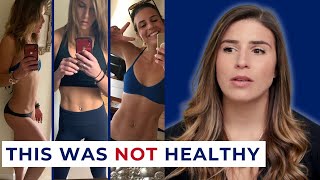
In this candid, first‑person video, Victoria S. Dorsano recounts her decade‑long battle with disordered eating and compulsive exercise that began in early adolescence when she felt overweight compared to peers. She describes how a combination of personal body‑image insecurity, a weight‑obsessed competitive volleyball club, and restrictive nutrition practices (e.g., 500‑1000 kcal/day, no carbs on tournaments) drove rapid weight loss, external validation, and increasingly harmful behaviors such as excessive cardio, food‑spitting, and skin‑pinching. A turning point came when her mother intervened, removed her from the club, and initiated daily weigh‑ins and re‑feeding, which restored weight but left lingering mental patterns. Over the years the disordered patterns morphed into over‑exercise, fad diets, intermittent fasting, and orthorexic tendencies. Through therapy and formal training as a health‑coach/behavior‑change specialist, Victoria learned to separate self‑worth from body weight, adopt a holistic view of health (physical, mental, emotional), and develop tools to recognize and counteract compensatory thoughts. She now coaches professionals to build healthier relationships with food, exercise, and work, sharing practical examples (e.g., vacation thought‑monitoring) and offering contact information for further support. The video includes a disclaimer for viewers currently in recovery and a call to like/subscribe.
Chapters
Hey guys, Victoria S. Dorsano here, and today I wanted to share with you guys a little bit of my background and personal experience with, um, disordered eating and compulsive exercising. And it's something that's a really personal story to me. Obviously, if you've experienced this yourself, you know, um, I actually haven't shared this with too many people, so I feel like it's important to share this with you guys and have you understand a little bit of my background and why I currently do what I do as a health coach. Helping people to find food freedom and really embrace, you know, what health looks like for them in their own bodies and have a great relationship with food and their work life and with exercise. I do want to mention, if you are currently recovering from an eating disorder or have had disordered eating or compulsive exercising in your past and watching some information on it or watching somebody else's story about it isn't part of your healing journey right now, I recommend going to a different video. But Otherwise, we're gonna move on forward and get started. But before I dive in today, if you could go ahead and hit the like button on this video and subscribe to my channel, I would greatly appreciate it. So this is something I've been kind of debating whether to share, um, in a public space like YouTube for a long time because, um, in some ways I think it's really great to be vulnerable and share where we come from and some of the personal stuff that, you know, us health professionals and fitness professionals deal with and have dealt with. And on the other side, I think sometimes it can almost glorify certain conditions or things like that. I've seen that a lot coming up on a lot of social media platforms about kind of glorifying different kinds of disordered eating and eating disorders, and I wanna make sure I'm not doing that. Um, so I'm going to share very candidly, very openly, but I'm going to try to be cautious about not necessarily glorifying that this was a healthy thing at all because it absolutely was not. Um, but here we go. Just a little bit of background, you know, of how I grew up and, you know, the body that I'm currently in. Um, I was a denser-built individual. I grew very, very fast. I had a lot of muscle tone even as a baby. Like, I was a very strong baby. I had like the same size quads and calves— well, not the same size, but I had very muscular quads and calves when I was little and just like very sturdy and dense. Once I hit my preteen years or so, I became much more aware of my body size in comparison to the other girls in my class and the other girls that were my age. And I was probably double their weight. And, you know, at that point had gained a decent amount of excess weight that, you know, may or may not have been healthy. I was still a growing individual, growing girl, so it's hard to say at that time. But, um, in the standards of, you know, medicine, they use the BMI to determine, um, you know, if you're at a healthy weight. And I was always over, still am to this day. But as a 12 or 13-year-old girl, you don't really understand that the BMI is a flawed system, so you're not really challenging those things. Um, But I remember starting to internalize this and understand that I was a lot bigger than the other girls around me and not feeling good about it and really making myself wrong for it and starting to look at, okay, what are the things that could, that allowed me to get here? Is it food? Is it that I'm not active? So amidst questioning these things, you know, I remember distinctly the summer going into my freshman year of high school. And I remember telling myself like, okay, it's time. I'm going to lose this weight. I don't want to be made fun for it anymore. I don't want to feel uncomfortably bigger than the other girls in my grade. I want to play sports. I want to, you know, really excel at my sports. Like, I'm going to lose this weight. So I remember joining a volleyball camp and I would go for a few hours and then I would even go for a run afterwards. On top of that, I would come home and I would eat a Lean Cuisine, which Lean Cuisines, I, you know, now there's a bigger range of calories that they allow for them. But back then I think they were like 250 or 300 calories per Lean Cuisine. And if you factor in how many calories I was burning from doing volleyball camp and then doing a run on top of it, yeah, I wasn't getting that much in, but the weight started to come off and that summer By doing the volleyball camp and by running and by really, really restricting what I ate and eating Lean Cuisines, which did not taste that great, um, I lost about 25 to 30 pounds. And I remember walking into high school to pick up my books before the year started, and I was getting all of these compliments. People were telling me how good I looked, how I looked so much different, how I lost all this weight, and wow, you look amazing. And all of these things that were about how my body looked. And I felt good. I mean, I felt good about it. I was getting all this positive reinforcement about this weight loss and this transformation my body went through. And it felt good. I felt more popular. I felt like I was actually getting more girlfriends and people weren't making fun of me anymore. So the perks just kept coming. And naturally, when you're getting positively reinforced for losing weight so quickly, you're going to want to keep doing it. And that's exactly what happened to me. I kept wanting to push it further and say, you know, in my mind I was like, if I'm getting this many compliments now, like, I got to keep this up. Like, I got to make sure that I can keep losing this weight or keep, you know, at least at bare minimum stay this weight, not gain it back. So I became really obsessed with counting calories and journaling them and tracking all my exercise and, um, really just restricting what I was eating. And at this point in time in my freshman year, um, it was about halfway through my freshman year, I ended up getting into a really competitive volleyball club that I was really excited to play at. And it didn't help that they reinforced this too with their players about being a certain weight. And, um, really limited our carb intake, especially when we were on tournaments traveling. We weren't allowed to have any bread. We weren't allowed to have anything that was just carb-related at all. And I remember traveling to a tournament with my team, and it was my birthday, and my mom had brought a cake, and the club director said that we needed to throw it out, that we weren't allowed to have any cake, um, or breadsticks or anything. We were at Olive Garden. She made us dump out all the breadsticks. So really fanatical. And if you know anything about sports nutrition, like, you need carbs to perform, but it was a really wonky kind of nutrition ideology at that volleyball club that just happened to reinforce a lot of the bad eating patterns and disordered eating that I was already having, um, and trying to do, and a lot of the food restricting that I was doing. And this isn't something that's an exception. I've heard this a lot from different athletes that unfortunately, you know, there are some, some people in sports, you know, some coaches or different things like that in sports and their clubs and their, their teams at school that enforce bad nutrition ideology or just not research-backed and are more concerned about the weight than they are about actually nourishing the athlete. And the athlete ends up developing disordered eating patterns and Lo and behold, that's what happened to me. And it also didn't help that this volleyball club punished us with exercise all the time. If we didn't get, do something right, it was stairs. If we didn't do this right, it was stairs. It was running sprints. It was, you know, any number of things, but we would do it to the point where we'd be rolling our ankles left and right. We'd be getting injured. You know, it wasn't a healthy amount of exercise, but I started to identify all of these things as being normal or what I needed to do to be a good athlete. and I did them. So on my own, when we weren't on tournaments, on the weekends, I would be running, I would be lifting, I would be really just exercising for hours on end and not reciprocating by nourishing my body in an appropriate way. And I kept losing more weight and losing more weight, which at the time I had no problem with because again, I was getting a lot of this validation and external praise for it. And it's pretty crazy. I actually came across my old food journal that I had from that time period, and I was only eating, you know, 500 to 1,000 calories a day, if that, on top of 3-4 hour practices, on top of strength training, and just on top of being a growing teenage girl that's going to need more nutrition than your average person because, you know, I'm still growing, I'm still building muscle tissue, I'm still growing taller, all of those things. So with all these events kind of combining at once, between getting the social validation from losing the weight in the first place, from being reinforced to lose more or keep it off in the volleyball club, and, you know, use exercise as a form of punishment and compulsively exercise, all those things coming together really solidified to me at the time that my worth, my success as an athlete and as an individual as a whole, were all tied to my weight. And if I gained weight, my worth and success would go down. If I lost weight, my worth and success would go up. And that is not healthy. I actually remember even doing things like taking bites of food and chewing it just to get the flavor and then spitting it out before I swallowed it because it tasted so good and I didn't feel like I deserved to eat, um, because it was going to make me gain weight. And I also remember cutting up my food into tiny pieces and scattering them across the plate so it looked like I ate more than I actually did. I remember even sitting down And if I could pinch my skin while I sat down and get any kind of skin between my two fingers, that, that meant I had to exercise an extra hour the next day or eat, you know, one meal less or skip dinner because I couldn't tolerate the feeling of having even like a roll of skin on my stomach. That's how bad it was getting, is that I wasn't even allowing myself to feel extra skin on my body. And not to mention, volleyball in general, and especially beach volleyball, there's a lot of skin showing. You're wearing really short shorts as a female volleyball player, um, for indoor volleyball. And then for beach volleyball, you know, a lot of the uniforms are you know, bikinis. And I know they've changed that in collegiate beach volleyball now, but that wasn't my reality back in the day. This was, you know, there were only adult leagues going on. So I was playing in adult leagues, but for, I mean, for indoor even, we had to wear the short spandex and you have to be very body aware and feel just, there's a lot of your body is exposed to the public. And I just remember feeling like if my thighs touched together in my spandex, like the world was gonna end because it meant I was, I was overweight, which meant then I wasn't gonna be successful playing that game. And it played into the psychology of how I showed up on the court because I was so fixated on how I looked. So thank God my mom, you know, started to notice some of these patterns and noticed that I was losing weight so rapidly and stepped in like a good mama bear would and She refused to let me go to that club again another year, which I threw a fit at the time because again, I was almost brainwashed into thinking that all these things were really good and that meant that I was going to be successful. So I was really mad at my mom for doing that at the time because I really truly believed that that was what I— that club and that ideology and the way that they trained you and the way that they made you lose weight and all those things was what I needed to be successful. Obviously not true, but I didn't— couldn't see it at the time. So she pulled me out of the club and she took me to the doctor. And again, because they use BMI and all those metrics that don't necessarily mean much if you're a muscular individual, it showed up as not presenting as like a medical issue, that I wasn't eating much and that, you know, my weight wasn't necessarily a medical issue because I still had— I still weighed enough for my height and age category and the BMI. So I didn't present as malnourished in terms of looking at my weight. However, if you were to look at my body and my energy levels and my irritability, it kind of lined up with having a lot of disordered eating, if not an eating disorder. But like I said, I wasn't fully diagnosed with an eating disorder because, again, I didn't present as your normal case. I was very muscular individual still. I just wasn't eating nearly enough and had all these compensatory behaviors around food and exercise and all of that. So definitely things that categorize disordered eating and compulsive exercising and some really harmful behaviors. So I'm really thankful for my mom for doing that and kind of stepping in and taking action in that way. And we did work. My mom took me home and we started doing daily weigh-ins every single morning to get my weight back up. And it was so hard for me because again, that meant that I had to reconfigure my brain around my weight not being tied to my worth and my weight not being tied to my success as an athlete and all those things. But I did notice that, you know, my performance started to increase on the volleyball court once I started eating more calories during the day. My weight started to increase back up. But even though we were able to get my weight back up to a healthier point, it didn't mean that the mentality and kind of the residue those behaviors and the way of thinking didn't leave a mark, because it did. It just kind of switched into a different way of coping with it. So instead of doing more of the disordered eating and like the restricting of food, I started to switch over into compulsive exercising a little bit more because it became easier to hide that, uh, than it would me not eating a meal. So I would go on really long runs. I mean, I was running tons of half marathons in high school. And on top of volleyball and really just spending extra time at the gym that I didn't need to be doing. Um, and again, these were all compensatory behaviors to make up for the extra food that I was eating. So the mindset of still trying to lose weight or my weight being tied to my worth and my value as a person and as an athlete was still there. It was just showing up a little bit differently. And then as the years went on, this kind of transitioned and morphed from a lot of the exercising to trying to be a vegetarian to intermittent fasting and kind of following some fad diets here and there, all in the name of losing weight and preserving my weight loss so that I can preserve my worth and my value as a person. Which again, those things aren't tied together, but in my mind they were at the time. So my disordered eating patterns really just started to hide in different forms and formats throughout different stages of my life. Starting is one thing, you know, restricting calories and the kind of typical way it might look, to, you know, overexercising, to trying different fad diets out, to fasting. And all of this stuff that just kind of evolved across the board. And it really wasn't until I started pursuing my own education as a health coach on top of getting some therapy, which I totally acknowledge is a privilege that not everybody has, that I understood that I wasn't treating my body very kindly or my mind very kindly. And I had started to realize that I spent about over a decade obsessed with trying to shrink my body and make myself smaller and not respecting my body's needs. So it really did take me some time to understand and truly believe that healthy for me is way more than just a weight or what the scale says. Um, because if you think about it, and if I look back The way that I was thinking about food and obsessing over exercise and tying my identity to my weight, my worth and my value as a person and athlete to my weight, that's not healthy. I could have a very fit-looking body, but that doesn't mean healthy if we're factoring in, you know, true physical health and nourishing your body on top of mental health and emotional well-being. I didn't have that. I had a fit-looking body, which is very different than a healthy body and a healthy mind. Being obsessed with eating all of the quote-unquote right things and exercising as much as you can isn't healthy. That's bordering into orthorexia, which is kind of an obsession with quote-unquote clean eating. And when I look back, I just think about how much energy I wasted obsessing over something that is like my weight, that is so insignificant to my overall health and well-being, and how much just energy capital I just dumped into that and could have been allocating to a billion other things in my life, improving relationships, you know, working on my studies, all those things, deepening my faith. There's so many other things I could have been cultivating in my life instead of obsessing over that. That's part of why I do what I do now with working professionals is, is being able to coach them to have a better relationship with their bodies in a healthful way. A better relationship with their food in a healthful way, and a better relationship with their work life. So all these pieces can come together and factor into a true holistic view of what it means to live and embody health, not just look fit or look healthy, to actually be and exist healthfully. Um, a lot of these things I've learned through my personal experience and obviously formal training as a, as a health coach and behavior change specialist. But that's why I love doing what I do, is because I've been through a lot of these weight struggles myself. And that's why I wanted to share some of this, is because I think a lot of people see the snapshot of who I am today and they might not recognize that I've been through some of my own struggles with my weight and still do from time to time because With things like eating disorders or disordered eating patterns, um, or compulsive exercise even, it's something that can pop up really at any point in time. But it's more so like if you've been through the recovery process, you know you have the tools to work with it. So I'll give an example. I was on vacation for 2 weeks prior to recording this video, didn't have access to a gym, and no really exercise equipment other than some like mini loop resistance bands. And you know what, I wasn't meal prepping my own food. So at some point in time in the vacation, I had a thought pop up: oh, you're not exercising and you're eating a lot of like vacation food and like fun food and really enjoying yourself and having a glass of wine. Don't you need to exercise. You should go on a run tomorrow. You should be exercising a lot more tomorrow. You should— so these thoughts started to pop back in, and I was able to call them out, you know, and deal with them and recognize that they weren't, um, helpful thoughts. And if I was being encouraged mentally to exercise out of a compensation for what I ate, that it wouldn't be a healthy choice for me to go ahead and exercise. But it wasn't until the point later on the vacation where I had the thought like, you know what, I really could exercise. I feel like it would feel really good to get a sweat in and just kind of like reset my nervous system for a little bit. I knew then that was more of a healthy way of thinking about it and was able to allow myself to exercise because I wasn't doing it as a compensatory behavior to eating vacation food and fun food on vacation. So those things still do pop up for me. I just have the wherewithal and the tools and the knowledge and the education, the background to be able to deal with them. And I'm really, really happy for that. And that's why I want to share that with you guys and with my clients that I serve. And I hope that this also provides any of you guys that have experienced disordered eating or maybe are experiencing it currently some hope and some light at the end of the tunnel that you can work through it. You can have a really great relationship with your body. Like, I found a very happy set point or set range for my body to fluctuate in weight-wise. And that I can still recognize my inherent worth and value and identity as a separate thing from my body weight. You can heal your relationship to your body and with food and with exercise. It is possible. If you have any more questions about that, feel free to reach out. I've dropped my link down below in the description where you can find me on my website and send me an email through my website, or you can connect with me on Instagram too and send me a message there. And guys, I really appreciate you watching to this point and learning a little bit more about my story. I hope that just provided you some context as to why I do what I do and why it's important to me and how it hits home for me. And as always, if you can go ahead and like this video and hit that subscribe button to my channel, I would super appreciate it so I can keep providing awesome content like this for you guys. And until then, I will see you later. Bye!
More from Victoria






3 things you should do to make sure you get the most out of your fish oil #legion
