Not Feeling Ready To Return To Sport After ACL Surgery? Here's What You Can Do To Get SPORT READY!
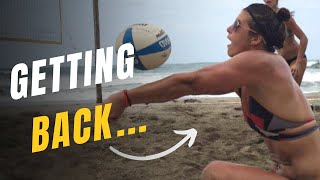
Victoria S. Dorsano explains why athletes are discharged from physical therapy before feeling ready to return to sport after ACL surgery, and what to do about it. Insurance caps PT sessions, many therapists lack late-stage rehab expertise, and passing a return-to-sport test doesn't guarantee readiness, leading to a 20-25% re-tear rate. She outlines four solutions: insurance appeals, ACL bridge programs, working with a strength coach, or supervised home workouts.
Chapters
Have you been discharged from physical therapy but are not quite feeling ready to return to your sport yet or do the activities that you'd like to be doing? Well, today I'm going to actually go through some of the reasons why this happens and how you can get yourself sport ready again. But before I get into the details of this video, I would love it if you gave this video a thumbs up and subscribe to my channel so I can keep providing awesome content like this to you guys. So if you've had an ACL injury or really any other sports-related injury and you're an athlete or you're something that's really active and needs to get back to a certain level of activity, of being able to move your body not only well but exceptionally well in very sport-specific patterns, um, the general run-of-the-mill physical therapy may not get you there if you have an injury, especially like an ACL injury. And there's really several reasons for why this might be the case. Number one is that your insurance just might have some limitations to it. It depends, and this can vary quite a bit across the board with different individuals, but Some people's insurance will only allow for X many of sessions to be used. Some people's insurance will allow for a certain point to when the physical therapist says like, hey, this, this patient's okay, they're functional, and then no more sessions are approved from there. So there's a variety of reasons why insurance might stop covering your physical therapy. Is it right? No. Does it happen? Unfortunately, yes. The second reason is that the physical therapist that you're seeing to help work with you on your sport-related injury or your ACL injury in particular may not be equipped to handle that injury, especially with ACL stuff. It's really, really, really important to find somebody who's specializing in that area because ACLs are such a finicky kind of sport injury, and you really have to work dynamically to strengthen a lot of different joint lines in the body and a lot of different muscles and ligaments, and everything has to be kind of really worked on to a specific degree. And then you have to progressively load your strength, and this requires a higher level of education around ACL injuries and the dynamics that go into protecting your ACL graft. So it could be that your physical therapist isn't necessarily equipped or specialized in this arena. Maybe they don't have the equipment. There are certain things that you really need beyond the typical physical therapy setting to get to a certain level of strength and coordination with your knee. You might need heavier weights or specific leg press machines, or, you know, a, a large stretch of turf that you can do some sled pushes and pulls on that are going to be specific to your sport. And that's really, really important that if you're trying to get back to a sport, that you progress and load into sport-specific activities. And a lot of physical therapy clinics just don't have the equipment available to be able to provide that service. And secondly, the physical therapists themselves might not have the knowledge or expertise to work with late-stage ACL patients. Most physical therapists are really great in that post-operative stage, you know, the first few months after your surgery, and getting, you know, things like your range of motion back, getting your swelling down, ensuring that your quad is firing properly, improving mobility and flexibility of all the joints like your hip and your knee and your ankle, and making sure that those are functioning properly, and optimizing single leg stance. Most physical therapists are pretty good with handling that immediate post-operative need for ACL patients, but just because traditional physical therapy will get you to that point where you have good range of motion and your quads firing, all that good stuff, does not mean that you are feeling ready to return to sport. And you might even be able to pass a return to sport test, but that still doesn't mean that you're ready to do a lot of repetitions, a lot of practice, a lot of heavy loading onto that knee. There's a lot of difference between passing a return to sport test and actually going to play a sport. And typically, a, a trained professional that's really well-versed in ACL rehab is going to be able to differentiate that. So before I get into some of the solutions and workarounds on this, I want to just share a little bit about why this is important to me. There's an ACL retear rate of 20 to 25%. For athletes, and that's scary, very scary. If you've gone through an ACL rupture like I have, it's a really painful injury and it's a long, gruesome, you know, recovery period, and you really have to put in a lot of work. It's very arduous, and, you know, I'm not going to sugarcoat it, it just takes a lot of time and effort to heal from. And to have to go through that a second time and your graft failing because of faulty physical therapy or not having enough insurance coverage, that's just not right. And I've gotten so many people reaching out to me saying that, you know, I'm 6 months post-op or I'm 4 months post-op and I've been cleared out of physical therapy, but I'm not ready to play volleyball again, or I'm not ready to play basketball again. And I don't blame you. I wouldn't be ready at that stage either. And I was working with somebody who was a, you know, strength and conditioning expert with ACL injuries. I needed more time than that. And the bottom line is a lot of athletes do. And if you're an athlete and you risk having this retear injury to your already previously, you know, operated knee, that could be career-ending. And that's terrifying for a young athlete. And I don't want anybody to have to go through that. So that's why I want to share a little bit of what some of the options are and what you can do if you find yourself in the position that you're getting discharged too early, or your insurance is stopping to cover sessions and you need to find another solution. Option 1: If you really like your physical therapist that you'd been working with and really like the clinic that you were going to, and you feel like they had enough resources available to continue to take you to that next level and actually get you to a point where you feel very comfortable and confident to return to sport, you can always do an insurance appeal with a letter of medical necessity. This is something that both you and your physical therapist will have to work on together, and everybody's insurance process on this is a little bit different. So you'll need to give your health insurance company a call and kind of figure out what that process looks like if you believe that you truly need and want more sessions covered. It is possible. I've seen it and heard it done, so I encourage you to try that route if you do really love where you're at with your physical therapy and you feel like they can provide those later stages of physical therapy for you. The second option is something that I don't think a lot of people know about that's out there. It's not commonly talked about. I was in a clinic again that had this resource available, and they mentioned it to me, and it was something that, you know, was discussed as part of my process for returning to the level of activity and sport that I wanted to, but it's called a bridge program, an ACL bridge program in particular if you have an ACL injury. Other injuries, if you're, you know, let's say Tommy John surgery or something that's a little bit different, there might be bridge programs for that particular injury, and you just have to check with your physical therapy clinic or Google it online. But what a bridge program is, is basically that program to bridge the gap between getting discharged from normal physical therapy and being able to play your sport, because I think a lot of therapy clinics have recognized that there's a huge gap and there's a need for that bridging, where there's sport-specific activity, strength and conditioning, and other things going on in that bridge program that you wouldn't get in traditional physical therapy. There are a ton of bridge programs out there. I know bigger hospital systems and bigger physical therapy systems tend to have these bridge programs, so just ask them about it. It is important to try to find this bridge program in person if you can, if you're close to a clinic that offers it. But I totally recognize that there are plenty of you guys out there that have messaged me that have said, you know, I don't live near a lot of buildings or companies or a lot of medical systems, and I need some care remotely. So there are some online bridge programs or online, you know, programs to get you ready for sport again, and I'll put a link down below in the description for a few of them that I know of. Dr. Wesley Wang is a great, great resource for ACL-specific training. Shout out to him, he's an awesome, awesome dude. He's a great YouTuber as well, but he has a lot of online programs and a lot of online training where he'll actually meet with you remotely, assess your knee, be able to give you some specific programming for you, and And I think that's a great resource out there. And the third solution would be to find a strength and conditioning coach or a personal trainer that has worked with injured athletes before and is open to developing a relationship with your physical therapist. Because if you are going to be jumping straight from physical therapy to working with a strength and conditioning coach or working with a personal trainer, um, it's really important that those professionals know exactly where you left off in physical therapy. So that they can start to program for you in a way that's going to progressively load your knee and not cause any re-injury to the knee. And again, I know I'm talking about the knee a lot, but this can go for any injury really that's sports-related and you're trying to get back to your sport. These are all things to consider, no matter if this is an ACL injury that you're coming back from, or, you know, a shoulder injury, or an ankle injury, or anything like that. And you're, you're done with physical therapy and you really feel like you need more assistance to get back to where you want to be. And the last option out there is something that is probably one that I'll recommend the least, but I understand that there's a need for it out there, especially when a lot of these extra things like bridge programs and working with a strength and conditioning coach and working with a personal trainer, those tend to be out-of-pocket expenses, right? You're paying for those on your own. Insurance typically doesn't cover those things. So, I mean, unless you have a really awesome insurance, and if you do, let me know who they are. That's pretty cool too if they cover personal training. But nonetheless, the cost of these things can add up over time. And for me personally, I had to really kind of leverage my options and, you know, ask for some home workouts and some stuff I can do on my own and really email my physical therapist after I was discharged and say like, hey, what's some home jump training I can do? What are the progressions on this? And really proactively ask for those resources. So this is my, my last suggestion, is to find some online resources and very carefully work through those on your own. There's a disclaimer here that I'm not like a knee specialist. I've just gone through this process on my own, so you have to take this with a grain of salt and understand if this is even in your realm of capability. I'm always a fan of having exercises supervised, and especially something with like an ACL rehab, that you are really, you know, monitoring yourself and making sure you're having somebody just guide you through that process. But like I said, that might not always be accessible for you financially. So there are some options to look at advanced ACL protocols and some YouTube videos out there that are really great that can take you through those later stages of getting ready for a sport. But again, I really recommend, you know, still trying to work with somebody either remotely or in person if you can so that they can supervise you in this process. So guys, I hope this video was helpful and gave you guys some options to look at if you're in that stage where you are discharged from physical therapy and still needing some support and some extra strength and conditioning to get back to a place where you can go and play your sport again. And like I said, I think this is really, really, really important and something every athlete should consider getting. Even if, you know, even if they feel like they're ready to return to sport at 4 or 6 months when they get discharged from physical therapy, I still recommend doing another 6 months until you get to the year mark of extra strength and sport-specific conditioning because there's still a lot of healing going on in the knee even up until that 12-month mark and even beyond where the tissue is starting to differentiate into the correct tissue and really starting to develop its strength again. And there's just a lot that I think is missing in the traditional timeline of how athletes travel through physical therapy and get discharged. So I hope that this helps some of you guys find those solutions and feel able and confident to return to sports soon, because I know if you're an athlete, you are getting ready, you want to get back to sport as soon as possible, but you want to make sure that you're feeling both physically and also mentally, psychologically prepared to go back to your sport, knowing that you've done everything you can to get to the point where you are strong enough and fast enough that you can get back without any more injuries. Well guys, that's all I have for today. But before you go, if you can give this video a thumbs up and subscribe to my channel, I'd super appreciate it so I can keep providing awesome content like this to you guys. Bye!
More from Victoria






3 things you should do to make sure you get the most out of your fish oil #legion
