Nutrition Strategies to HEAL FASTER after Surgery or Injury
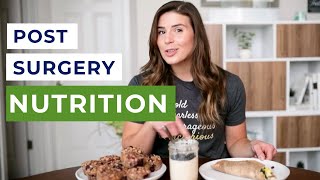
In this YouTube video, Victoria S. Dorsano walks viewers through how targeted nutrition can speed up recovery from injuries and surgeries, using her own ACL reconstruction and a subsequent kneecap fracture as a case study. She outlines the three biological healing phases— inflammatory, proliferation, and remodeling— and pairs each phase with specific dietary recommendations. For the early inflammatory stage she emphasizes anti‑inflammatory fats (olive oil, fish, avocado, nuts) and cautions about supplement timing, especially fish oil and turmeric/curcumin, advising consultation with a surgeon due to blood‑thinning effects. She highlights the importance of antioxidants from berries and Juice Plus. During the proliferation and remodeling stages she stresses increased energy needs, prioritizing high‑quality protein (animal or plant‑based), a rainbow of vegetables for phytonutrients, and minimally processed whole‑grain carbohydrates. She also addresses bone‑specific healing, recommending calcium, vitamin D, and vitamin K (via dairy alternatives or supplements) for fractures. Throughout she shares personal meal‑plan examples, supplement brands she trusts, and repeatedly urges viewers to consult healthcare professionals before adding supplements. The video concludes with a call to action for subscriptions and community engagement.
Chapters
What's up everyone, Victoria S. Dorsano here, and today I want to talk to you guys about how to utilize nutrition and different things that you can eat and take to speed up your healing process, especially if you've gone through something like an ACL injury and ACL surgery, reconstructive surgery, or just any surgery in general or any injury this can apply to. Um, obviously, you know, a lot of you guys know on my channel I talked a lot about my experience with having an ACL injury and going through surgery, and a lot of you guys have been asking me like, how do I speed this process up? What can I do to make this go faster? And nutrition is a really key component of this, so I wanted to talk a little bit about that today. So before I dive in, I just want to thank you guys who have subscribed so far and been engaging with my videos. I really appreciate it. This community has been amazing, and if you know anybody else that might benefit from some of the videos that I've made, please share those along. Ask your friends, family to subscribe as well. It's really just been helping me to continue to make this content, um, and gear it towards your questions as well. So I just really appreciate it. Every last subscriber is super meaningful on my road to hopefully getting 1,000 by the end of this year. That is my goal. So keep subscribing, keep liking my videos. I super appreciate it, and thank you again. All right, so first of all, excuse my hair tied back. You guys know I usually, usually doll myself up a little bit more for video shoots and for doing YouTube stuff, but just got back from the gym, really wasn't feeling like getting myself together all that much. But I do want to make sure I get this content out there, so I might be doing more casual videos like this where I'm kind of just hopping on camera straight from the gym or whenever I feel like, you know, things make sense for my schedule. So excuse the sweatiness and like the grossness in the future, but that's my life. This is me. Here we go. So there's actually 3 main phases of kind of healing through any injury, and I'm going to be using, you know, ACL as an example because that's my personal experience. I've obviously had other injuries like a calf tear, and actually multiple calf tears, a quad strain, low back stuff, I mean, my ACL. So it runs the gamut, but the phases of the injuries are the same. So if you hear me say ACL a lot, that's just because that's my most recent experience, and a lot of you guys have been responding to my ACL videos asking about this question in particular. So there's 3 phases in that injury timeline. We have the inflammatory phase, right, when you are having a lot of inflammation to the injury site. And this can pertain to when you freshly had the injury, or if you had to go through surgery, you're still going to have— it's like your body has gone through the injury again. So you're still gonna have this kind of inflammatory stage because it's just gone through a lot of trauma from the surgery. So, you know, when I'm saying this from both a timeline of when the injuries happened and, you know, post-op, it's kind of the same process that your body's going through because an operation is very much so like re-injuring your body. Even though you're repairing it, to your body, it's still acknowledging that this is kind of trauma to that site. That first phase is really just pain and swelling, right, and having a lot of inflammation in the area and a lot of fluid. You'll notice, you know, for ACLs in particular, especially after surgery, immediately your knee is really swollen. It looks giant. Usually your leg's all wrapped up and you can't really tell, you know, when you're, when you're looking at it, but once you take off the wrap and you're like, oh my gosh, my knee is gigantic, sometimes you can't even tell that there's a knee there. It just kind of looks like one one straight line of a leg. So there's a lot of inflammation that happens post-surgically and when the injury initially happens. And you're gonna want to really make sure that you are eating to try to mitigate that inflammation as much as possible. Inflammation isn't always a bad thing 'cause it means that you're getting, the body's basically protecting that area. It's trying to promote blood flow. It's trying to promote healing molecules in the body to that area. But you don't wanna have an overload of inflammation or do anything, nutritionally that's going to increase the inflammation beyond what is actually needed. That's why I said from a nutritional standpoint, it's really important to try to eat in an anti-inflammatory way with anti-inflammatory foods as much as possible in that initial stage when you are battling some of that inflammation after the injury or right after surgery in that first, you know, it can be anywhere from 2 to 4 weeks really that you're dealing with some of that inflammation after surgery. So this is going to really look like having healthy fats in your diet, like olive oil, fish oil, having any kind of fish like salmon and mackerel, eggs, and things that are going to just be rich in, in healthy fats. This can even include things like avocados and mixed nuts and seeds. Those are the things that I personally really prioritized was getting healthy, you know, fat quality in that initial phase and just really making sure I was doing things that were going to help with the inflammation. However, I will mention that you should probably check with your surgeon about fish oil, and I'll mention something else later on turmeric. But fish oil and turmeric, I know, are two things that they are really keen on knowing if you're taking prior to surgery. And I know there's certain protocols for how you take it right after surgery because fish oil and turmeric can affect, I think, the blood viscosity, like how thick and thin it is. I know fish oil in particular makes the blood a little bit thinner, which you want to make sure that you're not promoting more internal bleeding in that area that you've had surgery with or in that area that you've just had an injury with. So definitely consult with your surgeon or doctor once you've had the injury looked at or once you've gotten out of surgery, um, how soon after surgery or the injury that you can take things like fish oil or start to take things like turmeric, which I am going to talk about in a sec. So as far as herbs go, there are a few like herbal supplements that I can recommend as well that can really help with mitigating some of the inflammation in that initial phase. After surgery or right after the injury. And one of those things is curcumin/turmeric. Curcumin is really the, the active compound of turmeric. But this comes with a caveat because I think I've mentioned this in other videos, and if I haven't, I'll definitely be talking about this more. Supplements are kind of a wild, wild west industry, like, meaning there's not a lot of regulation and you can probably get yourself into trouble by taking something that's not, you know, following good standard protocols and making sure that, you know, it's a, it's a cleaner supplement, that there's not a bunch of random stuff in there. So there are a few brands that I do trust. There's one in particular that I personally took for curcumin, and it's combined with piperine, which is a black pepper— it's the compound basically in black pepper. And when you combine piperine and curcumin, the curcumin is better absorbed into the body. So you want to make sure you have a supplement that kind of works in that way, where it's going to have bioactive compounds that are more absorbed absorbed together like that synergistically. So I'll recommend one down below in the description that I personally used and can vouch for. There's a few others too, so if you're curious, like, and if you don't like that first one I recommend, feel free to reach out to me. Either comment down below if you, if you need more suggestions, or you can reach out to me through Instagram on my direct messages. So the other really important thing to think about is making sure you're getting a good amount of antioxidants to help mitigate that inflammation too. This comes in a variety of different sources. I'd say My main source personally was a lot of blueberries, blackberries, strawberries, just berries. I was having a ton of berries. I was putting them into yogurt. I was putting them in my cereal. I was eating them for dessert. I was just making sure I was getting a good amount of berries into my diet just because I know that those are pretty high in antioxidants. I was also taking something called Juice Plus, which is a— it's not technically a supplement. It's technically like a food item. But I've been taking Juice Plus for a long time. I actually just doubled up on it. It right after surgery just to get a higher dose of antioxidants. And Juice Plus is just pulverized, you know, basically vegetables and berries and fruits into a capsule. So it was easy for me to take, and that was something that I believe helped me too, just in the sense that I was getting more antioxidants. And this goes without saying, but obviously if you're going to be eating anti-inflammatory foods and making sure that you are, you know, taking some anti-inflammatory supplements like curcumin or, you know, Juice Plus or whatever it might be, you're going to want make sure that you avoid inflammatory foods, right? So foods like, um, fast food in general. I won't say all fast food, but like, you know, things that are really fried in a lot of like oils. Um, what else? I mean, mostly just highly saturated fat foods like your hot dogs, hamburgers, just that sort of stuff that I'm normally, you know, for incorporating. But during this period of time, you're going to want to try to make sure that you are mitigating as much inflammation as possible. So just avoiding kind of fast food, processed food, things that are high in saturated fats, you know, that have been fried. So once you've made it through that phase and you can tell that some of the inflammation has decreased in that site of injury, whether that's initially from having the injury or after having surgery, and you can kind of tell if the inflammation's decreased, you're going to be able to get more full range of motion back into the joint, there's less swelling there, then you're probably moving into the proliferation stage. The nutrition for actually these next two stages, so the proliferation stage and the remodeling stage, are fairly similar, actually pretty much similar. But just to kind of explain what's going on in each stage, proliferation stage is really when your body is like kind of sending molecules in to clean out all the debris and kind of like clean out all the inflammatory stuff. It's not necessarily like the fluid can drain out, right? It's cleaning out old tissue. I like to think of it just like little cleaners, like little cleaning molecules going on, like macrophages. Are going on and kind of like eating up molecules that aren't needed anymore, tissue that's not needed anymore, and your body is temporarily starting to rebuild new tissue and send new blood supply in, and it's starting to do a lot of work in this phase. The next stage after proliferation is the remodeling stage, and that's really when your body is more permanently establishing new tissue there and starting to build that tissue more strongly, starting to reinforce that new tissue. For example, like like when I'm using the ACL example, if you've had, you know, like I did, a patellar tendon graft where they take your patellar tendon and then reinsert that as your new ACL, the remodeling stage is really when that tissue is getting— now it has this new blood supply from the proliferation stage, and then it's getting stronger and built thicker and more durable, and the fibers are just getting stronger, right? So it's just remodeling. It's constantly making sure that that new tendon has differentiated into a ligament and it is getting stronger and just, you know, the fibers are getting more coarse and rope-like. So with both those phases, the proliferation and the remodeling phase, you're going to notice probably your appetite gets up there a little bit more. I know I personally did. I was starving, and I mean like starving. I was— I couldn't like fill myself up. I was so hungry. Um, you know, I don't know if this is everybody's experience. I know I've talked to a few other people who have gone through ACL surgery and they've similar experiences like that, but man, like absolutely starving. And that's because your body is demanding about 25% more energy. I think it's actually anywhere between 10 to 25% more energy to actually, you know, rebuild in that injury site and start to make that tissue stronger and heal up. So your body is actually having to, you know, produce more energy to do that, and it needs more energy in order to produce more energy to heal, right? So you're going to feel a little bit hungrier, and that's totally okay. So this is not a time to necessarily like think about going on a diet because your body's needing the excess energy to really heal up. So because the nutrition is pretty much similar for both proliferation and the remodeling stage, I'm just going to kind of lump them together and address them at one time. So in these two phases, it's going to be really, really, really, really important to prioritize good sources of protein. Your body is going to need protein to rebuild that tissue That's so, so crucial because that's going to be the main resource that it's utilizing to rebuild new tissue. Things like you eat animal protein, chicken breast, lean ground turkey, some red meat here and there can be good too to get the iron from red meat, pork. If you are, you know, plant-based, eating things like legumes, beans, tofu, pea protein, really just trying to prioritize that protein intake is going to be so important. For me personally, I would wake up, I would have a protein shake in the morning, I would go to either physical therapy or do some workouts on my own. I would come back, I would have either 2 or 3 eggs, some Ezekiel bread toast. I would have like, I think, some like snack in the afternoon, like an apple peanut butter. I'd have my lunch, which would usually be some chicken breast or something like that. So I was really, really, really getting a lot of protein in my day. And I feel like it helped me a lot, not only help with the hunger because I was so hungry and protein helps with that, but I just felt like my tissue was healing pretty well throughout that, that, you know, those latter two phases, the proliferation and the remodeling. The next thing that's going to be really important in these latter two phases is just getting a variety of vegetables, like really prioritizing vegetables as well, um, and fruits. But just getting the rainbow. I don't think within a day, because that's hard to do, is to eat the rainbow within a day. But if you focus on getting the rainbow within a week and trying to prioritize getting your greens, your reds, your oranges— I eat so much like butternut squash and spinach and kale and green beans and beets. And what were some of the other things? Like berries, like I mentioned earlier, apples, oranges, bananas. Trying to think what else were some of my go-tos. Like different kinds of squashes other than butternut squash too, like green squashes, zucchini squash. So I really made sure that I was getting a variety of vegetables as much as possible. I do understand that not everybody might have access to that kind of variety, and that's totally okay. So whatever you can find, as long as you're getting some kind of vegetable, even if it's just 1 or 2 different types throughout the week, that's okay. And frozen vegetables, totally okay as well. I totally understand that that's easier for some individuals. So if, you know, frozen green beans are your thing or frozen broccoli, just whatever you can find, just getting more vegetables than you have been is always a good thing. And that's really going to help provide your body with all the nutrients in the form of like phytonutrients is what it's called. All the different little, um, basically they're, you know, different forms of antioxidants that give fruits and vegetables their color, and they all have different ones because of different colors. So that's why it's so important to focus on trying to get the rainbow if you can, but at least getting some veggies in there is always a good thing. The other thing is carbs. Carbs are definitely going to be important. You're going to want to try to have minimally processed carbs, so things like oats, farro, whole grain breads, just really making sure they are as minimally processed as possible. And that's just going to give you some good fiber, some good B vitamins that are in whole grains like that. Um, so just really making sure you're, you're prioritizing nice whole grain sources of carbs as well. Now, kind of just in conclusion, when I've been talking about all this nutrition, right, this can obviously be applied to any injury, but there are some caveats to like if you had a bone injury, right? Because bone and calcium, they're a thing together, right? So, um, I can give my personal story on this too. As a lot of you guys know, after I had my ACL surgery 2 weeks after the operation, my kneecap broke in half. So I was not only dealing with the demands of having to heal a new ACL in my knee, but also really needed to have that kneecap fused back together. I was lucky enough to not have to go through surgery for the kneecap because the kneecap didn't move, it just cracked in half and stayed in place. So we were hoping that, you know, with time it would just fuse together, which is what happened. But for bone injuries, you're obviously going to want to make sure you're getting a good source of calcium and vitamin K and vitamin D especially, because those are going to all help you to have the resources available to heal the bone tissue itself. So for me, everyone was telling me to have like, oh yeah, boost your dairy. I'm like, I'm lactose intolerant, so that doesn't really work really well. Um, but I was able to find some yogurt that worked for me. It's called Skyr. It's Icelandic yogurt. It's lower in lactose, so it didn't bother my stomach as much, and I was able to get some of that in. Um, but I also did supplement with like a vitamin K, calcium, and D2 supplement, um, all combined because it was just— I wasn't going to be able to get enough dairy that way. But, um, there's obviously other food sources of calcium too, but I just found it easier to prioritize that in a supplement form for myself. So that's just like a little caveat if you have like a bone injury versus, you know, ACL or something like that. There are obviously more, you know, little things that you can do nutritionally along the way, but I like to say start there, and if you have more questions or if you feel like you have that nailed down and you want to take it to the next level, let me know in the comments down below. I can give you guys more personalized suggestions. I'll also drop all those supplements that I personally was taking and that helped me in the description below. As always, make sure you consult your, your doctor or your surgeon or physical therapist on any supplements that you do plan on taking to make sure it's not going to interfere with your personal healing timeline and your personal medical history. But just so you can, you know, cross-reference that, I'll put those all down below. And I hope this helped. I hope this gave you guys some more information to go off of to really accelerate the healing timeline and help support your body as your body's going through this healing process. Because, you know, our bodies are amazing and they do a lot on their own, but there's definitely things that we can do to help expedite that process. And if you're anything like me and you're an athlete and had something like an ACL injury and you went through surgery, like, you are wanting to get, get it healed as soon as possible and do everything you can. So I hope this gave you the resources to do that. All right guys, thank you again for watching, and if you haven't subscribed yet, definitely subscribe and like this video. I appreciate all my subscribers and I have been loving the community that's been developing here on YouTube, so I appreciate you all. And until next time, bye!
More from Victoria






3 things you should do to make sure you get the most out of your fish oil #legion
