The BEST Diet for 2022 | How to Lose Weight Eating What You Love With Flexible Dieting
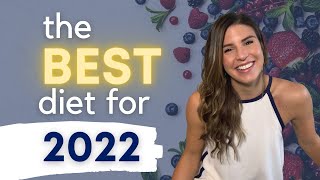
In this instructional video, Victoria S. Dorsano critiques why most popular diets (keto, paleo, low‑fat, low‑carb, etc.) fail, highlighting four main flaws: extreme restriction, lack of basic nutrition education, over‑reliance on scale weight instead of body recomposition, and ignoring the underlying behavioral or hormonal causes of weight gain. She then outlines a recipe for a sustainable, long‑term weight‑loss plan for 2022. The plan begins with a personal inventory of motivations, habits, emotional eating patterns, and hormonal status, often aided by a coach. Next, she recommends a modest, sustainable calorie deficit calculated from an individual’s TDEE, paired with a balanced macronutrient distribution that prioritises protein. She stresses flexibility: eating foods you enjoy, allowing occasional treats, and averaging calories over the week rather than obsessing over daily perfection. Throughout, she encourages realistic goal‑setting, acknowledges the emotional role of food, and offers a free downloadable guide and coaching services for further support.
Chapters
What's up everyone, Victoria S. Dorsano here, and today I want to share with you guys the best diet for 2022. And just so you know, a lot of the details of today's video are actually going to be in my free guide down below in the description. I'll drop a link down there so you can download that guide, and it's a full weight loss guide to sustainable dieting. So before I go ahead and actually dive into what makes the best diet of 2022 and what kind of the ingredients are for that recipe of a lovely, perfect perfect diet, I want to talk a little bit about why the current diets out there don't really work all that well. And if you're on this video watching this, I'm sure you've already heard of some of these. You know, we have our keto diets, our paleo diets, our low-fat diets, our low-carb diets, and they get, you know, rebranded and monetized as all different fancy names— the Dr. So-and-so diet or this diet. You know, we've all heard them at this point, but 95% of these diets actually fail, meaning that people end up regaining the weight that they've lost on these diets. And there's several reasons why, and I want to run through why these diets actually don't work first. So the first reason that most diets don't work is that they are extremely restrictive. They, you know, often don't let you have a certain type of food or food group. Sometimes, like, some of these diets say no carbs at all, or some diets say no fats at all, or some diets say no sugar at all. And It's just not really a recipe for sustainability because when you end up restricting the whole entire groups of food or certain foods that are your favorite types of food, you're gonna really crave them and your body and your, your mind. So psychologically, you're gonna want that food a lot more, and that creates a dieting and a binging cycle. So that's the number one reason is that these diets are mostly very restrictive. The second reason why most of these diets don't work is that they don't actually educate you around the basics of nutrition and food. Most of these diets don't take the time to actually help you acknowledge that, hey, we actually need all these major food groups. You need your carbs, you need your fats, you need your proteins for your body to run optimally. And this is why, and this is how you'll, you'll want to combine and mix and match on your plate so that you're gonna feel the most full and be able to stick to your calorie deficit and not feel like you're super hungry or starving at the end of the day, or feeling like you've restricted yourself of something. And when you have the basic education around food, you're able to kind of flex with that a little bit more and improvise. When you're at a party and you don't know what to eat and you don't know what's fitting within your "points," quote unquote, if you know what I'm talking about in terms of certain diets, it's hard to pick anything. So if you have a basic idea and education around, oh, okay, I see some protein here in the shrimp, that would be really good, and I'll have a little bit of bread with that, and I can mix this over here with this appetizer, I'll be able to get some greens in. So if you have that basic education and understanding, it makes it a lot easier to adapt and adjust to different life circumstances. But most of these diets don't take you through that education and understanding how food and nutrition can be flexible and still fit within your diet. The third reason why most diets don't work is that they focus a lot on body weight loss, or body weight being the metric that you track, right? And not so much body recomposition. And this can be psychologically really damaging because you begin to attribute, you know, your worth of, of how you're doing in a certain program or a certain diet by what the scale is reflecting. And if you're combining, you know, activity, which most people do when they start a diet, also combining extra physical activity. If you're combining that into the mix, you might be gaining some muscle, you might be maybe staying at the same weight, but your body composition is changing and shifting. You might notice your clothes fitting a little bit looser, but if you get on the scale and you see the same weight or maybe even a higher weight, you're going to feel really disheartened, and that's going to force you to go off the rails with your diet. So that's what I see a lot in other diets, is that they're not really focusing on the body recomposition part of things and how to better understand how to measure your body what other ways can be to measure your progress throughout a diet, like using InBody scan that can tell your body fat percentage and your muscle percentage and kind of use those metrics as markers instead. I don't see that happen often in traditional diets. And lastly, the fourth reason why most of these diets don't work is because they don't actually take the time to understand how the weight got there in the first place and what led up to that. Because getting down to that root of the behavior is super important, is to like, what's your body going through that it's putting on weight? And maybe it's something genetic, maybe it's something hormonally, you know, there's a lot of fluctuations that we're going to talk about soon as I move throughout the rest of this video. But that is something super important and something that's really missing in most diets is understanding what led up to this point so we can understand what are the behaviors that are here, what do we need to look at, right? So now that we understand all the reasons why traditional diets don't necessarily work for long-term sustainable weight loss, let's look at what are the ingredients for a successful long-term sustainable weight loss plan and go through that one by one. So the first ingredient in creating the best diet plan for 2022 is really taking a moment and taking inventory of why you're here, you know, why you want to lose weight and what got you to this point. Like I said, that's one of the most important things most diets miss. So that should be the most important thing to address first on the list, is just taking inventory, understanding your behaviors, understanding yourself. And sometimes it can be harder to do that with ourselves, right? Because sometimes we can't see everything that we're doing, or, you know, some of these behaviors might be unconscious or subconscious, which is why having somebody like a coach like myself and, and working with somebody is really important to do, because you can actually tease out a lot of things that you end up missing when you take some time to review and have somebody asking the questions to you and really getting down to the nitty-gritty of what's, what's creating some of these behaviors. We have these beliefs about ourselves, right, which then create behaviors, which then, you know, those behaviors are actions that end up leading to a sequence of either consequences or successes. And we have to understand, if we're existing in a consequence of a situation that we don't like, there was a series of actions and behaviors and even beliefs before that led you to this path. And we have to understand what that is and breaking that down piece by piece to really feel that out and, and get good answers so we can get down to the root of why you're actually here and how to move forward best for you. And in this process, there might be some really important things that you discover, right? You might discover that maybe you're an emotional eater or a stress eater. And, you know, Lord knows we've experienced a lot of stress this, these past few years, and it's, it's normal to stress eat and emotionally eat. We're, we're human beings, and that's okay. Food is meant to be a comforting thing. But when it becomes something that's controlling us rather than us controlling it, that's where we have to take a look at it and honestly say, okay, where does that cross the line for you? And maybe that's, that's a part of the equation. And another thing is, you know, considering hormones and where you're at in your stage of your life. This is relevant for both men and women, but obviously women have that very distinct time period of perimenopause into menopause where there's a lot of hormones fluctuating and changing, and your body's going to maybe want to sit at a different weight than it has in the past. And Understanding that piece of things, but also taking that into account with your weight loss goal is really, really important. And also wrapped into this is, again, understanding like your, your why and what your goals are, and really getting down to like what's your goal weight and making sure that's a sustainable goal weight. A lot of the time, I— what I don't like about most diets is they say like, pick a number, any number that you want to be at, and let's get you there, let's calculate it out. Or like these diet apps, right, you put in your goal weight And I could put in a goal weight of like 40 pounds less than I am now, which would be terribly emaciating for me. But the app would be like, okay, let's get you there. Here's your calorie recommendation without even checking if that's like a realistic goal or not. And that's not okay because you have to understand that your body actually, depending on a lot of different things, can carry different mass and you can only have so much fat to lose really. So it's really important to look at what's sustainable for you and your body and where you're at in life and what's gonna match up in terms of what you're willing to do to get there. Because you might say like, I wanna lose 40 pounds, but if you're not willing to look at food a little bit differently and start hitting the gym and to do these things that it's gonna require, then, you know, maybe that goal's not necessarily where we need to set it right now. We need to adjust that, right? So that's another really important thing where it comes into play that a coach can really help with is like understanding what's realistic for where you're at and giving you a healthy reality check of, okay, maybe we need to push that goal a little bit, or maybe we need to take it easy a little bit and relax that goal and set a little bit wider of a window. The second thing that's on the recipe card for creating the best diet for 2022 is to have a small but sustainable calorie deficit and a focus on your macros. It's still back to the basics with this one, and the calorie deficit is what matters the most in terms of actually losing weight, right? And calorie deficit, meaning that you are consuming and taking in less calories than you are burning. Now, it doesn't have to be this drastic amount, like you're taking in only 800 calories and you're burning, you know, 2,000. No, that's not what we want. We want something that's going to close that gap a little bit, so we're not going to create too much feeling of hunger or adjust your metabolism too low. We want to make sure that we are keeping it in line here and And again, we're, we're doing it in alignment with what your lifestyle is and what's gonna be sustainable for you. So creating a small calorie deficit is the first part of that, and then focusing on your macros. Now, this is probably the lesser important of those two things, but still important because you don't wanna just eat your calories in bread for the entire day because that's not gonna fuel your body and that's not gonna really help you feel good either, 'cause we need to have a good macronutrient ratio of having some protein and some carbs and some fats in there. So it's important to have a goal in mind when you are in that calorie deficit of how much protein you should be getting. Protein's probably the most important in my opinion for weight loss because it's gonna keep you the most full. It actually burns a lot of calories to digest it, 'cause there's this process of thermogenesis that I'm not gonna get into. But we really wanna focus on getting that protein, getting some veggies in, making sure you're still having your carbs in there, and really eating a well-rounded diet. Still, but within that small calorie deficit that you're creating. So to do that, you're obviously going to want to calculate your total daily energy expenditure, your TDEE as it's called. And I will actually drop a link down below in the description where you can calculate that out, but it's a rough estimate using these calculators. And that's why, you know, in coaching we actually will go through, and that'll be, you know, one of the first things that we do is calculating that out specifically for you and, and how much activity you do in a day and then you end up taking that caloric amount and decreasing it a little bit to understand what calorie deficit you wanna be at. So that's just the basics of it, but that's still nonetheless a very important ingredient in the recipe for the best diet of 2022. And the third thing that's in the recipe for the best diet of 2022 is to actually eat foods that you like and to not necessarily restrict a ton. You still wanna be able to incorporate your fun foods and the things that you really love the flavors of. Of course you want to focus on nourishing and nutritious foods, like still getting your proteins and your greens and stuff in. But if you want a cookie, have a cookie. You're just focusing on staying in that calorie deficit amount. So as long as that cookie is not going to send you over, you know, over your calorie budget for the day, that's okay. And even if it is, you know, that's okay too. It's okay. It's gonna happen some days where you're not gonna hit that calorie deficit every single day perfectly. I like to look at it almost as if you're on a week schedule and you average out your days in the week and you stay under that calorie amount as much as you can, right? And there's gonna be some days that'll be over and under, but as long as you're kind of hovering at that amount, you'll be okay. But it's really important to eat what you actually like and to, you know, flavor things well and to season your veggies. If you're not a veggie person, I get it, but finding ways that you can make it taste good with some teriyaki seasoning or some— I love the Everything But the Bagel seasoning seasoning. You can sprinkle that on pretty much anything and it tastes like an everything bagel. There's so many different ways that you can season veggies to make them taste really good, or any food really, that can make it taste really good. So enjoy those foods and make it a fun process of learning how to make these foods taste good. But also, you know, have your cookie, have a piece of cake every so often, have a piece of chocolate. If you enjoy a glass of wine, that's okay, have a glass of wine. But make sure again that you're, you're budgeting your calories okay. So That's what I mean about this flexibility. You need to have flexibility in your diet to make it sustainable because we as humans, we love to have food. It's a very emotionally fueled experience too. And it's important that we also give into that emotional hunger once in a while and that taste hunger of like, ooh, this would taste really good. Do I still have some calories for that? Yeah, okay, have a bite of Snickers. That's great. I think it's really important to blend that into any diet. So that's what's going to be the last point for the best diet of 2022, is making sure that you're eating foods that you actually like and you're not restricting or having any foods off limits for you. Well guys, I really hope this was helpful for you in understanding the recipe for the best diet in 2022 and some steps you can take practically to get to that point where you can have a sustainable diet that's going to get you to your goal weight without feeling like you're starving or restricting foods foods that you love. And don't forget, if you want to learn more about, you know, weight loss without restriction and being able to incorporate a diet like this into your year 2022, go ahead and download my guide down below in the description to my free weight loss guide without restriction. That's funny— description, restriction— it's kind of a tongue twister. And guys, I get it. If this process is something that you feel like you need accountability and structure and really somebody on your side and on your team throughout this process of, of weight loss, then feel free to reach out. I have my link down in the description below to my website. You can fill out an application for some coaching or to just book a one-on-one call with me. We can discuss what that would look like. More than happy to do that. Well guys, thanks everybody for watching, and please go ahead and like this video and subscribe to my channel if you haven't already so I can keep providing awesome content like this to you guys. And until then, have an awesome day. Bye!
More from Victoria






3 things you should do to make sure you get the most out of your fish oil #legion
