The BEST Knees Over Toes Guy Exercises (Especially If You've Had ACL Surgery)
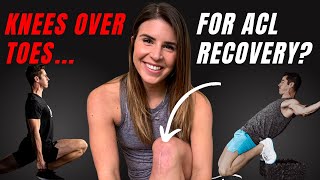
In this YouTube video, Victoria S. Dorsano shares her personal experience using Ben Patrick’s Knees Over Toes (ATG) program to rehabilitate a post‑ACL‑surgery knee and improve overall knee longevity. She begins with a safety disclaimer, urging viewers to consult healthcare professionals before attempting the exercises. She then walks through her five favorite ATG exercises—backward sled pull, VMO squat, ATG split squat, a progression of step variations (Patrick, Peterson, Poliquin), and tibialis raises—explaining the biomechanics, targeted tissues, scaling options, and how each movement promotes synovial fluid circulation, tendon strength, and unilateral balance. Throughout, she notes her own progress, pain cues, and practical alternatives (e.g., treadmill, hill walking). The video concludes with a promotion for her upcoming “ACL Secrets” course and a standard call‑to‑action to like, subscribe, and follow the provided links.
Chapters
Have you had ACL surgery before, or do you just have knee pain in general? Well, you're going to want to stick around for this video because I'm going to show you guys my 5 favorite knee exercises to bulletproof your knees. For those of you guys who haven't seen my previous videos, I've been doing the Knees Over Toes program, aka the ATG program, aka Ben Patrick's knee program, for about 3 to 4 months now, and I've had significant improvements in my knee, especially— I mean, both knees, but especially in the knee that I had ACL surgery on. And I want to go through what my favorite exercises were that I found to really significantly impact and help heal my knee as I've gone through these later stages of the ACL healing process. But really, if you don't have an ACL injury or just really any knee issues at all, these exercises are still going to be so, so, so good for you to do to help just improve your knee longevity in the long run. If you don't want to be, you know, in your 60s, 70s, 80s having knee issues, or even sooner, these exercises are going to be amazing for helping prevent some issues too, as well as treat current issues. And of course, before I dive into these exercises, please make sure you consult with your healthcare provider or your physical therapist if you are going through an ACL rehab program currently, just to make sure that these aren't going to implicate you as you're in your rehab program actively. I did not start these exercises with the Knees Over Toes program until well over a year after my ACL surgery was done. So please advise with your healthcare provider to make sure that you are doing your due diligence. All right, so first exercise is the backward sled pull. And the backward sled pull is honestly the first, you know, kind of hallmark exercise in the Knees Over Toes program. It's the one that you do first in every single day's activity. And I have found this to be so incredibly helpful and low impact. You can scale it to really any difficulty. And I really see the benefits of this. You can feel it right away. And really what a backward sled pull does is it, it's really working on the mechanics from your toes to your feet to your ankles to your knees to your hips to your glutes. So you're working all the way up the chain of movement in your entire body, but you're forcing yourself by pulling a sled backwards to load just slightly knees over toes. So you are starting to get that motion, that pressure in the front of the knee, which might feel a little uncomfortable at first because If you've trained like I have most of my life in volleyball, I've been told to squat, you know, with my knees behind my toes and to make sure that the knees don't go ahead of my toes. This is totally different. So scrap all that stuff that you've learned. The backward sled will reeducate you in how to move gradually at your own pace, knees over toes. So as you are planting your foot and your toes are rolling back, you're pushing back, your knee is planted over your toes and you're pushing backwards and you are just getting some good motion into the knee. You're activating the quads, which is great. You will feel a really, really good quad burn doing this exercise. And really, you can start with as little weight as you want pulling a sled backwards. You can start with a good amount of weight if you feel pretty strong in that area. You can take it at whatever pace you feel necessary. So it's really such a great scalable exercise. Now, Ben Patrick does talk about in the program that there are some different ways if you don't have a sled handy, you can instead walk backwards on a treadmill with the treadmill off, kind of pushing it backwards. However, if this is not your own treadmill at home, be aware the treadmill might break at the gym. Most treadmills are not built to be pushed backwards, you know, to be walking on it backwards manually without it being on. It can start to break the motor of the treadmill. So take that, that word of caution. Make sure you don't get in trouble with your gym. Um, make sure you know what kind of treadmill you need to be on for that. Another option is just walking backwards uphill. So if you have a local park that you can go to and you can walk backwards, that's another way to add some of that load via gravity and continue backwards as you're walking up a hill. So those are just some ways to kind of tweak that, but that is honestly one of the exercises that I felt the most like impact right away. It just feels so good in the knee. You're getting the knee moving, you're getting the joints warmed up. It's just great to add on to the beginning of any workout really. And like I said, for the sled, you are also working your feet and your arches and your ankles and calves, and those are all important things. They all connect up to the knee, right? So we're not just focusing on the knee. The knee isn't just its floating own entity on its own. We have other body parts that connect to it that need to be warmed up, that need to be activated, that need to get circulation to them and, and synovial fluid to the joints and all that good stuff. So This really helps to do that because of the way you have to plant your foot, push through the ankle, push, use your calf, and then push through the knee and quad. Okay, so clearly I'm a big fan of backwards sled pulling. I mean, I've talked about that for a good while. We're gonna move into the next exercise. So exercise number 2 that I found significant benefits to doing pretty regularly for my knee that I've had ACL surgery on is the VMO squat. So the VMO squat really trains the vastus medialis obliquus as well as, you know, put some good force and tension into the patellar tendon and the quadriceps tendon. So in particular, the motion of this VMO squat is really accentuating the knees-over-toes movement. So you have your heels elevated, you are trying to keep your torso up straight. So all of this motion is actually forcing more pressure forward into the knee, forcing more stretch into the patellar tendon, more stretch into the quadriceps tendon than a normal squat would. It is also just putting a little extra shear force onto that ACL. So again, this is an exercise that I would highly recommend checking with your physical therapist with doing if you are currently still in, in physical therapy. For me, I didn't do this until I was about a year and a half out of physical therapy, and it's still a little achy doing it. So I take it easy. I adjust this exercise. You can scale it by actually using a band to help slow your resistance on the way down and help elevate you on the way up. You can scale it to having no weight and then eventually adding some counterbalance and then eventually adding a weight, you know, in a goblet squat hold. So those are some ways you can scale that, that exercise. But really, this is phenomenal because you, you're, you're activating those tendons and those muscles that are going to support the knee. And motion is lotion. So all of these exercises I'm talking about are really putting some good motion and angles into the knee. And when we are moving a joint, we're drawing in synovial fluid, and synovial fluid is what's going to bring nutrients to heal cartilage, nutrients to heal the knee. So it's really just a great thing to keep the knee moving as tolerated. With the VMO squat in particular, I have felt a lot of decreased sensitivity in my patellar tendon because that was where I got my graft taken from was my own patellar tendon. And inherently, that makes it a little bit of a sensitive area, some weakness there. A lot of people complain about having anterior knee pain after ACL surgery. Makes sense because literally they're taking your tendon out of the front of your knee. So, you know, this really helps to slowly gain some tensile strength back into that tendon, start to gain some mobility, some stretching, and just the integrity of that tendon starts to be a little bit stronger. All right, so the next exercise that I have found from the Knees Over Toes program that has drastically improved my knee since ACL surgery is the ATG split squat. What I love about this exercise is that it helps you to address single side weakness. So, you know, obviously if you've had ACL surgery or have any kind of knee issues, you're going to have that side be a little bit weaker to the other side. So this helps you to even it out. And what I really like about how the program is structured around this is that they'll have you have like a 2:1 ratio working on your weaker side to stronger side until it becomes a little bit more even. So with the ATG split squat, this is really great because you can work on your weaker leg first, then do your stronger leg, then do your weaker leg again, and you're gradually building up that weaker leg that has had the ACL surgery or knee issues back up to par with the other leg. But let's break down the motion of this, this movement in the first place. I love this because again, you're putting that full bend, that full flexion into the front knee while also getting some hip flexor stretching on that back leg. So you're getting a great combination of working on strength, the mobility factor, and just overall flexibility on top of things. So it's kind of like you're getting the best of all three worlds at once. And again, with that full bend into the knee, it's just the more motion you can get into that knee, the better over time, because you're again drawing more synovial fluid into the joint, you're healing those tissues, you're allowing it to get the nutrients it needs. Um, as tolerable though, like I said, you never want to push through pain. Muscular pain, very different than feeling like, ow, sharp knee pain. We all know what that feels like if you've had any kind of knee issues. So knowing your body and knowing the difference is really important because this exercise can also be scaled back depending on if you have, you know, tight hip flexors even, or if your knee won't bend fully all the way. If you don't have full flexion yet, there's different ways to adapt this exercise and scale it all the way, you know, to a full ATG split squat or scale it back and just kind of take it easy and ease your way into that movement over time. Okay, so the next knees over toe exercise that has drastically improved the health of my knee that's had ACL surgery is the Patrick step, Peterson step, Poliquin step. And the reason why I'm putting 3 of them in there is because they're kind of all variations of the same movement. Um, I always say start with the Patrick step and then kind of move your way from Patrick to Peterson, Peterson to Poliquin. And I'll kind of explain the differences between these. So the Patrick step, your foot is pretty much flat on a surface and you're stepping in front of you or stepping down and you are intentionally bending again one knee to have the knee go over the toes and back up. The Peterson step up is basically you are going on kind of rolling onto the ball of the foot who that's standing back on the step. The other heel is dropping down to the floor while your top foot is still elevated, the heel is still elevated, and then you gradually lift back up. And roll that heel back down. And then the Pelican step is basically putting your foot on a, on a wedge of sorts. So you're elevating your heel intentionally. You're not manually doing it yourself. And then you step down with the elevated heel that's still back on the plate. You step down with the other foot and you raise yourself back up. So obviously, you know, there's, there's slight differences in the mechanics of all of those, but you're still addressing the same thing, which is a focused, controlled movement of getting the knees over toes. One is just slightly more pressure when you have the heel elevated than the other, which is why I say start with a Patrick step where your foot is flat. But this is really, really great for control through that movement, for again pushing the knee over the toes, getting some of that pressure into those tendons and ligaments in the knee, and allowing some more synovial fluid to come into the knee over time. And again, this is scalable too. Even as you get up to the pelican step, you can also add weight, you can take away weight, you can use a band, you can use assistance in terms of like just holding on to something. So there's lots of ways to scale this, you know, both down and up. Okay, last but not least, as far as knees over toes exercises that have drastically helped my knee that's gone through ACL surgery, is something that I really didn't anticipate like helping that much until I started doing it more regularly. I was like, wow, okay, this actually does help my knee a lot. And it is tibialis raises. If you don't know what a tib raise is, I totally get it. Um, but the tibialis is basically the muscle on the front of your shin. So when you get shin splints, that's the guy that's barking at you. But really, it's your first line of defense against knee pain and helping to support your knee because it's activated in every step that you take forward and backwards. And it really is really, really involved in sports where you are jumping and landing and decelerating and accelerating. So pretty much most sports. So you have to think about it, when you're accelerating or decelerating or jumping up and landing, you're putting all this force into your leg. And whatever your muscles can't handle, whatever your calves and your tibs and and all that can't handle, it's going to go into the joint. So you want to make sure those tibialis muscles are strong and capable of handling that force when you're landing and decelerating in a sport so that all that force isn't traveling up into the knee joint itself. So with tib raises, you can do them— there's several different ways you can do them— just standing and with your back against a wall, and you're just raising your, your toes up until you, you know, you feel a good burn by the time you get to like 20 or 25 reps of that. Another way is to strap a weight onto your foot and do tibialis raises off of a bench. There's actually like a tibialis machine at some gyms, so if you— if your gym has that, awesome. I wish mine did, but maybe one day. So there's a lot of different options that you can, you can do for these, but honestly one of the most effective ways is just doing it standing. It's, it's perfectly effective unless you really don't feel the burn, and if if you don't feel the burn, like, are you superhuman? Because these things hurt. I mean, not in a bad way, they just burn. Um, but I've just noticed that my calves and my tibs have been able to handle more force and more deceleration. I just feel a lot more stable, and I can only assume that that's taking some pressure off my knees. So that's why I included this one in here that's not like directly like a knee exercise, but it's, it's one of those accessory exercises that can really help to support the knee. So there you have it, guys. Those are my 5 favorite exercises I found so far in Ben Patrick's Knees Over Toes program that have really, really, really helped improve the health of my ACL since having ACL surgery. So I hope you get a chance to try this program. I'm gonna link it down below in the description if you do wanna give it a shot. I highly recommend it. It's been absolutely life-changing. Oh, and before I go, I have a big announcement. I am going to be releasing an ACL course coming out soon called ACL Secrets, and it's going to be an accumulation of all the things I've learned through going through my ACL journey, things that nobody told me that I wish they did, and just a lot of new science, new research that can really help you get through any kind of ACL injury, uh, the best— with the best possible outcome you can. So if you want more information on that, link is down below in the description as well. And if you could go ahead and like this video and subscribe to my channel, I would greatly appreciate it. All right guys, till next time.
More from Victoria






3 things you should do to make sure you get the most out of your fish oil #legion
