The Most Effective Supplements for JOINT PAIN // Top 3 Science-backed Joint Supplements
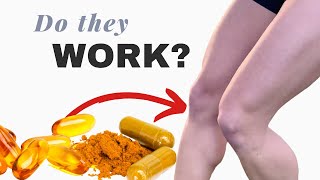
Victoria S. Dorsano recommends three science-backed supplements for joint pain: fish oil (2-3g EPA/DHA daily), collagen (40mg undenatured type II or 10g hydrolyzed), and curcumin (500mg with piperine or BCM-95 formulations) as an optional third step. She emphasizes third-party testing like NSF certification since supplements lack FDA oversight.
Chapters
Joint pain sucks, and chances are you probably already know that because most of us have probably experienced some joint pain at some point in our lives. And sometimes there's a simple path to resolving the pain, whether it's just rest or physical therapy or sometimes just icing. But what do you do if none of these things are helping? What if you still have nagging pain in some of your joints after doing all these things? And it's at this point you might wonder about going the route of looking for some joint supplements to ease your pain. And that's exactly what I'm here to talk to you guys about today. As much as I am a skeptic in regards to most supplement claims, there are a few supplements that have some really strong evidence showing efficacy in helping to reduce joint pain. But since the cause of joint pain can really be from a variety of causes, whether that's an injury or osteoarthritis or rheumatoid arthritis or just general joint pain, it's really important to understand what the cause of your particular joint pain is as it pertains to taking supplements to help that thing. So in the interest of making today's video a little short and sweet, I'm going to be talking about just a few supplements that have the most evidence for reducing joint pain that's related to athletic activities and overuse, whether that's something like an injury or recovering from surgery or just pounding the pavement a little too hard. So if this doesn't sound like your particular cause of pain, then hold tight because I'll probably be making further videos on supplementation for things like osteoarthritis and rheumatoid arthritis. Because yes, the recommended supplements that have the most clinical efficacy do differ for each condition. But before I dive into today's video, a quick message from today's sponsor, Freak Athlete. Freak Athlete has been creating some of the highest quality equipment out there on the market for those of us that not only are doing the ATG style training but also just want to improve our joint health and just perform better as athletes. Whether you're an athlete or not, Freak Athlete has a piece of equipment that I'm confident will change how you move and feel for the better. Some of their trademark pieces, such as the Nordic Mini and the TriFlexor, have helped me to drastically improve my knee pain and continue all of my ATG style training from the comfort of my own home or or even at the gym too, as a lot of their equipment is modular and can be broken down really, really easily and tucked into your gym bag and brought with you to the gym. And the folks at Freak Athlete believe in their products so much that they even have a lifetime warranty and a 100-day money-back guarantee. So if you're looking to get out of pain and become a freak athlete yourself, I highly, highly recommend you guys checking out their equipment. You absolutely won't regret it. And if you click the link below in my description and use code Victoria10 at checkout, you will get 10% off your entire purchase. Again, that's discount code Victoria10 at checkout. And thanks again to Freak Athlete for sponsoring today's video. Okay, so you've got some joint pain and you've done the PT, you've done the rehab at home, and maybe you've even tried some supplements that a friend recommended and probably spread all the Ben-Gay over your joints that your nose can possibly handle at this point, and nothing's really been working in the long term. What now? Now that I think about it, do people even use Ben-Gay anymore? Have I just dated myself? I'm pretty sure icy hats the new thing, or BioFreeze. I think Biofreeze, this is the new cool thing, but back in my day we used to use Bengay, which had a very distinct smell. It's similar to Icy Hot but almost worse. Anyways, I digress. So there are certain supplementation combinations that are shown to work the best when talking about using supplements for athletic injury, surgery, overuse, that sort of thing. So while you may have already tried maybe one of these supplements before and not seen such great results. There's a variety of reasons why that may be. But this actual combination that I'm going to share has been shown to have some really great efficacy, not only from, you know, a scientific study and research perspective, but from my own personal story as well. Yes, this combination was one I personally tried after ACL surgery to help with a lot of the residual joint pain I was experiencing. And actually a little bit prior to my surgery too, when I still had a lot of inflammation from the actual ACL tear before I I could get surgery. So this combination, yes, it's well studied, but I also have a very great, you know, subjective opinion about it from my own personal experience and how it worked for me. So you're welcome for being the guinea pig. All right, and one last thing before I give you this magical stack of supplements that can potentially help you with your joint pain. Please keep in mind that I am not a medical doctor. I just have a degree in bioinformatics and biostatistics, so making sense of clinical studies is kind of my jam. However, please consult with your doctor or any medical professional before adding any of these supplements into your routine, especially if you're on any certain medications already. Okay, cool. So supplement 1 in this combination is taking fish oil, and not just any fish oil, but fish oil with a high level of EPA and DHA. You're gonna want to take about 2 to 3 grams of combined EPA and DHA per day by taking fish oil softgels that have that high concentration of the EPA and DHA, or eating about 200 grams of salmon daily if you want to go the whole foods route. And if you're a vegetarian or vegan, no sweat, you can do the algae version of these omega-3s. So why fish oil? Why is that something that's going to help your joint pain? Well, fish oil is believed to be one of the most potent anti-inflammatory agents in our diet. So if you can reduce inflammation in the joint, then a lot of the pain can subside. And oftentimes when we're overusing our joints from sports or even just having an injury, a lot of the cause of the pain is the inflammation. So if you can get the inflammation you know, handled and ameliorated, then that can solve a lot of the pain. Now, just a note, most fish oil supplements on the market don't have nearly enough EPA and DHA to account for 2 to 3 grams. So you're going to want to look for a higher dose EPA and DHA fish oil like I mentioned before. So I've listed some options down below that are a little higher in dosage and that are third-party tested for purity, safety, and efficacy. So you're welcome. Also, hi, it's me again. Another quick note. Fish oil, you're going to want to take those soft gels with food or in the evening if it's a single dose, um, because you don't want the fish burps. If you've taken fish oil before, then you probably know about the fish burps. They're not fun. It doesn't smell good for you or anybody else around you, and it definitely doesn't taste good. So if you take fish oil with some food or take it in the evening, it tends to, you know, fix that issue. Okay, so supplement 2 in this combination is collagen, and in particular, 2 types of collagen you can take in these particular dosages. So either either 40 milligrams of undenatured type 2 collagen once a day, or 10 grams of hydrolyzed collagen once a day. So why collagen? Well, injury and microtrauma from athletics involve damage to the joint cartilage, and collagen is a major component of cartilage. So it's possible that by taking collagen, this can help to repair the cartilage. This hypothesis has been demonstrated to be plausible in several preclinical studies, but only with undenatured type 2 collagen and hydrolyzed collagen. Aka collagen peptides. So you'll want to start there with those two supplements that I recommended, the fish oil and the collagen. And if there's no improvements that are seen after a month of taking these two supplements, then you can add the next in line. And that next supplement that you could add to the combination if those first two don't work would be curcumin. Now, curcumin doesn't have great bioavailability on its own, meaning it's not really absorbed by our body really well on its own. So it's best to take it with something called piperine, which is black pepper extract, or by combining it with lipids like done in the formulations of BCM-95 or Meriva. So if you're going to take curcumin with piperine, you're going to want to take a supplement that has 500 milligrams of the curcumin with 20 milligrams of the piperine 3 times a day, which equals a total of 1.5 grams of curcumin and 60 milligrams of piperine per day. Now again, if you don't want to do that combination on your own, I will list some supplements that have those 2 things combined together in the right dosages, with the best efficacy down below in the description so you can find that supplement right there. Now the other option is again taking curcumin with those lipids like in the formulations BCM-95 or Meriva. Um, with BCM-95 or Meriva, you're going to want to take 500 milligrams of those supplements twice per day. So you're going to want to do either or, not both, but those are just two different formulations with two different kinds of lipids blended in there. Now again, these supplements are not an end-all be-all solution for joint pain, but they can certainly be a great addition if you've already tried everything else and aren't having any success. Before we wrap up, one thing I will mention that's really, really important and I am very passionate about, it's that it is crucial to get your supplements from a source that is third-party tested. Since the supplement industry isn't FDA regulated, it's crucial to find a product that is third-party testing certification from a reliable testing agency like the NSF, for example. So to help you figure out how to evaluate which supplements are the best and which are third-party tested and by whom and if that's reliable and all that stuff, I've made an entire supplement safety checklist that you you can use to review your supplements and listed some of the supplements already in the description that I vetted through myself that have third-party certifications, that are well-established companies and all that jazz. So if you want that supplement safety checklist, I'll put the link down below to get that download. And then you can also check out some of the other supplements I've recommended in the description as well. So now that that's out of the way, I hope this video is helpful, and I'd love to hear your thoughts and comments. And if you've taken any other supplements that have worked well for you for your joints and joint pain, drop them down in the comments below. I'd love to hear from you And again, if you like this video, go ahead and give it a thumbs up and subscribe to my channel. I would super, super, super appreciate it. And thanks again for watching, guys. And until next time, bye.
More from Victoria






3 things you should do to make sure you get the most out of your fish oil #legion
