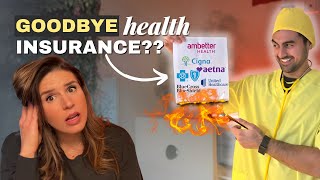
In this interview-style YouTube video, host Victoria S. Dorsano talks with Dr. Sulana Misra, a direct primary care (DPC) practitioner, about a growing alternative to traditional insurance‑based primary care. The conversation defines DPC as a membership‑based model where patients pay a flat monthly fee (typically $50‑$150) for unlimited primary‑care access, eliminating copays, deductibles, and complex billing codes. Dr. Misra outlines three core differences from conventional care: a transparent payment model, substantially longer and same‑day appointments with direct communication channels (text, email, virtual visits), and a dramatically smaller patient panel (100‑400 patients) that allows more personalized attention. The duo discusses which populations benefit most—entrepreneurs, families, people with chronic conditions, and those seeking preventive care—and offers practical tips for locating a reputable DPC provider, including online searches, meet‑and‑greet appointments, and key questions about services, insurance compatibility, and payment methods (HSA/FSA). A detailed patient success story illustrates how DPC’s intensive, continuous care helped an alcoholic patient lose weight, quit drinking, gain employment, and rebuild family relationships. The cost breakdown is explored, noting that membership often covers physicals, urgent‑care triage, basic labs, vaccines, and sometimes expanded services such as medical aesthetics, nutrition, psychotherapy, and weight‑loss medication. Dr. Misra explains how DPC can be combined with traditional insurance for medications, labs, or specialty referrals, leveraging the physician’s coding expertise to secure prior authorizations and negotiate lower drug prices. Looking ahead, she predicts three major opportunities: the spread of direct specialty care, the creation of a DPC network that could include urgent‑care centers and hospitals, and a stronger focus on preventive health. The video closes with a persuasive call to action, urging viewers to consider DPC as a more affordable, patient‑centered alternative and providing links to find DPC clinics and Dr. Misra’s practice.
Chapters
There's no question that health insurance and healthcare has gotten very expensive in the past decade, and honestly, it's probably going to get more expensive in 2025. But what if I told you that there's a new healthcare model that can save you tons of money and get you better healthcare? A healthcare model where you can get unlimited access to your doctor, same-day appointments, and no health insurance hassles. That is exactly what the direct primary care solution is offering. Today we're going to be doing a deep dive into this revolutionary healthcare model, and I'm thrilled to be joined by Dr. Sulana Misra, who runs her own direct primary care practice. We're going to go over what DPC is, how it evolved, the benefits of DPC, the cost breakdown of DPC, and how to leverage that with certain types of insurance to get the most coverage with the least amount of financial burden. And Dr. Mizr and I even go into a little bit of the future of healthcare access. So let's go ahead and dive in. How would you explain DPC or direct primary care to somebody who's never heard it before?
DPC is actually an alternative healthcare model where patients pay their primary care doctor directly. So there's maybe a registration fee fee, and then there's generally a monthly membership fee that can range anywhere from $50 to $150 or more, plus or minus, uh, depending on where you're located and cost of living and other factors.
You see, the rise of direct primary care is not random. It's truly in response to some major, major issues within our current healthcare model. And with significant changes on the horizon, including the expiration of enhanced ACA subsidies in late 2025 that can increase premium payments by an average of 79%, many Americans are for more stable healthcare options. So if you had to outline some really high-level differences between DPC and traditional primary care practices, what would those key differences be?
The main 3 differences are the payment model itself, the access and the time that you get to your physician or with your physician, and the number of patients that physician is seeing. So for example, in an insurance paying, um, a system, generally there are bills, so there have to be codes in order to bill for the treatment or the care that you received. There may be copays involved, so you may not know the actual cost of things. The price is then negotiated with insurance. So you may have a copayment and you may not know that, or you may find out after the fact with that. There may be deductibles and there's very complex coding mechanisms that are purposely confusing to confuse the, the patient and the physician. With direct primary care, we have affordable, more often affordable monthly membership fees. The fee covers most of the services, so there are no deductibles. If we can utilize your insurance, but sometimes our prices beat out the negotiated prices that you've negotiated with insurance or insurance has negotiated on your behalf, so there's no need to pull out your wallet and pay a copay each and every visit to your doctor. When we talk about access and time. I like to talk about this kind of like Amazon, you know, with traditional, with insurance-based practices, often you have really, really short, quick appointments that need to cover 1 or 2 things because that doctor then needs to write a note and then code so they can get paid for that visit. And that is quick and that takes time versus when you're in direct primary care, you actually can have longer visits. Sometimes our visits are 30 to 60 minutes, sometimes even 2 hours long, especially with the initial intake, and you're paying for access to your doctor so you can get same or next day appointments. You also can access your doctor through email, through text, sometimes through cell phone, and through virtual visits, which is really exciting for our patients. And we also limit our patient panel size so that we can give you the care that you need and we're not overburdened with administrative. And generally, the doctors then limit their panels under the insurance model. They may have thousands or tens of thousands of patients that they see, or a fee-for-service model. But with direct primary care, a patient— a doctor's panel can range anywhere from 100 to 400 patients per panel. When we max out that panel, in order to give our patients optimal care, we generally cut that panel on accepting any more patients so we can give you the care that you need. And then we either have a waitlist or we add another physician to the practice. To take on more patients.
So direct primary care can be particularly beneficial for entrepreneurs and business owners and folks who have to pay for their own health insurance because they're not necessarily part of a company or an employer that is funding their health insurance. It's really great for families because oftentimes the subscription model where you are paying the doctor directly, it's very affordable for families where, you know, an individual subscription to a doctor might be $75 a month. The whole family might only be $125 total for the month. I'd say folks who have chronic conditions and need to have a really quick response from their doctor, DPC can be a great option for them. And for people who just want stability with their healthcare access amidst policy changes. And I'd say people who value preventive care, this would be another great service for you folks. So how do you find a good direct primary care provider? Like, what does that process look like? Where are they? Why are you maybe just hearing about them now? Well, I'm gonna let Dr. Solana weigh in on that.
There's a whole bunch of DPC places. You can also Google direct primary care near me. But what I wanna be clear is that direct primary care is by physician to patient. So if there are movements and there's companies that charge a lot more that are riding the direct primary care movement that are not direct primary care, what you can do is you can go direct primary care near me. You can direct primary care Los Angeles, direct primary care NYC. Whatever you want, direct primary care mapper. And when you find someone in your area, or you can even contact any direct primary care doctor and they might be willing to help you and look, because we're all for this movement. I may not be accepting patients at Dr. X, but I know Dr. Y is accepting patients, you know, and we may be able to help you in that way. And you can have a 15-minute meet and greet, but you can find out it's not a medical consultation. I want to be clear. So I don't want you bringing up, I have this, this, and this unless it's Can you help me with this? Then we can say yes or no. But with that 15 minutes, you can see the personality. What can you do for me? What is included in my membership? What is not included in my membership? Can you use HSA, FSA payments? How do I use insurance during this time? And do you accept insurance? And what if I need that insurance or that higher quality of care? What do I do? And there's all these different questions that you can ask before you plunk down your money and sign that contract. And then when we have contracts, each direct primary care doctor offers different things, like we said. So you want to know what they offer. Everything is dependent, dependent on that direct primary care doctor.
So can you share like a specific patient success story that really demonstrates the difference of somebody having DPC access?
I have many that I'm very proud of. There is one in particular that sticks out in my brain a little more than others, and I'm going to refer to this person as a she. I'm going to make it a she, or I don't know, gender neutral. So she was a patient of mine that is about 30 to 40 years old and was an alcoholic. And when we first met, was having hormone imbalances and low energy and fatigue, was unemployed, was a full-blown alcoholic and unfortunately overweight and suffering from a lot of sequelae hypertension, cardiovascular disease, from all of the lifestyle that was going on. That patient was also inappropriately taking other medications by other non-physicians. They met me and we started first with medical weight loss. And with the medical weight loss, the patient finally saw that weight can happen, weight loss can occur, and started getting seen in a different way, but also started wanting more for them. Themselves in their lives. So with the medical weight loss, they ended up quitting drinking. So I have a feeling that semaglutide and tirzepatide and these meds may be indicated for quitting drinking and for alcoholics. They quit completely. They were unemployed. They got a job. They were not speaking to their family members. She ended up reconnecting with her siblings, nieces, and nephews. And her parents and is going to Thanksgiving, upcoming Thanksgiving, for the first time in years with the person that she's in a relationship with to visit her family. So this is a person and they started working, but now they want a better job. So they're in the middle of interviewing as well. That is the DPC level quality of care. However, in order to get there, that patient and I have met maybe once a month twice a month, 3 times a month in order to chat about their specific needs to get them where they are right now.
So let's talk about everybody's favorite topic, money. With potential cuts to ACA subsidies and Medicaid funding on the horizon, understanding your healthcare options right now is crucial.
So like I said, DPC practices can range from $50 to $150 or more, plus or minus, depending on your location. A lot of things that are generally included are comprehensive physicals, same or next appointments, sick visits. A lot of times, if you feel like you have the need to go to urgent care or ER, the ER, we can help you triage that. Sometimes certain practices will include maybe some basic labs in their membership. Other practices may include vaccines like the flu vaccine or screening tests like a pap smear, vision exams. Other things that may be included can also vary from DPC practice DPC practice. So when you, there are DPC practices that are standard and just include like your certain testing, like a fecal occult blood testing or urinalysis or urine pregnancy testing or COVID testing, strep and flu, basic things that we need in order to assess your general primary health. However, there are direct primary care practices that go above and beyond. They may do supplementation, they may do nutrition, they may do exercise, they may have psychotherapy involved. They may, I personally do medical aesthetics along with supplementation and a little bit of psychotherapy because everything's integrated. They may do medical weight loss and/or obesity medicine, men or women's sexual health. So it really depends on your primary care doctor and what they feel comfortable and what their niche is.
Now, I've gone through some ways to combine DPC with traditional insurance plans in another video, which I will link here, uh, somewhere above here. But I'm going to let Dr. Su also go into detail about how to do that specifically. And what that actually looks like in practice?
That's a great question and one that I get asked frequently. I wanna use the weight loss meds as a good example of this. First of all, with your insurance, depending on your insurance, whether it's an HMO or a PPO plan, each insurance has a list of medications that may or may not be on formulary. So let's say Wegovy is on formulary, but your primary care doctor knows nothing about obesity medicine treatment and does not know how to write and code code for it in order to get you approved. And maybe you have insurance that you need to see that primary care doctor in order to get it approved, or you need to see a primary care doctor that knows how to code for it and write the right thing so you can get it approved through your insurance. I have a lot of patients that have insurance and we utilize the insurance for meds or labs, but they pay me directly for my service. So how this works is They may be not getting the medication through their insurance plan because maybe their insurance-based primary care doctor is not aware of what's going on or how to code. They get a denial. They then come to me. I know how to code for it because this is what I do, because practicing direct primary care allows me to open my eyes and understand what's going on within the system. And so I can swoop in and use that time that I'm not paying myself, trying to code and pay for myself, to fight insurance and call insurance and do prior authorizations and potentially get the medication covered for you. We also have our own negotiated prices for medications because large panels of DPC patients don't have insurance. So we have negotiated prices and sometimes we can get your medications actually covered at a lower price, at a wholesale price or a discounted price which may be cheaper than the copay you're paying with your insurance. So DPC can work with insurance. It depends on your individual insurance and their negotiation with what they've negotiated with meds, with labs, with imaging. This also is very, very popular with men's health. A lot of times men's health, with men's sexual health, is not covered by insurance. And the treatments are not covered by doctors or doctors don't feel comfortable in systems doing these treatments. And so for men's health, a lot of patients leave the system to find a doctor that can treat them with testosterone replacement therapy or similar. And they will, we will use the insurance for labs, for imaging, for urologist or urologist follow-up or a specialty follow-up if we get into that territory. And that's how insurance and DPC work together beautifully.
And then a follow-up question. So let's say I have traditional insurance, let's call it an HMO. And maybe I don't necessarily love the medical system in which I'm operating in, maybe there's not many options nearby me, right? So I get a DPC membership with a primary care. So do you see situations like that, where somebody is exclusively using DPC for primary care, even if it's not specialty prescriptions like like weight loss medications or men's sexual health, but just going for primary care needs and then utilizing their main insurance for if there is anything like, you know, major, if they have to get a surgery or, you know, God forbid, a critical illness or something like that pops up. Do you see that stuff?
I have insurance and I have direct primary care as I have a direct primary care doctor. So I go to my direct primary care doctor for a toenail that may have grown in something, a wound that may not heal, that needs some— maybe an incision and drainage, some basic labs, my regular checkup, Pap smears, mammography, vision checks, vaccines. But my primary care doctor doesn't do above and beyond because they're not specialists in integrative medicine. So they don't do obesity medicine or medical weight loss. But I don't need those things.
What do you see as like the 3 biggest opportunities for DPC, let's say, in the next like 5 years?
One thing One thing I see is the DPC movement spreading. Not only will it be direct primary care, but there is a parallel movement that has started recently called direct specialty care. So the direct-to-doctor movement is expanding. That's one thing that I see. The second thing I see is that potentially we will create a network within the direct primary care and direct specialty care system. This will probably be called direct physician care, where we may even open urgent cares. We may open our own hospitals, and we may end up doing studies to see how we're bringing the cost of things down. So that is another thing that I believe will happen. And then I think that this is what most people want, and this is what direct primary care does. Instead of targeting current illnesses and chronic care issues, we'll be focusing not only on that, but preventative healthcare. I think the movement of medicine needs to move from treating current illness to also preventing further illness and preventing illness from starting in the beginning, and that's what direct primary care aims to do.
Guys, for too long we've accepted a healthcare model that's frustrating and expensive and not really effective. We've really gotten used to just rushed appointments and long wait times and feeling like we're just another number. And that's of no fault to the doctor. It's more so the system in which they're functioning under. And that's why I think with direct primary care, there's another system that allows both the patient and the doctor to truly thrive. Like imagine going to a doctor's appointment where the doctor greets you by name and you get to have an hour-long appointment with them, really go through not just one concern, but multiple concerns that you're dealing with. You don't have to make separate appointments for each concern. They spend time with you, listen to you, and they partner with you on your health journey, and you can text them directly when you have any concerns with your health. Imagine getting all of this for less than your monthly cable bill. And the coolest thing is this isn't a fantasy. Like this is actually happening across DPC practices. Across America. And as the healthcare landscape continues to evolve, you now have the power to choose a different path. A path to choose where you get to be in control of the quality of your healthcare and where quality care is affordable and where your doctor works for you, not the insurance companies.
This is not just a movement by physicians for patients and for physicians. It's a movement for everybody that can include everybody who cares about care.
The future of healthcare is here and it's more accessible than you think. And if you're curious about where to find a DPC doctor near you, I put the links down below where you can find a clinic nearby your community. And guys, don't forget to like this video, subscribe to the channel. I greatly appreciate it, and thank you so much for watching. DPC is really, really a cool movement, and if you want to learn more about them and advocate for the DPC movement, I'll put those links down below as well. And thank you again to Dr. Sulana Misra for hopping on to the video and giving us more context as far as what DPC actually can do for you. And if you want to learn more about Dr. Misra's practice, I'll put her info down below in the description too. Thanks everyone, and I will see you next time.