The Top 5 Lessons I Learned from My ACL Recovery
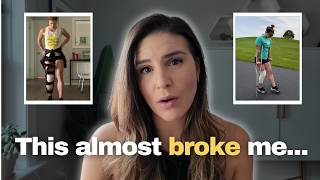
Volleyball player Victoria S. Dorsano tore her ACL in 2020, then fractured her kneecap two weeks after surgery. Over six years rebuilding, she learned that rest matters more than pushing hard, being an athlete is a mindset not just a sport, and that asking for help is strategic, not weak.
Chapters
About 6 years ago, I was lying on the floor of a volleyball court crying my eyes out and convinced that my athletic career was over. Yet today, I genuinely believe that that ACL injury was one of the best things that ever happened to me. And I know that sounds insane, but in this video, I want to bring you through my viewpoint of the past 6 years since my ACL journey and recovery to teach you the 5 most important life lessons that I've learned throughout that process and why I'm able to say that I'm so grateful for that experience. To Despite it being grueling and difficult to go through. And if you're currently going through an injury or stuck in that dark place wondering if you're ever gonna feel normal again, then this is for you. Because here's the truth, the physical recovery is only about half the battle. What you learn mentally and emotionally is what changes your life. Quick background if you're new here, I'm Victoria. I'm a health coach and volleyball player and just overall activity enthusiast. I'm an active person. I love doing new sports, new things, which is why in 2020 when I tore my ACL, it was so incredibly difficult for me to slow down and kind of halt all those things that were so important to me. I also fractured my kneecap 2 weeks after surgery and then spent the entire next year rebuilding my body from scratch. I've made plenty of videos about the physical recovery side, exercises, the protocols, all that good stuff. But today I wanted to go a little bit deeper. These 5 lessons aren't just about getting back to your sport. They're about becoming someone stronger and more resilient and more self-aware than you were before the injury happened. So let's get into it. Okay, so the first lesson I want to point out is that time is relative and dark times do not last forever, even though it might feel like like it. When you go through an injury that not only pulls you away from the sports that you love, but makes it difficult to even be independent, and all of a sudden you can't shower on your own or use the bathroom on your own or even get into bed on your own, you can feel like you're trapped in this nightmare that never is going to end. And it becomes really, really hard to see the light at the end of the tunnel when for the first 4 weeks you're really just trying to survive. Even beyond that, when you start getting into like phase 2 and 3 of the recovery process and you can do a little bit more, you still have these never-ending questions cycling through your brain. Am I ever gonna be pain-free again? Will I ever be able to play the sports that I love? Will I ever feel normal again? And honestly, my favorite one, is there ever gonna be a day where I'm not thinking about my knee? Because so much of your energy goes into just thinking about how to walk, how to move, how to not reinjure it. And I don't think that this is unique just to an ACL injury. I think for any injury that an athlete or an active person goes through, there's those thoughts of, is this the end for me? Am I ever gonna be able to feel normal again? And I think just saying that out loud and having you guys hear that, that, that is an experience that I've had, that so many of you guys have commented on these videos and have also had, just knowing that it is a common hurdle to overcome and that you're not alone in that. I think that in itself helps us to know that, yeah, this is gonna get better. We'll be able to get through it. There's light at the end of the tunnel. Just keep moving forward. But back to that time is relative component, because this is important. When you're going through the recovery process, it can feel like a grind, just day after day focusing on trying to get better, and your world starts to feel like it becomes very small. So having something to pull you out of that and look forward to, aside from getting back to your sport, because that can sometimes feel so far away— having something like a trip or an adventure planned can be so helpful. It all of a sudden pulls you out of the day-to-day grind and has you reconfiguring how you're thinking about your days from 1 day post-op, 2 days post-op, to maybe 2 weeks out from my trip or 3 weeks out from my trip. That for me was super, super helpful. I know I had my wedding and my honeymoon 5 months post-op, so knowing that I was going to be hiking in the Appalachian Mountains gave me purpose in my recovery and had me look towards something else and just made it a lot easier to get through that and to feel like time wasn't so slow. This actually became such an impactful motivating driver for me through my recovery process that I decided to start taking people on group adventure trips. We actually I actually have one coming up in August of this year, 2026, in Peru. We're going to be doing some hiking around the Sacred Valley, going to Machu Picchu, and just experiencing a different culture. So if you're wanting to join a group of active travelers, then I'm going to put the link down below in the description, and maybe that could be your thing to look forward to. Lesson number 2 that I gained through this process that was so important to me is to respect rest. Your body is not a machine, and 1 2 does not always equal 3. Learning how to tune into your body's signals and actually heed them before they become problems is a skill that you get to practice here. Because ACL injuries are a type of injury that require like a very active recovery process. You are constantly toeing the line between pushing or resting and doing therapy or recovering. There is a time to push in your recovery process and to push the exercises and to do it big and to really dig in there, and then there is a time to back off and rest. You want to know how I broke my kneecap? I didn't know the difference between those two, and I built up my quad muscle so strong so fast that it actually snapped my kneecap in half. But that wasn't a personality trait that I just acquired out of the blue. That was something that I had before going into this whole ACL process. I was somebody who pushed and pushed hard, tired, pushed through, sore, pushed through, body feeling like the gas tank is empty. Oh great. I'm gonna push harder because I'm not weak. I can do this. That didn't turn out great for me. You really get an opportunity to work through that in this process. And now to this day, I use those skills all the time and I'm so much better for it. When I'm feeling burnt out, I take the last game easy, or I choose to walk instead of lift sometimes, or I just rest. I just don't do anything. I've been honest about this. I still have knee issues from time to time. Sometimes my fat pad in my knee gets a little irritated if I increase my load too quickly, my lifting, or just demand too much of it. But now I'm able to catch that, sense it early, and back off before it becomes an issue. The whole process really allows you to learn how to respect your rest. If something's not feeling right, your body is not your enemy. It's just giving you some information. Third big life lesson that I learned in my ACL journey is that being an athlete is a mindset. And just because you're not playing your sport doesn't mean that you're not an athlete. This one was a really hard one for me to accept because I associated being an athlete with being very active in my sport. And when I couldn't do those things consistently, I felt like I lost a part of my identity. But even pro athletes have off-seasons, time where they are away from their sport to decompress, to rest their minds, to rest their bodies, and to recover from injuries. Athletes are people who just love to push their physical and mental boundaries in the pursuit of getting better at something. And guess what? Physical therapy, rehab, that's part of that pursuit for any athlete at any level. It's how you show up to your rehab, to your physical therapy, to your training, the attention that you pay to your technique, the effort that you bring, the mental game that you play with yourself. That's athletic. Athletes rise to the occasion, especially when things are hard. They dig in, they get 1% better each day. They study their form on the smallest movements because they know that makes a difference. That dedication that's in here and in here. You might not be playing your sport right now, but if you're showing up to rehab, if you're doing the unglamorous work, if you're still staying in the fight, you're still an athlete. Don't let anyone, including yourself, tell you any different. But here's lesson 4. You're not only an athlete. That's not your only identity. And this might be one of the most important things that I learned when volleyball was all of a sudden taken away from me. I realized that I put all my eggs into that basket. My entire identity was wrapped up in being an athlete and an active person. So when I couldn't be that way physically, all of a sudden I didn't know who I was, but recovery really forced me to slow down, which for active people is very uncomfortable. But it was in that stillness that I got in touch with parts of myself that I had neglected. I decided to spend some time cooking more and actually enjoying it more than just doing it to fuel. I painted. I played music again. I learned how to create content and build a YouTube channel, the one that you're watching right now. I nurtured my relationships with my friends and my family instead of just prioritizing games and training. So here's what I want you to hear: your sport is important. Your athletic identity is real and valid, but you are so much more than just that. And when you develop these other areas of yourself, it actually makes you a better athlete because you start to have these other aspects of your life that help you feel fulfilled and other identities to lean on and to feel grounded in when your athletic identity is being challenged, because all of that just makes you more resilient and more balanced and more whole. The last big life lesson that my ACL journey has taught me is that rebuilding or Building anything takes a team. Here in the US, we live in a very hyper-individualistic society. We celebrate the person who pulled themselves up by their bootstraps and became the self-made millionaire or billionaire in this day and age, except that's not actually how it ever works. That's how we like to tell the story, but every successful person who's well-adjusted and humble will tell you that they didn't do it alone. Same with successful athletes. There was a mentor or supportive parent or spouse, a team behind the scenes supporting them. We as humans are not built to do things alone, and rebuilding yourself from the ground up from an injury is not an exception. There were so many times that I needed help showering, reaching something, getting dressed, and those were just the physical needs. I also needed someone to talk through my fears and my insecurities with the days that I never felt like I would be the same. The mental and emotional support was just as crucial sometimes if not more crucial than the physical. And learning how to actually ask for that support and to say the words out loud, hey, I need help, not only made my ACL recovery so much better, but it became a very strong skill that I leaned on in building my business, even in my marriage, and in my friendships. Asking for help isn't weakness, it's strategy, and it's self-awareness. It's recognizing that you're not made to carry everything alone. So If you're in the middle of recovery right now and you're trying to tough it out by yourself, stop. Reach out to your support system. Tell your partner what you need. Tell your physical therapist when something isn't working, or join an online community with people who are going through the same thing. Because honestly, the people who come back strongest aren't the ones who've done it alone. They're the ones who are brave enough to ask for help. So those are my 5 big life lessons that I have learned in going through this process. But I have to say, they definitely didn't only apply to getting through my ACL recovery. They have changed fundamentally how I show up in my life and how I coach my clients, how I nurture my relationships and how I approach challenges. These lessons have fundamentally changed me and I'm so grateful for it. So if you're going through an injury right now, I know, I know it feels hard. I know it feels endless, but I promise you, you will come out on the other side. And if you show up for the process and ask for the help that you need, You're gonna come out stronger than you ever were before. If you want more specific help with your ACL recovery journey or recovering from any injury, I've put together a playlist of all my videos that I've made of my process and different things that have helped me, and I'll link that down in the description below. And again, if you're looking for an active adventure to look forward to, then definitely check out our Peru trip coming up. And lastly, I wanna hear from you guys. If you've gone through a sports injury or an ACL injury yourself, or just an injury in general that has changed how you've seen and done life moving forward, I wanna hear what's the biggest lesson you got out of it. I think it's so important for us to all share these things because somebody might resonate with that experience and it might just be what somebody needs to see. Thanks guys. And if this video is helpful, please subscribe to the channel. Give this video a thumbs up. I greatly appreciate each and every one of you, and I'll catch you guys on the next one. Bye. Mm-hmm.
More from Victoria






3 things you should do to make sure you get the most out of your fish oil #legion
