How We Run Profitable Sales Funnels on Day 1 (and stay profitable) | Vince Reed | E5
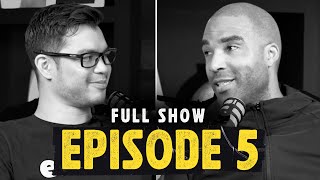
Vince Reed breaks down two profitable video sales funnel models: a three-step brick wall (opt-in to webinar to order) and direct-to-video. The key is knowing your exact numbers—conversion rates, cost per click, ad spend—and making multiple offers to existing audiences through retargeting and watch-time-based targeting.
Chapters
So today I got a good one for you.
Cool.
So we talk often about people not believing something works and not having certainty that, you know, even if they believe something works, that that thing will actually work for them. Everyone typically knows you can make money online. Most people believe it's possible. If I could show you how to guarantee that if you were to start a business leveraging any type of video funnel with 100% certainty, you would be profitable, that interests you.
Sounds good to me.
That's what we're going to talk about today.
All right. All right, let's do it. Episode five. All right, what's up, guys? Episode five, More leads, faster sales. My name is Vin Shried. I'm the founder of eboov.com and today we got a good show for you. I got a question. You ever created a campaign, a funnel, a marketing funnel, and it's just terrible in the beginning, it's not making any money, or have you ever created one that starts making money, then it just goes extremely bad and then you start losing money and it's this roller coaster. Well, today we're going to talk about how you can run profitable funnels on day one and how you can keep them profitable through eternity. Wouldn't that be cool? We're going to dive into that now, specifically on this episode, which is a lot longer than our typical episodes. And we did this because we wanted to really go below the surface so you fully understand how you could never lose money on a funnel again. Wouldn't that be cool? And we break down a couple different funnels. One, we talk about the standard three step brick wall funnel. Opt in page to your webinar VSL to your order or application page. You know, the funnel that you see on 99% of ads that you click on online. We talk about that funnel and we also talk about your standard, basically what I call a buy now or, you know, apply now funnel, which essentially you click on the ad and you drive traffic right to the video and. And then the person can book a call or they can buy the product right now. Okay, so we talk about those two in depth. But more specifically, I share with you how you can create these funnels and be profitable on day one and continue to run these funnels and make money, not just a lot of revenue, but actually be profitable. So we dive into that. Now, I also share with you an amazing tool that we use as a company in terms of really figuring out the math. All right, but. Because if the math is not mathing, you're not going to make any money. So we show you this calculator that we use to where we can pretty much guarantee whether or not our funnel is going to be profitable outside of a couple variables that you have to make sure are correct. All right, last but not least, make sure you hit that, like, button and subscribe to the channel and support the content, especially if you're getting value, because we're here to serve you guys and make sure you have the very best information that's working right now on the Internet today. With that being said, let's dive into episode five of more leads and faster sales. Enjoy. All right, so let's dive right into creating profitable funnels out the gate, because right now it's tough times. Yeah. Side note, great job on the caster method playbook.
Thank you.
Sure. Seeing a lot of that.
Yep.
Here you go, guys. Caster method playbook. Let's talk about money. Because you're watching this because you want to make money specifically for video funnels. All right, so again, there's two types of funnels, right? You have the brick wall funnel, got the opt in page. Okay. You opt in here, Then it goes to the video. Okay. Then you have the order page. Okay. That's funnel one. Right. Right. Now, this order page could be like a buy now or it could be a book, a call.
A call page where they, like, fill out the application, right. And then the second funnel that you see people using, because they probably heard us, you know, this brick wall pages left and right, Right. So they get rid of this and they drive traffic funnel number two right to the webinar, okay.
Directly to the right.
And then you've got this same thing happening, right? It'll be a buy now or book a call. So, like, you just sending traffic right to the video. Okay.
Usually they would. In that scenario, they would have a video on that page. And then underneath, what is it, like a buy now type thing? Like two step.
Yeah. Well, like, sometimes this page will just be a long form page. Right. And then they could buy at the bottom. Okay. Right. They can buy at the bottom of the page. Right. Or it separates into those two. Right. A separate sales page and then an application. But most people, if now that you actually bring it up, they're just sending people to the page, and then down here will be the buy. Or I've seen, like the book of call would be. Right.
Yeah, that's true.
Okay, so those are the two types of funnels. Brick wall funnel. And then just say buy now or direct to apply. Right. So the ad would Lead right to one of these. Those are pretty much the main two ways people use funnels, video funnels, to build their business. Right. So the question is, how come most people aren't profitable? I mean, if you look through history, right. You go look at everybody's funnel. I'm even talking the gurus of the gurus. How come they never just keep doing what they're doing? Right. How come it'll start off with maybe funnel two and then all of a sudden you'll see them doing funnel one. They keep shifting, the product will change. The offer is always shaped, always doing something different. Typically that happens because one one starts off being hot and they're making money.
Yeah.
And then it slows down for whatever reason. Maybe ad cost goes up, maybe the conversions are down. Maybe they have an issue with their sales team not closing and they can't seem to be profitable.
Kind of like up and down.
You know, I was listening to a podcast recently, I'm not going to say the person's name, but it's a guru that most of you guys would know. But this person like cut their whole agency last year and cut their high ticket program and is now just doing like the workshop model. Right. Because for him it was more profitable. He said it was more of a lifestyle thing, which made sense. But in reality, if the other thing was likely profitable, there wouldn't be. It probably wouldn't shift. Including me, including when I had my agency. Right. So we made a lot of money with when we would had our agency and set up my ads. But what would happen? We'd run into the same thing that everybody else is falling victim to. Just the whole process just wasn't profitable. Maybe your overhead went too high. Maybe there wasn't enough money coming in to pay staff and it was just too much work. So things have to change. Yeah. So ultimately the funnel wasn't profitable. Why is that?
Right.
So when we launched eboov, Right. For me, one, I wanted a offer and a product that allowed me to play a much bigger game. Right. Because I think the work's always the same. Like if you're selling a dollar product or a $10,000 product, to me it's the same amount of work. Probably actually more work for the dollar product.
Probably. But I mean we gotta experience that like for other products. So.
But my point that I'm making is I looked at this because I'm like, I don't want to do another thing and get going and then all of a sudden it's not making any money.
Yeah.
So that's why today I'm going to talk about a really simple process to ensure that the funnel is profitable. Now, there are some components to this. There's two parts. The first part are essentially knowing the numbers to the safe.
What do you mean by that?
So if you add the numbers to a safe and there was $2 million in it, you likely wouldn't forget those numbers, Right, Right, exactly. And if you use those numbers, would the safe open? Yeah, right. It would always open. Right. The numbers, the safe. So if you had to go from California to Florida, let's say you had to drive there.
Yeah.
What would you do? What would be the first thing you'd do?
Well, one transportation bar to what's the fastest route?
Right. And incorporating the fastest route. Route. What does that specifically entail? What would you need to do to get the fastest route? What do you have to gather?
Well, I have to find like the. The roads.
Right.
That are best.
Right. The directions.
Yeah, the directions to get me there.
And it would tell. The directions would share with. Tell you what, how many what?
Or how many miles it takes to get there.
Right. And miles have specific numbers, correct?
Yeah.
Would that ever change? No, would never change. Right. That stays the same thing as like the numbers to the safe. I started to realize before I started this company that it's always math. So for example, if you look at these funnels, this brick wall funnel is always going to convert somewhere around 20%.
Right.
You might get someone that writes a good opt in and you'll hear them brag, oh, I got 40%. Then it's going to eventually hover around 20%. Why? Because people get to this page and most people don't want to just give you their name and email address. Yeah. They already think they know the magic trick. They know that they're going to go to the other side, there's going to be some video, you got to offer them, some high ticket things so they don't want to give you their information. Yeah. With that being said, do you think that the 80% of people that never opt into a brick wall page, on average, all 80% would not want the product? No.
There are people.
There'd be people that want it. Right. I started thinking about this, so I started looking at the math and the numbers and I realized the biggest thing for those of you watching right now, the reason everything that we mentioned in terms of companies that are successful that end up quitting, because it's not profitable, they get burnt out or for whatever reason, because they're not making Enough money. They're not making enough money because not enough people.
See what they have to sell. I don't know what that is. It's an arrow coming from eyes. But not enough people see what they have to sell. Yeah. Right. It's math, and it starts with knowing the coordinates, knowing the numbers.
All right.
I'm going to say one other story just because before I give you what you need to do to make sure you get the numbers so you can ensure profitability. I got a story because this is. This might resonate with some of them. So I've told you this story before. When I was in real estate, there were a bunch of loan officers and everybody. During this time. This was way back in 2006.
Yeah. Before the.
Before the. Before the, like. Oh, crash, crash. Right. At our office, everybody was averaging. The top guys were averaging anywhere three to five loans a month. I was somewhere in between that every month. I was probably the top five in. In that company.
Okay.
There was one guy doing 10 to 20amonth. Everybody swore he was cheating. Everybody swore he was getting leads under the table. Everybody swore there was something going on. There's no way this guy could just crush everyone. And he was making. Back then, it felt like, to me, it was like, oh, God, this guy's like crazy rich. He was doing like 30 to 40 grand a month.
Okay.
Right. Everybody else was somewhere in the 7 to 15 range.
Yeah.
I kept asking him, like, how are you doing this? Long story short, he would just. At. When I was there, he would say, I would give my clients the best deal. That's what he would say. Come to find out, when I went to work for him, because he ended up leaving that company, he was telling the truth, but he was leaving out some very important details. And the detail that he was leaving out was that this guy was doing two things. One, he was more focused on his. The next month's pipeline, the next than he was the current months. So when he would talk to clients, his goal was just to get something in some form of documentation in from the client. If you were doing a loan, he would say, let me get a bank statement to lock the loan. Got it. Got it. And he would try to get as many of those onto his future pipeline as possible. That way he'd say, hey, let me lock your rate. I just need to create what he would call a ghost file. And he would get something from you. A pay stub. Just one.
So they got some skin in the game. Right.
Where everybody else was trying to get everything together, they were Trying to get like, I need. I need your last two years w2s your bank statement. And then they would create the file. This guy would just get one thing because he knew that if you gave him one thing, you were most likely not going to work, going to go with anyone else because you already sent something to one guy. Right. Plus, he would do little things. This is kind of going overboard. But he would do what he would call landmine sale. So he would offer the client the best deal by essentially buying down their rate. I'm not going to get in that. If you're in the real estate industry, you know what that means. And then he would tell the client what the other people were going to do because most people back then thought a free loan was a better loan. And he would get. He would actually charge them buy down their rate and then explain how it was. He could write off the fees and he would save X amount over time. And he'd say, this is what the other people are going to offer you.
He kind of like educated.
He would educate them and he would tell them, show them how that was a worse deal. And he would tell the other guys to go shop them. So, like, they were like, what? Anyhow, the whole point of this was he would have. When I started to see what he'd do, he would have 20 to 30 people in that pipeline of people that sent in something.
Yeah.
So then he would just follow up and be like, hey, did you go shop me? Great. What'd they say? I told you. And then they would end up sending him in more stuff so he'd have a bigger pipeline. Okay, all right. Now when it comes to digital marketing, how is this related? Most people, okay, are trying to, one, put this whole thing together before they start not understanding the court dates or the numbers. Right. So they're usually never even get started. Because just like, how most too much because it's too much. Right. Or. And they never know where the real problem is because they've got so much stuff going on. And let's say they're using a brick wall funnel and they get, I don't know, two leads and they don't get no one buys. Right. They go, is it by webinar? But the real problem is what I put right here. Not enough people saw what they have to sell Y. All right? So that's why they're not making money. But how do they guarantee profitability?
Okay.
E.com for/calculator, which we have here, they don't break down the numbers first. All right? So we created this tool, which we use before we launch anything to give us a realistic look at, like, if we launch this funnel, okay, how much money can we make? Right. Right before we even get started.
Now we're taking into account that you've got a good product, right? Because if your product sucks, it doesn't matter if Jesus created it. Jesus probably doesn't create bad products. But you get the point. It's a bad product or service. You're not going to make money regardless if you know the coordinates of the math. So step number one is like, what does it cost? And we're speaking to you advertisers out there. What does it cost to get one person to click on your ad to land on your page? So this calculator.
Three step funnel.
Yeah, let's start with the three step funnel.
All right, price point, do like, what, 300?
We'll say. No, let's just say the clicks are $2 a click. Let's put that in.
Well, for the product price, just for.
The calculator, okay, so the product price. Let's say a $500 product for fun. Okay?
And then $2.
$2 is the average cost per click. Actually, I've heard it's gone up, but let's just leave it at $2. That means if you send 100 people at $2 a click, that's $200.
Yeah.
All right, so what we're going to do is let's say you're spending $100, okay? So total ad cost notice, $100 a day times 30 is 3000amonth. So go ahead and put 3000. 3000 for total ad spend. Okay? All right, now as you go down the calculator, all right, on average, on the brick wall funnel, 20% opt in. Well, let's just be generous and let's say, because I know there's a guy out there watching right now, I get 30%.
Okay?
So let's just do it for that guy. Even though the average is 20, we'll.
Keep it at 30.
Let's get do 30%. Okay, right now, this is standard numbers. On average, 35% will watch the video, whether it's live or evergreen. So put 35%. Watch the webinar VSL.
Yep, got that.
And let's just go. It's normally 2 to 3% will click and buy. So let's just put it at 5%. Let's just go high. Everything's higher than average. All right, we'll go.
We'll go higher.
5%.
5%. Okay.
All right, so what are, what's the numbers in terms of revenue and leads and all that right there.
All right, so for the standard three step funnel, in terms of the traffic, you drove 1500 people. And in terms of sales. Eight sales.
How many people saw the presentation?
So 1,500.
No, saw that. Saw the brick wall page or opted in. Saw the brick wall page was how many?
1,500.
Yeah. So how many people saw the presentation?
Oh, okay, 100. Well, 450 opted in. And then 158 watch the webinar VSO.
So let's just take that for example.
Yeah.
Before we move forward. And this is what I, what I want to get at here in terms of understanding the math and the numbers. Like we know the numbers. Like I've written that formula down. We've done ads slapping stuff. If you look at our last episode, people know the math in terms of the percentages, but they aren't looking at the actual numbers. Right. Because if you want to make more money, okay. The amount of money you make is in direct proportion to the number of offers you make. Right? Right. So if you have a product and you sell your product to 10 people and I have a product, the same product, and we're selling it the same way and I sell it to a thousand people, I'm gonna make more money. Yeah. Right. Because more people saw what I had to sell. So what we're doing right now is how do we guarantee profitability? So how many people saw the presentation for the traditional not percentage that opted in? Saw it. Right. 35% are gonna watch. So what's that number?
158 saw the webinar or the BSL.
Okay. So 158 saw it. And how many people clicked?
How many people click? 1500.
So just say that out loud. It just this. Let's just, let's sit in that for a second.
Thousand five hundred people click. Just got to.
Got to the page.
Yeah.
And 158. This is over a month. Saw what you have to sell.
And we're saying this assuming that they gave you the real email address. Right. Because a lot of those people won't even don't give you the real email.
They're just probably opting out of curiosity.
Curiosity and like clicking on their side. Right. So of the people that sell, we put it at 5%. And by the way, this is 30%. This is high numbers. Normally it's 20% opt in. So it'd be even less 5% buy. What's that number.
So that's eight sales.
Eight sales.
And the cost per sale is $375.
So you're. This is again, getting into the math. So $375 is the cost per sale.
Per sale.
So let's go through the math. What's the revenue on that?
So the revenue is $4,000. Cost, of course, is the 3,000 ad spend, and profit is $1,000.
Thousand dollars.
Thousand dollars. Yeah.
This is why I think we could stop the video right now. This is why most people don't run profitable businesses.
Now.
What would they do? This is. Let's say we're that business. Right? Okay. This is happening.
Yep.
First thing someone's gonna tell them is, you're selling too low. Raise your price. So let's raise the price 1500.
Okay.
To $1500 per price point. Yep. And let's see what that does.
Okay. So with all the numbers being the same except the price point, revenue is now $12,000.
Minus the cost. 3,000. Profit, 9,000.
Got it. So you profited nine by raising the cost. And we're assuming the conversions stay the same, and we're at 5% when it's really 2 to 3. Yeah. So one more time, say the profit.
Nine thousand.
Got it. Okay. You can see why it's very difficult. Now what we do is we leverage eboo, where we realize what I showed you here, which is the amount of money you make is in direct proportion to the amount of offers you make. We also understand that there are people who would never opt into a brick wall page that would still buy our product. So we got rid of the brick wall. Let me. Let me go through the numbers real quick so people understand. Right. So for our specific funnel, okay, we typically average anywhere from 50 now all the way up to 80% conversions. Right. The. Our members are usually somewhere between 40 and 60.
So I have 50 right here.
So we have it like that. So 50% of the people land on our webinar VSL, and 50% of them are opting in. All right, so 100% of every click lands on the presentation. Why? Because that's the whole point of the funnel. Right. When you create these funnels, the goal isn't to get people to the brick wall. The goal is to obviously sell the product. But more importantly, in order for them to buy the product, they've got to see the presentation to know what they're buying. That's the point. I think people have forgot about that being the thing. We realize that. Right. So we send 100% of people here, right.
Land right on the VSL.
They get the press play.
Right. They get to press play in which we start building retargeting audiences and the video does some really cool stuff. We won't, we won't really play on that right now. Okay. But then the lead pop pops up and then people can opt in. So we can lock the presentation at any point that we choose and then they opt in. And 50% of the people that are getting to that pop, at bare minimum are opting in and becoming leads. Here's the kicker. This is the part that is really exciting. Of the people that opt in, we found that 85% of the, of the 50 watch 100% of the presentation, right.
All the way to the end.
So we're getting more people. If you do the Math, it's like 51 times more people to see what we have to sell. Why? Because if you want to make more money, okay, people have to see what you have to sell.
Well, that's if like, for example, we use like 60% opt ins, which we're getting, right.
We're just putting it down because we went high for them. I want to go low for us.
And that's the reason why, like, you know, when we say, you know, 51 times faster sales, you get 51 times more people to the end. On average, we're getting 60% opt ins with our campaign. So out of the 85% from that 60.
Yeah, let's, let's lay this out so the people watching can really see this. So our funnels are typically anywhere between 60 to 80%, 79 at the high. But so if we're at 60% of the people that get to our webinar and get to the lead pop and opt in, that 60 leads opted in. And then the video and the VSL webinar continues to play. Okay, so that 60 people are still watching. Remember, they opted in out of necessity because they actually wanted to continue watching vs opting in. Out of curiosity, on the brick wall page, of those 60 people, we found that.
85% of them watch 100% of the video.
And also too, that's, you know, with the example when you send like a hundred people.
Right, Right. So if you look at the math, right, 60 people opt in. 85% of the 60, that's 51 people get to the end. And at the end we have a link there where they can click through and go to our order page or our application. That's how we're getting 51 times faster sales. So let's go through the math on that.
Okay, so you just want to stick with the 50 on average.
Let's go 50. Because I want to go lower, because I don't. We went higher for the Brick wall funnel. Let's go lower for our funnel.
Okay. Yeah. So same amount of traffic. 1,500 people got to see the webinar in BSO. 50% opt in. So that's 750 people opted in.
Okay, so let's stop there. So we got how many leads?
750 leads.
And the brick wall got how many leads?
450.
Okay, but 100% of every click saw the presentation. Exactly. And this is where people don't understand. Whereas they're like, oh, well, the leads. Yeah, you got more leads. And they can argue whatever, but they can't argue that 80 people never saw any portion, even one second of their webinar.
Exactly.
Whereas 100% of every click sees the presentation. Now just kind of going deeper because with this podcast I want to make sure that we're going deeper for deeper than the surface level stuff you see online. The reason this actually works, and this is just kind of a side note, is based on what's being said before they click. Right?
You mean.
Think about it this way, right? If we're clear on the ad of the problem and we tell them they're going to go to a training and we're going to solve a problem, and then they just click and they're able to just get there and start watching the giving first. Right. Providing value immediately. What do you think the person on the other end is feeling as they go through this process? So let's just take that person. Let's say we're running the same ad. Both ads are clear. Both ads are expressing the problem. One ad clicks lands on a brick wall. One ad clicks lands on the presentation. How are you feeling in that moment?
Well, when it hit, well, let's say the brick wall, what is your wall? Honest? Like, what's your gut? What do you. What are you feeling?
A little bit annoyed, frustrated. Knowing that if it says like, watch the training. Kind of want to watch the training.
Exactly.
Yeah.
Right. So then how do you feel when you just land?
You can watch pretty much like much better because one, I'm already getting what I wanted.
Right, right. Cool down to there. All right, cool. So, alright, so now we got the lead. So now let's go to the. How many people? We're saying 85% watch. So how many people is that?
638.
Compared to what? On the brick wall funnel.
Compared to 158. And then. And again, that's all the way like.
Mike, how you gonna just roll over that, do that, say that all the way through? That's all. Go back to the. How many people saw it again?
158. For the brick wall funnel. 638.
Opt in to continue watch and watch the whole thing.
Watch the whole thing.
Okay. This is the thing that we don't talk about either.
I just watch it.
Not just watch it. We're seeing 85% watch 100% of the video because they're opting in to continue watching. This is the difference that people don't understand.
So it's like the intent.
Right. So like an argument, this person. Well, they're opting in and people can see it. Well, they're not necessarily always watching all the way through. Because what will happen is people on the brick wall opt in and say, this webinar is horrible. Our leads are people that are watched and said, I want to keep watching and watching all the way through. So pound for. So for the same hundred clicks or whatever, what do we put the spin was 3,000.
Yeah.
Our people watching are way more likely to actually take the action we want based on everything that we're talking about here. Right, right. And this is why I wanted to go to this. So we're talking about how are we making it profitable. All of these things like are reasons and take part in the profitability of our funnel. And again, knowing the math, knowing the coordinates. All right, so if we take that same 5% on the people, now we at what's. How many? 600. How many people watched?
638.
638 people watched all the way to sell your offer. Mean they got to the end and they saw your order page or your book a call page. Right. What is the number in terms of sales?
32 sales versus what? Versus the 8 sales with a 3.
Step funnel on the same $3,000 ad spend. Yep. All right, so what's our numbers looking like from a profitability perspective? Let's go back to the 500 though, first. Okay. How we had before because we had the product at $500.
Okay. You want me to go.
Yeah, put it back to 500. Let's see.
Back to 500.
So do so remind me of the brick wall funnel numbers.
Okay, so for the brick wall, three step funnel revenue, $4,000. Cost 3,000. Profit 1,000.
Okay.
With eBove revenue, 16,000. Cost 3,000 dot 13,000 got it.
So what's the roas on that?
Roas for the three step funnel, 33 cents. Roas for eBove, $4 and 33 cents.
Crazy. All right, now, big jump. Clearly.
If you're doing the brick wall, you're experiencing what everyone experiences. I got to get more traffic. How do I get my brick wall from 20% to 25% or 30 to 35? Do I need to raise the price? Right. So let's go ahead and raise the price. What's the price raise?
Want to go to 1500?
Yeah. What? Is that what we did?
Yeah, that was okay. Okay, so three step funnel. Revenue 12,000. Cost 3,000. Profit 9,000. E boo revenue $48,000. Cost 3,000 dot profit, $45,000.
This for.
That question.
Look, you get that. Cut it in half. Okay, so just like, what's. What was it? 40. What was it? So what was the profit?
Just for eboof?
Yeah, Just keep the same. What were the profits?
So the profit was $45,000.
So if you cut it in half, 22. 5. Right, right. In profit, still more, do you see?
Still more.
The point that I'm getting at here is all we did was get more people to see what we have to sell.
Yep.
And people come to me all the time. They go, vince, like, how do I make more money? And they're asking these questions like, is it Facebook ads? Is it YouTube ads? Is it this? Or do I need to do a webinar versus a vsl? And my answer today is get more people to see what you have to sell. Right.
And again, what are they actually asking, though?
Well, when they're asking that question, well, they're asking the Facebook what's better. They're asking which one will make them more money. Right. If they're saying webinar, vsl, they're asking which one will make them more money. Yeah. They're not. They're not asking which one is better. I mean, now, if they ask me what's better, webinar, vsl, I would tell them, like, typically, webinar costs going to be more. Conversions are typically going to be higher. Vsl, lead flow is going to be lead costs can probably be lower because it's faster. Yeah. And conversions might be lower, but you have more leads, which you could kind of counteract. Okay. I would say do which one suits you, but it doesn't matter how many people are seeing what you have to sell. Like, that's the answer. What business should I sell? What should I do? Consulting agency. How many people see what you have.
To sell, it's across the board, same.
Okay. So you have to figure out the math, right? And you could ask yourself if you're watching this, if you did what we said and your end result was 50% of the profitability that we just showed you, that's, that's still, what is that, like, percentage higher than the brick wall. Even at 50%?
Yeah, even at 50%. That's like around 22.
5 to 5.
That's still more than if.
How many times more?
Two times more?
Because if you would double the 9,000, be 18,000.
Right. So it's, it's still. It's like two and a half times. Times more.
Yeah, two and a half times.
Even 50%. Those numbers are 50% off. You're still two and a half times more profitable by letting, by opening up the door, letting more people see what you have to sell. All right, so I'm still haven't. You probably know now you have to get more people to see what you have to sell. How do we guarantee profitability? Okay, because that's why, why you're watching this and I'm about to drop the bomb right now.
So what that does is hedge your bet. So if you see our ads, we talk about hedge your bet, right? Getting more people to see what you have to sell. But the reality is it's the offers you make to the leads. Right.
What do you mean by like, you mean the type of ads that you're running after, like the follow up, like.
Just to retarget ads you run after. So let's say we're, we'd spent the 3,000. And how many leads that we get with the brick wall funnel?
450.
Okay, 450. How many did we get with the, with Eboo?
Yeah, 750.
Okay. So our list is growing almost double than the other one. Right, Right. So when I'm running ads to those leads, pushing them back to either to buy or to book a call, I'm making more offers right now. With Eboo, we're able to build retargeting audiences and 100 of every viewer actually sees the webinar. We could run additional ads to them, either pushing them back to the webinar to book to opt in or pushing them to a different offer. Which is a side note, we're getting more leads because we value watch time leads, which again is a whole nother conversation.
You can do that like on an individual.
Right.
Video.
Right. So my point that I'm making is to guarantee profitability is to figure out a way to make more offers. So we naturally make more offers based on our process, but we supercharge it by running additional campaigns, pushing people back to the offer. Meaning in our case, to book a call to get software where if you're in this funnel brick wall, you're more focused on how do I get from 20 to 25? Or how do I get from 30 to 35% opt in.
What about, like the page view pixel?
Again, we're going to have to do a whole nother talk on that, but that's retargeting. So they're like, oh, I can retarget the 80% who didn't opt in. Right. But they're basically saying, okay, I already concede the fact that 80 people out of 100 aren't going to opt in. Let me depend on the Pixel, which obviously iOS updates the platforms, on tracking, all of them, and especially when cookies go away. By the way, those of you out there should know the biggest ad disaster is looming. It's coming. I'm warning everybody right now. All right, this is gonna be, in my opinion, worse than the Google Slap back in 2011. Cookies are going away. Look it up. Chrome already got rid of like, what, 30 million users cookies, and then Safari's coming, like, by the beginning or end of the year, cookies are gonna be gone. Which means if you're, oh, I get the page view pixel and I can retarget my website visitors. No, you're not going to be able to do that with eboo, because we're building the audience on the video on the API server level, we can still build those audiences. And essentially when a person lands on our page, presses play, we can stay in front of them. When cookie goes away, retargeting is gone. So that 80% that you think you can get back from retargeting, say goodbye to that.
Even if you don't use like the lead pop, for example.
Exactly. So with us, even if you don't opt in, we're getting, we're building an audience and we can remarket to them. Yeah. So anyway, that's a side note. We'll do another talk on that. The point that I want to just make sure is clear. The way you're able to guarantee profitability is do an exercise like we just showed you. You can test it out. Eboof.com calculator Go play around with the calculator, see where the math and the numbers are. Know your coordinates, know the numbers to the safe. Right. Understand how the math works and Say to yourself, If I spent $3,000 and I was using Eboo, for example, what would my numbers look like? Okay, well, what would happen if it was 50% off of that and you can see you're still profitable? You can grow a business and you can now hire more employees. You can put more money back into ads and grow a bigger list. Now, if I supercharge it to really guarantee profitability, how do I position myself to make more offers? We focus on running ads to our leads and to our audiences because we've already opened up the front door on the first click where everybody's already seeing what we have to say.
Have more people to make offers.
We have more people. That's how you guarantee profitability. With one caveat. Did I say that right? Yeah, caveat. See, I'm using the big words, not caviar. Not with one caviar. With one caveat. You have to have something good to sell.
Yeah.
Right. You have to have a good offer.
That's true.
Hey, you don't have that again, doesn't matter who created it. No one's going to buy. All right, so that's how you do it. Now, we could go into the other types of funnels, which I will here, just to close it out. Yeah, because you got the guy watching. Well, I don't use a brick wall.
Straight to the video.
They're sending people to this number two. All right. And that's where our opvr off platform video retargeting technology takes place. So we're still getting 60% conversions because we're getting the lead. But even if we weren't getting a lead, let's say we weren't using a lead pop. Right, Right. We would be able to retarget 100% of every person that presses play and then continue to run ads pushing those people back to our offer. Right. Whereas everyone else that are using this funnel. But I mean, this funnel, funnel number two, without eboo, you land on the page, they don't buy and they don't book a call. You just lost that $2 on that click with us. When they press play, we're building that audience. And we can run a precision ad, have an ad that follows them around, pushing them back to the offer, and stand in front of 100% of every visitor.
That makes sense.
All right, so again, it always remains front and center in what we do, which is the amount of money you make is in direct proportion to the amount of offers you make.
So you're actually putting your ad dollars to Better use.
Right. Your ad dollars are going to offers that actually drive profit and revenue. Whereas if you're using, for example, this funnel, the goal is to drive traffic to get the lead at 20 at a 20% clip. And then you're trying to fix that all the time. And then if that doesn't work, you're like, oh, let me raise the price. You're not focused on the wrong thing. Where our focus is, it's already open. We're just focused on making more offers, and that's how we can guarantee profitability. So I would tell everybody out there.
Just remain focused on the math. Like, the numbers work. Like, we can wake up and say, hey, we got this many people to our page that watched, and I can turn up ads and turn down ads or whatever without looking at the things I used to look at before. Like, I can just look at the math and make my decisions based off of that and focus on how many people saw the offer today.
I see.
And we focus on breaking that record each and every day. I want to get more people to the offer than I got the day before. I'm not worried about how do I go from a 20 to 23% opt in rate.
Yeah, something that actually moves the needle.
Exactly.
You can focus on.
Exactly. And the last thing just kind of a bonus. Build some type of continuity into your business. I mean, I think a lot of people are learning that now. You see a lot of stuff coming out, talking about continuity. Definitely important for overall profitability. I mean, imagine if the numbers that we just showed you were recurring revenue and you were opening up the front door. That would improve your chances of being profitable. That's all I got. Good. I like it. Good.