THIS formula makes 7-figures in 3 years or less (5 steps)
Vince Reed breaks down a five-step framework to hit seven figures in three years: build influence and network, level up your skills, stay consistent, spend on ads, and grow your list. He emphasizes focusing on what you control and grading yourself on execution.
Chapters
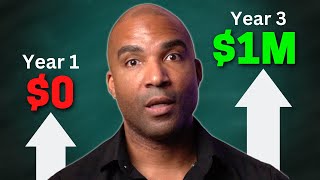
It came about because people would be like, how do I make money? Like, how do I make a million dollars? Right. If you can put three years into one effort, typically it's gonna grow. And I could guarantee them if they did this specific action, they could make a million dollars in three years or less.
So I was just reading your book.
Greatest book of all time. Is that what you were thinking to yourself?
Shameless plug, by the way.
Hey, Mike, I didn't know you read Tactical leads. You read can read.
I was reading this and one thing stood out to me, and that was this five part framework that helped you get seven figures or make seven figures in three years or less.
You're talking about the income maximizer formula.
Yeah. So someone that wants to. Everyone wants to make a million dollars, right? Most people do. For people that want to. How did you do it in that short period of time?
Well, you know, I stood out on a lot of street corners.
What do you mean by that?
Well, you know, use your imagination.
Hey, sugar, you looking for a date?
No, I want to find Beverly Hills. Can you give me directions?
Sure, for five bucks.
So the income maximizer formula, it came about because people would be like, how do I make money? Like, how do I make a million dollars? And I was like, how can I create something that just gives individuals something that they could actually do? And I could guarantee them if they did this specific action, they could make a million dollars in three years or less. So ultimately, get the book, go through the formula for all the little details, but I'll give you like a quick Cliff note version. Right? So basically there's five parts of the entire formula. Number one is your influence and network, right? Do you have an influence and a network that essentially can help you get to the next level? Right. Then there's number two, your skill level. And I always tell people your level of expectations must match your expertise. Right? So improving your skill level, make more money. Number three, how consistent are you? This is most people's failure. They're just not consistent enough. Do anything extremely well and make any money. Number four would be ad spend. Are you marketing your product and service? Are you getting your message out there to the world? And then the fifth part of the framework is your list size, because size matters. Mike.
Number one, influence and network. Break that down for me.
One thing I did when I created this is I just backed up and I was like, well, let me take a look at the people that are making it happen in my specific industry. Entrepreneurs, business owners, online marketers. What is it that they Have. What is it that they're doing that I didn't have? Right. And the ones that were making money, they had a big Rolodex, right. I could call them up and say, hey, I'm having trouble with building a website. Oh, call this guy. He's the best in the world. Oh, I'm having trouble getting booked to speak at events. Oh, call this guy. Another thing would be, could you push a button right now and put 50, 100, 200 people in a room? A live event, Right. So I noticed they were doing live events, Right. They had that. That ability to get other people to want to be at those events. Right. And then last but not least, like, are they getting invited to speak at events? Are people reaching out to them and connecting with them and. And wanting them to be part of what they have going on? So those are things that you can start to kind of look at when you're grading yourself in terms of your. Your network and obviously your influence.
That makes sense because earlier on in your career, you wanted to get invited to speak at other people's events. So you put on your own event, you're able to push the button, generate more leads, get people to your event, and then as a result, you got invited to speak at other, bigger events.
Absolutely.
Yep. Okay. So number two, skill level.
Yeah, skill level is important. You know, I remember the day I made the decision. I was like, I'm just going to be the lead guy, but I want people to know me as the guy that can help you get quality leads at the lowest cost possible. Right. So I went all in and started to, you know, do the things that you have to do to improve your skill level. Right. So you have to invest in yourself. So one of the things you want to do is you want to say, how much money am I investing in my own education into that skill? Right. So one of the things I talk about in the book is if you're not investing at least $10,000 a year into your skill development, then you know you're not an expert at your craft. Right. You know, because I believe you're either getting better or getting worse. Are you reading books consistently? Right. Are you out there buying courses and going through them like, what are you literally doing to get better? So that's one of the ways you can kind of grade your skill level and should really be where your focus is, because there's always someone out there looking to improve and what it is that you're improving on each and every day, as you focus in on growing that Skill level.
All right, number three, consistency.
Yeah. I mean, this is another one that speaks for itself. And it's so simple, you know, how consistent are you? And the goal is to get to doing something with high focus on that one thing for at least three years. If you can put three years into one effort, typically it's gonna grow.
Was that what you were able to see?
100% people that were able to get to three years, every single one of them were getting great results.
Number four, ad spend.
Ad spend is really, really important because at the end of the day, it's about getting your message out there to more people. I remember I saw this message when I was getting started in paid advertising with Brendan Bouchard, and he said, you're not actually marketing unless you're spending $1000 a day.
And I remember $1000 a day.
$1000 a day. And I remember being like, man, I was spending, like, 50 bucks a day. And that was a lot at the time. And I now realize what that means. It actually gives you an advantage the more that you spend, especially if you've got a solid product that's solving a problem and actually gets results. And the reason why that's the case is it's math. It's not magic. It's math. If I'm spending $10,000 in a month and you're spending $100 in a month, then who has the advantage? I'm putting myself in front of more people. I'm giving myself a chance to make more money. I'm taking more shots. Right. So that's why ad spend is so important. So really, the goal is to try to shoot for a minimum of $10,000 a month, minimum on ads. But the goal should be to get to a thousand dollars a day and then continue to scale from there.
That makes sense, because most people think they put $1,000 in. I mean, they make mistakes earlier on and they don't get any returns.
Right.
But you put that $10,000 in, and you might have a much higher ROI on that return on investment.
Absolutely. And the way to make yourself feel more comfortable about the amount of money you spend is you have to reverse it. Right. You ask yourself, okay, If I spend 10,000 and I get 10,000 clicks, and let's just make it simple math. Every click is a dollar. Right? That means 10,000 people are sitting in the room. So if you reverse engineer that, you say, what can I say specifically to those 10,000 people? To where only the people that click would have the problem that I'm Claiming that I can solve the 10,000 clicks. Saw my message, they have the problem, now they want to see if I can solve it. If 10,000 people are in the room, what is the message that I need to give them to get 3% of them to buy? It's crazy. The math doesn't even have to be like that. Wild, right? You can get 10,000 people in a room and you know, 3% of them buy, you're going to be a millionaire. And that's why spending more gives you an advantage. That's why. That's part of the formula and part of what I've seen every single successful seven and eight figure earner understand that I wish I would have understood a lot earlier.
And number five, the last one, list size.
Because size matters. List size. Get your head out of the gutter, man. Getting someone's name and email address, building your list, it is your business, right? So If I have 25,000 people on my email list and you have a thousand people on your email list, I'm going to have a better chance of making more money by pushing a button and having instant distribution power to put my message in front of more people. The key to that is to obviously build a targeted list and make sure that you understand why they're opting in. And then at that point, it's what you do with that list, right? I mean, are you providing them with value, emailing them with content each and every week or day or whatever that may be? Are you uploading that list to social media and running ads directly to that list, providing them with more information? Because a lot of people don't understand that the best, the most powerful list is a buyer's list. So when people generate leads, they don't realize that the key is to get those leads and to buy and then to get those buyers to buy more frequently. One of the things I always do is upload that list, run ad to them, and then obviously the third thing is now use that list to find more people like them. So we'll create lookalike audiences off that list. And now that becomes the target of my cold traffic that I then can put more ads in front of to make them aware of what it is that I have to offer. So that's why, in my opinion, growing your email list is the most important part of a business because it's instant distribution.
So this is great. Now for someone that is still trying to figure out, you know, what to do, how can they implement this framework for their own business, what is the best way or how is the best way you can describe this for that person?
Yeah. So, I mean, number one, you want to, you know, go through those. The five that I talked about, right? The five parts of the framework, and then figure out what you have control over, right? So you can control yourself. Spending more money. You can control. When you're running ads or sending people to your website, are you building a list? Are you constantly doing those things? Focus on the things that you can control, right? Pick a target. It's kind of like we had that discussion, like if you were going to go to the moon, for example, and you had your coordinates and you were off by like, barely one degree. One degree, right? Like Ms. It by hundreds of millions of miles, be in another galaxy, right? So figure out now that you have this framework, you know, what you need to focus on, right? And if you just get better at all those, you can, you know, make. Make a lot of money. And I think that also understanding that framework and then stepping back and looking at where the world is today, it gives you the ability to kind of like. Like, almost like see into the future. Because while other people are worried about things that don't matter, right? You're focused in on the key to, like, making it work. And it's like the, like the Wayne Gretzky story, right? The story about Wayne Gretzky was he wasn't the fastest, you know, he wasn't the strongest. But, you know, a lot of people say he was the greatest ever. And the analogy of what they say was that he didn't go where the puck is, he would go where the puck is going to be, right? So I think that when you have this framework and you're like, okay, I need to build my list, right? And let's say something goes wrong with a specific platform, you immediately still know you have to build your list. You just figure out, like, what is the next platform that has the attention and let me continue to stay on that versus what a lot of people will do is just change, like, quit everything. When something goes out, they don't know what. Where to focus, so they're constantly pivoting as things happen. For example, with AI, you know, people are looking at AI like, oh, I need to change everything. But the key is, here's my business. How do I implement AI into this framework to enhance what it is that I'm already doing?
So basically for a business owner, they can go back to this framework and reference it as kind of like a foundation, and they don't necessarily have to focus on everything. At once. They can just focus on one aspect that they're lacking at, what they can improve on, and that just improves the other parts of that framework.
Right. And at the end of the day, when they can go through this framework, and if they were to give themselves and grade themselves on a scale of 1 to 10, and if they were to give themselves, let's say, an eight or ten in all five, I guarantee that they're going to be making seven figures within three years.