We Audit Vinh Giang's Course Funnel (let's make it better)
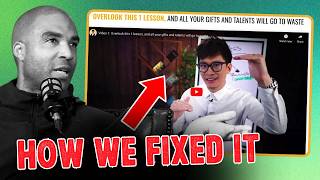
Vince Reed and Mike audit Vinh Giang's course funnel, comparing a standard opt-in page (20% conversion) to a video-first approach with in-video lead captures and off-platform retargeting. They find missing conversion pixels, flag YouTube embedding risks, and recommend streamlining steps and adding precision retargeting to boost sales.
Questions this video answers
1501 clicks.
1090 leads; 72.62% conversion rate (reported for their campaign).
About 20% opt-in on brick wall pages (i.e., ~80% drop-off).
Between 50% and 79% (their campaigns; example at ~72%).
Press play, 25%, 50%, 75%, and 95% video-watched events.
Chapters
1501 clicks.
Mike.
1090 leads, 72.62% conversion rates. Bad campaign we're running. Just keeps getting better and better and better.
Nice, nice, nice.
We've been getting a lot of good feedback from these audits, so I'm excited for today's target. Who's the target?
We got a good one. Ben.
Ben.
Yep.
What kind of fun are we looking at?
So he teaches people how to speak well in public.
Cool, Cool.
I'm using a brick wall page. Yeah. All right, let's get into this audit. Let's do it.
Okay. All right, cool. Hey, what's going on? Vintreet here, founder of eBove.com and I am here with Mike.
What's up, everybody?
Head of production here at eboov, and we are excited. Over the last few weeks, we've been doing these audits where we've been looking at funnels, finding different targets and seeing if we could essentially transform their funnel into the type of funnel that we use. So Mike has the target over there. Who's the target today, Mike?
We have VIN today.
Vin. Mm. Awesome. What type of funnel do you think this is? Like, what is he. What is he offering?
Oh, so he's offering how to teach people how to speak better in public.
Awesome. Awesome. All right, so in a second, we're going to see if he's using a brick wall funnel. We don't like brick wall pages around here. Mike, explain what a brick wall page is before we get started so they can kind of understand why we don't like them.
Brick wall page, essentially, you would be driving traffic right to this page where you have the individual to opt in to obviously continue to the other side, which is your webinar and bsl. But the bad thing about these brick wall Pages essentially block 80% of individuals that would have never opted in to get to the other side.
Yeah, because on average, only 20% of people are going to opt into a brick wall page. So, Mike, go ahead and pull up our funnel so they can see what we use. Now we get anywhere between 50 to 79% conversions. Our latest campaign, as you saw earlier, we're right at around 72% as of right now in this new ad campaign. And we're driving 100% of our clicks to this funnel that you see here. A simple main headline, a sub headline that shows the outcome, and a video. The video that you see here on this page is an EBOO video. And what's cool about this is one, obviously, we're able to eliminate steps. So as you can see, we're not using a brick wall page, so we're not losing 80% of traffic. 100% of every click lands here. So they're able to start watching the webinar immediately. And we're able to use our IN video conversion technology, a lead pop that we can essentially set at any time that we want in the webinar and that will lock the webinar and then the person can opt in to continue watching. Now, that in itself is really cool because we actually get better leads. We see, you know, 50 to 60% open rates on our emails by simply getting people to opt in out of necessity because they actually want to continue watching vs opting in out of curiosity. Now, really quick, the main thing that really makes this work and why we're getting 72% conversions is our OP VR off platform video retargeting technology, which allows us to do two things. Optimize this page for conversions with several different event options. So, for example, when I press, when you press play on this video, I can essentially start building custom audiences based on how long they watch the video. So, for example, when they press play, when they get to 25%, when they get to 50%, 75% or 95% of this video, I can build a custom audience, which is like an individual list, based on their time watching the video. And then I can run what we call a precision ad, and essentially run another ad targeting those specific users, all while passing that conversion action or those conversion events back to the ad platform, allowing our pixel to get smarter so the ad platform can find us better quality buyers. And that's why we're getting the numbers. So what we're going to do right now is we're going to take a look at our target and we're going to look at the funnel that they have, and we're going to see how close we can essentially get their funnel to our funnel, or just see if there's some things that we see here to make it better.
Yeah, let's do it.
All right, so let's start with the ad.
Let me bring it up here.
When you pause, the first thing is you give people time to process what you're saying.
Notice how when I pause, it gives you a chance to process the information. Whereas what people don't realize when you don't pause, you don't give people any time to process anything that you've said. And as a result of that, there's no clarity in that communication. Because if I just keep talking about all the Vocal foundations. I go from brighter speech to volume and I don't really stop any after any moments at all. And I just keep going through. After a while, you don't get an opportunity to pause and you don't get an opportunity to process anything that I've said. Therefore, after a while, everything just becomes a bunch of information. Nothing really sticks out. Nothing was highlighted. You don't even know what you're missing to be listening to. When I pause, I pause intentionally to give you time to breathe in the lesson, to be able to process it. Second, foundation for the pause. If you don't become comfortable with the pause, your speech will be littered with non words and filler words. Non words are the sounds we make to fill the silence and filler words are the words we use to fill the silence. And so like, do you know what I mean? We fill our speech with it. So for example, if I wasn't comfortable with the pause and you know, like, you know, you know, as, you know, as I was going through, you know, do you know what I mean? You know, when I get through to do you know what I mean? When I get, you know and do you know what I mean? It's called verbal clutter. And when you've got lots of ums and ahs, what it does is it decreases the clarity of your message dramatically.
I can go ahead and stop it. So this guy's got game. First of all, really good content. I mean, there's definitely things I'm going to take from just watching that. I think it's great. Obviously, I would think he needs a cta, a call to action at the end of that, obviously to get people to click the learn more button. But now for the moment of truth. Mike, is this guy using a brick wall page? What do you think?
I am 99.9% sure that he's.
All right. Let's go.
Using a brick wall page. Let's go ahead and see.
Let's see. And yes, a brick wall. Now. Now, obviously, I would add a cta, a call to action to that ad to get more people here. And again, you see the brick wall. How to communicate effectively and transform your life. Real short and sweet. Right to the point. And then over to the right on the form, free access to the three part video series. So obviously this looks like it's a funnel that's gonna release several videos to essentially teach you how to communicate effectively and transform your life over three different videos. All right, so you know, just to quickly, for those of you guys watching, just note as Great as that ad was, as much value as we got, there are going to be 80% of people on average that are going to get here and never get to the next step. Right. So the question that, you know, Vin, that's his name. Vin has to ask himself is, would he find it more valuable if 100% of every click got to see at least the first part of the first video? So, for example, if you go to our page, right, we're driving 100% of clicks right to the webinar, right, where he's sending them to the Brick Wall page to opt in. But let's go ahead and just click to get to the next step, and let's see where they're landing. Awesome. All right, so there's the video. And you can see to the right. You've got video 2. Scroll down, Mike a little bit. And then you can see video 3. And you can click on below you have the button there. So there's a lot going on, Right. So Vin has to ask himself what would have been different if he would have essentially, instead of having all of these different options, had he just. If you go to our page, okay, what he could have done is simply put the video that you see there, the main video on one page, right? And then go back to his. To his Brick Wall page. All right? And then he could have just put how to communicate effectively and transform your life on the top of his single page. Let's go back to the video. Let's go back to the video on the next step. So imagine. Actually go to our page. So imagine you. He drove traffic from the ad. He had the video that you just saw there, one video. And then on the top, it said what essentially he had on the Brick Wall page. How to effectively communicate to transform your life, right? So now 100% of all of the visitors are getting right to the thing that they want to see. So let's go back to the. To his page, his hit with the video. All right, now over to the right, you can see he has the video two and video three. And I can tell that that is there because this is optimized for mobile. So if you're opening this page up on a mobile phone, then underneath this main video, you're gonna see all the other videos. I'm assuming this is an assumption. Cause I don't know his funnel, but I've been doing this a long time. I'm assuming you would agree the chances of someone purchasing his product are gonna be greater if people watch all of the videos Correct.
Exactly.
Yeah. Now, with this general setup, so, for example, if you scroll down, you can automatically skip through to video 2. You can even get to video 3 right from this page. There's a high likelihood that someone's going to do what you just did. Click on video two, without watching the video. Go ahead and click on the next button. They're going to click on video three. They're going to see this video. They're going to be like, okay, I just want to know what the price is at this point. Now, they're going to click unjoin now and then, as you can see here, looks like some kind of special offer. You can buy the product for a thousand bucks. All right, now, question for you, Mike.
Yeah.
If the average person is going to skip through the funnel, not watch the videos, do you think that. That he's probably losing out on sales that he would have made that people watch the videos?
Absolutely.
Absolutely right. And there's all these other steps. Right. The steps going on and, you know, could basically breakage points in his funnel.
Yeah.
You know, my mentor, I've said it in past audits, always said, you know, innovation is not about adding steps. It's about essentially taking steps away. All right, now, side note, I think the guy is doing a great job in terms of communicating. He's got game. You know, he's doing a boot camp funnel. So I'm assuming when they opt in, they probably get the first video, and then over a few days, they get the video 2 or video 3, but they're also able to just skip through and watch the entire thing. Right. Now, the problem is that most people aren't gonna really watch everything. They're gonna skip ahead. All right, so what I would do if I was him, if you go back to our page, I would essentially, to use eboov, I would put the main video on one page like this, using eBove, simple headline, literally the same copy he has on the Brick wall page, and then obviously drop the lead pop at somewhere within the first video, they'd opt in to continue watching. And then I would use a CTA button on the video, the same way we use a CTA button. So, for example, if you can kind of show our funnel right here and show, like, at the end after they opt in to continue watching. And then at the end of the webinar, we use a CTA button that links to our page where they can book a call. So if he wants to continue using the bootcamp funnel, which, by the way, is a great funnel, because People ask us all the time, how would I use EBOO for a challenge funnel? You know, instead of doing all these live challenges, four or five day challenge, you can turn your challenge funnel into a bootcamp funnel. Very similar to what he's doing. Right. So we put video one there. They opt in to continue watching. Then it says watch video 2. It would simply link to it on the CTA button to video 2 at the same time when they opted in because the form integrates with all the CRMs, we would do what we call chase the lead. Chase the lead means that they're watching video right now. They opt in to continue watching. Now sitting in their inbox is the actual replay of the video that they're watching right now. They can just watch it again because people say to us, well, what if you know a person ops in and then it watched the entire thing?
Well, things happen.
Yeah, we chase the lead and they can Go back to video 1. And now on day two, with your automations, you can send video two, video three and you just force them to watch it. So when I send a video to, it'd be the same thing. It wouldn't be all the other options to skip ahead, it would be just video two and it would say video two of the three part series on the top. And then at the end of that video, it could be a CTA to Video 3 because we told them it's going to be a three part video series. And then obviously they could be right on the page, it could go to the next page and then they could essentially get to the offer. Now what would happen is by the end of this funnel, he could be assured that the people saw the videos before they got to the 997 offer.
Exactly.
I think that would increase his conversions. All right, so that's how I would shift the funnel. But let's get to the moment of truth. Right, so let's go back to his Brick Wall page. Because the secret of EBOOV is the OPVR technology, the off platform video retargeting technology. Let's go back to the Brick Wall page and let's go ahead and go to the Facebook Pixel Helper. So you can see it's firing the page view conversion pixel. All right, so this is basically saying someone landed here on this Brick Wall page. Now if a person does not opt in, then obviously it's not gonna fire a lead conversion. And anyone using a Brick Wall page, the objective of this campaign is to get leads. So think about it from Facebook's perspective or YouTube or TikTok, wherever you're running your ads, if you're sending 100 people to this page and 80 are leaving, it's basically you telling the ad platform 80 times that they didn't get you in front of the right person, knowing very well that there's a good chance that had there not been a brick wall page that at least one of the 80 would have likely purchased. Yep. Does that make sense? So if you go back to our page. Right. All right. You can see that we're sending traffic directly to the video. So let's go ahead and refresh the page and let's go on the Pixel Helper. You can see we're firing the page view, but go ahead and press play on the video. So now they're right on our webinar. Right. Here's the kicker. Go ahead and pause it and go back to the Pixel Helper. You can see that we fired a press play conversion action. Now, side note, Eboov has really cool technology. It's basically DRM protection, which is essentially the same technology of a Hulu or a Netflix that prevents people from illegally downloading videos or screen recording. The reason right now, if you're looking at the screen, because I can, obviously I can see Mike's screen here on a big screen, he's looking at it from his computer that he's recording on. So he's recording everything. So the fact that he's recording on his computer activates the DRM protection. That's why the screen is black.
Right.
So, but anyways, we'll show you what it would look like. So when a person presses Play, it's going to fire the press play conversion action 25%, 50%, 75% and 95% conversion action back to the ad platform, letting the app platform know that this user is interested in this video. Giving our pixel, getting our pixel smarter, giving the platform more data about our user. This is one of the reasons why we're getting 72% conversions because the platform knows essentially who our customer is. And we're getting more data now while this is happening, we're building these custom audiences as I mentioned earlier. Now we can go back and run precision ads back to those individuals. So Mike, let's go back to his page and let's go to the opt in form. Like let's go ahead and opt in again. And what we're gonna look at right now while he's pulling that up is if he's passing any video data back to the ad platform.
As a conversion event. So here we are on the page. All right, so let's go ahead and press play and then hit.
Let's check here.
So you can see there's the page view. So actually what's interesting about this, it didn't even fire the lead conversion, which is strange.
Why don't you go back and do it again with a dip? Let me just make sure that's not the case yo me, because maybe we opted in too many times and it's. And it's, you know, it's not convert firing that. Because if not, hopefully his team's watching that and they can go make sure that conversion is on that page. I want you losing out on your leads, Vin. Got to get your leads, my man. All right, so let's see what happens here. All right, so let's go to the. To the. Okay. Yeah. So, all right, so no conversion event is passing. So this can. This particular funnel could be getting a lot more conversions by simply allowing the pixel and the platform to know that it did its job, that it got that he got a lead here. All right, so we definitely want to make sure that's on this page. However, let's go ahead and press play. Okay. And then let's go ahead and go back to the Pixel Helper. While that's playing, you can pause it and you can see it's obviously not passing any video conversion events back. So the difference between the two funnels, his funnel, okay, one, he's using a YouTube video. Lots of distractions. So, for example, go ahead and click on any of the video, any of that stuff there. These people can literally leave his funnel, and now they're on YouTube and they're just distracted. So you. In my opinion, you don't want to use a YouTube video within your funnel because it's just too many distractions going to crush your conversions. And. And obviously, we already discussed that he wants to have his conversion pixel there. Okay.
So, yeah, he would want to put an eboo, have one video and pass that conversion act those video conversion actions back to the ad platform. So then he can go retarget those individuals. So go back to the ad library, because this guy's great with his content. So we looked at this ad, the main ad, but look at all of the other ads that he has.
So.
So imagine if he was able to run precision ads based on the time people watch his video and run these ads back to everybody that pressed play. So he could be sending a hundred people, 100% of people right, to his main video. Video 1 Building those custom audience. And he has all these other ads that could link back to the webinar, taking people back to that process, which would essentially allow him to make more offers.
Yeah.
Does that make sense? So I think he's missing out on a lot of offers. And most importantly, even if he's not using eboo, if someone's got to get a conversion event pixel on that second page. All right, so two things just to note. This is a really good example for how I think people should be running challenge funnels. I think people that are doing live challenges are wasting a lot of time. This allows you to turn your live challenge into an evergreen funnel. I think that's great. And then obviously with chasing the leads via email, you would send video one, video two, video three through your automations. But with iboo, he could be getting a lot more conversions and not missing out on 80% of traffic. What would you say? Anything in closing that we're leaving out here?
Yeah, I mean, I always like to clarify. So like for example, you know, building the custom audiences, some people ask, is that done on EBU's platform? No, that's on the app platform.
Right.
As absolutely would.
Yeah. So when we talk about building the custom audiences to run the precision ads. So if you go back to our funnel, for example, and you go to the Pixel Helper, Right. So once you press play, so go ahead and press play again.
And pause it and go back to the helper, you can see that it passed the press play conversion action the very second that person or whoever presses play on Facebook, it's building that audience. So essentially I'd be able to log into my audiences and see that and create a press play custom audience. And then I could go run a second ad and then in my targeting, just select the press play audience and then I could run an ad back to that. But think about how big the list size can get of essentially 100% of every click pressing play. See, the money and the power is in your list, but the fortune is in the follow up. So if you're using a brick wall page, you're preventing yourself from building a quality list, a large list, to essentially make more offers. Right. The key to EBOO is the fact that we're allowing people to make more offers, which is is why our slogan is more leads, faster sales. Right. Because we're simply making more money because we're making more offers. So, you know, it's a lot here. I think there's a lot of good to this funnel, but I think they could instantly increase, you know, conversions by simply adding a conversion event and eliminating some of those steps.
Yeah, definitely.
Awesome. Open it up. Well, that's all I got, Mike.
Till the next one. Later.
Peace.