Everyone Only Sees the BMW Or In My Case a Porsche -The Whole & Untold Truth About Entrepreneurship
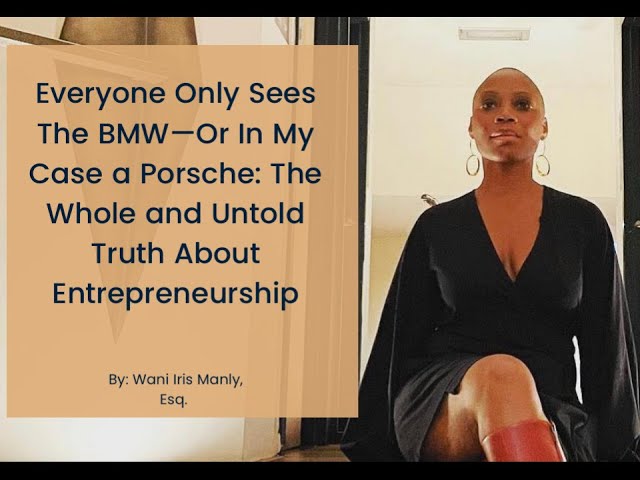
Wani Iris Manly, a former big-law attorney and 14-year entrepreneur, talks about what entrepreneurship actually looks like behind the Porsche and social media posts. She covers the isolation, money struggles, and emotional toll most people don't see, then walks through what actually works: fixing your money mindset, investing in mentors, learning to charge properly, and building real systems.
Chapters
Bonjour! Bonjour! How is everybody? Wonderful! Do you guys live in Paris? Yes! Welcome to my city! I'm originally from Miami and I've been living in Paris for about 12 years. In 2006, I was living in Miami and I had a date. And I was waiting for him to come and pick me up, and he was actually running late. He called and told me he was actually having car trouble, and he wanted to know that I had a car, and if I actually minded driving. And I told him, I said, "Yes, I have a car." I said, "It's no problem. I don't mind driving at all," because he says he didn't want to take a chance of us taking his car, his Jeep, and something actually happening. I told him, that when he got to my building, to valet park his car, and to call me up, and I would come and pick him up. And that's what he did. So when I came in front of my building to pick him up, was in the front, and his mouth just dropped. He was in shock. I had pulled up in a 2001 convertible Porsche Boxster. It was tan— excuse me. It was tan. It was a navy blue on the outside and it was actually tan interior. I think the— I think it's dark. Yes, we get bigger. This was the car that I actually pulled up at. And when he got into the car, he asked me, he goes, "Whoa, this is your car?" And I said, "Yes, it's my car." So he got into my car, and he looked at me as we were pulling off, and he asked me, "Are you renting in this building, or are you an owner?" And I said that I was an owner. Next slide, please. At that moment, his entire demeanor had dropped. He got into the car— this is the C-Lock in front of my building— We got into the car, and talking to him was like pulling teeth. I was always the initiator of the conversation. He was very dry. It was a very, very similar conversation. Now, what he didn't know about the car was that that car was my 31st birthday present to myself. Even more so, it was actually my reward for finally passing the Illinois Bar Exam and to be able to practice law, which I had actually failed twice. I bought the condo. Next slide, please. The white building right there. What he didn't know was in that building, I actually rented before I actually bought. And in order for me to actually buy, I had to do the unthinkable, which was actually save money. And for an entire year, I literally saved $2,000 every single month to come up with a down payment. What he also didn't know is that The day that I actually closed that property, I was actually short $135 or something like that, and I literally had to borrow the $100 and something to actually get the full amount in for my closing. And this whole process, like, literally I spent an entire year with friends who asked me to go out. Anything that involved money, I always said no because I was saving to actually buy this piece of property. You see, had he actually given me the chance, I would have shared all of these details with him, right? But he didn't. Right away he was able to judge me, he was sizing me up, and he thought I was I don't know what, but he had no idea of my backstory. And this is what actually happens, because why? Everybody only sees the BMW, or in my case, it was a Porsche. Next slide, please. And so today, I actually want to talk to you about this. That is the journey of being an entrepreneur, what it's really like, the truth of it all. I'm going to talk to you about the difficulties about it and the challenges of it, and I'm also going to talk to you about what we're actually seeing about entrepreneurship, which is not the truth. I'm going to talk about the glamorization of it. I'm going to talk about the romanticism. I'm going to talk about the social media facade, and dare I even say it, the lies. Because really it's all curated. And so before I even get into that, I want to talk to you— I'm going to tell you how that my journey as an entrepreneur— I'm going to tell you this story not as a 14-year entrepreneur and business owner, but also too as a business law attorney for 19 years advising strictly entrepreneurs, corporations, startup companies. So I know a little bit what I'm actually talking about. Next slide, please. But before I actually got to an attachment being an entrepreneur entrepreneur, my journey actually started in this building in Miami. There I was a young associate working for an international law firm, and I was working 14 hours a day. I was working 7 hours, 7 days a week, and on the weekends I was actually working a full 8-hour day. Like a young associate at a big law firm or a mid-sized law firm, I had to bill 2,200 hours per year, which meant I had no life. I was absolutely miserable. I was driving a beautiful car, I was owning a beautiful loft in Miami, and I had some clothes to match, but inside I was dying. In fact, things were so bad, my very first year of working with this law firm, I didn't go home for Christmas, I didn't go home for Thanksgiving, I worked at Easter. I was constantly working. After about a year of this, I couldn't take it anymore because, like, literally it was like working in a pressure cooker, and I decided to look for another job. And so I spent an entire year in Miami going from interviewing with different law firms and different banks and different corporate organizations, and I kept hearing the same thing, which was, "Wani, you're too expensive." You see, the thing was, I was actually working in the Miami office of a Chicago-based law firm, and Chicago has one of the highest salaries for professionals, whereas Miami has some of the lowest.. And for me, I could not afford to make a single penny less than I was making because I had a mortgage to pay, right? And so everywhere I went, I kept hearing, "Wani Iris Manly is too expensive," and I was like, I just— it was always in the salary negotiations. I was like, "I'm sorry, I can't make a penny less." For me, it was either a lateral move or above. And so after hearing this for a whole year, I decided, you know what, maybe it's not meant for me to actually work for somebody. Something else. I said, you know what, maybe I'm actually meant to work for myself. And so I decided to start my own law firm. But before I could actually do that, fate would step in and I would get laid off. Next slide, please. And that is how my first law firm, my first business, W. Manly, P.A. Associates, was actually born. I started off with most entrepreneurs with $0 and zero clients. However, on the day that I got laid off, one of my girlfriends called me to invite me to go to the party, and I was like in tears, and she like begged me to go with her for about an hour. And I went to her party in Miami, and as fate would actually have it, right, what I see from the signs from the universe is the direction you're supposed to go into. I met my very first client, a management company, with the CEO of a management company that managed celebrities and athletes Miami. He hired me to actually set up the company. Next slide, please. And my first retainer was a whopping $500. And so I felt really good, I got started, right? But then it took months for the next client to come in. Like most entrepreneurs, I didn't know at the time, I didn't know anything about running a business. Business. I didn't come from a business-minded family, and so I didn't know— all I knew was how to be a lawyer. I didn't know how to market myself. I knew nothing about how to run a business. I didn't know how to attract clients. I spent money on chasing my tail, and I had no strategy. In fact, hope and pray was my method, was my strategy. I had no personal development skills whatsoever, and I also didn't have a mentor. Clients for me were few and far in between, so which meant I was living in survival mode. Next slide, please. I was stressed out. I now had the freedom that I had to create from my previous law firm job, but I had lost the salary and the security and the cushion that I actually had before. I was attracting clients that could not afford my fees because I was working for an international law firm, so I had big clients at the time. Firm, right? And so I did what most entrepreneurs do, which is I struggled in silence. I didn't tell anyone because also too, I wanted to prove myself. And also too, I had mortgage to pay. And so on the outside, I presented quite well, you know, everything like, you know, kept it together like I am right now. But in the inside, I was so stressed out. How many entrepreneurs are here in the room? Today. Does this sound familiar? Yes. Am I losing it? No, no, no, no, no. This is the case for most entrepreneurs, just that people are not speaking about it, right? Next slide, please. However, I began to develop myself. I found coaching, and I began to really embody the business— a different mentality that our actual my business. And actually, things— my life now looks completely different than when I started 14 years ago. One company has now turned into 3. I have 2 companies in the United States, and I also have a company here in France. I'm now a professional speaker. I've spoken on TEDx stage. I've written multiple bestselling books, been featured in many magazines, and I'm actually going to be in a movie documentary on a very very popular network that everybody watches next year. Alright, alright! Woo! That's me on the TEDx stage, cover of one of the magazines. But I want to share with you and say that if I could come up with one image that really surmises my experience in the 14 years after this led me to this point. Next slide, please. It is this popular diagram. Who here have seen this before? The illusion of success. Okay. Yeah, right. And so this is actually where I was most of the time, the journey, and where a lot of entrepreneurs actually are, right? And so I want to talk to you about what's really at the very bottom of that. Next slide, please. What's really out there? You know what it is? It's like, literally, it's like everything in the kitchen sink. It's all what's underneath that's going on when you're trying to run a business, right? What we're looking at is actually limiting beliefs about money, about your self-worth, your low self-esteem, your anxiety, your stress, the living in survival mode, the taking one step forward and taking 5 steps backwards. You're not operating in your zone of genius because when you're working for yourself, you're everything. You're the banker, you're the lawyer, you're the accountant, you're the marketer, you're the developer, you're the priest, I mean, you're just like— I mean, I did it, right? You're not operating as an honest genius. And of course there's the loneliness and the isolation because it's like literally you and your shadow running your business right off of your computer. And then everything is a freaking experiment, it's all trial and error, you have no idea, it's like literally you're throwing spaghetti against the wall and you're hoping something actually gonna stick. Next slide, please. And then also too, like I said, hope and prayer was my business strategy. It's a business strategy for a lot of people, right? I'm gonna pray about it. How many Christians here? Right? God's running my business, right? And then you're constantly comparing yourself to other people, especially nowadays with social media. You know, when I first started out, we didn't Social media wasn't around, but now it's like everybody's like seeing exactly what everyone is actually doing. Then there's all this self-judgment, right? And then you're comparing yourself to other people and you're feeling like crap and you're feeling like a complete failure. Sound familiar? Yes, yes. But let me tell you something, you know, if there's one thing that— one maxim that I've actually been given to me, it is this, that if ever— if If it were so easy, everybody would be doing it, and they're not. And everybody would be super successful at it, and they're not. And so if you're in this room right now and if you're feeling like crap, if you're always like, "Oh my gosh, she's hot, I feel attacked," I want to give you some stats on entrepreneurship so you can stop feeling bad for yourself and give yourself some praise. Next slide, please. According to Kauffman Foundation, only 6% of all entrepreneurs ever achieve making $100,000 in their very first year of business. Only 2% ever achieve making 7 figures, and that's the first $1 million. And to make the next million, the numbers drop. For women, it's even less than that. And then for women of color, it's way less than that. Okay. And then more than 50% of all business owners never receive making $25,000 a year. Ouch. Wow. Oh, why do you think this is? Anybody want to guess? Scarcity, fear, mindset, mindset, and suffering in silence. Just not asking the question. It's hard. Yeah, nobody likes to say it. I'm not saying you're here, I'm not yelling at you, but I'm just saying like nobody really Wants to admit it's freaking hard. Next slide, please. And so I want to talk to you today about what really makes this journey hard and what I've actually begun to— and I'm going to also talk to you about what— how to get away from that, what actually put me on the other side of actually struggle. Number 1 is that entrepreneurship is a journey of personal development. I call it baptism by fire. You think you're about to run a business, you're not. You're about to go into a deep dive about yourself. Yeah. And you're not equipped for it unless— I mean, I know when I started, I had not been in spirituality, I had not been in personal development, and I literally had no idea that this is actually what I was actually getting into. What it is, like, you're about to start looking at that what's causing everything on the outside is what's in the inside, which is your conditioning, your limiting beliefs. Next slide, please. Number 2, next one, it is your mindset. Now, you have the mindset when you start a business as an employee, because most of us— I know I was in my family, I was first generation entrepreneur. My parents both worked for a couple companies. My father worked for a West African— he worked for like, you're the government in West Africa. And the problem is that you're trying to run a business as an owner, as a CEO, but you have a worker bee mentality. And then worker bee and as an employee. And so what you've done for yourself is that you've actually have created a glorified job for yourself. You're really a glorified employee calling yourself, I have my own business. And it's never going to work as— a successful business will never work as long as you're in that framework, in that embodiment of an employee and not as an owner. Next thing is that you have unrealistic expectations about what Spoiler alert, your success is going to take a lot longer than what you think. Yes. Yeah. And it's not easy. And I'm telling you, anyone who's telling you that it's easy, they're lying. Unless you're starting with like they're taking over a family, a family business, unless they have partners, unless they're buying an existing business. I'm talking to people that are pulling the straps of what they say from the bootstraps, right? Like you just start from zero, zero, zero, zero, right? So it's going to take a lot longer, and I'm going to share it towards me in my presentation, some great examples of that. The next one is if you bought into the mind— into the maxim of build it and they will come. Who's heard that one before, right? Yeah, it doesn't work. You're gonna actually have to need real business skills and real marketing skills to actually attract your people and to make them buy from you, and then just psychology behind that, which isn't common knowledge. So the maximum building, they will come, right? I mean, who here has actually launched a program? I know there's many coaches here and nobody has bought. This is the safe space. Yeah, right, right. What if you keep building, nobody came, right? Exactly. And the next thing is like, you're too prideful, and I'm super guilty of that. It's like you don't want to ask for help and you don't want to actually get a job because for some reason we think that by asking help, it's like we're— it's like you're— you— there's a shame thing going on here. And it's like going to be getting a job, which is probably like the best answer, not like the full-time job, but get like a supplemental income. We feel like we've gone backwards, and it's actually not, because what you're needing is like something to release the financial pressure, because you're always thinking, how am I going to make money, right? Right. And so those are things we don't do, and it's just like it hinders us. And the last thing I'm going to say like you're running— you're— this is like a charity. And this is the case with so many service-based entrepreneurs, the coaches, the healers, the travel people, that where it is you're not selling a product but you're selling yourself, where you are the business, right? Especially the women in the room, right? Because we're so nurturing and we're so heart-centered, and so we have no boundaries. People come up with our soft stories and our prices are fluctuating, right? We have trouble asking for the sale. We have trouble by saying what our price is, or it's like, what's the price? Uh, well, right, that's what makes it actually hard. Next up, please. And so I want to actually share with you now what really got me over on the other side of all that podcast, okay? Number one is like, you've got to invest in yourself and you've got to invest in your learning. For me, it was like discovering coaching and coaches and getting to business groups., right? And at the very least, or at the earliest you can, if you can actually get a mentor involved in the picture, even better. But there's tons of books out there. Tony Robbins, everything out there is free for him. I mean, there's everything there's on the internet, right? There's no shortage of information actually how to run a business, how to change your mindset, how to become who you actually want to be. That's very, very key to changing the mindset. Number 2, oh my God, you have to look at your relationship with money. Let me tell you something, you'll never realize you have a money issue, you have like limited lease around money until you start running a business and you're like, there's no money coming in. Because when I was working for that law firm 14 hours a day, it was a very, really nice firm where literally everything was provided for me. I had a secretary, I had a paralegal, I had an accountant on staff, um, my lunches were usually bought from expensive restaurants, bagels were always bought in on every Friday. Like, I mean, literally everything was there, like my garage was paid for, my healthcare was paid for. But when I opened up my law firm, I had to pay for all of that stuff, and the money just quite wasn't there. And I had to realize, I had to work to realize, my God, I have a limiting belief that says I have to work hard for money, I don't deserve money, I'm not worthy of it. All these things comes up when you start running your own business. Number 3 is you literally have to learn marketing skills. I did not know how to market myself at all because again, I was working for a cushy I had a small firm job where the partner got the business and just gave me the work and I was just the worker bee and actually having to do it. And so learning how to actually put yourself out there in terms of how to attract the right people, the right messaging, those things actually have to be generated and to be learned because you're not going to be able to run a successful business based on a great idea alone. The next thing is that you've got to ignore what's on social media. Especially on Instagram, because it's all a curated facade, okay? On Instagram, everybody is winning. Everybody. I mean, am I wrong? Everybody. Like, there's nobody that was complaining. Everyone has luxury. They're wearing luxury items, they're flying first class. And it's literally— you have to ignore it. You have to stay focused and focus on your business. I'm telling you, it's not the truth. People are lying. And so I'm not saying all, but a lot of people are lying on social media. It's proven people are lying about their incomes, especially in the coaching industry, about how many clients I actually have, because who's actually verifying that, right? People are not doing their due diligence. Everyone's— they're selling a lifestyle, and that's what everybody's seeing. So people are just like, okay, here, they can say whatever they want, right? Right. Ignore social media. The next thing is you have to develop emotional intelligence and emotional resilience. Come on now. When I started my business, I had no idea like what those two phrases meant, right? But I'm telling you, you're gonna need it like like nobody's business. Because you're going to go through many valleys like this, and you're going to be like in the dark nights of the soul, which is like dark months and dark years, but actually, which is not a different part. And so you're going to be able to have to be able to weather the storm and to not be reactive, but to just say, you know what, I'm okay. Like, I'm actually okay. Because all your fears are going to be up, and you really have to have emotional resilience. Because guess what? The average overnight process takes about 10 years. That's real talk. I'm not saying it has to be like for everyone, but generally speaking, that's what it is. You also have to connect with other people. And I know, so for many of us, we're all running our businesses, like I said, with our shadows, right? It's us and our laptop and social media, and that's it. And so we're not connecting with people anymore. You've got to get out of your rooms and get out of your apartments and your homes and go to coffee shops and go and work with— and just be in a restaurant. I mean, I live here in Paris, and so it's very easy, just like it's café central, right? And so it just changes your energy. And I want to share that I was in law school, one of my professors said to us, he says, network or not work. That has stuck with me like my entire life. You've got to start talking to people because I know for myself, like probably many of you here, you're all high achievers where we're all used to getting things based off our own merit, correct? Like you work hard, you push for something, you get it, right? But at a certain point in life, when you go to a certain level, you're going to need people. You're going to have to have like connections to actually make things a lot easier for you. The next thing is you've got to know your numbers. Listen, for 19 years I've been working with literally only C bosses, okay? They all know their numbers daily. You cannot be an ostrich and not look at your bank statements, not looking at what you owe, not opening your mail, and not know like what your numbers are what your quarterly goals are, what your weekly targets are. None of those things. You just got to actually know like what they are. Next slide, please. The next thing is you got to be a problem solver. You just can't be a storyteller. And I'm saying that because we're in a day and age of social media where you have to have a social media presence, and it's all about storytelling, right? And everyone's like putting inspirational quotes and talking about business and that, but listen, at the end of the day, You've got to be able to solve people's problems when you don't have a business, you have a hobby. People will look at your story, they will look at your pictures and say, okay, how can you help me? If you can't help quantitatively help people, you're not going to have customers. Next thing is you got to treat your business like a real business. My goodness, from day one, you know, many people start their businesses without talking to a lawyer, without talking to an accountant, without like having any kind of business plan, even if it's a one-pager. They just like, I have an idea, here I'm doing this. I'm telling you, you're not— you don't have a business. You really have to have— I mean, here in France, I love that you're here in Europe because, of course, of the business, you actually have to work with CPA, actually have a company, you have an actual accountant. It's regulated. Whereas United States, where it's like literally you roll out of bed, you go on like the Division of Corporations on any website, you can set it up yourself, your LLCs, right, or your fictitious name registration. You've got to treat your business like a real business because here's the thing, a business is part energetics and part like the physicalities of it. And in order for your business to be a real business, you got to treat it from day one. What I'm talking about, talk to a lawyer, register your IPs, use lawyer-written contracts and not DIY or, you know, go piece by piece by piece by piece, do whatever you can do, but have a lawyer involved in your business like from day one. The next piece is this: success is not going to just happen like by happenstance. You really have to plan for it. You can't wing it. If you want to be a millionaire, you're not going to wing it. It's not going to happen by winging it, right? And the next thing is the freedom piece because I know this is so pertinent for me as to why, which is my why, why I actually started. And I know it is the case for many people out there, right? We all want it. Money freedom, time freedom, motherly freedom to be able to watch our kids wherever you want. It's like we all want it to not be controlled. Anymore. But I'm going to tell you something, a freedom-based business requires structure. If you see someone now that's like not working on the golf course and they're like having drinks and not working because they're like rich, it's because 6 or 7 years ago they created systems to be able to have that lifestyle. So it really requires structure. But for me, that was the biggest shift for me for my business. I had to start working. The next is you've got to value yourself. You've got to charge accordingly for for it. I don't know what it is, like when you start your own business, it's like all of a sudden like you just pull back. You want more money, but when it comes to like charging for it, your, your value, you have a different self-image of yourself, and that actually affects like your pricing. Charge for it. Charge. Own it. Own your value. Amen. The next is you gotta— I want— you gotta celebrate yourself and celebrate your achievements every day.. And I wanted to tell you a very, very quick story about this, and it's called the power of one. I know in the day of social media where it's all about, you know, followers and vanity metrics and just having like a bunch of people going viral, right? The title of this actual presentation, the Everything Goes to the BMW, came to me like this. In 2019, I did a Facebook Live kind of talking about similar things right here, how the struggles of actually being an entrepreneur. And I was also talking about the same thing with me living in Paris, how through the early years that was so for me. And I could never call my friends in Miami and talk to them about, gosh, I won't have any friends, it's so lonely, the people are strange here, because everyone's like, oh my God, you're living in Paris, it's beautiful, it's Eiffel Tower. I was like, nobody wanted to hear it, right? And so I did a Facebook Live in a Facebook group, and then I was actually guided to the same Facebook Live on my, on my, my personal page. And even though I speak now, I don't like the whole virtual thing very much. And so I did it on my personal page, and one person watched the audio. Okay, and she didn't even watch the entire thing. She actually emailed, she's like, "Wow, I saw your story because I think, you know, you have an amazing story because I actually know some of my network that's actually doing a big summit at a castle in Northern Ireland and she's looking for speakers and I want to connect you with her. Her name is Shelley." So this woman connects me with Shelley. I didn't know who she was at all. Shelley and I, we all, we had a conversation and I was booked to speak at a huge, amazing castle. With, um, members of the royal family. At that castle, I met a $10,000 client from there, and I also met a woman named Karen who has the biggest— one of the biggest publishing companies in Australia. Remember what I told you about you in the movie documentary? Yes. Karen's the producer of that. At that same talk in Ireland, I actually met Karen's sister Emma, and I spoke with her for maybe 3 minutes. 2 years after that, Emma lands in my inbox on Facebook. She's like, "Hey, Wani, I have the license to do a TEDx in Northern Ireland on June 9th. Would you be available to do it?" That's how I got my TEDx. You normally have to try out for TEDx. None of those things came to me. And there's so many things that I keep talking about, 'cause I have an NDA, but it's just so— one Facebook Live. It didn't go viral. I didn't have a million people watching it. It didn't get passed around, but just one thing, right? Last thing is you gotta remember why you actually went through this journey. What's the point? Have fun doing it. Next slide, please. One of my favorites, as I'm coming to a close here now, is I want to talk about— this is my two favorite success stories. This is Uru Levine, who was the co-founder— who has— you guys use Waze on your— yeah, this is the co-founder of Waze. I actually saw him speak years ago in Miami at a tech conference, and what people don't know about Uru Who were Levine is that he was a serial entrepreneur. He actually started about, if I remember, 10 or 13 startup companies that all went— they all flopped. And he was going through this journey, this entrepreneurial journey, and he wasn't making any money whatsoever. And his wife almost left him. He was flat broke all the time, but he just kept on. He was persevering through all of it. And the 13th company that he co-founded was Waze, and he ended up selling that company for $1 billion. To Google. And now all he does is, you know, he stands, he works with entrepreneurs, and he actually speaks like, you know, what I'm doing right here, right now. My next favorite guy is actually Jeff Bezos from Amazon. He was actually from Miami as well too. And I love this picture of Jeff because this is how— Amazon is like a complete universe. You can buy everything you need from Amazon, and this guy started from his freaking garage. That's where Amazon got started from. And now he's been like the richest person on the planet up until 2 years ago when Elon Musk like beat him to it, right? And now they're both competing like building spacecrafts. He was actually adopted, so he's got a whole bunch of trauma. So it's like, I just want you to know like, this is my 2 favorite stories because it just shows you like, you know, what this journey can— what the possibilities are. So no matter where you are in your journey, I mean, it's endless. I mean, anything is actually quite possible. So in conclusion, what I want to say to you today is that the truth is, it's freaking hard. Yeah. Don't let anyone— it really, really is hard, but it's the most rewarding journey you will ever take. Preach. And I'm going to share with you the one thing that is going to actually get you through the most difficult periods and take you from wherever it is that you're trying to get to. And that's actually having grace and compassion for yourself. You have to understand that you're like literally a child on a journey of learning. If you see a child, which is mostly probably mothers in here have children, their kids have to learn how to talk, how to walk, how to crawl. Did you ever be, you know, where you be littering them like, hey, why don't you walk properly, right? But that's what we do to ourselves when we're actually running a business. And it's like you have to have the same compassion as you would like a 2-year-old or a 1-year-old as you're trying to walk. Come on. Yeah, it's your baby. Thank you. It's your baby.
More from Wani
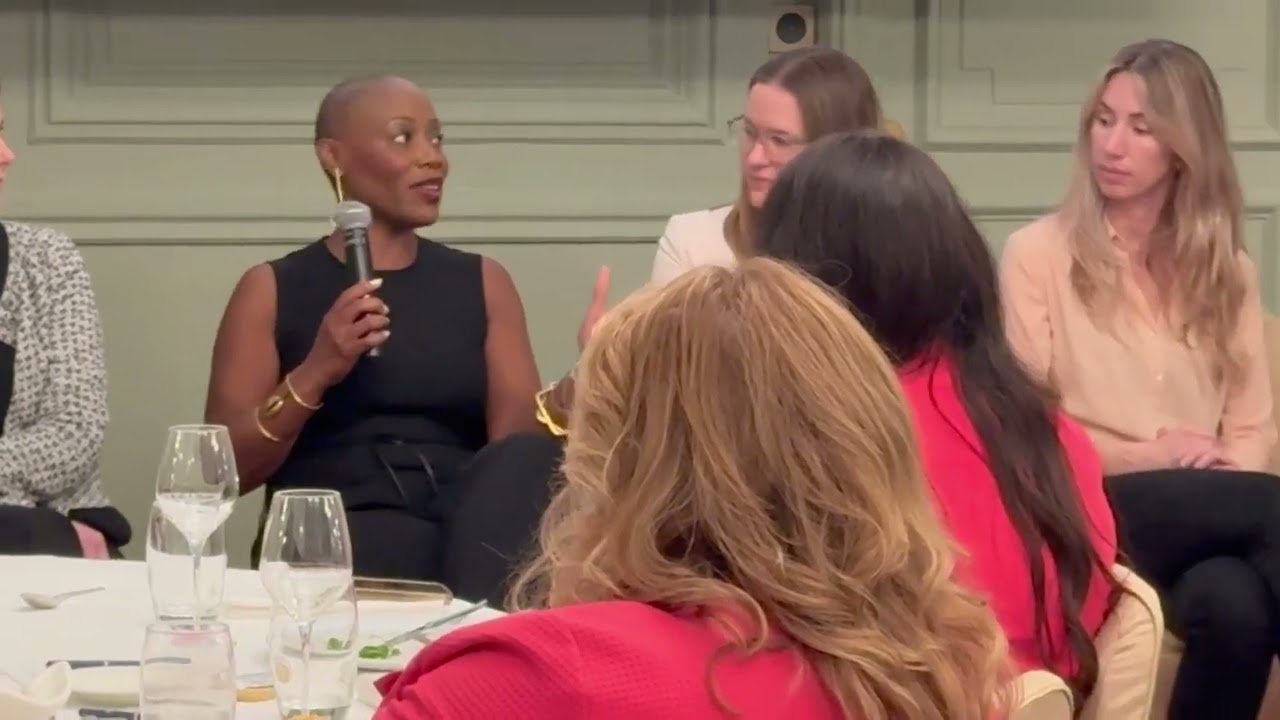

Dream. Lead. Succeed. A Dffierent Conversation About Manifesting Your Dreams, Leadership and Success

Wani speaking at #Oxford on the Mental Health Crisis in the Digital Age and Unprecedented #Change.

Uncovering the Unknown A Deep Dive into the Transformative Journey of Self Love By Wani Iris Manly


Wani Iris Manly, Esq | Eminent Speaker | Global Research Conf. 2023 | King’s College, Cambridge, UK

GRC 2023 Networking Dinner Global Research Conferences 2023 King’s College, Cambridge, UK

Lisa Charles on my award winning keynote on entrepreneurship at the Paris RISE WISE WIN Conference.