Asia And Climate Change

Will Richardson shows that Asian companies are setting climate targets faster than anywhere else, growing 53% in 2025 with China up 92% and Indonesia doubling. Supply chains, investors like Japan's GPIF, and capital access are driving the shift, not regulation. But only 11% of global firms actually deliver cuts, so the real edge goes to those who close the gap between targets and action.
Chapters
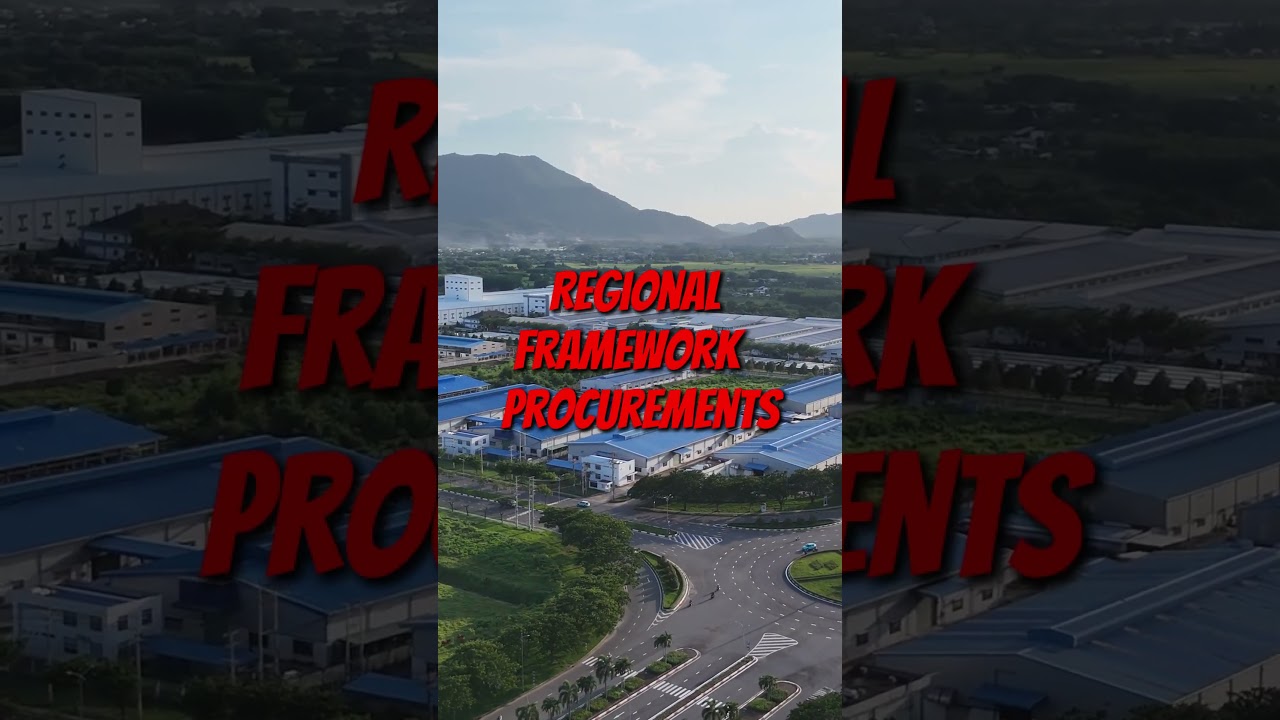
While the West cuts ambition, Asia just quietly took the lead. While some Western governments are quietly cutting their climate ambitions, the fastest acceleration of corporate climate action on the planet just happened somewhere else entirely: Asia. And almost nobody in the West is talking about it. In 2025 alone, the number of Asian companies with validated science-based emission targets grew by 53%. China grew by 92%. Pakistan grew by 92%. Indonesia doubled. This is not a region playing catch-up anymore. This is the new front of corporate climate action, and it is moving faster than Europe and far, far faster than the United States. In the next 8 minutes, I'm going to show you 3 things: why Asia is suddenly accelerating without anyone forcing it to, what the data tells us about where this is heading next, and why, if your business buys from, sells to, or operates in Asia, this matters to your strategy. This quarter, not next year. I've spent 25 years in sustainability consulting, and the picture I'm about to walk you through is genuinely the most underreported climate story of the year. Let me show you what is happening. The story doesn't match the headlines. This is a narrative doing the rounds right now that corporate climate action is stalling, pulling back, going out of fashion. It's a particular political moment in the West. The problem is the data does not support it—not globally, not even close. By the end of 2022. Asia recorded the highest proportional growth in companies setting validated science-based targets of any region in the world, up from 2,297 companies to 3,513. That is a 53% jump in a single year. For comparison, Africa grew 48%, Latin America and the Caribbean grew 42%. Both are impressive, both worth their own video. But Asia did not grow fastest in percentage terms. It grew the most in absolute terms. By a wide margin. Margin. Europe still holds the lead overall with around 4,769 companies, but Asia is now firmly in second place at 3,513 and closing fast. North America sits at a distant third at just over 1,000. Now here is the part I find most interesting, and it is the bit that changes how you should think about this. None of these Asian companies were forced to do it. There is no regulator standing behind them with a clipboard. They are setting these targets because the commercial case has become overwhelming. The investors The customers and the supply chain partners that matter to them are demanding it. So the smart companies are moving first. That is a fundamentally different driver than what we saw in Europe a decade ago. In Europe, regulation pulled the market. In Asia, the market is pulling itself. What the four countries that matter are doing. There are dozens of countries inside that headline number. I'm not going to walk you through all of them, but four of them are doing something genuinely worth understanding. Japan is the established leader, holding sixty. Of all Asian companies with validated targets, that is the result of a decade of institutional investor pressure, strong domestic governance culture, and one of the world's most active pension funds pushing listed companies to disclosure. None of this is surprising. What is interesting is that Japan is still growing, not coasting. China is the one that should make you sit up. China recorded a 92% increase in validated targets in 2025. That is the fastest percentage growth of any established economy. Economy in the world this year. Not just Asia, the world. Yes, China still runs around 60% of its electricity from coal. Yes, the absolute number of Chinese companies with validated targets is still small relative to the size of the economy, but the direction of travel is unmistakable. And this is the same country that has just contributed more than half the global increase in solar and wind generation in the past 2 years. China's not standing still. It is repositioning. India grew 40%. Taiwan, 53%. Both are major global manufacturing and technology hubs, and both are facing the dual pressure of supply chain demands from global brands and the brutal physical effects of warming on the ground. And then there are the emerging markets that should not be overlooked. Indonesia, the world's fourth most populous country, doubled its companies with validated targets. Pakistan grew 92%. Singapore grew 59%. South Korea 43%. This is not a story about one or two first mover. economies. This is a structural shift across the entire region. The 3 engines driving this. So if regulation is not the driver, what is? 3 things, and none of them is going away. The first is supply chains. The major Western brands sourcing from Asia, the ones whose names sit on your supermarket shelves and your phone, have embedded science-based target requirements, or at the very least, full disclosure into their procurement standards. When a global brand tells its supplier in Vietnam or Taiwan to either decarbonize or lose the That supplier moves. That pressure flows down the supply chain at a remarkable speed. The second is investors. Asian institutional capital, particularly out of Japan, Singapore, and now South Korea, is screening for climate credentials at a level we have never seen before. Japan's Government Pension Investment Fund, the largest pension fund on the planet, has been pushing listed companies towards disclosure and target setting for years. That pressure is now visible in the SBTi data. The third is capital market access. Asian companies seeking listings, partnerships, or financing in European and US markets are now being asked about their climate credentials as a basic threshold question, not as a differentiator anymore, as a starting point. A validated science-based target has gone from impressive to expected. These 3 drivers are commercial, not political, which is why none of them is going away when the politics shifts. They are tied to the way global capital and global supply chains now actually work. The thing nobody is pricing in. There is one more piece of this story that I think is genuinely underpriced by Western businesses, and it is the big, bigger picture. Asia is not just leading on emission targets; it is also the most exposed region on Earth to nature-related risks, and it is moving on that too. Floods alone cost Southeast Asia over $2 billion in direct economic losses every year. According to the Asian Development Bank, around 75% of the region's GDP comes from sectors that depend on nature. higher than the global average. But here is the flip side. A global shift towards nature-positive developments could unlock over $10 trillion in business value by 2030, and Asia and the Pacific account for $4 trillion of that, plus more than 200 million jobs. And Asian businesses are moving. 86% of companies in Asia-Pacific are already using or planning to disclose against the new Global Nature Framework. The equivalent figure in Europe is 69%. Asia is ahead. This is not a region following the West's lead anymore. On nature, it is genuinely setting it. What this means for your business. So if you are running a business in Europe, the UK, or North America, why does any of this matter to you? 3 reasons, depending on how you touch Asia. If you buy from Asia, and most businesses now do somewhere in their supply chain, your suppliers are operating in an environment where climate credentials are becoming a commercial expectation. The Asian suppliers ahead of that curve will be easier, lower risk, more reliable partners. The ones behind it quietly building Scope 3 exposure to your value chain that you will inherit. Knowing which is which is your job, not theirs. If you sell into Asia, the baseline expectation has shifted. A validated science-based target is no longer leading edge in Tokyo, Shanghai, or Singapore. It is becoming the price of entry. The pitch decks Asian buyers want to see now look different to what they wanted 3 years ago. If you operate in Asia, the regulatory direction is becoming clearer. Thailand's draft Climate Act The US's Climate Change Act is the most significant signal of the year, moving from fragmented pollution rules to a unified economy-wide framework with mandatory reporting, an emissions trading system, and a potential carbon tax. Other countries will follow. Acting before the law arrives is cheaper than acting after. And even if you have no Asian footprint at all today, this still matters because the frontier of corporate climate action is shifting east. The next decade of supply chain decisions, investment flows, and commercial partnerships will increasingly be forged through Asia. The businesses paying attention now are the ones that will be ready when those relationships start to matter. The gap that remains. Let me close with a piece of honesty, because the momentum in this data is real. It is not the full picture. Globally, 80% of listed companies claim some form of net-zero ambition. Only 11% have actually delivered any measurable emissions reductions. The gap between intent and action remains enormous. Asia's acceleration is encouraging. It is genuinely good, if not great news. But setting a target is the beginning of the work, not the end of it. The competitive advantage in the next decade is not going to belong to the companies with the boldest claims. It is going to belong to the ones that close the gap between ambition and verified progress. That is the work. There are no shortcuts. And right now, Asia is showing the rest of the world what the early stages of seizing that opportunity look like. If this was useful, here is what I do on this channel. Every week, I take one piece of the sustainability story that businesses are getting wrong, or in this case missing entirely, and I show you what the data actually says. Subscribe so you do not miss it. Drop a comment with this: if your business buys from, sells into, or operates in Asia, do you actually know where your suppliers and partners sit on climate? I genuinely want to know how many can answer that with a real picture, because in my experience it is almost none. And if you are a sustainability professional, a consultant, or an advisor, advisor, working with businesses that touch Asia, and building a network of practitioners who do this work properly. The link is in the description. At 51 to Carbon Zero, we help organizations turn sustainability from a reporting exercise into a business advantage, with a particular focus on the Asian markets where this acceleration is happening. If you want to be a part of our network, drop a comment or send me a message. I'll see you next week.