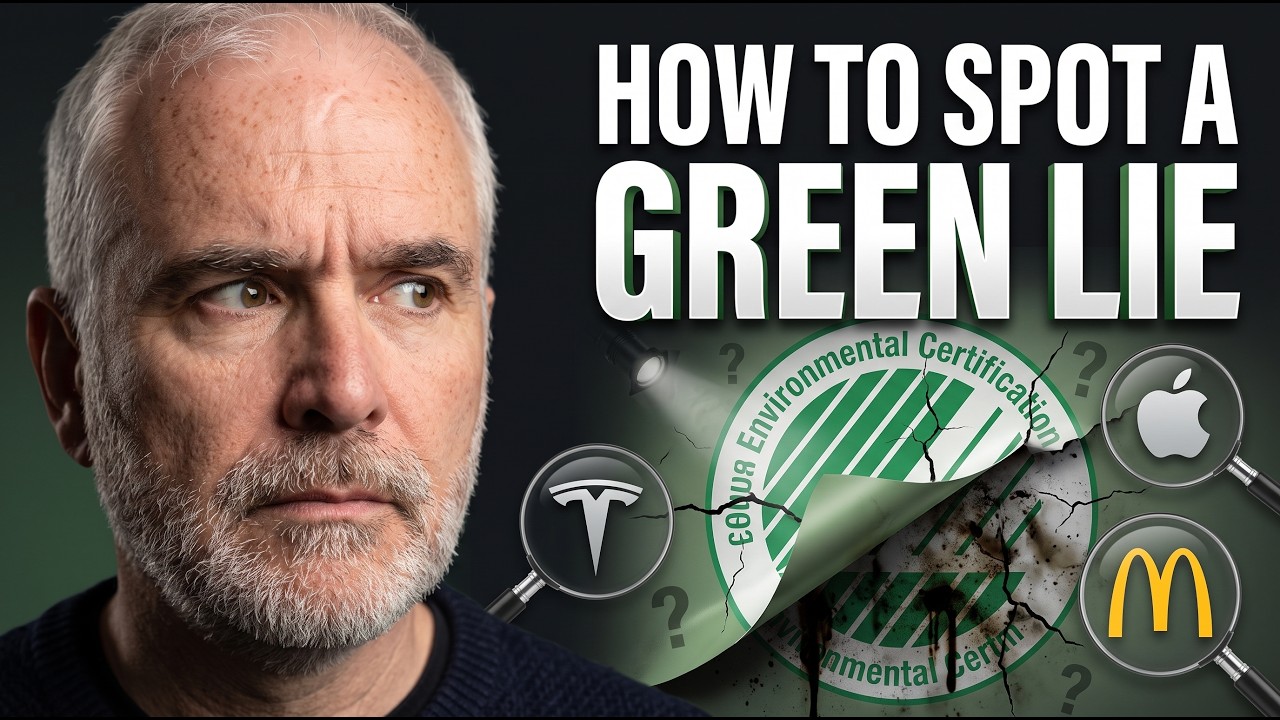
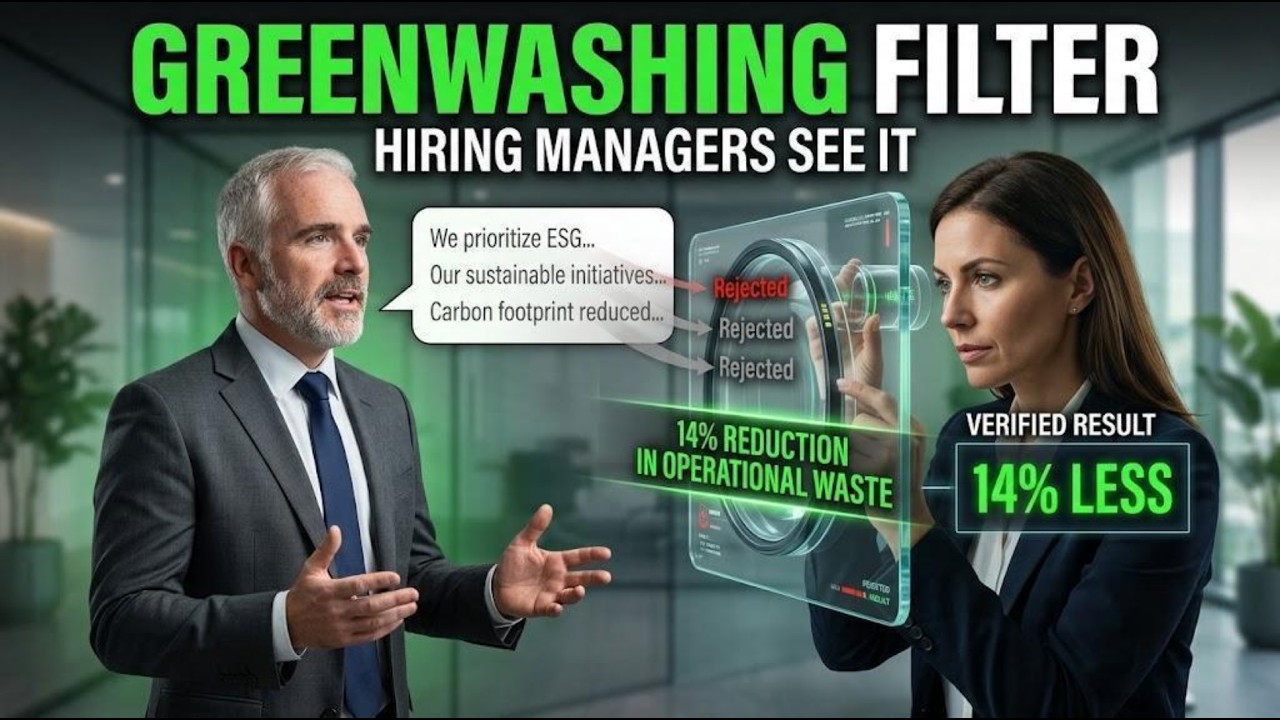
Sustainability consultant Will Richardson explains why green claims from Tesla, Apple, and McDonald's are often half-truths. Regulators and courts, especially in the EU, are cracking down on misleading eco-labels. Companies with quiet, data-backed credibility will win; those with unsubstantiated claims face legal risk within 12-24 months.
Chapters
Is Tesla actually good for the environment? Is Apple? Is McDonald's? Is the electric car sitting in your neighbor's driveway actually helping the planet, or is it just a very expensive theater? The honest answer to all of these is complicated, and if you're running a business right now, the reason it should matter to you is not what you might expect. Hi, I'm Will Richardson. I've spent 25 years in sustainability consulting. I've worked with car companies, energy companies, food and beverage giants, and every kind of business in their supply chains. So I have seen how green claims get built from the inside, and I have seen why so many of them are now falling apart. Let me explain why this matters for your business and how the businesses I work with are getting ahead of it. The problem: every major brand you can think of has spent the last 5 years making some kind of green claim. Tesla is saving transport. Apple is carbon neutral. McDonald's is hitting sustainability targets. Every big consumer brand has some version of this in their marketing. Here is the pattern I keep seeing. Most of these claims are not outright lies. They are half-truths presented in the most flattering way possible. The company picks a small part of their business that has genuinely improved. They put a big green label on it, and they hope nobody looks at the rest. Tesla is a good example of this. The cars are genuinely lower emissions when you drive them, but the battery's carrying a big environmental debt on day one. Apple's carbon neutral. Watch only counts a fraction of the product's real footprint. McDonald's has hit some efficiency targets while its total emissions have actually gone up. None of this is criminal, but it is being questioned now in ways that are going to affect a lot more businesses than the giants. Because here is the thing: regulators, investors, big buyers, and increasingly the courts are all starting to look at these claims properly. The EU has already made some of them illegal. Others are the subject of active legal cases, and the ripple effect is. Now hitting mid-size and even smaller businesses. If your business makes any kind of environmental claim in its marketing, on your website, or in your tender responses, it might be about to come under scrutiny that is— it was not designed to survive. Why this matters for your business. You do not need to be a Tesla or Apple for this to affect you. If your business sells anything to a bigger buyer, that buyer is now being pressured to prove their own supply chain is clean, which means they will start looking at what you have claimed and what you can prove. Vague marketing liners will not survive that. If your business has ever put eco-friendly, sustainable, carbon neutral, or climate positive on anything and you cannot back it up with hard data, that is a growing legal and commercial risk. Not tomorrow, but in the next 12 to 24 months, absolutely. And if you're watching your competitors making bolder claims than you and wondering whether you are behind, the honest answer is you are probably ahead because bold claims without evidence are becoming a liability, not an asset. The businesses winning Contracts now are the ones with quieter, more honest positions that stand up to scrutiny. The winners in this shift are not going to be the loudest; they are going to be the most credible. How we have helped businesses fix this. Now here's the good news: this is fixable, and most of the businesses we work with are much closer to a credible position than they think. What we do is straightforward: we help businesses get honest, defensible data behind whatever claims they are making or want to make. We show them where their current marketing is exposing them and where it can be tightened to. Survive an audit or a regulatory challenge, and we give them the exact language to use with their customers, their buyers, and their tender responses so they can compete on sustainability without exposing themselves to greenwashing risk. For most businesses, this is not a big consulting engagement. It is a targeted piece of work that pays for itself many times over the first time it wins a contract that would otherwise have been lost or prevents a claim that would otherwise have caused a problem later. As an example, I worked for Elan Cable, One of the UK's major British global cable supplier and distributor. I enabled them to understand what impact they were having in their operations and how they could become more efficient both financially and environmentally. The businesses we work with are not making bolder claims than their competitors. They are making stronger ones. There is a difference, and it is the difference between winning and losing over the next few years. If your business is making any kind of environmental claim right now, and you are not sure whether it would survive. Scrutiny, drop me a comment or send me a message. I am happy to have a short conversation and tell you honestly whether it is, it is something worth acting on. You don't need to overhaul your whole business. You just need to make sure what you are already saving is defensible. Subscribe if you want more videos like this. Every week I take on one part of the sustainability conversation people are getting wrong and give you the honest answer. I'll see you in the next video.