Growing Pains
Yusef-Andre Wiley built Timeless Group to employ justice-impacted people, growing from a 2012 startup to LA County contracts by 2019. But rapid expansion exposed a brutal problem: frivolous lawsuits from former employees drained the nonprofit's limited reserves, forcing settlements and threatening closure. Wiley now advocates for policy reforms to protect nonprofits from legal vulnerability.
Chapters
Peace and salutations, my people. Let's have a conversation about business— nonprofit versus for-profit business. As you know, most of the time when we decide we want to build or form a nonprofit, we're doing it out of desire to give back. Typically, that's the reason we We see a need somewhere in the community and we want to give back to the community. Now, as you know my story, I was incarcerated, all that stuff, and changed my life around and created this thing that we call Timeless along with my co-founders and The desire is and was to give back to the community, to work with individuals that's been impacted by incarceration, to support individuals that are in re-entry. That's always been the mission for the most part of Timeless. Now, of course, we've extended it and added homeless service, workforce, etc. But even with the workforce, that was part of that need for employment for justice-impacted individuals. In our case, Timeless Group, we, we've had our early struggles in our early development, early stages in 2012 when we Created the organization and built it up, and by 2019, we began to get government contracts in Los Angeles County. Once we began to do that, we seen an opportunity right there for us to begin hiring from the community, supporting community. One of the challenges, one of the serious challenges of being able to do that is number one, what does your infrastructure look like? What does your internal controls and infrastructure looks like before you expand and grow to a large size from small to midsize or from small to large? As an organization. That is definitely one of the key components, especially as it relates to HR, uh, departments, creating and forming an HR and, um, you know, finance team or finance department. Now, as you continue that process, your desire again as your mission is to help, to give back to the community, to serve your people, to give 'em opportunities to find employment who could otherwise not find employment or have a struggle finding employment due to a justice-involved background, right? So it's a little difficult to find work. Timeless have done that since 2019. I'ma give that year. From since 2019, we've been able to hire individuals impacted by the system, individuals, um, with rest history records. Now, do you know that these are the people— these same people are the very people that will come back to hunt you? Um, it's unfortunate and it make you doubt or question, why is it that I decided to help individuals like this, like myself? These individuals like myself, but these are the very people that can easily come back to bite you because it's come back to bite us at Timeless. Um, the majority of the people that have filed litigation, and we're talking about frivolous lawsuits, frivolous litigation for things that nonsensical, and just to find an easy come up, find a way to come up. Now, what is that here in Los Angeles, LA County? What is it with our people? What is it with our people where we do this to each other, especially African Americans? Where whether it's hating on Tyrone, it's hating on me, whoever it is or whatever it is. What causes our people to go after each other so hard? Now if you notice, you know, what made me think about this is, uh, you know, lately in the media, social media, they've been talking a lot, you know, the comedians, ever since the Katt Williams, um, interview at the Che Che Room or Che Che Club with Shannon Sharp. Um, comedians been going after each other, you know, Black folks going after each other, right? And it's just, I don't know, it's something there, it's something wrong with that. And none of us are, are protected from, from that. Now, me as an employer, Art Timeless as an employer, We have to deal with that. We have to fight off this litigation. Now, unfortunately, as a nonprofit organization, we're not loaded like that with cash to buy attorneys, and they know this. You know, people that decide that they want to file a lawsuit against nonprofit organizations, they know a lot of times nonprofits are going to just settle, and it has happened. And, you know, research has showed that, um, typically nonprofit organizations are the ones that settle claims just to avoid the court proceedings, etc. They typically, whether it's trivial, frivolous or not, they offer some money to these individuals just so they can go away. But that's just it, that's what they want. They want whether their claim is false or have any validity, they know that in most cases that nonprofits are just going to settle. And that's what has happened here in Los Angeles with Timeless Group and is happening, unfortunately. And we're trying to survive it. We're, we're going to survive it. Um, we're going to survive it even if we come out looking different. Even if we come out as an organization looking different, not as much emphasis on formerly incarcerated folks, not as, not much focus on second chance organization, not much is focused on serving our community or our neighborhoods with a different focus on our youth population, etc. Um, we, we definitely have to rethink some things because these things that has happened, these trivial frivolous lawsuits that the homies are, that the so-called homies, right, file against organizations like ours, uh, it hurts. It hurts, uh, not just financially, but it's just It makes us look at what we do a little bit different, and it's unfortunate, and, and it's happening a lot. Uh, if you do your research, you'll see, especially in the state of California— California is the worst in terms of protections for employers, the worst. And, um, nonprofits specifically, uh, we're talking about 4,700 plus nonprofits close their doors annually in the state of California compared to the second, um, state, I believe Missouri or Michigan, only 970+ nonprofits close their doors annually. That's huge. That's a big gap. That's a huge number.. And it's unfortunate. And all of these nonprofits that have solid missions and visions to give to the community, doing great work, they just— it's difficult in California. And this is one of the reasons you find many, you know, one of my mentors told me he spent 10 years in the nonprofit space. But he had to get out. He literally said, man, I, you know, I had to get out because I realized that, you know, I can't do this forever. This is difficult to be in this space, um, because you don't want to lose heart for the work. You don't want to, um, turn sour towards people, and you don't want to lose yourself in it. So He's one of the people, my mentor, who's helped me and trained me, um, how to become an entrepreneur, how to be someone that can go after it as a consultant and things like that. That's neither here nor there, but my point is, and I don't know, maybe I'm sure other cities, other states go through it, but specifically California, Los Angeles, We have some issues, some serious issues with self-hate. Uh, this Black on Black is not just Black on Black crime, but it is crime. It's another level. It's a different type of crime, how we come after each other, after we go after each other. Um, we just literally hate to see each other succeed. We hate to see other Black folks doing well. It's never, oh man, good job, right on brother, keep up the good work. You have a few that feel like that, and there's even folks that may utter those words but don't really mean them. Um, watch you on social media, check you out, um, but really hating inside. What is that? What is that thing that caused Black people to hate on each other so hard? Now we know, we can go into history about that. I can give a history lesson about self-hating, the plantations, and the Jim Crow, and we can go in all of that. But this is 2024, folks. If you don't know your history yet, if you don't know the psychological slavery and the impacts and effects of those things that we've been through, through the Jim Crow era and slavery, etc., if we don't know that yet, and, um, way, way behind. This is 2024 and we're still finding a way to hurt each other. Not the enemy, not the people that truly hate us, not the people that's literally hurting us as a community, right? Racism and all those things. We, we don't go after them. We don't go after law enforcement and that, um, target Black folks, Black and brown folks, and all of these evils that we know that exist in our society. Against Black people. We don't spend no time going and dealing with those things and advocating against things that harm us as a society, as a community. We come after each other. We spend all our energy coming after each other. Ain't that something, right? So now that I've had this experience of being in the mouth of this insanity of hate against me, against my organization, Timeless Group. And I'm just warning folks that, look, if you are building an organization, there are some steps. There's some— I mentioned earlier in this video about, you know, having a strong HR team, having a strong finance team and, uh, payroll, uh, team, etc., which is expensive to even build as far as infrastructure. So a lot of times nonprofits don't have the financial capacity to even create those things within the organization, especially in the early stages. But people that you're hiring and coming in that you're trying to help in the community, to give jobs to, they don't care. They don't care about that. They, they— that's a— that's that weakness or that hole that they can punch in to possibly get a settlement check up out of you. That's, that's what they want. Um, you know, ever since the, uh, COVID and the stimulus checks, it's like we've, we've went to a newer low. We found a newer low. Um, the scamming and all of those things that began to happen when the checks went away, when the stimulus checks disappeared, and And folks got comfortable sitting on the couches and not doing anything, not working, you know, driving Mercedes without a job, nice cars and, you know, nice things, but not able to maintain a 9 to 5 because they don't want to. And when they see an opportunity to sue somebody, for whatever reason, because they Black like them. And what you doing over there? You supposed to be on the ground, on the floor with me. What you doing with the business? What you doing with the organization? No, no, no, no, no, I'm about to come after you. I'm about to sue you. That, that's what's happening, and that's what's happening to our community right now as we speak. And Timeless is not the only one. Our researches show many of the other organizations that's out there in Los Angeles, in Los Angeles County, are going through the same thing with disgruntled employees, or employees that got caught sleeping on the job, employees that's been disciplined for a number of reasons and they still got chances to stay employed. These are the very people, the pad hours people that, you know, clock in from their home across the neighborhood, across the other city, in another city away from the job site, clocking in at work. And these are the ones that end up later trying to sue you. So pay attention, pay attention. If you do, or if you are a nonprofit owner and, and you're dealing with this, let's talk more about this. I, I, I've actually, uh, decided as of, uh, the last month or so take on a different role, or more of a role, to support organizations like ours that, uh, that struggle with these various type of issues within our, our company. So I'm becoming an advocate for nonprofits and, um, you know, legislation, uh, policy changes that can support employers, employers specifically that are nonprofit employers. There need to be some protections and supports for folks like us, and I'm on that mission. I'm on that mission to see what we could do. I found a couple of the organizations out there that are doing similar things, that they have like a membership where you can join. Ask me about that if you like later, but it's tough, and we just got to stay strong. We got to stay focused. We can't lose heart for the people that we want to truly help because this just— it's a small percentage within a company. If you, if you have a company that's going through something like this, it's usually a small percentage, but that small percentage still hurts. So especially when your only desire and goal is to help people and to serve your community. So with that, appreciate you listening to me, hear me out. If you have any thoughts questions, hit me up. Uh, check me out, uh, on my Instagram, Yusef-Andre Wiley. Or, um, let's talk about it. You know, I like to really, uh, delve deeper into this matter, uh, as to why, why us. Peace. Salam alaikum.
More from Yusef-Andre


Are you a Democrat or a Republican? How do you feel about adding a third party? #democracy
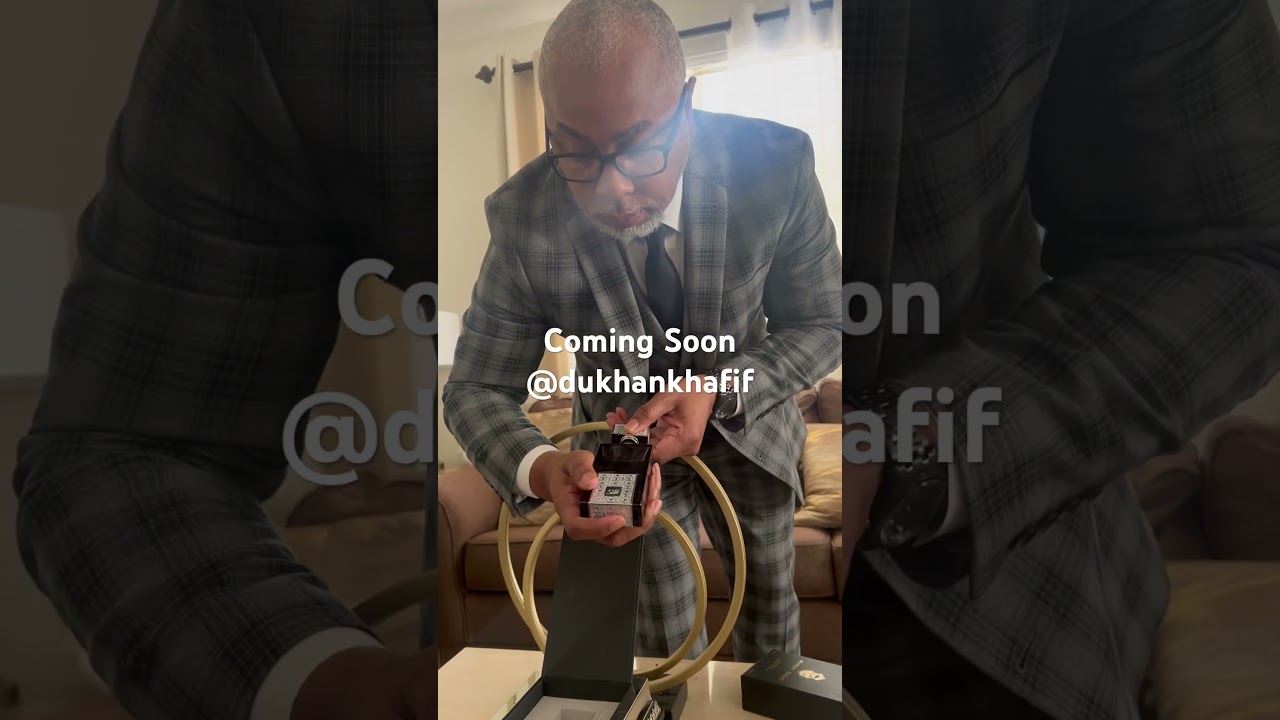
Luxury Fragrance Store coming soon. Dukhan Khafif #ould #luxurylifestyle #luxuryfragrances