In a Pioneer livestream, Clark Urzo (a second‑time founder from Manila) pitches his new venture Black Belt, a skills‑learning platform that breaks complex abilities into tiny, repeatable exercises organized in a skill‑tree. He argues that existing online learning suffers from click‑bait content, high‑level advice, and low engagement, and proposes that Black Belt’s micro‑exercises, instant feedback, and competitive bounties will keep learners motivated. The platform will initially focus on a writing skill‑tree (which Clark will author from his four‑year workshop experience) and later expand to other domains like programming via crowdsourced skill‑tree creation. Clark outlines a go‑to‑market plan that starts with niche writing subreddits and author affiliates, followed by an MVP launch, user acquisition, and reaching “ramen profitability” before scaling. He describes a dual incentive model for content creators: intrinsic motivation (similar to Wikipedia) and a paid apprenticeship/subscription system where experts can earn by building courses for subscribers. Kevin from Eventbrite serves as an advisor, helping with networking and immigration. Zach Sims questions how content will be generated and scaled, the canonical versus multiple skill‑tree issue, and the sustainability of creator incentives. Clark acknowledges these challenges, emphasizing flexibility, featured skill‑trees for authority, and the eventual community‑driven model.
Chapters
Right, okay, so, uh, hi everyone, I'm Clark from Manila, uh, and today I'm going to talk about Black Belt. So, uh, the problem is learning new skills is a difficult problem. It's hard to find good content not optimized for clicks, and it's hard to stick to any given course. If, for example, you Google how to write a novel, you will see this. Cliché advice from, uh, like, uh, too high level for beginners, uh, content farms peddling expensive courses or books on writing, and ad-riddled how-to guides. So wouldn't it be great if you can just write to learn writing? Enter Black Belt. So Black Belt lets you break down skills into tiny exercises. These exercises allow you to learn a complex skill via small repeatable steps. People can hold Kaggle-like competitions for difficult exercises, and these so-called bounties are what incentivizes learning in the long term. Mastering a complex skill is never the end. You can build up your expertise as you master more exercises in the skill tree, which keeps track of your learning progress automatically. Now, this is a saturated market, I know, but we believe this is the only method that makes sense for long-term learning. Our approach is to make the user feel growth from instant feedback. And well, our go-to-market strategy is to get referrals from niche writing subreddits first and foremost, and then affiliate authors. We will also have an onboarding process for people who are already skilled. And the next couple of months will be spent on finishing the MVP and getting my first users, then focusing on the writing skill tree until I get ramen profitability. And then maybe expanding to like other niches like programming. I'm a second-time founder already. I was CTO and then chief scientist of Veer, which still has a monopoly on airline crew training programs in the Philippines. And Kevin from Eventbrite serves as my advisor for the most part. He's helping me in terms of network and immigration. To do all this, I need to grow my company quickly and get help from domain experts who are excited to pass on their knowledge to potential apprentices. That's all. Thank you very much.
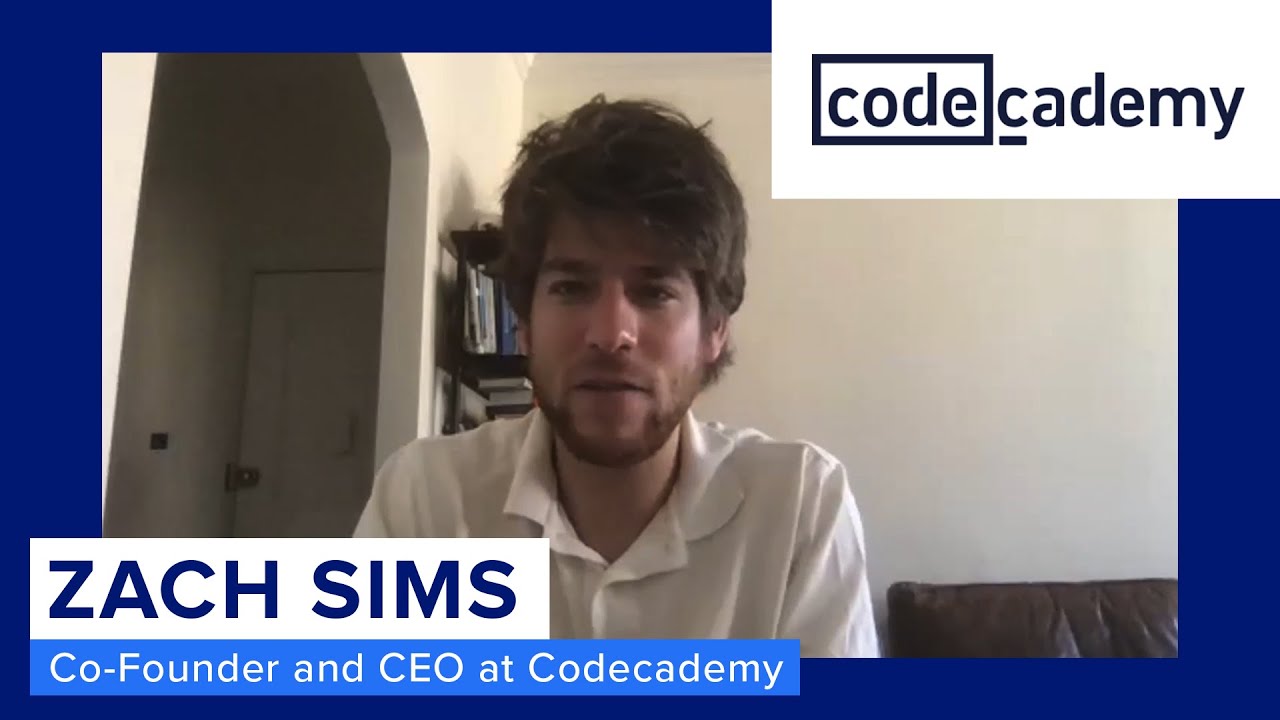
Um, yeah, so something very near and dear to me, obviously, the, uh, the scaling up and improving, uh, yourself. So really cool to see. I'm curious, you know, one of the things that I think we've had trouble with at Codecademy is how you generate great content. So you talk about the bounties and you talk about building a skill tree. How is all that being generated? And, you know, how do you think about that scaling over time? Like, is writing a concrete skill where you're finished creating courses?
Right. So actually, the writing— well, for the writing skill tree, I will be providing most of that content. So I'm part of a workshop group running writing workshops for like 4 years now. But for like the other skills, I would ask domain experts to actually like provide the— or like build the skill trees themselves. So like, for example, I can like ask a programmer to like build up a skill tree from, from, from like console to actual running code. And I will actually eventually open up the like building these skill trees to the community. So it's, it's kind of like a like a crowdsourced thing eventually. Like people will be able to build skill trees with each other.
And do you plan on them— on there being kind of one canonical way for people to— like there's one skill tree for writing or there are multiple different skill trees? I think, you know, they're— one of the things that we experienced was this challenge in brand perception with UGC, right? Where, you know, if 50 people are making a skill tree, that's different from black belt standing behind it yourself and saying like, this is the authoritative way to learn writing.
Right. Yes. So yeah, that's actually one of the main problems that I'm seeing. And the thing is, I feel like getting like that featured skill tree is one of the best ways to solve this problem. But then again, because I want to give people the freedom to try different approaches, because I feel like that's, um, that's one of the main things that Black Belt is, is really good on. Like, it's more flexible than current solutions in that, for example, if I have— if I want to teach a specific writing style from scratch, then I would be able to make my own skill tree, and people will be following that skill tree instead of like the, the usual mainstream one.
And what's the incentive for people to create content?
Right, well, so there's two things actually. So one, I think it is clear that a lot of people do actually produce great content without, for example, monetary incentives, like for example in Wikipedia. And I feel like that's one thing. And the other thing is that As I said in one of the slides from before, maybe I can like bring that up. Hold on. So, so like I said, there's going to be— hold on, there's— hmm, where is it? Anyway, yeah, like I said, there's going to be like an apprenticeship model here. So like in terms of like the business model, People can in fact subscribe to like more people who are more skilled than them. So like there's like a subscription thing that they can actually get paid to build these courses for other people.
Awesome. I think we're about running out of time, but I would say, you know, one of the biggest things to focus on is that content model. I think that was something that, you know, was really challenging for us in the early days, and I think there's a whole bunch of different ways to look at it. You can incentivize people by letting them sell courses like you talked about, or by letting them subscribe. But I think making sure that there is that pure incentive and not just relying on the Wikipedia style, doing it for good, I think will be an important thing for you guys to consider.
All right, thank you. And I really like Codecademy. Thanks. Yeah, thanks for the feedback.