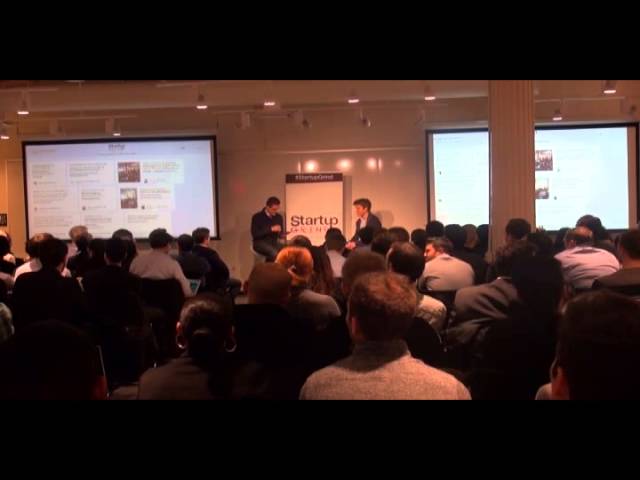
In this panel discussion, Zach Sims critiques the current higher‑education system and outlines how Codecademy aims to address its shortcomings. He traces the shifting perception of college—from a narrow aspirational path in the 1960s to a broad, often under‑delivering institution for a diverse adult learner population. Sims identifies three systemic failures: (1) the content taught is misaligned with job market needs, leading to high under‑employment; (2) teaching methods remain entrenched in traditional, non‑blended formats despite evidence that blended/online learning is more effective; and (3) the institutional model inflates costs and student debt without improving learning outcomes. Drawing on his personal experience of dropping out of a political‑science program, Sims explains why he co‑founded Codecademy. The platform is an open, data‑driven marketplace where anyone—from Google engineers to universities—can create practical, project‑based courses. Learners receive personalized course recommendations, immediate feedback, and a portfolio of completed projects that serve as proof of skill rather than a credential. The model operates with minimal administrative overhead, leveraging online delivery and local meetups to build a global learning community. After two years, Codecademy reports millions of users, career transitions, and entrepreneurial outcomes, positioning the platform as a scalable component of a broader solution to modernize post‑secondary education.
Chapters
Cool, so as was mentioned, I started a company called Codecademy, and we'll get into that in a little bit. But when talking about the future of higher education, I thought it made sense to get back to what is higher ed. I asked a bunch of friends, a bunch of colleagues, what they thought of when they think of higher education. Is it college? You know, someone going to vocational school. And I think this has changed over time. So I think when you look in the 1960s, only a small percentage of us were actually going from high school to college. And college was seen as a really aspirational way for people to step up in the world, seen as really the original affirmation of the American dream, right, with 68% of Americans actually thinking that going to college is an integral part of that. And as we've made major headway getting more and more people from high school to college, this has actually changed. And more and more people are actually seeing college as less integral to the American dream than they did beforehand, which I find super interesting. I think this really says something about the ROI of college and post-secondary education for people, primarily that people realize that colleges aren't doing enough to prepare people for life after college. And instead, they're finding other ways to fulfill their educational needs. So essentially what we're trying to do is solve different and challenging problems with the same solution in the same system that we've had for the past couple of decades. Now college appears to a much wider and broader demographic, as we're educating many, many more people. And actually, 51.3% of those people qualify as independent, which means that they're over the age of 24 and they're funding their own education. So I think most of the time when we have this conversation about MOOCs and higher education and college, we're really thinking about undergraduate education. We're thinking about people between 19 and 23, they're spending 4 years on a campus somewhere. But actually the vast majority of people that are getting a post-secondary education are doing so outside of that window. So we're using the same system to educate those people we've been using for the past bunch of decades. And even new plans from the government, like Michelle Obama's new plan for higher education along with the President, plans to increase the number of people that are getting college degrees in this country instead of thinking about other reasonable alternatives. So, we're trying to solve a new problem the same way we've solved old problems, and it's not going to work. So I think I see 3 main problems with the way college works for us now, mostly in content delivery and the institutions that we end up learning from. So, I think first with content, what we're actually teaching people is wrong. 41% of college graduates after— a year after they graduate find themselves unemployed or underemployed despite going to a 4-year degree program. And actually, 2/3 of the entire college graduate population thinks that they'll need further training and instruction after graduating. And these are people, again, that have finished a 4-year degree program and feel like they expect their employer to provide them with education that most of the time their employers have no reasonable expectation of providing them. Secondly, how we're teaching these people is wrong. So we're still focusing on these 2 to 4 year degree programs that oftentimes are not coupled with what people actually need to know in order to be successful in the world and what they need to know in order to find a job. Further, as Andre mentioned, only 30% of faculty on campuses actually believe in the concept of blended learning. So we've seen many studies at this point that have actually proven that blended learning and online learning can be much more effective than learning one-on-one or in a group in a classroom. But still, the vast majority of faculty don't believe this. Lastly, I think where we're teaching right now is wrong as well. We're relying on institutions that have ballooned in cost, not necessarily because they're dedicating more attention and effort to the teaching experience, but because they're dedicating more attention and effort to administration and hiring other professionals to do things like working on athletics. Uh, and this has led to a massive ballooning in student debt, right? As we all know, student debt's one of the biggest crises that we face right now. Mostly because of the way that college is structured cost-wise. So to sum that all up, again, I think what we're teaching is wrong, how we're teaching it is wrong, and where we're teaching it is wrong. So there's a lot that could be fixed. So I got a little fed up with all this, and I dropped out of college. I was a political science major at Columbia and was stuck in a bunch of lectures. Yeah, exactly. We could go into that. I found myself sitting in a bunch of lectures, watching professors and learning things. And then I found myself working 30 hours a week downtown in New York using none of the skills that I had actually learned in the classroom and failing to see how anything I learned would eventually be anything more than a luxury on the way to becoming a professional. So I started a company called Codecademy with my co-founder once we saw that a lot of our friends faced the same problem. They were interviewing. At firms like Goldman Sachs and McKinsey and teaching themselves financial modeling the night beforehand or teaching themselves to lie in a McKinsey consulting interview with a big thick vault book beforehand. So we decided that there needed to be a way for people to learn practical hands-on skills from everyone else around them and not just from authorities like universities and corporations. Secondly, we decided they needed to learn by doing, by actually working on projects, producing something, and in small community groups as opposed to in a massive openly online course. And we thought this should all take place online where we could form a global community of people, and also offline with meetups in a bunch of different cities. So as I mentioned, we teach exclusively practical skills. And our content is not created— we don't create content ourselves. But instead, we're an open platform that lets anyone in the world create courses. So we have Google engineers that have created courses. We have Facebook the company. And we have educational institutions like Columbia that have actually put classes on Codecademy as well. And we use a bunch of data and analytics to figure out which courses are right and which courses are ineffective. We only show students courses that are right for them. Secondly, we put a major emphasis on projects as opposed to credentials, grades, and assessments. So people A, get immediate feedback, but B, they have that portfolio that we talked about beforehand. So when they finish a certain course on Codecademy, they have something they can share with their friends and something that they can share with employers that proves that they're able to actually execute on what they say they can. And lastly, as a platform, we have almost no costs of administration. We're purely building the medium through which these people are interacting. So does it work? At this point, we're on 2 years into Codecademy, and there are millions of people all around the world that have taken lessons on Codecademy. And people become both entrepreneurs, they level up in their own companies, they find new careers, and they're retraining themselves. Themselves. So I think we're doing one part of something much larger, and we can fix the system. So all of us, I guess, by applying the lessons that I think we've learned. So thanks.