Startup Grind New York City Hosts Zach Sims of Codecademy
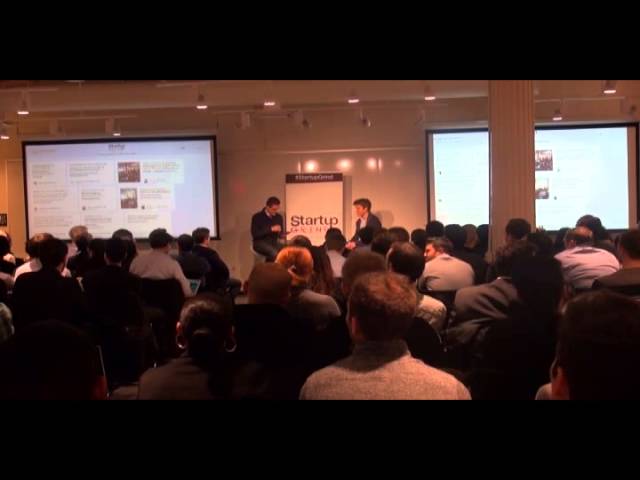
Zach Sims, CEO of Codecademy, talks about launching the coding education platform in Y Combinator and hitting 200,000 users in the first weekend. He explains the free model, how to monetize without paywalls, and why online learning can disrupt traditional higher education.
Chapters
Welcome to the Startup Grind.
Hey everybody, how's it going? Thank you so much for coming. Everyone, if you can quiet down, we're gonna go ahead and get started. Thank you so much for coming. My name is Peter. Welcome to Startup Grind New York City. This is, I believe this is our 15th monthly event in New York City, so we're really excited to have you here. I'm proud to say this is the biggest event we've had so far.
Woo!
Woo!
We're really excited to have Zach Sims, one of the founders of Codecademy, with us tonight. Are you guys excited?
Woo!
Yeah!
Woo!
Yeah!
Like, kind of excited? I don't know if he's gonna come out here if you're just like kind of— like, how excited are you to see Zach Sims? All right, well, work on that. A few quick things. We have bathrooms available to women in the back, to men in the front. Men, if you absolutely do have to go to the bathroom during the interview, please walk around all the way around the back and come through over here. The Wi-Fi is as always going to be called Pivotal Guest. I know most of you can't see it. It's right over here. Pivotal Guest, and the password is makeithappen, all lowercase, makeithappen. So one of the best reasons to get on Wi-Fi tonight is because we're gonna ask you to do Q&A on Twitter. So if you have any questions throughout the entire interview, you can tweet using the hashtag #startupgrindenyc, which you might already see a few tweets up here. #StartupGrindNYC. If you ever have a question for Zach, tweet it using that hashtag. You don't have to include any @handles, but you can include Startup Grind NYC is also a Twitter handle. We tweet from that account. You can include Zach Sims' account. You can include the Codecademy Twitter account. So please do that if you'd like. But tweet @StartupGrindNYC and we'll actually be pulling your questions off of Twitter in real time. So I'll be looking at my phone periodically throughout the interview. I'm not checking email. I am checking Twitter, but it's for a good reason. Let's see. First of all, I want to thank all of the volunteers, our event team who helped make this event possible, who checked you in, who helped set up the chairs, everything. Please give them a big round of applause. I don't know. That's still a little lackluster. It's like, it was sunny and 55 degrees. Aren't you guys excited to be here? Wasn't it a good day? I also want to give a big shout out to moo.com, who's sponsoring this event for the first time. They're going to be our sponsor for the next 6 months. We, Josh and I and other people on our team, have been getting business cards from moo for a very long time, for more than a year now. We're really excited to have them on board with us. Liz is here. Liz, can you raise your hand real quick? Hey, Liz, how's it going? So she's in the back there. If you want to talk to her about anything MOO-related. And I think in the future we'll have a little swag from them. Looks like it might have gotten lost in the mail tonight. But I also need to give a really big shout out to Pivotal Labs, who's hosting us here in this space. They've also provided all the pizza. They've provided all the drinks in their coolers over there. After the event is over, please feel free to go and We're actually pretty close to out of beer, but please feel free to go grab any other drink. If you really want some beer, you can like run over there right after the interview's over. But I think that's it. Without any further ado, remember to tweet using the hashtag #StartupGrindNYC. Without further ado, I wanna quickly bring up Chris from Pivotal Labs, who's gonna talk a little bit about what they do, and in particular, I believe they're hiring right now.
Can y'all hear me okay?
Okay.
Good evening, everyone, and welcome to our space. I know many of y'all have been here before, but I'm Chris, and I'm your event host for the evening, and I just wanted to tell you a little bit about Pivotal Labs. So we're a software consulting company specializing in agile development. We're always hiring designers, project product managers, and engineers, and when it comes to our client list, We are committed to keeping a balance between Fortune 1000 companies and startups. So I'm not gonna take too much of your time, but if you're interested in learning more or working for us, please come see me throughout the night. I'll pretty much be in that back corner over there. Okay? Thank you.
Thanks, Chris. One last thing to mention. With every event that we do, at the end of the interview, we're actually gonna ask the audience to get up and give pitches to each other. So tell us what you're working on and what you need right now. So if you're looking for a developer, if you're looking for a designer, we'll call a few people. We'll just have you raise your hands. We'll call people from the audience, and you can tell everybody else here what you're working on. So if you're really excited about that, be thinking about what you're gonna say during that time, and I'll call on you. Without further ado, I would love to invite Zach Sims, founder of Codecademy, to the Startup Grind stage.
Come on, a little more, please.
Thank you. So.
All right.
Got a little beer there for you. Thank you. Yeah, you really— you have to be careful with these. Yeah. A few interviews ago, I actually sat down on the chair and it sank about 1 foot.
It's like the first test, you know?
Yeah.
Yeah.
So now we test them every time just to make sure. Zach, you've been a really busy guy over the last few years. Zach Sims, it seems like you've been up to a lot of interesting things, and even before Codecademy, you were working on some exciting stuff, but you actually, I believe, met your co-founder of Codecademy when you were still in school at Columbia University? Is that correct?
Yeah, so Ryan and I met each other working on the newspaper in college.
All right.
Yeah.
Nice.
And then how did you go from— so I believe you were a political science major in college. How did you first get in touch with this kind of like tech startup ecosystem?
So, I kind of always been working in startups and somehow ended up a political science major. I think I originally wanted to go to Stanford and somehow figured that if I couldn't do that, like maybe I should study something other than computer science. But I'd been starting companies since I was 13 or 14, just kind of messing around online. I think as the expression goes, you know, no one on the internet knows you're a dog. And for me it was no one on the internet knows you're a 13-year-old in your parents' basement. So, you know, I sold things online and started companies and kind of messed around before actually going to college.
What's, what's an example of that?
So I designed one of the first waterproof iPod cases after I was given an iPod when I was 13. And then actually I tried a couple different times to learn web development., in order to sell stuff online and basically continually had this problem of not knowing, you know, SQL from .NET or any acronym that I would find whenever I went to the library, to try to pull out a programming book. So, the problems with learning technical skills, happened early on.
Okay.
Yeah. I think I would say this is the fault of the industry's complexity. My co-founder would probably say I'm dense.
So, you know. How did you, once you started doing political science, how did you still stay involved in the tech scene? And then what was the impetus after you graduated to really embrace that?
So New York, so I started college in 2008. And when I started college, I tried to get as involved as possible in the startup scene in New York, which was super easy considering the startup scene was probably like 2 companies and 10 people that weren't working in finance. So, broadly what that meant was going to the one meetup that was around back in 2008, trying to meet as many people as I possibly could, and continually trying to stay strong when all of my friends in college told me I was an idiot for working at a startup. You know, I first got involved for a company I worked for my first summer after my freshman year, a company called Drop.io, and I, I was kind of new and naive when I got to campus at Columbia, and there was a poster up for a talk that Sam Lessin, who was the CEO of Drop.io, just left a job running all of product at Facebook. Sam was coming to talk on campus. I had thought this was going to be a super well-attended talk. Like, who wouldn't want to see a startup founder as CEO? Like, so many people are going to go to this. So I get there like half an hour early. And I show up, and by 15 minutes into the talk, I'm still the only one there. So that was, that was the startup scene in 2008. But, you know, I saw Sam talk, thought was super driven by what I heard him talk about, and just didn't stop emailing him until he agreed to meet with me. And first it was coffee, and then I tricked him into lunch, and somehow I snookered him into an internship. I think originally I'd called it like, "Can I just hang out on your couch for 2 months and work on projects?" And then once I was there, it was too late.
So, Drop.io actually turned into, not only was it acquired by Facebook, as you said, Sam just left Facebook, but it turned into this kind of micro-accelerator for a lot of startup talent that is now in other places in the city. Do you still keep in touch with people who work there?
Yeah, I keep in touch with plenty of people that were there. It's unclear what exactly made Drop.io a place where a lot of people who left started companies from. Right.— but it's happened. So Steve Greenwood started Brewster, uh, which is Union Square funded. Uh, Soraya Darabi started Zady. Um, I'm sure I'm forgetting one or two, uh, that are in there as well. But there were only 20 people at the company, and I wanna say a good 25% of us now run venture-funded companies.
Right.
Um, so I'm not exactly sure what it was that did that, other than I think the selection bias is pretty strong, because if you were into startups, you probably worked at Drop.io or like Etsy down the street, which at the time was still like 10 or 15 people, so.
Yeah. So—
I made the wrong choice, to be clear.
Yeah.
I don't know about that.
I would've been sitting here IPOing. No, it's fine.
So it seems as though— so briefly after Drop.io, you did some stuff in the venture capital space, but it seems very quickly actually started Codecademy. What was that transition like?
—So I, I, after I finished working at Drop.io, it was for a summer, uh, and then I continued working while I was in school, and, uh, the next year I wanted to work in venture capital because I figured, like, what is someone non-technical to do, uh, other than work in venture capital? So I spent the summer, uh, working at a firm called AOL Ventures and, and looking at investment opportunities. We ended up looking at an investment opportunity that I was super passionate about but that couldn't get over the line at the firm, uh, called GroupMe. At the time it was called Grouply. Group.ly. And I started sneaking out at night to work for GroupMe while I was still working at AOL over the summer. Everyone knows at this point, so it's not a secret. But I was super taken by the two founders and what they were trying to build. And ultimately decided I wanted to see what a startup was like not just from the 20-person phase and the venture-funded phase, but really from the ground up. So when I joined Grouply, then GroupMe, At the time, it was the two co-founders. They were working out of— Steve Martosi is one of the co-founders— working out of Steve's apartment. They had just launched over the weekend in a hackathon, and the graph was like this in terms of new users. This was before the real rise of stuff like WhatsApp. And at the time, we were competing with companies with names like Beluga and Fast Society. Beluga's now Facebook Messenger, so they did OK too.— you know, I got to see everything from the beginning. From— I wrote, I think, our initial terms of service, which quickly thereafter were actually written by a real lawyer. And did, you know, a bunch of mock-up stuff and business development stuff. And really enjoyed watching the process of creating something from nothing and taking it through an idea that was in two people's heads to something that quickly grew to a team of, you know, 10 or 15 people, many of whom actually worked at Pivotal Labs before working at GroupMe. So, I don't know if it's still verboten to talk about GroupMe in these walls, but you know.
So the guys from GroupMe were actually one of the first Startup Grind guests here in New York. Excellent. Yeah. So from part of that experience, I mean, did you learn anything about who those early adopter users were? 'Cause I mean, it obviously grew so, so quickly, and there are a lot of parallels that we'll get into with Codecademy.
I think GroupMe was really good at capturing the tech hype cycle. Uh, so people very early on, uh, you know, they were on the front page of TechCrunch. I don't think they won the Disrupt Hackathon, but they did something like that. Uh, and they were really good at continually getting their name out and building momentum, uh, and having everyone who was, you know, important in the tech sphere, uh, start talking about them really often. Uh, and so that was something I think that really kept the momentum up. And the company sold, I believe it was 364 days after inception, uh, to Skype, so— they kept up the momentum over the course of a year and built something that was kind of always in the lexicon for most people. Right.
So shortly after that, you started Codecademy, and let's just jump right into that because the parallels here are obvious. In the first weekend that you built it, you got 200,000 users. Is that correct? Yes.
So we had a lot of people use it very quickly. Can I ask, by the way, how many of you have used Codecademy at one point or other? Awesome. How many haven't? We're going to do public shaming. No, I'm kidding. It's fine. Better log on afterwards. Yeah.
That's pretty insane. I mean, can you briefly go into some of the tactics behind that or what you were doing to get— I mean, I can't conceive that that's like, what, 10,000 people per hour or something like that?
Yeah, I think the overall tactic is to just generally not have a clue about what you're doing. But that doesn't work for everyone. I've tried that. It didn't work for me. Yeah. The actual answer is to just build a product that works. And we were very fortunate that we were building something for me in the beginning. So I was teaching myself to program. I had taken one computer science class in college. My first computer science professor, who's great, had said something at the beginning of class, something similar to, if there's 300 people in the class, look to your left, look to your right. 100 of you. "Will drop this class over the next 2 weeks. 100 of you will fail. 20 of you will get A's." And he kind of grinned a little bit, and he said, "But everyone will be miserable." So I had a really warm welcome to the world of computer science, and I tried to learn a lot more independently than I did in a classroom. So when we were building the first version of Codecademy, we were actually building something that I wanted to learn from. Right. So it was easy to figure out what worked and what didn't, because I wanted to throw my computer out the window if we built something that didn't work. Work.
What were the resources that you were using prior to the existence of Codecademy? Pretty much everything.
I watched videos. I read textbooks. I used tutorials online. And my co-founder actually had started a group on campus at Columbia that was designed to teach people to program. So Ryan had a ton of experience actually teaching people. So Ryan helped me learn over the course of the summer as well. And what I learned was that learning by doing with actual projects that mattered and I could deploy quickly and share with friends. It's probably the most important part of the process. And I think when you look at traditional learning, in particular vis-à-vis computer science, it's very theory heavy in the beginning. And the thing that we've discovered about learning is that people need a motivation to continue. And oftentimes what happens is they're discouraged from continuing by the fact that they're not able to build something immediately. And really what we wanted to do with Codecademy was remove all the barriers possible to actually starting to learn.
Great. So what was the initial seed of the idea? Because if I'm right, it wasn't originally purely an online education play. So can you pinpoint a moment where you and Ryan said, this is the idea. This is the company we're going to start with, and then pivot from there?
So we had a conversation in January of 2011. 2011, both of us had come back from break. We'd worked on a hackathon at Columbia that's called DevFest now. It's a pretty big thing for students in New York and elsewhere. And what we decided to do was, I looked around. I was interviewing at banks and consulting firms at that time for some reason, 'cause that's what you get trapped into doing when you're a political science major. And I realized that I, as someone who's spending $200,000 on an education, I didn't have the skills I needed to be successful. And that I was spending my nights and weekends, along with everyone I went to school with, reading Vault textbooks about how to do discounted cash flow models and all these weird things that, you know, I hadn't heard of between studying, you know, Plato and Hobbes. Somehow they skipped over the Black-Scholes model. And so, you know, what we saw this trend and we looked into it more deeply and realized that in the U.S., you know, 50% of college students are unemployed or underemployed a year after they graduate from college. College. Uh, this just seemed totally messed up to us. Uh, and beyond the fact that, you know, we're trapped in a student debt bubble and we're not able to graduate students to meet the needs of the jobs of today, um, we thought there were a lot of people who might not have had those college degrees who might have been able to actually do the jobs, uh, that the economy needed. So we looked at solving that problem. Is how do you— there's a significant mismatch between the jobs that are open and the skills that people that are graduating from college have. How do we quickly test for those skills and match them up with the companies that need them. And are those—
is that still the same problem that you're solving now? Are you still going after that young demographic, kind of college age?
I would say the broad demo for Codecademy is anyone who wants an education that has an ROI. So we make sure that the time you put in and the money you put in, which is pretty easy because you don't put any money in right now, but the time you put in, you get a lot more more out in terms of value that you're later able to apply to your career.
So you have a weekend where you get 200,000 users. Obviously, this is now a thing for you. You can't just abandon 200,000 people. I mean, you could, but it's such a good indicator. I mean, what's the next step after that? What's the next week? What's the next month look like?
So at that point, we were in Y Combinator. So we were in California, and we'd launched. And we had never expected to have that many people use the product as as fast as possible. I've told the story a few times before, but the day we launched, my co-founder Ryan and I looked at each other and Ryan bet— we installed Chartbeat, which is a real-time analytics service. Ryan bet me that there would be no more than, I think it was, 50 people on the website at the same time that day. And I said, you know, let's be optimistic. Maybe 100 people will come. And we went out for bagels after that. And the reason we thought that way was because we had pitched a couple venture capitalists. We had pitched some of the Y Combinator partners.— all of whom said, "There's no market for this." You know, I remember one of the YC partners told us that when we launched a product, it should be ugly, but never that ugly. Which really does a lot to fuel, you know, your ego and your belief in yourself. So at this point, it was just kind of like a throw your hands up in the air, you know, whatever kind of moment. And so we left and launched the product, and we installed Chartbeat, I had the iPhone app, getting bagels in Mountain View and I started getting like, my phone started vibrating off the hook. First it was, you know, 250 people on the site at the same time. Then it was 500 people on the site at the same time. And I looked at Ryan and I said, "You know, you must have installed Sharpie wrong 'cause this is like ridiculous. Whose site did you put this on?" And, you know, he nodded. He was like, "Yeah, I must have done this wrong." And then I started getting tweets from like crazy people and emails. Like 20 minutes later there was an email from Sal Khan in my inbox, you know, who started Khan Academy and a lot of like the who's who in Silicon Valley. And so Ryan and I, you know, jaws dropped a little bit, ran back to the car, went home, and for 72 hours just did not sleep. I think, you know, my trash can at that point looked like something you'd find in a college frat house. It was like just a ton of Red Bull, like the occasional beer, lots of pizza boxes. And for 72 hours we just didn't sleep. And so the first thing we did after those 72 hours was sleep a lot. But after that we started raising money. It was right after Demo Day for Y Combinator, so we raised our Series A financing, but also At that time, we had written out on a whiteboard the product roadmap for Codecademy. You know, here are the next 5 or 6 really big features we wanted to build. We thought we could build them all in, like, the next 2 or 3 weeks, because the first version of Codecademy that we'd built had taken us about 3 weeks. Turns out we're still working on most of those features, so.
Nice. So, what then, you were in California at the time, what then brought you back to New York?
So, the two of us had said, We started here. We had a network here of people that we were interested in hiring. And we figured the core team for Codecademy could be built in New York. But the only way we were going to do that is if we worked with an investor we thought could really help us put down roots here. And Union Square Ventures, who I think is kind of the premier venture firm in the US, happens to also be the premier venture firm in New York. And we were fortunate enough that they wanted to work with us. So, moved back after Union Square invested in October 2011. And started building a team here.
Great. So what does that team look like now?
What does that team look like now? We've hired a lot of people in the past couple of weeks. So 2 developers starting on Monday, a community manager starting in a few weeks, started a head of product a couple weeks ago, and we're hiring more for those of you that are interested. I'm just going to slip that into every answer from now on. But yeah, the team is about— will be about 25 at the end of this hiring spree and hopefully a little bit larger.
OK. Wow. That's really interesting that it's still a comparatively small team given the ratio of traffic that you're getting, the ratio of users.
Absolutely. I think we are a big believer in— well, A, we run a software company. But B, we also teach other people how to write software. So we're a big believer in hiring people for a lot of roles that are engineers and can, as much as possible, write software. To do things and leverage themselves as opposed to hiring lots of people to leverage themselves. As an example, you know, we have, we have somebody we hired recently who runs, uh, people and talent and a couple other things for the company, uh, who formerly was a director of engineering, uh, and, you know, he started on his first day and instead of saying we need to hire a recruiting coordinator or we need to hire someone to trawl LinkedIn, uh, he wrote a script to trawl LinkedIn and then wrote a script to schedule interviews with candidates. Uh, so we kind of have the whole team doing that, uh, everyone from the office manager to me, to anyone else at the company. So we're all pretty highly leveraged at this point. So you've since learned how to code? I am— I would not— let's put it this way. I would not hire myself to be an engineer. But I think that is good because it still lets me be the alpha user for the product. If you can tell, I've answered this question a few times. Yeah. But I think as we continue to build more and more advanced stuff, I continue to learn with the product as it evolves. Great. So we have—
I'm going to start pulling in questions from the audience. Where is Dan Russell? In the back there. Hey, Dan. So his question is, what do you do to ensure retention? Obviously, you've got a massive user base now. How do you actually keep those people engaged?
Sure. I think there's a ton of things that we do to ensure retention. But it also depends on your definition of retention. One of the things that we found early on was that using metrics that are standard for consumer internet products like churn or, you know, daily actives and stuff like that might not necessarily be the best metric to use because our users come in and we place them into different categories. So we have hobbyists who are interested in kind of messing around with code. We have people that are looking for jobs. It's about 35 to 40% of our users who are seriously looking for skills to take them to the next level. And then we have people that are kind of learning one specific skill. So, I own a bakery and I want to make a website, for instance. And retention vastly differs across each of those demographics mostly because they're each looking for different things. So the make a website people are super happy. You know, they spent an hour. They learned how to build a really simple website with HTML and CSS. And they'll come back to Codecademy next time they have a question. And we're not really worried about retaining them. What we're most worried about is providing them with a good experience when they're on the site that solves the need that the user has when they start on the site. And less about spamming you with insidious retention emails.
So, another question from Elizabeth Levitt. Where are you, Elizabeth? Hey. So, her question is, "What percentage of people using Codecademy go on to use what they learn for their jobs?" So, I guess, of the demogra— of, you know, so you break it down into these categories. Of the people who are really serious about professional skills, —what are they going on to do? Good question.
I don't know. There's— there are not a lot of statistics on this. We run surveys all the time, exit surveys on users that leave. Do they use this stuff? All those surveys I think are pretty biased in general, just based on the people that respond tend to be the ones that are actually using this stuff in the workplace and continue to be engaged with the product. So it's hard to answer that question. Judging by the anecdotal number of stories we receive, you know, a large percentage of people I think the question almost is less what percentage of people use it professionally and more what percentage of people in their use professionally find that it helps them make more money, which is something that we're also trying to do. So not only are you maybe an office manager who's automated the ordering of toiletries or something like that, but that skill gets you noticed by your boss and gets you a raise.
Great. Great. So as Codecademy continues to grow and develop, you get more and more users, especially on this professional side of people who are hoping to use what they learn to get paid one way or another. At the end of the day, because Codecademy— well, I guess I should really start with why did Codecademy start as a free platform. In the first place.
So one of the key things behind Codecademy is we wanted to build an education for anyone, anywhere, at any time. The anyone part of that is pretty restrictive if we start charging for education at the beginning. So one of the biggest things I noticed when I started learning to program, you know, I related the story of, you know, I first went to a library and I saw there were a bunch of books on the shelf. They said, you know, PHP, MySQL, whatever. And I turned and I left the library. And then I started looking into learning to program when I was in college.. And I had the experience I mentioned with the professor. So I think again and again, people that are interested in learning relevant skills are continually told no. And I think the barrier of a paywall actually is continued reinforcement of that. You know, not only can you not learn this, but you have to pay to find out that you can't learn it. Which is really just a treat, right? So our philosophy was, we'll show people that there's value in this skill. And then we'll show them eventually that we've built something worth paying for and that we can build something with large network effects around education that is unlike any education business that exists today. I think underlying all of that is a broader belief that over time, as we've seen in pretty much every other industry, that content really goes to zero. If you look at the music industry, you're paying $9.99 a month for Spotify, and artists are earning less and less than ever., on the tracks that they're producing. The same is applying in the movie industry. I think you're seeing this in pretty much every industry, and one of the last industries to see that— that you've seen this in is education, because it hasn't happened yet. But speaking to, you know, the CEOs of major education companies, they think this is gonna happen too. So textbook revenue will start to drop. It already is. We'll start to see online content that at one time was placed behind a paywall, all of a sudden will be free and openly available for anyone on the internet to use. And so we thought we would be ahead of the curve by actually pushing that change forward and finding alternate ways to monetize that, help build a business model that's actually friendly to consumers. And this is a long-winded answer, but I think the broad way that we think about education is that it's one of the last 2 or 3 industries to truly become consumerized. So when you look at broadly the landscape of every industry, we have transportation, we have payments, all these industries have been totally upended by software. And by the fact that everyone is designing in a user-centered way at this point. When you look at education, that is absolutely not the case. You know, the textbook you bought in college, you didn't choose to read that textbook. You didn't choose who wrote the textbook. A textbook publisher, you know, had a salesperson who went to the teacher or the professor, convinced them that that was the right book for them to buy, and then you were stuck with the bill. So this is like the classic enterprise software conundrum where the person who's actually paying for the item is not the person making the purchase decision. And when we look at designing education, we want to design an education where the purchaser and the user are one and the same. And we want to design an education for consumers. So for the first time, I think what we've done with Codecademy is really design a consumer education that is not just education for you, but also education by you, because anyone on the platform can contribute both in terms of lessons, questions and answers, and whatnot. It's probably the first time the focus has been on the consumer instead of on the professor or the enterprise.
Which is an amazing philosophy. But I guess there is a question of how do you reconcile that philosophy with also trying to run a business at the same time?
So we're very fortunate to have supportive investors. The question we always get from everyone always is, you know, Aren't your investors breathing down your back about making revenue? Um, we're lucky enough that we've worked with, I think, some of the best investors in the business. Union Square, Index, Kleiner Perkins, Richard Branson, Y Combinator, a bunch of others. Uh, all of whom have seen this movie play itself out before in terms of scale, build a network effect, defensible business, uh, and then begin to generate revenue. And I think, you know, we are, um, well down that path at this point. And, and so I think we have a lot of defensible advantages when it comes to revenue generation.
Generation. So I want to go back to a question that was asked about 20 minutes ago or so by someone named Flo. Hey, Flo. So her question is an interesting one and a very broad question. Is the future of startup tech Silicon Valley or New York City? And I guess, how do you view those two different ecosystems?
How's this for a non-answer? I've been to both. So, I think in a perfect world you can have companies that start anywhere. I think that's obviously not the case at this point. And there are still distinct advantages to being in Silicon Valley and distinct advantages to being in New York as well. I would say that the advantages to being in New York are probably less than the advantages to being in Silicon Valley, but there are certain industries where it is, you know, justified to be elsewhere other than Silicon Valley. So, I think what needs to happen, and we're starting to see this in New York is New York hasn't really had an ecosystem of executives and people, uh, that have survived the zero to IPO, uh, experience, and you have a lot of that in Silicon Valley. And, and we're seeing this now. We're, we're hiring a few people to join our management team. We've hired 2 of the 3 so far from Silicon Valley, uh, and I think just the bench of talent out there is much deeper when it comes to trying to scale a company. So, I think all too often the focus here is on engineers. Can you hire "Great engineers who will work at your company?" And the answer to that is, in New York, yeah, probably. There are a lot of great people here. But when it comes to the talent you need to scale your company from, you know, $100 million business to a billion-dollar business, and you need someone who's a great— this is not the case for us, but you need someone who's a great enterprise sales lead or, you know, a really great COO, those people really aren't in New York yet. And I think we're about to graduate a class of these people, right? Etsy will IPO soon. You know, we'll hopefully DataMiner raised $120 million today. So, we have a lot of big successes in New York that will breed a second generation of talent here. It can really help to grow an ecosystem. Interesting.
So, what's the future for Codecademy?
So, Codecademy was started to teach anyone, anywhere, at any time, around the world the skills they need to find a job. And there's a lot of work to do on that one, it turns out. If you look at unemployment rates in the US and in Europe and elsewhere in the world. There's still a massive gap between college graduates and the skills that they possess and the people that are hiring for those skills and what they're looking for. And the problem obviously is much deeper amongst people that are not even college graduates. The fact that a college education is so horrifically expensive. I think broadly around the whole world what we're trying to do is jam a generation of students through a system that doesn't generate the results that we should be expecting. And as a consequence, we need something new. We need an educational institution that is focused on generating results for students, results in the form of jobs, in the form of, you know, higher income for them after they've attended that institution. So what we're trying to do is build the world's largest source of those skills, the greatest community of people who are learning alongside you, and really the education that tries to change your life.
How do you see the the larger landscape of education, particularly higher education, developing? Where do you think it's gonna be in, let's say, 5 years?
I think 5 years is a very short-term time period to think about things like higher education. You're looking at institutions that at this point, for, you know, amongst the most prestigious institutions are at least 300 years old. They have $6 to $35 billion endowments. I think the great universities will be fine. You'll look at a squeeze amongst the, I would say, probably schools that don't rank in the US News and World Report's top 50. We'll start to see a decline in enrollment. I don't know whether that will happen over the next 5 years, but I think broadly what we're looking for is a societal movement where people start asking why, which seems a pretty simple question to ask, but most of us don't wake up and ask it every day. Why are we sending our students to college? Why are we spending $200,000 a year on an education? "Doesn't every student have access to an education that will help provide them with opportunity instead of abstract skills?" So, HuffPost Code is here.
Can you raise your hand? Who's tweeting on that? Oh, hey. So, you've obviously specialized in online education, but HuffPost Code is asking if you have plans for a book, or is there a reason for you to write a book? Book, and are you— where are you in your career in terms of developing your own thoughts and actually solidifying those?
Sure. So Codecademy's actually written a couple of books in partnership with publishers like Pearson and Wiley. We recently participated in Coding for Dummies, which is a book that Wiley put out last week. We're participating in a lot of future upcoming Wiley titles. The same applies for Pearson. We helped co-write a couple books on JavaScript. Broadly, that's to provide a better experience for people that have access to books right now. So, you know, we're trying to spread knowledge throughout whatever medium we can. My story? No. Not in the short term. Yeah. I mean, look, I think I love books, but I'm focused right now. Your—
I mean, your story really only, you know, it spans a relatively short period of time compared to most of the people we've had on the Startup Grind stage. You're a relatively young individual.
Do you think that—
Relatively. I'm turning 25 soon. That makes me old, apparently. Really harp on the insecurities, yeah.
Well, I mean, that must have both advantages and disadvantages, right? I think among other things, I believe last year you were part of the Davos World Summit. I mean, how does— your age and in some sense you have a great wealth of experience that most people in this room have not had. In other ways, you're still relatively early in your career. How has that affected your journey?
I think everyone generally ends up with a pretty good wealth of experience. Hopefully everyone in the room feels that way. But in general, I think, yeah, this is only the beginning. And being young is actually a great advantage in some respects. You're confident. And as much as, you know, you go to conferences and people assume you work there, really the bar to impress them is not that high. So, and I would say this applies in general. You speak with a journalist, you speak to, you know, someone who you're pitching your business to, you speak to someone you're hiring, and really what they're expecting when you're, I would say under 25, maybe under 30, is someone who just graduated from college. And if you possess more maturity than that, I'm not saying I do, then, you know, you really are able to enchant someone and convince them about, you know, about what you're doing and why it's important. So I think it's been an asset for sure. You know, I think at this point it's kind of scary to think about by the time I'm 25, I will have spent, you know, 5 of my 25 years on Codecademy, which is really kind of like my life's work. So, you know, I'm excited to hopefully spend 10, 15, 20 more doing the same thing. And hopefully the age question will stop at some point.
Is that a scary thing for you, 5 out of 25 years?
I think it's always a scary thing when you think about dedicating a large amount of time to something. But I think in our case, we're dedicating a large amount of time, or I'm dedicating a large amount of time, and everyone who I'm fortunate enough to work with, we all work on something that has real impact every day. I think it's helpful to come into the office and see this on a few different planes. I think it's nice to be able to see where we're trying to go. It's nice to be able to see the metrics on the wall. You know, at this point, more than 25 million people around the world have tried Codecademy and started taking lessons. And it's helpful to hear the individual stories, which are almost better than the larger, bigger picture. You know, it's helpful to hear about the auto mechanic in New Jersey who used Codecademy and went from making $30,000 a year to $90,000 this year. It's helpful to hear about the single mom in California who's now able to support her family because of the skills she learned on Codecademy. So, yeah.
Are there any of those stories that were really unexpected, or are there any stories that you hear about people using Codecademy where you have a moment of, like, wow, how did the thing that we started on this small scale end up affecting people around the world?
I think that happens on a daily basis. I kind of wake up every morning and I realize how lucky I am to be doing what doing. And, you know, I sit in a room like this and I ask a room of 200-something total strangers, "How many of you have used something that I started with a friend in our college dorm room?" And, you know, 85, 90, 95% of you have used that. Blows my mind. And this happens on a pretty regular basis. You know, I'm lucky enough to get to travel around the world to do international partnerships that we work on with governments. And one of the first things I do when I start talking to people in another country see if I can somehow get them to bring up the fact that they've used Codecademy. I would say more than 50% of the time that happens. It's happened, you know, we, I was in Ireland for a weekend about a year ago. We were sitting at a bar with a friend of mine who runs another coding-focused organization called Coder Dojo. We were sitting at a bar the first night I had landed, and the people we were talking to were engineers at Salesforce. And James, who is my friend, was kind of poking at them to see whether they were, that, you know, she was looking for a new career. He asked her how she was learning those skills. She said something like, you know, "I use this website called Codecademy. Sometimes it's a bit shite," but, excuse me, but those were her words, not mine. "Sometimes it's a bit shite, but overall it's great." And he starts laughing hysterically. And we waited another 5 minutes to tell her that I had started Codecademy with Ryan. And, you know, that was like an unbelievable experience. I fly halfway across the world, someone's used the product. And that happens on a pretty regular basis. I mean, it's happened in the back of a cab in San Francisco, which I guess is which is not so abnormal for technology companies. But it happens everywhere, and that's the greatest feeling in the world. Yeah.
Nate. One more question from the audience. Where is Mina? There he is. So, Mina asks, "Are you worried—" Excuse me. "Are you worried for Codecademy or for most startups about potential tech bubble?" I guess that's a perennial question at this point. Yeah.
Do you have any thoughts? Do you want to weigh in? I cast aside all thoughts of macroanalysis after my interview at Goldman Sachs. So I really can't tell you much about the state that we're in right now. I think the best thing for companies to do is be financially prudent, you know, at all times and to raise money when you can. And, you know, beyond that, I think the best thing is for each company to think about its own cash position instead of the market as a whole. Yeah.
Makes sense. All right. So we're actually coming to the end of time. I feel like that went by pretty quickly. But the exciting thing is we get to hear from all of you. So I would love if a few people could start raising their hands to hear what different folks in the audience are working on right now. So what are you working on? And what is your biggest need? Yeah, right here.
My name is Maria Matyoska. I'm CEO of People of Spyros. And from today, I have one need. The same reason you learned from today, from the first session, you have to try your product, your— if this tutorial is good, you have to do that to Zach Sims. So I have that tutorial, which maybe is better Hi, Igor. The name of that is Django Parrots, and actually we will run that on the Python this year. So I will be very happy to just take a look for Django Parrots. Yeah, I will ping you about that.
Awesome. Great. So 30 seconds. What are you working on, and what do you need?
Yes. I'm Morgan Hirsch.
I'm founder of I'm the founder of Morgan's Don't Run Out. It's simply everything you need in your bathroom delivered so you don't run out. And I have a technical co-founder as well, but I'm looking for a designer, freelance or bigger commitment.
So anybody who's a designer, come see me. I'll be here. Great. Yes.
Yeah.
Okay. Hi, my name is Leda. I'm the director of marketing at a legal tech company called Priori Legal, and we connect small businesses and startups with high-quality lawyers at discounted rates. And we are hiring a director of growth, a sales manager, an email marketing specialist, and a Ruby on Rails developer. So if any of those things are you, or if you know somebody, then come find me after.
All right, startup legal services. That sounds pretty useful. Yes?
I'm CEO of Huddle.me. It's a mobile app that allows you to create last-minute catch-ups with people in your network location-based. We are currently looking for someone to talk to about integrating payment systems into the app. So if you know anyone, if you are that someone, please talk to me.
OK. Thank you, CC. Yeah, in the aisle here. Great. Yeah, Dreamit's a great program. Yeah, also in the aisle on the left.
Hey guys, my name is Kevin.
I'm visiting from Indonesia.
I co-build, I co-invest companies back home, early-stage companies. I'm looking for developers if you are adventurous enough to try Indonesia out. I've seen a lot of things from TechCrunch. What the hell is going on in Indonesia?
I'll be happy to talk.
All right, thanks a lot, Kevin. Yeah, very back corner. Yeah, I'm Paul Heil from Slido.
I'm the US Council Director.
And we have an event technology company that's worked with a number of events that has a platform for audience members to post questions and vote on polls. And currently we're just looking for people to help us get the word out in the U.S. Most of our development is in Slovakia. So if anyone is in and around events or has some referrals for me, just come see me and I'll take all your business cards.
All right. Paul, thank you.
Yeah, right in the front. Hi everyone. I'm John Madsen, sales and marketing manager at the Made in New York Media Center by IFP. It's a media tech-based incubator and coworking space in Dumbo, Brooklyn. We're currently looking for more backend development, Ruby on Rails, anything like that for education. We're building an education model right now. And if anyone else is interested, we're doing a presentation this Thursday with Squarespace. Liv is coming to speak about dual user acquisition, basically the chicken and egg problem between getting drivers and passengers at the same time. So I just wanted to put that out there.
All right. Made in New York.
Yeah, right in the front. Hi, I'm Natasha Green. I'm the founder and CEO of weintervene.com. So we intervene and help school counselors and social workers find resources for our students in less than 30 seconds. So what I'm looking for is actually any of you who know social workers or school counselors in the ed tech K-12, because my platform is live and we're just now looking for users. Thank you.
Great. Yeah.
So if you are a productive millennial, please see me afterwards. I would love to possibly get your story. We feature you, and then we give our users resources on how to basically be productive like you.
So yeah. Thanks. All right. You are a very productive millennial, meerkatting and asking a question at the same time. I like it.
Yeah. Hey, I'm Joe.— I want to write about your story. So I'll post photos related to engineering, design, data, technology, what you guys are doing. And, uh, see you afterwards. I'd love to write about some of your stories. Thanks.
All right, great. I think we're gonna have to wrap it up there. Um, Zach—
Now can I ask what I need?
That's exactly what I was gonna ask. That's exactly what I was gonna ask, actually. What do you need?
So I'm sure everybody in the audience really needs people to hire badly, but we need them more. So really what you should do is send me an email. I'm zach@codecademy.com. I think even z@codecademy.com works. Just reduce the spelling error problem. Trust me, a lot of people spell Zach with a K. Lifetime problem. So we're looking for pretty much everything. Designers, developers, product managers. We're fortunate enough to be scaling our team pretty quickly. And if you have an organization that's interested in learning to program, let us know as well. But beyond that, thank you all for coming. I'm super psyched that this was the most sold-out event, and now I will have to handicap all future events to make sure they're smaller.
So, Alyssa, one more question for you. And it is, first of all, worth noting that it's Codecademy and not Code Academy. Though that resolves also. It does. It does. All right.
So— There's a much longer story there.
Preferably Codecademy, all one word. Z@codecademy.com. But the final question is, what are you excited about for 2015? Obviously, it's gonna be an interesting year. It's gonna be an interesting year.
One company I'm really excited about is Codecademy. I've heard from some people that know that they're doing some really interesting stuff in education. They're hiring a lot of people. And you all should reach out to their co-founder.
That's great. I heard they hired a lot of people just in the last few weeks.
They have actually. The past couple weeks have been great for the company. Future's looking bright. 2016 will be even better than 2015, it turns out.
It's all rainbows and sunshine from there.
All the time. You'll learn this if you have a startup. Every day is great. That's literally the biggest lie I've ever told on stage. Awesome.
Zach, thank you so much for coming. Thank you. Thank you to Pivotal Labs. Thank you to moo.com. Thank you to our events team. Please stick around, grab another drink. If there's any pizza left, grab some pizza. Feel free to stick around. We have the space for a while yet, so you don't have to leave. You can stay here.
More from Zach

Teaching Millions of People to Code with Zach Sims, Co-Founder & CEO of Codecademy

Zach Sims (Codecademy Co-Founder and CEO) gives career advice to students during WayUp Lunch & Learn


