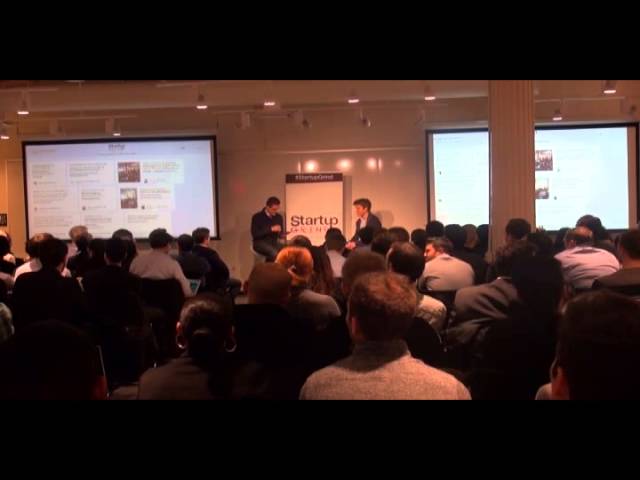
Zach Sims (Codecademy Co-Founder and CEO) gives career advice to students during WayUp Lunch & Learn
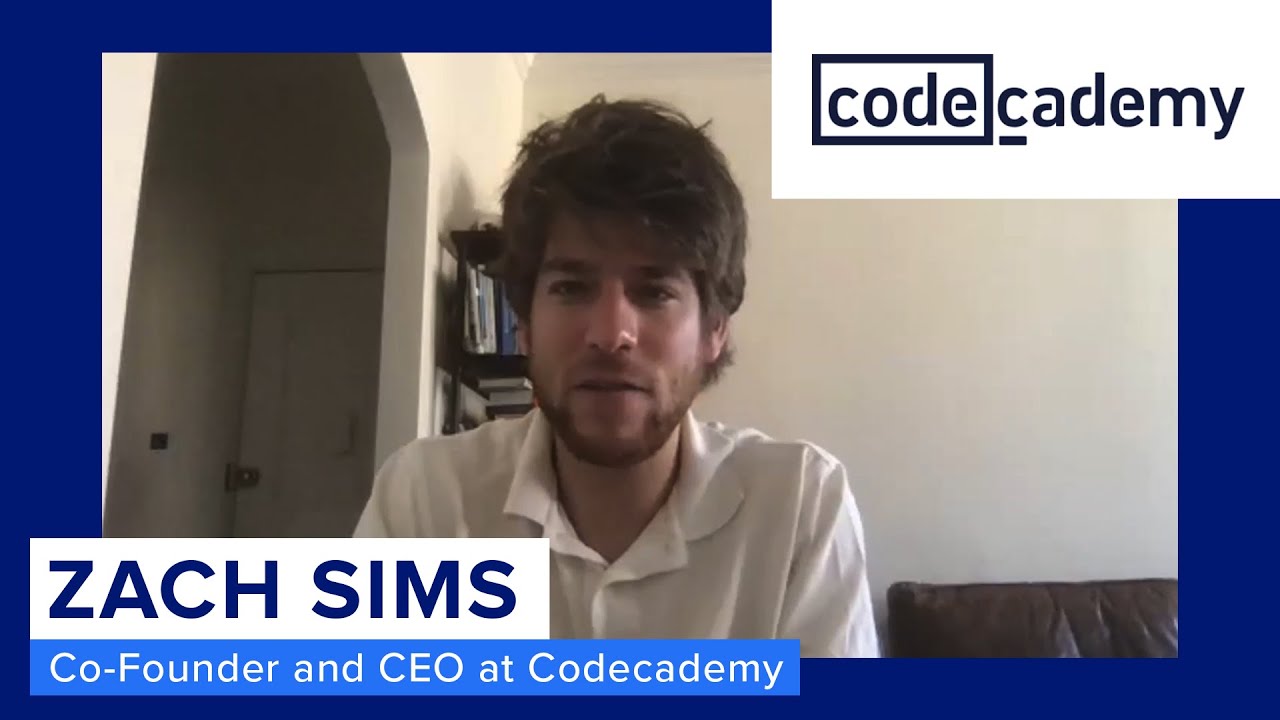
Zach Sims, Codecademy's co-founder, left Columbia as a political-science student to build a coding education platform after Y Combinator funding forced the choice. He talks dropping out, imposter syndrome, picking your first programming language, and why the education-employment gap still matters.
Chapters
Awesome.
Hi everyone. Welcome to today's Lunch and Learn with Zach Sims. Without further ado, let's go into it. I'm so excited to introduce Zach to you guys. Zach is actually a pretty good friend of mine. We met probably through the Y Combinator network and have been— he's someone I just trust completely with my life, let alone my company, and I go to him for advice all the time. He's one of the best and smartest and most hustling entrepreneurs I've ever met. So Zach, thank you so much for joining. How are you doing today?
Good, thank you for having me. Excited to be here with everyone.
Awesome. Okay, so I just wanted to start off with a lot of people on this call are in college as you just saw. So can you just start us off with like, who was Zach in college?
Wow, try not to think about that.
No.
I think in college, so I studied political science in college, and for some weird reason, I didn't really know what I wanted to do when I grew up. And I was kind of paralyzed between following a more traditional path and studying to be a lawyer, or like, I was at Columbia, so working, you know, investment banking or consulting. But, you know, I discovered my freshman year, I worked at a startup, a company called Drop.io, after like seeing a poster on campus. And I spent the summer working at Drop.io, and it was just amazing to me that, you know, you could go work at a small technology company, and it didn't matter that I was 21 at the time and I had no experience. I got to do anything I wanted and contribute a lot. And that to me kind of sealed the fate of what I wanted to do when I got older, which was like have an impact before I turned 40, and maybe not just like spend college partying all the time and you know, and not working on anything of consequence.
Amazing. I love how each speaker— one speaker said they really participated in school, another speaker said classes didn't matter, you're kind of like none of it really mattered. So I want— go for it.
I think like a lot— I feel like when you go to college in a big city, or at least it's definitely the case at Columbia, like I feel like half of your life takes place off campus. And so I feel like I got very lucky to be in a place where I could learn an amazing amount of stuff. Like, I really appreciate the education I got studying the classics and whatnot. But at the same time, I got to work and learn from working. And so I think maybe the moral of the story is like, take the most of your college experience. It's the one time when you should hopefully have some headspace to try new things. And experiment.
Awesome. Okay, so I want to talk about Codecademy because you dropped out of college, I think your junior year, to start Codecademy. So before we even talk about that, can you just do like the one minute on what Codecademy is for the probably very few people in the world who don't know what it is?
Yeah, so Codecademy at this point teaches tens of millions of people around the world technology skills and helps them find jobs. So we teach people skills like web development, mobile development, game development, data science, in a way that's interactive, accessible, and flexible online. And, you know, you can spend a lot of time learning those skills, many for free, and you can pay $40 a month for Codecademy Pro, and then hopefully get a job in one of those fields, in kind of the most desirable fields of today.
So how did you come up with this idea, and like, what gave you the guts to say, I'm qualified to do this, I'm going to drop out of college and just start a company?
I'm definitely still not qualified to do this. So I don't think there's anything that qualifies you to start a company. I think for me, my co-founder and I had spent a lot of time talking about, you know, what does the world look like today and what should it look like? You know, a lot of those things you can do in college, right? Get angry at small things. And I think for us, maybe it wasn't a small thing, it was this massive gap between education and employment. And unfortunately, a lot of this still exists today, where you can go to college, you study a topic that maybe doesn't necessarily have relevance to what you might want to do when you graduate from college, and then you spend $200,000 on your college education, you take out a bunch of debt, and you don't get a job. And we saw this, and we were like, this is messed up. The American dream is like going to college and living a better life. And it seems like we kind of have not allowed people to have that. We should start something to try to fix it. And that's kind of where we started with the original idea for Codecademy, which is how do you connect education to employment? How do you teach people these important skills? And kind of how can we improve people's lives with that? And it started because of the people I was in college with. I wanted these incredible first in their family folks to go to college, to not graduate with a crushing debt load, and to, you know, eventually live a better life. And so we wanted to find a way of creating that for them.
Awesome. So normally I ask the speakers on this, what's something you wish you knew before graduating, but you didn't quite graduate. So what's something you wish you knew while you were in college making this decision that you now know today that you would tell your younger self?
I think that no one ever knows what they're doing. So, you know, you asked me at the beginning of the call, like, what a couple minutes ago, you know, what, um, what do I wish I knew in college? And, and I think that is really the answer, is that now, number one, running a company, uh, number two, like, having met a lot of people that are tremendously successful, um, it's always shocking to me that, like, we're all making it up all the time. Um, and I kind of thought, like, oh, you're in college and you're still learning. When you graduate from college, like, you're going to become a full-fledged adult. And, like, you know, then you will know and you will be assertive in everything you do, whether it is, you know, running your business or your job or, you know, whether it is, you know, your choices about where to live. And I think the answer is just no one ever is that way. And even, you know, now I'm lucky enough to work with people that have 20, 30 years more experience than I do. And there are times where those people don't know what they're doing, which I think is— can be reassuring in a world where you as a college student may be insecure a lot because you have no experience doing something, but you should not be.
Awesome. We have some questions coming in about imposter syndrome, so I have a feeling we're going to come back to that. So I'm curious, we had Michael Seibel on a week ago, who, as you know, is the CEO of Y Combinator, but he had started Twitch, but he worked for a couple of years after college before doing that, before co-founding Justin.tv and Twitch. And so I'm curious as to your thoughts when students. We have a lot of students who are on the call who are thinking, I have an idea for a startup, I don't want to keep paying hundreds of thousands of dollars in tuition, and by the way, my campus might not even be open this fall. And so they might even be thinking about dropping out and starting their own business too. So I'm sure you've had students come to you in the past and ask about that. I'm curious, what do you tell them? What advice do you give them on whether they should or whether they should work first?
I think it's really case by case and individual. And I think that is what makes it so difficult, is there is no one size fits all. I think for me, I had this kind of unique confluence of circumstances where I'd worked for a couple of startups. You know, when I finished working at those companies, I went back on campus, I had this idea, we applied to the same program that, that WayUp did called Y Combinator in Silicon Valley. And they gave us money. They, you know, wired $17,000 to our bank account. And as soon as we took other people's money, it became very obvious to me that like, we can't go back and decide— and I can't go back to college. Like, I took someone's money, I promised I would give it a shot. And so I don't think there was this like magical moment of, "I'm gonna drop out, school is dumb." I think the idea that we'd had and what we had started working on gained enough speed and momentum that I said to myself, like, I can fortunately go back to school if this doesn't work out, but it's unclear to me if I'll be able to participate in a future Y Combinator class, for instance. And so I should really seize this opportunity, take a year off. You know, that's how it started. It wasn't like I'm done with school. It was like I'm going to take a year off and then if this doesn't work, I'll just go back to school. So I think it really depends on the circumstance. Like if you don't have an idea for a company and you think you should just like leave college and spend 6 months coming up with an idea, like probably not the best idea.
Yeah. Ethan, what about like money-wise? I mean, the average student is in pretty bad debt and so What's your advice if someone does not have the fiscal ability to necessarily support themselves? Should they expect to still at least be able to raise some venture money quickly so that that can pay their salary?
100%, yeah. I think that's what it was for us as well. It was like, you know, when I was talking to my parents about leaving school, you know, they had said to me, if you do this, like, make sure you can support yourself. And I think that was, you know, the nice thing about Y Combinator was, look, it was a small amount of money, but it was enough money to get us through the summer. Enough to support myself. And so I feel, you know, very lucky that that was the case. And again, without that, I think it's really hard to leave school, leave kind of the safety net that you've set up for yourself, however you've set up that safety net, and start something new without knowing that you will have some kind of financial wherewithal to weather that storm.
Awesome. Okay, so if someone on this call has a business idea, they're ready to pursue, if anything, if there's ever been a year to take off and then plan to go back to college eventually, a lot of students are right now thinking this is the year. What should they focus on first? Like, what is the first thing that they should start thinking and doing?
I think like, who's your customer, uh, is, is a massive question. I think for us, we were very fortunate to be able to build something that, uh, was for me. I was a political science major. I wanted to learn technology skills, and nothing existed for me, and therefore You know, we decided to build a programming education company for people like me. And we knew that there were a lot of them. And so we did a lot of customer development. We spoke to a lot of people that were prospective customers. And we knew there was a market there before we built a product. So I think that's kind of step one. If you have a business idea, it's like, make sure it's not just an idea in your head, but make sure it's something that people want. I think, you know, Y Combinator's slogan is "Make something people want." I think that's, that's really true. So you should make sure that whatever you're building is something people want before you kind of put it all on the line and start a company to pursue that idea.
Okay, cool. I'm going to ask one or two more questions and then we're going to open it up to the audience. So guys, keep them coming in. You are asking awesome questions. So you obviously know a ton about engineering talent. You're seeing people becoming engineers or growing their engineering skills every single day. But if you were an engineering student right now, or maybe an engineering recent grad, which there's a lot of you on this call, how would you navigate the internship and job market right now? Like, how would you think about what kind of job to start in? Would you optimize for the company name? Would you optimize for the job? What would you optimize for?
Yeah, I think, you know, again, so much of this is so individual because it depends on what your aspirations are. I mean, if you're trying to start a company, I think the The answer oftentimes is to kind of go where you will get the most responsibility the fastest in order to figure out kind of what you need to learn in order to grow your own company. And so, you know, oftentimes that is great. You need to learn how to manage. Maybe a startup will let you manage people earlier and faster than another company might. So go work at a startup. Or if you need to solve massively complex technical issues, you know, that you may be better served working at a company that has massive scale like Facebook or Google. So I think thinking about kind of 5 years down the line, what are the types of problems you're going to want to solve, is one good heuristic. And the other, I think, is to think about kind of what you need to— what you kind of— how you learn best, I guess, is the answer. Which is, at a bigger company, there's likely to be a formal, you know, onboarding program and an established, you know, maybe internship program where you're going to learn a bunch of things. At a much smaller company, you'll be thrown into the deep end. And so if you're comfortable with that, then great, you can go work at a smaller company. But if not and you need to be handheld, which is totally fine, then you should go work at a bigger company where there will be kind of like a formal syllabus for you as you learn and progress from job to job.
Awesome. Okay, my last question I'm actually going to start with is the same question as Maggie from UC Berkeley. So I'll end my questions with a transition to hers. So how does the pandemic play into the startup scene? And I'm curious how has COVID-19 how COVID-19 affected Codecademy?
Yeah, so I feel like we have been— it's been really challenging, I think, for everyone. And so I think the challenge for us is, how do we build something that can help as many people as possible that are challenged economically right now? And so for us, I think that's lots of people are stuck at home. They should be learning a new skill. But we're also kind of moving into, you know, we're moving into maybe historic period of unemployment. And so what can we do in this historic period of unemployment to help as many people as possible? And I feel pretty fortunate again, that we have been able to create, we've given away more than 100,000 scholarships to high school and college students to learn with Codecademy during this period. You know, we focused on people that have been furloughed or unemployed. And so there's a real focus for us on just helping people as much as we can. And I think that's, From a business perspective, good for the brand, but also we're a bit of a double bottom line business where we want to do well and do good, if that makes any sense.
Yeah, it makes a lot of sense. So speaking of teaching people engineering skills, Caitlin, who's a student at Oregon Tech, wants to know, what tips do you have for learning a new technology in a short timeframe? Say you were given a project using a framework you've never used before.
Yeah, I think the first is should take the Codecademy course. On it. So if you're learning React, JavaScript, Ruby, Python, something like that, you should try to take the Codecademy course. I think other than that, there's plenty of other stuff that you can do. I think really picking and building a project, I tend to find, is really the best way to get started with something new. And so that's kind of what I would encourage people to do is if you're tasked with learning a new language at work, try to build a project with it part-time on your own. Or contribute to open source after taking a course. I think taking a course is kind of just the start, and really the longer-run way to contribute is by, you know, building something on your own.
Can you elaborate for one more minute on if they want to go the Codecademy course route? Talk a little bit about like how long does it take to gain one of those skills using Codecademy?
I think it really depends on exactly what you're trying to learn, right? If you're learning a a small set of skills, like you want to pick up a new JavaScript framework, you know, that could take you 5, 6 hours. If you want to start learning to program from scratch, it could take you months, right? And so I think it depends on kind of the time frame of and severity or depth of what you are being asked to learn that really kind of determines where and how you should learn it. Like, obviously there is a benefit to a college computer science program as well that maybe isn't being reflected today because you learn so many other things. But I think online classes are not necessarily a substitute for that. But oftentimes with online classes, you can learn just the small skill set that you need, kind of just-in-time learning instead of learning for 4 years up front.
Awesome. And you actually have many users of Codecademy on the call. But one, Kate, wants to know, I just signed up for Codecademy last week since I'm starting a new career in healthcare analytics. What language What language should I learn first?
Python or R would be my recommendation. Probably Python is more well-rounded if you're, if you're learning on the data side. But I think both of those will be super useful for you if you are entering the field of data.
Awesome. We have some R fans on the call. I'm curious, someone who's anonymous, but they didn't share their name, but someone asked what's the future of low-code or no-code movement? Is the future of code no-code? What implications does that hold for CS students and Codecademy students at that? And can you just spend a minute maybe explaining to people on the call who don't know about the no-code movement what that is?
Yeah, so, so low-code and no-code are two different ways of creating products that are becoming much more popular. Traditionally, they use what's called a graphical user interface, or a GUI, kind of drag and drop. Different components to create web applications. So some forms of low-code, no-code that you might be familiar with include things like— God, what's a good example of this? Squarespace or Wix are kind of classic no-code, low-code products. And so I think that is definitely part of the future. I think you're going to see this stratification where you still have very complicated data and computer science challenges and problems. That will require computer scientists and folks that have backgrounds in those subjects. But on the other hand, you'll have kind of these lower-code things that will be taken up by low-code and no-code tools. And so like, in 5 years, will we be coding up websites in HTML and CSS? Like, maybe not. But will we be solving complex artificial intelligence and machine learning problems using low-code and no-code? Probably not.
Awesome. Okay, going back to your career, we've got a lot of questions about it, so I'll start with the first one. Andrew, who is a Barry Company intern, wants to know what is it like finding such success at an early age?
I think the challenge is I definitely do not find myself successful, so that's— we should ask someone who is, but But I think it's weird is the answer. I think, you know, I was very lucky that when I was, you know, 22 or 23, I kind of met a ton of people that I wanted to meet by the time I was 40. I'd accomplished all kinds of things in my career that I wanted to accomplish by the time that I was 40, and kind of causes you to introspect a lot and think about, you know, what are you really capable of if you can accomplish this stuff early on, and kind of what do you owe because you've been given this opportunity. And so for me, I think like why I wake up in the morning and I'm excited about what I do from a work perspective is because I get to give back and ideally help, you know, tens of millions of people around the world learn skills, find better jobs, be fulfilled, and make an impact. And I think, you know, whenever you find success, you should kind of ask yourself the same question, like, what can I do with this to help other people?
Okay, so I'm going to ask it because I know someone's going to ask it. It's been asked on almost every single call, so I'll just ask it now, and it's a hard one. You said you don't consider yourself successful yet, so what do you define as success for yourself?
I think the problem is that so many successful people have no definition of success because you're on this endless treadmill, and I definitely fit in that category. I think I've spent time talking to plenty of peers and mentors and friends about this question, like when, you know, what is happiness? What does being successful look like? And I find oftentimes that for many people that most of us would qualify as successful, they definitely do not think of themselves as successful because there's always something more that they can do and contribute. And that kind of chip on their shoulder is actually what drives them and persuades them to be better. And so I think that's kind of the, you know, the core thing. And so whenever I ask myself, like, am I successful? The answer is always no. And maybe that will change at some point, but I definitely don't have a mark of like, oh, if I make X dollars, or the company is X number of employees, like, will be successful. I think it's more like, am I living up to my potential, is probably the key question.
Cool. Okay, I don't know if you should take this as a compliment or as an insult, but I think it's a compliment. Someone, a DTF, a junior at MSU, Michigan State University, says, I look at you and think of Mark Zuckerberg. You have similar stories. But Facebook, I think it's a very big compliment in this one, but Facebook has now developed from just a social networking platform to various other fields, Have you ever considered expanding Codecademy, and what are your thoughts on that?
Yeah, so we are kind of persistently always expanding Codecademy, and we are really interested in, you know, teaching every digital skill that someone can learn in order to find a job and upgrade their career. I think it's important, and I think we can teach those things. And so yes is the answer. And I think the opportunity that we are tackling, I think, is a really historically large one. If you think, you know, what— how can you have the biggest impact in the world, right? I think if Mark Zuckerberg were to answer that question, he would say, you know, to make the world more open and connected. My answer to that question is to connect people to economic opportunity, right? To say that, you know, the family, whether they're in Queens in New York around the corner from me, or they're in, you know, Afghanistan or Turkey or, you know, China, wherever they are, they should have the opportunity to learn something, you know, for a low cost and then live a dramatically better life. And I think not only is that an opportunity for us to have an impact on the world, but it's also a giant economic opportunity. I think there is a several-hundred-billion-dollar business to be built in doing that, and I think that's kind of what wakes me up in the morning.
Amazing. And everyone, keep the questions coming in. If you have a takeaway you want to share with the world, we would love to hear it. Just tag @WayUp and #WayUpSummerSeries, because I'm having a lot of takeaways from this. Great. So back to this kind of imposter syndrome thing that I think every entrepreneur, but certainly young entrepreneurs have, that you alluded to. Let's start with Alana, who's an intern at Cisco and studies at the University of Michigan. She wants to know, did you receive negative comments about dropping out of Columbia? How did you combat the negativity to achieve success? Or whatever you define as, you know, on the path to success.
All the time. I think everyone I went to college with thought I was like a giant idiot for dropping out of college at the time. Since then, some of those people have asked me for a job, so, you know.
I love it.
But at the time, I think it was super difficult, right? Because you do something unconventional and people don't expect that. They want you to fit a mold, and that mold is Oh, you know, Zach graduated from Columbia, Phi Beta Kappa, and, you know, went to go work at a law firm or consulting firm. And I think the pinnacle of that success, you know, when I was in college was like, oh, this person got a job at Goldman Sachs, like, wow. And so when I dropped out of college, everyone was like, you are an idiot, you're throwing away this opportunity, you have to go do anything and everything you want. And I think for a couple years I let that affect me and I was pretty upset about it, right? Like, wow, I would have that classic nightmare, you know, you wake up and you have a test and you're not prepared. And then I would be like, oh, that's okay, I don't have a test, but I did drop out of college and I don't have a college degree. And like, this is crazy, what am I going to do when my company fails? But I think overall I just kind of pushed through that. And I think that's what you have to do is just, you know, for lack of a better phrase, like ignore the haters if you're confident about what you're working on. And I think ultimately, like, I was confident about what I was working on. And so I was able to say, like, okay, I'm just going to ignore all these people.
So Jenny, who's a rising junior from Cornell, wanted to hear about exactly that. Like, outside of just ignoring them, maybe for those who it's really hard to ignore them, like, any other tips for people to just make it through? Is it, you know, find a mentor network, a peer network, anything else like that?
I think peers are like incredibly helpful. You know, Liz and I spent a lot of time together, and I think like That's a— it's a good, uh, you know, whenever you— you should surround yourself with people that are as ambitious, you know, as, um, excited about the future as you are. And then you should take those people's advice seriously, um, not necessarily somebody who's made a different life choice. Like, if you're on a different path and you're, you know, not going— like, you are working in a traditional firm or you're going to law school or something like that, it's hard for you to relate to someone who's not. Uh, so you should kind of find people that are on your path and use them to make you better.
Awesome, awesome. Um, okay, so we've got so many good questions here. I'm sorry to everyone who— I think we're going to get through a lot of them though, but keep them coming. So we have someone who wants to know about New York City. What role does the New York City startup ecosystem play during the founding of Codecademy?
Uh, what role does it play in starting Codecademy? Yeah, uh, a big one. I, I think like I was lucky enough to, you know, meet the person who I first interned for. Sam came and gave a talk at Columbia, and, you know, I went to his talk, and then after going to his talk, I, you know, kind of pestered him until I got a job. And then after that job, I, you know, met a person there that introduced me to the place I worked the next summer, which was at AOL at the time doing venture capital. And then someone came in and pitched us at AOL that I then went to go work at their company, GroupMe. And then when I decided to start the company and raise money, a lot of the people that had worked at Drop.io with me and GroupMe with me invested in Codecademy. And so I think kind of that sort of serendipity of, you know, you meet one person who introduces you to the next person who introduces you to the next person definitely was true for me. And I was very lucky in, I think, meeting kind of all those folks. And working hard to keep up those connections and, you know, benefit from them when it came time to start the company.
Awesome. And by the way, that was a shout out to Andrew at Columbia University for submitting that. So thank you. Great. So I am also curious— these questions are so good. Okay. I'm also curious. I'll do a couple rapid fire. Let's do rapid fire and then we'll go back to more career advice. What coding language has a special place in your heart? Ethan at Muhlenberg College wants to know. Muhlenberg, sorry.
I think JavaScript just because it's kind of, in many respects, not just the language of the future, but it has created a lot in the past. But I think as you start to see a lot more like serverless types of technologies, I think knowing JavaScript is super important for the future.
Okay, and so maybe that answers the next question. Brandon at Wichita State University wants to know, if I am a business major or really just not a technical major and I want to try Codecademy, What's your advice for which, which language I should start in?
JavaScript or Python.
Awesome. Any reason for why Python in there as well?
I think that's probably the most used backend language and our most taken class.
Awesome. Okay, Rena, who is a Columbia recent grad, wants to know, what did you get out of Columbia that helps you be who you are today? How did Columbia help you to grow to be a founder and CEO of a successful startup? So I know you spoke a little bit about your experience there, but is there anything specifically about Columbia University that you would say?
I think maybe the biggest thing that Columbia did for me was like be in New York and put me in New York. I think there are plenty of things from a like educational perspective that I quite enjoyed about Columbia. I really liked the core curriculum. I really liked reading a lot of classics, you know, and I think that was great. I didn't really appreciate it at the time. I can't say that has like contributed dramatically to what I do on a day-to-day basis. I do think it's contributed to who I am as a person, in person. But I think that's probably it. Maybe the last is kind of introducing me to a really great network of people that I think are just peers and friends from college who have kind of been really ambitious and intellectually challenging and interesting over time.
Awesome. Okay, Henry just asked a really interesting question. So you moved from being a college student to a CEO of what is now a pretty large corporation. So he wants to know what has been a difficult challenge you've encountered as a boss when dealing in difficult situations with people working under you? And maybe I'll add like even people working under you who might be twice your age.
Um, it's really hard. I think, um, learning a lot of those skills early on, uh, was hyper challenging, I think, for me. Um, becoming a CEO, uh, you know, managing performance for people older than you, firing people, hiring people, how you interview and assess people Like these things, we're doing them all for the first time, right? And they definitely were not easy. And so I think that that's probably like the biggest takeaway for, you know, is that it doesn't— definitely isn't like flip a switch and a lot of these things come natural to you because all of a sudden you're a CEO. I think, you know, I spent the better part of 2 years— we had a really high churn at the company. We had a lot of people join Codecademy, a lot of people leave Codecademy because I was a bad boss. And, you know, I think I was learning how to be a boss.. And it turns out that takes some time. And if you're fortunate enough to work at a company, you can acquire those skills at that company. But if you're thrown into the deep end and you are responsible for leading a company from day one, it becomes challenging sometimes.
Yeah. Do you have any business books that you'd recommend people read for whether it be like learning how to be a good manager or a good business person, a good founder?
My absolute favorite business book is called High Output Management. Um, It's Andy Grove. He started Intel and it is just a truly phenomenal book that I think is very tactical. So it tells you a lot about like, what should you actually do in a one-on-one? Like, what does a performance review look like? I think now a lot of these things kind of are old hat, but at the time I think it was like revelatory to me to learn about a lot of these things for the first time.
Yeah, I have it on my bookshelf right near me. And I have to say, I think I need to reread it because it's been so long. You read it at the beginning of your company, but it'd be be funny to— or fun, not even funny, fun to read it again now and see like, what have I totally forgotten that I'm doing so bluntly wrong?
No, I mean, we, we are running a management class at the company and that is our curriculum. And so I've been rereading it and it is still relevant. And he wrote— I mean, that book, for those of you that don't know, was written like in the late '80s. And he has a lot of these examples where the book is called High Output Management. The, the He has a lot of these examples that are like, when you send an interoffice mail with a vacuum tube, like, here's how you should do it. And obviously since then we have email and Slack and texting and all these other tools. But it's amazing that he's still right years later. So it's amazing.
I love it. That's awesome. OK, I love, love, love this question. So Kendra, who is an internet digikey and a student at University of Wisconsin-Stout, says, First of all, thank you so much. Codecademy was my first experience with coding when I was 15 and inspired me towards my major of computer science. Good to see you. My question is—
I feel so old now, by the way.
So her question is, what qualities do you look for in new employees joining your Codecademy team?
I think the biggest thing is, so we have 5 values at the company that we look for kind of above all. You know, I would say one that's really important to us is we are learners. So I think everyone on the team is really focused on learning things and cultivating what I would call a beginner's mind. This is a phrase from Zen Buddhism, of all places. In the beginner's mind, the possibilities are endless. In the expert's mind, they are few. And what I think that means is like, as someone who's just kind of endlessly curious and also like doesn't judge and is humble and kind of takes things is willing to learn from anyone and everyone. And I think that's what we've seen our most successful people do. They're not dogmatic. They're always willing to hear a different perspective. And I think that's a real differentiator for people that we work with as well. And then, of course, there's kind of the classic— we have another value, we improve relentlessly. And I think that one makes a little bit more sense. I think we're focusing on people that, you know, there isn't just an endpoint for a lot of learning for people. We expect that relentless improvement, you know, you're never— there is no definition of success. You should keep building over time and keep improving over time. Those are the types of people we want to work with as well.
Awesome. So for people who are looking for a job, by the way, go to Codecademy's website. I assume you guys are hiring a decent amount right now given the growth. Yeah, awesome. Okay. Yah, who is a student at UNC Charlotte, asked a great question. When is your opinion side projects, when does it turn into a company? When should it come turn into a company?
When should a startup turn into a company, or when should an idea turn to a company?
I'm sorry, a side project. When should a side project, I'm sorry, turn into a company?
That's a good question. I think when you think it has enough legs to, to become a business, and I think it's a side project until you can't manage it in the amount of time you have.. And so, you know, there are always like— Facebook is a great example, right? Like Mark Zuckerberg couldn't spend enough time scaling Facebook.
He—
it was like he took over his life and it became obvious that this needed to become a company. I think there's many examples of that in side project world. You build something like, wow, all of a sudden lots of people start to use it. And when those people start to use it, you need to spend a lot more time on it, more time than your kind of side projectness allows. And then it should become a company.
Awesome. Okay, so back to your comments about— and back to starting a company, back to your comments about finance. So Maggie, who's a student at UC Berkeley, just wants to hear a little bit more about what advice you have for students who want to make an impact, want to start a company, but are afraid of financial instability because they don't necessarily want to bank on getting funded by Y Combinator or venture capitalists.
I think a side project is like definitively your answer then. Try to build something on the side, um, and try to make it revenue generating so that it can support you. Um, other than that, I mean, I think you can go join a startup. Like, I definitely think there is no shame in joining a startup instead of starting your own. Um, in particular, as an early employee, you can take advantage of a lot of those learnings. You can have a major role in shaping an organization. Uh, and, and that's a pretty underrated experience too, if you need some form of financial stability, which I— as many, many people So there's no shame in like taking a job like that.
I love that. We have several people who joined WayUp and have since started companies. I think we've got 5 or 6. So I totally agree with you. That's great. Okay, Alexandra, a student, a business student on a pre-law track, wants to know, do you think all students should know how to code and that it will be a skill that is necessary in all fields in the future?
You say law students?
Do you think all students should know how to code?
Yeah, I think we believe that everybody should learn how to code. And again, not like to be an engineer, but just to understand how the world around you works, right? You have a phone that you should understand how that works. You're on a computer all day. You might have an Apple Watch. Understanding these concepts is fundamental for the future. And I think will enhance your employability. So I think it's important for everybody, kind of regardless of what your future looks like, maybe not to be an engineer, but to know enough in order to understand how the world around you works.
Very cool. Yeah, I mean, I guess everyone uses code every day. You're using it right now by watching Zoom. There's a whole team of engineers who built that. That's awesome. Um, okay, uh, William wants to know Who should your first few hires be when you start your own company? How did you think about prioritizing your first hires?
Yeah, we definitely screwed this up, I think. But I wanted to hire a pretty, you know, diverse team when we started. So diverse in terms of skill sets, diverse in terms of background, diverse in terms of kind of where people are from geographically. And doing that to kind of fill in the holes that my co-founder and I had. So we hired people with more experience, we hired people with different domain experience. Um, so I don't think there's a one-size-fits-all, like your first employee should be an engineer, your second employee should be a designer. I think it's more about, um, what are the skill sets that your team needs in order to be successful? Uh, and, and, you know, where do you feel weak and how can you hire around that? And I think early on that was a pretty critical lesson for me, is understanding, uh, you know, where I was weak. I thought like, wow, hiring someone who's smarter than me in all these areas will be like really bad thing because then I'll look stupid. And then I think the first thing you realize when that happens is actually no, you should immediately— like, you're in this very fortunate position as the founder or the CEO of a company. You can surround yourself by people that are smarter than you in every way, shape, or form. And doing that, it makes you look smarter because your organization will be more successful. So I think kind of being self-aware and saying, I'm not good at these things, so I should hire someone to do that, I think is super important.
But what about— there's probably a lot of things that a founder might be bad at that might not be that important if they only have $300,000 to spend on salaries. Like, for example, maybe it's important to have a really, really solid infrastructure and cybersecurity setup, but maybe it's not the number one most important thing because there are tools and vendors out there. So how should you grapple with that?
Yeah, I think it is kind of that, that intersection of like what matters most for you— sorry, for your company— and what you might not necessarily be good at. So, you know, if you have no experience in public relations but it's not important for your company to be successful, then obviously you should not hire for that. But if you are not an engineer and you're building a technology company, like, you should hire for that. Or if you are an engineer but you don't have any designers on your team and the reason people aren't using your products is because it's not well designed, like, you should hire for that. So I think it's kind of using both of those rankings in order to kind of determine where to deploy those first resources.
Awesome. Another code advice question from Jess, who's an intern at WW, which I think is Weight Watchers, so welcome, and a student at UPenn. What language would be most useful for product designers to learn?
For UX design? I think probably learning JavaScript because a lot of UX design stuff, it relates to the front end. So I would say JavaScript, HTML, CSS, and these front end are probably the most important to learn.
Cool. By the way, if more people have more very specific questions like that, hey, I want to do X or Y, what language should I start with, is there a place in Codecademy where they can go to just kind of figure it out?
Yeah, we have a wizard when you get started that will kind of ask you exactly what you're looking to learn and will hopefully kind of point you in the right direction from a language perspective as well.
Okay, perfect. Awesome. All right, two people actually asked this question, so I should, I should definitely ask it next. Looking beyond Codecademy, if you had to put your effort into a new venture in the internet space, where would it be and why? And we have that from Henry, as well as Xi Ying, who is a student at the National University of Singapore. I love Singapore, welcome.
I have no idea, to be honest, what else I would start. Maybe something in, you know, I think that some of the things that I find particularly interesting, there may not necessarily be like a giant market for at the moment. Like I think a lot of— Like what? I think there's a lot of like personal health things that are interesting. How do you make people eat healthier? How do you make people, you know, go to therapy, take their medicine? Like a lot of these human behavior challenges, which oftentimes like don't pan out to be great businesses, unfortunately, because changing human behavior is hard. But if you are able to do it, can be like, you know, really dramatic needle movers for the world. I find those types of businesses to be kind of the most interesting to work on. And I think the problem is that in order to start a business like that, you generally have to have like a pretty experienced pedigree in order to kind of raise the capital to work on something that might be considered, you know, more ambitious than your classic kind of app startup.
Any companies in that space that you look at and are like, okay, I think they're really interesting?
Yeah, I mean, there's an interesting company now called Levels Health that does like continuous glucose monitoring to like maximize performance for sports and weight loss. I find interesting. You know, I think Headspace obviously is a really interesting meditation company. So these companies that are mainstreaming, you know, healthy habits and activities, they have an uphill battle the same way we are trying to mainstream like learning new skills. And you have an uphill battle. The hope is just that you can find a way to change behavior in a meaningful way.
Awesome. Okay, so you mentioned raising money in your last answer. So Hari, who's an intern at T-Mobile, wants to know, do you have any tips for receiving VC funding or raising VC funding for people who've never fundraised before?
You know, if only it was as easy as just receiving, receiving money. I think the biggest thing is, you know, A focus on building something that people want and use and everything else kind of takes care of itself. I think when we raised our Series A, you know, our first institutional round of financing, we were lucky that we had a product that lots of people used. It was growing like a weed. And because of that, it was like really easy to get money. And, you know, we didn't have to focus on, you know, on what's— how arduous of a fundraising process it's gonna be. Because we had a product that just worked. And I think that's kind of really underrated, is if you build something that just works and the people use, it will be— the money will follow, if you will. It's to use that old Field of Dreams quote, like, if you build it, it will come, essentially.
That's great. So speaking of building it, you had a pretty large addition to your platform, which you mentioned at the very beginning of this, and which I remember happening around when you and I— I think it was happening around when you and I started to become close friends, which is you started charging for some of the products on Codecademy. And so a student who's an applied physics major at Providence College wants to know, why did Codecademy switch to charging more on some of their products, and was it difficult before doing that to run a company that basically didn't make money?
Yeah, so we didn't make money for a very long time, for the first 4 years of the company, and I'm not even sure you could call it a company during that period because it didn't make money. So I think that's always really challenging. And I think I would kind of encourage everyone to make sure you have a business plan if you're going to start a company. I think that was kind of the biggest lesson for us is, you know, you can't do this forever, basically. You can't kind of— you can't have a company that doesn't generate revenue forever and ever. And so, you know, for the future, I think we would have spent much more time upfront focusing on business model and monetization. Instead of trying to kind of build the plane while we were flying it, if that makes sense.
It does make sense, though I will give you credit that it clearly worked out quite well. So, okay, so I like this question because I know you quite well and I definitely feel like you are, you have a great social life and a professional life. And so Alejandra, who's a student at Northeastern Illinois University in Chicago, wants to know how do you balance your personal and professional life? Any tips maybe for also fellow aspiring founders?
Yeah, it's really a work in progress at all times. I think, you know, Liz, you can attest to this too, like running a company is like having two full-time jobs. And I think one of the ways you meld these is by making friends that also run companies. And so Liz and I are friends and I find that half the time we end up having conversations together, like it is also in some way additive to my work life. Because, you know, we share tips and we trade stories with each other. And so I think blending your work life and your personal life is one thing. And the other, I would say, is just setting boundaries. Like for me, the morning is my time. You know, I like to wake up at 7 o'clock in the morning. I like to work out and meditate and, you know, make tea and do a bunch of things. And I think I try to not let work encroach on that. And that I think is like sacred for me. And I think the same is true for, you know, one or two evenings a week where I'll say like, I'm gonna turn my computer off tonight and I'm not gonna touch it. And I'm gonna go to dinner with 2 friends, and that's fine, and like I'll be unproductive tonight. I think you just kind of have to be clear in setting those boundaries.
That's great. I still am working on that every day, that's for sure. Okay, so we clearly have a lot of people who are going to be starting or already are starting companies, because we've got some tactical advice, so I'll just go through some of these. I would— I'm so curious to hear how you answer this. So William, who's a student at New College of Florida, asked, especially at the very beginning. How do you set your salary as a CEO?
Early on, we didn't pay ourselves at all, so we didn't have a salary really. I think, you know, over time we have a board of directors now, and that board, you know, is some of our investors, and so those people set my salary. And early on, it was like whatever we could have, whatever we needed to live. Like, what do we need to have, like, an inexpensive apartment, afford meals, and work? And I think there's kind of generally, like, a correlate early on with people that are like, "I need to make a lot of money as a CEO in year 1 of my company." I think it's real— like, if that's what you're optimizing for, don't start a company. Like, you should basically make no money the first couple of years of your business because you should put it all back in the company. You should focus on building something great and make money on the equity.
Unless you're one of a billion or trillion people who— no, a billion people who are like, actually, I don't need money, I'm good. Then, then maybe it's okay.
Dream. Yeah.
Yeah. Okay, this next question is from Morgan, who's at Wichita State University. Um, I co-founded a bootstrap startup that failed due to not knowing how to properly market our service and manage our infrastructure in general. The cost of failure were thousands of dollars out of pocket. How do you believe managing risks in your decision-making process should be influenced by your past failures? Do you think that there's an underrepresentation of failed startups in our cultural sphere?
So failure is critical. I think— I don't know if there's an underrepresentation because I feel like there's so much of this kind of mantra in Silicon Valley, fail fast, you know, failure is okay. And I think for us, like, even in our cultural values, We improve relentlessly is a value targeted at, you know, assuming you need to improve relentlessly because you have made mistakes and failed in the past. So again, I think failure is great so long as you're learning from it every single time. And I think it is actually reasonably glorified in today's culture. Maybe not in like the formal world of work, but definitely in the startup world.
Yeah. One thing we talked about on another Lunch and Learn, I don't remember which one, was just the fact that because of that huge financial risk that you're taking, that this person clearly also just took. A lot of people can't take that, and as a result, you end up seeing a lot less diversity in startups because unfortunately, some races tend to, you know, unfortunately be more related to socioeconomic statuses, etc. Any thoughts on that and how our country can change? We have a couple questions around that. So how we can make it so that there is more representation in the startup world from Black and Hispanic talent, female talent, etc.?
Yeah, so I think this is super important. I think, you know, we try to do our part as an organization to help more diverse people enter the field of technology. So make it as easy as possible for anybody, you know, regardless of what you look like, where you're from, you know, what your background is, to get started learning. I think, you know, there are now many efforts in the venture community in how do we get financing to underrepresented groups, you know, how do we make sure that they get the mentorship that they need. And so I don't claim, unfortunately, to have any magic bullets here other than it is critically important. And I think for us, we tackle it as an organization through education. How can we teach more people these critical job skills that allow them to start companies, allow them to live better lives from an economic perspective so that they can eventually go start companies?
Awesome. Okay, we have time for 2 more questions. So I will ask 2 more, and I'm so sorry to everyone if I didn't get to your question. You asked amazing questions. Um, so Jacob, who is a student at Rice University and completed the data science career path from Codecademy, um, asks, is there such a thing as being a freelance data scientist? How can you connect with people who need your services?
Absolutely. Uh, the skills that you have right now are tremendously valuable to anyone and everyone, uh, who runs a company in the 21st century. And I think You know, what are, what are the ways for you to get freelance jobs? I think the most obvious is to use a network like Elan— sorry, like Upwork, where there are plenty of data science jobs posted. And I think you can just generally send companies emails also, like, hey, I'm interested in doing freelance data science work, or posting your resume. I think there are so many people that are so interested in data science talent that, you know, many job boards have part-time stuff, you know, the occasional consulting job as well.
Great. And then let's end with this last question. Taylor, a student at UNC Chapel Hill, wants to know, did you have a mentor or role model that you looked up to as you began your entrepreneurial ventures? And if you did have a mentor, like, how did you meet them? How did you get in touch with them?
You know, I don't think I've ever had like one mentor, to be honest. I think I have been lucky enough to have like many people that have contributed to my growth as an entrepreneur. And I think different people at different times. Like, I think my parents have been immensely helpful in just being a resource when I have challenges. I think peers like you, Liz, are helpful when I'm thinking about how to build my organization. I think, you know, entrepreneurs who are further down the road are helpful when we're thinking of fundraising. So I really think it depends kind of where we are, where I am, and who I'm looking to for advice. So I don't think I have one person where I'm able to say, you know what, that's the person that I think is my mentor. Mentor.
Oops, I was on mute. Okay, fair. But what about the person— if you think about one of those many mentors who you met, and maybe not a peer mentor, but someone who clearly is further ahead than you, how did you meet them? Or like any advice for people who do want to get more aspirational mentors in their life?
Yeah, I think turn your bosses into your mentors, I think is a good one. Like I spent a summer working at AOL doing venture capital, and I think that the person that I I was fortunate enough to work for, Mike, you know, has been encouraging me to start my company, is one of the first checks into my company. You know, I still call him for advice. We talked earlier this week. So I think it's critical, you know, to turn people that you work for and work with into allies in your future who can help you as mentors. Yeah.
That's a great, great point. So everyone watching who has an internship this summer, or maybe you've had an internship in the past and your internship this summer got unfortunately rescinded, your offer, Go talk to your manager, your former manager, and make them your mentor if you respect them. That's great. All right, well, Zach, this is so helpful and educational and inspiring, uh, to me, and I'm sure to many of the people watching. So thank you so much for joining. If people want to follow you, is Twitter the best way? Instagram? LinkedIn? What's your social media network of choice?
Z Sims on Twitter.
Z Sims on Twitter. Great. Um, and thank you so much. And if people want to sign up for Codecademy, they just go to codecademy.com?
That's right.
Perfect. All right, well, thank you so much. We really appreciate it, and, uh, have a great day. And to everyone watching, if you're on the West Coast, I hope you enjoyed your lunch. If you're on the East Coast, have a great rest of your day. Take care.
More from Zach
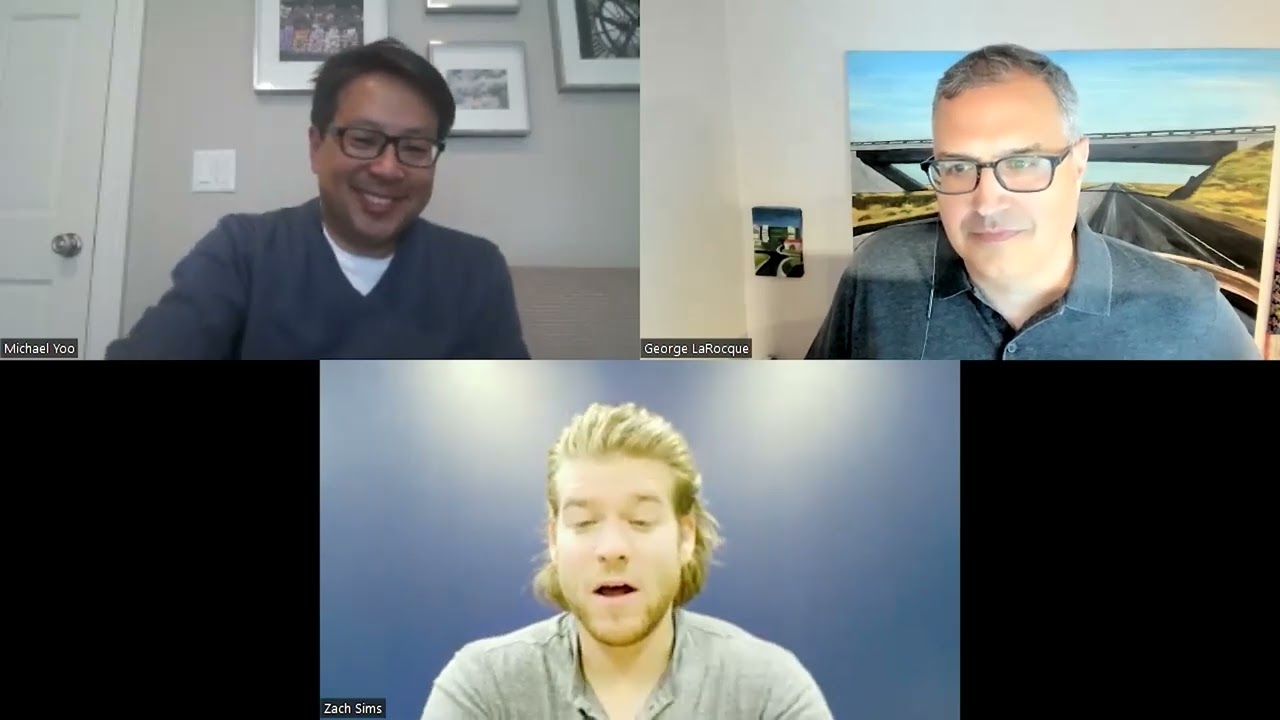

Teaching Millions of People to Code with Zach Sims, Co-Founder & CEO of Codecademy