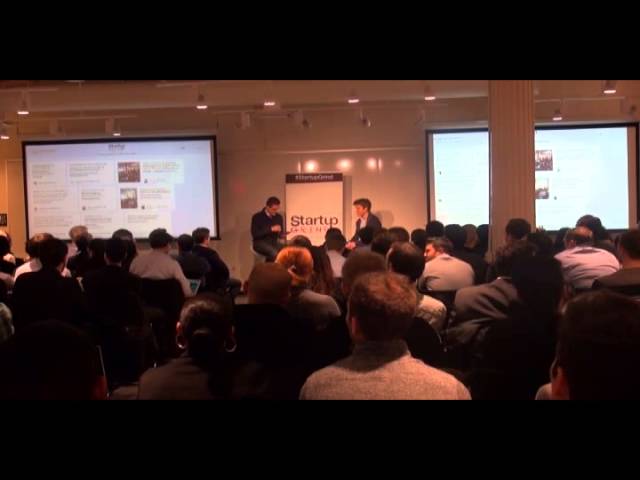
Zach Sims, Sumoru Saza, and Amit Mittani discuss how coding bootcamps and micro-credentials are reshaping tech hiring. Codecademy has reached tens of millions with low-cost, flexible learning. AngelList experiments with anonymized profiles to reduce bias, while Sumoru's own nine-month bootcamp stint led to a career switch from product management.
Chapters
And now please welcome to the stage Zach Sims, co-founder and CEO of Codecademy, Sumoru Saza, the CEO of Nickel, and Amit Mittani, the head of talent products at AngelList. Here to lead the conversation is The Atlantic's Adrienne Greene.
Welcome guys, thank you for joining us.
Thanks for having us.
Thank you.
I wanted to start off by talking a little bit about the intersection, or the interaction, between higher education and the technology workforce. What kind of higher education is going to be, are we going to need for the jobs of the future? Big question, I know.
Yeah.
Right off the bat.
Start with that. Why? I think, you know, what we've noticed at Codecademy is that higher education responds super slowly to market demand. And what'll survive is something that actually helps people learn the skills they need in the workforce in order to be successful, as opposed to something that is kind of traditional, packaged in a 4-year format, and non-responsive to labor. And so the future is one where people are getting kind of micro-credentials in order to stay active with what the workforce needs, and not what academia needs.
So would that mean that we're entering a world in which maybe a 2-year STEM technical certification might be more valuable than a 4-year Bachelor of Arts?
Be my perspective. Even then, I think 2 years— 2 years, I think, might even be too long, right? There are many cases where— 9 months, 6 months, you can really form a package of skills that's important enough and meaningful enough for people to level up in their careers.
Yeah.
So talk to me a little bit about Codecademy, Zach and Zaza. I know that you both have, you've obviously started the company, and Zaza, you've taken the classes. Talk to me a little bit about how that works. 6 months, 9 months, how long? What did it look like?
I'll give a brief overview, and then Zaza can hop in, if that works. So I started the company about 7 years ago, and One of the things that really occurred to me was what you were talking about, which is this huge gap between education and employment. And so what we did with Codecademy was try to design something that was engaging, so really focused on kind of lean-forward learning, interactivity, and fun, accessible, so low price point, and flexible, so take it anywhere at any time. And I think that's led to, at this point, tens of millions of people around the world having taken our courses, and hopefully having connected with better career opportunities because of that in a way that they might not have had access to beforehand because college was inaccessible or going to a physical place was difficult.
Sounds like you used Codecademy to make kind of a career transition. Talk a little bit about that and what your experience was like.
Yeah, so I was at the Huffington Post. I was a product manager. It was my first time working in tech. I actually initially thought I was just going to be there for a year and go to business school, but realized I had an opportunity to really dive into the product that Huffington Post was putting out in the market, really understand how to work with engineers, and probably just not even go to business school. So I did Codecademy for about 9 months, got promoted, was able to stay at Huffington Post for a couple years, so it turned out to be a good decision for me.
Amit, you kind of, you went to school, you got a 4-year degree in engineering. How did that kind of impact your ability for job preparedness, getting ready for the workforce, et cetera?
I don't know how much it impacted job preparedness. I've been, I was engineering or coding since I was like 12. This is something I wanted to do for a long time. When I got to school, I think it kind of helped in a lot of different ways, but I think it was more useful as just a networking thing and as a like certification. Like, oh, you went to Berkeley for computer science. That's just an easy in to any interview that you want. But I don't necessarily think that the education that I got there was like, what drove my later success. I think the jobs that I had and everything else did.
Do you think that you would utilize a program like Codecademy or other certification to kind of up your skills, or how does that work once you're kind of in the workforce for a bit?
I mean, I think I do. I don't necessarily use Codecademy, but I'm reading all the time. We're taking random other classes to get better at the things you do. I mean, tech moves so quickly that what was important 10 years ago when I was still in school is completely different now. So you have to just be on it all the time. So I think programs like this are super useful, even if you've had the 4 years.
Awesome. We talked a little bit about working outside the system. I was wondering how you might take these same principles of kind of quick turnaround and some really targeted approaches and apply them to the system instead of working outside of the education system. I'm wondering if there's any interaction with perhaps public schools or with college programs to kind of combine the approaches.
So we've done a lot of work with institutionalized education, both college and the K-12 level. In fact, the UK was one of the first countries to implement a nationwide computer science initiative for K-12 students, and we work with them to implement that. And so I think that's taking kind of best-of-breed tools and education, implementing that in the classroom in a way where our tool or tools like it can help teachers get up to speed on, on skills and technology as they're changing. And so not requiring a curriculum rewrite every 5 years, but using a platform that's changing, you know, every day so people are learning really high-impact skills.
I want to talk a little bit about the relationship with the workforce again. Amit, what is— how does a coding degree kind of help someone's chances in getting private funding? You work with venture capital funding a lot. Is a bachelor's degree what you're looking for? Does someone with a bunch of certifications have as much chance in a pitch meeting? Talk me through what those meetings look like.
Yeah, I mean, it really depends. It depends on the school. I think someone told me this joke that, you know, when you're a venture capitalist, if someone went to Stanford, you hear within the first 5 minutes. But that's about it. Like, it's certain school. And he was from Berkeley, and he's like, yeah, we have to do due diligence before we learn that people are from Berkeley. I think it matters, but again, it's the certification thing. But what we see is that once products are actually successful, companies tend to, I mean, venture capitalists tend to be like, okay, we see actual real numbers. But I think what we see more on the job side especially is that unfortunately, recruiters are busy and they're saying like, oh, I know that this school is good. I know that they have a hard entrance bar. Or that company is really hard to get into. So I'm going to use that as the thing to say, like, oh, this person is good. And I think that's what we're seeing more of. And unfortunately, we're trying to fix it, but, you know, we— one of the things that we notice is if you have, like, Stanford or Berkeley or, you know, Harvard on your resume, you're 50x likely to get— I mean, sorry, you'll get 50 times more requests from companies than if you had, like, a boot camp on your resume. On your resume.
So what is a workaround if I'm an applicant?
Yeah.
And I'm coming to you for funding or I'm trying to make a pitch.
Yeah.
How do, how do I translate the skills that I might have gotten outside of the scope of a Stanford education or something like that?
I mean, I think like there's multiple ways. I think one of the things that we see really works well is that you have that first job. That first job is the, the person that, the, the company that kind of took a chance and brought you on. Once you've done a good job there, everything else is kind of forgiven. And this is the same thing with degrees and stuff too, right? Like, your first and second job is now the big thing. It's not the degree that you had. So I think we've seen a lot of that. Once candidates get a good first job, then they can kind of go in a higher trajectory.
And stepping back from that first job, I think you're exactly right that that is kind of make your mark on the marketplace kind of thing. But to get there, you normally have to travel through these traditional educational places. And it sounds like Codecademy and programs like it propose themselves as a way to kind of break through to communities that don't necessarily have access to an elite education or might not be able to afford one. How do you see that relationship working so we can get to the first job that might impress people like Amit?
I think one of the things we really focused on when we started Codecademy was giving access to communities that traditionally wouldn't have a computer science education. And the first thing is, I think, when students enter a computer science class and they look around and no one is like them, it's intimidating, right? And so I think what we've tried to do is, is put computer science in more places. So people can form their own micro-communities. People can learn on their own if they want. We ran a program a couple years ago with Google, for instance, to get more women into computer science. And so we were in K-12, in high schools, working to basically provide incentives for teachers to form computer science clubs for the women that were learning with them. And in order to basically induce people to get started and to build these small communities of people that were similar enough to kind of inspire each other, give them good role models that they could look up to.
That's really awesome. I want to kind of step back even further and talk about the concept of coding. That coding often is sold as this avenue to these high-paying jobs and one of the most advanced or kind of technologically, it gives you access to these kind of high-paying jobs, but oftentimes we look at the workforce and we're still inclined to go with people who have gone to fancy schools and have a more broader and robust education in something like computer science or engineering. And that can possibly, critics say, create a stratified system within coding. People who have access to really awesome programs that might operate outside the educational sector, but the people who are really getting the best and the biggest opportunities are those that go through those traditional means. Talk a little bit about that and kind of how you see both AngelList and Codecademy and all of the work that you guys do playing into that.
I think, you know, for us, it's about building track records for our students, and so having them build portfolios and projects and network with each other. So oftentimes what we see with Codecademy is students end up landing a job at a company and are super thankful that someone took a chance on them in that sense. And they didn't have a traditional education, but they end up getting a job. And then they're likely, as the hiring manager in their next job, to start looking for the same thing. And so unfortunately, I think a lot of this stuff doesn't happen overnight. But when people start taking chances on people that are really, really smart but might not have the traditional backgrounds, and they change their hiring processes to not just filter out people without a 4-year degree, I didn't finish college, for instance, but to really look for what makes them smart. You get people that are non-traditionally educated that then are willing to look at other people that are non-traditionally educated and really broaden the spectrum of the types of people that are working in technology to be more inclusive and open.
You kind of perfectly, your career kind of perfectly encapsulates that. You're hiring now, right? You run a company. Yes. When you are looking for engineers or people to employ at your companies, are you looking specifically for people people who went through non-traditional avenues, or do you still place a premium on these more, you know, premier academic programs? How are you thinking about hiring?
It's definitely a plus for us if someone has projects outside of their traditional degree. I think that a degree is obviously a great stamp to have, but when it comes to a startup, you're looking for people who can roll up their sleeves and get stuff done. And typically a better proxy of that is if they've worked on projects in the past 6 12 months.
Yeah, we were talking a little bit backstage about lean in and being able to kind of throw yourself into a career path or a background that might be unfamiliar to you or that you hadn't worked in before. Talk a little bit about how that felt and whether you've kind of broken through that.
Yeah, yeah. So my family has definitely been about education. They wanted me to go to grad school. I was at Huffington Post and it didn't really make sense to leave, especially if I wanted to be better in tech. There were some full-time coding classes that I could have taken, but Codecademy really provided this, like, you know, I could, I could do it after work, I could do it on the weekends, and the badge system, we've talked about this, was amazing at just helping me feel like there were certain modules I was getting. And more than anything, it gave me a language that I could use to be fluent with engineers and people internally. So that's not something you can really learn from school. You really have to dive into something day to day.
Awesome. I want to take a quick break to say that we're gonna go to questions if anybody has one. We have runners, mic runners going left and right. I see one hand in the back. Just stand up and give your name and organization.
Hi, my name is Yale. I'm a co-founder of a startup called Split. We were acquired last year. We're in Detroit, we had two VFA graduates from Andrew Yang's program. He was on stage earlier. Our tech team consisted mostly of people who went through alternative education, different boot camps. The problem that we ran into was that a portion of those stuck with us and were able to participate in the upside of the exit, but there were a few where they, where we were their first job, and they worked with us for 6 months, a year, but then afterwards they moved on to something else. They weren't able to participate in upsides, and we tried to convince them to stay, but the hardest part as a startup entrepreneur is the other side. You know, there's a huge market. How do we get the people who are now exposed to, you know, this level of jobs to say, "Hey, stick it out. Your stock is going to be worth something." You know, that's—
It's really hard. I mean, not just that your stock's gonna be worth something, but Google's gonna pay you twice as much if you go over there, right? Like, I'm dealing with that every day. I think it's, you know, the same way you market externally, you have to market internally all the time. We do it all the time, and we're not as good as we should be, but we try to do more. I think it's the same thing if you have someone with a 4-year degree or someone that's coming out of a non-traditional background. It's a problem right now. The industry is so, there's so many people, I mean so many companies looking for people, and there's just not as many people looking for jobs right now.
Do we have another question? Just give your name and organization. My name's Lisa Jardine. My organization is Expat Essay, and I help kids get into college. So my, and I don't know if 100% of them belong there, to be honest, but anyway. My question is about what does the average demogra— what does the average student at Codecademy look like?
Yeah, so, you know, we'd like to say there is no average, but I can tell you, you know, where most students fit. It is, you know, between 18 and 34 is the real core demographic of the people that are learning on the platform. And for the most part, it's people that are looking to either up-level their career or to get an entirely different job. So we refer to them We like to think of them as career switchers or career uplevelers. And for the most part, we are not a replacement for a 4-year college degree. I think, you know, there's plenty of great things that come with college. I think you said something that bears repeating, which is in many cases, college isn't right for people. And unfortunately, this system as it exists today, I think, really tries to shoehorn everybody into a 4-year degree program. I think it's right for many people, but it's also $200,000 plus. And we like to think that we can provide a way for people to learn job-ready skills for much less money, if that's the path that they choose to go down.
One in the back right here. Could you stand up and state your name and organization?
Sure. Hi, my name is Charles Somm. I'm an education journalist.
I just had a question about, here in New York, CUNY, they're doing a great job.
ASAP and Early Start programs, increasing the graduation rates, but still at the community colleges, the graduation rate is under 20% for the associate's degrees. Is there an opportunity to partner with CUNY or community colleges to provide students, you know, these kind of credentials and, like, these pathways to prosperity that you guys are offering?
Definitely. I think there are ways to partner with community colleges. I know that plenty of other companies are doing that as well from the employee employer side. Like Siemens, I know, has a big program with a lot of colleges. I think for us, we work in some cases to get embedded into classes in community colleges. We don't have a product specifically that sells to them. So I think it's kind of up to the teachers, the administrators, the program coordinators to figure out that they need a programming class, and then we have options for them in that case. And we hope that we can help community colleges kind of stay current with the skills that are needed today and the skills that will be needed in the future.
I have a final question before I let you gentlemen go. We've talked a lot today about the kind of stratified opportunities for people in the tech community, and it's been reported widely, it's not a secret that both companies that receive VC funding and kind of the pipeline of tech workers in general is heavily white and heavily male. I want to talk about what that effect is on our kind of long-term trajectory of the tech industry, and also kind of how you guys are putting that in mind as far as how your individual companies are contributing to the marketplace?
So I think for us, we run a job marketplace, right? So we see this up front. And we've tried many things. None of them have been perfect. Some of the things that we try are hiding names and profiles so that maybe you won't have bias. But then you see the work history, and you have bias that way, right? We've tried to credential candidates on our platform by running them through tests that we run and say, hey, AngelList says this candidate is good. You should take a chance. Companies don't buy it yet. And we're working really hard to make that happen. But right now, we just haven't gotten a solution yet.
So for me, I'm from Newark, New Jersey. I have a lot of friends that I grew up with who who did not go to college, and they are interested in tech, and I tell them all the time that if you take a program like Codecademy or something where you can just, in, you know, 4 weeks, learn the basics, that it goes a long way. That's my small way of just helping folks who aren't necessarily involved in the business. For us at Nickel, we're pretty committed to continuing education, so we do give employees a credit if they want to take a course like Codecademy or something else online. Because as Zach mentioned, technologies evolve, the languages evolve, and so we want to make sure that everyone is sharp.
I think for us, similar to AngelList, we've tried a lot to try to make it easier for anyone and everyone to participate in the upside in the tech economy. And I think you asked about some of the repercussions. I think we worry a lot that we're building products for diverse audiences, hopefully, right? And hopefully that will help more people join the technology ecosystem and build more products for other diverse audiences. But it really comes down to employers, for the most part. And we can do a lot on the education side. But if employers are unwilling to consider these third-party credentials and not look past where someone went to college or the fact that they worked at Google, it's really hard for anybody who gets educated through a different means to find a job. And so our hope— And it sounds like Angela's hope as well is that a lot of employers will change how they're evaluating talent in order to make sure that they're finding the best people, not just the people that went to the fanciest schools.
And the biggest issue too is that everybody's looking for a Stanford graduate that did AI at Facebook, and they're running a simple website. It's like, what's the point, right?
Only one, by the way.
So I think that's the other issue. We need to educate employers, and we're trying. And I think that's part of the problem. But I think when you talk to recruiters, they're like, well, if I send a bad candidate to my engineering team, I've wasted their time. And so it's like no one gets fired for sending the Facebook engineer over, right? So I think it's a retraining and convincing people to take chances.
Well, Amit, Zaza, Zach, thank you so much for joining us.
Thank you.
Thank you.
More from Zach


Teaching Millions of People to Code with Zach Sims, Co-Founder & CEO of Codecademy

Zach Sims (Codecademy Co-Founder and CEO) gives career advice to students during WayUp Lunch & Learn