Global Sales Mentor Podcast with Dwight Winkler
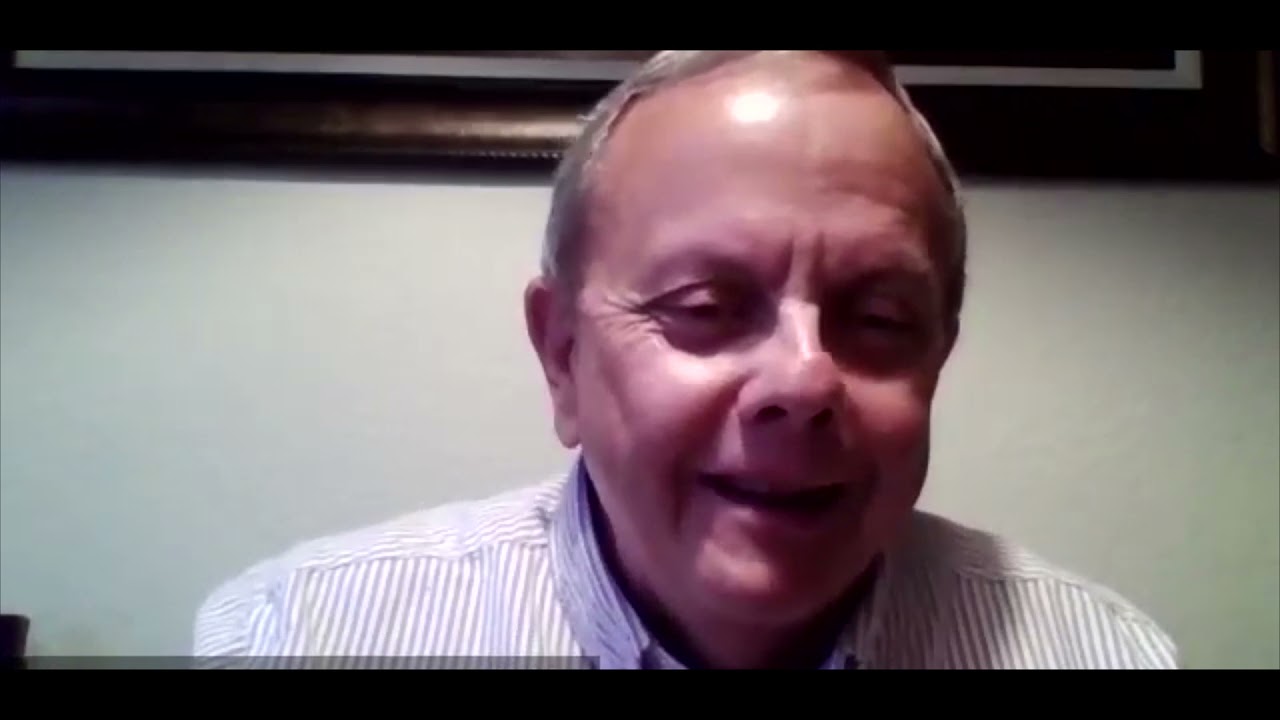
Dwight Winkler, a trade finance veteran, explains how exporters can get paid when overseas buyers demand extended terms or refuse letters of credit. He covers export financing, trade-credit insurance, and how the Export-Import Bank and private insurers shift payment risk from sellers to themselves.
Chapters
Welcome to the Global Sales Mentor Podcast for conversations that drive growth. When you are ready to grow your international sales, join the conversation with your host, Zach Selch. Welcome back to Conversations That Grow Global Sales, and I have with me my friend Dwight Winkler. And Dwight is involved in a very important part of global sales, which is helping guarantee the financing. And we don't often think about this Especially when we're used to domestic sales, because typically this isn't part of what we do. Okay. So Dwight, welcome. Thank you very much for joining us and maybe introduce yourself and tell us a little bit about yourself.
Okay. Glad to be here, Zach. And thank you for inviting me to your program. As Zach said, I work in the area of what I would call international trade finance. I'm a career international businessman. I have a graduate degree from the Thunderbird School of Global Management, which I think has been ranked number 1 globally for a long, long time. And so I've dedicated my career to that area of business from the beginning. What put me into the area of international trade finance was, I suppose, at the very, very beginnings of my career when I was part of Foreign Credit Insurance Association, which was the insurance arm of the U.S. Export-Import Bank. And that got me very close to the people, the companies, the businesses big and small that were doing trade abroad. And we were underwriting the political and commercial risk that one always has to take into consideration when you are dealing and working abroad. So that started the whole, shall we say, career chain, which has led me to, I would say, 32 years of living abroad at different times and conducting many of those years this topic called international trade finance.
So just so we're clear, I know I use— and very often when you're not a huge you don't think about trade finance, right? I've used it myself a few times, really not that many times, but maybe 25 times over the course of 32 years that I, I've been doing this myself. But maybe, Dwight, you could walk us through a very basic scenario so people get a feel for what it would be like to use trade finance or the Ex-Im Bank.
Okay, you have, obviously you have a supplier here in the US manufacturing goods, equipment, and maybe services with it. Could be even a commodity. It doesn't, it's not exclusive to hardware. And they have a buyer abroad in a particular part of the world. It could be Asia, South America, Europe, or Africa. It really doesn't matter. And that buyer is or would desire to seek some extended terms. And typically here, as Zach, you said, in the US, people would be dealing with people on a 30-day net invoice basis, that's pretty much the common thread in that. But when you get working abroad, you know, you're not only building equipment here, but you're shipping it. It takes time to get there, whether you're shipping it by air or by sea. One's longer than the other, one's more expensive than the other. You have to get it there. The customer needs to receive it. So that takes time. And then so the expectation that that overseas buyer can pay you in 30 days is not always going to prevail.
Right.
Nor is he going to want to pay in advance. for those goods and services, although there are exporters that would and have in an earlier era probably tried to secure more advanced payment type arrangements. But that doesn't enhance sales. Right.
It can make it difficult to sell. And very often there are customers, very often governments don't like to pay in advance. And what governments typically will pay you, there are very few governments that can afford not to pay you, but they'll pay you late. Or they'll ask for 180 days, which, you know, if you're a medium or small manufacturer, you might not be able to afford to front the government $1 million worth of manufactured goods for 180 days, right?
Well, that's correct. And that's where, you know, if you're not a deep-pocketed company, and not all companies are that, the vast majority are not, and that you're going to need to rely on other types of products that are available in the market, both government-supported and not.
Right. So just sort of for clarity's sake for our listeners who might not be familiar with this, I am— let's say I'm a manufacturer and I do, you know, $20 million in sales internationally. And I've been— until now I've been working with people I trust or know, or I've been working with LCs, or I've been working with cash in advance. And suddenly somebody wants to buy $2 million from me. It's a government, uh, and they say, you know, that they, they want to pay me in 100 180 days and they don't want to give me an LC and my company says, well, we can't do that. Right. And so I come to you, what do you do for me?
Well, let's go to the crux of, shall we say, the root of the issue in that you have, if you've been dealing on cash or cash in advance or letters of credit, especially letters of credit for your buyer, that there is a cost to him for that. Right. Very often that buyer has to put up equal, if not greater than 100% compensating balances with his bank. So he is tying up not just credit lines, but could even be tying up monies that are in his account to collateralize that.
I know people who have mortgaged their house out for LLCs for a big deal. Yeah.
And you've got, then you've got all the consequent fees with that go with it. And it's very back office driven. What do I mean by that? It's very labor intensive. And then in terms of handling documents, yes, we are going into a digital world, but this is probably one that is not as, you know, going to be as digitized as one might expect because there is paperwork that has to go from party A to party B and through the bank. So that you've got banks in the opening country part, you've got banks on the US side in it, and everyone is in it for his, you know, amount of fees and that to handle that.
Right.
So it's— or it is not an enhancement to increase sales in them because you can't go on to the next sale until you clear out the first sale, especially if you're talking to a repeat buyer. Right. And, and, and so that for him, it's costly. So there are other ways you can deal with that.
Right. So let's sort of pin it back down, Dwight. I'm sorry. So what— talk to me about what you offer me. I come in and I say, here's the deal. I can't get an LC out of this customer, but my, my company isn't going to let me ship without payment. What do you do for me?
Okay. So as Being part of an organization that can provide financing in these cases, we would come in and we would look at, okay, who is the buyer? And we would go and do a due diligence on that buyer's creditworthiness through financial statements, through credit, other credit sources. And then we would determine, okay, we can approve and provide this buyer a certain amount of credit up to, let's just say, 180 days.
Right.
Okay. Behind that, we can back that up behind the scenes with some trade credit insurance. Where let's say 90% of the commercial risk is covered through the insurance. There's a 10% residual that the exporter might have to retain in case of— in the event of a default. When it comes to political risk, typically these are 95% or more covered in the event of some political reason that payment can't be made. So that underwrites the deal. And that's— so with that backing then, and with the credit being established for your buyer, a finance organization like the one I'm associated with could then basically effectively pay the shipper out at the point of shipment. And he has his money and go on to the next sale. The borrower has, or the importer has anywhere from 30, 60, 90, 180 days to pay depending upon what the agreed terms of payment are. And so that can help free up his credit lines as well.
Right. So effectively what happens is I come to you and you can either, you can do one of two things. Either you can pay me and sort of take over the debt. And get paid by my customer, or you can guarantee so that I— it takes away all the stress. I don't have to worry. I know that at the end of the day, I'm going to get 90% of that money one way or another because you're taking the risk. Right. And now I'm going to pay you for that. But essentially, as an exporter, when you're faced with a situation where you can't sell according to the financial standards you're used to, you like to get cash in advance, you'd like to get an LLC. But you know, you're going to have to walk away from this deal this time. If you insist on your normal credit procedures, this is your solution to make sure you can still get that deal, right, Dwight? Would that basically sum it up?
Well, that's correct. And it opens up your ability to look at not only increased sales to that particular importer, but it just— the whole concept gives you a tool to look at, okay, there are other importers out there where we have similar situations. And we can go to work and start relooking at this whole approach to our commercial terms and conditions.
Right. And what I've found is this is in a lot of companies, they're very hesitant in the beginning to take anything they perceive as a risk with customers or distributors. But very often there's simply no way to expand your business without taking a few risks. But working with one of these trade finance companies Really takes the risk off my plate and puts it on somebody else's plate. 'Cause I know in the end of the day, I'm gonna get paid. Right. And that's the big thing.
And, and there are, and the trade finance organization has then banks that are part of its, in, in its portfolio that they can then sell down that risk.
Right.
And then see how all of this works.
And they also have a better ability than I do for checking the credit rating of these people. Right. So if I were to go and check the credit rating of a distributor in Saudi Arabia, I, I have a limited amount of tools. But these finance companies have better tools to do that. So they can be a lot more exact when they check the credit rating of somebody I want to do business with, right, Dwight?
Exactly. I mean, they have the ability because of their experience and knowledge in the arena. And they don't carry some of the— perhaps some of the fears that an exporter, especially who is new to entering into this field of international trade, I mean, as you grow and mature in the field of international trade, okay, yes, some of those fears go away. But it's those first few attempts in that that can be very concerning for an exporter who's never been engaged in that way.
Exactly. And especially, you know, for companies, if you have a company, a lot of these companies that are American manufacturing companies They've been working with the same customers for 50 or 100 years. They're very, very comfortable with the way they do things. And now suddenly you're saying, okay, you got to trust this guy halfway around the world who speaks a different language. Very often the American company gets very stressed out over this. And this is a tool to really make everybody feel comfortable because you're, you know, if you want to work this way, you're essentially getting paid by an American bank, an American bank that is is backed up or at least cured by the federal government, right? So this is—
Well, it's either— if it's not the federal government, for example, like the US Ex-Im Bank, and there are other private insurers that are out there that are part of this mix of tools that are available for people. So it's not just government-backed, but it's also private sector in that it depends how you structure the deal. It also allows, especially if you have an export Right. It allows— and you want to start really growing your business in that you can then look at that exporter's total portfolio of clients that they work with abroad. And you can take— if you approach it from a bundled perspective or a whole turnover perspective, then you have this mix of high credit, you know, good credit risk and versus some that might be a little less. So then you can go to work and look at this thing a little more realistically where yes, you have some of a business risk. of each in that, and you can help that then put a program together that then addresses not just piecemeal, you know, one, you know, one at a time into, you know, and that you can, you can look at it in a much more broader way. And then it maybe gives you the flexibility to maybe take a little more risk in some areas because you've got other parts in your portfolio that are less risky.
Right.
So you've got that ability to do it. If you're a major infrastructure guy and, you know, where you're talking, you know, Heavy— some kind of heavy equipment or some kind of a piece of manufacturing gear that you're shipping to somebody to use in his factory. You could even go to the extent of then being— taking it one step further and say, okay, we can finance that through the period of time that it's being manufactured and delivered and get it on the ground. Then we can move it into a 3 to 5 year financing. And then that's where you get into your government, like U.S. Export-Import Bank participation.
Exactly.
To step in and say, okay, we will now take it on and put it into a 3 to 5 year amortization and that backed by the US export.
Just to clarify this. So the federal government has an interest in helping you export if you're an exporter. And if you come in again, let's use this. You're a $100 million manufacturer and what you now want to do is make $2 or $3 million worth of stuff to send to a new client in Colombia. You have sales going on, stuff's moving, and suddenly you need to add to your manufacturing capacity. $3 million worth of stuff that you might not get paid for for 6 months or so. There is finance available that will finance you both basically from the point where you're buying your raw materials and building this product to the time that it gets paid. You can loop this all in through the Ex-Im Bank, right, Dwight?
Well, that's correct. You've got supply chain financing and then you can get parties like the Small Business Administration. The SBA has loan programs that step in there and can help you through that. even the— then you, then you can also engage with some of your banks here in the US that may not even be active in the international arena, but they are your bank, your maybe your regional bank. They're not a money-centered bank. They're a regional bank or they're more in, in the, in the locale and that, and you can draw upon them for helping in the funding of this supply chain financing. But because you've got other backings behind the scene, SBA, other other support mechanisms and that enhances or at least gives that bank the comfort that, okay, we're into a good— we're into a solid deal and then you can start funding those requirements and that through the entire process.
Right, exactly. So these are some great tools for your small to mid-sized exporters. And the reason I say that is because I'm guessing if you are a large company, you already know this and you're doing it. You probably have somebody maybe even on staff who does does nothing but trade finance.
Because that's what you— Zach, I mean, I can speak to that because I spent 25 years with Fortune 500 companies actually doing that in-house because they could afford to do that.
Right. And that's, that's exactly it. So, you know, the big boys know how to do this, right? They hire somebody like Dwight and Dwight does it. If you are a smaller company, if you're not a Fortune 500 or a Fortune 1000 company, this is a tool that you might not know is available, but it is, and it's a very helpful tool. You know, there's no reason for you to walk away from a sale because of the finance part unless the distributor is really very shady, right? You should be able to find a way to work with it.
And even with distributors, you can, you know, you can take— I mean, a lot of exporters say, well, my first line of risk management is it's all on my distributor. Well, yeah, but But exactly.
But your distributor can just— I, years ago, about 20 years ago, I worked with a company and we had a distributor in Brazil who for about 2 years bought from us, you know, $50K, $100K, you know, and then he put in one order for, I want to say about $1.5 million. And he— and by that time, we were giving him 30 or 60 days credit just on his good looks, right? So we ship him all this stuff and the owner essentially declares bankruptcy, moves the goods to another warehouse, opens up another company, and now he owns our product in Brazil, right? So go find a lawyer who can make that work, right? You know, theoretically, we probably had a case. There was no way we were going to get our money out of that, right? And so he just basically stole from us $1.5 million worth of goods, right? And this does happen. It's rare, but it happens. And I've had distributors over the years, you know, I was with a company a while back and we terminated a distributor for poor performance. And right before we gave him 6 months notice, we were really good to him. And what he did was he put in an order, the biggest order he had ever done. He had basically been doing about $100,000 $150K a year for years. He put in a $600K order, we shipped to him, and he never paid us. You know, he basically just walked away, and we had to go through, you know, threatening to sue him and all of this, right? So even your distributors— and I love my distributors— you got to be careful because you don't want to expose yourself too much. You know, anything that could sink your company, anything that could really hurt your company, you don't want to expose yourself.
Well, you know, it all— that's where you get to the, you know, if you don't do your due diligence upfront, right? And it's not just doing it at the upfront stage. You have to have a practice of, I would say, annually reviewing the individual credits of the parties that you're working with.
Right. I agree 100%. And people sometimes forget that. People forget that.
Yep. You can't be sleeping at the switch and thinking that, oh, okay, you know, oh, all is good. Things change.
Right.
And also in cases of, you know, where there's resellers involved. And that I would say for the small and medium-sized exporter, that's probably the gateway point that they're using to get into markets is through resellers. Why? Because the reseller is in that market. He knows, should be knowing the parties, all of that. And so now that party, that reseller might just be a pass-through, depends what kind of a company he's got, or maybe he's bringing some further value add like service.
Exactly.
Parts, all that, you know, those all play into it. How much, how much is he invested? You know, what's his skin in the game for this? But also in cases like that, you can look at, okay, he has a buyer, right? Maybe, maybe there's an opportunity to actually look at, well, the buyer might be more creditworthy, for example, than the reseller.
Exactly. Especially my experience is especially when the buyer is a government, because, you know, the government, in my opinion, the government is going to pay. It might pay late, but Governments don't like to walk away and not pay. They don't like how that's going to impact them.
Right. And so you can go and then look at structuring a transaction which says, okay, we will fund you, we will finance your buyer for this. And if that's an established and an approved credit on, you know, again, let's say the 30, 60, 90, 180-day terms as an example, somewhere in that, in that range, which is generally perceived as short-term financing, you then have everyone else up the chain taking out, you know, the financial part, I mean, in the receivable that's generated out of it, including the logistics guy that somehow also has to get into—
Exactly. It's all part of the value chain.
Right. So, that's how a deal can get structured in the best way.
Right. So, Dwight, you were telling me the other day you lived in Lagos for a while?
I lived in Lagos for 7 years and I was— Fortune 500 company that I was working with. Before I went over, I was manager of international trade finance globally for the company. But the company's had some significant business. I'm talking We're talking huge amounts of business in places like Nigeria and several other places at that time. And so it boiled down to, well, we need to make sure we get paid.
Right.
Yeah.
So you're dealing in Nigeria, you want to make sure you get paid. That's, that's pretty important.
And admittedly, the terms and conditions, we weren't looking at financing per se. It goes, we were, we were using very traditional forms of structuring, letters of credit, confirmed LLCs.
Well, but I'll tell you what, a confirmed LLC in Lagos still means you got to find the right bank, right? I mean, there are banks— Lagos you don't want to take an LC from.
Well, well, and that's where you're then— if you're on the exporting end, you're going to want to make sure that the party, the bank on the US side, which is the confirming bank, right, is A-okay with that issuing bank. So there's going to be corresponding banking lines between the 2 parties, and that's— you're going to want to make sure that the bank that's confirming it on the US end is really reliable and you can depend upon that. That's where you're looking You're looking as the exporter for your ultimate payment. You're not looking for it coming from the importing end in that particular scenario. So you're right, not all banks look alike.
Right, right. So important question. What's your— what did you ever, did you ever go out and listen to music when you were in Lagos?
Oh, I traveled the countrywide at that time. And then there are travels that I did in Nigeria that I probably wouldn't do today because of how the situation has changed. It's just too risky.
What was your favorite place to go out in Lagos? Lagos. It might not still be there, but did you ever go hang out at the Shrine or any of the other good music clubs and hear some highlife music?
Oh, well, there was always, you know, that going on in different venues in that. I mean, I had a—
You were in a country club.
Well, I did have a membership at the Ikoyi Club in Lagos.
Victoria Island, right?
Yeah. Well, it's just on— no, it's on the mainland on Ikoyi Island, but it's just just by a causeway from it. But I did live on Victoria Island when it was still in its infancy.
Really? Wow. Wow.
Okay, today I doubt if I would recognize it. But—
It's huge and sprawling now. Yeah, I was there. I was at that country club, the Akoya Club, probably no more than 21 years ago, I guess, 20 years ago, something like that, I think. But yeah, it's an interesting city for hanging out.
And where else have you Well, I've lived, um, I had, um, 8 years in Singapore.
Singapore is a totally different kettle of fish, right? Singapore is a lot safer and a lot cleaner.
Oh yeah. I mean, uh, at that time, at that time I was a director for Motorola Credit Corp for Asia Pacific, Africa, Mideast. When I originally started in Singapore, I had come, the company had sent me up from Chicago out there. Uh, eventually it just ended up being Asia Pacific, largely India down to the Australia, New Zealand arena. But, uh, so So 8 years in Singapore, 4 in Indonesia.
Where in Indonesia? Jakarta?
Jakarta, South Jakarta, living in South— my wife of 19 years prior to her unexpected passing, and that was Indonesia. And so we lived in South Jakarta near Bogor, near the mountains. And so I was there for 4 years, not really in a trade financing role. I, in the latter years, stages of my time in Singapore, it was sort of a combination sales operations and customer financing role. And then when I moved down to Jakarta, it was— I was in a manufacturing business and then in the telecom arena.
Okay. Not for Motorola, for somebody else?
No, no, no. This was a private company. We were manufacturing the shelters that go with base stations being erected around the country. And then I was hired out to Kuwait For where I was part of a team to build and launch a telecom network on behalf of Saudi Telecom in the country of Kuwait. So I was part of the original launch team. Did I expect to spend nearly 13 years there? No, but I was in a contract—
13 years in Kuwait. Wow. Yeah.
That's— I was in a contract management role on the technology side. So all of the contracts that were used that we needed for building and operating the network, I was involved in throughout that entire time period. And then in addition, they added a few short years into it budget control. So all of the budget related to building and operating the network came through my desk.
Right.
And purchase requisitions were issued through my desk to vendors around the world. So I was with them up through August timeframe last year.
Oh, wow. Okay. Yeah.
Before I—
It's changed in the past 13 years. Yeah.
Before I, you know, among other reasons, determined that it was time to— although the timing wasn't perfect, Not perfect or great by any means, but nevertheless to come back to the motherland and start reestablishing roots again. And so I'm now back in a, in my core career in business, which is in the area of international trade finance.
Right.
But when talking to exporters of any, whatever they're doing in the same conversation, they have to deal with, they have to deal with contracts, they have to deal with accounts and account assessment, you know, sort of account planning, pipeline management. So all of those things I can bring into of the same conversation. So we can think on— we can talk about how to structure your financially, your export to whatever company or country it is.
Right.
And then, and oh, by the way, you know, you've got issues on the, you know, relative to the contract, or maybe, you know, you have a team that needs to get a little better handle on the account planning side because you don't want to waste money going after all the low-hanging fruit or after an account that you may not have a chance of getting in the first place because you don't have the right entry point to get into it. So you— that's all part of assessing an account to, you know, where are you positioned relative to winning that business?
Right, right. Exactly, exactly. And what people sometimes don't get is, you know, in America, if you're dealing just domestically, not just in America, but if you are dealing domestically and you're selling something, it's pretty simple, right? You hand over goods, you get your money. That's basically it. Once you start dealing internationally, there are all these complications. How do you get your money? How do you ship the goods, where does the ownership change from the manufacturer to the buyer? Right? Because that has insurance implications. It has shipping implications. Who—
Exactly.
And when you start dealing with this, it seems a little silly because you get down to the whole, well, is it my— is it the—
is it—
does it belong to the manufacturer before it gets on the truck? Where does it change ownership? Right? All those little things. And they're all important in terms of the sale. And when you're new to this, you know, even when you've only done this a few times, You really— this is the type of thing that takes you from being profitable to being not profitable. You screw up one of these things and suddenly you're not insured for a $500K shipment and you lose it. Boom. You've lost 2 years worth of profitability for a small company, right?
One of your key decisions, small company, medium-sized company, one of your key decisions on an export sale is going to be who is the forwarder that I'm going to use. to contract with because—
Right. And I'll tell you what I see all the time is people say, well, I'm just— I've always dealt with UPS, so I'm going to work with UPS. And you go, you know what? Yeah, you're shaking your head. People just listening can't see what Dwight's doing. Dwight's shaking his head. And that's the same thing I say to people. I say, you want a relationship with your forwarder. You want somebody serious because that's the guy who's going to get your product out of customs. That's the guy who's Who's gonna make sure you're paying exactly what you need to pay, make sure your product is insured the way it's supposed to be, all those things. And very often for a small to medium-sized company, you don't have the ability to write your documentation or even check your LC in-house.
And that's where, if you are gonna continue to use an LC as a medium for underlying the transaction, right, that paperwork has to be impeccable. Exactly. I'm not talking, I'm not talking ink smudges. I'm talking, you know, all of the details. And that's where that forwarder plays an important role. Your bank might play a very important role because when the papers end up for negotiation at his counters in New York, Chicago, wherever he happens to be, that's what they are going to scrutinize. And if anything is slightly adrift, and that, that will impact your ability to get paid. And then you get into this merry-go-round of, well, they got to contact the issuing bank who has to contact the applicant, and you get into this.
Actually, I gotta ask you, so over the past 20 years, I've seen a tendency— I mean, not to dump on any particular company, but for instance, there is a big bank out there that everybody deals with, and they've bought up 100 little banks. So what it used to be was if you were a manufacturer, you had a bank you dealt with which might have 12 branches, and you dealt with the international trade guy at that bank, and you had a relationship with him. Now maybe your bank has been bought up by one of the big banks, and now you're dealing with a bank that's headquartered across the world. You're dealing with them on the phone. You don't have a guy at that bank, right? You don't have a person at that bank. So you're calling a number, and whoever happens to pick up the phone is your guy that day. You have no relationship with him. He has no idea who you are, and you have to trust him to go over this paperwork. Are you seeing this too, Dwight? Is this— and what do you do about that?
Well, you've got some, you know, the big money said, yes, you're right, They have absorbed many of the smaller banks. You have regional banks, we have them right here in this Southwest because I'm out here in Phoenix. We have some, I obviously won't mention names, that don't have this capability, the international trade part of it, because it requires people to do that.
With experience, right.
And that you're going to have to rely then on other parties that can bring that, you know, such as the organization that I'm with. But I mean, my point is, you're right. They've, you know, some of the big money center banks and that have also gotten out of the whole thing of international trade finance. They've just closed the hole because it is labor intensive. Yeah. So you're— there's a lot that has to go into some of that decision-making. It can get done, but it's part of getting it set up right.
You know what, Dwight? I tell people that all the time. It's about setting it up right, finding the right forwarder, getting the right people you're working with. Because when that million-dollar deal comes in, you don't want to have to start scrambling to find a forwarder then or a bank then or anything like that. You want to have that stuff in place beforehand. And I always laugh and I say, here's what happens when you talk to a manufacturer. They say, we know how to— don't worry about the shipping part. We know how to do this. We've been shipping for 30 years. And you said you've been shipping to Cleveland for 30 years. Have you ever shipped to Kuwait? And they're like, well, it's going to be the same thing. We're going to be fine. And it so is not the same thing. And they all screw it up. Every company I've ever been with has screwed up a couple of million bucks worth of shipments that have cost, you know, cost money in sales because they— and I always say it's always because they're overconfident. They believe that they have so much experience shipping domestically that they're going to be able to figure out international shipping.
It's a complete Complete 100% different ball game, right? And you need to find a forwarder that is in that game seriously, or don't. Just and there's gonna be you might be working with a forwarder or or or a company you're used to move your stuff across the United States, and they might be the greatest thing since sliced bread. And then but they may not know one iota about oh I have to move this to you know a a Kuwait or even a European market. Let's just you know keep it low or even a You need to then source out people that are actually in this day in and day out.
And you want to have a relationship with them. You want them to know who you are so that they help you out, right? It can't be that the first time you talk to them, you need them to do something tomorrow, right?
No, no, you need them, especially if something should go adrift. And, you know, things do. I mean, it's just—
Things do, right?
It's inevitable. And it's just, you know, that goes back to how did you set up the deal? What was the due diligence you put into it?
Right.
And so, you know, this isn't easy. It's not a slam dunk, but it's a very rewarding part of business in that because, you know, you can grow if you've been shipping and only out supplying into the United States. And then you'd be surprised in that how you could go to work and grow your revenue just by broadening beyond the borders.
That's exactly right.
You know, okay, it's a crawl before you walk, walk before you run. So maybe in those initial years You need other third parties, right? A group like I'm, I'm with that can go to work and work with you through that. Now, obviously, you want to remain in for the long-lasting, long haul with you in that, but you need that, especially if you're not going to hire and you're not in a position to hire people that know the ins and outs of that. And most of these folks don't. They don't know who to go to. They don't know what to phone pick up, right, to even get a conversation started.
Right.
So it's a part of business in that, that, you know, of course, maybe it's because of experience in that I'm no longer afraid of it. I'm not afraid of the numbers, but it can be dealt with.
Exactly.
Great.
Well, thank you really a lot, Dwight, for everything you've said here. Do you want to tell people how they can find you and use your services? I don't know what your— if your company wants to— you want to name your company, but if you want to tell people how they can find you and how they can use your services, That would be great.
Okay, well, my name is Dwight Winkler. My contact email is dwightwinkler@yahoo.com.sg.
And I'm going to put that on the podcast, uh, in the notes so people can find you there.
And, uh, I, I do have, um, you know, I am in LinkedIn. You can find me there.
What I'd suggest is if you are looking for these kind of services, there are a lot of people who do it, but Dwight's been doing it for a long time.
And I'm, I'm, I'm, uh, currently We're affiliated with a trade and finance group actually in the Chicago area. It's Bear Trade and Finance Group, and they are a licensed lender for the U.S. Export-Import Bank. And so we have quite a bit of credibility there. So, you know, look at these type of things. We're a multifaceted business in this arena.
Exactly. So if you're looking for this type of service, reach out to Dwight. Dwight can help Thank you very much for being on the show, Dwight. We really appreciate your time here, and we really appreciate all the interesting stories and explaining what it is, because this really is— this isn't maybe the first thing you do when you start thinking about international sales, but you really have to be able to line this up to be able to succeed, especially when you start going past that first deal or two. Thanks a lot for listening. Remember, join us every— we are releasing a podcast every week. Join us, Conversations That Grow Global Sales, Global Sales Mentor. Thank you very much.
Thank you, Zach, and it was my pleasure, and I really appreciate the opportunity.
More from Zach





Red Stafstrum is our guest on conversations that drive global sales growth - an introvert sales star

Amy Bosco award winning global sales leader talks about distributor engagement driving sales growth




