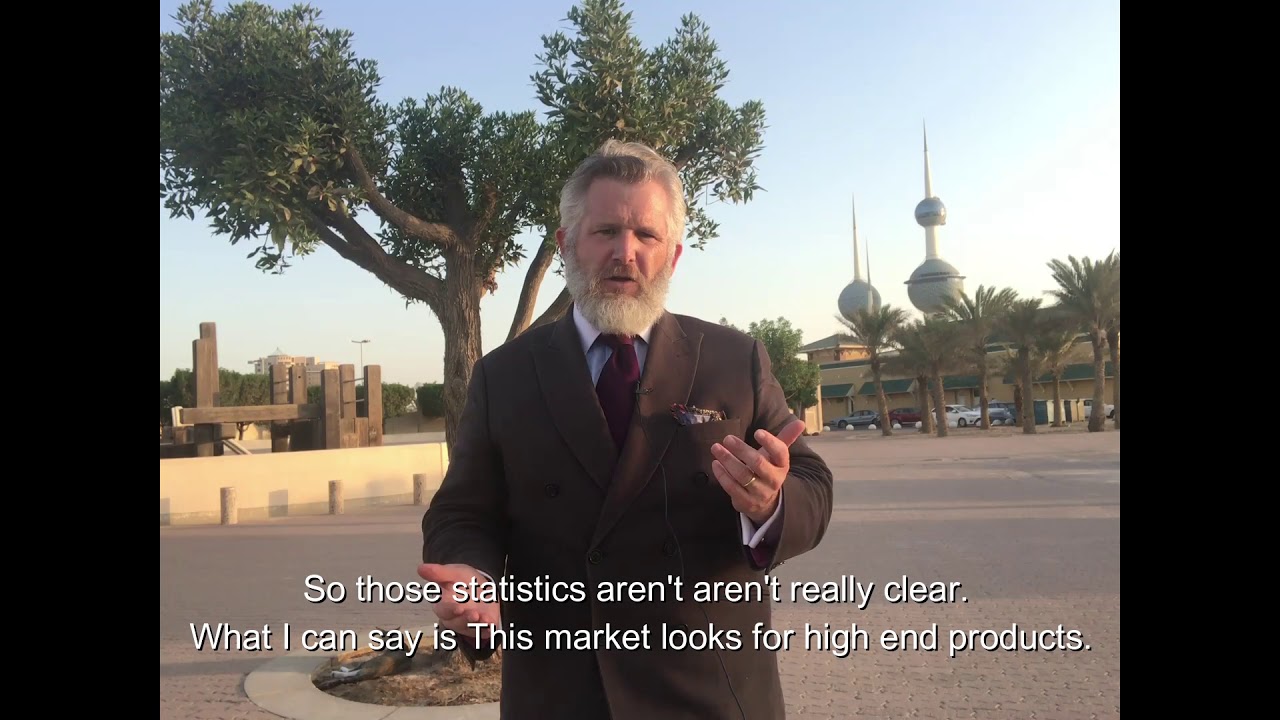
In this presentation Zach Selch provides a concise yet detailed analysis of Kuwait’s medical market, beginning with a macro view of the country’s oil‑driven economy and its unique demographic makeup—about 1.5 million citizens who own roughly 6 % of the world’s oil reserves, with a large expatriate workforce from South Asia and the Arab world. He explains that the economy is highly undiversified, making health‑care spending highly sensitive to oil price fluctuations; roughly $1–1.5 billion is spent on health care annually, equating to about $3,000 per capita, though the split between domestic care, medical tourism, drugs and devices is unclear. Selch highlights a decade‑long stagnation in public‑sector hospital construction caused by repeated dissolutions of parliament and budget impasses, followed by a recent surge that added about 3,500 high‑quality hospital beds. This rapid expansion has created a massive demand for consumables, capital equipment, and especially for solutions that enable the existing workforce to deliver care with fewer clinicians—Kuwait needs roughly 15,000 additional clinicians. He notes that the market favors high‑end, FDA‑ or CE‑cleared products, with minimal regulatory barriers for American companies. The procurement environment is cyclical and heavily driven by government budget cycles, leading to years of strong demand alternating with lean periods. Finally, Selch outlines the distributor landscape: long‑standing large firms coexist with many small “mom‑and‑pop” shops, and every foreign distributor must partner with a Kuwaiti entity, often linked to Egyptian or Lebanese networks. He concludes by inviting companies seeking to expand international sales to contact his firm.
Chapters
So let's talk about the Kuwaiti medical market. First of all, let's look at the economy in general. Fantastic, huge economy. 1.5 million people, more or less, own about 6% of the world's oil reserves, because that's how many actual citizens there are here. That's only about 25% to 30% of the general population of Kuwait, but most people here aren't citizens. About half of them are South Indian— South Asians. The rest are other Arabs— Lebanese, Jordanians, Palestinians, Egyptians, etc. The economy is extremely non-diversified in terms of how people are handling their money in the Gulf. It's not like Qatar or Dubai or Abu Dhabi or even Saudi Arabia where they're really trying to diversify. Here, Partially because of the structure of the government, they have trouble making decisions quickly. They haven't diversified. Everything is oil. And you've got to keep that in mind. So when the oil prices go down, the economy suffers. 90% of the revenue of the government is directly related to oil right now. So you've got to keep those things in mind. What about the medical business? Somewhere in the neighborhood of $1 billion a year being spent on healthcare in general. No. Somewhere in the neighborhood of $1.5 billion a year being spent on healthcare in general, but that is unclear where that divides up between medical products and drugs, for instance. $3,000 per head is being spent on ongoing medical care, but also it's not clear how much of that is spent on outgoing medical tourism and how much of it's spent on treating people in Kuwait. So those statistics aren't really clear. What I can say is this market looks for high-end products. They like American products. No barriers to doing business here. Very easy to do business here as an American company. And if you have FDA or CE, you're not going to have a problem with registration. The private healthcare— the public healthcare market here was stuck for about a decade because of problems between the parliament and the emir. They couldn't reach agreements on budget. The emir who appoints the parliament actually dissolved parliament 7 times over a 10-year period. And how does that impact me? Why do I even care about politics here? Because what that meant was every year people would say, well, you're specced, you're going to get this, but the budget didn't come through for this year because the parliament was dissolved and there isn't any healthcare budget. So they didn't build a hospital bed for about 10 years here, maybe a little bit longer. Then in the past 3 years, they've built 3,500 beds of high-quality hospitals, really some of the best hospitals in the world. Wow. What's that as an opportunity for you? Those hospitals have to be made operational. They need staff, they need consumables, they also need a lot of the capital equipment that they don't have yet, right? So that's— these are big opportunities that aren't gonna come around again probably for another 10 years. The big thing you should also remember is they need 15,000 more clinicians in Kuwait than they had 10 years ago. Wow. And I don't know where they're gonna get those from. What that means is it's a perfect opportunity for any product or solution that helps provide good healthcare, both from a comfort perspective, patient experience perspective, and also from a perspective of quality of care with less clinical help. Okay? So if you can provide tools— For nurses to do more work with less nurses, or doctors to do better care with less doctors, those are the type of things that have a definite market here in Kuwait. Over the years, over the past close to 30 years, I've done a lot of business in Kuwait, but it's very cyclical. It really depends on what's going on with government. There is a private sector here. They just built 3 beautiful private sector hospitals, but for the most part, it's driven by, by the government, the public sector budget. So you'll have very, very good years in Kuwait, and then you'll have really bad years in Kuwait. So it really, really depends, and I've seen both. In terms of distributors in Kuwait, there are some really great large companies that have been around for 50 years, and there are a whole bunch of little mom-and-pop type shops, and it really depends what you're selling and who you want to get to. Every distributor needs to have a Kuwaiti partner here, so even though the people you're going to be dealing with are probably going to be Egyptian, Or Lebanese. You want to find out who their partner is, how well-connected their partner is, and so on, because that's going to be key also to doing business. When you decide it's time to grow your international sales, call us.