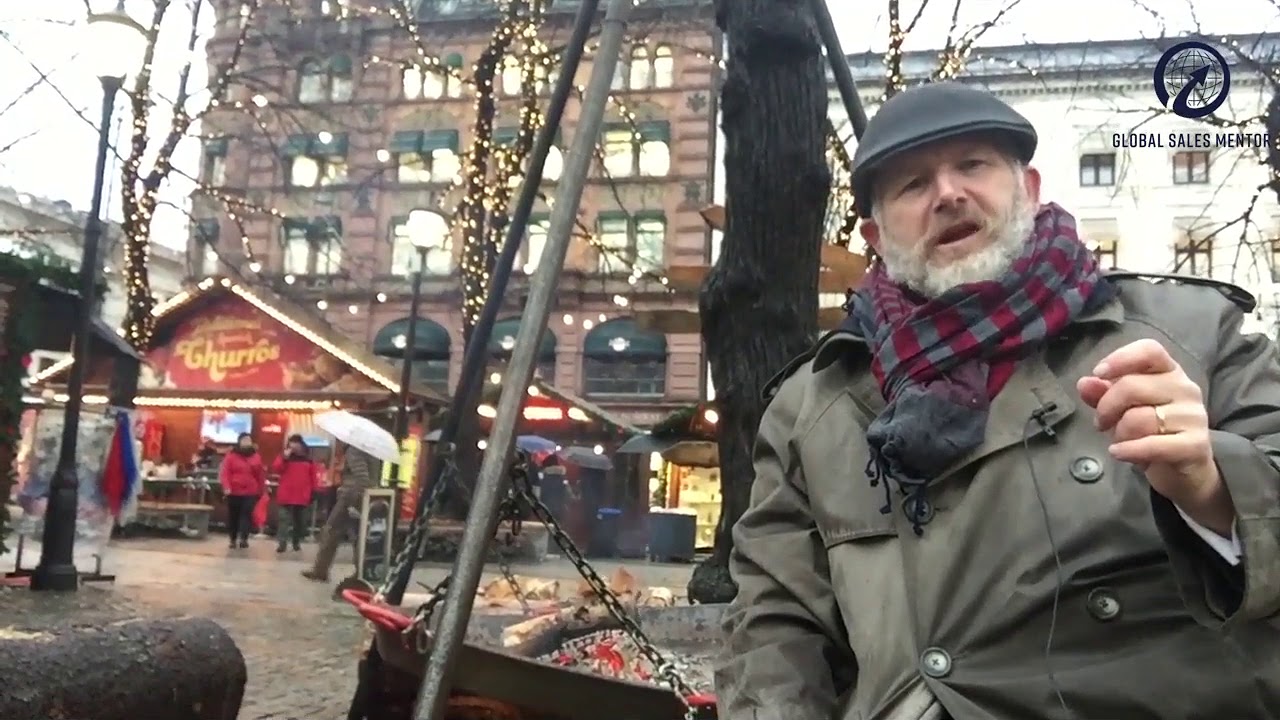
In this video Zach Selck, standing at a Christmas market in Oslo, explains how Scandinavian business culture differs from more "masculine" cultures such as Italy or the United States. He frames Scandinavia as a "feminine" culture—family‑oriented, modest, and not status‑driven—based on sociological terminology. He describes how this cultural orientation manifests in business: modest presentation, decentralised company locations (people often start businesses in small towns to stay close to family), gender parity in roles, and shared parental leave. Selck argues that these traits affect sales tactics, presentation style, and team management when dealing with Scandinavian partners. He warns that mixed‑culture teams (e.g., Italian and Swedish) may clash due to differing masculine/feminine expectations, but stresses that proactive planning can overcome these challenges. The video ends with a call‑to‑action for companies seeking help with international sales expansion.
Chapters
I'm in downtown Oslo at a Christmas market, and you can see behind me is a fireplace in the center of town, and there are about a dozen of them spread out here. And this sort of exactly talk— exactly points to what I wanted to talk about today in terms of business culture in Scandinavia. And, and what I usually mention is I really think that you can lump together business culture in Scandinavia. There are minor differences between the different countries, but they're all very similar. And one of the big things that differentiates Scandinavian business culture from other parts of Europe and certainly from America is that we like to talk about— well, sociologists and anthropologists talk about a masculine or a feminine culture, and I don't like that terminology, but that's terminology I've been saddled with. And Scandinavian business culture is a very feminine culture, okay? Scandinavian culture would be considered by anthropologists or sociologists to be a very feminine culture. And what does that mean? Think about Mad Men circa 1959. Don Draper in his suit with his gold cufflinks and his, you know, drinks and his cigarettes and, and, and his fancy Cadillac. Um, so that's a masculine culture, and the opposite would be a feminine culture. Scandinavians are very family-oriented. They're not flashy. They're not status-driven. Um, and this is really one of the big characteristics of Scandinavian business culture and Scandinavian culture in general. And that is going to impact your business. It's going to impact how you sell to people. It's going to impact how you present, how you work with your distributors, how you work with people who may report to you if you have Scandinavians reporting to you. First of all, nobody's going to get impressed here by a $200 tie or a fancy pair of cufflinks. People tend to be modest and relatively simple with a lot of their stuff. One thing that I found, which is probably the, the best indicator of this, is there's a huge decentralization of businesses in Scandinavia. And by that I mean, uh, if somebody wants to start a business, he doesn't go into the big city always. He might stay in his little village. So I've done a lot of business over time, hours and hours outside of the big business towns. Because people wanted to live where their families lived. They wanted to be comfortable, and this is very common. You're going to see just about as many women as men in different business roles. Men are going to take maternity leave or paternity leave, that kind of thing. So it's really a very interesting culture, and frankly, you know, I think a lot of Americans are very comfortable with it. What you're going to find different is if you have a team with, say, Italians. Italians are an extremely masculine culture, right? So if you have an Italian and a Swede, or an Italian and a Norwegian working together on your European sales team, they're probably going to be looking at things very differently. And you, like I say with all of this cross-cultural selling issues, nothing's insurmountable. You can deal with it. You just have to proactively think about it in advance and how you're going to deal with it. Remember, When you're ready to grow your international sales, reach out to us. We can help. When you decide it's time to grow your international sales, call us.