In this video Zach Selch provides a concise briefing for companies interested in entering Iran’s medical market. He begins with a strong legal disclaimer, urging viewers to consult the U.S. Treasury and Commerce Departments because U.S. sanctions make any business with Iran risky, even though healthcare products have a limited exemption that still requires extensive paperwork and reporting. Selch then outlines the market’s macro‑economics – roughly 80 million people, a $400 billion GDP, and a rapid rise in health‑care spending from 2‑3 % to 10‑12 % of GDP, with about 800 hospitals nationwide. He highlights the primary health challenges (car accidents and addiction) and a demographic wave: a large cohort of 22‑25‑year‑olds now having children, creating strong demand for prenatal, obstetric, gynecologic and pediatric products. He notes a severe doctor shortage (≈0.5 doctors per 1,000 people) contrasted with a huge pool of medical students, suggesting opportunities in medical education and related services. For distribution, Selch points out there are roughly 100 licensed medical importers in Iran, most of whom congregate at the Arab Health exhibition in Dubai each January, where Iranian Ministry of Health officials also attend. He concludes with a call‑to‑action, inviting viewers to contact his firm for assistance in growing international sales into Iran.
Chapters
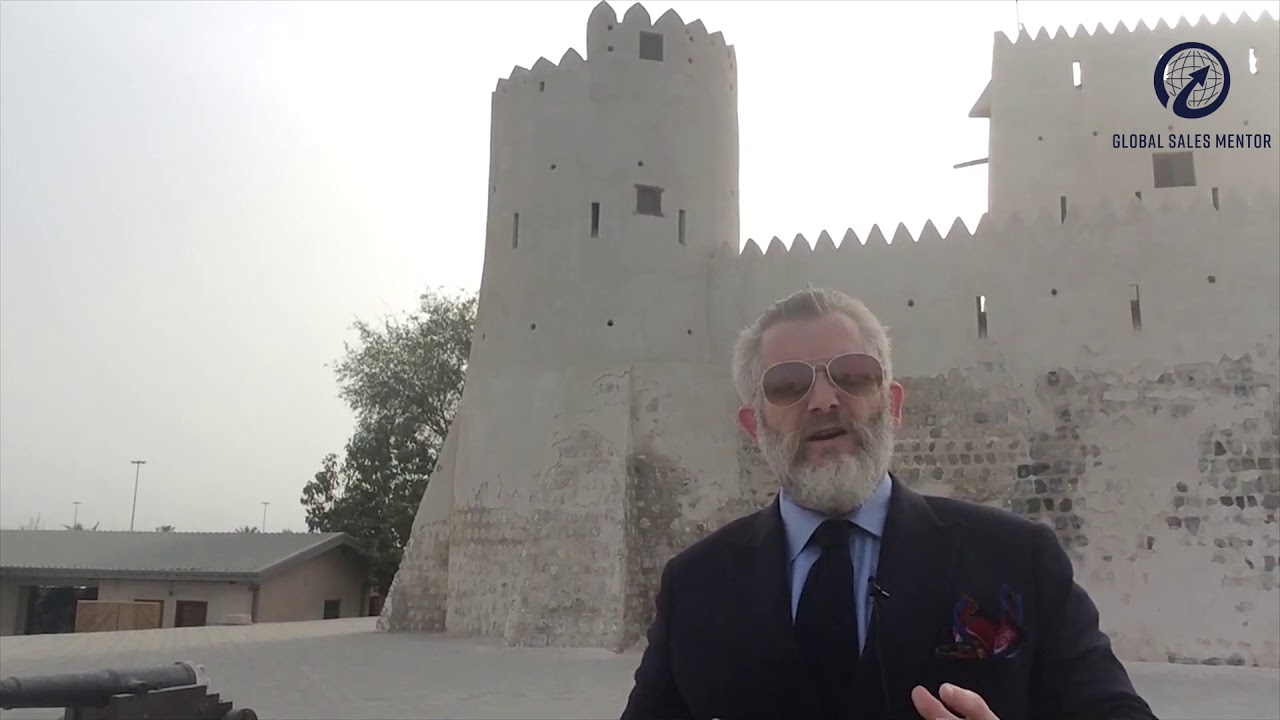
Hi, I'm at the Kalba Fortress in eastern Emirates, and where this fortress was built a few hundred years ago specifically to keep the Iranians from invading, and so far it seems to be doing a pretty good job because there aren't any Iranian invaders here. The Iranians are Just a few miles across the strait that way. And very often you're gonna find people doing business through— from the West with Iran, instead of going to Iran, are gonna do it in Dubai. Now the first thing I'm gonna tell you is I'm not a lawyer and I'm not giving you legal advice. If you're doing anything at all in terms of business with Iran, you have to talk to the Commerce Department and the Treasury Department. I always do that whenever I'm looking at anything with Iran. I want to talk to the Treasury Department because the laws are a little confusing and they're very draconian. They're designed to keep Americans from doing business with Iran. The one main exception is healthcare and medical products, but you still have to fill out a lot of paperwork. There are restrictions and there's a reporting liability. So you're You're responsible for reporting, for filling out forms, all that. Failure to do so can get you in huge amounts of trouble. So I'm just gonna say this: I am not giving you any advice about how to do this. What I'm saying is go talk to the Treasury Department and, and make sure you understand your legal responsibilities before you do anything with Iran. Now that said, over the years I've done a fair amount of business business with Iran, and it's been very happy. They're lovely people, good business people, fair, honest, etc. The people I've dealt with, and I have no problems with that. I've closed millions of dollars in business with them. Just the paperwork is a very, very big hassle, and you have to be very careful with it because it literally on the form says if you If you put in any incorrect information, that you could be liable for a huge fine and jail time. And I really had, you know, nightmares and a tight, knotted stomach for months doing business with Iran in terms of paperwork. Let's talk very briefly about what we're looking at. We're looking at about 80 million in population, about $400 billion in GDP. For years, the spending on healthcare has just been a couple of percent, 2 to 3% of GDP. Lately, it's popping up there to about 10 to 12%. Now, this could be a temporary thing because they're building up a lot of infrastructure that wasn't built during the time of the sanctions in the previous years. But it's hard, hard really to say. It could continue. It could be just a few years of opportunity. We're looking at about 800 hospitals. You're looking all throughout the country. What are the primary diseases? Interestingly enough, car accidents and addiction are 2 of the 4 primary health problems that kill people in Iran. Another big opportunity going on in Iran has to do with the demographics. Their baby boom is now of childbearing age. So their baby boom is 22 to 25, having children. All the healthcare products that are related to prenatal care, giving birth, gynecological care, and then dealing with babies and pediatrics, this is really the time. And obviously then we're going to have waves of children in the coming years that are going to require those type of products and care. So anybody in that field. Another big thing is there are very few doctors in Iran, as in terms of the population, something like half of one doctor for every 1,000 population, but There are many, many medical students. Seems to be just a huge number of medical students per doctors. Now, I don't know if that means they're not getting through school or if they will all graduate, but anything involved in medical education seems to be a really, really good product or solution to be targeting the Iranian market. As a matter of fact, the Department of Health, the Ministry of Health in Iran is actually the Ministry of Health and Medical Education because they're tying those two things up. If you're interested in finding people after you talk to the Treasury Department, there are about 100 licensed importers of medical products in Iran, and they're typically all at Arab Health, which is the big show in Dubai that happens in the end of January. They know that. Most people would rather meet them there, even though a lot of Westerners do travel to Iran. I myself and most others seem to want to meet them in Dubai, and the Iranians know that and they're perfectly fine with that. So if you want to find a distributor, the place to do it is probably going to be Dubai for Arab Health. And also you're going to find a lot of representation from the Department of Health, the Ministry of Health from Iran. A lot of people from the Ministry of Health from Iran are going to be at Arab Health in January as well. When you're ready to grow your international sales, reach out to us. We can help. When you decide it's time to grow your international sales, call us.