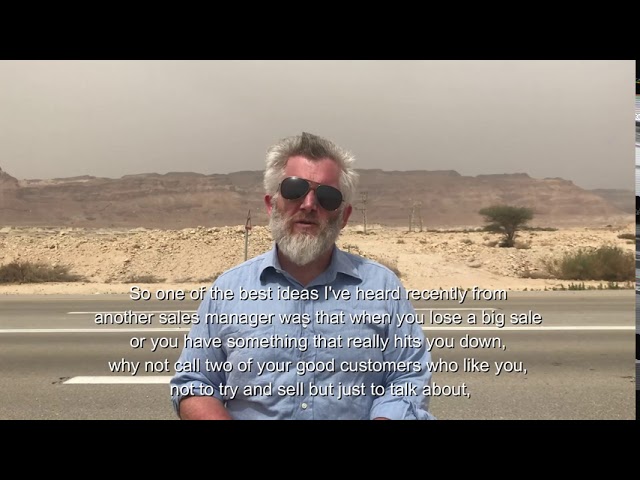
Zach Selch explains why high performers sometimes collapse after losing a deal and what managers should do instead of saying "suck it up." When a rep is down, have them call trusted customers to reconnect, not to sell. Empathetic listening and rest matter more than pushing through.
Chapters
So I'm on the lowest spot on Earth, about 400 meters, more than 1,000 feet below sea level. And if you're in sales, you've been here too. We always have times when things don't go the way we want them to. We have our ups and our downs. Sometimes we just have a bad day, or we lose a sale, or we, we find out that the competitor got a deal. And sometimes that can be very, very tough on us. And I'm going to talk about something that we don't hear that much about, is some of us are a little bit more resilient, or for instance, what we sometimes say about salespeople or sales managers, we don't get as much validation from external sources. And some of us are like that. For instance, for me, when I have a really bad day, I pretty much never have a situation where the next day I can't get up and start selling, and that's unusual. Very often we have salespeople who are Good salespeople who take it really hard, because a lot of very good salespeople get a lot of external validation. And I once had a guy report to me who literally would, would basically go to bed for a week every time he found out he lost a big deal. He might just roll up in fetal position for a week, wouldn't communicate, and then he— it would take him about a week and then he'd be back on his feet. And sometimes as managers, if you don't need external validation, it can be very hard to know what to do with people who do need external validation. Right? Because very often we might find ourselves managing people who are totally different than we are, and they might really take it hard. And your first instinct is to say, well, you know, suck it up, buttercup, right? Just get back up on that horse. And that's counterproductive because that isn't the right way to talk to people when they have to go all the way up from the lowest point of their life back up the hill to the top of the mountain again so that they can go and sell with confidence and energy. Right. So one of the best ideas I've heard recently from another sales manager was that when you lose a big sale or you have something that really hits you down, why not call 2 of your good customers who like you? Not to try and sell them anything, just to talk to them. Because you can help yourself remember how well people do like you, how, how well you, you have been successful, and your previous successes. So as a sales manager, that's a tool for you. You can be understanding and listening, and you can just sort of listen to the salesperson and say, don't worry, take, take a few days, rest, clear your head. But you can also suggest to them, you know what, why don't you call John, or why don't you call Bob, and just have a conversation with them, maybe take them out for dinner, and remember these people who really like you, who gave you a lot of business, who you were successful with. And that type of thing can help these people who need external validation get back on track. on the horse. So you as a sales manager who might not identify with that too well, this is a good tool for you to help manage those people because as salespeople we're always going to be at that low point in our life and we can't sell until we climb up the mountain back to the high, high points. So this is another tool that might help you with your sales team if they have different personalities from you. When you decide it's time to grow your international sales, Call us.