Former OpenAI Lead Zack Kass: How AI Will Change Society Forever
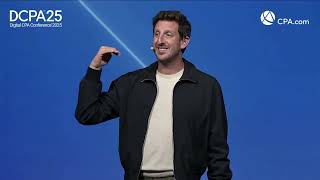
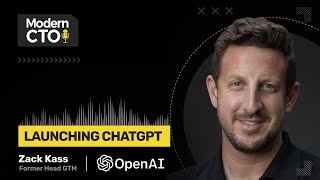
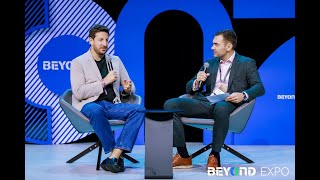
This content was created by open-monastery. This content was uploaded by open-monastery. This is a YouTube video titled "Former OpenAI Lead Zack Kass: How AI Will Change Society Forever" created on March 3, 2025. It features a conversation between Jeff and Zack Kass, a former leader at OpenAI, discussing the future of AI and its societal impacts, including technological disruption, the evolution of work, and the importance of humanistic qualities in an AI-driven world.
Chapters
I'm super excited to talk to Zach Kass today. He's a former leader at OpenAI and he's an AI futurist in his own right. So I'm really excited to get the inside scoop on what's happening next in AI as well as with all future tech. What we call digital disruption, he calls the next renaissance. And he's got some big ideas for how the rest of the century is going to evolve for organizations, for workers, and how technological change is actually going to impact things way beyond technology. Should be a great conversation.
Zach, I wanted to talk a little.
Bit about just your sort of approach toward AI, your view of the world from here. You kind of branded it the next renaissance in this kind of explosion of technology and capabilities.
Why do you call it that?
What does that mean to you and what are the implications?
So I studied history at Berkeley, and what we sort of forget about is that the known universe, what we, you know, what we know of the universe today hasn't always been a known universe. And it actually takes a lot of discovering of technologies, things like the telescope, things like submarines, to expand our understanding of a known universe. And this is what the, this is what the first Renaissance actually was about, right? It wasn't just highfalutin thinking, it was political thought. It was advancements in military industrial complexes, it was advancements in sciences. And it was, it sort of came at the same time as we massively expanded. It was the first major expansion of human potential. What one person could do in the first. In, you know, the chapter prior to the first Renaissance paled in comparison to what one person could do after. And some of this was, you know, the way governments were informed. Some of this was the way that, you know, we started embracing far more technology. Cities started to sort of expand, people started to gather and sort of like exchange thought more. And the easiest way that I found to explain to people what I thought would happen was by sort of comparing it to this initial event. Now, obviously things are going to happen more logarithmically, but it's not sufficient to say that humans will expand our potential because something else is clearly going to happen, which is like what you and I know about the universe today is going to feel sort of silly compared to what we're going to know about the universe in, you know, 10, 20 years and sort of forevermore.
So, I mean, at the risk of asking you to predict the future, like, how, how is this all unfolding?
How, like what?
Aside from like the, you know, the two letter AI answer, like how, how is the way we understand the universe changing now? And how is it positioned to change, you know, in the next 20 years or whatever? Time horizon.
Yes. So the easiest way to, to think about the ways in which the universe is changing. Talk about known and unknown universe. First, let's just define these things. It's helpful. A known universe is basically everything that exists around us that we can sort of consider a discrete or a finite problem. So if a calculation can solve this thing, we can consider it a finite problem, and it exists in our known universe if there is no calculation for it, either because we don't even know that it is a thing, or because the variables are just too infinite. Right. Like, for example, a finite problem in this case is how do we get to Mars? An infinite problem or an indefinite problem is how do we get to the Andromeda galaxy, Or how do we get to a galaxy beyond that? It's just not even something that we could really make sense of today because we just don't lack the tools to fully understand. And we don't even know where we would go in the Andromeda galaxy to begin with or what we might face as we go out there. Obviously, bio and life sciences, molecular sciences, particle sciences, have this, probably the largest scope of known universe finite problems that we can sort of point at. And they are starting to make incredible grounds because in a world where we unlock human potential, we can start supercharging the experts that we have. And so, you know, if there are 10,000 oncological researchers in the world, because the aperture for oncological research is just very small for reasons that, you know, listeners can, can make sense of. The one answer is we could just make more of these people, but that's really hard. We don't have the infrastructure to do that. The other answer is we supercharge these people. And so what we're going to see is in, in sort of the very short order, the answer to the question, what if there were like 10 million oncological researchers? What if there were 10 million people studying molecular science, particle science, et cetera. And this is going to lead to the breakthroughs in novel science that we're sort of expecting. Fusion, Quantum, AGI, et cetera. And as a reminder, OpenAI was 90 people when we shipped ChatGPT. Sorry, 90 people when we shipped GPT 3.5 and 130 people when we shipped ChatGPT. Yeah, small teams are very capable now for the reasons I've described. And so in short order, I think the obvious answer is we're going to unlock a lot of what we consider finite problems. Things like cure for cancer is something that I think we know we can solve, and I think we're going to solve it. What's the meaning of life is going to remain probably an indefinite problem for a long time. And is there a God? Is going to remain an indefinite problem. For there are things that will remain in our unknown universe outside the scope of what we can solve for for quite a while. But in the next 50 to 100 years. My prediction is that just like the first Renaissance evolved, our understanding of what the social contract could look like introduced enlightenment thought, which led to, among other things, democracy and new forms of government. My prediction is that the next 50 to 100 years, outside of novel sciences, will see the biggest changes in understanding of social construct. And you know, Sam has talked about this, A lot of people have talked about this. In a world where work becomes less critical to. To actually running society, where value creation gets less expensive, redefining how society should work is going to require a bunch of people to think about it and a bunch of, like, quite honestly, conflict within governments to redefine those things. And so if you're looking at 50 to 100 years out, my bold prediction is new government, like truly, like, democracy, may not be the final state and we are probably destined for something. And by the way, I'm a free marketer. Capitalism might not even be the free market solution. We just don't know yet because imagining these things just will require major updates to how we understand the universe to work.
Okay, so I'm just pausing because there's like 8 trillion things to unpack just in the scope of what you just said. And there's so many places we can take this. But I guess.
Zach, as you talk.
About that, there's an optimism I hear in your voice, right? Like we can unlock this human potential. But so much of this, like the word that comes to mind, obviously, very topically today, is disruption, right? Like it feels like to get here, like basically absolutely every part, not just of technology, but every part of human social structure is potentially disruptible here. And, you know, I guess my thought is like, sometimes when you disrupt things, or when there's winners and losers, there's resistance or there's pushback, you know, to what degree do you see that being the case? Is there risk here? You know, how do we navigate it and how do we, like, how do we make sure it unfolds in a positive way?
So, yeah, so similarly to you, I have to pause to Sort of collect, because there's a lot there. Let me, let me start by just giving my priors. So my priors are. I grew up in Santa Barbara, California to, to two parents who, who are, are, are doctors and, and work in, in the medical field. And I observed a really charming, you know, childhood and then went to Berkeley and studied, studied history and computer science and then went and, and worked in ML and, and I had lots of personal, you know, strife along the way. But, but have lived a relatively charmed life by any universal standard. Past, present, future, probably. So I see the world as being a really acceptable place and I'm not naive, but I do want to admit my priors because I think it's very easy to sort of look at these things and say, well, of course he thinks this. That being said, if you study history, one of the great things that you learn is that the world gets better all the time. It is very hard to read a bunch of history books and arrive at any other conclusion than today is the best day ever to be born. And in fact, the beauty of the human experience and the reason that arguing are humans good or bad? Is so easy is because if humans were actually bad, we never would have arrived here after we crawled out of caves. The fact that we have all the things that we have, the fact that the world is as safe as it is for most people and that it gets safer all the time is a testament to the fact that we are just building a more aligned Earth and more aligned human, human experience. And that's not to say we aren't fallible and that we don't have lots of, you know, problems, but it is to say that our problems are diminishing. And so I don't think the onus is actually on me to prove that the world is going to get better. I actually think the onus is on someone else to say this is the peak of civilization. So I'll say that. Now, that being said, it's true also that disruption breeds a lot of like, conflict. Some of that conflict is really healthy. Some of that conflict is like, problematic. Someone asked me last night, I gave a talk last night and someone said, like, isn't it true that like, there'll be so much change that it'll just become this like, violent era of change. And I actually think that, like, the reason that we've had so much, sometimes so much conflict in the past, if you, if you go back and study periods of like, long periods of warring and conflict, it's often when there is no progress and in a world where you're not making progress, where you look around and you're like, it's a zero sum game, we're not making any progress, we're not inventing new technologies, we're not living longer. We need to like, it's a scarce resource game, we just need to fight and to like, we need to conquer. In a world where we start making a bunch of technological progress, where people look around and they go, wait, we might cure cancer. Suddenly, suddenly it's very concerning that we might die at war, the interest in that suddenly plummets. And so I think that what we're going to find is a world where conflict, interpersonal conflict, becomes far less interesting to people because we're going to start to observe the world in a very positive net sum game versus versus zero sum. Now, it's also true that our generation is going to pay a ton of sacrifices because of this progress. All generations do, I think our sacrifices, whereas many generations sacrifices were economic, right? If you had studied the greatest generation, you watched them grow up in a depression and they had less than the generation before them. And if you had extrapolated, you would have said, oh, the world is getting worse. But in fact, we know that to be this short, diplomatic, our generation's conflict, I think is going to be emotional, not economic. I think the hardest part for us is going to be facing this new normal, which is whiplash, rapid change and the sort of separation of work as a source of identity. And when we sort of talk about one of the great risks, I think of the AI revolution, it's going to be the fact that our work is going to change so much and so frequently and so arriving at a net positive outcome. This sort of like utopia panacea in the distance is going to require that people actually probably overcome the short term and maybe even medium term pain of accepting that even if the world is economically better, which it certainly will be, and I get so much flack for this, but it is impossible to argue that it has never been less expensive to be alive. I mean, so many of the things that we consider commodities today, staples were luxuries 20 years ago. And so I get all this, I actually get a lot of vitriol online because people like, how could you be so naive? And I point to things in their lives and I say, what do you think your parents would have paid for this? Be it an antibiotic that hadn't been invented. I mean, you know, just like you cannot observe the world and see and see it for what it is unless you're willing to actually go back and imagine what it would have been like living in the world 50 or 100 years ago. That doesn't change the fact that a lot of people look at what I'm saying and say, that's wrong. Corporations are greedy, the world is getting worse. And I, you know, if, if I can't work, I'm not going to make money. And I just totally disagree with that. I think the world is going to be economically so much better and emotionally probably pretty aggrieved and overcoming that conflict is going to, is going to take a lot of work. Now the one other thing I'll say, and we can come back to this or you can expand on this. When people ask me what's the next great conflict? I don't think it's between two nations. I really don't. I think we have reached this sort of this flat earth point where it's like really not in any nation's interest, especially nuclear equipped nations to fight. And a hot war would just be like so untenable. You know, we would just. I don't think anyone wants it. I do think that there is a future conflict between people and the state. I think there is a world where we wake up in 20, 30, 40 years and we go, oh, we have all the things that the state has been promising us. It's just not the state that delivered it right. It's technology. And that's going to be one of these moments where people go, I wonder why I'm paying 50% taxes to a body that, you know, doesn't actually produce value anymore. And so there's a whole other thing there which is like this introduces this idea of a new form of government. I think we get there because a lot of people are going to be like, wait a second, why are we being governed in such a way that it doesn't allow the technology to serve us? Fair enough.
And we could spend a lot of time talking about the future of governance. And part of me definitely wants to, don't get me wrong, but I want to zoom in on one thing you said specifically, Zach, which is about work changing and like our relationship with work changing. So like, can we dive a little bit deeper on that? Like, how do you see the nature of work changing over the next five to 10 years?
One of the things that I, that I'm struck by is like so many of the people that I have the conversations about this with the future of work, you know, I'll often like explore their job and ask them if they could have understood their job 10 years ago. And for most people today, the answer.
Is no, I couldn't have understood one year ago, frankly.
Sure. And I think, you know, your podcasting is particularly interesting because it's just, it requires so much, you know, sort of novel technology. You, I think you could have understood it 10 years ago, but, but there are a lot, there's just a lot of work today that like, required so many updates to technology. And I preface that by simply saying, like, I don't know and no one does. I think it's going to be one of these, you know, arrival moments where we sort of appreciate that, like most of our life is actually filled with exceptionally rote work. And I think one of the great awakenings in this next renaissance is going to be realizing that our technology has sort of tethered us to our devices and that we associate screen time with work time, when in fact we have a device addiction epidemic. And most of the time on the device is actually just rote, wasted time. It's not a ton of like, deep critical thinking, imagination, curiosity, courage. And if you decouple your rote work from your like, strategic work, what I think many people would find is like, actually, you know, they. We live even in like, developed high, you know, high value societies, fairly rote, monotonous lives that I don't think are driving the satisfaction that we would have wanted from the technology we created. So my guess is one of the tenants of the future of work is appreciating how much work we do that doesn't actually serve our happiness function. That there is in fact a lot of work we do that like, makes us, you know, makes us happy and a ton that doesn't. That's going to be, I think, one major breakthrough and just like a tenant of the future of work. The other thing that I think happens is we will probably redefine what it means to have a work week, which is to say I think a lot of work will actually start to feel almost piecemeal in a way that's like very upsetting to some people, but like, could work out really nicely and you're starting to see the world move in that direction. And I don't mean like, you will work out of the office sometimes. I mean that like, some work you like, do some work and then you won't do some work and that it will actually just feel a lot more sort of episodic and periodic because the idea of a career is just probably going to sort of melt away. And that's not to say that people won't have specialization. I think they might. But I think it's going to be far more interesting to operate in a world where like everything feels more fungible and sort of like, you know, plates, tectonic plates that sort of move where the pressure zones are beyond that. It's actually I think really hard for me to, to sort of point at anything. My prediction is that like we end up probably working less. You know, I don't know where that asymptotes, but we are working less than we, than we did in 1960. For example. The average work week was 57 hours. Now it's about 45. So it is coming down. Japan just passed a four, four day workweek law which like went pretty unannounced. And the, they did so because they want people to procreate more, but they're doing it because they can. They have the labor productivity to now say, hey, you know what, we have so much productivity in the workforce, we can actually just get people to work less and go spend more time with their families having kids. That to me is one of these incredible watershed moments that I think we're going to look back on and be like, oh wow, like a, a country was like, hey, we're willing to compromise some economic value for like future gains. This I just think is going to become more common. I think, I think we're going to just say, hey, like what is, what does it mean to actually work hard? And what is it? What does a long workday look like? And I think both of those things are just going to, you know, change a lot. So let me, let me play.
I love that vision and it's super exciting and it's super optimistic and I feel like I have to advocate for some of the skeptics who are like Zach, I don't buy that. You know, I think that there's like real opportunity for a hellscape here. You talk about tension between, you know, citizens in the state. I'm curious about tensions between like employees and you know, kind of megacorps or you know, larger organizations. Like is this a risk? And I guess where I'm going with this is, you know, there's this world where it's more fungible, where it's more, you know, I'll choose deliberately to take the negative lens where it's more like gigging versus like this, this full time steady salary job, which in some ways we're already seeing. But is there a risk that we're going toward a world where you know, these, these large corporations get more and more of the pie and they can do more and more of it without, you know, human workers. And you know, like, it's just kind of a double edged sword. Like there's, there's just less work for us and that impacts our, you know, our finances.
That's certainly a possibility. But let me tell you. So I think that the world where we have like a bunch of like a few mega Corps and they all have automated the labor pipeline and we live in this like, you know.
Sixth Sense.
Yeah. Sort of hellscape, which is so funny to me by the way. I just want to pause. The really amazing thing about all of these dystopian films is that they can account for flying cars, but they cannot account for like Michelin star on demand food. Right. Like, it's like a very weird world where you saw like it is where our mind goes. We are not, we are willing to be like, oh, here are all the things that technology could wreck. But like if you do all those things, like if you can have flying cars, if you can have floating, like transforming, you know, in the ready player one world. Right. Yeah. Something would have had to go so wrong to have all of that and not have, you know, incredible sort of utopian outcomes as well. Yeah. And I think it is so easy for us to imagine all the downsides because we have, we have a negativity bias that served us when we crawled out of caves. And yet in fact the world just keeps getting better and then it get like. It would have been very hard to describe, you know, this world around us to someone a hundred years ago and, and yet here we are, despite all the conjecture. Now I do think that the risk of sort of technological hegemony is an interesting one. But, but there are like a bunch of competing forces that we're already starting to see. One of them is told by the OpenAI story. Right. So just again reminder, OpenAI was 90 people when it shipped GPT 3.5 or, or 100, 130 when it shipped ChatGPT and 200 when it shipped GBT 4. I mean it's just like very small teams are capable of a whole lot. And that has a double edged sword if you're an incumbent because it both means that like, sure, you could run your company a lot leaner and you know, that could have economic consequences. It also means that individuals are going to be able to do a lot.
Right.
And so for every, for every small team that a company can sort of, you know, crunch down to create a bunch of value. There's going to be another small team that's like, oh, we can build a competitor to this thing. And someone, you know, I had dinner with a leader in bio and life sciences about two weeks ago and they said, you know, I want to know the new competitor to our company. It's the hobbyist. It's the expert hobbyist in the garage. Like there's a non zero chance that someone cures cancer in their garage. Which by the way, there's, there, there's actually precedent for like if you had said to someone then the, the next great wave of companies is going to be of technologies companies is going to be built out of garages. If you had said that to someone in 1950, they'd be like, how IBM computers cost like $5 million and they, and they require an entire room. That was like the state of play in 1954 when an IBM researcher went on national TV and said they were going to solve machine translation in the next five years. So if you describe that world to someone at that time, they'd be like, computers are so expensive. There's no way that someone's just going to buy one of these and build, build a company in their garage. I think that we are approaching that world where individuals are so capable that we're just going to see incredible competition from all corners of the world. The other thing that I think is going to happen is we are going to enter a world where people are not going to tolerate a lot of the employment experiences that they put up with today. Because actually the deflation in the world is going to mean that people can just work less. And people fight me on this, but I just, I'm so sure of this. Outside of governments or regulated oligopolies and monopolies where there is no price competition, we are going to see crazy, crazy price competition. And this idea that like corporates are greedy and they, they behave in their own self interest, sort of true. And it's also true that like for every company that's like, we're not going to lower prices, there's a company that's like, we're going to drive price down because that's our advantage. And then everyone has to follow. Spirit and Frontier are the best examples of this, right? I mean you could fly across the country for $70 today, which is like just crazy to think about. And for every Gelsons, you know, I don't know what, what you're fancy. For every erawan there's a Costco and there are luxury ends of the market and there are commoditized ends in the market. And I don't think this idea that like, corporations are going to rally together and like, keep everyone from accessing the goods and services that they want is crazy. Especially as we observe the cost of the AI inference just plummeting. And that to me is actually one of these great markers that I point to when people are like, how do we know that the world is going to get better economically? Deep seek is the best evidence that there will not be a technological hegemony because you won't be able to tax a service that is effectively free. And by the way, your AI is going to run on your device pretty soon. And when that happens, it means that it will truly be unmetered. And anytime the world has access to unmetered critical resources, there's a Cambrian economic explosion. This happened with water and then foodstuffs and then electricity and then the Internet. Driving the cost of these critical resources to zero is exactly what the world wants in the pursuit of, of sort of, you know, shared economic outcome. And yeah, I'm like, look, it is very hard for me to imagine a world outside of like the pharma case, which is, by the way, remember, a government regulated oligopoly where if you discover a drug, you can control it for seven years. That's because the governments allow that. But there's just very few industries like that where we will, where we won't see incredible price competition. And I think the, you know, the consumer ultimately wins this battle. And then it's like, you know, the cost of cost of living may plummet so far that like, people are like, I don't want to work. Yeah, you know, or I don't want to work this company, or I don't want to work this much. And that's going to be the sort of optionality that people get in the future.
Well, and the garage model is particularly exciting to me. And I mean, yeah, yeah, we've seen this before, but it sounds like, Zach, like you're also seeing a world that kind of skews more toward, you know, what I kind of call in like more extreme cases, like the one person AI shops that like, with this unlocking of human potential, you can have corporations of one. Because if someone has an idea or a vision, you know, potentially AI can do everything else to bring that to market and make that a reality. And I mean, this is deliberately like an edge case, but it, but is this kind of directionally where you see the economy going?
Absolutely. And it doesn't just apply. You know, it's easy for people to be like, oh fine, technology will, will. The pushback I get is people go, technology will get less expensive. I go, do you know what happens when techn technology gets less expensive? Everything else gets less expensive. And in a world where you can create software without code, we're going to move to a world where you can create hardware, you know, just as fast as you can create software today. And then it's like everything else sort of follows suit. Sam has this, Sam Altman has this prophecy that we'll see a trillion billion dollar company, a unicorn of one person in the next two years. Totally, totally reasonable. I mean it is a timeline. Exactly. Who knows? But I am so excited by the fact that like running a small, why do people not run a small business today? It's not because people don't want to be their own boss. It's not because everyone doesn't have some passion project they want to share with the world. It's because the cost of running a small business is super high. And it's not like even the economic cost, it's like all the stuff that goes into it. And even the most favorable nations, Estonia for example, which make like running small businesses as inexpensive as possible, cannot automate all the things that come with bookkeeping, accounting, taxes, lawyers. Like they try, but it's like you still have to do all these things. AI just reduces the need for these things. So far that I think we're going to see a bunch of small businesses show up. I think people are just going to like create a bunch of, you know, John Collison always reminds people that everything in the world is a passion project and the world is actually just this museum of passion projects. More people want to create passion projects, more people actually want to build things than, than, than, than do because it's just hard to do. And I think we're just going to see a bunch of building happen.
It's, yeah, I, I, I'm like super energized by that. Like to me that's like very much a best case scenario. And I like, I, I love to imagine that that's how you know, people get unlocked and, and we can do that, right? We can be self employed there, we can be empowered to like change the world in those much smaller groups. If you're, I don't know if you end up talking to these people but you know, if you're Talking to executives, VPs of larger organizations, you know, mid sized organizations that are now, you know, potentially Going to be disrupted? Like, what, what do you tell them? Like, is there a defense here? Do they just have to kind of wait and see? What's, what's the play?
So let's, let's define what a, what a high level or mid level organization is first. So I think defining a mid level or high level, you know, mid level or high level manager inside of a big company is like anything from a technology company to a traditional industry to, you know, fill in the blank.
Yeah.
And I would say most of these people, most of these people are not thinking about their company being disrupted. Right? That's like, not necessarily where their head goes. What they're thinking about is their role being disrupted. You really have to get to the board and the C suite to hear people talk about, you know, how will our industry fundamentally change? Incidentally, by the way, young people at companies are like thinking about how their company will be disrupted because they're like, they're looking up and being like, will I have a job here?
Yeah.
And it's the mid level and, you know, senior management that are like, you know, I gotta, I gotta make sure that I keep this, like, everything's going great. I have a good salary, I have like a, I pay an expensive mortgage. Let's just keep, let's keep this train on the tracks until I retire. I spend a lot of time with boards. So the, so the advisory firm I run, we do, we do a lot of boardroom advisory for Fortune 1000 in governments. There is like a, there's sort of an even split between people who are like, look, I know that the world is going to be disrupted, but like here, you know, we have some really solid defensible positions and here they are. And I'll talk about those in a second. And then the other half, which are like, wow, we're going to need to change a lot. And I'm not sure that either is exactly right. Like, I do think that a lot of change will have to happen. What I think it becomes critical is not whether or not someone believes that their industry is going to change, but how they identify what their defensible positions are. Because companies that basically believe that they are great because they have been great for a long time, they are big, they are, you know, like experienced, et cetera. Those companies, I think, are in for a uniquely rude awakening. I think it is very likely that a lot of these companies wake up one day and realize that just because they were big for a long time doesn't actually mean that they will be big forever. And that in fact, heft is no longer a strategic position. Similarly, companies that say, we're the smartest guys in the room, you know, quote unquote to, you know, could be the Enron documentary, these are going to wake up very disappointed. Right? Intelligence is obviously becoming unmetered. Being brilliant is not it. Companies that identify that, you know, their brand is of critical importance, their market trust and distribution is of critical importance. These are the companies that I think are going to do well whether or not they believe their industry is going to be disrupted quite a bit. It's the ones who are actually seeing the future and saying, these are the things that become unmetered and these are our new opportunity vectors. And this is why I'm so certain that the Fortune 1000 is going to just go through dramatic change over the next 20 years. I think we're going to see more change in it than we saw in the last year, you know, 50. Because just a lot of companies aren't seeing this for what it is. You know, a lot of companies are like, look, we're safe because we're big. We're safe because we have the smartest people in the industry. You know, we're safe because we control all these patents. Oh, man. Like, you know, hearing people talk about, like, you know, their defensive patents, it's like, look, these are going to be obsolete soon. Right? You just, like, the scientific paradigm is shifting so fast. So that I think is sort of how we, is how we approach it. And, you know, it's. A lot of these senior leaders get it and plenty don't. And trying to convince them all that the research was commoditizing was a task in and of itself. You know, a lot of these companies were like, we're going to partner with the best. OpenAI is the best. And it's like, look, OpenAI produces incredible products, but the research itself is a commodity. And pretending that it's not is just going to set you up for disappointment. And then, of course, deep seek shows up and there you go. It's also a reminder that Apple is very good at predicting the future because they sort of, they sort of saw this coming. But, yeah, that's basically the lay of the land.
Yeah, no, it's, it's super interesting. And it, like, I, I apologize because I'm going to make this so insanely reductionist. But I was going to say, like, I was going to say that, like, the best defense is still a good offense, right? Like, it's still taking an aggressive posture and thinking, what are we going to do next, to grow what we're doing versus resting on our laurels. Is that fair? Even though it's like, insanely reductionist?
I think it's fair. And look, this funny thing about what you just said is like, it's one of the things we talk about is that all of the trope, the more things change, the more they stay the same. So all of the historic tropes are still playing out like it's, you know, distribution is king. Turns out the, the, the app layer is actually the most important thing. Yeah, nothing actually commoditizes at the limit like the United app is better than the Delta app, despite the fact that everyone knows exactly how to build a great app. You know, 17 years, 16 years after the App Store, it's like, there's still a lot of, you know, disparity. And so I think that, I don't think it's, it's, it's reductionist at all to say that companies that like, go out and like, attack this are going to do a lot better than companies who, who wait. And the one thing I would add that I, that I didn't mention is a lot of companies are also identifying this, what we study in the advisory business, the negative space of AI. So a lot of people are like, okay, what's open AI going to do next? Very few people are like, what are they not going to do next? And so actually exploring the, the, the designing around things that AI cannot do. What, what we call the negative space of AI in the advisory firm. That, that's a super interesting project and sort of exploration for any company on, on their path to figuring out what it is they are and aren't in, you know, over the next 20 years.
So what, what, what are you seeing as, as, like, I mean, I'm sure we could talk for hours about this, this one topic, but like, what are you seeing is like the big negative spaces of AI where organizations can capitalize.
Okay, so this one is the one that gets me out of bed every day. And this is. Of all the reasons that I'm optimistic, this is it. Like, you know, I would just say to listeners, like, if you're only going to listen to one bit, this is the thing I would listen to. What, what I, what we talk about and like, what I present in the book and what I present in my talks is this idea that we are building machines that have human intellectual equivalence. That is what AI is, is pursuing right now. That is decidedly not human emotional equivalence. Right. Like, there is a reason, Jeff, that like you and I could have done this exchange over email. We could have had our AI agents probably just have this conversation and then, you know, sent it out as like, sort of hologram recordings. There's, like, a bunch of, you know, ways that we could have communicated this information that actually wouldn't appeal to the market because there is something unique about our tone, our intonation, our, like, physical mannerisms that change the story, that. That mean that, like, the information isn't actually the words that come out of our mouth. It's something. It's something else that's going on and studying that is. You know, people have been doing that for thousands of years, but it's like, actually a pretty interesting study in why we connect with each other. AI is very good at computational workloads and very good at human intellectual equivalence and increasingly so, and not at the other stuff. And so when we talk about what AI is going to solve for and what it isn't, I basically tell companies to start optimizing for their most humanistic qualities, hiring for adaptability, courage, curiosity, wisdom, empathy. Right? The sort of. That list goes on. When young people are like, what should I study in college? I'm like, look, it doesn't matter. There's a declining correlation between your major and your economic outcome. Assuming that's what you're optimizing for. Study something you love, because the act of learning is going to be the thing that gets you to where you're going, right? Picking a thing and being great at that thing is hugely problematic. And great lifelong learners have all these unique qualities that many people don't. And to tell a personal anecdote, this sort of hit home for me so hard. Four months ago, my dad, who's an oncologist actually in Santa Barbara, won the Light, won a lifetime achievement award from the Breast Cancer association of America. And a patient of his came to speak at this awards ceremony. She had five minutes at the lectern. I mean, by the way, I cried the whole night. Like, it was this powerful moment for me. And I remember a lot of it. But when she spoke, I remember it word for word. She stood on the lectern and she said for the first 30 seconds, she talked about her patient outcome. She described, you know, having survived breast cancer and gone on to live a fulfilling life. And she was giving back to the community alongside my dad. And then for the next four and a half minutes, she talked about how my dad made her feel during her treatment. And she described the fact that she had gotten this diagnosis and then gone and seen Four oncologists and gotten the same four prognoses and the same four treatment recommendations. Right. So the, the algorithm or sort of had optimized what she should do. She wasn't a, she wasn't a candidate for any trials. And it was like, look, this is what you should do. Right? Then she said the thing that I just will never forget, and then I just like, tell people and truly, anyone who will listen, she, she basically was like, Look, I chose Dr. Kass because of how much hope he gave me. And in the course of my treatment, what I came to realize, this is her words, not mine, is that, you know, in a world where the research and the therapy is basically a commodity, where everyone knows exactly what you should do because the computer has become so smart. She said, the bedside manner is no longer a feature, it's the product. And I was like, yeah, like, it, just like it hit me all at once. And I was like, yeah, that's right. And for me, it was like I'd always seen my dad as this very smart man who was curing people and saving people's lives because he was brilliant. And here was this woman who was celebrating my dad because he was kind and empathetic and curious and, and, and hopeful. And that was. And you know, by the way, he's 76 and still practicing because of that. Right. Like, he, you know, is probably in. I don't know, he's. He's going to listen to this. Is he as sharp as he once was? I don't know like that. I don't know. Is he as empathetic and curious and kind as he's ever been? Yes. Is that what matters most in a world where the therapy starts to commoditize? Yes. And so I think we're just going to see this. We're going to see the negative space of AI drive us to a much more humanistic place. Because in a world where AI is human intellectually equivalent or far superior, and it's not emotionally equivalent, the world is just going to grossly value, you know, just, just incredibly over indexed on soft skills. And I think that's where individuals and corporations are going to, are going to differentiate the most. Yeah.
Yeah, thanks. Thanks for sharing that, Zach. You completely knocked me off where I thought I was going to go with this, because I. To be honest, I had like, quite an emotional reaction to that. So, so thank you for sharing that.
Yeah.
So sorry, where do I want to take that? The reason I had an emotional reaction to it is a. My dad worked his whole career in healthcare and helped people with chronic pain. And B, because I lost him to cancer last year. And the care that he got was so important. Like, you really understand the value of it, right? And to me, one of the things that I saw, and it sounds a little bit trite, is that in healthcare, the health piece is getting more and more commoditized. Right. Like, it is, we have the technology, but the care is really what matters. Right? Like, the care is what people remember. And if you don't treat these people like people, like that is like kind of the whole ball game. So I thank you for saying that. I really appreciate it. And honestly, it, it gives me a lot of hope.
I mean, Jeff, I'm so sorry for your loss and I appreciate you sharing that. And yeah, I mean, I, it's hard not to. I mean, yeah, like, I, I realized in that moment why I was so proud of my dad, because he, you know, he, he, he, he inspired people. And I don't think I had ever fully appreciated that that's actually what medicine had become about and in some beautiful way probably is what the world is going to become about. It's just like this, this is the inevitable direction of most jobs where what we know starts. You know, you and I can be an expert in most things in about 30 minutes. Yeah, I mean, expert is, is relative. But like, we could, we, we could, we could get pretty deep on a subject really fast. Thanks to ChatGPT. How we communicate that, how we inspire people to believe that is not a commodity and in fact is like, you know, becomes like probably the most valuable thing going forward.
Yeah, well, and it's interesting to me, you know, especially I work with a lot of people in, you know, it and in technology, and there's a risk and there's like, there's a profile. And I'm sure people will be offended by me saying this, but there's, there's a risk of this, you know, kind of, I don't know if I want to say personality type or posture of just like, I'm an expert. I hate working with other people. Just let me do my thing and like, I'll be good at it because I'm an expert. And it's like, is this going to become extinct? Like, like, does that people side become the most valuable piece and does everything else get commoditized?
Jeff, like, you could, I mean, think about it this way. Like, you could be an expert in AI if you were like, not pleasant. This would just like, not be a, like you could know a Ton about AI and, you know, we could have, like, an academically interesting conversation, but it just, like, would not be a worthwhile podcast that, like, people would listen to. And I'm reminded of this constantly when, you know, I. I. My background in AI is interesting insofar as I've, you know, been at a very cool company, a few very cool companies, but there are far more illustrious speakers that people can hire. Telling the story matters a ton. And. And, like, insisting that just because, you know, a lot, you. You are, you know, you are the most equipped to. To teach neglects the fact that, like, Michael Jordan was a bad GM and, you know, like, yeah, these, like, experts in their domain often struggle because it's not actually the, you know, the knowledge or information that they have that is, like, most critical to society. It's like, yeah. I mean, I'm. This is the thing that gets me out of bed. This is actually the thing that, like, I'm most excited about. Like, if we can. If we can commoditize computation.
Yeah.
I really believe move to a much more humanistic world.
Yeah, no, that's. That's. That's awesome. And it's super. It's super inspiring. Like, I think, like, like, that more human world, I think, is like.
Like, yeah.
It reminds you of what the technology is all about, right? Like, it's not technology for the sake of technology. It's technology for people to, you know, kind of live more fulfilling lives. If I can say that you arrived.
You arrived at, like, the thing, like, it's hard for. It's hard. It's so hard for me to say that to people and, like, not. Yeah, it's like, it's contrived. It's like, why do we build technology? But, like, if you think about the problem long enough, you realize that, like, the actual power of AI is in freeing us to live more fulfilling lives. It's not actually stealing our fulfillment from us. It's like, expanding the idea of, like, what could humans do? Because today, you know, even people who work these nine to fives that they don't really, like, are, like, what if open. What if OpenAI takes my job? And it's like, well, yeah, something profound might happen. I mean, like, true. There is a downside. And I'm not. I don't want to be, like, so flippant. Yeah. But also, like, what if we weren't meant to work 50 hours? Like, what if we were truly meant to commune? You know, Harari and, like, a few other, you know, historians. I don't know if you've read this stuff. But like, there, there are some like, pretty smart people that argue that humans were probably happiest when we were hunter gatherers. Yeah, I'm like, a little mixed on that. It's like the average life expectancy, I think, was like 27 years or something. But does. It does introduce this, it does introduce this question of, like, are we just in this, like, funny chapter right now where we think we need to work hard because, like, that's what we've been doing, or are we actually, like, just destined for so much more?
You know, you're making me reflect that. It seems like, you know, for the past hundred years or so, we've gotten used to this, like, this definition and this structure of work right. Between people and organizations and there's offices and we do this and this is kind of how our life is like. And you know, we, we've, we've convinced ourselves somewhere along the way that like, this is the goal. Right. Like, this is the end of history. This is what we'll do fore. And whether it's fulfilling or not, this is where we're at. And I feel like one of the most exciting things about AI in the last all tech, all disruption the past few years is I feel like we're starting to shake free of that and say, hey, maybe that's not the future. Maybe there's something else going on here or something else we can aspire to.
Look, I certainly, I caught a glimpse of this in 2018 when I. Yes. I mean. Yes. And I think the hardest part here is that humans have such a recency bias, such a negativity bias, and such a confirmation bias. Like these, like, overwhelmingly powerful signals that we sort of like, look for. Yeah. That it's, it's so hard for us to like, actually remember, you know, explore the idea that our, you know, great, great grandparents would have not believed this state. Like. Yeah. How could you have possibly just, you know, one of my, One of my pride and fun facts is I'm a direct descendant of Benjamin Franklin. In fact, I got so lucky on that lineage that I have a desk on which he wrote the Art of Making Money Plenty. My mom has his daughter's wedding band. She, she. She's named after Sarah B. Franklin. And I'm very proud of this. And it's also so funny to me to think, like, what, what would Ben, like, how could Benjamin Franklin have imagined this? Like, he just could not have.
Right.
He, I mean, you know, he. The. The, the sort of the godfather of like, a lot of modern economic theory that we don't appreciate. Certainly the discover of electricity, he could have extrapolated some things, but, like, there's no way that he could have ever arrived at the Internet. Right? And my challenge to people is, like, the next Renaissance is really designed to, like, explore this idea of, like, what if so much of what we know becomes evolves and so much of what we don't know opens up to us? It was like, I'm sure the humans will go explore space, by the way. Like, I'm certain that we will colonize Mars at this point, like, and. And, like, you know, go to other galaxies. This is, of course, a very upsetting idea to people. We're like, well, why don't we just, like, take care of Earth? And I'm like, that's exactly what the Spaniards said to Magellan and Columbus. They were like, do not. Like, why do you need to go anywhere?
Take care of Spain.
Yeah, yeah. Like, let's just make this better. Like, you don't need to go anywhere. It's like, it's not a big deal. And I think, you know, this, like, this idea that this is you. You said it best. This idea. This is like, the pinnacle is like, no, it's not. It's very egotistical to look around and be like, oh, yeah, like, this is it. I assure you, this is not right. There's so much more to go. And by the way, even if there's incredible conflict, there's so much more to go. What humans have proven is that we are exceptionally resilient. And so there is not a world. I mean, there's like, I guess a world, but, like, very few cases in which something could happen and someone could be like, I told you so, and I wouldn't be like, you're right. It might not happen in our lifetime, but it's coming. Like, you know, we've been around a long time. We crawled out of caves once. We have a lot more to go. And I don't think it's working in office buildings. I just am pretty sure. Yeah.
Awesome. That's super, super exciting. Like, I don't even know. I've got a whole pile of other questions that are not really relevant at this point, to be honest. Like, I don't want to go into some, like, nitty gritty, like, bureaucrat, like, organizational detail. I feel like the big picture stuff is, like, so, so much more interesting. Zach, is there anything you didn't cover that you wanted to talk about in terms of know what's going on in Your world or messages you want to leave people with that we haven't talked about.
We, we played all the hits and quite honestly, Jeff, I think what we should just do is, is schedule another time to follow up on this in six months. And you know, I would love to. Yeah, let's just do a constant check in and, and maybe next time we can do it in person to sort of fulfill the, fulfill the promise of be becoming more humanist. No, I, I think I would just remind everyone to pay attention to how, how much better the science is getting and how much less expensive it's getting. This is the deflation of. The deflation of the cost of the technology is the critical indicator. And it is the single best argument I have to anyone who talks about technological hegemony and, and corporate greed. I'm like, look, would Sam like to charge more for AI? Probably. Can he know? Not in a world where it just keeps getting, you know, really. And maybe that's not even true. I shouldn't even say that. I think that Sam would probably want to give it away if he could. But like, it's, it's likely that, like, some people in AI would love to capture more value. It's really hard because it's just getting super inexpensive and the market is driving the cost down and this is just what happens. Yeah.
Hey, let me ask you this. And if you don't want to get into it, that's fine, but, you know, I don't want to talk like, you know, the dirt on OpenAI, that's not what this is about. But, you know, one of the things I'm kind of picking up on is, you know, from your time there that it seems like there's a pervasive sense of optimism there about a culture of kind of building the future. And it's not just this, okay, how can we make our next buck, it's how do we shape the way the world is going to be? Is that fair? Can you unpack a little bit? Just kind of the culture and the mission of what was going on there?
Yeah. I mean, without, you know, speaking to how it operates today, I can confidently say that there were very few people at OpenAI that I spent time with who made any mention of the wealth that was being created. And that may have been true at other. You know, I don't know if that was true at Google or companies like that. But, you know, these, like, liquidity events were just not things that people spent much time talking about because the fascination and the fixation was with, how do we Build a technology that like moves the world forward. And the hardest part I think about, you know, explaining this to people is that it sounds so self serving. And I suppose in some sense it is, right? Like, you know what, I admit, if it was a very greedy place, I don't know, probably not, but, but I can confidently say that like, it really is one of these places that, you know, to the best of my knowledge still where people are so excited about actually creating, you know, introducing the world to this exciting, incredible technology that could fundamentally change the human experience. And the hardest part is I think of like all of the, you know, in fairness, I'll just call them out, folks like Gary Marcus and Jan leclune talking about how, you know, they've moved the goalpost so many times, I can't even keep up with them anymore. Sean was like, oh, it's not going to be that great. Gary was like, oh, it's, it's, it's overhyped. Then they're like, oh, it's going to destroy the world. Now they're like, it's, you know, an ecological disaster. You know, it's like they've moved the goalpost so many times. And I think the hard part about these people is if you predicated your career like Gary Marcus has on sort of like OpenAI is the bad guy. You, you are drawing this, like, there's like this readership and followership that comes with the fascination of finding a villain and a nemesis. And my point is like, sure, that's one way to go about this, but like, there is also a world in which we are truly entering a net positive sum game and you don't have to keep pointing at a corporate villain. Yeah, like, what if we were all now working, you know, it's like, and by the way, I have this like argument with like China Hawks too. I'm like, yeah, it's like, what if, what if, like we're in a world where like there is, there's just a bunch of positive sum outcomes here and you know, it's like in that sense, I suppose I'm naive, but, but I really do believe that like that's how many, if not Most people at OpenAI view this.
Yeah, that, that we're going towards an age of abundance and that, that gets rid of a lot of the, the conflict.
Yeah, totally. Sham Sankar, who, you know, brilliant guy, a Palantir CTO yesterday said that he disagreed with Sam at some White House event that, you know, he, he, Sam, I, I, the way he described this, this is Conjecture. This is, this is hearsay. But Sam talked about, hey, you know, we're not at war with China. This isn't an arms race. And Sean was like, oh, it certainly is. And I think one that serves Palantir because you know, the talk of war crimes purchases. But I also think that like it's just, it's just like an inappropriate thing to say in a world where like deep seek open sourced AI. It's like you can't both believe, you can't both believe that the research is commoditizing and that we're in an AI arms race. This may just be one of these prize that's shared universally and then a world where everyone can agree that they want, you know, Venezuela and Argentina to do better. Why can't we actually be in a world where we want China to do better? Like why do, why do some things have to fail in order for us to benefit close collectively? I'm not sure. Now with that said, I think there are some institutions that are fundamentally broken. Obviously insurance in particular, health insurance is one of them and these are usually propped up by government institutions. But that's for another conversation, another time and to be continued.
Absolutely. Zach, thank you so much for being here today. I super, super appreciate the conversation. It's been really enlightening for me, hopefully for listeners too. And yeah, looking forward to part two.
Thanks, Jeff.
More from Zack

Anchor Your Mission, Adapt Your Methods: Thriving in an AI-Driven World (w/ Zack Kass)
AI Will Change Your Life Faster Than You Think, According to Former OpenAI Exec Zack Kass