Zack Kass on Seizing the Healthcare AI Advantage [Podcast]
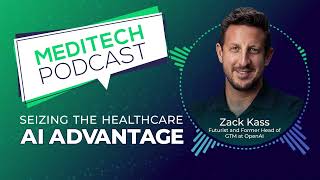
In this Meditech podcast, host Rachel Wilkes interviews AI futurist Zack Kass, former head of Go‑to‑Market at OpenAI. Kass recounts his accidental entry into AI, the pivotal role of the 2017 transformer, and how AI already permeates daily life. He argues that AI will be the accelerant that makes abundant, high‑quality healthcare possible, contrasting the current crisis of clinician burnout, staffing shortages, and rising costs. Kass proposes automating low‑risk, high‑pain tasks—especially clinical note‑taking and documentation—to build trust and improve efficiency. He contends existing regulations (HIPAA, medical practice laws) already address ethical concerns, emphasizing AI’s explainability and lower bias compared to humans. He also warns of three societal risks: idiocracy (decline of critical thinking), dehumanization (over‑reliance on machines for companionship), and identity‑displacement (loss of work‑based self‑identity). Looking ahead, he predicts autonomous AI agents within two years and AGI within a decade, which will free up time and reshape work weeks, urging deliberate free‑time practices. Kass advises healthcare leaders to adopt AI now, dismissing the “hospitals move slowly” excuse, and recommends staying current via daily AI white papers and two books—Life 3.0 and The Coming Wave. The conversation ends with a hopeful note about AI‑driven transformation in healthcare.
Chapters
We just need to start challenging the technology companies and the administrators to adopt this quickly to actually improve everyone's outcomes. And starting with the doctors and the nurses and saying, hey, let's make this job much better will inevitably lead to everyone's improved outcomes.
Welcome to another episode of the Meditech podcast. We're the leader in healthcare technology, empowering you to be a more informed healthcare consumer and provider. Hear the latest from our friends and colleagues on topics we think you should know about. I'm Rachel Wilkes, director at Meditech, and today I'll be your host. I'm joined by AI futurist Zach Kass. Zach has spent 14 years in AI, most recently as the head of Go to market for OpenAI, where he built its sales partnerships and solutions teams. Today, his mission is to champion a future of abundance by demystifying AI and helping leaders around the world prepare for the impending technological revolution. Welcome, Zach.
Thanks for having me.
So you bring a wealth of expertise to the field and I'm curious how all this came to be. So could you tell me why is AI so important to you personally? And can you share a time where AI significantly impacted an outcome or event in your life and what your takeaways were from that experience?
Yeah, I would say broadly. You know, I got into this field a bit accidentally. I got a job at a data labeling company out of college and never looked back. And circa, you know, 2017, it became very clear that I had picked, again, accidentally, probably the most important industry that I could have stumbled into and then eventually found my way to OpenAI. I think that what we are observing right now is the culmination of a bunch of advancements in the industry, namely the discovery of the modern transformer. Most of the reason that anyone cares about AI right now is because we started rebuilding, reimagined the way that we designed these models. And the modern transformer, which was discovered in 2017 by eight Google researchers, is the most seminal moment in this. Of course, the explosion in the amount of available data and compute, which sort of grew by an order of magnitude over the last 10 years, was critical to all this. AI has changed my life, not just because I happen to work in the field, and it's catapulted my career and all sorts of wonderful, abundant ways, but it also has materially improved a number of outcomes. Let's be clear, most of what we do day to day is now augmented by AI. We just, we just don't realize it. The cost of goods and services have declined, you know, around the world. Because we are better at doing things like load management and demand forecasting. Right? We survived the pandemic's supply constraints in large part due to like incredible advancements in shipping and logistics that, you know, helped burden the weight of this, of this really old infrastructure and help nations like the US survive what could have been catastrophic outcomes day to day. So I say all this to remind everyone that we are all massive beneficiaries of advancements in machine learning and computer science and AI. We just don't realize it because so much of it happens passively. We're the secondhand beneficiaries. But you know, today, and by the way, we should talk about this, so much is happening right now in research and development, so, so in the medical field, we are seeing huge indicators blinking green. You know, we, we discovered our first antibiotic in 60 years three months ago because of AI. We split HIV out of DNA three weeks ago because of AI. So we are all, we are all the beneficiaries again of this technology. But I can confidently say today as a solopreneur, right? So I run my own business doing a number of different work streams. So much of my work now is streamlined because of this technology. I have a Zach GPT, the response to 80% of my email. I get about 250 emails a day and I'm able to respond to a lot of people really thoughtfully. I end up doing an incredible amount of really intense creative thinking paired with AI. And quite honestly, I haven't used an attorney in a long time because ChatGPT reviews most of my contracts now. It's not legal advice to a lot of people. And certainly if you're working at a hospital right now, you have a general counsel for a very good reason. But I have the luxury of not having compliance and regulators breathing it on my neck. And you know, attorneys are expensive and historically pretty slow and ChatGPT is pretty thorough and cheap. So, you know, these are the ways that it's changed outcomes for me in the short term.
That's great. That's interesting too, when you think about the augmentation of creative thinking and what AI can do there. So tell me, what does a world that embraces AI look like to you? And you know, as a self proclaimed AI futurist, do you have a philosophy about AI that kind of governs your worldview on the use of the technology?
Well, that's a good question. Yeah, there I have a, I have a general philosophy that governs my world, really that has nothing to do with AI, which is that I, I know. And we empirically can all observe that the world gets better all the time. So I studied history and computer science at Berkeley. And one of the things that you learn if you study even a little bit of history, it's that things that you used to be a lot worse, and before that they were much worse. And before that they were much worse. And because today is the best day ever to be born, and because tomorrow will be the best day ever to be born, and because we don't think that that trend will discontinue, the real question now is will we start to see a material acceleration in the improvement of our lives? And I think the answer is yes. And I ultimately think that AI becomes that accelerant that we are about to democratize and commoditize a number of things that we consider luxuries today. One of those, by the way, is going to be healthcare. We are approaching a world of abundant healthcare. We just don't realize it yet. Today healthcare is a luxury by any account, certainly good healthcare. And so my philosophy is governed by this empirical understanding that the world gets better all the time. And the real question now is, will it get logarithmically better?
Sure. Fair. And you know, I know you've talked a little bit about some of the advances in healthcare that you're, you're seeing and expecting with, with AI, but many of our listeners are healthcare workers and of course all of us are patients. So what's your take on what's happening around us with regard to health and healthcare that requires the creative adaptation of using AI? And then also conversely, what happens if we do nothing? What happens if we don't adopt?
Well, I'll start by providing the context that I, you know, I'm the, I'm the child of two care providers. My dad's oncologist, my mom's an OB gyn. My, my grandfather was, my, my dad's dad was a urologist. My dad's, my, my mom's dad was a, was a radiologist. Caregiving has sort of been part of something I've, I've observed for, for a long time. And what's really troubling is while patient outcomes are getting better, patient satisfaction is somehow declining. Patient care is getting much more expensive. Despite improved technologies and caregivers satisfaction, job satisfaction is plummeting. Right. This is observable. We have a negative replacement rate for doctors. Why? Because doctors don't tell their kids to become doctors. In fact, they discourage it. We have a negative replacement rate for nurses, for all sorts of reasons that we can observe and sort of know. If you walk into a hospital, you realize how hard this job is. And so my starting place right now is it's untenable. We've reached an untenable position where it is so hard to find a happy constituent here, really accept the insurers. And we should, you know, I'll skirt this one very carefully, but if you're a patient, your experience is getting worse. If you're an administrator, your experience is getting worse, right? And by the way, if you're a small hospital, bless your soul, you're doing everything you can to not get gobbled up by a big one. And if you're a big one, you're doing everything you can to not get sued for enough monopoly. And if you're a doctor, you know, you're doing your best to stay sane. And if you're a nurse, you're probably thinking about changing your career. And this is the sad state of healthcare today, at least in the United States. And so what we need is a great leap. Like, we just, we have to have a great leap. And by the way, I compare healthcare and education and environment in pretty similar. Like they seem orthogonal, they seem sort of totally unrelated, but they are actually very interesting comps, situations that are truly untenable. There is no incremental path to, to a better world. We actually need, you know, great leaps forward. And a great leap in this case probably comes in the form of technological improvements, infrastructure. Infrastructure change. Systematic, systematic change. And we've talked about this for a long time, right? It's, you know, we've talked about health care needing some massive reboot. The reality is it's too big to have some, some policy reboot. So what it really needs is a technological one. And AI, I think, represents that opportunity to massively scale R and D, to massively improve doctor and nurse efficiency and proficiency, and to lift the baseline of care such that everyone can start to talk about an improved, not worsened, experience. And so my answer is if we do nothing, then we really will run off some proverbial cliff, right? We will wake up one day with an aged population. Today we have a million doctors in the United States. We're projecting to have 800,000 in 10 years if we don't. 800,000, I think, in 15 years if nothing changes. And it's not like we're minting more med schools. So something's got to give here. And so my message to the industry is if we do nothing, then we are really, we are truly facing a crisis. And if we think we're facing one today, just wait. Right? So this is a chance, I think, for the industry to accelerate out of a mess that, by the way, is really not a fault of anyone's except the weight of the industry.
So I agree and you know, certainly we have this tremendously overburdened workforce. I agree that we need to take a great leap forward. But when you're in particular speaking with physicians or other frontline clinicians, what are you telling them about why they should care about AI? So you just gave us a really compelling picture of what the industry looks like, what some of the needs are. But how are you having that conversation with them about why they should care about this particular technology advancement?
I will start by saying if I have to tell someone why they should care about AI, it's not, it's hard for me to tell someone why they should have to care about AI if they can't extrapolate how far we've come and how far we might go. I'll start by saying that now the truth is most people have come to realize how quickly this is accelerating and people, especially in healthcare, are smart enough to extrapolate where it might go. The real issue is that there is so much cynicism in the industry predicated on how slowly things have moved the not outside of health care, but inside of health care. And so the real issue that I have when I talk to health care providers and administrators is not hey is going to be amazing, it's hey, is AI actually going to ever find its way into health care? This is, this is the question that, that most people have. This is due to, you know, policy and compliance. This is due to, to the speed at which the industry moves all bunch of factors. That being said, my assessment on all this is that there is an incredible amount of cruft, computational cruft and bureaucracy that exists in healthcare that we can't actually throw out. It is a necessity to sort of diligent care and compliance and say what you want about hipaa. I have some issues with what it does to actually the burden on R and D, but it exists and it's not going anywhere. That being said, my dad doesn't need to spend six hours dictating charts anymore. He does it because we haven't distributed the technology evenly yet. But the reality is we have HIPAA compliant ways of recording patient doctor conversations, transcribing them, note taking, setting, follow up, distributing to primary care physicians and nurses and aggregating the notes for, for the patient file. That alone changes doctor and nurse satisfaction. And that technology is exist today. Right? Today we can record these conversations in 180 languages and provide thorough notes. If you extrapolate a little on where this is going, people ought to start caring on an R and D basis. I mean, my thesis is we will cure cancer and neurodegenerative disease within the next 20 years. So there is, there is a whole lot of juice to squeeze here. We just need to start challenging the technology companies and the administrators to adopt this quickly to actually improve everyone's outcomes. And starting with the doctors and the nurses and saying, hey, let's make this job much better, will inevitably lead to everyone's improved outcomes.
Yeah, I agree. And I think what I've seen from my perspective working here at Meditech is this degree of cautious optimism, certainly understanding the upward capability of this technology to reduce burden, but also having a fair degree of, okay, well, what are some of the other implications? What are the things we should be thinking about? And I think one of those are the ethical considerations. So from your perspective, for the health IT community, for vendors, for even for organizations deploying healthcare IT solutions, how do we ensure that ethical considerations and biases are addressed in both AI development process, developing the technology, and in the deployment at individual health care delivery systems?
Well, I have a hot take, which is I don't think we need any new policy. Hospitals, Meditech and technology providers are sufficiently governed today by laws that are pretty comprehensive with respect to ethics, I mean, morality. We, we are very careful about what we allow companies that provide health care in the United States and those who support healthcare providers to do. Ethics is a. Is a popular button to press with respect to AI because there are lots of concerns around new ways to break new laws. And my point here is simply, we have made it very clear what doctors can and cannot do, what nurses can and cannot do. And AI doesn't actually introduce new issues. What AI does is create new complexities in how we govern those laws. And so what's really critical here is making sure that the technologies that are being utilized are HIPAA compliant, are sufficiently secure and private that the patients are aware that these technologies are being used. There is no world in which a patient is going to be diagnosed anytime soon by AI. That's not something that a doctor is going to do. And it's also, by the way, not something that is legal. I mean, we, we have actually already adjudicated this. So what we really need to do is decide that, in fact, the risks that we're discussing Here aren't new, right? They are just being presented to us again. But that we've already basically stipulated what doctors and nurses can and cannot do and that we should, you know, effectively protect for these things. And by the way, what isn't ethical is often also just bad practice. So, for example, we may not actually have ever considered whether a doctor can spoof their own voice to tell a patient about a prognosis. That's probably not something that we've ever adjudicated. It's also not something that a patient would want. And so I think what we also need to be honest about is like, look, let's, let's find all the efficiencies in the system and also guard for patient satisfaction and outcomes, which, which should be in the interest of the administrator and, and the, and the caregiver. That's fine. What I think where there's a lot of hand wringing and I frankly don't think there should be right now, is around by this idea of biases in the system. And what I remind everyone is, if you think AI is biased, go meet your neighbor. The reality is, what's unique about AI is this idea of explainability. Humans lack explainability. And this is such an important concept, right? There is not enough therapy in the world for an entire hospital of doctors to understand their own biases. We are creatures of incredible complication. And this idea of. We throw around these terms of trauma and triggering these days, but it's true. We grew up with all these events that lead us to believe certain things. A doctor would never, ever begin to understand why they believe something, right? It would take years and years of incredible psychoanalysis. Moreover, they would never actually admit that thing. They would never say to a patient, hey, you know, I, I struggle in the OR sometimes because I had a broken relationship with my father, right? This is. These are real things that happen in everyday lives that we can't actually process because it's not appropriate and we're not capable of it. AI is capable of actually explaining the decisions that it makes. So if AI makes a recommendation or concludes something, it's actually quite capable of saying, here's why I did this. AI is far less biased, therefore, than humans. And this idea that we are introducing new bias is sort of funny to me because it's potentially the first system that we've ever explored that has human intellectual equivalence without human intellectual, without human bias equivalence. And, you know, for the first time ever, we might be able to have a system that, like, doesn't actually consider all of the Things that humans consider when it makes really critical, important decisions.
You know, it's an interesting way to put it too, is the human intelligence without the level of human bias. And given that and that, I don't, I don't know how many people are thinking that way. But if you, how do you have organizational leaders foster a culture of trust within an organization for AI? So you've talked about explainability, you've talked about AI maybe not having the biases that people think that humans think, but I kind of guess, how do you, I guess what's the psychology of getting through that and making sure that people are okay and just getting to the point where they do trust AI, particularly in health care?
Well, it's a. Yeah, I mean, this. I don't know that any traditional systems are inherently skeptical of change, which is a feature, not a bug. And Meditech knows that. Well. Right. Introducing a new product or a new feature into a Meditech software is a very, very, you know, I'm sure journey with the hospital, because you're talking about years and years, decades of behavior that is, you know, hard to change. And having observed my parents, doctors are not particularly technologically savvy. And that's by, no, no fault of their own. It's just not the skills you learn. And so introducing change is hard, period. So how do we best do this? Well, incremental improvements that have material outcome are the easiest way to do this. And one of the things that we should be doing is finding the highest pain and lowest risk points. And obviously that's in note taking. I mean, this is why I bring this up over and over again. Note taking is this exceptionally high pain and exceptionally low risk place. Because if you're, if you're recording the conversation, you can go back and re listen.
Right.
Just because the transcript arrives and just because you're 99% sure that's the transcript, you can still re listen to the conversation. So it's actually introducing redundancy and safety. Starting at a place like this allows the system to slowly maneuver and acquire trust in what will eventually be sort of sweeping improvements to practices. But, you know, starting again, the Venn diagram is where do people experience a bunch of pain today? Where are we willing to explore this technology and where's the outcome obviously going to be really good? And this is how any system adapts to change, but in particular, one that's designed to move very slowly or update very slowly, like a hospital. This is exactly how we should be introducing this new technology. And I think one of These things where a doctor is going to get this, it's going to change, or a nurse is going to change their life and then everyone's going to go, wait a second, how do I, how do I get this thing? And then the administrators are, you know, instead of the administrators trying to push trust, the administrators are actually going to be feeding, you know, we're going to, we're going to flip the script suddenly and, and you know, the technology that we introduce is going to be seen as this welcome versus this, you know, rejection.
And we've seen quite a lot of that too. So our own experience is that the note taking documentation has been an area when the first kind of set of use cases that we've tackled because the same thing, it's a highly burdensome, intensive area that we feel like once you get some wins there, that can help, you know, build some trust and incompetency in the technology. So I know you talked about AI shouldn't be doing any diagnosing. Right. But from your perspective, what are the, any other things that AI in healthcare can't or shouldn't do?
Well, I'll start by saying I have no issue with AI doing diagnosing, but I don't, but I, I don't fall in the, this is, I'm, I'm an outlier and all these things and I accept that I'm an outlier. So I never use myself as a strawman. At the limit. Let me tell you what I believe. At the limit. Healthcare is fundamentally a game of relationship. It is managing and it is an individual managing an individual' expectations and optimizing their outcome as best as possible. And at, at its best, health care is about a doctor and a patient, a nurse and a patient and, or we should say broadly, caregiver and patient and that patient both understanding what they need to do, understanding what will be done for them, and that that plan being executed as effectively as possible. Everything that happens outside of that, which unfortunately is so much of health care today, should be automated. Everything. Finding a doctor, scheduling with the doctor, the paperwork leading up to and after, I mean, I am shocked and by the way, I am reminded all the time of how amazing the healthcare system is when I can't call in a favor from my parents because so much of healthcare today is knowing someone. And I, and I say this now, I mean, with an incredible amount of privilege. You know, it's, it's really upsetting. It's, it's so sad. If I can't call in a favor, it takes me A long time to see a specialist. And you know, moving back, I moved back home to Santa Barbara and one of the incredible luxuries of moving back home to Santa Barbara is, you know, all the people you need to know. And if you don't know someone, man, it's hard. And that needs to, that needs to go away fast. And all of that stuff should be automated and all of the follow ups and the post ops and the check ins should be automated and we should get to a place where if a machine can do it consistently and you know, it doesn't, it doesn't have a crazy margin for error, it should be done. And what we should build is a healthcare system where what humans are doing is the highest leverage work. Having hard, interesting conversations with patients, delivering the most important care and doing things like changing lines around patient behavior, delivering really challenging news about prognosis, delivering really good news about prognosis, the things that we want humans to do. And you know, I'm reminded all the time, you know, people, people fly all over the world to see my dad. And oncology at this point is a pretty automated practice, right? You, you, you put, you plug in a bunch of diagnostics, it comes out with a, with a recommend, a recommended medical plan. So why do people want to see my dad? Well, he's an exceptional listener and it turns out when you're facing a life changing crisis, what you want is someone exceptionally empathetic. His patient outcomes are probably marginally better in large part because he probably puts patients in a better mind space. But oncology is more and more being reduced to empathy. I mean you go into school for a long time to simply be a really kind person who knows, happens to know a lot about cancer. That's how a lot of this is going to go. And obviously surgery accepting so much of this is going to be about bedside manner. And I don't think we're going to call it bedside manner anymore. I think we're going to call it healthcare. I think we are basically going to redefine the importance of being a human in healthcare as long as we can strip out all of the things that aren't actually patient care. And this is a big vision which is, I don't lead with this, but man, most of the stuff that caregivers are doing today is not actually caregiving. And if we can, if we can, if we can do away with that, we should be left with, you know, the highest value work. And by the way, why everyone gets into this field in the first place, no one becomes A nurse because they want to fill out charts.
Right. Let's let the passionate people be passionate about taking care of people. Absolutely. So in inside or outside of healthcare, is there anything about AI that keeps you up at night?
Oh, plenty. Look, the, the, the downside here, and I don't think it's a long term downside, but I think the short and medium term downside is pretty clear. There are three really weird outcomes. The first outcome is this theory of idiocracy, which is this idea that, you know, in a world where we solve a bunch of our problems very simply, or I should say very easily, and in a world where we get very good at hyper personalized content delivered at exactly the right time very easily or very inexpensively through very abundant machines, there is a very real risk that we simply devolve intellectually because the importance of critical thinking declines and the, and the accessibility and attractiveness of the alternative. You know, let's, let's be frank. Social media content, but, but just sort of hyper personalized content on your, on your device becomes so good that we have this like, you know, K curve in the behavior of humans. And we're starting to see some weird trends in Gen Z that are sort of suggesting a regression in socio cognitive behavior. Now by the way, Gen Alpha is exhibiting inverse behavior. So I think it could simply be generation. But we should never have given kids cell phones and we should never have given them social media and we should take it all away as fast as we can. So that's a clear risk in all. And that leads to the second risk, which is dehumanization. There is a world in which we actually get much smarter because of AI. We expand our minds and by the way, I think we do, for what it's worth, like I think we will expand our minds and our, you know, our children's understanding of the world will be so much greater than our understanding of the world and, and so on. And that's been a true trend for forever, but one in which we actually find more joy in, in the company of machines than in the company of each other. And this one's weird, right? So whereas the first, the theory of idiocracy looks like Wall E where we sort of surrender ourselves to machines and you know, find the pinnacle existence is actually consuming food and content sort of floating around on beds. The, the second negative outcome looks more like her. Joaquin Phoenix is her right. Where this man, very lonely man, finds companionship in a, in a humanoid robot. Beautiful companionship by the way. But that obviously has incredible negative consequences, namely the decline of civilization because it would lead to a fertility crisis. But it's also clearly not what machines should be doing. They should not be providing us compassion and joy. They should be, they should be doing all the other things because humans at the limit should actually just be congregating in community outside among friends and family. That's probably what we are most meant to do. So those are the two risks. And then you know, the third risk, which is the one that I, I think is inevitable, quite honestly. Whereas the first two I think we can avoid with some really thoughtful management. The third is this idea of a identity displacement crisis. So right now there's all this attention on job displacement and I think it's misguided and I don't think it's misguided because jobs will not change and go come and go. I think it is misguided because the real risk is not the economic implications of your and my work changing. Right? It will change. We, that is for sure. What is scary though is that while we may be able to put food on the table, attaching our sense of self and our identity to our work that is constantly moving will be very hard. And you know, there's a reason that the most common last name in the United States is Smith and Miller is because we used to name ourselves after our occupation. Right. It wouldn't for a long time. In a post industrial world we have built an inextricable connection between who we are and what we do. And that has incredible knock on effects, mostly related to GDP growth and innovation. Right. The more obsessed we are about our work, the healthier our economy gets. And it's, it's, it's a really good thing, but it has incredible consequences for, for mental health and emotional health. And this is why we observe incredible depression among retirees especially. And that trend is increasing, right, because people believe that they are what they do. And so in a world where you can't pin the tail on the donkey anymore, where your work changes so frequently and so much that you can no longer confidently say I'm an accountant, I'm a lawyer, I'm this, I studied for this and I, you know, I'm a company man, that's going to be really hard. And I think identity displacement is going to be something that we are truly is the thing we are not prepared for. And I think it's going to be the, you know, I think if there, if there is, and there probably will be an incredible, incredible backlash to AI at some point, you know, we've observed troglodytes and Luddites historically, people who reject technology or try to destroy technology or don't understand technology. We will have huge movements, industrial movements, to sort of stop the spread, predicated not on the economic implications but really on the emotional ones. And I don't know that we're, I know we're not prepared for it and I don't know how it'll play out, but there will certainly be social unrest.
It's all interesting. There's, there's so, so much to think about and so much for all of us to do to keep learning and stay on top of how things are trending and what the new considerations are in, in this space. So what are some things like how are you staying updated on the latest advancements, any trends, interested in any kind of favorite publications that you're keeping tabs on, books that you've read lately? And what are you reading?
I. What, What? Yeah, what don't I read? It's a little tricky. I will say it's tricky for two reasons. There's basically two kinds of content today. There's exceptionally comp. There's the white papers that are moving the industry forward. And these come out daily at this point. I mean truly we are seeing research papers published on a daily basis that are moving the industry forward across, across AI. Yesterday, yesterday, Rachel, we saw two state of the art models published. I mean that, that's how fast this stuff is moving. If you are interested and you are academically inclined, there are a lot of places to read the white papers and to see the, the latest. You can also download white papers, put them into chat gbt and say, explain this to me like I'm a 12 year old, which works really well. And surprisingly no one's, no one's built an API for that yet. And honestly, it's like a project that I wonder if I should build. The second thing that you can do is read the Zeitgeist in the press, which I think is 90% garbage, but 10% very good. And there are a handful of people that are consistently writing really thoughtful things that sort of cross the chasm. In AI, there's basically a quadrant of thinkers, people who think it will be very good, people think it will be very bad, people who think it's moving really quickly, people who think it's actually moving slower than we think. And so in that quadrant you basically have people who, you know, in the upper right, where I exist, people who think it's moving quickly and it's very good, etcetera There are a lot of places to go. The three books that I recommend that everyone read are the Coming Wave by Mustafa Suleiman, Life 3.0 by Max. Actually two books, I'll keep it simple. Life 3.0 by Max Tegmark and the Coming Wave by Mustafa Suleman. Those are two approachable good books that give you a comprehensive understanding of the future of AI. I have a book coming out later this year. Meditech can buy one for all it's clients. I'll sign it. And those are written by two moderately optimistic people who recognize all the risks. And you know, life 3.0 by by tag mark is really considered. I think that the gold standard in this stuff, outside of that, my best advice to people is stop listening to the news. It really, it's poisoning minds. It's not helping anyone. And they don't know what they're talking about. Like they really don't. I mean they're training on fear. You know, if you turn on, if you turn on CNN tonight, you'd be convinced that the world might end tomorrow. And it's just not, it's going to get a whole lot better tomorrow. And the best thing we can do is demand that mass media start telling us, giving us reasons to be optimistic. It's just, it's the most interesting thing that they can do today.
Right. We'll definitely have to check out those books. Appreciate the recommendations there. And again, given how fast everything is evolving here for folks that are looking to either start a career in data analytics or AI or advance their AI specific skill sets for folks in like specifically technical roles. Anything that they should be thinking about.
Yeah. So if you are, if you're an administrator, if you're operating in a very technical role, this is going to sound self serving on this podcast. Please be prepared to adopt the technology that is going to materially change the direction of the hospital and the caregivers experiences. We cannot, I, we cannot live and die by the. By the, by the excuse that it's a hospital so it moves slowly. It's just. No, it's not an acceptable answer anymore. The buck stops with someone. And so my encouragement to anyone who operates in a highly technical role is adopt the stuff that can materially change these outcomes. Adopt it at home so that you can be a holistic practitioner and adopt it at work because people actually want it and it will materially improve the cost and the outcomes of everyone's career. And please, please do not hide behind the excuse that hospitals must move slowly. It's A self fulfilling prophecy that we can break. We have the power to make these systems move quicker.
Totally fair. And my last question for you, I think aligns with everything that you've said and how you describe yourself as a futurist. Let's close with how do you see AI evolving in the next five to 10 years and the implications you see maybe most specifically on healthcare?
Well, we will have AGI within 10 years and that's going to be one of these seminal moments in the human experience that we'll look back on quite like we look back on fire, except that it'll proliferate almost instantaneously. And in that sense, I think we're about to experience the greatest industrial revolution in the human experience. That being said, in the next two years we will see agent, in the next year we will see agent of AI so autonomous agents that will do things on our behalf. And suddenly instead of imagine a Siri that worked, this sort of what I help people and such, that instead of actually opening up our apps and opening up our browsers, we will start to give assignments to this technology. And that's going to be this Wright brother moment for a lot of people where they go, oh, you know what? Actually my life is filled with a bunch of crap and bureaucracy that I don't actually enjoy and that doesn't accrue value to me, it's just stuff I have to do. And suddenly everyone's going to start to, to experience AI in a really profound way. And my theory is whatever happens with this technology, in any direction it goes, it will ultimately lead to much more time. And so my, my, my closing sentiment for most people is start practicing a very deliberate free time because you're about to get a whole lot more of it. And I'm not convinced yet that we know how to spend our free time. Well, we talked about the theory of idiocracy and dehumanization earlier. I'm desperate for people to start practicing very, very deliberate free time usage. Limit your screen time as much as possible, go outdoors, be with friends and family, smile, do, you know, meditate, do the things that, you know, the healers on Instagram talk about, but actually do them. Because when this industrial revolution arrives, I truly believe we're about to, we're about to see what happens with, with a 20 or 30 hour work week and that that's going to have all sorts of funny knock on consequences.
Well, that's a really kind of happy thought to end on and appreciate that. And this was a, this is a really fascinating conversation. I appreciate the time you spent with us and all the perspectives you shared.
Thanks so thanks so much for having me. And thanks for all the work that you and all of your listeners are doing to improve patient outcomes around the country.
Thank you and we look forward to seeing you at Meditech Live at the end of September. Thank you so much. Thanks for tuning in. Stay informed and subscribe to Meditech podcast and we'll talk to you next time.
Sa.
More from Zack

Anchor Your Mission, Adapt Your Methods: Thriving in an AI-Driven World (w/ Zack Kass)
AI Will Change Your Life Faster Than You Think, According to Former OpenAI Exec Zack Kass