From Fast Cars, Women, and Nightclubs To Spiritual Life Coach | Zarak Fatah on RISE Podcast | Ep. 12
This podcast episode features Zarak Fatah describing his pivot from Toronto nightlife entrepreneur to a location-independent transformational life coach. Key events: first Alive Experience retreat in Costa Rica (March 2018), deciding to sell Blowfish (friends Patrick and Natter bought it), hosting further retreats (Whistler, Bali, Tofino, Muskoka, Sedona), relocating to Nosara by Nov 1, 2018, and running roughly 13–15 retreats before/during the pandemic. He completed professional coach certification during the pandemic, shifted to focus on coaching men after a client suicide, and now runs a family of offerings under Alive Life (retreats, one-on-one male coaching, group programs, corporate coaching, and an upcoming Alive Thrive Mastermind). The episode also covers his views on trauma, childhood conditioning, breathwork, and responsible use/integration of plant medicines (ayahuasca, psilocybin).
Chapters
One time I was out with a friend of mine. He's a promoter from New York. What the hell is going on? Every club we go to, we're treated like VIPs. On the way out, it looks like they're like, paying you or something. He's like, yeah, I'm a promoter. And I'm like, I want this job. This is what I want to do. I start from nothing. We've created this multi million dollar empire with amazing venues. We can just keep going and keep going. However, our promoters became our competition.
You're becoming this transformational life coach. How did this play itself out? Welcome back to Rise podcast, life stories of accomplished individuals. Thank you again for joining me today. As you guys know, the premise of this podcast is to extract value from people's life's paths, to understand their challenges, to understand their triumphs, and understand how they got to where they are today. I'm really happy to say that we've got Zoraq Fatah with us, and this is a very special episode for me because you and I, we've known each other over three decades now. Over three decades.
You're making us sound really old now.
Well, you know, we're not.
That's true.
I was about to say we're not young, but that's. That's kind of relative. I think we are young. I really want to dive into your story, and I've been, you know, I've been really looking forward to this. You know, you and I have been in touch over the last three decades, on and off. We've always seemed to kind of, you know, come back and either you reach out to me or I reach out to you. Yeah. So I just really want to thank you for being here and I want to thank you for taking this time.
Yeah, my pleasure. Thank you for inviting me, of course, sharing my story with you and diving in deep.
Awesome. Awesome. I'm gonna read. There's a lot I want to. There's a lot I want to, you know, say from my interactions with you over the last, you know, couple of decades. But I want to read the what I prepared in terms of your accolades and your accomplishments.
All right, let's go.
All right, let's go. Let me know. Let me know how I did.
Okay, sure.
Zaraq Fatah, currently residing in Nasara, Costa Rica, is a renowned transformational life coach and founder of the Alive Experience, providing curated five to 10 day trips designed to have guests experience profound breakthroughs in areas of life that are important to them. Zurak's current Success in his chosen field is a very far cry from his 25 year career that created a $14 million per annum, 300 employee empire that started from absolute zero. Specifically, Zurock owned and operated 12 successful companies that included award winning restaurants, bars, nightclubs, a spa, a hair salon and music festivals. And just to say that I frequented from time to time.
So again, very supportive customer.
Thank you. Very familiar. An's 40th birthday, he had a life changing revelation that led to a complete 180 degree shift in his life. Professionally, mentally, physically, energetically, spiritually and even geographically as he left his glamorous life as an entertainment mogul in Toronto and relocated to Nassara to pursue a complete transformation. His story is a true inspiration. So, you know, that's good. I didn't get a.
Is that all right?
I'll forward that to you. I'll forward that to you. I mean, you know, when I look back, the first time I met you. You don't remember the first time we met. I know you don't remember.
It was probably dark and loud.
No, it wasn't, it wasn't actually. It was, it was, it was daytime. And I'm trying to remember the name of the club owner whose place that we met because it's, it's, it's so interesting that this is one of those. Like it's an old memory, but I, it's so vivid. The gentleman's name was Moses.
Okay. Moses had Fluid Lounge. Fluid legendary night spot.
It was the, the underground place at Richmond and.
Richmond and Duncan.
Yeah, Richmond and Duncan.
Before that was still life.
Correct. And so I remember I had this online kind of hospitality directory way back in the day that I started in 99.
Yeah.
And I got a meeting, I remember, with Moses.
I remember you were there for a meeting with them.
Yeah. During the day.
Yes.
And I remember coming downstairs and it was the first time I had met you.
Yeah.
And I had heard of you. And when you first walked into the room, I didn't clue in that it was you. But then after Moses called you by your name, I realized it was you. And you know when I say like a larger than life character, like wow. You know, because like I come from a pretty conservative background, you know, in terms of, in terms of my, you know, my family and stuff and my early life and you know, when you walked in, it was like, wow. And back then you went by Zark.
I did? Yeah, you did. That was the old life.
The old life, yeah.
So.
So I mean again, like to go from to that and by the way, like, that was just the start because you're, I believe, a year younger than me, so you were about maybe 26 at the time. I was about 27 when I walked into that meeting.
Okay.
And, yeah. And then since then, your career just, you know, took off, and you. You were always the kind of quintessential guy in terms of nightlife. Like, if people knew you, that means they're getting in, they're getting into all the top places. So, yeah, I just really wanted to paint that picture. But I want to. I want to kind of go back to the early days, because the more I read about you and the more conversations you and I had over the years, I realized that your start was a very. It was very far from that glamorous life.
So.
Yeah, and I want to get into your transformation, and I want to get into all of that. Like, this is going to be. I'm just warning everybody now, this is going to be a long episode. It's worth sticking around for. So tell me about the early days. You grew up in Scarborough.
Yes.
Okay, so talk to me about. Talk to me about Scarborough. Talk to me about the racism that you experienced, because I know that's. That that was a part of your, you know, your. Your history and just your family life. So where were you born, first of all?
Yeah, so I was born in Toronto, downtown St. Mike's and my parents moved to Toronto from Pakistan in the 70s. And, you know, Toronto was a very different place back then. There weren't as many brown people as there are now. You know, so my father often says, like, I didn't realize I was brown until I moved to Canada, you know, so growing up in Scarborough, we moved there when I was probably about 8 years old. You know, for those of you that don't know what Scarborough is, it's a suburb of Toronto. And it's. It's. I mean, it's changed, but back then, it was pretty ghetto. Yeah, they called it Scarlett. And even though my parents owned their own modest little bungalow, there were two housing projects near me, Teesdale and Cataraqui. So I went to school with some pretty bad children. Like, no exaggeration, like, I can count on two hands how many kids I went to school with that either murdered or were murdered before high school. Hold on.
Sorry. Yes, please.
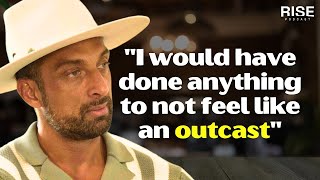
Yes. So just to give it some context, you know, grew up with boys and girls who didn't even know who their fathers were, and when they did, preferred not to. Like, it was a pretty bad situation. Just as far as the type of children I was going to school with. Now there was also many amazing kids I went to school with. However, you know, being brown, having a strange name like as you mentioned, like I went by Zark then because Zarach was too hard for people to say. People to say Zaraq or Xeric or they would just mess it up. And then when I transferred to that school that was Oak Ridge in grade three, somehow my name got shortened to Zark. And I'm like, oh, well, that kind of sounds like Mark, so I'll go with that. So that's where the name Zark had come from. And I would do anything to not feel, feel like an outcast, to not deal with the bullying and the racism. So much so that I really pushed away my father and my grandmother because my grandmother would wear the saris, right? My father, he looked like a long haired hippie, more so than like, you know, a typical Pakistani man. And because he looked different, sounded different, my grandmother, like you could tell she was from Southeast Asia. I really like pushed them away and pushed away from that culture and dealing with the racism and the bullying really had me feel like I wasn't accepted. You know, I just, I just wanted to have friends. You know, like growing up, the kids either stole cars, sold drugs, or played pool and video games.
It sounds, it sounds like you were kind of fighting two battles simultaneously because, you know, from what you're saying from school, you know, having difficulties there because you're, you're a minority, you know, and also at home because you're saying you're, you're kind of, you know, pulling away from your traditional family background. Because I can tell you, like, for me, if I felt I was kind of losing that relationship with my children on such a fundamental level of, you know, they want to kind of go away from our kind of base culture. So, you know, were you kind of fighting two battles in the sense that with your family because they were probably feeling like they were losing you and then at school, so it was kind of like you're in the middle. It's like you don't fit in with your family anymore and then you also don't fit in at school 100%.
Yeah. So my mom was actually raised as a Christian because she grew up in boarding schools. So my mother, she is actually half Irish, so she's considered Anglo Indian. So she led more to the Anglo side. When she moved to Canada, she stopped speaking Urdu. And my father, very non traditional. Like my father drank beer, smoked weed, he wanted. My brother and I to grow up as Canadians. He didn't care if we learned the language. He didn't want us to be Muslim. He actually detests religion. So he was like, you. You do.
You.
You grew up as a Canadian. And if you want to learn Urdu or you want to learn about Islam when you're an adult, then it's your choice. But he gave us the autonomy and freedom to really be our own individual.
So then you weren't fighting that battle at home? We were.
No.
Okay. So that. Okay. And sorry, just so I understand correctly, your father's from Pakistan. Yes. And your mother's from India, so, I.
Mean, back then it was all India. So my father was born in India, but because they were killing Muslims, Right. Him and his family had to move to Pakistan when he's two years old.
Okay.
And again, my mother was born in India but then raised in Pakistan. Yeah.
Okay.
Okay.
Okay. So you're in. You're in. So you're in school kind of, you know, you're. You're dealing with. With this. How did you stay out of trouble considering, like. Or did you. I mean, or did you.
Did you kind of. Yeah, I. I wasn't brave enough to do what the other kids were doing. Like, literally, they were stealing cars and selling drugs, you know, and I didn't get into that. I was more so into video games. I was more into shooting pool at the local billiards club. I did a pretty good job at keeping my nose clean. Yeah. And I. I had a good group of friends, I would say, growing up, that were. Even though some of them did live in the projects as well. They were. They were great kids. So I did have good group of friends growing up. And what I discovered at a pretty early age was that if I could be funny and I could be charming and dress well, that I could win over people's, I guess, acceptance because I didn't play sports. I never knew how to play soccer, baseball, football. My father was not very evolved in that way, like teaching me that. So for me, I didn't get chosen for any of the sports teams as well.
I have to interrupt. I apologize. What? No, because. Okay. So I want to just provide some context to what you're saying, and then I want to continue with your. With your kind of. With your thought pattern. But you were known, and I'm telling you this as an outsider kind of looking in. I mean, you. You. You were essentially like a local celebrity, you know, but you were. I'm not. I mean, like, you can be modest about it, but you were, you were in multiple local publications. Again, you had all the, you know, the, you were in nightlife, very kind of outwardly facing industry. And when you say you. You weren't involved in sports, that's actually shocking to me because one of the, One of your big. If I would kind of look at your celebrity pillars, one of them was fitness. I mean, you were and still are like, probably one of the fittest people I know. So with your father not teaching you about sports and like getting you involved in that, I guess I'm trying to understand when you look at the fashion and then the other pillar is fashion. I mean, you were at the cutting edge of men's fashion in Toronto. It's funny, like, you, I, I see, like, your, Your reaction is very humble to it, but this is. You, like, you were known. You were known for the clothes, you were known for the cars, you were known for the, you know, how fit you were. So, you know, I say this, and one of the things that you said is, you know, you said before I interrupted you is you said that you thought that if you dressed a certain way and if you dressed really nice, that, you know, people would accept you. So all of this, you know, with the fitness and the, and the clothing and just the entire kind of outward appearance and, and everything that you were manifesting, was that for acceptance.
The identity of Zark that you met? Yes, right. That version of me was in the gym five, six days a week, shopping in Europe twice a year, driving the Porsche.
And I remember a Ferrari, I think.
It was a red Maserati. I went from Porsche to Maserati.
Okay.
I still love.
Did you ever. You had a Ferrari at one point? No, no, no. Okay.
I thought you did. So. So you're exactly right that. So as adults, the identity we've created is rooted in the experience we've had that has us believe that we're not something. So for me, being fit and having a strong, attractive body was to compensate for the skinny version of me that got bullied and picked on and didn't get chosen to play any teams. The fashionable part of me comes from realizing if I dress a certain way, if I present myself in a certain fashion, people will accept me. Not only they accept me, but they'll actually admire me and my personality. Then when you met me, I knew I was a shit. I had the hottest clubs, the hottest girls, hottest cars. Like I said, I knew I had all that, but I was still that hurt little boy who I want you to want me more than I want you, because that is the side of me that felt rejected. So you now have to work extra hard for my acceptance. And of course, it's no surprise that the kid that doesn't get picked for any of the school teams and the kid gets picked on opens the hottest club where now I could pick you up.
I get it.
Right? So this whole identity I had created, and I'm grateful for all of it, don't get me wrong, I wouldn't change a thing about it, the identity I created, like most of us, is rooted in the traumatic experiences that we have as child, as children that we don't heal. So it, you know, we have an experience, that experience creates an emotion which creates a belief. That belief creates our perspective, that perspective creates our behavior, that behavior creates our pattern, that pattern creates our personality, that personality creates our reality.
So I see where you're going in terms of your transformation. So I think what you're talking about is a precursor to the transformation which we're absolutely going to get into. And I get it. So I understand kind of that pattern. But I want to point something out because again, like the conversation that we're having is I'm trying to understand what it is about people in general and today, you specifically, that got you to the, you know, to be successful. So the things that you're talking about in terms of, you know, all of the things we just mentioned, the, the fitness, the, the appearance, the nightclubs, and I want to, I want to still go back to your early days and see how you transitioned into that industry. But all of the things that you were doing to, I guess, you know, mask or hide or prove to everyone that, you know, you, you were worthy and that, you know, you are now picking them, all of those things that kind of almost the, the, the genesis of all of this that happened to you came from this, this position of feeling weak.
Yes.
Right. However, and this is where the contradiction is, and I want to try to understand this is in order for you to do all of those things, it takes a tremendous amount of strength and self discipline. So, so in order to have the physique in order or just creatively to be able to dress in a certain way, to be able to afford to dress in a certain way, to open up businesses, to work, because you were always working. Every time I'd see you, you were working or traveling. We're working or traveling. So to me it's like these things that you did that originated from a place of weakness that motivated you to do it, required tremendous strength and self Discipline to materialize into reality. So here's what I'm trying to understand. When somebody wants something as badly as you did, regardless of the fact that the, the reason you wanted it were based on something that negative that happened to you, how did you find that? What it was the core element of like, teenage zark. Right. Trying to, like, getting to do that. Like, how did you get that discipline. That's tough to do.
Yes. So for me, my parents were able to provide me with the very basics. You know, food, Food on the table, roof on her head, basic clothes on our back from, like, Zellers and byway. And at a young age, when I started going to all ages clubs and started experiencing the downtown nightlife and really fell in love with fashion, I knew that if I wanted those things beyond the basics, I was gonna have to work for them. You know, like my parents, My mom was a secretary. My dad was a courier. Very modest, I'd say lower, mid, Lower to mid income. When my parents split up, the banks took our house. And just to give you some background as to the situation, I want to get to that. Yeah. So for me, I knew that if I wanted anything beyond the basics, I'd have to work for it. And my mom and dad both have a great work ethic. So, you know, I guess I've learned that from them. And, you know, many successful people are driven more by from the pain from the past.
Right.
Than passion and purpose. But for me, I knew that when I found nightlife and I started making money, I'm like, okay, I'm a high school dropout. I have no financial resources or support for my family. Like, it's up to me to make this work. And, you know, having gone from being a bartender and now a promoter, and as a promoter, Ralph and I were making sometimes five to $7,000 cash each a week.
And I was like, Ralph, Ralph is, was your business partner. I know, I know who Ral know. Anybody who's listening may not know.
So Ralph and I really, we built our, you know, empire together.
Yes.
So when I realized at the age of 25, wow, I'm making really good money doing something I really enjoy, like, I'm not going to F this up, you know, and what I will say, where I developed my determination, that's what.
I'm trying to get to.
So at 17 years old, I wasn't playing any sports. Yeah, you know, I, I, I, I, I, I joke and say that I look like E.T. the extraterrestrial. Skinny arms and legs and a little belly okay. And I'm over at a friend's house one day and her older brother captain the football team at Birchmount park, champion kickboxer. His name's Chris Shaw. And you know, I would come over and see, you know, she'd see. He'd see me and Kim, like, paint video games, just hanging out. He's like, dude, like, don't you play sports? Like, aren't you doing anything? I'm like, no, I don't know how to play any sports. He's like, I'm taking you to the gym with me. I'm like, chris Shaw wants to take me to the gym. Okay, I'll go to the gym. So I only went with him two or three times, but the fact that somebody that I admired showed me around the gym and I didn't have to rely on anyone, nobody needed to pick me. It was me versus me. So here I'm in the gym, nobody's counting my reps, nobody's pushing me. Whether I was in there for half an hour or two hours, it didn't matter to anybody. So I put in the work day after day, week after week. After about two or three months, I'm like, whoa, something's going on here. And that taught me that when you do the work, even when it doesn't matter to anyone, no one's watching and no one's pushing you, but you do the work because you choose to do the work. You do that long enough, one day you wake up in the mirror, you look, and there's a new person looking back at you. And I applied that determination and commitment to everything I did moving forward, knowing that it's up to me, and nobody is going to create the life I want other than me. And the gym is what helped me to stay away from alcohol, stay away from drugs. You know, rather go into the after party at whoever's house. At three in the morning, I was going home to bed because I wanted to get up, I wanted to hit the gym, I want to go for a bike ride or go for a run, you know. So health has always been a pillar for me because it also helped me develop my confidence, my identity. I mean, I've been fit and muscular since 19 years old. And when I realized girls really like a well dressed, muscular man, I was like, okay, I'm onto something here. So my identity was being fit, being funny, being fashionable and being social. And that was the genesis of Zark. And I turned being Zark and being that guy into a multi million dollar career.
It's you Know, it's interesting because you used this negative situation, and especially, like, at school, where you're saying you were kind of alienated and, you know, and picked on to. To leveraging that and developing the social skills. Because in addition to the determination at the gym and the. The. The business knowledge that you had to acquire and the experience that you had to acquire to. To build a business, a multifaceted business like that, you also had the social skills, which, again, is counterintuitive to where you came from, because you were socially, to a certain degree, shunned in your early days.
Yeah, well, I got kicked out of three high schools. Why? Because I need to be the funny guy. I need to be the social guy. I needed. I wanted the attention. I wanted the validation so much that I'd be cracking jokes, I'd be disrupting class, I'd be doing anything I could for attention to the point where I literally got kicked out of three high schools. And at 17, I'm like, you know what? That's it. I'm done. I went full time in the gym. I got my first job at night in nightlife at 18. So was that legal? 18?
Yeah, 18 was a legal age to start serving.
Yeah. So I developed a high level of emotional intelligence by working in nightlife at a really early age. And also, you know, when you are. When you want people's attention and you want people to like you, you better learn how to communicate well, and you better learn how to be a bit of a chameleon where you can adapt to different crowds.
You were always good at. Sorry to interrupt.
You.
You were always good at. And I. And I noticed this about you is that you had people who were close to you. You had, like, such a spectrum of people around you. You know, you had the pretty girls around you, probably for your own personal enjoyment, obviously, but in it. But in addition to that, because it was also part of this Persona. It was also quite. I mean, you. You needed to have these girls in the clubs to attract men to come to the clubs. As a. From a business perspective, you know, you had. You had very successful men around you, very successful people that you were always networking with. And whenever I'd see you, you always had this, like, eclectic group. And one time, again, you probably don't remember, you invited me to your loft.
Okay, Broad View, Broadview Loft.
And I remember you invited me there. I think it was like a holiday party that you had put together. And I remember, like, that just eclectic group of people and the range of the people that you knew and even at the time where I was, I wasn't very advanced from a business. I mean, not as much as I am today. But even back then, I. I recognized that as being, wow, like, he's so strategic about the people that he surrounds himself with. And I'm. In a positive way. Like, I thought it was great that you were doing it. Like, I didn't think that. Oh, it's like, fake. And. No, I thought like, wow, like, this is smart. And I actually took that as a lesson. So I actually. You influenced me kind of early on to be more conscious and selective about who I let into my life. And not from the perspective of, like, how am I going to use these people, but how am I going to exchange value with the correct people? So that's something I can, you know, I'll credit.
Yeah. And, you know, one of my natural gifts is building community.
Yeah.
And really bringing good people together. So when you came to that event, there were friends there that I've known since 16 years old, and then there were friends there who I did business with, people who I wanted to get to know, who maybe I wasn't super close with yet that I wanted to bring into my, you know, ecosystem. And then there were some people there that were like my. Like my ride or die besties, you know, So I like bringing and mixing eclectic groups together because I love seeing new friendships form by way of the experiences that I create. And that's one of the things I love most about my retreats, which we'll talk about later. But I'm. I'm gifted at bringing together good people, and I. I believe that has to do with the intention and the energy that you put out there. You know, because even though it was a very eclectic, diverse group, everybody got along. Yeah. You know, from CEOs to strippers, you know, like, there was a mix of all kinds of people there.
Everyone was very complimentary of you. So when I would. When I was, like, kind of lounging around in different areas of your place and kind of, you know, floating around from different social groups, it was always, you know what, it may have been your birthday.
Okay.
It may have been your birthday, not a holiday party. And people were very complimentary of you. So you were. Look, you're obviously. You're obviously very liked and very well respected.
I gave people a lot of free vodka for many years.
That probably helps. No, I. Listen, it probably. Especially in the clubs. Right. With the bottles. I want to. I want to understand how you got that. I want to understand kind of that turning Point, because there was this turning point that got you into nightlife, that put you on your entire path, that got you to this day, but getting into that first bartending job at 18. So as soon as you hit 18.
And you were legally able to correction there. My first job in nightlife was a go go dancer.
I knew that. Yeah, I did know that about you. I had, I had already forgotten. I, you know, I, I want to say that I've, I, I've, I've never seen you as a go go dancer because that was before you and I met. That was in your early. Well, yeah, that was. You're 18, so I didn't know you at 18. I, I met you the first time. I was in my mid-20s, but. Okay, so talk to me about that. I want to know that, you know what I'm, you know, what I'm envisioning when you tell me that. You know that scene in Studio 54, okay. When I think it was Ryan Felipe, the actor, okay, he was trying to get into Studio 54, and he was, he was a young kid and he got in and there was this door control and you know the movie I'm talking about, right?
I do, yeah.
And there was door control or face control, whatever you call it. And they were picking people, and they weren't going to pick him because he's just like this scrawny kid. And then the owner of the club, I forgot the name of the actual person, but he was played by the guy who played Austin Powers, in any case. So the guy comes out, the owner of the club, and he was a gay guy, and he said, and he saw him and he said, take off your shirt. And the kid takes off his shirt and he's this like super fit, young, you know, teenage guy. He goes, okay, you're in. And then once he got in the character, Ryan Felipe's character, that was it. Then he was this nightlife guy and kind of his life just kind of, you know, went on that, on that tangent from that single moment. So was it like a moment from this movie where I have a shirt on?
So I was at Club Energy in Mississauga.
Okay.
Out near the airport.
Yeah.
And, you know, I'm 18 years old, I'm out with my buddies. I had fake id, you know, and by that time I had been working out just over a year. So, you know, I had some pecs, that's biceps going on. And of course, I got to flaunt it everywhere I go. So there dance with my friends. And I love to Dance. Like, dancing is also something that really helped me develop my confidence when I started going to all ages clubs at 15. Like, I really, really love to dance. So I'm there dancing and this woman comes up to me, she's like, hey, you're a really great dancer. I'm like, oh, thank you. And she's like, she was hot, right? And she's like, she's wearing a very small outfit.
She was older than you.
She was older.
When you say woman.
Yeah, she actually, I think she might only be two years older than me, but so anyways, she comes up to me, it's complimenting great dance. I'm like, thank you. And she's like, you know, you've got a good look, a great style. She's like, would you be interested in working here? I'm like, absolutely. Like, but doing what? She's like, well, my name is Monique and I run and I manage all the go go dancers here. And I think you'd be.
You're still friends with her, aren't you?
Oh, we, we are still connected. We're still friends. I mean, I haven't talked to her.
Because I think I know who you're talking about.
Yeah, yeah. She was very involved and ran dancers in the entertainment scene for a very long time. So she's like, so I'm, I'm the manager of all the dancers and I think you'd be a great part of our team.
Wow.
I'm like, hold on, you're gonna pay me to do what I'm doing right now and I get to dance with you and those girls? She's like, yeah. I'm like, yes, yes. I would like this job, please. Wow. So at 18, I started working as a go go dancer. Club Energy. Now she also managed dancers at many different venues. And Monique definitely had a thing for me. So I was first off. There weren't a lot of.
Did you get involved with her?
No. No, no, no.
You're unsure of that? Answers are no.
Rocks or we, we, we had a nice friendship and there was mutual attraction there for sure. But she was also my boss, you know, so because there were a lot of male go go dancers and I could work in the Euro clubs, I could work like in the rock clubs. Like I had that diversity that she could dress me up. However, so I was literally dancing five nights a week at 18, you know, and we weren't get paid that much, but I was probably making 5, 600 bucks cash a week at the age of 18. Not bad. And I did that for two or three years. And I was like, okay, you know, dancing on a box is cool and all. Like, I met a lot of amazing people, had a lot of great experiences, but I'm like, I think it's time for me to level up. I want to be a bartender. So I got into bartending at Industry, if you remember Industry. It was like the after hours club that had all the biggest DJs. Like, this is going back to like, wow, this must be like, I was 21 then. That's 27 years ago. Wow, that's a long, long time ago. Anyways, so they had me serving pop and juice and bottles of water because most people were not drinking alcohol.
Industry.
But at least kind of got my feet wet with that. And then Charles gave me a shot working at the government.
So you're talking about Charles Caboose? Charles Cabooth. The legendary Charles.
Yeah. Hospital mentality, nightlife mogul.
And yeah, to this, to this day.
Yeah, he's a legend. So I was working at the government as a bartender and ended up coming to Miami for New Year's in 1997. And I went to Amnesia, which is now story. And I met. Our waitress was French, but she was French Canadian. And like, your French, but you're not from France. She's like, no, I'm from Quebec. Because if you know the Quebecois accent, it's quite distinct.
Sure.
So I'm like, so you're Canadian. How are you working here? And she said, well, the management company here loves Canadians because we're hard working and we're honest. I'm like, well, I'm Canadian. I'm a bartender. I'd love to work.
I'm hard working. I'm honest.
Exactly. She's like, well, come in tomorrow.
Yeah.
Let them know you're ready to work and they'll literally hire you on spot.
This was after a couple of years working for Charles.
Yeah, I'd probably work for Charles only probably for about a year. And he wasn't giving me great shifts because I had just started. I'm a guy. He still saw me as a go go dancer. And like to work at the government was a thing like, you know, it was one of the hottest.
Government.
Yeah, the country. So can I ask you.
Sorry. I just want to ask you, did you ever have beef with him and you went out on your own?
Yes.
Okay, we'll get, we'll get to that if you. If, if you're okay talking about it.
For sure.
Okay.
So I go in the next day and I meet the manager. I Said, hi, I'm a bartender from Toronto. I would love to work here. I heard you're looking for people. He's like, can you start this Friday? I'm like, yes, I can start this Friday. So I went back to my hotel. I told my buddies, hey guys, I got a job, I'm staying.
But how are they doing, the immigration? Like, how are.
They weren't.
So you were there just for under six months.
Exactly. Got it. Okay. Yeah. So the thing is, you didn't get paid, you just got your tips and I crashed it on a buddy's couch. For the first month. I saved up money to like rent a room at a friend's place.
What were your parents saying to all this? Were you. Sorry, hold on. Let's just back up for a second. Your go go dancing. Did they knew that you were doing this?
Yeah, but at that point my parents were fighting so much and my mom was already like one foot out the door.
Oh, I'm sorry. Your parents eventually split up?
Yeah. Okay. Yeah. I grew up hearing my mom say, when you kids are old enough, I'm out of here. Wow. And then if it wasn't for you kids, I'd be gone. I grew up hearing that all my life. I love my mom, I love my dad. I'm so happy my mom stayed as long as she did and pardon me, wishes she left sooner.
Got it.
You know, for her own well being. So at 21, my mom left. And at that time I'm like, okay, this isn't going to go well. I moved downtown, got my own apartment. Sure enough, two months later, my brother comes home from school and the doors were locked, house is boarded up, and my dad and brother end up moving into a one bedroom apartment for two years. You know, by that point, I'm long gone.
Your parents, they. They weren't giving necessarily you a lot of like, they knew you were doing the go go dancing and eventually the bartending. They knew you had moved to Florida. So in all of this, like, was there any animosity between you and your parents? Did they object?
Because my parents knew that I was very independent. You. Samya. Hey. Okay, so what you're probably gonna have to do, Jay, is get rid of the ball together. She's gonna think it's a game and she's gonna want to like. She'll throw it at you, then she'll bark. Yeah, no, no, she's. She. Yes, Samya. She's gonna bark at it now because she wants you to grab it. So best thing to do is just Take the ball from her and just like hide it somewhere. Yeah. No, Sam, it's not a game. Hey.
We're good. All right. Okay. So you are. So you. So you were saying that your, your parents, like. Because look, if you, if you look at this from the perspective of just like most common people.
Yeah.
If I had a, you know, if one of my sons went through this kind of. And I'm not, I'm not putting it down by any, by any means, but there would be potentially some animosity. If my kid is kind of taking this path and then he's like, okay, I'm moving to Miami. Well, we live in Miami now, but assuming we were living in Toronto to be a bartender, like, I. I'd probably be. I'd have some concern as a parent, as I'm sure you would. So that wasn't happening.
No. Because I had been working from pretty young age and the fact that I had left high school, my parents were just like, okay, we'll just go out and do something then.
Right.
Because they did. They were more worried I was going to sit at home and just waste my time rather than go out and work and make money. So at that time, my parents had split up. My mom was just doing her own thing. She was finally free, and my father was in a pretty depressed state and we didn't have that much contact at that time. And for that, for the two years that I was down there, I didn't see or speak to my parents all that often.
Did that bother you?
No, because I didn't really feel that close and connected to my parents growing up. So for me, I, I was also 21. I'm living in Miami. I'm having the time of my life. Like, I'm not worried about what's going on with my parents, you know, and like I grew up with so much fighting and tension in the house. I was also fine. Like, finally it's over, you know, and I just didn't have to deal with that anymore. And yeah, just being in Miami, you know, 21, bartending, it's like I'm living the dream.
Okay, so let's get back to Miami. So you're, you're 21, you're bartending in Miami. How long is this lasting?
Yes, so the first year I was down there for about, down here for about six months and I, I got a job at Joya, the original Joya. Okay, so this is an interesting story. Is not a restaurant. Yes. So I'm crashing on my friends couch. Who lives on Ocean Drive and he was working at the Delano, but he also got a job at this new restaurant called Joya. And the original Joya was on Ocean Drive. And he said, hey, bro, I. I'm supposed to go in for a training shift at Joya this Saturday, but I can't. Can you go fill in for me? Yeah, sure. I'll go do that. You know, crash on the guy's couch. Happy to repay the favor. So I'm there, and they're getting ready to open some, opening up the furniture. I'm stuck stacking the bar. Like, I'm doing what I know to do, having worked in clubs for a couple years. And this guy comes up to me and he's like, hey, what's your name? I'm like, I'm Zark. He's like, what do you do here? What's your job? I'm like, well, I actually don't have a job here. He's like, so what are you doing here? I'm like, well, I'm filling in for a friend. He asked me to come help, so I'm here helping. He's like, so hold on. You don't work here. You're here helping, and you're busting your ass? I'm like, yeah. He's like, you have a job here. What do you do? I'm like, I'm a bartender. He's like, hey, you're our bartender. Okay, cool. He's like, nice to meet you. I'm Chris Pacello.
Is that. That. Is he, like, a big name? And.
Oh, Chris Pacello is like a nightlife legend.
Oh, I don't know. That. That. I don't know.
Yeah. So do your research on Chris Pacello. Okay, so they're actually. So he. Him and his partner at the time, Ingrid Casares, she was known for dating Madonna. And they had a legendary club called Liquid. And I will say that Liquid and what Chris and Ingrid created was instrumental in the development of the Miami nightlife scene. Okay, so in 1997. Well, they had liquid before that, probably, I think 95 or 96 to, like, the mid-2000s. Chris and Ingrid were called the kings and queens of Miami. So Chris now owns all the anatomy gyms.
Okay.
He owned Rockwell for a while, so he's still a legend in Miami. Very well known, very well respected. So this guy, Chris Pacello, who I had no idea who he was, hired me to be a bartender at Joya. Now, opening night, they were fully staffed.
And again, what a serendipitous moment, right?
Totally.
Fill in for your Buddy who you're. You know, you're on his couch, and you meet this, like, legend just because you're busting your ass. That's it. Okay, so then where did it go from there?
So then that opening night, they didn't meet on the bar, so they had me work the front door. So kid from Scarborough working the front door. Joy. I'm letting in Donald Trump, Gloria Estefan.
Hold on. Literally, general, Like, Lopez.
Yeah, you literally are coming in. I'm opening the rope and letting them in. That's. That's. That's who was coming to Joya on opening night. Like the creme de la creme of Miami. And I'm working the front gate, letting these people in, and I'm just like, where am I?
Like, hold on a second. Was it your. Sorry, was it. Was it your choice on who to let.
Oh, no, no, no. I was just the woman who ran.
The pr she said they're allowed to.
Go, and you just look at me. That opened the gate. Of course, anybody who was coming to Joy on that night was invited, and they were someone. So that's. That's how my job at Joya started. And then I continued to work there as a bartender for that season. And.
But this is. Sorry, I apologize. This is a pivotal moment because I want to. I want to capture this moment. So you're seeing these massive A listers, and this is a massive difference than where you grew up.
Like, Scarborough to South beach, like.
Yeah, yeah, even me. Listen, we moved down here two years ago, and I'm walking around, and it's like this celebrity. That celebrity. You know, we. Now. We started kind of, you know, being in certain circles, being people with huge audiences, this and that, just recognizable people, and just coming from Toronto, where it's like once in a blue moon, a celebrity comes to town, typically around the film festival to eat. For me as an adult, it's like, wow. Like, so were you. Were you starstruck when you're at the door and letting in Donald Trump?
No, absolutely. I was just in amazement. Like, I just. It was like I couldn't believe that this was actually what was happening right now, you know, and it all happened so quickly, too, you know, from getting hired to now Joy's opening a couple of days later, I'm working the front rope, letting in, like, some of the biggest names in the entertainment industry. And, yeah, it was. It was definitely a pivotal time in my life, but I didn't realize that at that point because it had expanded my perspective on what nightlife and Hospitality could actually be like, because, again, coming from Toronto.
Yeah.
You know, people got in line, they paid their $5 covered list top 40. We didn't have bottle service. We didn't have, you know, the type of models and VIPs that.
Of course.
Of course not they do in Miami. So it was really expansive in that sense. And working there. So I worked there that season, and then I had to go back to Toronto for the summer, and I came back to Toronto, and I was bartending at Fluid and bartending at Government. And because I had come back from Miami, it's like I had come back from, like, Mars. People were like, yeah, blown away. Like, wow, what are they? What do they drink in Miami? Like, what do they wear? Like, this is 1998, you know? Like, yeah, people from Toronto were not going to Miami. So it's like, I'd come back from, like, another planet. So now Charles offered me any bar, any night, any shift.
So why. Why did. Why did. Why did he get. Why did he, like. Why did you get his attention?
There was something interesting and something very appealing to people about the fact that I had just spent the last six months working in South Beach, Miami, working at these places. You know, it's like I had. I had a different style, I had a different attitude, and I had a different, like, demeanor to me, you know.
So it was charisma, definitely. And he saw that in you?
Yes. And. Yeah, and it really helped me to cultivate and develop my. My skills as a bartender as. Even as a promoter, because, you know, just networking and connecting with people.
So now you're in your, like, I guess, still early 20s, right?
Early 20s. So I. I worked back in Toronto that summer, knowing that I'm going back to Miami that winter to work. Now I was in New York that summer, and I bumped into Chris at a place called Chaos. And Chris said, are you coming back to the beach this winter? I said, absolutely. He's like, okay, great. Because I'm opening up a new place called Barroom, and I want you to work there. I'm like, no problem. I'm in. So this year, going to Miami. I said, I'm gonna prepare myself. So I rode my motorcycle to Miami. I said, I want my motorbike with me. So I wrote it all. The road trip by myself from Toronto to Montreal to New York, down to Atlanta. From Atlanta, I went over to Dallas, Houston, New Orleans, Tampa to Miami. Why were you on the road? By myself.
How many? You were two months on the road.
Two months on the road. A Kawasaki Ninja ZX7.
On a sport bike.
On a sport bike. So I'm not on some, like, comfy. Right. Harley cruiser. I'm on a race bike, which. Two saddlebags, tank bag, and a backpack. And I don't even know how many thousands of kilometers.
What were you doing in each city when you stopped in each city?
I've got a room at local, like, Motel 8. You know, I'd eat pancake house every morning, and I would just. I'd ride about five to 600 kilometers a day.
Yeah.
A lot of time by myself.
Okay.
Yeah.
Okay. Okay.
You do these things when you're 23 years old and sure, you know, you want to have your motorbike in Miami.
That's one of the things I always. I always admired about you because when I was kind of following along on your social media, or even when I. Even before social media, when I just heard of the stuff that you were doing, like, you were always traveling in exotic locations. And I think one of your things is, like, you've been to, like, how many countries have you been to?
Probably close to 60 now, right?
Yeah. So that's. And you were always that. And, like, I gotta say, like, for me, I kind of stayed in one place, and I'm almost, like, not so much ashamed of it, but I regret that I didn't take advantage of my youth more. Yes, you took full advantage. You were every.
I also didn't start traveling till I was 25.
I know, but you're making it sound like 25 is an old man.
Well, I mean, now a lot of young people at the age of 25 have been to, like, 20, 30 countries.
It's a different world.
It's different for sure.
It's a different world.
Yeah. And for me, like, travel was my education. Like, going to see and experience different cultures and societies. That really, for me, is what helped me to develop my perspective and the mindset that I have now. You know, having been involved with the artbound charitable organization and building schools in Kenya, India, Nicaragua, Guatemala, and Haiti, that was a big part of teaching me what contribution is and what true fulfillment feels like.
How did you have time to do all of this stuff? I mean, between working as much as you did traveling, and the philanthropic stuff that you were doing in terms of building these schools, how are you managing all of this time?
Thankfully.
Sorry. And this is before you even started your.
No, the charity stuff all happened kind of in the 2000s. We created Artbound in 2011. So between 2011 to 2018, 19, we had done five charity trips. So at that point, I had, you know, we had our 300 staff, all of our team in place. So my role in our company capture group was really come up with the concept, develop the vision, hire the senior leadership team, really put together the marketing, the branding.
But we're not there yet. I don't want to miss. We're missing a lot of stuff. And I know, I know that we're. We're taking our time.
Yeah.
But I especially knew because I know how dynamic your life is. I knew this would take time.
Yes.
So, okay, so you travel to Miami. You had this experience for over two months on your bike. You get to Miami. So then you're here again. You're working for Chris. So you're now going back and forth between Toronto and Miami, working, doing bartending.
This time, bottle services. This is what taught me. I also, during that second season, being down there, some friends of mine who are still here in Miami, they hired me to work the door at one of their parties, actually at Chaos. On Washington. On Washington. So I then got to learn how to work the door, how to communicate, how to be selective about who should come in. And I remember one time there was this guy who rolled up and out of the corner of my eye, I saw him get out of his car. Now he's wearing flip flops, ripped jeans, T shirt, but he had just parked his convertible Rolls, like, just within, you know, 15, 20ft away. And typically, if this was a Toronto mentality, oh, sir, you're not wearing a dress shirt. You're not wearing, you know, dress shoes. You can't come in. I learned how to communicate with people in a very open way and get a feel for their energy and get a feel for their vibe and discern who would be the right fit for the party based on the energy that they were bringing versus how much money they had or how well dressed they were. Because just. Just because somebody shows up wearing a beautiful suit doesn't mean that they're the right fit for the party. So Miami really taught me that. Just opened my mind to what it is that makes a party really resonate, makes the party really go off. Because in Toronto, our nightlife formula was so vanilla. Whereas in Miami. Yes, back then, I mean, it's changed a lot now. In Miami, there's so many elements that made a party, like, pop off. And I remember one time I was out with a friend of mine, he's a promoter from New York, and we were going to these different events, we'd go to these different clubs, and each club we'd go to, there was a bottle and there was tables and there was models and we'd go and we'd have some drinks and get the VIP treatment. Then we'd leave, we'd go to another club. Same thing there, another club again, same deal. And by the night, I'm like, everton, man, I gotta ask you now. I'm pretty tipsy by this point. So I felt comfortable to ask him, like, what the hell is going on? Every club we go to retreated like VIPs. We go to the table, everything's free, there's beautiful people there. And on the way out, it looks like they're like paying you or something. Like, what, What? What is going on? And he starts laughing. He's like, bro, I'm a promoter. I'm like, I'm sorry, what do you mean a promoter?
Paying him on the way out?
Yes. So, like, he's a promoter. I'm like, what is that? He's like, well, I organize the party, I hire the dj. Those models and people, those are friends I've invited. All the alcohol is comp. Because that's what I get at my events. Alcohol for the guests.
This was the light bulb moment. Yeah.
He's like. And on the way out, I'm getting my cut of the door. And I'm like, this is a job. He's like, yeah, I'm a promoter. And I'm like, that's when I'm like, oh, my God, I want this job. This is what I want to do. So this is what inspired me to go from being a bartender to a promoter. And that's why living in Miami really taught me that when you curate the event with the right types of people and you mix that formula together with the right music, the right environment, magic can really happen within those same four walls. And that's what inspired my Sunday night party at first Fluid. So working with Chris, I remember they had the super bowl event there. This is going back to 1998, probably early 99. And just anyone you could possibly imagine was that bar room that year for the super bowl party. And it just left an impression on me that I knew, like, this is what I want to open in Toronto one day. I'm going to have a club like this in Toronto. Like, that was it. I knew it was going to happen. So a few months later, I knew I had to go back because I didn't have papers. I was just there working under the table. I knew at some point I'm going to get caught. So moved back to Miami. And I approached Moses at Fluid.
I said, hey, moved back to Toronto.
Move back. So moved back to Toronto, 1999. And I said to Moses, look, your Sunday nights here used to be like the hottest party I remember, but they're dead now. Yeah, I have a concept. It's a Miami based, Miami inspired event called Sundays in South Beach. And I want to decorate the space like the Delano. And I want to have specialty martinis and I want to have, you know, this style of music like this, you know, these vocal remixes of like, like house remixes of Madonna and Whitney Houston, you know, because I had heard that Miami style house that they played in New York and Miami, but in Toronto, they only played this type of house in the gay clubs. And there is a DJ who recently passed away, rest in peace, Joe Morella. He was playing at Scorpio one night and I heard him playing this music from Miami. I ran up to DJ booth, I'm like, who are you? And where did you get this music? He's like, well, you know this music. I'm like, yeah, yeah, I just moved back from Miami. Like, this is the hottest track down there. He's like, oh, you lived in Miami and then Joe used to live in Miami many, many years ago. So he understood the music I wanted to play, he understood the vibe. So Joe was working with Fluid as well, and he helped me to create Sundays in South Beach. And this was an event where there was a guest list and you only got in if you were on the guest list. Didn't matter if you were regular at Fluid. And Fluid was open five nights a week, so it didn't matter if you were regular there. Wednesday, Thursday, Friday, Saturday, Sunday, it was a different night. And we played a certain type of music that you only heard, you know, in the gay clubs. It really catered to industry people, hairdressers, people who didn't want to go out Friday, Saturday, but they wanted something different on Sunday. And the night started off with like 100 people in 125, 150, 200, 225. And because I've been a bartender and a dancer and I knew a lot of women and a lot of, you know, good spenders from the bar, I was able to curate a really amazing crowd. And about four or five weeks into it, the. You remember Fluid had two rooms? Yep. Had lounge and the club. So we were doing the party in the lounge. But week five or six, like, we were packed.
It spilled over.
We couldn't let any more people in. So this guy named Ralph has Started coming to my party. So one night at the end of night, he says, hey, bro, can I talk to you? I'm like, yeah, sure, man. What's up now? I knew him from the government because he was a promoter there when I was a bartender. But I didn't really know Ralph. I just knew he always had like a really cool crew with him. So he said, you got a good thing going on here. I really like the vibe. I'm like, thanks, man. He's like, but I noticed like, you're full and the other room's empty. But for you to go from this to the next room and fill it.
Up, the room you were in was smaller.
I was in the smaller room in the lounge. And we were maxed out at like 225, 250. And to fill the other room, we'd have to be doing probably 350 at least. Otherwise it'd be two half empty rooms. So he said, I have an idea. He's like, I have my dj, Aubrey Richards. He plays more of a New York style house music. It would complement the Miami sound. Well, how about I bring my dj, I'll promote the club side, you got the lounge side, and we'll partner on the night. And I, you know, I thought about it for maybe 20, 30 seconds. Like, I knew a bit about Ralph, but didn't really know him. But I was like, yeah, you know, yeah, sure, okay, yeah, why not? Let's go for it.
You guys became very good friends.
After that was the beginning of a 20 year partnership together. You know, we started doing Sundays in South beach together. We called the left room the Manhattan Project, and we called the lounge Sundays in South Beach. And the mix of Aubrey and Joe just worked. And. And because Ralph was doing parties in the Orange room that were a mix of like kind of gay, straight house music oriented events, he brought that demographic which really complemented and blended with the clientele that was already coming. And Sundays blew up. We went from doing like 350 to 500 to 800. On long weekends, we'd have 1400 people coming through the door.
Wow.
And it totally revitalized fluid. It brought a new energy into fluid. Like fluid had already been open about six or seven years.
By that, Moses was happy.
Oh, yeah, Yeah. I mean, because that type of attention and new people coming on the Sunday who'd never been started coming back on Wednesday and start coming back on other nights. So that Sunday really revitalized fluid.
So I think going back to what I initially mentioned when I met you.
Yeah.
When I was. When I went to go pitch Moses at Fluid to be on my directory. Yes, that's when I met you. So you were in your heyday there.
Yeah, we were probably a couple years into it by that point. And.
No, I remember you were confident. Like, I remember meeting you and you were like super confident. You had your crew with you.
You were like, yeah, yeah, because we were just on fire. Like that Sunday night gave us the leverage to really. We had venue owners calling us, saying, any night, wow, any deal. What do you want? You know? So from there we. I talked to Dean again. Rest in peace. Dean was Moses partner at the time to renovate a place.
Sorry. Oh, Dean passed away.
I didn't know he passed away. Yeah, yeah, Dean passed away probably about six, seven years ago.
Okay.
So they had a place called Abracadabra, which is beautiful venue, but never did well. So I talked to Dean about the Delano and the concept of doing a supper club. A place where people can come eat, have dinner, but then stay for the dj. Like, you know, in Toronto, it's like that just didn't exist at this point.
You're still not an owner. You became an owner of all your.
Yeah. So now this is still promoting. 1999, we turn Abracadabra into a place called Society.
I remember Society.
Society was. Society was just ahead of its time.
Yeah.
You know, Society was a beautiful venue.
That was then. That was Moses's place that Moses and Dean.
Moses, yes. So we opened Society. We did New Year's there, I think 1999, year 2000. But anyways, society was there for a while. And then from Society on Fridays I moved. We started a hotel on Thursdays.
I remember Hotel.
And then.
What was his name?
Hotel Pierre.
Pierre, that's right.
Yes. I started Hotel on Thursdays with Ralph and then I joined Ralph down at the Government, but I was doing the Door and promoting Charlie's, the VIP of the Government.
You were promoting again, you're not. You're not one of the principals yet anywhere. You're basically a hired gun.
Yeah.
And how many. How many different venues in one night did you have?
So.
And how many nights a week?
Yeah, so we were doing four to five parties a night.
And then simultaneously.
No, no, one night, one party a week. One party, one party a week. And then Ralph and I had separate Saturday night gigs because I was at the Government for a while as one of their promoters. And then they were renovating Society to turn into something called Boudo and they wanted me to do the Saturday nights. There. And again, they said, we'll give you the door. Whatever you need, Saturdays, it's yours. So that's when I left the government to go work at Boudo. And, you know, not too many people leave Charles, you know, Charles. To work with Charles is an honor and a privilege. You know, he's the best of the best, and he's amazing at what he does. And I knew that my growth within Charles's company was limited, and I knew that I wanted to do my own thing. So I left the government to go work at Boudo. And that night did very well for me. And, you know, we. We had like five or six parties going on a week between Ralph and I and our party, our company called zrf. So Zark, Ralph and friends. And we really brought something different to the Toronto nightlife scene that didn't exist before. You know, we brought a new level of style, a new level of customer service. We were bringing in amazing DJs. We did theme parties. We had a very attractive, cool crowd. Like, you rarely saw fights or anything like that at our party. I remember. Yeah, it was. It was a nice vibe, you know, and the thing is, that's funny because I was talking to Ralph about this the other day. We just talked about Toronto nightlife and how different it is that we reflect back and we realize how special what we created was. And it's because Ralph and I, we weren't doing these parties for the money. Like, we weren't looking at our projections and how many people got put through the door to make X amount. Yeah, we both just wanted to see people have a really good time and bring good people together to dance and have fun. Fun and enjoy life. And that was the intention and inspiration behind everything we did. So we had, I would say, like, the good. The good juju, the good karma behind us, you know, and we had a very, very successful run as ZRF for many, many years.
Yeah. But then, of course, you know, sorry, I want to get to that in a second, but I just. I don't want to lose. No, no.
Yeah.
No, no, I'm sorry. No, no, continue. I didn't want to.
I was gonna say. But then, of course, every person. Promoter, ultimately wants to own their own nightclub.
Correct. And I want to parlay into how you started owning your own nightclub, for sure. But what I wanted to say is that it's interesting, and I'm only starting to realize this now in these. These meetings, these interviews that I do, and just from my own experience is that the. The people who Truly see success in anything that they do, more times than not, are not doing it with money being the primary focus. They're trying to. You know, to your point, you were doing this because you wanted to see people enjoy life, have a good time. And it. It's creating that. We crudely call it a product. That. That experience and then that experience often creates a financial windfall versus let me figure out how to make money. And then reverse engineer the pro, reverse engineer the. The product to create money. Whereas it sounds to me what you are doing is you were first creating the product and then you're like, you know, kind of hoping it'll parlay into money, almost like. And so you have to take that leap of faith. So I think a lot of entrepreneurs, the successful ones I see are more like product first, like product and vision first. And then the money almost is like a nice coincidence that it happened. So it sounds to me like that's kind of where you were going. So now we want to parlay into owning your own place. So you've, you know, you've done all this, You've made yourself money, you've made other people money.
Yeah. So we worked with Nick Donato, we from Liberty Group. We worked with Charles, we worked with Dean and Moses. We worked with the best on the promotion side. On the promotion side.
Okay.
And we helped them make a lot of money because they knew, like, you know, we were going to la, New York, Miami, London. We were traveling around the world seeing, like, what's the hottest vibe in these different cities. Yeah. These club owners, they weren't in the know like we were. So they knew that even though we worked at their venue on a Friday night, all their other nights were going to be more successful because.
Absolutely.
Bringing a cachet to their place. If ZRF was at your venue. Yeah. That validated it in a way, you know, so we knew that and we were having a great time. And, you know, back then, we got the full door and people paid cover charge back then. You know, this is before bottle service. But that all changed with Century Room. So I remember every promoter wants to open their own venue. Like every chef wants to open their own restaurant.
Yes.
And we knew our time was coming. Richmond street had turned into a complete Gong show. It was a zoo, you know, shooting stabbings, like police AIDS on Richmond Street. It was just getting gross. So we knew, like, you know, we're now in our late 20s and we knew, okay, things are changing. And we knew we wanted to get off of King street now.
Sorry, you wanted to get off of Richmond. It just proves how close attention I'm paying to every word you're saying.
So, yes, we wanted to get off Richmond street and we didn't know King street was the next destination.
Right.
However, Roxy Blue had opened on King street and Brasai had opened. John Unique had opened west. And these are all like, I mean, only a couple of blocks over from Richardson during all of west of Bathurst. Let me.
Let me ask you something. During all of this, because of the experience you had here in Miami, you're now taking your experience that originated in Miami, the education you got in Miami, you brought it to Toronto.
Absolutely.
Did it ever cross your mind to say, like, why am I in Toronto? Why don't I just move to the. To the United States and do this in Miami?
Yes. There was a point where Ralph and I weren't getting along and I thought to go and work in New York because my friends in New York, my roommates who I used to stay with in Miami, were now in New York and they were promoters and they were doing really well. And. And I thought to leave Toronto to go there. But then an interesting opportunity came up for me.
Century Room.
No. Blowfish.
Blowfish.
Blowfish. The.
The Japanese restaurant. Yes.
So do you know who Hanif Harji is?
I do know who Hanif Harji is.
Hanif has a whole string of amazing restaurants. It's Toronto.
So he's actually partnered with Charles on that tapas place. Right on King.
Yeah, I believe something. Yeah. I'm not sure.
So that was a while ago. This was.
Yes. So Hanif had come to a couple of my parties and I had given him a hard time getting in because he didn't necessarily fit the look that we were catering to. But he was very persistent. We got to know each other and, you know, one time we were out and he said, like, I had just gone to go look at the Crystal Room that the Liberty Group owned because they were looking to make a change. They. They were going to offer us partnership to get involved if we wanted. And I was telling Hanif, yeah, I just want to look at the spot and, you know, I want to get to ownership. I'm not sure I want to work with these guys. He's like, well, what do you want to create? I'm like, what I see Toronto really missing right now is type of Miami restaurant where you go and you have dinner in a beautiful space. There's amazing cocktails, there's a DJ and it's a supper club environment where people don't have to leave the restaurant to go to a club. He's like, oh, interesting. He's like, well, I have something that maybe you want to take a look at. And I'm like, okay, what's up? He's like, well, at the corner of King and Bathurst, there's this old bank building that's been empty for a couple of years. And we have a concept to create a sushi restaurant like Nobu. Now, I had known of Nobu having lived in Miami, but I didn't eat sushi at the time. I did not like sushi at all.
Okay.
So he's like, so we're looking to create something kind of similar to what you're talking about, like a modern Japanese fusion restaurant. And, you know, maybe you want to kind of add your vibe to it if this is what you want to create.
Like, okay, so now this is. Now this is a transition from strictly nightclubs nightlife to, more broadly, hospitality in the form of a restaurant.
Yeah, and blowfish was, you know, like, kind of casual fine dining, in a.
Way, was hard to get into.
Yeah, it was, you know, it was a place people dressed up.
Yeah, yeah, I remember.
And so. So I went to go look at this space and dilapidated bank building, but, like, you know, amazing bones and character to it. And. And he offered me 10% of the restaurant. Okay. And 10%, you know, I had to buy in. I think it was, you know, at the time, the restaurant cost us 800k. We put up 400 of our own money. We got an SBL for the balance. So I'm like, okay, yeah, I'm down for 10%. Now. The thing is, is he offered me the 10% on my own. He didn't want Ralph a part of it. Why? Because he saw Ralph as a party guy. And in all fairness, at that time, Ralph really was a party guy. Like, this is why I considered moving to New York, because I felt like I'm really busting my ass here. Like, I'm up in the office every day, 9am I'm, like, doing the work. Ralph's going to afterparties, he's getting all messed up. Like, I just found that Ralph was not as reliable as I was. Or at the time, I didn't see Ralph's gifts that I appreciate. Now at the time, I just want somebody who's working as hard as me. Okay. So Hanif also didn't really care for Ralph because Ralph was really, like, a club guy. Like, he didn't see where Ralph would fit into blowfish, whereas I could, like, Go out in jeans and a T shirt, and I could show up also in a three piece suit. You know, I could really adjust my style being the chameleon to fit in where I needed to. So I decided to go ahead with Blowfish. And that was. That tainted my partnership with Ralph. That really created a wedge between us. And in retrospect, I wouldn't have done that.
Really?
Yeah. In retrospect, I would have argued for shares for Ralph as well, because I know Ralph's involvement in that restaurant would have made it even more successful than it was.
Did you guys. Have you guys reconciled your differences?
Yeah, for sure. I mean, Ralph and I, we're like an old married couple that have been together so long, we can look back and talk about anything and everything now. We have such a love for each other. And I appreciate him so much now because I could see how I never would have achieved the success I did without Ralph. And I think that goes both ways because we. People used to say, I don't know how the hell you two work together because you're so polar opposite. And that's what worked. The yin and the yang, the balance of who we were as individuals really showed up in the places we created and the parties. Just the vibe, right?
Yeah.
So I opened Blowfish Without Ralph in 2003, right out the gates. It was a huge success. Like, Blowfish was like, we had Shenan Ghovani's birthday party there with the Hugo Boss party there. We had film festival, all kinds of stuff. Like, it was just right out the gates. It was blazing hot. And Toronto didn't have anything like this.
Right.
And the fact that it was at King and Bathurst, people were like, king and where? King and Bathurst, like all the way over there. But it was like when a cool New York restaurant opens, like in some, like the Meatpacking district, before it was a meatpacking district. You know, you would go down there, be super sketchy, but you walk into this room and you're like, oh, my God, what is this? And that's what Blowfish was. We took this dilapidated bank building and Johnson Chu created this award winning architectural masterpiece that just blew people away. This is before chandeliers were in style, when.
When this was happening. Okay, so you, you're now slightly at odds with Ralph, but was it getting worse? Because I'm sure from the side he could see, see the success that you were having with it. So how did that affect your other business with Ralph? Because you were still maintaining your other businesses.
Yeah, so we had the promotion, the Party stuff going on. And I explained to Ralph, like, look, this restaurant is just going to help us in other ways. I said, you know, this is a way for me to meet new people that I can bring to our events and whatnot. So then this is what also helped us to open up Sentry Room. Because the fact that I was a partner in Blowfish, that gave me a lot of credibility. So when we met with the. The landlords of the Mockingbird at the time, the Century Room space.
I remember.
Yeah. It gave us the credibility, like, oh, you guys own Blowfish. Wow, that place is doing amazing. Yeah.
Sorry, Ralph was with you at Sentry Room?
Yes. So Ralph, Vito. I remember Vito owns Noto and Saluna, and he's got a portfolio of amazing venues. Now, Vito and I used to bartend together at Government, so we've known each other for a while. And then I brought in my brother as a minority partner to handle the back end of the house, the alcohol, the inventory, all of that.
So what's your brother's name again?
Taurus Taris. Yes. We had a really strong team.
I remember I met him a few times.
Yeah. And Sentry Room was the first club lounge really designed around offering bottle service in Toronto because our lawyer.
The laws have changed.
So this is our lawyer, Adam Vasos is the one who petitioned to get bottle service passed in Toronto. And we were in the process of developing the concept for Century Room, and we knew bottle service was coming. So having spent time in New York and LA and Vegas, we knew how bottle service needs to be facilitated.
Yeah.
So we designed Sentry Room all around bottle service. Like, we had, I think, 16 booths in there when we opened. Like, no venue had 16 booths, you know, and we were able to design it again based on our experience. So many years working with the best of the best, we saw what they did really well, and we also learned from what they didn't do well. So we knew how to design and set up Sentry Room in a way to offer the best service in an amazing vibe and just a well designed, functional space. So Century room opened in 2004, and it was just a home run from the day. Oh, I remember it was. I remember it was a place where our people who had been coming to Richmond street for the last five or six years could now get dressed up, go somewhere different, valet park their car out front, sit in a beautiful, like, plush lounge seating, order their bottles, and people were like, finally, Toronto has something.
They also. They also matured. Yeah. So from the days at Richmond street, they were younger now. Their finances had kind of. Their finances had matured, and now they were able to actually afford the bottle service. And, you know, so. So let me ask you something. During that period, that initial period, I've always kind of imagined that there's this kind of seedy, kind of dangerous element to this business that you were in, in terms of, I don't even know, like, extortion, danger, organized crime, police shakedown. Just the stuff that I see in the movies. So was there an element of all of this in your operations?
So this is why I say that, because Ralph, Vito and I and my brother were legit operators, right? We didn't screw anybody over. We were always fair with people, and our intention was just to provide people with an amazing experience. We really had karma on our side. I also think Vito's dad was kind of connected, but we never. We never had issues. We didn't have anybody trying to extort us. We didn't have. You know, sure, we had bikers, we had mobsters. We had all those kinds of people coming, but they came, they drank, they paid their bill, and they left. We never had any issues like that. You know, later on, we had some issues. We did a party for Drake. We. Which went sideways. We. We had some problems later on, but that's when Toronto and King street had also changed. But thankfully, we had never experienced anything like. I mean, some venues in Toronto have been burned down.
Sure.
Some club owners in Toronto have been beaten to a pulp.
Right.
Thank God. We never had any issues like that. And I attribute it to the fact that we were good people.
You're actually professional operators.
You're not.
You know what I mean? Like.
Yeah, I think.
I think. I think. I think. Yes, to your point. Yes. It's because you're good people, and you don't rub people the wrong way. You don't screw anybody over.
Along the way, we also used our own money. Right. We didn't borrow money from people, you know, we didn't. Yeah, we. We were. We were a bunch of bartenders and promoters who worked, put their money together and. And opened a proper business.
So now you're in your 30s.
That was probably 28 or 29. Wow. When it opened Sentry Room, and then it just went on from there. So then my best friend, Antonio Tadrisi, at the time, he designed Sentry Room. Very talented designer. Him and I had been to Italy many, many times. He got married on an island called Ischia.
Okay.
Where we were inspired to create a men's spa. So we. Her Mom. So Hammam was originally going to be a men's only spa.
Oh, really?
And then we found this beautiful 7,000 square foot space at the corner of King, Portland.
Yeah, I remember.
We can't open a spa this big just for men. So then we decided, let's open for women. And we were standing in the corner of King and Portland, and literally the Hammam space was like they had squatters in it. It was dilapidated.
How did you make that transition? Sorry to cut you off, but how did you make that transition? Because now you've gone from, you know, all of these different things. Like, you know, you're in. You have the restaurant, you have now your own club. You had done promotions in the past. Now you're doing promotions for yourself. You're doing all of this. The spa business is fundamentally different.
Yeah.
So did you have an operational partner who knew how to do all of that?
We thought we did.
Got it.
We thought we did. So what happened?
That's a disappointment, right?
So there's a woman who I'd known from the still water, who was young.
Stillwater was the spot to Hyatt.
Yes. Young, hungry. She wanted to do something new. So he told her, look, we're going to give you 10% of the business. You're going to run our spa. You don't have to put any money in. And we're going to build a beautiful, beautiful spa. She's like, okay, I'm in. So we signed the lease, we start demolition. Three months into construction, she gets transferred to Miami, and she decides, you know what? I think I'd rather live down in Miami and work here. She bailed on us three months into construction. So we kept going, you know, kept going. Built out this beautiful, stunning spa.
I remember it.
And we ended up finding a management consulting company to come in and help us get going. I'm not gonna lie. The first three, four years of Hammam was very bumpy. We had to learn a new business completely. Again, I was involved more for the marketing and branding standpoint, of course, Antonio on the design, the build. But together we made decisions about management and who to put in place. And by about year five, Antonio's wife stepped in and she took over as manager. And from there, year after year, Hammam just got better and better and better. And I'm very proud of what we created with Hamam. It's been named one of the top 10 spas in Canada year after year. It is still doing very well. I'm no longer involved, but Hammam Is. Is really a beautiful spa facility. And they have a second location in Bayview Village now. And the reason Antonio and I opened Hammam is we were standing at the corner of King and Portland.
Yeah.
And we're looking around, and we knew what was coming. We knew, like, okay, that parking lot, that's gonna be a condo. That building that's coming down, that's gonna be a condo. We saw what was coming long before anyone else, because we had. I had two thriving businesses on King street already, and we could see what was happening. You know, we got to know Peter Fried. He shared his vision with us.
So Peter Fried was the condo developer.
Exactly. Yeah. So we knew what was coming, and that's why we created Hamam. Also the Blowfish customer. The Centroom customer was a Hamam customer.
Yeah.
And vice versa. So we developed our companies catering to the specific demographic of people in their 20s who used to come to our parties on Richmond street, who are now in their early 30s, who are making money, who are buying bottles of champagne and eating expensive sushi at Blowfish and Century Room. And we then continued to create from there. So then I opened a restaurant with Hanif and a couple other partners from Blowfish at the Cosmopolitan Hotel.
What was that called?
That was called Doku 15.
Okay.
Yeah, that one didn't do so well. We closed after about a year and a half. That. That project taught me the lesson to want two lessons. Always read the small print and location, location, location.
Yeah.
So I can see why that restaurant didn't work. I was way over my head. I shouldn't have taken that on. And then we opened up atelier, and atelier was that small, like 50 person VIP.
That was on King. Right.
I was on King.
I remember that.
Yeah. That was one of my favorite venues we've ever opened because it was just. It was cool.
I ran into a few times.
Yeah. So we opened Atelier, and again, I did that one without Ralph. Now, Ralph and Vito then opened up Kiwi Kitchen on their own at the corner of King and Portland.
Did you. Did you find that this sort of to jump in. But did you find that when you're in this industry, especially with your company, where you've got multiple partners and you're now kind of going off on your own, they don't have interest in everything. Do you feel that now? I mean, you kind of alluded to the fact when, you know, you mentioned it, like, zark, sorry, Ralph should have been involved with Blowfish.
So if I could go back, I would have done completely different.
You would have had everybody own everything together.
I had one partnership group and we would have grown together. Because when you start getting fragmented and you start doing things without this person, one, you can't benefit from economies of scale. You can't benefit from having one management team that oversees everything. And, and you create animosity, you create tension.
Absolutely.
You know, there's friction and, well, how much time are you spending here? What are you doing there? You know, so I would do that differently and I wouldn't have changed a thing as well because everything works out the way it's supposed to. However, I can look back and see that, yeah, you know what? I. We could have done things in a more efficient way and had greater success.
Do you feel, do you feel, and this is like, I think like a lesson that I'm trying to extract, you know, as you're having success in this business is very visible, aesthetic business. Kind of going back to the beginning of the conversation when you're talking about why you did a lot of the things that you did for that validation, do you, do you feel at some point or at any point in all of this, because now we're getting into real, like this is like a real scaled business, like it's an empire with multiple brands within it. Did you ever at any point feel like your ego got away from you?
Oh, 100% for sure. Yeah, there was. I knew, like I was on a roll, I was unstoppable. I was the guy people wanted to be with, work with. And yeah, it totally went to my head for sure.
Your personal brand in Toronto, again, just someone who grew up in the same era because like I said, I'm a couple years older than you. Yeah, you were the absolute man when it came to this industry. And so how did that manifest in general? Like, when we're talking about, you know, being in business and starting to see success at various stages of your career, do you feel that ego? Do you feel that the ego. Do you feel that ego helped you continue to propel your business forward? Or did you feel that ego was something that held you back or potentially caused more damage than it did good?
Yeah. So I would say that at some point I started taking things for granted. Like, we're just so hot and everything is just so easy right now. Like, yeah, I can just travel all the time and I can just spend money on whatever the hell I wanted.
And you did.
And, and I did. And just assuming, like, I start from nothing. We've created this multi million dollar empire with amazing venues. Yeah, we can just keep going and keep going. However, our promoters became our competition and now we're not as young and relevant.
Because they opened up their own.
Yeah. And I'm now not in town as much. Ralph isn't as town as much in town. And we started facing new challenges and because I wasn't as present, you know, because I just assumed like things are just going to keep going the way they are, that we found ourselves in a situation where it's like, oh shit, numbers are dropping, right. And you know, when you have eight businesses and yeah, maybe two or three might be crushing it and two of them are doing okay and then a couple of them are losing money, it's like when you do the average, it's like, shit, I didn't make any money this month.
Right.
You know, and, and like we had big rent, big, big payroll. So I would say that my cockiness or my, my, my lack of awareness just assuming things were going to keep going the way they are and then things shifting and me not being as present and aware definitely played a part in this change in my financial situation. Because also I was not investing the way Ralph or my brother was. You know, I was spending money sort.
Of investing in, they were investing like in real estate and stuff.
Investing into.
Yeah, like different types of traditional, traditional long term investments.
Yeah.
You were spending it on lifestyle.
Exactly. 100. Yeah. And, and that doesn't pay very good dividends, you know, so.
Yes and no. You know what it is? I'll tell you yes and no. Because I, I can foresee, I not foresee. I can imagine how you rationalized it to yourself at the time. Being that you're in this business, you are the face, you are much more the face than Ralph. You were this like, you know, quintessential super stylish guy. And I bet, if I'm not mistaken, tell me if I'm wrong, that you felt that that spend on lifestyle, the car, the clothes, all of that was actually contributing to the success of. Success of the business.
100 for sure. Yeah.
It's easy to justify it, right?
Because you know, I'm in newspaper articles, you know, magazine covers, like I'm getting a lot of press and had I been more strategic about it, I probably could have got a lot those clothes for free. I kind of leveraged my brand and success to, I could have been an influencer before. Influencers were before the thing, you know, before the platform. So yes, I did justify it like that. But like I didn't have to wear everything Gucci, Dolce, And Prada. You know, it's that everything. Everything was.
It's that line. You don't know where that line is. Where it's like I'm investing into my brand to help the overall business. But then at what point is it personal?
Too far. So.
Yeah.
So then, you know, my. Also I had that lone wolf pattern as well. Where.
How do you mean?
I just wanted to do things on my own all the time. You know, I.
Business wise.
Yeah, business wise. Like, the thing is, I wasn't. My human design is a manifester. And as a manifester, I was doing exactly what I should be doing, which is like coming up with the ideas, creating the concept, sharing the vision with the team, delegating, informing, and moving on. The thing is, though, is I wouldn't delegate and inform. I would work hard for a few weeks and then travel for 10 days. You know, I was in and out of town all the time because that's what actually nurtured or nourished my human design. So I could be as good as I was when I was in town. But again, being in and out all the time, not being present, people start to take, take. They don't take you as seriously. Your staff, you don't see you around as much. Your eyes are on the ball and the thing in nightlife, things can change quickly.
Your traveling was very public. Everybody knew that you were.
Yeah.
Away. So that. Yeah, I would think that the personal touch that you were able to offer, like let's say at Century and at Blowfish, when people would come and see you. Yeah, they came a lot of the time. People came to see.
Yeah. And the VIPs who, they want to come, they want to have you greet them at the door, sit at your table, like they want that experience. Like, I'm sure it's like you, when you go out in Toronto or whatever. I only go to the places where I know my friend's the owner, he's going to be there and we're going to get to hang out. So now I'm not there, Ralph's not there. And our VIPs are now going to our promoters clubs because they know them. So all of a sudden, like EFS down the street has all our VIPs and they're crushing it. We're like, what the hell happened?
Right.
You know, and. And so that was the beginning of the end in many ways, where, you know, then Ralph start to do more of his own things and I was becoming less relevant. And this is all now, you know, we're kind of getting into my late 30s, let's say, been into this for, you know, quite some time in ownership. And this is, as we start creeping up to me turning 40, I want to get, when I like to say the perfect storm happened.
So a couple of things I want to, I want to now transition into.
That One more thing, one more thing I have to share, of course. So, you know, we've opened Atelier. We tried. We opened a second location of Blowfish. It didn't do as well as we hoped, so we end up selling it to our investors. And I knew there was one more project I had to create. It was the vision I had when I lived in Miami. I knew that I needed to create that club that I experienced in Miami. And that club was Maison.
I remember Maison.
Maison Mercer opened in 2010.
I'm surprised. Yeah, we should have. Yeah, absolutely.
Maison is what Live is to Miami. Maison was to Toronto at the time. And Maison was a club that for me, it was like the, the feather in the hat. It was the, it was the peak of the career. For what I had aspired to create was this big venue, big sound, big lights, big DJs, you know, like, that's what I had always envisioned I would create when I moved back from Miami. And along the way I created, you know, many other businesses including Digital Dreams Music Festival, which we didn't talk about, or the Over Easy Hangover Supplement, other things to talk about. But Maison Mercer was the venue that really both Ralph and I and Vito were super proud of because it was something that Toronto didn't really have at the time. It was a high end, large sized nightclub with bottle service, with great DJs, with beautiful staff. That was just like. It was on point.
You, you mentioned to me, I remembered very well and it was, it was a great club. I remember. Yeah, no, I, I, yeah, I remember I'd been there many times and I was really, I was really blown away by it. You, you, you mentioned earlier that when you had already gotten into this business and I had asked you if there was ever any kind of animosity between you and Charles, you said there was. Is that something that you're comfortable talking about or.
Yeah, so I would say that I did some things that definitely pissed off Charles that, you know, with Charles, in many ways you're either with them or you're against him, you know, And Ralph and I were really making a name for ourselves. Both Ralph and Charles. Both Ralph and I once worked for Charles and when we went out to do our own thing, I Think to him, that was obviously a bit of a jab, because we could have stayed and grown with him, but we need to do our own thing. But, like, I would do dumb, like, flyer my parties in his clubs, you know, so at one point, and I don't blame him, but at one time, you know, I was at a club, and Charles said, zach, I just want to tell you that you're. You're not welcome anymore here. Wow. You know, and he banned me from his clubs for a while. Totally understand why. Because we would go to his events and we would. You know, they did the Thursday night fashion show at Sky Bar, knowing by midnight people are going to want to leave, so we'd bring them to a hotel. You know, I did things that if I was Charles, I would have banned me too.
Why'd you do it?
Why? Because I was aggressive. I was hungry, and I knew that, you know, it was an opportunity, you know, and I was just. I was just hustling, you know.
You weren't worried about any. I mean, Charles is a very connected guy on all fronts. You weren't worried about any. Kind of.
Like, the thing is, is I would just go to the. I would go to the event, and people would see me. They'd be like, oh, can you put me on the list after? I'm like, yeah, sure, no problem. Like, I wouldn't go and, like, blatantly solicit. But if I was there, people knew to come out after, you know, And Charles isn't a dumb guy. He knows why I was there. I wasn't there for the freaking fashion show, you know, so. So I couldn't go to Charles's venues for a while. And then, you know, certain staff left some of his places to come work with us. And then I remember one DJ went to him and said, hey, Maison's willing to offer. Willing to pay me this. If you don't raise my pay, I'm gonna go work for them. And we actually never offered that DJ a job. He used that as leverage to get a raise. So, you know, things like that kept happening.
You ever straighten that out with Charles and say we never made that offer?
Yeah. I mean, no, I don't think so. But, I mean, Charles and I are cool now. Like, when I was back in Toronto a couple of months ago, he offered me Clio at no cost to host an event I was doing. So, like, he. We're good. I mean, and I have a world of respect for Charles. You know, when I'm in Toronto, I eat all his places because he does a great job, you know, So I think Charles is one of the best operators in North America. I love what he's created, and I love the fact that they have five restaurants in Miami now. Like, I love seeing Toronto places here in Miami. Like, it's like, yeah, we. We know what we're doing, you know, so things are totally cool between Charles and I now, and I don't blame him for ever feeling the way he did towards me. And, you know, there's that one point where Blowfish was really hurting, and I actually went to talk to Charles and I said, charles, look, I don't know what to do with Blowfish. We're underwater, and I'm either going to close it or sell it or I got to do something with it. And are you interested? He said, no, but I don't blame him either. And, yeah, anyway, so we're all good.
So the entertainment empire is moving along. It sounds to me like you're distracted. Your partners are distracted. You're now moving into, you know, moving into your. You're living your life.
I've also lost the passion because after Maison, it was like, okay, well, now what? You know, I really had checked the boxes of what I wanted to create, and I was working on a deal to bring the SLS to Toronto.
Okay.
One of my clients who managed a big fund, he wanted to bring a sexy brand to the city. I was friends with Sam Nazarian, so I set up a meeting. They flew up to meet with my friend, and they were offering me the food and beverage contract. I thought, okay, well, you know, being a part of the sls, having unit there, being involved some way, I mean, that. That sounds pretty sexy. I'm like, man, but that's like a. That's like a 10, 15 year commitment.
You're back. You're back into it.
Yeah. And. And after me Zone, I feel like I had really completed what I had set out to do, and I didn't know what was the next move. You know, you weren't motivated anymore? No. So I was traveling. But why did you a lot, you.
Know, why did you lose this motivation? I mean, it sounds like you, you, you. You were achieving everything you wanted to.
Both because Toronto had also changed. Toronto had changed. The big boys were in town now. You know, big brands were coming in, big budgets, rents were going up, you know, and Blowfish wasn't doing great. My venues weren't doing great, you know, and this is why I say, like, it was like the perfect storm that kind of culminated at.
At 40 so talk to me about 40. So what happened at 40?
So leading up to 40, you know, I always thought, first off, 40, like, when you're in your 20s, is like, wow, 40. So old. Right. So 40 came pretty quick. Like, my 30s just were a blur, you know, a wild, wonderful, amazing blur of a decade. And I was up by 40. I'd be married with kids. I thought I'd be out of nightlife, doing something different or maybe just doing something on a larger level. And I thought I'd definitely be in a better place financially than I was. So I was single and lonely.
Because you hadn't made investments.
Right.
So had. Was that a factor of it that you didn't. So that.
Yeah, I didn't have, like, reoccurring, like, passive income.
Okay.
You know, I was really dependent on what my venues were pulling in.
Sure.
Right. So I had owned some great real estate properties along the way, but sold way too early. And just because we. We invested all of our money, we were financing our own places. Okay. And looking back in retrospect, I probably would have done that in a different way. Right. Okay. So I'd put a lot of money into blowfish anyway, so I had put a lot of my own money into my project, so financing. I wasn't in a good place. I found that I was kind of repeating the same patterns in my relationship, relationships over and over again. All my closest friends were married kids, growing businesses. They were. They were stable and they were expanding, and they were. They were doing well.
Listen, I definitely remember seeing you with a lot of different women over the years.
I've been blessed, yes. You know, and I've dated some very, very attractive women, and I always dated women much younger than me. And that was partly out of convenience and also just out of preference, you know, But I also knew that a woman my own age, really, even close to my age, doesn't want to be with a guy who's flying to festivals and going to openings and doing all these things. Like, you know, like a woman that was, you know, in her mid to late 30s, wanted to be with a man who was more stable, you know, that she felt safe with. And. And, you know, the young girls, it was easy. It was convenient. They would just, like, jump onto whatever I was doing, and for them, they were having the time of their lives. So after having two, three, you know, relationships with amazing women that never really evolved into anything serious, you know, now I'm 40, I'm single, I'm dating a couple of girls, but nothing that I really See a future with. I don't love my business anymore. I'm not passionate about it. I don't know what to do next. And I'm hundreds of thousands of dollars in debt.
Were you scared?
I was confused. I wouldn't say I was scared because I've always had this belief in myself having started with nothing and created so much in my life that I'm smart enough and I'm hard working enough and connected enough that I'll figure this out.
Okay.
But I didn't know what was next. So it was my 40th birthday and I'm staying at a buddy's house in the Mississauga Road area because I was in between places at that point. I had sold my loft that you'd been to and I was trying to figure out what do I do next. And I end up having my birthday at my friend Antonio's house. He has a beautiful, beautiful home in the Lauren park area. And, you know, a couple hundred people came out for the party and it was such an amazing event, great group of people. And, you know, you'd think this is a day where I feel like really joyful and grateful and ecstatic. And while I was very appreciative and thankful for all the amazing people that came, there is this tone of sadness that I was carrying. And it really came out during my birthday speech. You know, my friends asked me to share something and I, I felt that I had, I had felt disappointed. Really. I felt that after so much success. Yes. Because even though I had all the success, it's like, okay, what do I have to show for it? You know, like, yeah, I've got all the great. Now this is the thing. I've also been very hard on myself. I've been very judgmental of myself, comparing my success to my friends. You know, like, I started way before these guys. How do they now have more money, more cars, more homes than me? You know, Like, I was looking at my success, successful friends and comparing and, you know, amazing ex girlfriends who are now married with kids, thinking, oh, that one's the one that got away, you know, and this one got away. And just criticizing and just judging myself for where I thought I should have been and what I was supposed to be doing at that point in time in my life. And it was the perfect storm financially, professionally and romantically. I was not in a good place and I knew something needed to change. I knew that I still had a lot of potential within me and that my life was going to mean more than selling bottles of vodka. And expensive sushi. Like I knew like I had more to offer the world and I didn't know what that was or what it look like. I just knew that something's got to change. And I'm committed to figuring that out because I didn't want to be that creepy 50 year old guy in a nightclub. Sure, I could have gone back to opening more clubs or, you know, doing more projects, but it's like I just didn't have that love for it anymore. And it was on that day that it really hit me that I need to make a change. And that I would say was the catalyst, that awakening moment where I knew like, okay, it's, it's time for something different.
So the transition that you made from what you were doing before to what you're currently doing now, I mean, it couldn't be more different. It literally could not be more different.
So I like to say from nightlife to light life.
Light life. Okay. So I mean for this to have happened, I'm just, I'm just trying to understand, like this is driven solely by purpose. Like you, I can't imagine you, you looked at this and using your analytical business mind said to yourself, I'm not suggesting it's a, it's a, it's not a good business because there are people in your space.
10, 15 million.
Yeah, yeah. I mean it's, it's endless. Just in general, like the more broad kind of influencer celebrity game is, is limitless. You know, there are billionaires made, made from this. But what was your, what was your thought? I mean, what I, I guess I kind of understand what inspired you in terms of your own personal situation. But to go to this place where you're, you're becoming this transformational life coach from where you came. How did this, how did this manifest? How did this happen then? How. What were the steps that you took? You're starting all over again at the age of 4, 40. And you said, yes, you have your connections and you have, you know, all of these assets, but you're, it's not like you're going into like, I don't know, like a business that could really leverage the assets that you had. You're going into something so dramatically different. So tell me about this transition. Tell me about this transformation. Like, how did this play itself out?
Yeah, so I didn't know I was going to be a coach first off. Like that wasn't part of the vision. What happened was a very good friend of mine who I've known for over 20 years, she asked me if I'd meet her for coffee. And you know when a friend of yours for 20 years asks you to meet for coffee, you know, like, okay. She said, I got to talk to you about something. Can we meet for coffee? I'm like, okay, sure. So she said, look, when you're in a relationship, you're an amazing boyfriend, and you're going to be an incredible husband.
This is one of your exes?
No, no, no. Just someone I've known for a very long time. Yeah. She said, I know you're gonna make an amazing husband one day, but you keep repeating the patterns over and over in your relationships. You're a brilliant businessman, and you've created so much, and I know you don't love what you do anymore, and you know how to make money, but you're at keeping it. And she was actually my realtor, so she sold my loft at Broadview, and I did pretty well on my loft. She said, okay, like, what are we gonna do with all this money? I'm like, pay back the bank, right? There is nothing left over. And she was well aware of the fact that, you know, I was underwater. So she said, I believe in you, and I know that when you figure out what's missing, you're gonna be unstoppable. And I've bought you a gift. You don't have to take it, but it's something that I've experienced that's been super helpful for me, and I feel that it's gonna help you understand your relationships, your career, and ultimately your finances. And I'm like, whatever you got, give it to me.
Was it Tony Robbins?
It was Landmark.
Okay.
Landmark. So at the time, I didn't know much about Landmark. I had heard people talk about it here and there over the years, but I didn't really know much about it. But Landmark Forum was the first personal development program I did that really had me see my life in a different way. That completely made sense of why I got into nightlife, why had the fancy cars, why dated younger women, why I needed to dress the way I did and show up, you know, in life. It really had me understand the root cause of my behavior. And once you see it, you can't unsee it.
See it, right?
And it became blatantly obvious that, okay, this is why I keep sabotaging myself. This is where it comes from. And through doing that work, I got to discover a side of me for the first time, and I like that side of me. I was like, okay, I want to get to know this Guy more I like. I want to dive in. And for me, when I commit to something, I go all in. So I started doing more landmark programs. I started going to different types of events, and instead of going to Coachella and Burning Man, I went to Archangel and I went to, like, Tony Robbins. I started going to these different personal development summits. And I'm listening to and learning from people who have been on the same journey as me, but they're on the other side of it. I'm listening to people who have gone completely broke or recovered from stage four cancer, gotten out of jail for murder, and now they're, like multimillionaires. And I'm like, okay, I don't know who these people are, but I want to hang out with these people. So I really immersed myself in the landmark community, in the personal development space, in the Archangel community. And, you know, when you're going through a monumental change in your life, it is so important to have community and people who understand you to support you through the process. Because a lot of my friends thought I had lost my mind. A lot of my friends had no idea what I was up to. And, you know, from the outside looking in. Yeah, it was a drastic departure, going from nightlife and music festivals and, you know, Ibiza and these places to, like, I went to.
I remember. Sorry. I remember when I had first heard of this transformation that you were going through, probably from your social media. I actually didn't feel if it was. I don't want to say strange. It just. It seemed. It's not strange in a negative way. It just. It was surprising more than anything else to me, but it also made a lot of sense. Yeah, it. You know, just having an. I was nowhere near in that kind of. I went to clubs all the time, but I was nowhere near kind of insert in that. In that lifestyle that you were. But it made a lot of sense that you kind of. When I remember thinking, like, he's. He's passed all of these kind of superficial, you know, things that were important because I saw you, like, selling your clothes on Instagram, like, your designer stuff. I saw all of that. Right?
Yeah.
And it's like, I thought. I actually thought, wow, this is like a really positive thing. And it made me think I should probably get rid of a lot of stupid shit that I have. And I remember thinking that that's good. Yeah. Yeah.
So people were shocked. People were also very suspect. People thought, like, okay, like, what is really happening here? Like, so there was, I'd say, some skepticism around my Authenticity, like, if I actually was, you know, legit about what I was talking about. And I'm sure till today, there's probably people who still think, like, this is some, like, Ponzi scheme, I'm snake selling snake oil or something or the other.
But it's been long enough, I don't think.
Yeah, so I, I started to speak publicly about what I was going through. Now, as you know, from social media, you know, people would look at my life and think, okay, he's in Ibiza in the south of France and la, and I mean, all these great places with all these beautiful people. And most people looked at my life and they thought, you know, I was having the time of my life. And often people even like, admire the lifestyle I lived. But I had been there, I had done that, and I was over it. And when I started saying that, I'm bored, I'm frustrated, I'm lonely, I'm in debt, I don't love my career anymore, people were pretty shocked. Not only were they shocked, but then some people started sending me messages saying, yeah, you know what, thanks for sharing that, because I'm feeling this too. I don't love my job anymore. I don't love my career anymore. I don't, you know, love my life anymore.
I have to say that, you know, when I'm hearing you say this, I taught this strength that you had to do this, because I really admire it. I really do. Thank you. And, and, and to have the strength to be able to after who you. I don't want to say who you were because you still are you, but the, the, the business you were in after all of that, to then take this step back publicly and to be like, this is actually who. That wasn't actually me. This is who I am. That just takes, in my opinion, the same strength and courage that you had as an individual when you were 17 years old, breaking out of that kind of toxic, lonely environment that you were in as a kid and then moving into, you know what, what? It's, it's, it's the same qualities that, that got you to. With this trip, like to do this transition. I'm not wording it correctly, but to got you to do this, to get you to do this transition and the, the, the strength and the bravery that you'd had to do this. It's. This, to me, it's the, it's the same source, it's the same human being that accomplished all those other things. So to me, it feels like such a natural trajectory into the real authentic You. So I just wanted to kind of make that.
Make that.
That observation, because I think a lot of people won't understand that. So I think. So I'll just finish my thought. So the people who doubted your authenticity in this transition, I just don't think they connected those dots the way I did. Like, understanding that this is the same man. That's the same strength in a different format.
Yes. Yes. Thank you. And for many, it was unfathomable because I was so well known and established as being that guy.
Yeah.
And now I'm denouncing all of that. Not in a negative way, but just be like, no, I'm not that guy anymore. I don't want to be that guy anymore. And I think many people were striving to have the success and the monetary items and the lifestyle that I was living. And I'm like, no, I don't want this.
You're saying it's not important.
Yeah. And the other thing I would mention is that when people say, wow, it's so much strength and courage to make the change, I often say that it would have taken more strength and courage to stay doing that.
Yeah.
Than to follow my intuition and listen to my heart and just be willing to step into the unknown. Because what really helped me is those people who sent me DMs and reached out to me and said, hey, I'm going through the same thing. And, like, what books are you reading? And what was that retreat you went on? And what coaches are you working with?
You knew you had something at that point?
Well, I knew that my story was resonating with people. And for the first time in my life, I was fully authentic and open about what was really going on. And that felt good because I didn't have to hide anymore, you know, And I can share what I was experiencing. And it was actually inspiring and helping other people. So the deeper I got into the work and the more open I became with sharing, more people started reaching out to me. And I realized, like, wow, a lot of my friends, a lot of people in my network, they're also alone or lonely. They're also frustrated. They're also bored, but they're not going to admit it. And some of them aren't even aware of it. And of course, when you do Landmark, you go to Tony Robbins, you want everybody you love and everybody in the world to go out and do it as well, because you know how beneficial it is. But I actually pissed off some people by just being a little too assertive, I would say. So I realized like, okay, people have to choose this. And the way people choose it is by seeing you as the example. They see the change in you as a proof. And if that inspires them and they decide I want that change for myself, then they can choose it. But you can't talk someone into doing this work. You know, we bought Ralph Landmark. A few of us friends who had done it, we bought Ralph Landmark Forum and they often say you should never buy someone Landmark unless they really want it. And they can't afford it because they're not showing up with the same listening. Like when I flew to Calgary to do my Landmark forum, for me it was do or die for me. It was like, there's something I'm going to learn this weekend that's going to make a difference for me and I'm going to show up, I'm going to listen, I'm going to take this seriously because I'm playing high stakes here. This is for my future.
Sure.
So as I start to share and more people start to resonate and reach out and ask me for help, I'm like, okay, there's, there's something here. So I thought to myself, okay, well if I'm not going to be the nightlife guy anymore, I'm not going to be opening any more restaurants, well then what the hell am I going to do? I'm a 24, I'm high school dropout, been in this industry for 25 years. Like where do I go from here? And I asked myself, well, if I could start all over again, if I could wipe the slate clean and create my dream life, what would that look like? So I knew that I wanted to be location independent. I want to be able to work where I want, when I want, with who I want. I didn't want 300 staff anymore, I didn't want eight brick and mortar businesses. I wanted to be fully remote.
Is this the genesis of the travel, of the travel concept?
So this is how I chose this new path. So I knew that I want to be somewhere warm all year round. No more winters for this brown guy. Yeah, I knew that. I wanted to, I knew that. Okay, I love travel, I love fitness, I love adventure, learning, personal development, being with like minded people, eating good food. This is what I'm passionate about. I knew. I'm an expert in event planning, I'm an expert in curating experiences, branding, marketing. I'm an expert traveler. Having been to 60 countries, you know, like I saw one of my skill sets that I've developed over the years. Photography, storytelling, you know all of these things that I've developed over the past 25 years. What can I now use these skills for in another capacity? And I thought ultimately, what's the impact that I want to make? What's the difference that I want to create? Like, what is something that I can create that I'm going to be really proud of? Because I'm very proud of all the things I've done and I've provided people with some amazing experiences. However, what legacy do I want to leave behind? And I knew that there's a lot of lost people out there, there's a lot of people in pain and suffering and they don't have access to these coaches and they're not going to go on a retreat or a seven day experience with Tony Robbins or whatever. And they might not even be aware that this work exists. So how can I share what I've learned from the coaches that I've worked with in a way that allows me to be location independent, allows me to eat good food, travel to beautiful places, meet like minded people, go on adventurous activities, dive deep into personal development and help people discover their true potential? And I had already given some thought about maybe starting like a curated travel company somewhere along the way because I love it, I'm good at it. So that's where the genesis of the live experience originated was I wanted to take people on epic trips to Costa Rica, Bali, Whistler, and teach them what I had learned by bringing my coaches on board and curating an experience that they got to learn some key fundamental lessons that helped me. Now I wasn't the coach, I was the organizer. I never saw myself as I'm going to be teaching people these lessons. They're just going to want to come based on my experience and my transformation. And I'm going to provide you with the resources to learn. So in March 2018, I hosted my first retreat in Costa Rica. And it was on that very first retreat that I knew like, okay, this is what I want to do. I felt an excitement and a passion within me that I hadn't felt in a very long time. And it was actually during that retreat, it was day six, I had the whole group down at this restaurant called La Luna and Sunset.
I've been there.
Magical, you know, so half the group is drinking margaritas, half the group are taking selfies with the sunset. And I'm looking around and seeing how happy they are and they're laughing and they're crying and connecting and learning and loving each other. And I just knew like, this is it, this is what I want to do. In that moment, I pulled out my phone and I emailed Tak, my partner at Blowfish, and I said, I'm done. That's it. We had already closed to begin renovations because I had signed a new 10 year lease, raised half million dollars. New menu, new name, new design. And we just begun demolition on the restaurant. And I told Tak, we're not opening again. I'm coming back. I'm selling the restaurant forever. We can paying off cra, paying off our trades, paying off our staff.
Investors must have been pissed off.
No. Yeah, I mean, they, they were happy about it. Of course. They were able to recoup some of their investment through tax write offs. I took the biggest hit. I was into it for over a million dollars of my own money.
And you felt that strongly about this concept that you were willing to.
Yeah, because at one point, I bought out my partners and I financed the extension of the restaurant. You might remember we built this kind of glass box over where the patio was. Yeah. So I paid for that in exchange for getting a cheap, cheap rent for 10 years. However, after two years of building that, our landlord sold the building to a company called Kingset, and they found a loophole in my lease to revise my lease and basically said, your lease is null. You defaulted. When you bought your partner out, you didn't change the agreement. So you technically don't have a lease, but we're not kicking you out, but here's your new lease. So all the money I put into the restaurant was like, pretty much gone.
Wow.
And it would only benefit me if I really wrote out the 10 year lease, which I wasn't going to do.
Right.
So from that retreat, I knew, this is where I want to go, this is what I want to do. And I, I came home, I started finding a buyer for Blowfish. Within a month or so, my friends Patrick and Natter, they bought blowfish for me. July 1st, I hosted my second retreat in Whistler. I want to make sure the first one wasn't a fluke. I want to make sure, like, okay, this, this actually works. The second one was amazing. A few weeks later, I'm in Nosara for a retreat that I was participating in. And I remember walking on the beach by myself. The sun had just gone down, had gotten dark. I just remember standing on the beach, smelling the salt water, feeling the warm tropical wind down my face. And I thought, I could live here. Like, I could really live here.
Like, such a far cry from your life. Wow. So, like, I mean, I'VE been to Nassaro. Yeah, it's. It's. It's like getting there is rough. Like, in terms of the road.
A little village in the middle of nowhere. Yeah, that was. That was mid July. I had made that choice. By November 1, I was living in Nosara.
Wow.
So I'd come home, I talked to my partners, I said, guys, it's time for me to, like, make a move. You know, I'm. I'm beginning. I'm beginning something new. And they were very supportive. Thankfully, a few of my businesses were still paying me dividends, and I'd sold my shares in a company called Over Easy, which is a hangover supplement that had given me some funds to purchase a house down there. And I. That was it. It was time for something new. So I started selling off all my clothes, all my Louis Vuitton luggage, because.
All those things to those that don't know in Costa Rica. Yeah, none of this is necessary, like, at all.
The mold will eat it all. Well, yeah, I mean, you can't come down at leather. Good.
I was in Costa Rica for about three months in the middle of the pandemic. We kind of escaped there because they were open with my family. And I just remember, like, I brought some, like, designer T shirts and stuff, and there's, like, there's no point to wear any of this stuff.
Nobody don't care what you wear. They don't care what you drive. They don't care. Nobody wears a watch. And that's the beautiful thing about Nosara. There are very wealthy, very smart people down there. You would not even know you're sitting next to a billionaire at lunch, you know? So for me, it was a place where. Where I could start over, you know, I can. I'm not Zark, the King Street Club guy. I'm just another human on his spiritual journey, you know? And not that I had planned it this way, but I spent many, many days on the beach by myself with my dog, just letting everything come up, just reflecting, just really being present to the amazing life I have lived and what I was learning and more importantly, really connecting to. Like, who do I want to be? Like, now that I've wiped the slate clean and I could be anyone, who do I want to be? You know?
What was the answer to that question?
I just want to be the most real version of myself, you know, I want to be. I want to be myself without the stories, without the layers, without the identity. Like, I want to really discover who am I at my true core. And, And, And Help others do the same.
Are you there yet?
I feel that I know myself better now than ever before and I know that there's still many more layers to pull back and I'm still deep in the work. You know, next, next week I go to the Hoffman process in Alberta. And for those of you who may or may not know, the Hoffman process is like landmark on steroids. It's a seven day deep, deep, deep dive into your childhood. You know, because for me, I'm 49 next month. By the time this airs, I'll probably be 49. I'm still single, you know, I do want to be married, I want to have kids. I'm still dealing with money scarcity blockage issues. Even though I make great money now, there's still this scarcity mindset that I've grown up with. I know that there are still blockages that I have that are deep, deep, deep within there that I'm wanting to work through, you know, and I think the personal development journey is a lifelong journey. You know, you're always going to learn more about yourself. I don't think you will ever get to a place where you really, really know who you are. Because even when you think you know who you are, you've evolved and you've changed, changed and you're now you're, you know, someone different. Right. So. So no, Sada was exactly where I needed to be at that point in time. November 2018. Moving down there to really reinvent myself or rediscover myself. I'd say rediscover is a better word than reinvent. And let go of all the parts of me, all the parts of my identity that weren't me and really start all over. And I continued to host retreats.
You sorry, you continue to host retreats now?
So from that time in Whistler, I hosted, I think it was 13 retreats in total until the pandemic.
But so I just wanted to be. Just to get clarity on something. These are money making retreats for you? Like.
No, no, they're not all money making. No. Really? So yeah. Oh yeah, for sure.
Were they, were they meant to be money making?
Of course. Oh, absolutely. Oh yeah. I was charging people. Yeah. The character thing is, is just like any new business. The first four, five. Yeah. Some I made a little bit of money, some I lost, some I broke even. You know, overall I didn't really make much from it, but it was the training and the experience I needed to prepare me for what I'm doing now.
Absolutely.
So it was an investment yeah. So I met a lot of great coaches, met a lot of amazing humans. I came on my retreats, I got to understand the transformation space in a very different way. I also got to travel to many amazing places and hosting retreats, you know, in Bali, Tofino, Whistler, Muskoka, Sedona, obviously Costa Rica.
And these are all branded as the Alive Experience.
Yeah.
So is that your core business now?
My core business is the Alive Life.
Okay.
And the Alive Life is called the parent company. There's the Alive Experience, which is retreats. There's the Alive Alpha, which is my private male, one on one coaching.
Yes.
There is the Alive Academy, which is my group programs. And then there's going to be the Alive Thrive Mastermind, which I'm launching next year.
Amazing.
Which is going to be a year long program.
So this isn't, this is a business now. I mean. And you've been doing this for a while.
Yes. So I'm actually pulling back on the retreat at the moment because after Hosting, I think 15 retreats now in total, Retreats are amazing. They're powerful catalysts for change and they are a lot of time and energy to sell them, to get people enrolled on board, get them prepped. But then while you're on a retreat, it's 24 7, sure, you know, you're in it. And when the pandemic happened, I began my professional coach training. I had already started leading up to it. And then when the pandemic happened, I began my six month certification program and started coaching people right away. Because people who'd been following my journey, people had been on my retreats, they were like, okay, I'm at home for I don't know how long and I don't like my career, I don't like my life, I don't like my wife. I need to change, I need to, I need to, you know, learn what is missing here? So my coaching career took off quite quickly. In the beginning, I was coaching men and women.
Now you're sorry, now you focused on men.
I focus on men, yes. And part of the reason why I focus on men is one of my male clients committed suicide. So after five weeks of working together, a gentleman I was coaching took his own life. And of course, I don't blame myself for it. He was, I'm gonna say it was too little too late because by the time him and I started coaching together, he had already gone through several bouts of depression and he. Yeah, he was in a worse place than I was aware of. So like many male entrepreneurs, Feeling alone, feeling can't talk to anybody, feeling the pressure, feeling like he's not worthy, he's not lovable and he just went into a downward spiral. And most of the male entrepreneurs I work with are going through the same thing. They're self medicating with alcohol and drugs, porn, extramarital affairs, gambling, whatever it is that they can numb themselves and distract themselves with. To stop feeling the pain from the past is what they'll do. And as a result it's jeopardizing all the amazing things they've created in their life. So I work specifically with men because I know what it feels like to be an entrepreneur that deals with that kind of pressure and stress and feels like you're alone. So about a year into my coaching I shifted to only work with men and that's been going very well. I worked with amazing men who are incredible leaders who were like, it's, it's so rewarding to see the shift that happens in these men. And ultimately it's all about helping men reach their true potential. Potential so they can give back and they can be leaders in their families and in their communities and for their, for their teams. So I work with highly successful men who have a lot of potential and I help them unlock that potential. That being said, I'm now hosting group programs which I'm really enjoying. So I have a 20 person all men group program that's been running for.
Three months and that's remote people, you get together.
Remote. Yeah. So it's called the Alive Alpha Alliance. I host that every week that will be ending in September. I'm also coaching a company called Spark Financial. I coach their team every Friday and that's a four month program. And I've even coached Mr. Hospitality's team. They own B. Marion Queen.
Oh wow. So you, you have a lot of corporate clients who do this now?
I have, yeah. Now, now corporate clients. I wouldn't say I have a lot, but it's happening where companies are realizing that if our team understand conscious communication or they understood time management.
But this is only for the male, right? But this is for the males.
No, so for the corporate coaching, it's men and women.
Okay.
Yeah. So men and women. I coach in a corporate setting and most of my clients have been realtors or developers or people in that space. And I get asked a lot from females for coaching and I've decided that in the new year I'm going to be launching a three month program focusing on realtors and entrepreneurs.
Okay. Because specifically.
Specifically because realtors and entrepreneurs, they wake up, they're in fight or flight.
Yeah.
Their nervous system is out of whack. They are so on the go, they don't know how to take care of themselves. And when a realtor is in flow, when an entrepreneur is taking care of themselves, they're attracting, they're not chasing. You know, they're able to make things happen in an expedited way because they're. They're in that higher vibration, you know, so. And the reason being is all these realtors and entrepreneurs, they've got kids, they've got husbands and wives, they've got partners, and they're not showing up for them. You know, like, ultimately, I want to help men and women be better mothers and fathers because I know what it's like to work, to grow up with a mom who's got three jobs.
Yeah.
I know what it's like to grow up with a father who's an alcoholic. You know, I know what it's like to not have that strong male role model in your life. So for me, I want to really help parents, realtors, entrepreneurs, show up for their kids in. In a better way, you know?
You know, it's. I really like this, and I'm gonna. I'm gonna plug you a little bit now. And it's not. It's not like a shameless, shameful. However, with what. How do you say it?
Shameless plug. It's not.
It's not. It's not. It's not. To me, there's no shame in it at all, because I strongly believe in it. You know, with you helping men specifically, one of the things that I've noticed among my friends, my peers, myself, is that men are very different from women in the sense that women have no problem calling each other and saying, hey, look, I have a problem, or, hey, let's get together. I need your help. Women are open. Women are great communicators with each other.
Yes.
I myself, personally, I don't call my body and say, hey, man, listen. What's up? How you doing? I have a problem. Can I talk to you?
Yeah.
I just figure it out, and it's like I'm getting shivers even saying it because this is such a common thing for me. And I think I'm a pretty good representation of, like, a common guy. And I think this is a problem for all men.
For a lot of men, for sure.
For a lot of men.
Because we grow up with fathers who tell us, don't cry. Don't be a. Nobody wants to hear, man up, toughen up. You'll get through it. You know, we grew up with fathers who didn't ask us. Hey, son, you seem a little bit down. Is everything okay? Yeah, you know, after a breakup. Hey, son, I heard about your. Your girlfriend. How's your heart feeling? Yeah, no, we didn't grow up with that. I didn't.
But women. But women do.
Women. First off, women are more expressive by nature. Women are more emotionally connected, so they are willing to speak about things, which is why women also live longer than men. Yeah, women release that emotion through crying. Crying is super healthy for us. But men won't cry. Men will hold it in. They'll push it down, down and pretend like it never happened. Just keep working, keep busy, keep.
You know, I'm so guilty. I'm so guilty of this. Just sitting in and, you know, talking with you. I off. I. I'm now more conscious of it because I remember a lot of the times when I have three boys, right? And my little guy, I don't talk to him like this yet. But my two older boys, whenever they start complaining, I'm just a. I'm just very against complaining for both men and women, but I just happen to have boys, so that's why I interact with. But I'm so against that. Whenever I hear my kids complaining or whining about something, I. Now I'm catching myself. I say, stop complaining. Nobody cares. And I don't mean it in the sense of like, hide your emotions. It's more like complaining won't do anything. In my mind, I'm telling them, like, take action. So rather than vocalize your dissatisfaction with a situation or whine or complaint, I'm saying nobody cares. Meaning talking about it won't make. Won't change anything. You have to go and take action and do it. And so I guess I think I'm helping them, but I believe inadvertently, I'm getting them to.
Yeah, if you keep telling them nobody cares, nobody cares. Nobody cares. They may just stop talking because they think nobody cares. You know, earlier I explained how behaviors create personalities in reality, Right? So at a young age, if you're told, listen, Children meant to be seen, not heard. Look, keep your mouth shut. Nobody wants to hear what you have to say. You know, you hear that from your parents at a young age, especially between 0 and 6. Children at that age are very egocentric, which means that they think that they're the only thing in the world because their prefrontal cortex hasn't developed to a point where they can distinguish between reality and their self. Everything for them is reality. Everything is them. So if mom and dad are fighting, they blame themselves. Yeah. If their parent says, hey, look, you're meant to be seen and not heard, and little kids shouldn't talk right now, nobody wants to hear you. They think, oh, my God, nobody wants to hear me. What I have to say is not important. That that thought creates an emotion, that what I have to say isn't important. I'm not worthy, I'm not smart enough, or I don't matter. That creates a belief.
Yeah.
That belief then creates their behavior, you know, and that behavior, so on, so on, so on, ultimately creates a reality. So we have to be very conscious of the words that we choose to use with our children, especially between 0 and 6, because they're like a sponge. It's like during that, those formative years, you were literally creating the software that's going to operate their system for the rest of the of their life. And that's why for most people, their behaviors, their habits that they want to let go of are rooted in those childhood experiences that are sometimes so painful or so deeply buried in their subconscious, they don't even know how to access them. You know, and I know we talked about this before, like with breath work and plant medicine, but there's many different modalities, talk therapy, coaching, hypnotic technotherapy, whatnot, that can help you to identify what is the root cause, what is the originating incident, that had you develop this belief that what you have to say is not important so you don't ever speak your truth. Right. And let's go revisit those experiences. You had to unpack them so you can shift your perspective and tell yourself a new story about, yes, what you have to say say is important, and yes, you matter, and yes, your truth is needed in this world. So that's all part of the, you know, the deep inner work that's needed. Because trauma is essentially unresolved, unprocessed emotions. And we all have trauma.
Yeah.
Whether it be the bullying that I went through, whether it be lack of communication between you and your father, whatever it may be, we all have unprocessed trauma, every one of us. And it's only when we are willing to face it, to be with it, to speak it, until we feel it, we can't heal it. So with men, you know, we deal with a lot of pressure, we deal with a lot of stress, we feel anxiety, we feel many different things, but we don't call up a friend and say, gary, can we get together for coffee? Because, man, I'M I'm not doing well and I need to talk to you. We don't do that because I don't want Gary to think I'm a loser. I don't want Gary to know that I'm stressed, you know, I don't want Gary to, you know, I don't want to bother Gary with my problems, you know, so we have all these reasons why we won't speak to someone, but then we'll hold it in and we'll push that down. Now, everything is energy. Emotions, thoughts, this can. Everything is energy with frequency. If we have emotions that have us feelings, scared, anxious, angry, there's a correlating frequency to that emotion. Now, if we don't process, if we don't release, cry, yell, speak about it.
Yeah.
That energy stays within us. Now, different emotions, every emotion has its own frequency. Guilt, shame, anger, hate, resentment are the lowest vibrational frequencies there are. If we are holding those frequencies, tendencies within our body, we are going to create disharmony in our cellulose. And the disharmony creates disease. And this is why all diseases start in the mind. If you're feeling guilt and shame, anger and hatred, you have low vibrational energy stuck in your body. Because all we are is energy. You know, we are just blobs of energy that have coalesced in this form of Zarak and Gary. But you are made up of many different energetic frequencies based on your past experiences and what you're going through, what you're feeling right now.
So does your, I want to call it, I guess, curriculum or the wisdom that you're able to impart on people. I'm assuming that this has a, like, it directly allows you to identify these things and, and work and work through them.
With men specifically, it's about helping them to feel their feelings again. Because for some of us, we're so freaking numb because we haven't let ourselves feel anything in years. You know, like the guy joined my breath work class on Sunday. He said, I cried tonight. I haven't cried in years.
I remember your breath work. We recently did it a few weeks ago and one of the things I remember taking from it, because your breath work isn't simply your breath work was the second time I've done it. The first time I did it was super brief. We were in Ibiza on a retreat and you narrated. I mean, I think narrate is the.
Correct word, but it's a guided journey.
It's a guided journey. So what you were, what you were saying, I remember because, I mean, I Was in a weird state of mind because I was, you know, doing the breathwork. But something along the lines of seeing your younger self. Yes. And almost like accepting and forgiving that younger self. That to me was a pivotal kind of moment. And I think that was the biggest thing that I took from that experience with you doing that breath work. And I feel in that moment I really connected to. I think it was you. You made reference to ourselves as childs. As children.
Yeah.
And so you made that reference and I remembered myself as a child. So that to me was. And that was only one session with you. And that was like a real. I made a real connection with myself there.
Yeah. And the thing is, I give people the option. I say visualize a younger version of yourself. It could be you when you were a kid, could be you. Whether a TJ teenager could be from a couple of months ago. Most people always go back to when they were a kid because that's what the younger version of them for. Most of us is still in pain, is still feeling unsafe. Like for me, that six year old little Zarak who got bullied and picked on, who didn't feel accepted, who just wanted to feel safe and feel loved and feel cool, that little version of me has been controlling so many of my choices in life, has been the one to cause me to make decisions and do things that I look back, in retrospect, I'm like, what the hell was I thinking? Because 95% of our actions are completely unconscious because of our beliefs that are rooted in our subconscious. And until we're able to identify that, okay, I don't want to do this anymore. I don't want to be shut down emotionally. Okay, well why am I shut down emotionally? At what point in time in my life did I say I can't be open to love anymore or I can't let anybody in? You know, and it takes work. There's many different processes and modalities that will help you to identify. At what point in time in your life did you decide that love wasn't safe anymore or that your truth doesn't matter, like whatever that may be. Some people, they decide that my body doesn't matter. It doesn't. I don't care what I put in myself, you know, because there are some people who don't honor their health because they don't appreciate their body. We all, like I said, have our traumas, we have our beliefs, we have that originating incident that's created these beliefs that dictate what we do and don't do in the world. So breath work is an opportunity for whatever you've been pushing down and suppressing to come up to the surface and have you look at it and be like, oh, oh, okay, I didn't know that was there.
Is part of your, I know, you know, in reading about, in reading about you and in speaking with you, the plant medicine, would you call it? And you're talking specifically about things like psilocybin.
Yes. So that part of that, ayahuasca and psilocybin, there's, there's, there's bufo, there's, there's many different psychedelic plant medicines that are very popular these days. Oh, I hear about growing interest because many people want to heal. Many people know that they've got some things to resolve. But unfortunately a lot of people want the fast track. They want to.
Sounds like a shortcut.
They want to take the shortcut. Now can plant medicine be a short shortcut? Absolutely. But it could also be, it could also be reckless. Because the thing is, is plant medicine can show you things that you had no conscious awareness of and it can show you things that you may not be able to process and handle as you try to integrate what you've seen into your day to day life.
Right.
There have been people who've been through ayahuasca ceremony only to discover that they were molested by their grandfather when they were four years old. You know, and that that experience has been hidden, locked away in their subconscious.
And knowing about it is now a benefit to them because now they can.
Well with it. Yes, it can be a benefit to them if they have the support, if they have the ability to integrate that knowledge with someone who can help them through that process. Because that's obviously very traumatic if you discover that's what actually happened to you. And this is why you have these, you know, self esteem issues or whatever, you know, because when we go through things as children, we're all going to react in our own way and develop our own beliefs about it. So for some people they might develop very toxic habits like drug or alcohol abuse because a part of them just feels this constant pain. They don't know why they feel this pain.
Yeah.
But after the medicine they're like, ah, okay, now I understand why I have felt this layer of pain my entire life.
You know, I, in listening to you and kind of the more I've read about you in this conversation, I feel that there are other people who do this. Obviously you're not alone in this industry. I feel you're so well qualified to do this. And the reason is more than the training you've had in the last six years. I believe it was six years, I read six years you've been training to do this. Specifically, it's not only the work you've done on yourself, it's not only the actual now real world experience, experience between the retreats, the one on one coaching. I think the biggest kind of differentiator in addition to all of those things is the fact that you did have this life before. Is this, this just the experience of that and understanding that you are able to make that comparison because you've actually done it. I mean going from where you were and going through the revelation on your 40th birthday and the transition to now doing what you do. In my, in my opinion, if I were to embark on this journey, this is the, you are the person that I would want to do this with. And again, I'm not trying to plug it. No, but it's true, like I'm not trying, it's not a plug. I'm not, you know, but because you.
Can relate to my story. Because I can relate, you know, and that's why I chose to work with high performing entrepreneurs specifically. Specifically because look, when you're the boss and you're really smart and you're very successful and all that, like you want to work with someone who understands you and you can relate to them because you kind of speak the same language. And you know, some of the guys I've worked with are way more successful than I've ever been but they see what I've done and there's that like, there's that respect. They're like, okay, oh, you know what you're doing. And a lot of the people I work with, somehow they know of me or friends of friends, you know, so it's like they're aware that hey, this is what I used to do. And I do this now because I love it and I do this now because I'm really good at helping people change their lives. So for me it's like I'm not monetarily driven. Like, yeah, I'm going to make millions and millions doing this, which is great. But first and foremost I'm impacting lives and events very important way and, and I didn't have to do this, you know, I could have gone and done a lot of different things. But for me it's like I really feel like I'm living my true purpose. And I know that every experience and every company and every trip and every you know, adventure I've had along the way has prepared me to do this.
Absolutely.
You know, so, yeah, absolutely.
I really want to thank you for doing this. I want to, I want to thank you for coming out here. This was such a pleasure.
Thank you.
To learn. I feel I already knew a lot of your story, but really diving it into, diving into it today was, was just incredible. I'm gonna link where people can find you to your website, Both to your website and to the Alive website. Yes, please. I'm gonna tag you in all the short form content so people will know.
Lots, lots of juicy stuff coming. No doubt.
Absolutely. And if, if anybody can't find Zoro from all of the linking that I'm gonna do and tagging DM me and I will make a personal introduction. Thank you, man.
Thank you.