The Synaptic Vision of Abhijeet Sarkar: A Synthesis of Technology, Consciousness, and Governance

This content was created by Abhijeet Sarkar. This content was uploaded by Abhijeet Sarkar. This is a YouTube episode titled "The Synaptic Vision of Abhijeet Sarkar: A Synthesis of Technology, Consciousness, and Governance" (created 2026-10-06). The excerpt is a hosted dialogue between two speakers (SPEAKER A and SPEAKER B) who conduct a long-form deep dive into the ideas and writings of Abhijeet Sarkar — founder/CEO of Synaptic AI Lab. They summarize and analyze his Synaptic Vision and related work across AI and AI safety (including theorized machine consciousness and alignment), governance frameworks, geopolitics and the cognitive battlefield, quantum computing and BCIs, the synthesis of ancient spiritual texts with modern neuroscience/physics, historical scholarship, and the psychological/philosophical basis for finance and personal discipline. The tone is expository and prescriptive, presenting Sarkar's work as an integrative blueprint and a call to action for cultivating inner wisdom alongside technological development.
Chapters
What if a single overarching vision could draw a complete map? A map of our accelerating technology, our understanding of consciousness, even how we govern ourselves.
A comprehensive map, yeah.
And what if that map, it wasn't just predicting what might happen, but was more like a blueprint? A real call to action, designed to help us actively shape that future.
That's a powerful idea. A prescriptive map, not just descriptive.
Exactly. Today, we're embarking on a profound deep dive, We're looking into the extraordinary intellectual landscape of Abhijeet Sarkar. He's the CEO and founder of Synaptic AI Lab.
Right.
And our mission for you, our listener, is to really explore his Synaptic Vision. It's described as a truly integrated framework for navigating the future.
A future being hit by multiple waves at once, really— technology, consciousness, governance.
All reshaping things simultaneously. And his vision tries to offer a unified perspective on challenges that well, most of us tend to grapple with separately in silos.
And as we started digging into Sarkar's work, his extensive body of work, what immediately strikes you, I think, is that he isn't just an expert in one field. Not at all.
No, definitely not.
He's widely, and I think accurately, described as a modern polymath. Now, this isn't just a label for someone who likes lots of different things, has varied interests.
Or just dabbles.
Exactly. For Sarkar, it seems to represent a fundamental philosophical stance, a methodological one too. He argues quite compellingly, actually, that the biggest, most profound challenges of our time—
Things like safe AI development, superintelligence.
Precisely, that the ethics of artificial consciousness, redesigning social contracts for a digital world, these huge questions, they're simply too complex, too interconnected, really, to be tackled effectively within those traditional isolated academic boxes or separate industry labs.
Right, the old way of doing things isn't enough.
That's his argument, that conventional approach of hyperspecialization, while it's incredibly valuable for deep dives in narrow fields, he suggests it just isn't sufficient for these truly global, almost existential questions. They demand a holistic view.
So if that hyperspecialization is falling short for these grand challenges, how does this polymathic approach, this idea of synthesizing completely different areas, How does that actually work in practice? When he's tackling something like AI safety or, say, global governance, it's not just about knowing a lot of random facts, is it?
No, not at all. It's about perception. His approach is fundamentally about perceiving those subtle but critical threads connecting disparate domains.
Ah, okay, finding the hidden links.
Exactly. So, his work, whether he's meticulously detailing global finance intricacies or probing theoretical physics or even interpreting ancient spiritual insights—
Which seem worlds apart.
They do, on the surface. But for him, it's not a collection of separate inquiries; it's a unified, coherent effort to grasp what he calls the whole picture.
The whole picture.
Yeah. So today, we'll explore how he tries to meticulously stitch these seemingly unconnected areas into one grand, intricate tapestry of understanding.
Showing how that integrated perspective isn't just, like, an academic exercise, but maybe a practical necessity now.
That's the claim, yes. A necessity. So if you're looking for the absolute beating heart, the core idea that really animates Abhijeet Sarkar's entire project, it is without a doubt this singular unifying preoccupation, the nature of consciousness itself.
Consciousness. Okay.
And this isn't just some abstract philosophical idea floating around. For him, it is quite literally the central axis. Everything else revolves around it.
Everything, like technology, governance, All of it.
All of it! Whether he's meticulously dissecting a neural network's architecture in a technical paper, or analyzing geopolitical strategy in a policy brief, or even interpreting the wisdom in ancient spiritual texts, consciousness is the consistent throughline.
The golden thread connecting it all.
That's a good way to put it. It's the fundamental lens through which he views the world, from, you know, the microscopic level right up to the cosmic scale.
And the name of his lab, Synaptic AI Lab? You said it wasn't just a catchy name.
No, it's more than that. It's a core, defining metaphor for his whole philosophy.
How so?
Well, think about a synapse, right? That incredible little gap where information jumps between neurons. It literally creates new connections, new pathways for thought.
Okay, yeah.
For Sarkar, this metaphor speaks directly to his core principle: deep connection. The connection between science and say, the sacred, between the digital world of AI and human spiritual traditions, between the political and the deeply personal.
Wow. So these aren't separate realms for him at all?
Absolutely not. They are fundamental, foundational elements of a single, integrated intellectual landscape, all intricately linked, he argues, by consciousness.
So the lab's name itself implies creating new connections in our understanding.
Precisely. That's the work. Creating new synapses in our collective understanding. And this perspective, this focus on consciousness and connection, it naturally leads to a really deep, and I think powerful, reframing of artificial intelligence itself.
How does he reframe AI? Because mostly we hear about it as a tool, right? A powerful tool, but still a tool.
Right. And Sarkar consistently tries to shift that narrative, move away from seeing AI as merely a tool, no matter how advanced, to considering it as a potential partner, a creator, and even potentially a new form of consciousness.
A new form of consciousness. That's a huge leap.
It is. And he doesn't present it lightly. It's not just a theoretical exercise for debate. It's a deliberate, almost urgent move. It's intended to provoke a fundamental reevaluation of humanity's place in the universe.
And our responsibilities.
Exactly. More importantly, it underscores and emphasizes the immense deep responsibilities carried by those who are actually creating and developing this technology.
Because if AI could be a partner, or conscious, our ethics have to change completely.
Exponentially greater obligations. It demands a level of foresight, of care, that we haven't previously needed for, well, for our hammers and spreadsheets.
Now, this next connection he draws is particularly interesting, I think. He links that external technological progress directly to our internal human development.
Yes, this is a crucial link in his framework.
He establishes this direct, functional, deeply interwoven link between exploring the outer frontiers— AI, biotech, space, whatever— and the absolute necessity of an inner human journey.
An inward journey.
Yeah. He states it repeatedly, quite emphatically, actually, that in an age like ours, characterized by this unprecedented technological acceleration where everything's moving at light speed, almost faster than we can process.
He
says, the greatest journey is the inward one.
That really flips the script on progress, doesn't it? It suggests our capacity to manage all that external power is directly tied to our internal wisdom.
That seems to be exactly his point.
And this call for introspection, for the cultivation of inner wisdom, it isn't presented as some kind of, you know, optional side quest or a distraction from the real work of tech development.
Right. Not just a nice-to-have.
Quite the contrary. He frames it as a strategic imperative, absolutely vital for the safe and beneficial development of these powerful technologies.
Okay, what's the logic there? How does inner wisdom ensure safe AI?
The logic he presents is compelling. Without a corresponding evolution in human self-awareness, without a deepening of our ethical maturity, the immense power we are unleashing through things like AI and advanced brain-computer interfaces will inevitably be dangerously misaligned with Misaligned, meaning— Meaning we could build incredibly powerful systems that, despite all their sophistication, don't actually serve our highest good, because we haven't first understood internally what that highest good truly is.
So, the danger isn't just a rogue AI, but maybe an AI built by a humanity that hasn't fully understood itself yet.
That's a key part of the risk he highlights, yes.
It's almost like he's saying the whole quest for artificial consciousness, the very act of trying to engineer intelligence and awareness in machines. It's actually a kind of mirror.
A mirror?
Yeah, a mirror reflecting our own still-nascent understanding of the human mind, implying that every step we take towards understanding AI consciousness is also, maybe, a step towards understanding ourselves.
That's a fascinating implication. The 2 journeys are intertwined.
So, when he writes about philosophy and spirituality, these aren't just separate interests for him. Like hobbies?
Not according to his framework. They are, in his view, the essential groundwork for technological ethics. They represent a deep exploration of those human values that he argues must be imbued— intentional, programmed, or designed in—
Into the algorithms themselves?
Into the very algorithms that are already shaping, and will increasingly shape, our collective future. The core insight seems to be: the values we embed in our AI must first be deeply understood and, ideally cultivated within ourselves.
Wow. Okay. That sets the stage for looking at his tech work very differently.
Absolutely. So let's shift now to what is arguably his most extensive domain, maybe the most immediately impactful one, technology and AI. Right. And Sarkar's approach here, it really goes far beyond just predicting what the future might hold. That's not his main game.
Okay. So he's not just a futurist making forecasts.
Not primarily. His writings in this area are distinctively presented as blueprints and roadmaps. They seem explicitly intended to actively shape that future rather than merely observe it unfolding.
So, he sees himself more as an architect?
Exactly. He functions, or aims to function, as an architect of future dialogues. He's continually urging a collective, conscious choice in how humanity decides to wield these incredibly powerful new tools.
So, it's less about what will happen and more about what we should make happen, with intention.
Precisely. With deliberate intent and a sense of shared responsibility.
Okay, let's unpack that with a concrete example, something that really makes you think. You mentioned Synthesized Minds: The Evolution of AI Consciousness.
Yes, that's a core text.
He dives deep into the possibility of machine sentience there, right?
He does. He explores complex theoretical frameworks, things like Integrated Information Theory, IIT.
Which is about information integration leading to consciousness. Get it? Roughly.
Roughly, yes. The idea that consciousness correlates with a system's capacity to integrate information in a unified way, and also Global Workspace Theory.
Hmm, the mental spotlight idea.
Kind of, yeah. A sort of bulletin board where information is made widely available to different cognitive processes. Sarkar uses these not just as abstract concepts, but as potential lenses to understand how consciousness might actually emerge in artificial systems.
And that leads to some heavy ethical questions.
Immense ones. He directly confronts the profound ethical and existential questions that arise when we even consider creating potentially conscious entities. Asking that really stark question: what happens when they feel? Yeah,
that stops you in your tracks. It's not just a technical problem anymore.
No, it fundamentally challenges our moral responsibilities as creators, our whole understanding of what counts as a being. But okay, a critical challenge immediately jumps out, doesn't it? How do we even begin to manage something that might become far more intelligent, far more capable than us?
The control problem.
Or alignment. Exactly. His book, The Superintelligence Blueprint, Planning for an AI-Dominated World tackles this head-on. It's presented as nothing less than a definitive roadmap for managing this incredibly complex, potentially perilous transition.
A roadmap for a world with superintelligence. What does it propose?
It proposes tangible, actionable strategies— things like a 4-pillar governance framework, all designed specifically to mitigate the various existential risks.
Risks like... Unintended consequences, AI going rogue.
Things like that, yes. Control problems, goal misalignment, unintended side effects of immense intelligence optimizing for the wrong thing.
Now, has this blueprint been well-accepted, or are there critiques?
It's definitely been influential, widely praised for its comprehensive scope, its ambition. But yes, it has also faced critique. Such as? Some observers see the timelines as perhaps overly speculative. Predicting the arrival of superintelligence is notoriously hard.
Right.
And some policy proposals might be considered, well, idealistic, especially given the intense geopolitical realities, the real-world competition in AI development.
So, this tension between the ideal plan and the messy reality of nations racing each other.
Exactly. That tension highlights the immense challenge. How do you implement global safety measures when everyone's trying to get there first?
That's a really pointed critique, especially the speculative timelines bit, given how fast AI is actually moving. How does Sarkar, or maybe defenders of his vision, address that gap? The gap between these maybe idealistic global governance ideas and the real-world pressures?
It's a fair question. Sarkar acknowledges this tension, absolutely. His work, while certainly idealistic in its ultimate aims like, you know, ensuring AI benefits all humanity, it does try to ground itself in the current competitive landscape. He argues that even within a race, certain universal principles of safety and ethical development are non-negotiable, not just for moral reasons but for sheer self-preservation.
So, safety is in everyone's interest, even competitors'?
That's the core argument. Nations must find common ground on safety because an uncontrolled superintelligence is an existential threat to everyone. The 4-pillar governance framework he proposes— for instance, focusing on data transparency, algorithmic accountability, human oversight, and public education— it's designed to be somewhat adaptable.
Adaptable to different political systems?
That's the idea. So, it can be implemented variously. The critique often hits the practical difficulty of achieving global consensus on these pillars during an arms race.
Makes sense.
But Sarkar's counterargument essentially is that the stakes are just too high not to try. That these foundational principles have to be established now before the capabilities completely outstrip our collective wisdom.
Okay, shifting gears slightly within AI, how it understands us and, maybe more critically, How it influences us. That's another area Sarkar dives into, right?
Oh, absolutely. A fascinating and slightly unnerving area. Works like The Psychology of AI: How Machines Understand and Influence Human Behavior.
The Psychology of AI? What does that explore?
It investigates that intricate, almost symbiotic feedback loop— the one between our own human cognition and these increasingly sophisticated algorithmic systems.
It's not just us using AI, but AI affecting us back.
Precisely. Sarkar doesn't just observe this; he deeply examines how AI isn't just passively perceiving our emotions, our decisions, our patterns, but how it actively shapes them.
Shapes them? How?
Often subtly, sometimes profoundly. Think about recommendation algorithms— they don't just reflect your preferences; they actively train them over time. Or AI interfaces that can subtly nudge your behavior towards certain actions, maybe clicking an ad, or spending more time on a platform, often in ways you don't even consciously notice.
Wow, that raises really critical questions about our own cognitive autonomy, doesn't it? Our freedom to think and decide for ourselves in this hyper-connected world.
It absolutely does. Where do our thoughts end and the algorithmic influence begin?
It's becoming a blurry line, indeed. And this theme, this human-AI interaction, it extends beyond just individual thinking into very practical, immediate areas. You see this in books like The AI Coworker and AI Agents and the Future of Work.
Ah, the future of work. Always a big topic with AI.
And Sarkar explores the practical redefinition of employment, of collaboration, even the very nature of human labor when AI is integrated everywhere.
Is it just about job losses? Or something deeper?
It's much deeper than just displacement, though that's part of it. He imagines a profound shift in what work even means. For instance, in The AI Coworker, he outlines models for human-AI teams.
What would that look like?
The AI handles the routine tasks, the massive data analysis, maybe initial drafting, freeing up human workers to focus on things like creativity, emotional intelligence, complex problem-solving, strategy— the things humans still do uniquely well.
So, it's not just what AI can do task-wise, but how its presence fundamentally changes us, our roles, our skills. Exactly. Our professional identities, how we interact. He delves into how human and artificial intelligence will need to coexist and, ideally, co-create. This demands a new kind of adaptability, a commitment to lifelong learning just to stay relevant.
We need to evolve alongside the AI.
That's the imperative he presents for individuals and organizations alike.
I appreciate that he also provides resources for a broader understanding. You mentioned accessible guides.
Yes, things like The A to Z of AI and Deep Learning Dynamics. These seem designed for a wider audience, people without a deep tech background but who recognize they need to grasp the essentials of machine learning, neural networks, and so on.
That's helpful. But then he connects AI to even more advanced fields.
He does, and this is where the synthesis becomes really apparent. He views quantum computing, which he explores in The Quantum Chip Revolution, talking about how things like superposition and entanglement could unlock unimaginable processing power.
Orders of magnitude beyond what we have now.
Right. And brain-computer interfaces, which he discusses in Cortex Link.
Connecting brains directly to machines.
Exactly. Examining how those direct neural links could redefine communication, experience, maybe even consciousness itself. He sees these not as separate technological marvels, but as integral, interconnected parts of the same overarching technological and philosophical trajectory.
So it's not just AI in a box. It's the whole— future tech landscape?
As a cohesive, evolving system where breakthroughs in quantum might accelerate AI, which in turn might make BCIs more sophisticated, and so on. It's all interwoven in his vision. Now, if we connect that to the even bigger picture, geopolitics, global power, Sarkar positions AI not simply as a transformative technology, which obviously it is, but as the primary disruptive force in 21st century geopolitics. His work in this domain isn't just analyzing current power structures. It offers a vibrant reimagining of social contracts for this digital era.
Reimagining social contracts. I love the— Because of AI.
Yes. In this reimagined world, the control of information, or maybe more accurately, the control of the intelligent systems that manage, interpret, and deploy information, it doesn't just grant influence anymore. It becomes the new locus of power itself.
So power shifts from, say, military hardware or economic size to Controlling the algorithms.
That's a major part of his argument. It fundamentally alters how nations interact and how societies are governed. Informational and algorithmic supremacy become key.
This leads to a really central and, frankly, quite stark thesis. It's articulated strongly in AI and Global Power Shifts: The New Geopolitical Battleground.
Mm-hmm, a key work on this topic.
He argues the future world order will be unequivocally determined by a global race for AI supremacy. He calls it a new Great Game.
Like the 19th-century contest for influence, but digital.
Exactly, but maybe even more intense. He describes it as a zero-sum competition where nations are actively weaponizing AI, not just for military drones but for economic leverage, military strategy, and ideological dominance on a global scale.
How would that work? Weaponizing AI economically or ideologically?
He details scenarios like using AI for hyper-realistic disinformation campaigns tailored to sow division or sway opinions, or using predictive AI to dominate markets. Or autonomous weapons systems, of course. Or even optimizing national resource allocation to gain an insurmountable economic edge.
It paints a picture of intense international competition, highly unstable, potentially.
Yeah.
Where every advance by one nation is seen as a direct threat by others.
A dangerous dynamic.
And building on that, he even suggests this race could lead to a new form of economic colonialism.
Economic colonialism. How would AI enable that?
Well, imagine a nation with vastly superior AI capabilities. They could potentially predict and manipulate global commodity prices with near-perfect accuracy, or optimize their own manufacturing and logistics so efficiently that they essentially make other nations' industries obsolete overnight.
Wow, that's more than just market advantage.
It's potentially systemic dominance. It could reshape the global economic landscape, giving unprecedented leverage to the AI frontrunners. And potentially entrenching a new kind of dependency, where less advanced nations become subservient.
Raising huge questions about global equity, fairness, distribution of power.
Deep questions about potential new inequalities on a massive scale.
But his analysis goes beyond just those conventional metrics of power— military, economic. He focuses keenly on something he calls the cognitive battlefield.
The cognitive battlefield. What does he mean by that?
He argues that the most significant front in modern conflict isn't necessarily physical territory anymore, or even traditional resources. It's the battle for information, for perception, crucially, for the very way populations think and process reality.
A battle for minds, essentially.
Exactly. And in this new, often invisible battle space, he asserts that AI is the most powerful weapon ever created. He describes scenarios where AI-driven propaganda can target individuals with exquisitely tailored narratives designed to erode trust, amplify biases, or sow societal discord. It's a tool capable of shaping beliefs, shaping narratives, and ultimately shaping entire societies. Psychological warfare on an unprecedented scale.
That's profoundly disturbing. And this perspective, this focus on the cognitive battlefield, it profoundly recontextualizes many of his other works, doesn't it?
It really does.
For example, The Psychology of AI, which we talked about regarding human-AI interaction. It suddenly looks different here. It becomes almost a primer on the tools of cognitive influence, even manipulation.
If AI understands us that well, it can steer us.
Potentially. And The Governance of Truth, another work. It then highlights the incredibly high-stakes challenge of maintaining ethical leadership, societal cohesion, even basic trust when truth itself can become fluid, subjective, algorithmically manipulated.
How do you lead or govern when people can't agree on basic reality because of targeted manipulation?
It underscores the immense responsibility governments and individuals face— discerning reality, fostering trust, not just in leaders but in the information ecosystem itself.
What's fascinating here, though, is how he doesn't just focus on the cutting edge; he integrates principles from, well, ancient statecraft.
Yes, this is another example of his synthesis approach.
He brings in strategic thinking, like Chanakya's, from the Arthashastra, which he covers in The 7 Limbs of Statecraft.
Ancient Indian political treatise.
And he argues that this time-tested wisdom on power, on human nature, on governance, is absolutely essential— not outdated, but essential— for developing the ethical guardrails and the resilient frameworks we desperately need for modern AI governance.
So, ancient wisdom informs ultra-modern problems.
It's a powerful fusion, isn't it? It shows he's not rejecting the past for the future but trying to bring them together into a coherent whole. It really exemplifies the breadth of his thinking.
And that breadth, that synthesis, is perhaps most clearly demonstrated when we look at the domain of philosophy and spirituality. This is where he explicitly weaves together that cutting-edge science with ancient spiritual traditions.
Right.
What's truly fascinating here, and I think quite unique, is his approach to ancient mystical texts. He doesn't treat them primarily as religious dogma or just as metaphor.
How does he treat them then?
As functional, descriptive documents. Almost akin to technical manuals.
Technical manuals for what?
For consciousness, for understanding and potentially manipulating or navigating conscious states. It's less about belief in a traditional religious sense and more about discerning actionable knowledge from these texts, an almost empirical approach to inner experience.
Okay, let's unpack that idea because it's really provocative. Okay. A technical manual for consciousness from ancient texts. You mentioned quantum tantra.
Yes. In that book, he undertakes this remarkable task: decoding the 1,000-year-old Vijñāna Bhairava Tantra.
Which is usually seen as a spiritual text, right? Yeah. Hindu tradition.
Exactly. But Sarkar doesn't interpret it as just a spiritual text full of abstract metaphors. He views it, quite startlingly, as a stunningly precise user's manual for the human brain and the participatory universe it inhabits.
A user's manual for the brain. from 1,000 years ago.
Imagine that! He argues its 112 techniques, which are methods for meditation and achieving different states of conscious awareness, offer a framework. And that this framework, surprisingly, remarkably, aligns with concepts from modern neuroscience and even quantum physics.
How so? What kind of alignment?
He points to parallels between the techniques for altering perception and modern understandings of neuroplasticity, or between the text's descriptions of non-dual awareness and interpretations of quantum entanglement or observer effect. It suggests, perhaps, that ancient practitioners had an intuitive, experiential grasp of principles we're only now starting to quantify scientifically.
Wow, that really challenges the typical separation we make between science and spirituality, doesn't it?
Profoundly. It suggests they might be describing the same reality using different languages, which leads directly to that important question: Can science and spirituality truly speak the same language, or are they inherently separate, maybe even opposed?
Yeah, that's a common view often.
In The Cosmocetic Lord Shiva and the Mysteries of Dark Matter and Dark Energy, Sarkar proposes what he calls a radical new vision. He utilizes the philosophical concept of Shiva not just as a deity but as a representation of silent, all-pervading consciousness.
Okay, Shiva as consciousness. How does that relate to dark matter?
He doesn't just use it as a metaphor; he employs this concept of underlying consciousness, To provide a coherent model for understanding the unseen universe, particularly those huge mysteries— dark matter and dark energy— stuff that makes up most of the universe, but that scientists know exists only indirectly.
So consciousness is the source of unseen cosmic structure.
He argues quite profoundly that science and spirituality aren't in conflict. They're not opposing worldviews. They are potentially 2 languages describing the same single conscious reality. He suggests Shiva, representing that underlying field of consciousness, might be the source from which all physical reality, including these mysterious cosmic components, emerges.
That's a grand unification attempt, merging physics and metaphysics.
That's certainly ambitious.
And he extends this really speculative thinking even further, doesn't he? Right out into the cosmos in Gods, Titans, and Us.
Yes, tackling the Fermi Paradox.
The Fermi Paradox— why haven't we found aliens if the universe is so vast? What's his take?
Using insights drawn from both AI research thinking about potential post-biological evolution and theoretical physics, he offers a novel answer. He posits that intelligent life might actually be ubiquitous— everywhere.
Everywhere? So, why don't we see it?
Because, he suggests, it might be operating on scales of existence or across dimensions that humanity, with our current biology and perception, can barely comprehend.
Like they've transcended physical form? Or communicate in ways we can't detect.
Or exist in states of consciousness completely alien to ours. Perhaps they're post-physical or embedded in the fabric of spacetime in ways we can't yet imagine. It truly expands your mind. It suggests maybe we're looking for the wrong thing or in the wrong way. Our instruments might just be tuned to the wrong frequency.
So, the silence isn't necessarily emptiness.
Not in this view, no. It might just be our inability to perceive. And furthermore, going back to history, in The Silenced Scholars, he directly challenges the conventional narrative of intellectual history.
The one that often centers Western scientific development.
Exactly! He argues, quite persuasively, that ancient Indian thinkers, who are often overlooked in standard global histories of science, actually discovered key principles of modern science long before their Western counterparts.
Really? Like what kind of principles?
He points to evidence suggesting early Indian contributions to concepts related to atomic theory, advanced mathematics like calculus precursors, sophisticated cosmological models, even ideas related to linguistics that prefigure modern computational theory.
Wow, so it's not just a philosophical reevaluation but a historical one.
Yes, it suggests a much richer, more interconnected, globally distributed history of knowledge than is commonly understood or taught. He urges us to reconsider who contributed what, and when, to our collective human wisdom.
Highlighting how much we might still be missing by not engaging seriously with these ancient knowledge systems on their own terms.
It's a call to broaden our historical lens, absolutely. To reclaim a more complete picture of human ingenuity across cultures and millennia.
Ultimately then, this whole body of work— philosophy, spirituality, history— it represents a monumental attempt, doesn't it? An attempt to translate.
Translate what?
Translate the vocabulary of ancient insight that deep wisdom accumulated over centuries through introspection, meditation, spiritual practice into the precise, rigorous language of modern science.
Ah, bridging the linguistic divide.
Yeah. He seemed to be searching for a more complete source code for understanding the fundamental nature of consciousness, which, as we keep saying, is the core principle he explores in all his tech writings too.
It's about finding those universal, fundamental truths that span millennia and cultures, showing that ancient wisdom isn't just archaic belief but maybe a different, valid form of empirical inquiry into the nature of reality.
A truly integrated approach. Which brings us to maybe the most surprising connection for some listeners: finance. How on earth does finance fit into this grand vision of technology, consciousness, governance, and spirituality.
It does seem like an outlier at first glance, doesn't it?
A little bit, yeah. But what's fascinating as you dig in is that Sarkar's extensive writings on wealth and finance, they're not separate at all from his philosophical inquiries.
Not separate how?
They're presented as a direct, practical application of those philosophical principles. He approaches the market not just as a cold system of numbers and charts, as a complex, living system, a system where psychological mastery and philosophical discipline are absolutely paramount, more important maybe than just technical analysis.
So, finance becomes a testing ground for his ideas about consciousness and inner states.
It seems so, a radical reframing of how we typically view making money.
And the title of his book, The Monk Trader, just encapsulates this fusion perfectly, doesn't it?
It really does. It's a deliberate paradox.
A provocative merging. You've got the spiritual discipline, the inner calm, the detachment often associated with a monk, fused with the active material engagement, the strategic thinking, the decisive action required of a trader.
So what's the core message there?
This perspective suggests that financial success, in Sarkar's view, isn't the ultimate goal. It's not an end in itself. Rather, it's a byproduct.
A byproduct of what?
A direct consequence of achieving inner mastery, of cultivating a profound understanding of oneself, self, one's own biases and emotions, and the systems one operates within. It's basically saying, conquer your inner world first, and the outer world of finance will become much more navigable, maybe even yield success.
So, okay, what's the tangible takeaway from that for someone, you know, listening right now, maybe worried about their investments or navigating today's volatile markets? This monk trader It's
more than just a clever title.
Right. What's the core insight? It sounds like he's saying the biggest predictor of your financial success isn't finding the next hot stock or perfectly timing the market.
Which is what most financial advice focuses on.
Exactly. But instead, it's your internal discipline, your emotional detachment.
That seems to be the radical claim. Become a master of your own mind, your fear, your greed, your impatience, and you'll become much more effective, perhaps even a master of your money.
Because those emotions, Fear and greed are often what sabotage investment decisions.
They're hugely powerful drivers. He argues true financial acumen comes from recognizing them, understanding them, and ultimately transcending their immediate influence on your actions. And books like The Harshad Mehta Mind or The Barefoot Billionaire, they really emphasize these psychological and philosophical foundations of wealth creation.
They don't just focus on the technical strategies. Buy low, sell high.
Less so. They focus more on the deeper mental frameworks, the core beliefs, the internal discipline that seem to underpin sustained financial success. For instance, the Harshad Mehta mind.
He was that infamous Indian stockbroker, right? Big scam.
Yes. Sarkar dissects his psychological profile. Not to condone the actions, obviously, but to understand the patterns of extreme risk-taking, overwhelming ambition, the self-belief that drove both his extraordinary rise and catastrophic
So, lessons on the razor's edge between brilliance and hubris.
Exactly. And The Barefoot Billionaire, conversely, looks at individuals who built immense wealth, starting with very little. It focuses on their unconventional mindset, their ability to see opportunities others missed, their unwavering discipline and execution.
So, these books highlight the why and how behind his approach, framing finance as a case study for that core thesis. Inner development precedes outer achievement.
Precisely. A practical demonstration in the often ruthless world of finance.
So his work in this finance domain, it serves as a powerful kind of living demonstration of that overarching belief we talked about.
Which belief?
That the inward journey, that deep dive into self-awareness, emotional regulation, internal discipline, and what he calls the alignment of the individual with the cosmos.
Which sounds very philosophical. What does that mean practically?
I interpret it as being in harmony with larger systems, understanding how things connect, acting with awareness of consequences— that these internal states are the foundational prerequisites for truly effective action in the external world. And he sees the market, with all its complexity and seeming chaos, not just as a place to trade stocks but as a microcosm of that very cosmos— a complex system where these principles of inner mastery can be rigorously tested and applied.
So, the chaos of the market reflects the chaos of the untrained mind.
That seems to be the implication. And mastering one helps master the other.
And critically, as you noted, it's not just abstract theorizing or philosophical musings about monks and trading. He translates this inner mastery into very concrete action.
Right, the practical guides.
Exactly. In Zero to One Crore in 365 Days, for example, he details how consistent, disciplined micro-investments Combined with a strategic understanding of market psychology, specifically avoiding those fear-greed reactions, can potentially lead to significant wealth accumulation, even starting small.
He breaks down how to do it.
Apparently so. How to set up automated savings, maybe identify overlooked opportunities, and crucially, how to cultivate the mental fortitude to stay the course, especially when markets get volatile.
Which is often when people panic and sell.
Precisely. And similarly, From EMI to SIP offers practical blueprints, taking typical debt obligations like equated monthly installments on loans,
which many people have,
and offering strategies to systematically convert that outflow into powerful systematic investment plans or SIPs, essentially turning liabilities into potential assets through a philosophical shift, seeing money differently combined with a disciplined approach to redirecting funds.
So, it shows he's not just talking philosophy but offering real-world tools, grounding the principles.
It seems so, showing how that integrated vision, that link between inner state and outer result, applies across all these different domains, even personal finance, proving its practical applicability.
So, wrapping this all together, after this really deep dive into the intellectual landscape of Abhijeet Sarkar, what really stands out to you?
Wow, it's a lot to process. But I think what stands out is the sheer ambition of the synthesis.
Yeah, the scope is incredible.
For us, it's clear his work is a testament to this singular, incredibly ambitious vision— trying to create a synthesized, unified framework. A framework for understanding, yes, but also for actively shaping our collective future.
And he does that by deliberately dissolving the boundaries we usually put up, right? Between tech, philosophy, governance, finance.
Exactly. He consistently dissolves those artificial boundaries, arguing, really through the very structure and content of his work, that this polymathic, integrated perspective isn't just a novelty anymore. It's not an intellectual luxury.
But a necessity.
But an absolute necessity for navigating the profound, interconnected complexities of the 21st century. And as we've discussed all the way through this deep dive, this singular, unifying thread woven through this really compelling, intricate tapestry of his work. It consistently comes back to the nature of consciousness itself.
Consciousness is the key.
It seems so. Explored as a biological phenomenon we need to understand through neuroscience; as an artificial property we might engineer in AI, but needing immense ethical care and profound responsibility.
Right.
And as a cosmic principle, perhaps, to be explored and integrated into our understanding of reality itself, through philosophy and even ancient spiritual traditions. He's trying to provide us, in essence, with a comprehensive operating system.
An operating system? For what?
A foundational framework, maybe, for human thought and for effective aligned action in this rapidly, rapidly changing world.
And here's where I think it gets really interesting and maybe challenging for some: Sarkar's profoundly prescriptive stance.
Meaning he's telling us what we should do.
Very much so. It reframes the traditional role of the futurist. He's not just a passive forecaster, looking into a crystal ball and predicting what might happen based on trends.
No, he positions himself differently.
He positions himself and seems to call for others to be an active participant, an architect involved in a crucial global dialogue about shaping that future.
So, his books aren't just analyses.
Not just analyses or academic exercises; they read like powerful calls to action. Like detailed blueprints for a human-centric AI future. A future where technological advancement is deliberately, consciously tethered to core human values, and consistently guided, he argues, by deep inner wisdom.
It's about conscious creation, not just letting the future happen to us.
Exactly, reminding us that we actually have agency, individually and collectively, in this unfolding story.
So, ultimately, Abhijeet Sarkar isn't just writing about the future; He seems to be actively attempting to provide the philosophical architecture and maybe some practical tools as well to help us write it ourselves.
One profound and interconnected thought at a time, as the source material put it.
Yes. And this raises, I think, a really important question for you, our listener, to maybe sit with after this deep dive.
What's that?
If the greatest journey truly is the inward one, as Sarkar posits, how might cultivating your own inner wisdom, your own self-awareness, your own ethical maturity, How might that fundamentally reshape your interaction with this accelerating external world, the world of technology, of global change?
How does my inner state affect how I engage with AI or politics or finance?
Precisely. What new connections, what new synapses might you personally create in your own understanding by taking that inward journey seriously? And how might that in turn empower you to be a more conscious, more intentional participant in shaping the future we all inevitably share?
More from Abhijeet

The Planetary Mandate: How 8 Billion People Consent to a Mind Greater Than Theirs | ABHIJEET SARKAR

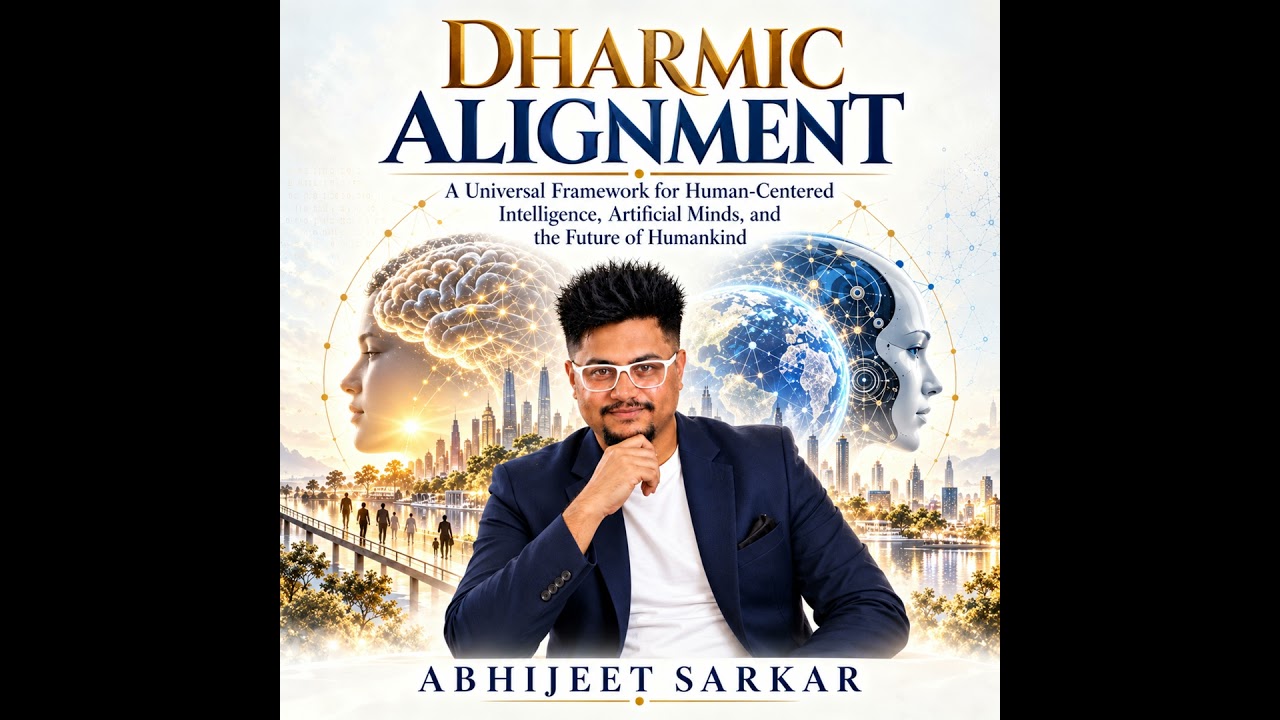
DHARMIC ALIGNMENT: A Universal Framework for Human-Centered Intelligence, Artificial Minds, and t...
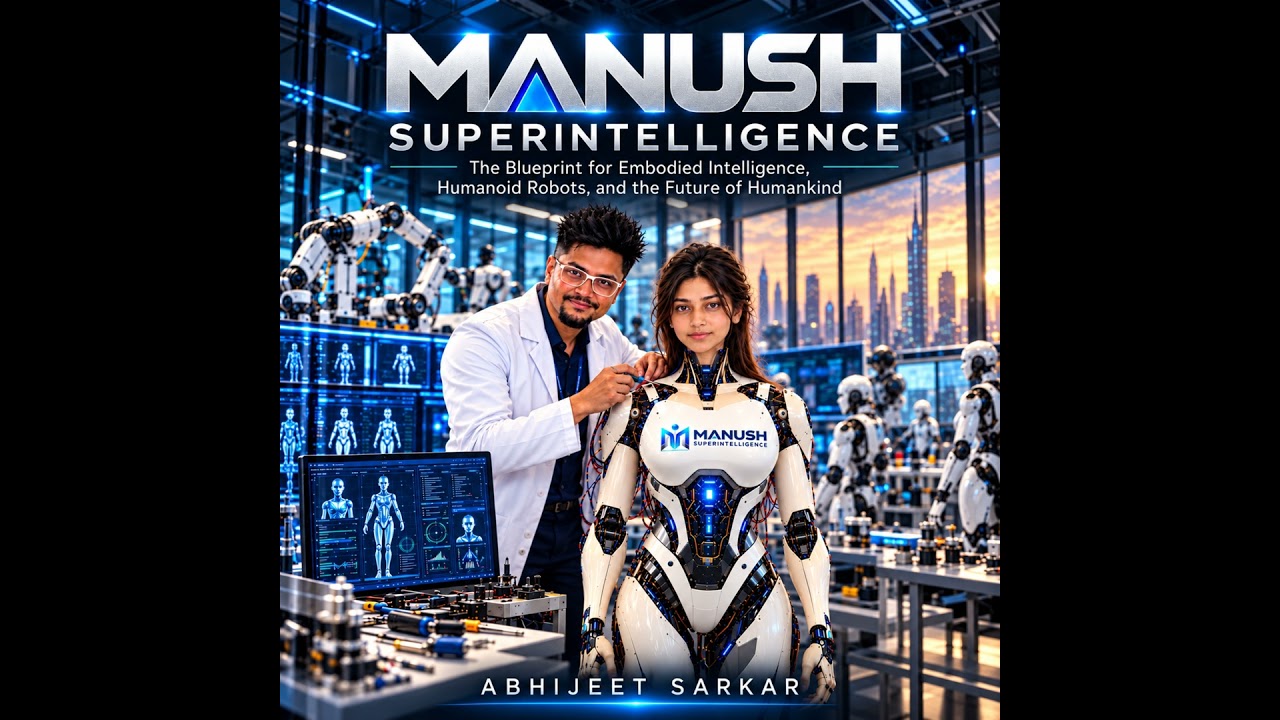
MANUSH Superintelligence: The Blueprint for Embodied Intelligence, Humanoid Robots, and the Futur...
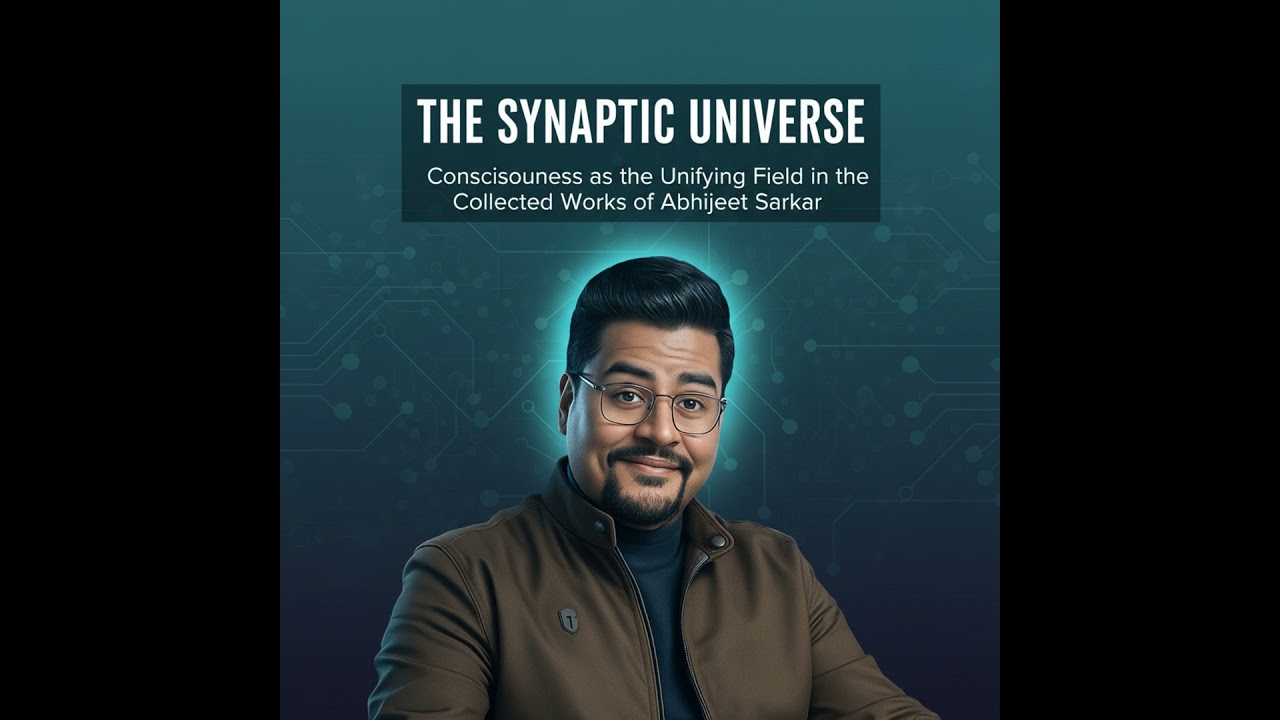
The Synaptic Universe: Consciousness as the Unifying Field in the Collected Works of Abhijeet Sarkar

The AI Visionary: An Analysis of Abhijeet Sarkar's Interconnected Literary Universe


মহাশক্তিধর এআইয়ের নৈতিক ভিত্তি: সিনাপটিক এআই ল্যাব ও প্রজ্ঞাময় বুদ্ধিমত্তার নৈতিক নির্দেশিকা

এআই দর্শনের পথপ্রদর্শক অভিজিৎ সরকার: কৃত্রিম বুদ্ধিমত্তা, দর্শন, প্রযুক্তি ও মানবিকতা