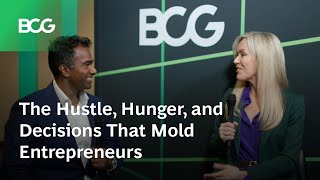
In this interview, Adam Joseph shares practical guidance for aspiring entrepreneurs and explains how his former consulting background informs the culture and operations of his startup, Clipbook. He outlines three core pieces of advice: (1) simply get started and commit to the idea, noting that most startup failures stem from inaction rather than product or business model issues; (2) unlearn habits from large‑company consulting roles—especially the tendency to focus on a single billion‑dollar decision—by embracing many small, rapid decisions; and (3) enjoy the incremental victories of the early journey, as these small wins compound into momentum. Adam then describes Clipbook’s defining core value, “Hunger & Hustle” (H&H), which represents an instinct for rapid, outcome‑driven action. H&H guides hiring (quick email responses, relentless pursuit) and performance management (velocity of execution), and even permeates internal communication (a dedicated Slack channel). Finally, he reflects on how his time at BCG shaped his entrepreneurial approach: the analytical toolkit (market and revenue models) translates directly to startup work; the high‑performance, coaching‑focused culture informs Clipbook’s feedback and sustainability practices; and BCG’s client‑centric mindset drives Clipbook’s commitment to ensuring enterprise customers capture value from the platform. Throughout, Adam emphasizes the translation of consulting rigor into a fast‑moving startup environment.
Adam, welcome. What's your advice for anyone who wants to become an entrepreneur at whatever age or whatever stage of their career?
Yeah, well, I have 3 pieces of advice. I'm a former consultant, so I like to speak in threes. You know, first and foremost, the biggest piece of advice I can give anybody is just to get started and to actually do it. And, you know, I always say 99% of startups fail not because of a technical problem with the product, not because of a business model challenge. It's simply because the entrepreneur, the would-be entrepreneur, never really took the plunge and actually committed to the idea. So first and foremost, get started, you know, really pursue the opportunity. Second is to unlearn the good habits that helped you succeed in prior roles. And especially to a company like BCG or sort of larger companies, a lot of what makes somebody really successful in the role is a highly analytical mind, a really thoughtful attention to to process, to, you know, really putting all of the work in to make a billion-dollar decision. And that, as an entrepreneur, will tank you in many ways. You have to, instead of making one billion-dollar decision, you're making a billion $1 decisions over and over and over. So, you know, think through some of the habits that made you succeed in your previous roles, you know, untie the knots, you know, really think through what is going to help you succeed as an entrepreneur. Third, and I think really critically, is really to, enjoy the ride in every single way. And, you know, entrepreneurship is hard. Starting an organization, whether a company, a startup, a nonprofit, whatever it might be, is going to have its challenges. And a lot of the victories that you score will be really small, especially in the first, you know, 6 months, 12 months, your first couple of dollars of revenue, and, you know, first key hire that you bring to the table. So you've got to really enjoy every single one of those as they come. They will compound over time, and it will really buoy the enthusiasm of you and your team.
As a leader, what are some of the core values that you have that affect your decision-making?
Yeah, if you ask anybody on the Clipbook team what is our number one core value, they will all say hunger and hustle, H&H. What is, you know, I always joke H&H is the Adam Joseph special. You know, what does that mean? For us, hunger and hustle is an instinct towards output, outcome, and action, and really using innovation and resourcefulness to execute very rapidly and with high velocity. And it is embedded in everything we do as a company, from how we screen potential candidates that join our firm. Even during the interview process, we really ask ourselves, you know, does this person have the H&H to work at a startup or a company like Clipbook? How can you tell? The quickness with which they respond to emails, sometimes the relentlessness with which they pursue the job. So are they not only having the interview, emailing us after, having conversations with other people on the team, asking mutual friends to drop in a nice note, right? That is a very strong signal for how they will actually behave in the workplace with us, right? And if they're going after a sales lead or engaging a customer, we want them to have that H&H approach. And this is the sort of thing that it's really hard to teach many times. You sort of either have it or you don't. So we really look for that, you know, that spark of H&H inspiration in all of our team. But, you know, even beyond hiring, even in our performance management, you know, the things that we're evaluating in our staff is in part execution ability and their velocity to build their functions and their core capabilities within their function really rapidly. So, you know, H&H is really central to what we do. It's our Slack channel, our general Slack channel is called General-H&H. That's how, you know, sort of in you know, the center of the lifeblood of our work it is.
So you mentioned right at the start, consultant, former consultant, BCG alum. What did you learn there? What, how did BCG influence your journey, your entrepreneurial journey?
I mean, BCG was such an important home for me for, for a number of years, and everything from the basic business toolkit that I learned, you know, doing a market model at BCG on an early case translates to doing a a revenue growth model at a startup, right? When you're just starting, you know, I think the core business skill set, you know, really applies day to day in many ways. But honestly, for me personally, the biggest impact was largely the cultural inspiration I drew from my time at BCG and the ways that I apply it to Clipbook today. From first, the commitment to performance management and excellence. I think anybody who's worked at BCG or worked with BCG consultants know that The standard is high in terms of performance, in terms of how we work with staff, and, you know, the same sort of level of coaching, the feedback culture, you know, that we have at BCG, you know, certainly part of the Clipbook journey. The commitment to the individual, to open conversations around how you team and around productivity, around sustainability of work, very much part of our culture as well. And then last, and I think very importantly, is BCG's commitment to client success in every possible way. And for us at Clipbook, we, you know, have 200, over 200 enterprises that are using our platform. And, you know, for some of them, they might get, capture all the business value that they hope from the platform, you know, within the first week and everything's great. But for some of them, they might not have captured the value immediately. And for us, that is, the onus on their success, of their success is on us to really to train them, to work with them, to make sure that they're winning every possible piece of business value they hope for. And, you know, very much part of the BCG spirit of responsiveness to client demands, to, you know, really improving client business context overall. So all part of the inspiration for the company.