How Can Small Businesses Increase Their Value Before Selling with Brent Stringer
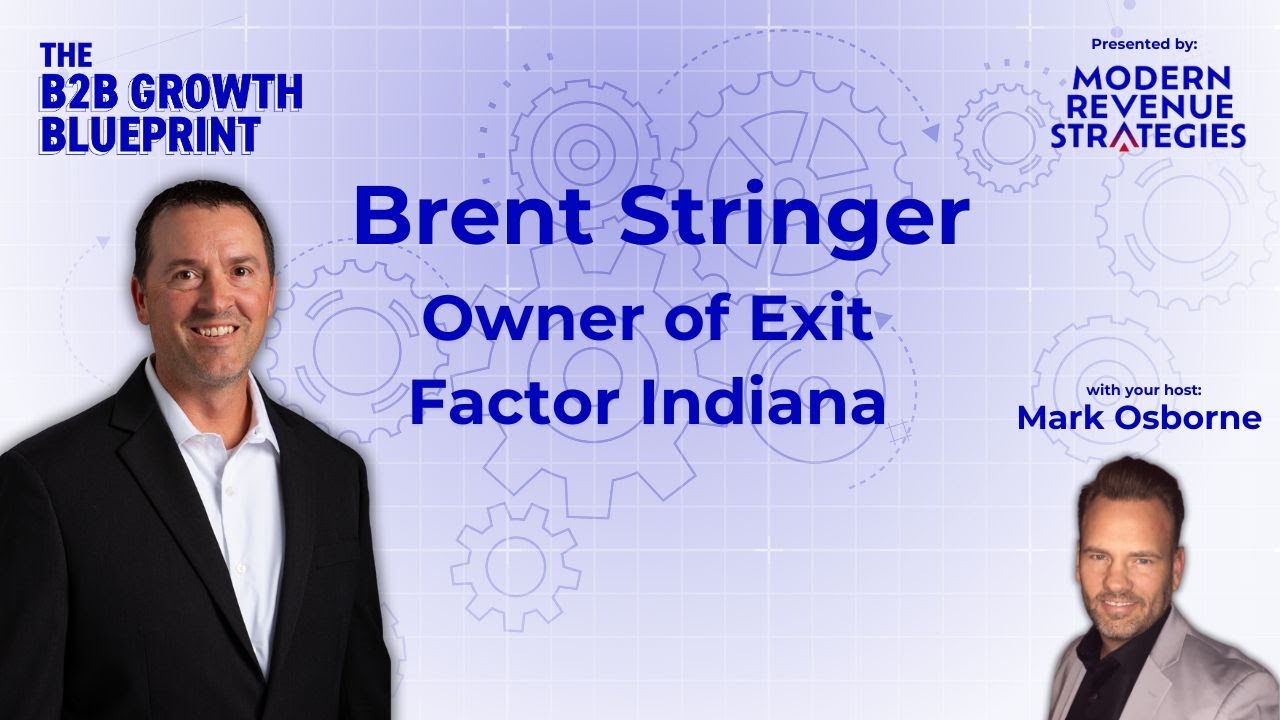
Brent Stringer, a CPA and exit planning advisor, explains why most Main Street businesses fail to sell well. Owner dependence, missing documentation, and customer concentration are the biggest problems. A well-prepared business closes in 8-12 months; poorly prepared ones take 3-5 years or don't sell at all.
Chapters
Welcome to the B2B Growth Blueprint podcast, where we talk with entrepreneurs, founders, and leaders at B2B services, tech, and SaaS companies to learn the systems and processes they've used to create success for their business. We'll also learn from marketing and sales experts to provide insights to help you grow your business. I'm your host, Mark Osborne, and the podcast is brought to you by Modern Revenue strategies and their 10x ROI B2B growth guarantee. Schedule a free diagnostic call to learn the fastest path to double your B2B revenues in just 90 days. Hello and welcome to another episode of the B2B Growth Blueprint podcast. I'm your host, Mark Osborne, and today I'm very excited to welcome my guest, Brent Stringer. Now, I'm going to read Brent's bio to make sure I get this right. He is the owner of Exit Factor Indiana, which is a certified public— he's a certified public accountant and a certified exit planning advisor, or CEPA®. He's a strategic advisor to established business owners and trusted partner to the Indiana business community, helping entrepreneurs build value and prepare for successful exits. With a background spanning finance, operations, and leadership, Brent guides clients through the complexities of exit planning, whether they are planning to sell in the near future or positioning their business for long-term growth. Earlier in his career, Brent spent more than a decade in public accounting, working closely with small businesses on tax, audit, and compliance. He then transitioned into leadership as an executive pastor, where he honed his skills in organizational management and community building, before returning to the business world with a renewed focus on value creation. As a member of the Exit Planning Institute and the American Institute of Certified Public Accountants, Brent brings both technical expertise and a personal commitment to helping business owners achieve clarity, confidence, and better outcomes for their companies and their families. So, Brent, welcome to the show.
Thanks, Mark. Appreciate it and looking forward to our conversation today.
Yeah, absolutely. So you've obviously had quite a diverse career, gone in a few different directions. Why don't you sort of tell us the story, bring it to life for us from the paper?
Yeah, absolutely. So as you mentioned, background in public accounting and honestly didn't really like it a whole lot. It's kind of boring. And but I did really enjoy working with small business owners and seeing the variety of how people run their business, what they do, what works, what What doesn't work. And so that part of the business was very enjoyable to me as I got to see a lot of different aspects and learned a lot. As you mentioned, from there, you know, I was an executive pastor at a large church for quite some time. And what a wonderful time that was. Very blessed to be able to spend my time and devote to that effort. And saw a lot of fruit from it, but then was ready to go back into the business world. And so, you know, what, what, what I saw here in the local community was small business owners, you know, putting their life, blood, sweat, and tears into their business only to see it kind of fall apart at the end. And, and what, what happened here was, you know, a lot of business owners specifically some friends of mine who were trying to exit their business and really weren't having much luck. Most folks in our line of work work with large business owners. And so, you know, there weren't many solutions for them in their space at their size and their budget.
Yeah.
So we thought, hey, here's some opportunity. Let's see what we can do to service those clients.
So that sort of mission of really bringing the resources that larger companies have access to as they prepare for exit to sort of Main Street businesses, I think is really inspiring. What are some of the sort of unique challenges that you've seen for, you know, sort of Main Street businesses as they think about whether it's recapitalization or selling to someone else, merger and acquisition kind of activity, or, you know, having a more traditional sort of generational transfer of ownership. What are some of those unique challenges you see for them, and how is that different than maybe other-sized businesses?
Yeah, so there's, there's a number of, uh, kind of unique challenges that they run into, and I'll touch on just a few of them. Um, so probably the most common one that we run into is the business owner who's working 60, 70, 80 hours a week in their business, and it revolves all around them. Right? So they're doing the sales, they're doing the marketing, they're doing the books. And when it comes time to sell, there's not a business there. There's a job.
Right?
Right. And so they really struggle with trying to find appropriate buyers who are willing and able to, to put that business into a place where it can function without them.
Yeah.
So that'd be one unique one that you really see a lot, maybe unique to small businesses, but I think you see it elsewhere as well, is, you know, they get time ready to sell and they think it's just gonna happen overnight, right? And they have not taken into consideration what it really takes to sell their business. Or realistically what it's valued at. Lots of times you'll hear, oh, my friend told me that my business is worth 10 times my revenue.
Right.
And probably, probably not. So help giving them a perspective around, okay, what is my business really worth and what is the realistic expectations I can have when it comes time to sell?
Yeah. So those are, there's some big, big challenges there. And I'm curious, you know, is, let's tackle a couple of them, you know, sort of as—
Yeah.
So that owner dependence, you know, building a job instead of building a business, something that's been talked about in the literature, like, you know, certainly lots of books, you know, Working on Your Business Instead of in It, The E-Myth, and all of those things have been around for a while. I'm curious, you know, as you work with a business owner and say, you know, it's going to be very hard to sell a job, but we can turn it into a business. What sort of, you know, how do they respond to that? Is it sort of a shock to people as much as, or is it more that they have an understanding that they should have been doing this all along and now they're willing to tap into it. I'm just sort of curious what you run into.
Yeah, that's a great question. And, you know, most of the time there's an initial shock, right? Like, oh, I'm making pretty good money. Why are you telling me I don't have a business here? Right? But then after you explain to them one simple perspective, it helps shift that. So the question I tend to ask is, if you were a buyer coming in, what would you expect? Right. Have the owner put themselves in a buyer's shoe.
Yeah.
And look at it from an outside perspective and what it really looks like to that prospective buyer.
Yeah.
Right. Does, does that owner want to come in and work 80 hours a week? Probably not, right? Does that owner have the skills and the ability that the previous owner has? Probably not, right? There's gonna be a learning curve. And so helping them get perspective on what it looks like from the other side of the transaction.
Yeah, so interesting because we do a lot of work with, you know, marketing and sales systems. And so we'll, you know, talk to an owner and be like, well, you know, who's your best salesperson? 'Cause we oftentimes will just sort of model what that person's doing, turn it into a repeatable process. It starts to become a lot easier. And very often the owner will be like, oh, they all suck. No one can sell it but me. And they're very proud of it. Like, that's something that they want to brag about because they think that that's a good thing. And we start to explain to them, well, then that means you'll have to be the salesperson for the new owner. Do you really want to do that? And usually they're like, no, I want to be on a beach or on a golf course somewhere. So that sort of understanding of, well, if it's really dependent on me, then it's not as much of a business as it is a job.
Yeah, exactly. That perspective change really can give them a different look, right, at what it takes and, you know, eventually what that buyer is going to be looking for.
You also talked about some oftentimes limited perceptions on the timeline that they should have in mind. So talk to us about what a reasonable timeline, or when you see people really have successful exits, what kind of timeline are those folks working on and how does that typically sort of run across that timeframe?
Yeah. So, you know, I think the perspective that most buyers have, the closest thing they have seen is when they sell their house, right? They put a sign out in the yard, depending on the market, somebody drives along and, oh, that house is for sale. Oh, I'm gonna buy it and we'll be done in 30 to 60 days, right?
Right.
And a business sale is gonna be very different, very different approach, very different steps that you have to take to get it done. And so, you know, tell folks, hey, the average is somewhere around 10 months, right? And we can do— might be lucky, get it done a little bit faster. It also will likely take a little bit more time than that, depending upon all the different circumstances involved. Right, which can have a really big impact on how quickly it can sell. That's one of the things we do at Exit Factors, help prepare those businesses so that when it comes time and they want to pull the trigger to sell, it sells a little bit faster, right?
Yeah.
So we might be able to bring that down from 10 months to 8 months. And that's a quick transaction. In regards to a business sale.
Well, I was actually a little bit surprised to hear you say that because, you know, I think, you know, the Exit Planning Institute and you and I are both CPAs and part of that organization. I think they say that the average length of time is like 3 to 5 to have a really successful exit. And so, and but I think that incorporates things like, you know, having a few years of well-documented books, which makes it a lot easier for a buyer to do their diligence on. Versus if you kind of got to get it ready for sale, you can get it done in, you know, sort of 8 to 12 months. So, yeah, I've heard, you know, much longer than that. So that seems like a really fast timeline, actually.
Yeah, yeah, yeah. It's— it can vary widely, that's for sure.
Yeah. Are you seeing any— you know, here we are heading into fall of 2025. You know, there's been a lot of sort of volatility is probably a good word for it in the marketplace over this year, and certainly not a big expectation of that calming down anytime soon. Are you seeing any interesting trends in the landscape of, you know, related to, you know, business buying, selling, or what are you seeing with the folks that you work with?
Yeah, so one of the biggest trends that we are seeing from an exit planning standpoint is, um, the, the younger business owners are more open to exit planning and willing to do that earlier, um, than your older business owners. Um, that can be attributed to several different factors, but one of them is that You know, younger business owners many times aren't looking at their business as a long-term career. We'll see turnover, right, where they might want to, you know, work in a business for a little while, sell it, do something different, and increase value through business acquisition and sales. So that's one of the largest, probably most impactful trends that the exit planning space is seeing. Currently.
Well, and also, I think it's probably true that, you know, there's been a lot of writing and sort of thought leadership around the idea that running a business as if it's ready to sell is actually just a good way to run a business for lots of different reasons. And, you know, to pick a few of them, like, and one of the things that we see a lot is, you know, owner dependence. You know, being dependent on the owner, it's one of the biggest obstacles to selling a business, like you and I talked about before. It's also the biggest obstacle to going on vacation if you're the business owner. And so, if you can remove some of that owner dependence, it's more fun. You get to enjoy life more, all of those things. Likewise, and this is a place where we spend a lot of time, sort of customer concentration. Like, if you're highly dependent on just a few customers, Well, that's a big obstacle to selling a business because a buyer is like, well, what if that customer leaves? Uh, the same thing is true. I see oftentimes with, you know, business owners that we work with, that that's what keeps them up at night is, well, I'm so dependent on this one customer. I gotta keep 'em happy. Or how do I bring in more customers so that I'm not so dependent on, like, and so if you can improve that, you know, sort of customer dependence, that also reduces the stress, uh, that, that you experience, uh, in the process of running the business. So, so many things. And I also, I'm curious if you've observed this. You also hear the stories of, well, I was just running my business, uh, and I got a phone call from someone who, you know, wanted to buy it and I didn't know how to respond. And so I either sold it and was kind of convinced that I probably didn't get the most for it, or I passed and now I don't know if I'll ever get another offer again. Uh, are you seeing much of that? There's a lot of talk in the marketplace about, you know, private equity gobbling up businesses and got to be ready when that call comes. Do you see that much in your marketplace?
Yeah, for sure. You know, and again, it's putting things in perspective for the business owner. And as you mentioned, exit plans, just good business, right? So I'm trying to show them the benefits of running their business so they can always be ready to exit tomorrow.
Yeah.
And part of that exit and part of being ready is knowing what your business is worth. And so, you know, those phone calls come along, and if they have no idea what those businesses are worth, a bad offer might be accepted, or they might pass on a once-in-a-lifetime good offer that comes along because they're not well informed. And so taking the steps to be prepared So that if the call comes tomorrow, you know what to expect. But also being prepared for the not great things that could come tomorrow. Right?
Right.
And we're all going to, we're all going to exit at some point.
That's right, unfortunately.
And so we have to make a decision here. We can be prepared and exit on the best possible terms or Do we just see what chance— see what happens, right, by chance?
Well, and so many business owners, you know, they're currently in the growth build mindset, but there's so many things beyond their control, you know, whether it's, you know, they, you know, have some disability or some, you know, accident that, you know, can be unforeseen or some family situation that changes that causes them to need more flexibility. All of these sort of aspects that are beyond your control, some disagreement with a partner or provider, things that you can't anticipate and that were never even on your radar. But if you have done the things that sort of have you ready, it's almost like insurance that if you ever find yourself in that situation, you can take advantage of it or at least adapt to it. without sort of selling on the courthouse steps or having a fire sale of your business because you're actually prepared for that.
Yeah, exactly. And I would even say it's better than insurance, right? Because we can plan it out a little bit better.
That's right.
And with more certainty.
Well, and better than insurance too, because oftentimes insurance never gets used. So, like, you spend money on something that, you know, you're kind of hoping you never have to use for certain things like flood, fire, other problems with your house or car. But, you know, eventually you will exit in one way or another. So, it's definitely no wasted effort or energy in making those plans.
That's exactly right, Mark.
Yeah, I find that, you know, exit planning or just the idea of, you know, having your business ready for even if it's recapitalization, like taking investment, it's something that people don't like to think about because it's a little bit challenging and heady. And they didn't get into the business. They got into the business usually because they either have a particular skill or a particular passion around, you know, doing a product or a service. And that's what they're focused on. And this is a little bit to the side of that. And so they push it off because they don't like thinking about those things. It's not where their passion lies. And so it becomes this sort of like daunting, you know, kind of thing that they keep kicking the can down the road. But as you work with folks that, you know, try to help them, you know, get a little more ready for that, what are some sort of low-friction ways that people can start to think about Well, I guess eventually I am going to exit. Maybe I should start to think about it. What are some things they can do that make it a little less daunting and a little less intimidating to start to think about that process?
Yeah. So, you know, the most— the biggest misconception is that this process is going to take me, you know, 10, 20 hours a week for the next year. to get prepared for. And it's amazing when you start diving into it, what can be done in a fraction of that amount of time, right? And so, and especially with today's technology, right, documenting processes can sometimes actually be low-hanging fruit, right?
That's right.
Because there's easier ways to do it now than there was even just a few years ago. And that doesn't have to take a lot of time outside your normal course of business.
Right.
And, and also really having clear goals. What do you want out of your business? What do you want to do once your business is sold? Things like that can actually help dramatically in the exit planning process because it allows you then to work with those advisors and helps cut out a lot of the, the the fluff time and get right to it and start planning for that potential exit.
Well, and it's interesting that you talked about that sort of low-lying fruit around, you know, SOPs, standard operating procedures, processes, and just documenting some of that. That's another one of those things that I find that it not only makes your business run better, Because it establishes like a baseline of what good looks like. It also makes it easier to run because then you can, you know, whether you're tired or distracted or whatever, you can show up as your best self because you've got a process that helps, you know, sort of support you and prop you up. It's one of those things that, you know, makes it just easier to run your business and more enjoyable to run your business by having that documented. And very interestingly, is one of the things that buyers look for the most, but that's so often missing from the business, uh, is just taking that time to create those playbooks, create those processes. Uh, and even, you know, once you've got it written down, you can take it to the patent office. You can turn it into like a sellable process, uh, that, you know, that really, really expands your intellectual property and, uh, all of those things in the business. It's just such a great step. That people so often overlook, right?
Yeah, it is certainly the low-hanging fruit in my opinion. Yeah.
And it's funny in the marketing side of things and sales side of things, when people, you know, think about growing, they're always like, let's do something sexy. Let's redo our brand. Let's redo our website. We need a new logo. You know, let's freshen it all up. And what I oftentimes tell folks is Sure, that stuff has the potential for a lot bigger impact long term, but especially if they have the idea of a recapitalization or exit, some sort of event in the next 3 to 5 years, doing that is less likely to make a strong return on your investment versus spending the same amount of time, energy, and effort and resources on documenting all your SOPs to really de-risk it for the buyer. And then that sort of starts to improve the level at which you deliver. And then let's upgrade some of those SOPs so that we can really make you best in class. And those things make an immediate impact on the business, not only how the business runs, the EBITDA that you get from your current efforts, but also the experience of running it. And then that value, that multiple that you could get for your business when it comes time to sell, because it's so much easier to see how it works, then that helps sort of fund You know, initiatives like redoing the brand because you've now got processes that work better, that make better EBITDA. So you've got more margin, you can use that margin to invest in redoing the website or there's some of those other flashier things.
Yeah, you nailed it, Mark. Yeah, sometimes it starts with the unsexy, right?
That's right. It's that infrastructure that breaks it loose. So I'm interested that You know, you have such a diverse background, uh, having, you know, worked as an executive pastor. Is there a lesson from community building and, you know, sort of your work with your faith that you bring to, uh, you know, advising business owners that, uh, you might share with our audience? Anything that stands out there?
Um, yeah, of course, there, there's, there's a few for sure. Um, but, you know, the biggest one is, is probably just the approach to have with the clients that, you know, we're really there to do whatever we can to create value for them, whether it's the best thing for me personally or not, is really we want to make our clients' businesses the best they can possibly be. So that they can get the most out of it when it comes to sell and and reach their goals in the quickest, most efficient way possible. So it's really it's it's an approach-based look at business consulting, right? We're serving those that. really haven't had a lot of targeted outreach before. Those small businesses, those Main Street businesses that they may only be worth a few hundred thousand dollars, which might not be worth a lot to somebody, but it's worth a lot to that business owner. And many times it makes a great, great deal, means a great deal to them. And so being able to help them, to serve them, And to walk alongside them in that process is very rewarding. I bet.
Yeah. So you're obviously an expert in a lot of really interesting topics that we could spend all day on, but I got to be mindful of your time. But before I let you go, you've alluded that, you know, you specialize in working with a very unique sort of niche in the marketplace. Tell us a little bit about who you work with, who you serve, and the types of results they get from working with you.
Yeah, absolutely. So the name of my business is called Exit Factor of Indiana. So we are actually a franchised group, part of a rapidly growing national brand that is affiliated with Transworld Business Advisors, who is a business brokerage who's been around for 40-some years. And so what has happened through Transworld is they have found that You know, these smaller businesses specifically are not well equipped when it comes time to being sold and to transfer. And so Exit Factor comes alongside and we help, we help those businesses in a way that's cost efficient. It's a proven methodology to enhance their value, to sell faster and for more than they previously could.
That's fantastic. And what's the best way for folks that have been listening and are like, that sounds like me, I feel like I could use some of, uh, Brent's expertise, what's the best way for them to get in touch with you?
Yeah, so I can be reached via email at brent.stringer@exitfactor.com, or they can visit my website at exitfactor.com/indiana. And then we also have local offices throughout the nation. If they want to work with somebody locally at Exit Factor, they can search our offices available through the website.
Well, that's fantastic. Well, Brent, thank you so much for taking the time to join us today. I really enjoyed our conversation and I'm sure our audience got a lot out of it as well.
Thanks, Mark. I enjoyed it as well. And good luck to you and your podcast. I've really enjoyed listening.
Thanks so much. Talk to you soon.
All right, take care.
Thank you for joining this episode of the B2B Growth Blueprint podcast. We hope you've gained insights to grow your business. If you enjoyed this discussion, please rate, comment, like on your favorite platform, and share to others who will find it useful. Do you know a CEO, founder, or leader at an early stage B2B services, tech, or SaaS company who would like to be a guest and share their story, send us a note. Let's schedule a conversation.
More from Mark

How Can You Maximize Your Business Value Before Selling? with Randy Katz Video







