How Culture and Leadership Drive Business Growth with Jon Chen
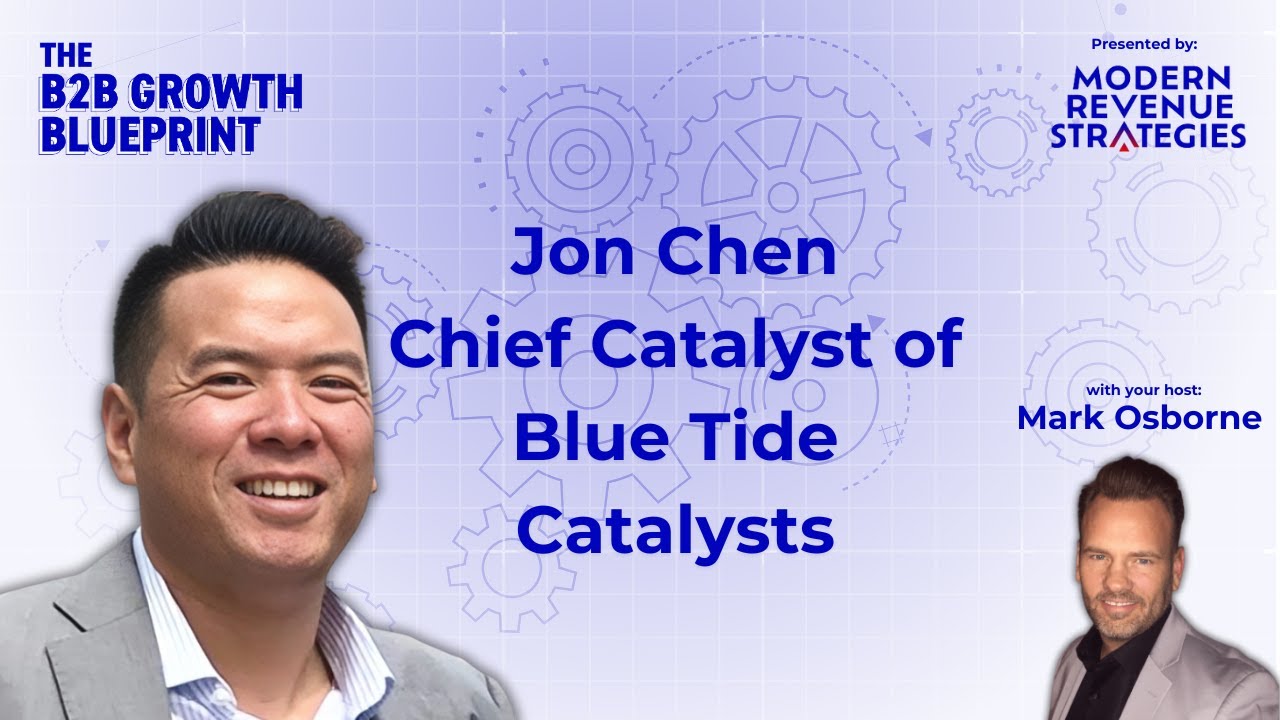
This content was created by Mark Osborne, MBA, CEPA®. This content was uploaded by Mark Osborne, MBA, CEPA®. This is a YouTube podcast episode titled "How Culture and Leadership Drive Business Growth with Jon Chen" (B2B Growth Blueprint) published/created on 2025-04-08 UTC. It is an interview-style conversation between host Mark Osborne, MBA, CEPA® and guest Jon Chen. The discussion covers building company culture (the "soul"), systems and processes, leadership and one-on-ones, employee engagement and destination-setting, and how these tie into exit planning and maximizing business value. The episode is aimed at founders, CEOs, and leaders of B2B services, tech, and SaaS companies and includes practical examples, statistics, and action-oriented advice.
Chapters
Welcome to the B2B Growth Blueprint podcast, where we talk with entrepreneurs, founders, and leaders at B2B services, tech, and SaaS companies to learn the systems and processes they've used to create success for their business. We'll also learn from marketing and sales experts to provide insights to help you grow your business. I'm your host, Mark Osborne, and the podcast is brought to you by Modern Revenue Strategies and their 10x ROI B2B Growth Guarantee. Schedule a free diagnostic call to learn the fastest path to double your B2B revenues in just 90 days. Hello and welcome to another episode of the B2B Growth Blueprint Podcast. I'm your host, Mark Osborne, and today I'm very excited to welcome my guest, John Chin. Now, John is a leadership team coach and strategist that partners with stuck, frustrated, or overwhelmed CEOs and executive directors to unlock the potential of their organizations from idea to exit. John combines 25+ years as a strategy consultant and his experience as a 6-time entrepreneur with the only holistic approach that drives sustainable growth. And we'll talk about what that approach is. He helps the C-suite create a clear and galvanizing strategic plan, align and execute as a high-performing team, and craft the organization's soul to drive the creative— the greatest competitive advantage. As a certified exit planner, he also partners with business owners to strategically align their personal life and financial goals with the growth of their business to optimize their exit. So, John, welcome to the show.
Thank you so much, Mark, for having me.
Yeah, I've really been looking forward to this conversation, you know, from our previous dialogues and all those things. So you've done a lot of really interesting things and you've got a really unique perspective. Why don't you tell us a little bit of your story of kind of how you got here?
Sure. Well, I guess I started my career in a consulting firm. When I joined, there were 600 people and I just wanted to— I had an entrepreneurial bent out of college and I joined this company and we were early in the dot-com ages. The company built the first Ctrade.com, built the first UnitedAirlines.com. I built the first online insurance agency. So it was very early in that internet age. And I learned a ton at that company about building businesses. I helped launch multiple businesses, operations, and helped companies scale over a period of 10 years there. And when I left, it was about 10,000 people. But what I learned the most at that place was the importance of building the culture of an organization. The company won awards for its culture. Harvard Business Review did a case study on its culture. And I just learned a ton about how important it was to align people and create passion energy around that. I later went on to some other high-growth tech companies and then actually left to help scale a stuck digital health company.
Yeah.
And I helped grow that from about $4 or $5 million digital health consulting company to over about $15 before I left and continued to work on a number of startups. I've, like you mentioned, I've got 6 startups under my belt. But kind of realized that like what I really love to do is helping people bring visions to life. Figure out where you want to go, bring it to life. I'm a catalyst. I help people achieve that audacious vision. But I'm also the one at this point in time in my life to continue to run a business long term. And I just love helping people succeed and bring their visions to life. So now I spend my time coaching founders, entrepreneurs, nonprofit execs. how to really unlock the value of what they're trying to create in their organization through a combination of my experience, holistic approach that you talked about, and yeah, just my experience.
Awesome. So I always love, you know, people that are experts in taking a squishy topic and turning it into something that is real and sort of bankable. And I love, you know, you've talked about how sort of culture is a real differentiator and a real lever for success. But I think a lot of people have kind of differing views on what does it mean to build corporate culture or what's the real benefit? How does it show up within the business? And as an expert in the space, I'd love to get sort of your expert definition of what is culture in an organization.
Right.
And let's think about not Not the 10,000-person corporation, but sort of these $5, $10 million companies that have got 10, 100 employees that are working there. What does culture look like there, and how does it impact their business?
Sure, great question. So I guess a couple of things. One, as we've kind of talked about, I've leveraged a system or an approach called System and Salt, which focuses much on the system of those small companies. And a lot of people in that space where you're— You started to launch a business, a lot of your listeners, right? You've launched a business, you've got this better mousetrap and you've launched it to market, but you get to a point where you're not scaling. People bring in systems, right? Processes get people organized, which is great and really important. And there are a lot of great frameworks for that. However, if you only focus on the system, after a while you get real good control, but people start to feel like cogs in a wheel. They start to get frustrated and you start to see people leave and HR complaints increase.
Yeah. Right?
And what you really need to do is focus on both. So I bring an approach that focuses on both. We talked about system and the soul of the company. And so I think, you know, maybe an analogy that I often use, what does it mean for a soul of a company, right? Is a soccer analogy, right? You see my little soccer ball that I'm holding here. If you have little kids or your listeners have little kids, you remember when they play soccer at 3, 4 years old? and they play what I call swarm soccer, right?
Yeah.
The whistle blows, they swarm the ball, and they spend the entire game in a giant mob chasing the ball around. You got kids in the corner screaming, you got kids playing with dandelions, you got kids going the wrong way. Well, you know, a lot of these companies, $5, $10 million companies who don't have system and structure in place, the same thing. They swarm from fire to fire, crisis to crisis, gotta close that deal, gotta close that funding deal, and it's chaos. And frankly, I've seen it at a $20 billion company before too.
Sure.
But it's pretty typical many companies. In order for that soccer team to, to, to grow up and win and maybe win a championship or win a World Cup, what do they need? They need systems, right? They need to know positions, plays, roles, responsibilities. But you also need like metrics beyond just winning and losing or scoring goals. What are my personal metrics as a goalie? How many have I blocked? How many have I let through? What's my metrics as a defense? which measures an offense. You need all those things. And those are great, right? The systems are great. But if you've watched any Kevin Costner sports movie or Miracle on Ice or Ted Lasso, like, what wins is, is soul, right? And so I define, like, culture is actually a piece of the soul of the organization.
Yeah.
A lot of people think that culture is good food, ping pong tables, water slides, or even just some values on the wall. Right? Core values on the wall. Core values are defined. I define core values differently than culture. Values are the people you want to hire. What are the things that, that, and the behaviors you want from individuals? Culture is what happens all those people come together, and it's an environment where people go to live or die. So it's what you want people saying about you on Glassdoor, right? About what it's like to work there, the group together, or it's what you want people telling their friends about what it's like to work there. So what is important is not just that culture. It's not just finding the right people, just the culture. What's important is creating an environment that brings the humanity alive in the company. Because statistics do show over and over again that companies that bring that soul, as I call it, to life win. And that's the greatest competitive advantage any company can have. So for example, it's a place where people feel the culture is important or the culture is good because McKinsey has shown over and over again the best performing cultures outperform the bottom tier. Studies show by over 200% financially, right? Companies where people feel empowered are 87% more likely to innovate. Companies where people feel engaged and feel meaning in their work are actually 80% more likely— actually have an 80% higher EPS, right, in public companies. So there's all these components that I work within for my clients to create that soul. It's actually not very hard, but you have to be deliberate about it. You have to define it. You put a strategy together for it, and then you create that and you can transform your organization. Sorry, it was a long diatribe there.
Oh, no. I mean, that's exactly what I was looking for. And I love the way that you're able to sort of couch the actual benefits that people get. And I think the thing that makes it even sort of more exciting is, at the end of the day, like, isn't that where we all want to work? Like, we want to work at companies that have— where you feel empowered to innovate, where you feel inspired to, you know, sort of do your best work and all of those things. Rather than just being a cog on the wheel. I will wager, and I'm curious your opinion on this too, though, is I bet without processes, it's pretty hard to have culture because you are all just kind of swarming from, you know, sort of emergency to emergency, whereas if you've got processes, it creates the framework that you can start to create some culture or a culture that isn't crisis. And in like a positive culture, like, can you kind of do them separately or are they pretty inextricably linked?
I think they're linked if I'm understanding the question correctly, right? Like the system, you need a system to create the culture, right? And the culture makes the system actually important, relevant. That's one way we'd like to say it. So they feed into each other and they're integrated in my approach. Right? Everything we do comes back to end of the day people, right? So let me give you an example, right? A lot of people do quarterly one-on-ones, right? Quarterly one-on-ones, a checkpoint on people, performance reviews. And the most, most of the time when you look at performance reviews, they're organized around what goals have you done for the company, right?
Yeah.
What have you done for the company? There's important, like, here's your KPIs. What have you done for the company? Are you successful or not? But that philosophy is really about what have you done for the company lately versus what have you done— what has the company done for you lately? And I like to say I like to work with companies that are looking to use the company to grow people. And then you do that, you actually grow the company. It's a virtuous cycle. So an example, when I work with my clients and I teach them to do the one-on-ones, it's about, okay, what are your goals? What are your passions? What are your strengths? What's your mission in life? And how does that tie back into a role in the company? And how are you helping the company? And so there are systems that you typically have, right? But it's actually more people-focused and more about the company again, because if you do that, you drive the greatest competitive advantage.
Yeah, that's so interesting. Well, and, you know, one of the things that we always say when we work with folks is you create systems that enable, like, collaboration because so many companies value collaboration. And we see systems as a way that it It turns it less from a, well, you did it wrong, to more like the system let us both down. And then you can collaborate on that. But I guess even if you've got the system, you have to sort of value the collaboration to come around it and to make those improvements, which is really interesting.
Right. I mean, it's collaboration. It's creating a safe place to collaborate where there is— as you've probably heard a lot of talk about psychological safety— and where people are actually playing to their strengths. And in innovation work, people have different strengths, and how are you leveraging their strengths. There's a whole bunch of tools and frameworks to think about, like better collaboration and bring people out in areas that they love and shine.
That's really interesting. Well, and it's also interesting, you, we talked a little bit in your bio about how, you know, you also do this exit planning and you and I have talked about in the past that, you know, that what's the old phrase? The best time to plant a tree is 20 years ago.
The second best time is today.
And so, like, you know, the best time to begin planning your exit was 5 years ago. The second best time is today. How does the sort of bringing the culture and systems together today help with exit planning in the future? Right.
So let's talk about what most people think exit planning is. And I would— this is the way I understood it before I kind of learned more about it, right? It's like putting a house on the market, you know, pretty it up and you get it ready to sell, you know, a few months before you're ready to sell. The problem is that 80% of those businesses that go on market don't sell because they're not ready to sell.
80% of businesses that someone is like, I've built this business my whole, my whole career, my lifetime, all my value that I think I'm going to retire on when I sell it. 80% of the time they don't sell?
80% of the time they don't sell because they're not ready to sell. They don't get the value they thought they heard because they got some value number from their friends at the golf club, right? Or wherever else they're hanging out and getting their information. And they're just not ready. Sometimes they get cold feet and they're not ready to sell. Now, 75% of those who actually do sell regret it. Because all of a sudden they discover, yeah, like they didn't enjoy playing golf that much and their spouse got tired of them being at home or they just lost a sense of purpose and meaning. So what you really have to do is start thinking.
That means only about 10% of people that sell their business are like, have a good exit and are happy about it.
Yeah. So my, my work as an exit planner is to help people think about that today and build a plan to get to what you want to achieve, both from a personal perspective. What do you want to do? Let's find meaning because let's hope you transition there when the time comes. But what is the financial need you have at that point in time, right? Typically, you want to think about 4% of your assets. You want to live off 4% of your assets. Okay, great. So if you want to live off $400,000 a year, you need $10 million. Is your business actually worth that much? People kind of go, I think it's worth that much, and they have no idea. What I help them do is understand what the range of value could be for the company, right? And then how do you get the maximum amount? All right. And so that's where my work in terms of coaching and business growth coaching comes in is how to get to that maximum value, right? What are the areas we need to work on to improve? And how do we grow the business? How do we create the right culture where you're gonna get even better value, the right soul of the company, get even better value out of your company so you can actually get the money that you think you need in 5 years? Because if you don't start planning for it now and you wait till then, it's too late.
That's right.
It takes 3 to 5 years typically to, to really transform a company to where you want it to be. And if you wait start that too late, just like you said, it's too late to do it. So exit planning actually starts now, today, to get your personal goals lined up, your financial goals lined up, your tax planning, right, your tax strategy. That stuff takes a while too. And then let's build the value of the business. And that's where I primarily work, but I act as sort of a quarterback for the entire team of financial planners and lawyers and everything else that's required to help, you know, succeed and achieve your goals.
That's interesting. So I'm gonna, Let me get a couple sort of nuggets of wisdom out of you since you've got such a great perspective. And the first, we'll stick with this sort of idea of exit planning. So, for that entrepreneur or operator today that is deep in their business, maybe even they're working on their business some instead of just in it, what's the one thing they should start doing today that'll get them in a better place for— You know, having a more successful exit?
I think figure out where you wanna go, like start with the end, right? Where do you wanna be? And then figure out where the gap is. And that's gonna be a, that's gonna be a business gap in terms of the value and what you're creating and your earnings. Get somebody to really give you a good sense of what your business is worth today. I think too many people have an overinflated sense of what their business is today and figure out how much you need in the future. But people, you know, there's good, Easy, not expensive ways to do a quick valuation, a range evaluation. You don't need to spend a lot of money to do a detailed valuation right now, but at least get a sense where your possible exit is right now, the value of the company, and then start putting a plan together, right? It's possible you gotta put a plan together, get a coach to help get you there. And frankly, I'll say a coach that focuses not only on the systems but on the soul, because that's gonna give you even greater value than— it's an exponential return, right? You're gonna get greater value.
Well, so that leads me to the next sort of nugget of wisdom that I want to get you to share with the audience, which is, you know, for folks that are like, you know, we've got some systems in place. And so we're starting to get that, you know, sort of baseline, but we don't have, you know, the culture that really inspires people to go above and beyond or where everyone's really sort of thrilled to come to work. What's something they can start to do today? That can start to improve that culture, that soul?
Yeah. I mean, there's certainly, I think, what the— so I think there's a lot they can do today, but I think you're asking for one thing, right? I would start with the end in mind again, right? You want to engage your team. And as you probably know, what, 75% of Gen Z cares more about meaning than they do about work. And we have a crisis in this country or in our business world where people are not engaged in work and people, as you know, are quiet quitting and disengaged. One of the most important things you can do is start to leverage the power of your organization, right? Get people aligned around where you're going. So Jim Collins, you might have heard this quote before, has said that building a visionary company is 1% vision And 99% alignment, right? But Bob Iger, CEO of Disney, says your strategy is only good as good as your ability to articulate it. So giving a very clear strategy is very important. And I think start there. And one of the first things you can do is just figure out where you're going as a team, right? A lot of times, like almost all companies I go into, they put a vision together, right? Everybody has a vision, but the visions actually don't go anywhere. I kind of analogize it as to a bunch of people sitting in the boat in the middle of the ocean saying, we want to be good rowers, we want to row fast, and we're going to get this time. But they don't have a destination. They're not going anywhere. So what I work with all my clients is to create what I call a destination. Where are you going? By when? And why does it matter? Right?
Right.
So the classic example I give often is JFK saying, we want to put a man on the moon by the end of the decade. Right? In the '60s, he said that. And if you put a stake in the ground, it's clear when you get there, it's visual, you know you're gonna reach it, right? And it's inspiring. Studies show that when people have something that stretches them, a destination that actually stretches them and inspires them, you actually get more done than when you don't have one, right? So get a clear sense of where you're going. The other piece that I really work with my clients on is like, why does it matter, right? A lot of times people put a vision together and they say, well, because I wanna exit in 5 years. Or I want to be a $100 million company. Well, your employees don't give a shit about your exit, nor do they give a shit about your revenue number, right? How do you create something that people are going to find, going to be able to engage in? Everybody from the lowest level employee to your customers. As an example, JFK, there's a story of JFK walking around NASA saying to a janitor, What are you doing? And he says, I'm putting a man on the moon. He could connect his work to the greater, greater vision, right? And the other thing I forgot to mention earlier just now is that like, you know, when you put that stake in the ground, you would, if you asked a NASA astronaut like, when are we gonna get to the moon? They probably would've said 2025 and we probably still wouldn't be there.
Right.
But because JFK put that stake in the ground, it created momentum. It opened up our imagination. We, you created technologies and inventions that we are still benefiting from today, right? So you want to, if you want to achieve the most out of your people, one of the first things is just figure out where you're going, right? And so I'll just give you an example, right, of one of my clients here. And I'll, you know, I guess I'll read it, right? Or should I show it? Probably show it.
Sure.
Yeah.
Give us a little visual aid there.
So I'll give you an example here of one of my clients, right? This is their vision. Our vision is to create, execute, and build and expand, fund, unique food concepts in the Boston area and beyond via our dynamic, organized, and highly technical craft casual restaurant group. We want to be recognized by our guests and critics as the ideal brand and destination to get the best style of food we're serving, phenomenal guest service, and experience worth sharing.
This sounds like what you would see on the wall at a lot of places that make breakfast, right?
Do you even know? Yeah, some people— somebody else thought it was a dinner restaurant. I don't think you can even tell.
I only know it's breakfast because you— I think it said breakfast specifically, right?
You know, it doesn't say— I think I told you earlier. Yeah.
So, okay, okay.
But it's long, it's wordy, nobody gets behind it. It doesn't— like, this is the vision, it's aspirational, but you're actually not— don't know when you're gonna get there and how do you get there? How do you measure it? And it's just hard to digest. So I revised— we worked in what I created. I work with them to create what we call a destination statement. This is the destination statement. We're gonna put 10 million smiles on people's faces by 2029. Because breakfast can make or break your day. So the important part here, yes, the 10 million smiles is good, but the idea of a deeper purpose and meaning, breakfast can make or break your day, that everybody can align with, right? People still make their decisions based upon beliefs, right? We think we make rational decisions, but we're actually still making decisions based on the most primitive part of the brain, fight or flight. Can I trust this person or not? So another example I have from one of my clients was a landscaping company. He said, I wanna transform, you know, 1,000 lawns by the end of the decade because I got the best people, I got the best tools, got the best equipment, got the best prices. I've been doing this a long time. The customers kind of really don't care, right?
Right.
It's what I call feature puking. So after working with him, his revision was we're gonna put, we're gonna transform 1,000 lawns by the end of the decade because outdoor spaces are where people connect. So all of a sudden you've got something again that has meaning to everybody. So I think the easiest thing is spend some time really thinking about what is your why and where are you going that's inspirational, that's going to stretch you 20% a little bit. And what is that deeper meaning, purpose, and impact of what you do? Everybody can find one of those. Every company I've worked with can find one of those. Like, how are you making the world a better place? And focus on the impact you are making to humanity, not yourself. And that will engage your people and people get excited behind it. And that's one of the first steps.
That, that's so inspiring. And like the moving from that, you know, long mouthful of, yeah, we make, we make food in the Boston area to we're gonna put 10 million smiles on people's faces because breakfast can make or break your day is like that. That's a reason to get up early and go in and make the breakfast because you're making or breaking someone's day.
Right.
Versus I'm helping my boss, you know, have another yacht to ski behind.
Exactly, exactly, exactly.
Such a different thing. So, you paint such a great vision with, you know, a lot of facts and statistics on the value of building the soul, building this culture within an organization. And I love that it's grounded with the systems and the processes that ensure the success. For the folks that have been listening and they're like, I need some of this, I want some of this in my business, what, you know, Give us the pitch a little bit. Like, you know, how do you, how do you work with folks? How do you engage? You know, what, what should they do?
I mean, certainly I'm open for any of your, you know, listeners to give me a call, right? Drop me an email, reach out to me at, you know, info@bluetidecatalyst.com. I don't know if you're gonna present the, the, the, um, yeah, they can email me through John or info. Drop me an email. I'm glad, or schedule an appointment with me. It's on my website. I'm glad to sit down and talk with half, half for half an hour about what, you, where you're at. I mean, it starts really with an understanding of what, where you're at, what you need, what your problems are. I can figure out how I can help you. Typically, I work with people by starting off by just clarifying that destination, right? And then it's coaching with them on an ongoing basis to help them transform the organization. It takes time to, to, to develop the new habits, to transform, to align people. I typically really only work with leadership teams, right? Because part of it is about helping that founder pass the bus test, right? Or pass the sale test, right? Like you cannot, like most of your whole podcast is about people who are moving from running the company on their own to building a team to delegating. And so that's a lot of my work too, but more not on the revenue side, but on the scale, the growth, the strategy side. So helping them put together that cross-functional leadership team that's sharing the responsibility that will help them grow. And how do you think about succession planning for when you do want to leave? Or if you don't pass the bus test. So I'm working with that leadership team to figure out where you're going, your strategy, right? What kind of culture you want to build, things we've talked about, where you're going. And then all along the way, I'm doing leadership development with them, right? So today I worked with a client and we're just working on actually how to do those, those one-on-ones we talked about earlier, right? Or I'll work with them on what leadership really looks like. So all along the way, I'm helping develop leadership. and skills for them to be able to run the company themselves. I don't know if that answered your question.
Yeah, absolutely. Well, John, you've been such a font of wisdom and shared so much knowledge with us today. So thanks so much for joining the show.
Thank you so much for having me.
All right, we'll talk to you soon.
Take care. Bye.
Thank you for joining this episode of the B2B Growth Blueprint podcast. We hope you've gained insights to grow your business. If you enjoyed this discussion, please rate, comment, like on your favorite platform, and share to others who will find it useful. Do you know a CEO, founder, or leader at an early-stage B2B services, tech, or SaaS company who would like to be a guest and share their story? Send us a note. Let's schedule a conversation.
More from Mark

How Can You Maximize Your Business Value Before Selling? with Randy Katz Video







