What Makes a Business Truly Sellable with Alejandra Santos
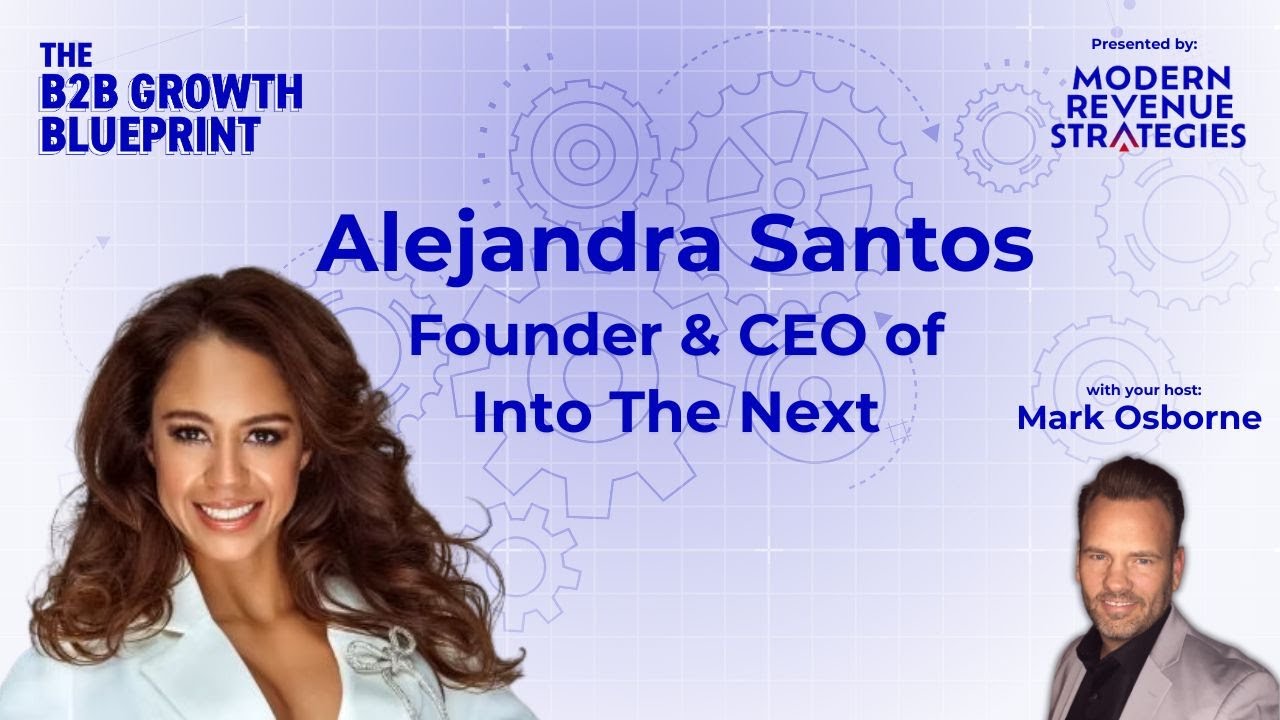
In this episode of the B2B Growth Blueprint podcast, host Mark Osborne interviews Alejandra Santos, founder of Into The Next and host of the Scale to Exit podcast. Alejandra shares her personal journey from co‑founder and CFO consultant to building a consulting firm that helps businesses become sellable assets. She explains her mission to bridge the gap between operating companies and successful exits, drawing on her father’s missed exit as a catalyst. The conversation distinguishes between VC‑backed startups and bootstrapped, blue‑collar businesses, highlighting differing mindsets, growth challenges, and the need for strategic planning. Alejandra emphasizes that exit planning is a core business strategy that creates freedom and legacy wealth, and she walks through the tools she uses—financial modeling, forecasting, SOP creation, KPI tracking, scenario planning, and a proprietary “Scale and Exit Readiness Index.” She describes how she quantifies a founder’s personal wealth goal, calculates a valuation, identifies the “value gap,” and builds a roadmap with quarterly milestones to close that gap. Common misconceptions are unpacked, such as equating top‑line revenue with exit readiness, over‑reliance on a few customers, lack of recurring revenue, and using the business for personal tax sheltering. Alejandra outlines Into The Next’s fractional‑partner model, working on retainer and equity, serving SMBs and venture‑backed startups with scaling, fundraising, and M&A advisory. She also promotes her Scale to Exit podcast as an educational platform. The episode concludes with contact information for Alejandra and a call‑to‑action for listeners.
Chapters
Welcome to the B2B Growth Blueprint podcast, where we talk with entrepreneurs, founders, and leaders at B2B services, tech, and SaaS companies to learn the systems and processes they've used to create success for their business. We'll also learn from marketing and sales experts to provide insights to help you grow your business. I'm your host, Mark Osborne, and the podcast is brought to you by Modern Revenue Strategies and their 10x ROI B2B Growth Guarantee. Schedule a free diagnostic call to learn the fastest path to double your B2B revenues in just 90 days. Hello and welcome to another episode of the B2B Growth Blueprint Podcast. I'm your host, Mark Osborne. And today, I'm very excited to welcome my guest, Alejandra Santos. Alejandra is the founder and visionary behind Into The Next, and she brings a wealth of experience and a passion for helping businesses achieve their full potential and leading the path towards a successful exit. She has over 17 years in the industry and a proven track record of driving financial and operational excellence across various sectors, including CPG, technology, e-commerce, and professional services. Her extensive background in CFO consulting, strategic planning, and operational efficiency has equipped her with the insights and expertise needed to address the unique challenges faced by growing and exiting businesses. She is also the host of Scale to Exit podcast, now in its 4th season. So, Alejandra, welcome to the show.
Thank you, Mark, for having me. I'm very excited to be here today.
Yeah, so you've obviously got a real depth of expertise and a wealth of knowledge. Why don't you give our audience a little bit of a background of sort of, you know, how your career has led you to this point?
Yes, so, yeah, my career has been interesting. I'm not gonna lie. I've worked alongside the trenches with founders in their business. I've been a co-founder. I have been in consulting companies. that are now my competitors. Um, and yeah, and I've also done some really cool mergers and acquisitions. So I've been all over the map. Um, you know, I am kind of the person that I see something, I want to make it better, and why not do it myself? So that's why I started my own business. Um, I've always had that entrepreneur bone in me. I mean, I was raised by 2 strong entrepreneurs, so. That has always been in my, in my mind on how to create my business. Um, and then one day I just took, you know, that little leap of faith in me. That was about 5 years ago, and now here we are.
That's fantastic. That's fantastic. So I know that at Into the Next, you have a, a real sort of refined, uh, way of approaching businesses through sort of where they are at their stage of growth, uh, and That's something that not every consultant or, you know, company does. Tell us a little bit about that.
Yes, I like to say that we are on a mission, myself particularly, to bridge the gap between a business and a sellable asset. I became very strong on that mission when, you know, I realized that not a lot of— I mean, I'm just gonna— I'm gonna say like only 20% ever get to have the exit of their dreams. And the statistics are there, and only 80% really regret it that they actually did. And my father was one of those statistics points where he raised his own business for 55 years, and he couldn't have the exit that he wanted. And he even told me that, like, I don't have— I never got to enjoy my retirement the way that I wanted. And, you know, and everything was taken from me. So I really, you know, became very ingrained with my mission, and that's the company's mission. And throughout that mission, I have lived many different experiences with the clients that I serve. I would call, you know, you can, I work with like your typical startup, right? Which is venture funding, white collared, I would say tech, you know, all of those industries and they work very differently and their mindset is very differently than your established business owner that has bootstrapped his business or her business. We're talking about more blue collar industries, landscaping, Landscaping, roofing, you know, HVAC, all of the backbone of the economy of America. And their mindset is completely different as well. And you see growth through their lens and through those experiences approach being approached and solved in different ways. So you see it from like, you know, we got the startup ones that are used to getting money from investors and getting money from external sources. And I'm just going to be very honest and whoever's listening to me, well, I'm sorry, I'm being blunt. But those founders tend to be a little bit more lazy, uh, because, and I don't mean it in a bad way, but I just mean it because it's true, because they rely a lot on the external funding in order to make the next growth stage in order to meet their milestones. Right. And over here we have, I'm going to call my right side, we have the bootstrap business owners where they are hustling, grinding, bringing that money, and they're really good at what they do, but they don't, you know, bringing the money in, but they're not really good at everything else. Right. So being exposed to that right side, I would call it's what I learned to describe about like the different stages of growth, right? Because on the left side, the VC-backed companies, they have it all, right? They have the good team out of the start. They have the professional team. They have everything because they have the money. But the other side don't have the money. So they have to bootstrap and find their way in. And you see growth through their lens in a different way. You can see it, you know, as very established business still acting like a startup just because, you know, they don't have the professionalism or the processes or, uh, the financials right in place. Some of them don't even have the financials in place. They work through tax returns, which is unreal to me, and they're making like $2 million in revenue. Uh, then you have them going to like $3 to $4 million and doing a very chaotic growth explosion is what I like to call it because they're very reactive. And they still don't understand why KPIs is important to have or why they need budgeting or why they need this financial model, right? Or why they need to know where their money's coming from. And then you have the ones that after $5, maybe $6 million, they're like, okay, now I really want to understand how do I sell this business because I've been doing it for so long, maybe 10, maybe 12 years, you know, and now I'm making $6 million and now I need to know how to sell it.
Yeah. So you describe these, you know, sort of different stages of growth and you and I have chatted before about, you know, sort of the importance of a strategy in guiding these different stages. And, you know, it's been, you know, said that strategy comes from, you know, different outcomes have a different strategy that apply to them. How do you, you know, sort of work with business owners to help them recognize that They have different outcomes on maybe a 5-year timeline at different stages of growth and, and sort of define those that then they can work backwards from the tactics that they use to achieve those strategic outcomes.
So that's very interesting. So that is a lot in the mindset part, I like to say, because even though a business is making a lot of money, you'll be surprised, like a business that's making like $10 million, $15, $20 million, the mindset of the leadership is not there yet. And somehow, you know, because they're really good at what they're doing and they get explosive growth, they really haven't got to a place where they want to think ahead. They don't really want to still strategize the right way. They're very reactive. You find that a lot on, you know, landscaping, roofing, construction, and some of those industries. So, The way I do it is, you know, really talk to that leadership mindset part of it, the emotional part of it. Like, let's create less chaos for you. Let's, you know, let's make you this less reactive. Like, every time there's a fire, I get a message, Alejandra here, Alejandra there, and I'm like, I don't know how to respond because we don't have all the tools. Sorry, you know. And I like to give really good responses. So if I don't have the data backing me, it's really hard for me to make, You know, those kind of responses useful. So anyway, so giving them and making them understand that listen, this is if we do this exercise, you're gonna get more clarity. You're gonna get, um, you're gonna become more focused. You're gonna grow your business better. You're gonna scale it leaner is what I want to call it. You want to scale leaner. And I also like to say, you know, because people are very defensive, they say I don't want to exit. The first thing they hear about exits is like I don't want to exit. And I'm like okay, uh, so you're gonna die with your business? Is that the business dies with you?
Like That's still an exit. Yeah.
So that's the exit that you want for your business. That's, uh, that's great. So, you know, helping them understand like the business, you, you have the option to exit your business and still have a life after that is really important. Uh, so it has a, it's a lot of like therapy work. I am not gonna lie. My job is also therapy. So, and it's included in the retainer.
Well, and I love that. I know that you have conversations even with early-stage businesses on this idea of exiting because there's a phrase in the exit planning sort of environment that exit planning is just good business strategy. So, if you've got a plan for how you're going to exit, even if that exit's 10, 20 years down the road, whatever it might be, having a plan for it today, again, feeds back into that strategy. The strategy is how you build that plan.
Yeah.
You talked about, you know, sort of changing from this sort of chaotic environment to more of a, you know, sort of manageable, less chaotic environment. What are some of the, you know, approaches and tools that you see be successful to make that transition from chaos into, you know, sort of more manageable?
Yeah, so thank you for that. So I'm gonna go back to your point, which you said about, you know, working with early businesses and giving them and trying to give them the exit strategy, right? So I I do work at, you know, I'm very huge on exit strategies just because, um, people are not. So I try to fill in that gap, right? Like, that's the whole mission of the company, how to create a sellable asset, um, to create legacy wealth, right, for others. So when I work with startups, even though they're venture funded, um, you'll be surprised at the number of those going for VC funding, they don't have an exit strategy. And that's when you have to have an exit strategy because if you're asking people for money, That's right. You need to have an exit strategy. Like there is no way going around that one and it's not gonna be an IPO. You have no idea how many people wanna go for an IPO. It's great. I love it. It's fantastic.
Yeah.
So from that beginning, I incorporate people on the exit strategy. You know, it's just like you said, a business strategy with foresight, very simple terms. And I like to say it to people and I say it through my podcast all the time. Instead of thinking, you know, you're gonna sell your business, start thinking, how do I create more freedom for myself? Because that's basically what you're doing. Why, why you have to wait to sell your business to really reap the benefits of having a sellable asset, right? Because that was going to give you more freedom. That's going to put more money on your table. That's going to give you actually live a life outside of your business, which most people don't do, right? They're always working in their business. So that's, that's something on that side. On the other side, the tools for making, you know, chaotic, for bringing chaos to clarity. I really love to create a lot of like financial modeling, you know, that's just because that's how I was bred into the finance world. I like to be, uh, one of the things that investors look and buyers look is predictability of cash flow and revenue. And that's what I like to do for the business owner themselves. I want to be able to help them see how much predictability we have in revenue and in cash because that's gonna prepare us for any kind of event, right? Like, if we have to go and ask for debt lenders, which is non-dilutive, you know, funding, or do we have to go to another fund? And what fund would that look like? Because then we're at a different stage, and a different stage of revenue business will be more appropriate for a different kind of fund, right? So those kind of things allow us to make those type of decisions. So having financial modeling Um, like you said, like you're in marketing, the, the correct, you know, marketing forecasting that I love to see, the, uh, systematizing operations, which is basically, you know, creating SOPs. It's so easy, like creating SOPs, just grabbing a Loom and do a Loom video and now and sell it, you know.
Yeah.
Send it to your team. That's basically what it is. Um, how do you make yourself more replaceable? How do you make an employee replaceable? Traceability of skill set is what I like to call it. How do you transfer your skill set or your employee skill set, or whoever is the main guy in your team, to another employee? Because guess what? We're not eternal, and people will leave the company, right? Like, that's one of the things that you see the most is people will leave, and then owners are struggling with like, oh my God, like, how do I do this task now if my main guy left, right? So transferability. So if you can create processes and models and You know, data tools that can go ahead and help transferability, easy predictability in cash flow and revenue. And then kind of like also creating case scenarios around it, right? If the economy does this, what do we do here, right? Because a lot of businesses are very cyclical. So if we have another COVID episode, what is that gonna affect my business?
Right.
Yeah, and this is what the things we can do with these tools to create these tools in-house.
So you hit on so many things there that, uh, are, I think, are worth unpacking some of them and sort of underscoring them because they're so valuable. And, and the first is you talked about, you know, sort of this idea of, you know, the things that make a business more sellable, more transferable, more attractive to a buyer are also the things that make it just a better business to run from the perspective of less owner dependency. Well, if you can't step away from your business, then a buyer can't see themselves running that business. So, it's not very sellable, not very transferable. It also means you can never take a vacation. And so, by building the things that make it less dependent on the owner, you make it, you know, you increase that enterprise value. You increase the sellability, the attractiveness to a buyer, but you also make your life better because you can step away from it. You also talked about sort of building some of these processes and systems, building SOPs. Again, one of the things that keeps business owners up at night is, what if Jill were to leave? Everything depends on Jill. Jill came in late the other day. Was she out interviewing for another job? That's a big stressor. But if you've done the work of building a process around the way Jill does it and documenting the way Jill does it, documenting the job description for replacing a Jill, then you can have a lot more peace of mind about not worrying, well, I hope Jill stays, but if she goes, it's not going to be the end of the world for us because we've built this system and process. And then the real sort of 301 level you talked about is the sort of forecasting because that forecasting creates this opportunity for scenario planning so that you can think through, well, what if I lost my biggest customer? What would that mean? And you can actually know because very often it's just the ambiguity of not knowing and not having a plan that creates all the stress in the mind of the business owner or the entrepreneur. And so creating those forecasting mechanisms And we talked a little bit before once on how sort of strategy is this integration, this sort of the overall business strategy is the integration oftentimes around the forecasting piece and around how, if you want to go here, how do we get there from an operations perspective, from a finance perspective, from a marketing perspective? What are some ways that you've seen companies do a good job of using that long-term goal to sort of create alignment within strategy across organizations?
So I like to tell, you know, the owner and executive team, I like to say, you know, can you please write it in a piece of paper, a number of how much money you need to live the life that you want after you exit this business, right? Just put a number, whatever, $5 million, $10 million, $20 million, whatever it is, right? And then we work on that number and then I tell them, okay, so, and then I created this like scale and exit readiness index, which is proprietary of Into the Next. And it's basically a very interesting questionnaire where it calculates the score of everything and it tells us where the business is at that particular time. Is it at risk or scalability or exit ready, right? Most of the times—
Yeah.
You're exit ready, no matter how much money you bring. People think revenue means exit, exit. No, not at all. 100% the opposite. So then, then we look at that number and then we do that very simple valuation and see where the business is at, right? And then I like to say, well, your business is at this much valuation, which means, honestly speaking, you're not gonna get that. Like, that's just a leverage point when it comes to selling a business. You're probably gonna get 80 to 70% of the asking price, right? That's what it basically— depending on the industry, depending on the market, depending on where Interest rates, all of that good stuff. And that's how much you're gonna get from that. And is that enough to cover your number? And most of the times it's not, right? Most of the times it's not. So then I like to work an exercise and be like, so in order to get your number, then we're gonna have to get to this valuation. And that's the value gap, right? You're a CEPA, you know what I mean. So then we calculate our value gap already. And now from there, we start creating what it is, the map, the map to get us to that number. But it's without, without this exercise, people don't really understand why are we doing what we're doing. They don't really get it. But once they see the numbers and the vision, they're like, okay, now I get why I need to create this roadmap in order to take us there. How long is it gonna be to take us there? And then we go from here and we bring it all the way backwards to the now to see exactly what the actions need to be implemented and executed in order to hit those milestones. So we're now, we're doing KPIs and milestones. Yearly, right? Your CEPA. I don't know if you do every 90 days, maybe you do sprints. I don't know. Everybody has their own thing, right? Depending on where the business is at, it could be sprints. It could be, you know, sprints of a week or 2 weeks. I don't know. Most of the times I like to do 90 days quarterly goals with mid, you know, kind of like checkups as well, just to see if everybody's on track. When the teams are all over the place, maybe we need to do a little bit more checkups. But anyways, that sets up the whole grounding foundation to why we're doing what we're doing and now getting aligned with the team to really accomplish those goals. So that's how I like to walk somebody through in a scenario. I actually do a workshop like this with people, with companies, because it takes a lot of time, right? Like, I wouldn't sit down in a meeting and just get it done. And you need your executive team there too because, you know, at the at the same time, the owner would know one thing or the CEO would know one thing and someone else knows another thing, right, of the business. So identifying all those pain points, how to get to this value gap, bridge the gap, right, which is the business operating, the business and the sellable asset. We bridge the gap, we get to your personal wealth number, and then we go ahead and bring it in.
That's right. Well, and that connecting the outcome of ultimately like having that successful exit, being able to live the life you want to live, after the business, that makes it so much easier for people to prioritize some of the changes that they need to make in their business. Because if they're not connecting it to this larger outcome, if it's just, well, we need to be more efficient.
Yeah.
Okay. Like, that's not super motivating. But if it's every point of, you know, improved efficiency, you know, adds this much value to the company, which puts you that much closer to that goal that you're looking for, that's a lot more powerful. You know, sort of connection that you're making there for folks so that they can really see themselves in that future.
Yeah, it's not only that, but when you do that exercise, you discover that you also have to work a lot on your personal life, right? Whatever it is that you want to do after, and in your, you know, maybe you have some goals that you want to accomplish personally, or maybe you're not ready. Like, I've sat down in meetings where people are like, well, I want to sell it to— I want to give it to my family, or I want to give it to Maybe IPO, the other one says, and it's like, maybe I want to do, and then like, you're not aligned at all. So that means that we have some, nothing is going to happen because you have to get aligned, right? To make an outcome happen. Um, so yeah, so discovering those little things really make you understand who else you need to bring into the picture, right? Because I can only do one thing, right? My team can only do the certain things. So do I need to bring a life coach, which I have done? Uh, do I need to bring a life coach into the picture? Do I need to bring your wealth advisor because you don't have one. And all, you know, lawyer and all of those things. So.
So you hit on something earlier that I thought was really interesting and something that I see a lot, which is sort of this idea of, well, if I just keep growing my business, that's making it more valuable. But very oftentimes that's not true for a lot of reasons, one of which is, well, if you're growing it in ways that aren't transferable or scalable or sustainable, That makes it a less attractive business than a smaller business that is more transferable. And that, you know, I'm sure you've heard the phrase, you know, growing broke, which so many businesses, you know, every new project, their margins are even worse, which is the opposite of what you should be achieving because you're creating the systems that get you there. What are other misconceptions that you see when you start working with companies that, you know, they're thinking, Oh, by doing this, I'm making my business more valuable. I'm preparing myself for the successful exit that I want. But in fact, it might be having the opposite effect, or at least not as impactful as, as potentially a different perspective or a way of approaching it.
Yeah. So, I mean, you really, you really touch on the good ones. Um, people, the biggest misconception is a growing top-line revenue. People are like, you know, oh my God, Alejandro, we're making so much money. We can exit, right?
And yeah.
No, we cannot exit. That's the biggest thing because, uh, people tend to forget that money can come from different places, right? And if money comes from, uh, 2 or 3 big players and one of those big players leaves, you know, the company, like stops doing work with you, then we have a problem right now. Your money just— your income got reduced significantly. And now how do we get another one? So really it's not about Um, the top line revenue is more about like, how are you getting your money, right? Is that process repeatable? Like you said, repeatable. Is it repeatable? Is it transferable to someone else? Is it something that has worked, that is working? Like, what are the KPIs to measure the success of that process in particular bringing that money? Because that's gonna tell me it's— the business is working, right? Everything is working. Um, now if you don't have recurring revenue too is another one, because people chase new customers. And I have clients like this right now, which is really painful. It's really painful for me to watch because all they do is chase new clients every single month, and it's so much stress for them. Like, it's not even about, you know, and the money keeps coming in, really big money, but chasing new clients every month is exhausting. So why not create a recurring revenue stream, right? And sometimes what happens is that you can incorporate these things into businesses or explain them why to do these things, but if they're not ready, again, going back to the mindset part, if they don't really understand the why, then it's not gonna happen, right? So, um, I have included recurring revenue streams for a lot of different clients and it has worked well, and I have introduced it to other clients and it has not worked at So it just really depends where that person is. Recurring revenue. Um, the other one, like I said, they funnel a lot of like personal expenses through the business. And that's a big one they should not be doing. Um, which, you know, is another misconception. They're like, I can X it, right? No, but that's part of my payment. That's part of like, if I was getting paid, I would be getting paid that. No, it does not work like that. You have to be so detached from the business. You have to pay yourself a salary, like people, but there are another one is like, I just want to minimize taxes. I want to reduce my tax liability. I'm like, great. But when it comes to selling your business, people don't want to— they want to see profit, you know, they want to see that the business is working, not just because you're reducing your tax liability, you're putting all these extra expenses in order to, you know, make it work for yourself. Um, I mean, there's so many.
That's what you hit on, some great ones, and certainly some, some big pitfalls that a lot of folks fall into. But you're obviously an expert in a ton of great areas that we're both passionate about. We could talk about all day, but I got to be mindful of your time. But before I let you go, kind of tell us a little more about Into the Next. Like, who do you work with? Who should reach out? And what kind of things do you help them with?
Yeah, so Into the Next is— I was going to call it consulting arm, but it's not really consulting firm. I don't like to say that I'm a consulting firm because we work very different than consultants. Um, we're very fractional partners. I would say if you don't have a team, we plug ourselves as a team. Um, if you do have a team, we still like to, you know, be very involved, um, in executing and getting you to the next place. We also don't do a lot of billable hours. Um, we work by retainers and equity, so we take equity in our clients. Um, because we are, like I said, embedded into the success of the business. So consulting is just because of tax purposes. You have to put it in the tax forms that you're consulting, but we're not really like that. Uh, and Into the Next is basically we help small to medium-sized businesses in, you know, scaling lean and exiting smart, which basically is systematizing operations, improving your financial position, um, and hopefully go for an exit at some point in the future. And we also support venture-funded startups. The biggest thing that we do there is fundraising efforts, setting a good valuation and getting them from a very tiny place, a seed level to a Series B level when they're ready to take on their own. And we do a lot of M&A advisory as well, which is something that, you know, gets to support big companies, bigger businesses. So that's basically that angle. And Scale to Exit is my podcast. Where I educate, you know, I like to call it an education platform, uh, creating awareness to business owners on why they should exit their business, of why you should do it ahead of time and not wait 2 months before you do it, uh, which is kind of like what you're doing, Mark, right? How do you create a sellable asset? How to bridge that gap? And I go very, um, very candid on how I talk there just because I want to really, really make people understand the importance of exiting and how much money you're leaving on the table when you're not doing it the right way. And I bring experts as well in their field, M&As, brokers, founders that have exited, all of them coming in together, really sharing their story and sharing why exiting is so important and why they should prepare ahead of time.
So Scale to Exit podcast, everyone should go check out. What's the, what's the best way for folks to get in touch with you if they're interested in learning more about working with you?
Yeah, so you can find me on LinkedIn. I'm there all the time, uh, Alejandra Santos. And then I have a website, it's called bealejandrasantos.com. You can also find me there. Uh, you can go to Into the Next and email me alejandra@intothenext.com. Uh, you can find me on Instagram and Facebook. I mean, I'm all the platforms.
Easy to find, very accessible. Well, Alejandra, thank you so much for taking the time to join us today. I really enjoyed our conversation. I'm sure our audience gained a lot of insight.
Yeah, thank you, Mark. I really appreciate what you're doing, and I cannot wait to hear how this came out.
All right, talk to you soon.
Bye.
Thank you for joining this episode of the B2B Growth Blueprint podcast. We hope you've gained insights to grow your business. If you enjoyed this discussion, please rate, comment, like on your favorite platform and share to others who will find it useful. Do you know a CEO, founder, or leader at an early-stage B2B services, tech, or SaaS company who would like to be a guest and share their story? Send us a note. Let's schedule a conversation.
More from Mark

How Can You Maximize Your Business Value Before Selling? with Randy Katz Video







