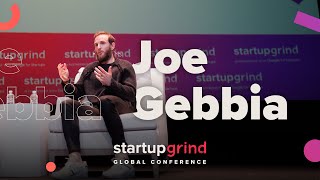
Alfred Lin (Sequoia Capital) at Startup Grind San Francisco

Sequoia partner Alfred Lin, who co-founded Link Exchange and led Zappos as COO, discusses why founders should prioritize passion over market timing and how Sequoia vets character through personal references and the "worst reference" question. He emphasizes culture as daily behaviors set by founders and warns against red flags in co-founder dynamics.
Chapters
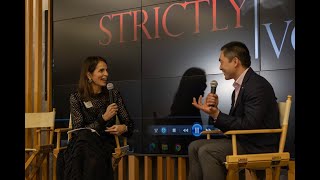
Welcome to the startup grind. So Alfred Lynn attended Stanford, where he received his degree in statistics. He attended Harvard and received his degree in mathematics. He dropped out of the PhD program at Stanford, much to the chagrin of his mother. And he joined his longtime friend at Harvard at Link Exchange, which eventually sold to Microsoft for more than $200 million. He went on to become the CFO and the COO, and if that wasn't enough, also the chairman of Zappos. Anyone ever use Zappos? Okay, you can clap to it. It's okay. You don't need to be ashamed of liking his product. As an investor, he's invested in companies like Airbnb, Houzz, Humble Bundle, Kiwi, Instacart, Stella, and.com zappos and a number of others. Let's give a big Startup Grind welcome for Alfred Lynn. Here we go.
Thank you.
Thank you very much.
Got two standard ovations already.
You haven't even said anything.
Exactly.
Can you guys hear Alfred? Okay in the back? We good? Okay. Okay. Well, Alfred, tell us. There's lots of places we could start, but I'd love to start with you taking us back to the day that you sat down with your mom and told her that you were going to drop out of the PhD program at Stanford and you were going to go join this startup, which at the time was not doing well, although it was started by one of your friends, I'm led to believe. Correct me if I'm wrong, but tell us what that experience was like. Tell us what happened when you told her.
Well, let's see. I think you got to go back and understand a little bit of my background. My parents came, immigrated to the United States because they wanted a better life for me and my brother. They had always envisioned, like a lot of Asian parents, but all parents in general, that their children's lives are going to be better than their lives. They had pretty good life in Taiwan, but they wanted us to come here. And they had this hierarchy of sort of things you could do with your life. And the most important thing was to become a scholar and contribute to society. So want us to get a PhD. If you didn't want to do that, then be a doctor. If you didn't do that, then be a lawyer. And if you don't want to do that, there's a whole list of things you could have done, could be doing. And the last thing was to be in business in their sort of framework. So I had acquiesced to go get a PhD program. I was always good at Math. So I came out here for a PhD program in statistics, and it was. For me, it was intellectually challenging, but I wasn't passionate about it. And I started telling my mom this, and she was like, no, just stay in the program. You got a full free ride. What's the problem? And I had to sort of tell her that I wasn't going to do it. And she basically cried on the phone. A few years later when I told her that I. Well, I told her what the company did, had not raised very much money and it had no revenue. She was like, tearing her hair out. And then a few years later, when the company did get sold to Microsoft, the information had leaked, and I couldn't call her until the deal was signed. She had already heard about it because it was leaked to the Wall Street Journal. So I called her up and wanted to tell her the great news. And she's like, so that means you can go back and finish off your PhD, right? To this day, she still asks me, when are you going to go back and finish your PhD?
So why did you want to answer her now in the camera and tell her when you're going to do it?
It's unlikely. Never say no, but it's unlikely.
What did you learn from that experience? Tell us about some of the lessons you learned at Link Exchange.
Well, I mean, the first lesson was if you're not really passionate about something, even if you are technically good at it, it's just not a fit. And years later, the book Good to Great sort of resonated with me because it talked about how something that company is uniquely good at, what your team's passionate about, and something that can generate your financial engine. Well, that applies to companies just as much as to human beings. As founders, as people in this world, you got to do something that you're passionate about and you're good at. And the financial engine thing was not all about just making a ton of money. You have to figure out how to make sort of more money than you spend. And that's what you have to sort of do, whether it's you as a person or as a founder of a company. And I think that was a very, very important lesson. Link Exchange was an interesting time. I think we had multiple times where we were going to not be able to make the next payroll. And it was very. It was the first time I had to do with that. And it was not fun and it was very, very stressful. But we got through it, and it led me to think about things a little bit more Differently. And, you know, we didn't raise a lot of money, but we sort of had to sort of iterate our way into an okay business model. We had a pretty decent business model. It grew, it grew. It grew. In 1996, 97, it was kind of a weird company in the sense that a lot of companies were focused on growth and usage, but not on monetization. And because we didn't raise a lot of money, we had to focus a little bit on monetization. And that discipline is actually a good thing. I think if you're only focused on growth and not on monetization, it could be great in some situations, or it could be disastrous. There's a lot of disastrous situations in 1999 and 2000.
Let me ask you, just going back to this question, on passion. Everyone here is passionate about something, but I know a lot of entrepreneurs taking that passion and actually monetizing that. I mean, like, you know, people are passionate about surfing, or they're passionate about, you know, playing music or whatever. How do you turn a passion into something that is a monetizable pain for other people around you? I mean, like, how do you make that leap?
So I think you gotta separate passion and hobbies from passions that you can actually build a company around. I'm not here to sort of talk about how you can become a baseball player or a movie star, because I don't know that world. But if you're talking specifically about you have a passion in music, there are plenty of problems that music companies face. And if you solve some of those problems, that company should be able to generate some level of revenue. It may not be the biggest company in the world, but it should be able to generate some level of revenue. And often that passion leads you to look at the world a little differently. So you have to ask a bunch of why? Why now? Why is this broken? How can I fix it? What is a customer value proposition that I can create with a product or service? And those are the type of things that will lead you to sort of a founding company idea.
You've been a founder, you've been an employee, you've been an executive at several startups. Put yourself in the shoes of a founder today. If you, you know, if the slate was clean, you're coming out of college, or, you know, you had nothing in front of you. Talk to us about how you would evaluate, based on the current climate, what's happening, whether or not to start a company right now, whether or not to join a company, or whether or not to go do something else. How would you look at making those decisions?
Well, I think the, you should just, in some ways you should ignore the climate. If you love what you're doing, you're gonna love it during good or bad times. If you don't love what you're doing, you kind of the pro, then you kind of find out during bad times you don't love it. You're not actually that passionate about it. That's the only downside of either starting a company or career joining a company during the good times. Because things tend to go pretty well during good times. You don't really know how bad it is until the bad times. And so I would just kind of ask people to just fast forward. Like what could be the worst thing that could happen and how would you deal with it? I think the regret functions, people forget about regret functions. Like if I were to sort of do X, Y and Z, would I regret A, B and C? And think through that, intellectualize that a little bit. And you know, I think, you know, the sort of example I'd give is lots of people I know when they start a company, they could care less whether it's a billion dollar company or they tried to make it a billion dollar company and it was, it did not end up that way. They could care less about the actual results, they just love starting the company. If you're that type of person, you can answer that truthfully, then I think you should go start a company. But if as soon as things go poorly, you're not going to enjoy it, you're not going to want to dig out of the hole that you created and you're probably not suited for it. Because the best companies in the world aren't the ones that sort of get started in good times, get a product going and get acquired in a few years, the best ones can survive ups and downs, go through business cycle after business cycle.
Have you just tilt that up just a tiny bit.
There you go.
Just speaking with a few people in the room, there are definitely some people here that would love to get funded by Sequoia and to say the least. So I brought, at the end of this, I brought like a couple of stacks of ones for $100 bills and thought you could just throw them in the air and we could all say that you had funded us, if you're okay. I mean, I didn't ask you if we could do that. I just assumed that would be okay. Now everyone's expecting it. So. But tell us about the vetting process, where the relationship starts With Sequoia and entrepreneurs, how do you meet these people? How do they come into your, you know, into your line of sight? Where does it begin?
Yeah, I know. I mean, I was on the other side trying to pitch Sequoia, you know, when I was at Link Exchange and had Tomian at Zappos. So I know the pain. It looks pretty opaque. And it's not opaque on purpose. It's just a firm like Sequoia, and a lot of venture firms, they don't make many investments a year. So at Sequoia, we don't think of ourselves as investors. We think we want to be business partners with the founders that we become business partners with. And so that's maybe a slightly different vetting process than other places where they think of themselves as investors. We're not trying to buy low and sell high. And so we try to understand the founders and who they are, what makes them tick. A lot of that element that is maybe not so much about the business up front. So we're not trying to sort of make 10 investments a year per partner. We're making each of us make one or two investments per person partner. And so we get lots of deal flow. But the ones that we trust are people who are in our network, people who have. I have worked with or some of my partners have worked with. And when they send a referral email that you have to go take a look at that company, we're much more likely to go say, hey, I'll go meet that company. And so we'll go meet the company and sort of try to understand what makes you tick. Why are you passionate about it? Are you solving a problem that you have personal passion and you have a personal pain for? And, you know, if we like the opportunity, we'll bring you back. We'll have skeptics both inside the partnership and outside our partnership. Maybe industry experts ask you a bunch of questions about what you're up to. And if you sort of pass that screen, then we bring you back for a full partner meeting. And that sounds like a process. We can do that in a day, in a week, and in some cases it could take several years. It was pretty fast for Link Exchange to get acquired after our pitch, mainly because Yahoo had wanted to acquire the company, and Mike Moritz was on the board of Yahoo. And after we said no at Link Exchange to being acquired by Yahoo, he sort of knew that the company had already been vetted, and that process moved pretty quickly. Zappos took many years before Sequoia invested, even though we had already made money for Sequoia as people who sort of helped get Link Exchange off the ground. But we don't always get it right. So we try to stay in touch with people and track the company's progress. And if we don't get it right the first time, hopefully we get it right the second time. If we don't get it right the second time, hopefully we get it right the third time.
It seems like a lot of the great companies are pursued. And there's a guy in Utah who started this company called Qualtrics, Ryan Smith, who's talked about this, where Sequoia and Excel really pursued them month after month, year after year, trying to get meetings, trying to talk to them, trying to invest. Do you find that the best companies are the ones that you have to not beg your way into, but hustle your way into, versus them coming to you and saying, hey, you should invest in us. We need money from you.
The funny thing about venture capital is, and I didn't realize this until I knew that we don't make a lot of investments. But in general, I would say we say no. 999 times out of 1000, the one time we want to invest, we're begging everyone, we're begging the founders to let us invest, we're begging their advisors, we're begging the management team, we're begging your own partners. Because no company is perfect. There's always a reason not to invest. So I think the dynamic is pretty interesting that way.
If Sequoia, if you were an entrepreneur and Sequoia had passed on investing in your company, where would you go next?
I don't know. There's lots of venture firms.
Is there anyone in particular? Or if you're. Are there any venture capitals outside of Sequoia that you'd say, that's somebody I really respect. That's somebody I would take money from, seed level, angel level.
There are lots of people that I respect. Never get to talk about your competitors.
Let's talk about. Let's talk about doing diligence in the founders. We've had this rash of kind of embarrassing things happening to founders, executives, CEOs, and I wonder, tell us about what kind of diligence does Sequoia do into the background of a founder and how important is that person's character and their personal values in an investment?
It's very important. I mean, that's why we, you know, as I said, we're going to, if things go right, we're going to be in business with you for, you know, five, 10, 15 years. And that's the type of horizon that we have to sort of think about. We don't go in thinking that the company is not going to work and thinking that this is going to be the best thing since sliced bread. And we're going to have a five to 15 year partnership. And so the vetting process for founder, we talk, you know, we're all going to ask you for personal references. We're going to obviously talk to them. We're going to like, look at the LinkedIn profiles of you and those people that you provided and try to sort of see one, you know, sort of one degree away and two degrees away. We're going to talk to some of those people. Look, I like asking the question just to see how in tune you are with both your own references and how straightforward you're going to be is like, who's going to be the worst reference for you and why and how would you explain that situation? And it's not looking for the worst thing you've ever done in your life. But if you can't answer that question or you feel embarrassed about it, then we haven't established a level of trust. You know, I think about this partnership the same way I think about your co founder partnership, your management team partnership. I don't want to be treated any differently than that because I want to be there in the trenches with you and be able to discuss any problem that you have if we decide to become partners with you and vice versa. You should do the same thing for the venture partner that you're going to invite onto your board. You know, the sort of. It is interesting that a lot of money is raised very, very quickly over the last few years, but I sort of submit to you, an investing partner's relationship with being on your board can be a long period of time. So can your management team, so can your co founder. And I go back to sort of this analogy. You know, people date for many years before they become. Before they get married or before they become partners, and yet 50% of those partnerships end in divorce. Why do you think any of these relationships on the business side is any different? And so I think it behooves you just as much as me as an investor to sort of go figure out what kind of person you want to be in business with.
The hashtag is StartupGrind. So this is a question you actually ask, who is the worst reference for you? You ask founders and do you follow up on those people? Do you talk to them? Do you?
Yeah, I think it depends on how truthful the response is. If you give me a softball or something, a softball sort of reference that it was someone who you work with on a team and they didn't like you because you were too aggressive, that's probably not the best answer you can give on that.
So then do you guys go trying to find it or do you just say that's a strike in. They can't trust him as much or her as much.
Well, it's not that we can't trust you. We just haven't developed the trust yet. We try to develop a good trust.
You don't hire private detectives or.
No.
You're not like trolling Instagram for ex boyfriends or girlfriends or anything?
Not looking for those kind of things.
That's the other side of Sandhill. So where is the line? I mean, do you like, do you look, do you say like, hey, this person's addicted to drugs, we can't invest in them, or, you know, this person's an alcoholic, we maybe should think about not invest putting $100 million into this company. Do those things matter? Do they factor into the decision or.
I'll answer it in general terms. Everybody has a balance sheet. Everybody has things they maybe have done that they're not proud of. They've gotten into trouble. Look, those are things of the past. Doesn't mean that you're going to have them in the future. But it doesn't form us of like the type of person you are. I would just put it this way. You got to, you know, we're going to trust. We're going to start an invest relationship. We may invest somewhere between, you know, zero, because we might incubate you to a few, or a dollar or a dollar or a million or two or three over time. If the company is successful, we're going to be investing tens of millions, maybe even hundreds of millions of dollars into your company. We need to be able to trust you with that. I need to be able to trust you with major decisions. And so look, do we ever have problems with people who have lots of fun? No, because having fun and being able to separate that from work, fine, if that, if you can't separate it, if you're coming to work high, that's a problem. If you're, you know, if you're doing things that are, that reflect negatively on the company, that will be a problem.
Seems fair. We're going to.
Is that both liberal and conservative?
You've appeased both. The liberal side, which is most of our room in San Francisco And a few conservatives that are here. So talk to us a little bit about culture. How do you. First of all, how do you define culture in your mind? What does it mean? What does startup culture mean?
Well, I think the culture is the set of behaviors that you exhibit in the company. So, you know, people talk about values, and often the values are just the plaque on the wall, as Tony alluded to in his book. If you don't live the values, that's not your culture. The culture is what gets expressed every single day by the way you treat other people, the decisions you make, things like that. And I think it's pretty important. I think the founder sets the tone for the culture, and generally, your personal values end up being the company's values. When you're the founder, and I think you want to be explicit about which are the. You have lots of values, but which are the set of 1, 2, 3, 5 values or 10 values in Zappos case that you want to sort of have be part of the company culture? You know, and I think we talked about this a lot at Zappos. We didn't write this down until a few years into the company, and we wish we had done that earlier, and we wish that it was in the very early days. It was a living, breathing sort of idea of like the type of people we wanted to hire, and we wish we'd just written that down and modified it as time went by. And it helps you sort of think through the type of people that you really want to have in the company and the type of people that you. You don't want to have in the company.
I'm two people in a garage, or I'm working in my basement, or I'm trying to figure out, am I writing out what my values are at that stage? Can I even define what my culture is going to be at that early stage? Or do you say no, five, 10 people, you need to figure it out?
The thing about one or two people in a garage is when you start interviewing the second or third employee, you're asking them questions not based off of just their qualifications, but there's some other set of things. The type of questions you ask are basically going to define the culture.
Like what? What kind of questions would you ask?
I don't know. Do you like arrogant people or humble people? Just the attitude that person portrays is going to set the tone of the culture. Do you like just hiring a bunch of engineers that's going to create an engineering culture? Do you like hiring a bunch of salespeople that's going to create a sales culture. And as a company grows, at the beginning, you have a set of things that define what's most important to the company. In this neighborhood, product is probably product and engineering sort of dominate. And so without saying anything specific, we have a lot of companies being founded that are very focused on product and engineering. And then you go one layer down from that, like, what kind of product do you want to build? Something, you know, simple or something complex. Why do you want it simple? Why do you want it complex? There are many, many reasons for that that is in your head that you haven't quite defined, and that sort of creates the culture.
The reality is, though, with most startups that are that small is it's very difficult to be picky and choosy about who's coming into your company because you're trying to sell anyone and everyone on your vision and your mission and getting them getting. So in some ways it's easy to compromise and say, look, this is the only person I can get. They're not the greatest engineer in the world, they're not the greatest salesperson in the world, but it's what I got. So do you settle or do you say no? Every single person is critical, regardless of what stage you're at. You can't compromise. They have to match your values, et cetera.
I think if you compromise on your values or you compromise on your standard, you're setting yourself up to having to deal with a personnel problem problem later. So you, yes, everybody has to pick their battles. But I would say the companies that have gotten the right thing off the bat, where they focused on both a combination of making sure they have the right talents and the skill set, as well as the values, are much better off because you're going to keep. You're going to hire that person, that person is going to hire someone else. And so if you compromise on either the skill set or the values, then you're just setting yourself up for having a bunch of compromises along the way.
We're going to do a bunch of questions on the startupgrind hashtag. So if you want to go to Twitter and ask a question, we can take one from there. We'll do that in just a minute. I want to talk to you about Tony Hsieh. You met him in college at Harvard. You were involved in several companies together when you met him. And I'm assuming if he were here, he would say a similar thing. But when you met him, did you say, hey, this is somebody that is going to be Extremely successful. Was it very obvious from the first thing you met, like, this guy is different, or what were those first interactions like between you and him in college?
I was just trying to buy some pizza.
He was selling. He had a pizza business, right? Yeah.
Look, I think we developed a relationship over time, and it was as simple. Look, I knew of him. He was actually always very entrepreneurial. And the thing was that in our dorm, the seniors would take over the grill, but you had to buy the grill. You had to buy the grill from the graduating seniors. The upcoming seniors would do that. And he decided to do that when he was an upcoming junior so that he can own the grill for two years. And the reason he wanted to do that was because the grill at the time was called the grill because all it made was French fries and burgers and milkshakes. And he thought that a pizza oven being installed in there would actually be much better for the environment. He wanted to change the environment in the grill and put in TVs and recorded movies. And he wanted to create a different environment in the grill. And he also thought that there was not enough margin in hamburgers and fries, and he thought pizza had much higher margin. So he did that. And I used to just come downstairs. His story is I came downstairs, bought pies, and took it upstairs and sold it by the slice. My story is that while that is technically true, I had a large college grooming group. I would literally go downstairs and tell Tony, hey, can I buy a pie? Can you give me a discount? And I brought it upstairs. Let's say the slice was $2. And so he gave me a discount. It was $1.25, $1.50. And I just want the money back from my roommates. I'm not trying to make a profit off of this, but 25 cents, which is a quarter, is a big deal back then because you needed quarters for washing machines, drying machines, and video games. Video games and vending machines. And either had to go to the bank to get it.
It was like the Bitcoin of your day.
My point, there is a dollar is not a dollar. 25 cents is not just 25 cents. So I always got, you know, I always got the leftover quarter. I always got two bucks for a slice. That should be $1.25 or $1.50 because of the inconvenience of having to go to the bank to get quarters. And then I told him about it, and so we bonded over that story because he was like, wow. So you go up, you come downstairs, pick up the pizza actually you call me from upstairs, then you come down, you pick it up and then you bring it straight upstairs. And I think you make more per hour than I do. So that's how we bonded. And look, did I know that he was going to be successful? No, because I don't think I imagined either of us were going to be. I don't think of us as successful, but I don't think any of us would have.
You don't see yourself as successful?
It's not that, it's more the. That wasn't what we set out to do and so we didn't talk about that. We just talked about these funny things about human nature, how like a quarter is not a quarter and that's how we bonded. And how he wanted to change the environment in the grill so you put it in TVs and recorded movies so that it was a more inviting environment. People weren't just going to come downstairs, buy the food and bring it upstairs. A few years later when I came out to Stanford, he wanted to, he thought yes, there's subways on university, but there wasn't one on Stanford's campus. So maybe we should open up the Stanford franchise. He's always a little bit ahead of his time because at the time the university just said no way because they didn't want any commercial entity on campus. Of course now there are plenty of commercial entities on campus and so those are all very interesting conversations. So I had to go tell him I don't think opening up a franchise subway franchise will work. You have to come up with some other idea. And then started actually Internet marketing solutions, creating websites. Because back then most people didn't know how to program in HTML. So he and Sanjay came out here, built websites and then they found that they created these great websites but they couldn't getting traffic to them. And that was the idea for link exchange. Link all these websites together so they can cross promote each other.
Someone has asked me to ask you to just speak louder. So just a heads up.
Oh sorry.
Are there any like huge red flags that you see when you, when you start talking to a founder or a team that you hear something and you're just like oh there is no way. Like are there just total deal breakers in co founder relationships that just throw up crazy signals for you that people would normally think of?
A lot of this is pattern recognition. There's not like. But I mean if the co founders are stepping over each other, they don't seem to be getting along and you're telling Me that the two of you or the three of you or the four of you are going to build a great company together. That's probably not going to happen if you can't get along. So that would be a red flag.
I'm going to take a couple of questions from Twitter and this is why you crowdsource questions because there's some great ones. StartupGrind. This is from Katerina and her question is who is your worst reference and.
Why.
Tables have turned. Okay, you're not going to answer that. How did you. This one is. Unless. Are you.
I don't know. Do you want me to.
I would love. Yeah, that would be awesome.
Let me think about it.
Okay, you've never thought about that or.
No, I'm the one asking the question.
I had to ask that question.
Nobody's ever asked me that question. So now that they have, I have to think about it.
From Kamyar. How did you deal with disagreements with your parents about taking your own path? Like how do you get that message across? How do you convince the people that love you that you're making the right choice?
I don't know. There's no easy answer to that. I think you have to be an independent thinker and make your own decisions and explain it to them as the best that I can. In fact, I probably my mom would be my worst reference. She doesn't have. She has great things to say about me and then she knows exactly where all my pitfalls are. And trying to reason with her is a hard thing because she doesn't see eye to eye with me. But those people who love you and they bring up objections generally have. They're well intentioned. So the objections are actually good to try to answer for yourself because if you can't answer them for yourself, then when someone else comes along and gives you that objection who could be an employee or business partner or board member, you know it's not going to feel very genuine when you're answering that for the first time.
This is from James Kim. How did you evaluate Link Exchange or Zappos prior to working there? What made you say this is the company I want to spend my time at. This is the horse I'm going to back.
I think if you had asked me had I planned my career path out, I'd say no, I didn't plan it. There are a bunch of decisions and bunch of accidents that happen along the way. I happen to know Tony. It was 1999, 2000. Sorry, it was 1997. 98. Time frame to 1999, 2000. That was a short period. There are a lot of things going on in the Internet space. I knew that there was something going on in the Internet space. I knew that because I was at Stanford. We had been using lots of different things that communicate with each other, both in the Science center at Harvard and then at Stanford. Just sending email using VI and pine, which nobody uses today. But you kind of knew that this was something that was different. Communication was about to be changed with the Internet. Then browsers happen. And so I knew I wanted to be in that space. And then there's an element of thinking about, okay, well, who do I know and what can I do there? And so that's what happened. There's just as much reasoning as much in terms of picking the industry as much as happenstance, which was that Tony was starting an Internet company and I knew him and he happened to need someone who knew something about numbers. I wasn't a finance guy, but I was pretty good at math and I had to pick up some of that. And he trusted me. And so that trust allowed me to sort of handle the finances for Link Exchange. Then after. So the Zappos one was a little also by happen cents we happened. So after Link Exchange was sold to Microsoft, Tony and I started Venture frogs because we enjoy the very early stages of our startup. So we thought we could replicate that by seed investing and incubating companies. We had raised a small fund of $27 million from friends and family of Link Exchange. And the first we basically invest. We expected to invest that over an undefined amount of time, maybe two years, maybe three years, but not in a year. We happened to invest that fund in a year. We just went, blew through it. And some of the investments turned out fine by itself, like ask Jeeves and OpenTable. And some of them got sold because we invested in the early part of 1999, in 2000, 2001, there were some interesting companies that were picking off Internet properties. But by 2001, 2002, a lot of the companies that had been funded, we had to go help. And you know, there were. We had 27 companies in our portfolio, seven of which we were like, okay, they'll do fine without us. And then we looked at the 20 and there were two companies that we thought we could help. The other 18, whatever we did, we probably couldn't help. So I went to tell me networks first and Tony went to Zappos because he was passionate about the company. And then I went back, went to Zappos. So it was more of an obligation as well as a love for both those two companies that led us to those decisions.
I wonder if we could just dig a little bit deeper into this idea of pattern recognition or making the right bets, because you seem to be better at this, better at this consistently than almost anyone I have ever seen. And I've talked to a lot of great investors and entrepreneurs and whatever. You can be humble about it, but it's true. And you made the humble face, which.
Is genuinely, look, we made 27 investments. A lot of them went to zero.
Yeah, but you had like 10 that were either IPO'd or acquired by huge companies or, I mean, you know, your ratio on that was pretty. And if you look at your portfolio today, there are no, like, the companies you've invested in, the companies you sit on the board for. There aren't really any duds. And, you know, I just like, what do you see that other people don't see? I mean, how is your evaluation process different? How do you look at entrepreneurs differently? That makes you pick the right ones.
So I would say, look, the investments that I'm on the board of right now, the investment decisions made by Sequoia Capital as a partnership, and I just happen to represent Sequoia on the board of those companies. And I really mean that. It's a team effort, team decision. If you've got a good team of people that sort of look at the world holistically, it will help you make better decisions and so surround yourself with people that see the world differently than you from a different angle. So if you're really good at tech and in engineering, you need someone who is going to focus on sales and marketing, find people who are good at that. And when you sort of come together and look at the world from different perspectives but come to the same conclusion, that's probably a better answer than looking at the world from your. If your only vantage point is from technology or from sales or from marketing, and that's probably the complementary skill set and viewpoint that you want to have, because I think often Tony and I would have. And also Fred, who was. The three of us, would look at a problem from very different angles at Zappos. But we would come to. We would circle around the conclusion, and when the three of us put our head together, because we look at it from three different angles, we come up with a better solution than if one of us came and looked at that problem. And I would encourage you to sort of seek people out that compliment you.
Okay. For those that don't have smartphones or mobile phones at all. You can use the mic over there, but we're all going to look at you funny. So if you have a question, jump over there. We're going to finish this in just a minute. I want to ask you one or two more questions here from Twitter and then we'll take these and then we'll close up. And that is solo founders versus co founders. Any difference there to you? Are you investing totally in co founder teams? Are you?
I think, look, I mean I think there are no hard. The most fun part about business is that there are some hard and fast rules, but there are very, very few. There are no hard fast rules about whether solo founders are more successful than co founding teams. Lots of co founding teams fall apart. Lots of co founding teams also work out well. And in venture capital and in starting a company you're basically trying to do something that nobody else has ever done before. And so there's no playbook. I'm not going to give you advice on whether you should be a solo founder or have two co founding teams or three co founding teams. Certainly we've backed solo co founders and two co founders and three co founders. Some of them have worked extremely well. The comments that we're just laughing today in the office about how you shouldn't back, you know, husband and wife teams. Well, we actually have Eventbrite Houzz. Eventbrite Houzz Medallia. We found out Plangrid does that, you know, so it's not, you know, there are no hard and fast rules around this. But look, if it works, it's because it's based off of a fair amount of mutual trust and admiration for each other as co founders and yet complementary. And that's the tension because you are going to look at the world from different angles and different perspectives and you have to figure out how to come together. And so the different angles and different perspectives. Perspectives can very easily pull you apart. And the thing that can pull you back together is having a similar set of values. Go for it, Alfred. How would you calibrate the geography of the company that you're funding? California. Not California. Us. Not us. Well, I think going back to the statement that we tried to be business partners with the companies that we invest in the earlier the stage like to have them be within driving distance of our office. It's just a lot easier to have a jam session, a brainstorming session about products when you're, we're able to go over and do that. It's a lot easier to go help you recruit an engineer that you're having a time. Hard time recruiting. If I could go over and have coffee with them as the company matures and develops and has more processes and systems in place, then they can be further and further away. So our general rule, and again, this is not a hard and fast rule. We've made investments outside of Silicon Valley and outside of California in the early stages. But generally we tend to invest in the early stages when within driving distance of our offices. And growth stage companies can be the sort of more mature. The bigger the scale, the further away they can be from our offices.
So when it's all said and done, made your last investment, when you're gone, what is the thing that you hope people say about you when it's all over now?
I told you, I don't think about that very much.
It's gonna happen at some point, Alfred. This is something you should think about.
Ponder about it. I. Ponder about it and think about it a little bit more.
Okay. And other than your mom, who would be the worst? Ready? We're gonna. We're gonna have to. I'm gonna. We're gonna have to do a blog post on who this person is.
Look, I think if you. The person that probably knows the most about my weaknesses would be Tony.
Yeah.
Because I've worked with them for a long period.
So long. Yeah.
Whether he'll give you a negative reference or not, I don't know.
Yeah.
You will have to ask him. Yeah.
Let's give Alfred a big round of applause.
Thank you for coming.
More from Alfred


Sequoia’s Alfred Lin explains why your startup should focus on being different rather than “better”


Alfred Lin from Sequoia Capital | Advice for founders, future of consumer social, and more