Sequoia’s Alfred Lin: Backing Founders Who Redefine Markets
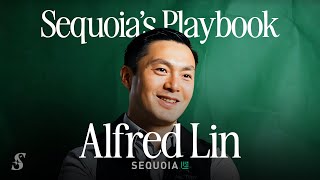
Sequoia partner Alfred Lin on backing founders who reshape markets. He emphasizes velocity over speed in AI, shares how Brian Chesky led Airbnb through the 2020 COVID crisis with layoffs and debt financing, and notes AI-native companies command a 20-30% valuation premium. Culture and long-term vision matter more than chasing hype.
Chapters
Airbnb entered 2020 as the number one IPO candidate. It was this big fanfare, and we were going to go public early in the year, from January, February, March, and then April, we saw the growth rate just steadily decline as Covid started spreading through. And at some point it went negative. That's pretty scary. We don't love the word speed at Socorro. We love the word velocity. Velocity is a vector, it is a direction, and you want people align to that direction.
How did you partner with Citadel Securities?
Well, it's funny because I would have never imagined that Ken Griffin would sell a portion of Citadel Securities. Our partner, Constantine, met Ken at a conference and develop a relationship. And over time, I think it's over, like two and a half years where he kept asking Ken, could we ever invest in Citadel Securities? And I think Ken said no, many, many times. And Konstantin did not stop. And so it was a team effort. Konstantin obviously sourced a developed relationship with Ken. Doug helped, I helped. We eventually broke through and got Ken comfortable with how Sequoia was going to help with the company building side. We may not know anything about market making, but we do know how to build technology businesses, and that's the type of help that Ken wanted. Around the table for cinematic security.
I was fortunate enough to listen to you speak at Forerunners AI Consumer AI Conference. I think it was a couple months back, and there were two things that really stuck out to me. One that I mentioned on a podcast with Brian Kim from Andreessen Horowitz.
Brian.
But one thing you mentioned about these cycles, which I thought was just. It was like, encapsulated so well, is you said things that happened three months ago are not relevant today. Things that are happening today are not going to be relevant in three months. Do you think that's going to continue? Do you think it's going to compress more? How did you get to that framework.
Of thinking in the beginning of any technology cycle? It does feel frenetic. There's just so much changing. People are experimenting, people are trying new things. And I think the things that I observed was the things, the interesting papers, the interesting research in AI that we're talking about today, we didn't talk about three months ago, which by definition, we're not going to talk about. Whatever we're talking about today, we may not be talking about three months from now. It's very hard for founders in that timeframe, because what you want to do as a founder is to have a vision of a company that matters 10 years from now. If you're going to start a company today and it takes a decade to build a interesting company. You want something stable over time. And the thing that's stable right now may be that AI is going to transform the world, but how it does is very, very tricky. And so I think the great thing about that is startups are a lot more nimble than large companies and they're going to be able to experiment and do different things that large companies are not able to do. And so we're seeing more innovation, we're seeing more younger founders get into the game, because experience is not as important as just innovation. And I stand by that. And for a period of time, there's going to be a lot of innovation, there's going to be a lot of companies that unfortunately won't make it, but we're going to. Out of all of this, there are going to be some substantial companies that are created, because AI is probably the largest and most powerful technology megatrend in my lifetime.
Why do you think markets collapse typically to two to three leaders?
It doesn't always have to collapse that way. The restaurant business doesn't collapse to two or three leaders. I think in technology there is an element, there is an element of network effects. There is a brand network effect. And a lot of businesses want to be able to trade off between one or two alternatives. So you don't want to make one be the company for the cloud. There's aws, there's gcp, there's Azure. Because if I am Goldman Sachs, I want to be able to trade off and be able to use all of them. And if you're doordash or Uber eats, some level of consolidation is good, because otherwise you're just constantly fighting with a bunch of players. And so there's a natural network effect in those businesses where it consolidates to number one, number two, and maybe a number three.
The other thing that I really liked, what you said on stage was build for the world. There's 8 billion people here. You should think bigger. Specifically, you started, and I don't want to put words in your mouth, so you should say this yourself, but you started off with that specific area in San Francisco where we were and the broader area, and then you expanded more.
And more and more.
Why do you think it's important to think like that when you're starting a company?
Well, over the years, I found that there's an element and a desire to be cultish. And part of being cultish is to help create a religion around something. And in the very early days When I was working with different tools, there's a company called Email Reader called Pine. And literally the name of Pine is Pine is not elm, which was a previous email reader. And then you had the Mac and the PC wars. There's a religion around the Mac and the PC. You have bit of a religion around the cloud. You have bitter religion around Android versus iPhone. And yet what you really want to do is not be Web two or Web three. You just want to build for the web if you're an entrepreneur. And so, yeah, we were sitting in the Presidio, so I said, don't build for San Francisco, which has probably 800,000 people. You may start there. Your ICP might be 800,000 people, and it may be everybody in San Francisco, because you're going to launch in San Francisco. But you have to think broader. All of the Bay area is about 8 million people, but you want to move beyond that and you can want to be able to reach the world. That's how many companies start. DoorDash started with university Avenue, it was much smaller. It was around the Stanford campus and then all of Palo Alto, then a few cities, then nationwide. And now they're trying to go internationally. They have a strong presence in Europe, and they're going to want to build for the whole world.
With Airbnb specifically, they went through a really dramatic period during COVID How did you help them navigate that? If you did, what did you learn from the way that Brian navigated that? And what do you think of founder mode?
I think one of the things that was fascinating about the Airbnb story and Brian, to his credit on his leadership, is he really, really knows how to navigate through a crisis. And I think people forget some of the facts, But Airbnb entered 2020 as the number one IPO candidate of 2020. And it was this big fanfare, and we were going to go public early in the year. And from January, February, March, and then April, we saw the growth rate just steadily decline as Covid started spreading throughout the world. At some point, it went negative. That's pretty scary. Company that is used to growing 30, 40% a year went to losing 80% of its revenue. I think it was very reasonable for a lot of us who were focused on a variety of things to just go inward. But Brian was thinking about his team. He wanted to make sure that Airbnb survive this pandemic, but also for generations. And that was, in some sense, resilience is about having purpose. And he had purpose. He's always wanted to build Airbnb so that everybody can belong and belong anywhere. That purpose, he was not going to give up. But that's in your head. And then you sort of think about from the heart. This is like true suffering, like you lost 80% of your revenue. You can either choose to hope or you can be in despair. And for him, he's optimistic. He was a hopeful person. He chose hope. What are the bright, shiny things that were still working even though things were in decline? It was experiences, because we could do virtual experiences. And it was actually short, sort of shorter distance days. Airbnb had been a cross border company where you traveled internationally, went to different parts of the world, and now we saw people leaving New York City to go upstate New York, leaving San Francisco to go to Napa, and that business still was working and thriving. So he focused on the places that were still really positive in this business. And he stayed really calm. And he stayed really calm. We call these things crucible moments. You have to be calm and untangle all of the noise to find the direction that you need to go and to accelerate out of this situation. And then finally, so you have the purpose in your head, the, the hope in your heart. And then I just think that physically he just kept doing the work. Every day he got up, he had, in all hands, he had a team meeting. Every Sunday, we had a board meeting. He prepped everybody from the board all the way down to all of his employees on what we were going to do. And that was a significant change along the way. He would call me and we would bounce off ideas. Obviously we needed to raise, raise money. Do we do it in equity? Do we do it in debt? Equity would be very punitive at that time. We decided to do it in debt and we decided that we were going to cut expenses. But there's a framework which is you cut marketing because we didn't need to market anymore. We cut offices, we cut contractors. And then the last thing he wanted to do was to have a layoff, but he had to do that eventually. And so it was a very, very logical, almost very thought through way of dealing with a crisis, even though the crisis is happening so fast.
Sorcery is brought to you by Brex, the financial stack trusted by more than 30,000 companies, including one in three venture backed startups in the U.S. nearly 40% of startups fail because they run out of cash. Rex is literally built to help founders avoid that. Unlike traditional banks that let your money sit idle, chipping away at it with fees, Brexit's designed to help you spend smarter and move faster. Their all in one solution combines checking treasury and FDIC protection into one powerful account.
You can send and receive money globally.
At lightning speeds, get 20 times the standard FDIC coverage through their partner banks, and even high yield from day one with same day and even same hour liquidity to access your funds anytime. Companies like Scale, AI DoorDash, Service Titan, PIMS, Anthropic, Flexport, Robinhood and Plaid Trust and use Brex. Start today@brex.com sorcery that's B R E X.com sorcery. I find it interesting because I feel like his, his decisions as a founder at the time and as a leader on the external presence made it like, I don't know how to put this. It made it that company and his leadership super attractive to go work there. But in a situation like that, that would crumble your culture. You would be doing layoffs. People would not be feeling very secure. It would be very disorienting. But having strong leadership does attract strong talent. I'm curious, how do you think about talent shifts and culture and resetting those cultures through these turbulent times?
Leadership is about making hard decisions, in my opinion. And in difficult times, true leadership shows. Culture is also about hard decisions and hard times. If you think you have a great culture during good times, you don't really know whether that culture survives during bad times. A great culture survives bad times. And the test of leadership and test of culture is going through bad times. Which is why in some sense, the companies that do extremely well have it hard early and they can be take lessons and they can shape their culture early to survive and to be resilient during hard times. I mean, Airbnb Brian talks about the fact that it was very, very hard for them to raise any money in the early days. And then we gloss over that because they had this nice little glide path for a period of time. But yeah, they started, it was tough. Nobody thought that we should fund a company where strangers are staying with other strangers. But he had a vision. I often talk about the fact that someone else's feature is another person's bug. Brian just thought that my father, who loves staying in hotels, in the same hotel in the same room because he wanted no variance when he travels for business. Brian thought that that was kind of mind numbing. And he wanted to create a company where people traveled much more authentically. And he brought that to life. And the pandemic showed that the culture he created and the leadership that he has can survive both good and bad times.
What do you think that means for being a founder in a highly competitive or a highly. It could go both ways because they're both extreme environments, either highly competitive or highly turbulent. What do you think that means to be a founder? How do you need to show up?
I think you show up with a vision and a North Star, and you measure your speed in the right direction. So we don't love the word speed at Sequoia. We love the word velocity. Velocity is a vector. It is a direction and the magnitude. And you want to go in the direction that you want to go in, and you want people aligned to that direction. Motion does not equal progress, and you've heard that before from a variety of different people. And getting a company to align and march in the same direction is what is really important during turbulent times, because it's very easy to run around as if your head was cut off during a crisis. It's very easy to see every little shiny penny that pops up because there's so much change in AI and try to go after a thousand different things. But your leadership as a founder is to make sure the company is focused in the right direction.
There's some interesting carta data around this cycle in AI, and there is a premium that AI native companies are getting, and it's more dramatic in the Series A and Series B. But given the macro on the AI environment, how do you set a culture for AI or to rebuild for AI? I guess, like, let me just. Let me reposition all of that. Talking about cultures. And in this new AI era, there are teams that have to reset and rebuild. How do you help orient or what would you. What would you say is, like, the best practice or principles to use to rebuild those cultures for AI? What, there's founders like Brian Armstrong that are making really hard pivots or, I guess, statements in his company. Everybody needs to learn how to use AI this week. If they're not, they're fired. And then there are others that are maybe taking it a little bit less intensely. But how do you think about setting cultures in the AI era and rebuilding them?
I think you want to build a culture where people pursue growth and learning, period. And so right now, it might be AI, and you want to learn all the tools that sort of can help you build things faster, automate things, et cetera. But when the Internet happened, you wanted every single person in the company to learn about the Internet. When mobile happened, you wanted everybody to learn about mobile. When cloud happened, we wanted to have developers learn about how to launch things in the cloud. And so I think you want your culture to stand for innovation, stand for progress, and stand for growth. And the companies that survive over time have had to have Act 1 and Act 2 and do things that are hard. I mean, how does Amazon, which is an E commerce company, be a cloud company and build aws? How does Zappos, who was just focused on shoes, go from all these other categories? How does Airbnb go from home sharing to all accommodations to experiences? Whether it was AI or not, you needed a culture that was going to be innovative and continue to sort of pull, push the envelope of what can be done. And so Jordache had to do that. From restaurant delivery to grocery to convenience to international. Maybe sort of take a step back on your specific question. I think for Clay, I'll just use Clay as an example. Where they started out as trying to bring programming to the masses. They built something and there were no, there are not enough users who thought that this was something that they wanted. They didn't know what to do with it. And so Kareem decided to use his own product for Go to Market. And then they developed this whole notion of go to market engineer. That was the first sort of thing that sort of made Clay into what it is today. But then, okay, well, we're in the world of AI. How do we automatically update these leads using AI? How do we use more AI tools to help users learn the product so that they can prompt Clay to do the things that they want? That gets built into the culture because they've constantly been an innovative and learning company and that's what you want to build.
I want to go back to the beginning when we were talking about all the categories you go after specifically within AI. A company that I've gotten to know a little bit more recently is Profound and this whole new world. It's a category creator. Another thing that I've heard from all your founders is you really back category creators. Kelsey's absolutely a category creator. Nominal. I think they're going to be there. Airbnb for sure. Profound is. It's just like, it's totally new. Like, who thought you would need SEO for LLMs and all of these sorts of things? But I'm curious, from your standpoint, could you one break down profound, but then to how you think about. I just, I just, I want to understand, like, who is Alfred as an investor? Because you back so many different kinds of companies. Like, how do you find them? And like, what makes you attracted to them?
Well, Profound's a great company. Let's Start there. And they're going to create this category of helping brands build their brand on, on, on AI. And if we start searching more and more on AI and trying to get more information, brands have to show up in foundation models and AI the way that they want to show up. And so it is creating a whole new category. But I don't think they're going to stop there. They're going to think about what marketing is going to be and how it's going to be different in the world of AI, not just showing up on AI, SEO, that's the initial edge. But James has a much, much broader vision for recreating marketing the way we know it. One of the things that over all of these sort of megatrends that I've been fortunate to live through is that the business models changed the Internet. There was a lot of innovation around advertising. Ad units changed, keywords became something that we bid on. There's just new innovation. With SaaS, obviously there was this change in selling seats and selling it in a subscription model versus licenses mobile. We had in app purchases we had freemium models where you got the free version of the product and if you liked it, you upgrade. These things are really interesting because I may not be able to build the product, but I can help founders reimagine what business models are going to be. And I think AI, with the technology that's coming, we're going to reimagine a lot of business models. And so that's really fun. And so when you ask who am I as an investor? I don't love the word investor. Back to we love being partners to the founders that we back and the management team that they hire, I'm really a partner to help solve these problems and maybe another way of thinking about me as an investor, all these different categories, I just see specialness in the founders and their desire to go change the world. This is a very fun business because I get to meet with these wonderful founders who want to go change the world. Even if I don't agree with them, I just love hearing the stories and their insights.
In today's high speed business world, staying ahead means using the smartest tools possible, including the powerful capabilities of artificial intelligence. Meet Turing Intelligence. Turing builds customizable AI systems designed to solve your mission critical challenges, no matter your industry. From expert guidance to tailored projects, Turing helps top companies realize AI that's more capable, more adaptable and more effective. With Turing, discover how AI can accelerate your business growth. To learn more, visit turing.com sorcery spelt s o u r c that's turing.com.
Sorcery how did you partner with Citadel Securities?
Well, it's funny because my brother is head of fixed income and macro at Citadel, the hedge fund. And I would have never imagined that Ken Griffin would sell a portion of Citadel securities, this market making business. I've asked them about the business and you know, and he was just like, yeah, it's interesting. But our partner Konstantin met Ken at a conference and went up to Ken and talked to him and struck a develop a relationship. And over time, I think it's over like two and a half years where he kept asking Ken, could we ever invest in Citadel Securities? And, and I think Ken said no, many, many times. And Konstantin did not stop. And so it was a team effort. Konstantin obviously sourced a developed relationship with Ken. Doug helped, I helped. And so we eventually broke through and got Ken comfortable with how Sequoia was going to help with the company building side. We may not know anything about market making, but we do know how to build technology businesses. And that's the type of help that Ken wanted around the table for Citadel securities because fundamentally it is a technology company and in some ways it is an AI company. They've been using math to find ways to make money with and, and calculate arbitrages and calculate risk for those arbitrages for a long, long period of time. And so they know how to do that. We know how to help them build technology. Build and grow a technology company.
So why did you want to invest?
Maybe in another life. I was supposed to work at Citadel securities, as you know, go all the way back to. I was born in Taiwan. I grew up mostly in New York City. I came to this, to the US not knowing any words of English. And my parents were like, yeah, you're kind of bad at languages. I was always bad at languages, so you better study math and do it well. So I studied math. I went to Harvard and studied Applied Math. They took a class from Robert Merton. In the class is called Continuous Time Finance. A few years later he would win the Nobel Prize for his work on Continuous Time Finance. And I asked him for a job at this place called Long Term Capital. And he said, you're pretty smart and you're pretty good at math. You should probably go get a PhD and then come and asked me for a job. I said, okay. And so I came out to Stanford to get a PhD in Statistics and I fell in love with the Internet. So I dropped out. A few years later when I was at Linkexchange I was the cfo acting CFO at the time. We're trying to take Link Exchange public. The market was dropping 100 points an. Sorry, August 31, 1998, it was dropping 100 points an hour. And that's because Long Term Capital was blowing up. So I dodged a bullet by not going to Long Term Capital. But there was some ricochet because we couldn't take Link Exchange public. We eventually sold it to Microsoft, but I could have ended up working for a hedge fund or for Citadel securities or Citadel or some company like that. Growing up, I think most of my family members, definitely my mom and my dad, would have thought my brother would have worked in entrepreneurship because he's sort of the extrovert, he's charming and I was the introvert. Awkward. So I was going to work either be a professor or work in a hedge fund, but the two of us swapped places in some ways. Wow.
And then that led you to having a piece of it.
Life. Life is funny in that way.
Sentimental. I like that. IPOs are causing a lot of demand, demand from people like Citadel, public market investors, those types of Personas to want more of these tech companies to go public. It's good for the ecosystem. But there is like a, a little bit of a pressure there. There's a little bit of pressure from investors for dpi. I'll share some information in, in the comments on some Carta data for that that's coming out today. But how would you advise companies as they think about these exit scenarios? And I was like, well, why wouldn't you want to get acquired? So like putting that to the side, how do you, how do you help your companies think about exit scenarios, whether it's through M and A, going to ipo, what makes a company a public market company, or you know, other routes of exits.
The exits is not something that I spent a lot of time thinking about or the founders I work with in general. I think the, the reason that is, is if you, if you focus on building a great business and a great company, then exit opportunities will abound. There. There's always if you need to raise money, there's always whether it's in good or bad market, if you have a great company, you will be able to raise money. And that's true privately. And that's true in the IPO market. That's true after the ipo where you might rise, you may raise financing in the public markets through a secondary or through a debt. And so I've always asked founders to focus on building a Great company. First and foremost on exits, it is the timing of an ipo. The timing of whether you sell the company has a lot to do with what the founder wants to do. I always tell founders an IPO is another fundraising round. It just happens that you're selling it to the public and you can get some liquidity for your early shareholders and your employees. But it is a fundraising round and are you prepared to be a public company? Are you prepared to give quarterly earnings and guidance and all those things? It's about preparedness on the ipo on an exit. One of the things to think it through is this is a terminal price. But more importantly, whether when you sell the company to the acquirer, whether it fulfills your vision, and in some cases it does, you can partner with a larger platform to help fulfill your vision. And that's the best scenario. You don't want to just. You don't want to just merge with another company and then have the product get shut down. You want it to thrive inside of the acquiring company.
Sourcery is very proud to be sponsored by Brex. Hard pivot surprise. Brex is all about spending smarter, moving faster, the intelligent finance platform. They love performance. And so I'm curious from you, how do you measure performance? What are the metrics that you use to determine? This is when I want to enter an investment with the company and this is when I want to follow on in investing.
I think the performance metrics for each company is very specific to them. Obviously we look at things such as, for example, unit economics, how well the customers were retaining. Those are the numbers behind the numbers. And we focus much more on those numbers than on pure sure revenue growth and profitability.
Going to cartadata. They had a question to the market and to all the companies that are on the platform, do AI companies command a premium? AI software companies that raised in the first half of 2025 saw three 30.9% higher valuation. So this is about a $55 million valuation versus $42 million.
It is a hot market for AI. And the one thing that I'm somewhat concerned about is many of these companies that we call AI companies, they're software companies, they're security companies, they're customer service companies. In probably two or three years, we will not call them AI companies just the same way that Internet companies over time, yeah, there were native Internet companies, but over time, every company became an Internet company, every company became a mobile company. And so we try to think about whether the premium is deserved or not. And these premiums that are being paid. Probably some of it is because we believe that the market and the market sizes are expanding. And if you told people back all the way in the Internet that online advertising was going to be as big as it is today, they would laugh at you. And so right now I think there's a lot higher premiums. 20%, 30% is because we believe that the market sizes are going to be much, much larger. And we've given some of this data. Our partner Pat Grady and Sony Huang, when they hosted AI Ascent, they showed this map of when SaaS was created. We had a certain size of the software market and we thought SaaS was going to be a big portion of the size of the software market. It turns out that SaaS is even bigger than all of the software market. In the past, we grew the software market. What AI has the potential of doing is looking at the services market, which measures in tens of trillions of dollars. And that's why the premiums that we're offering seems very high and seems at times ridiculous.
Sourcery is proudly sponsored by Carta. Carta is transforming the private marketplace connecting founders, investors and limited partners through software purpose built for private capital, trusted by more than 65,000 companies in over 160 countries. Carta's platform of software and services lays the groundwork so you can build, invest and scale with confidence. Carta's fund administration platform supports over 9,000 funds and SPVs representing nearly 185 billion in assets under management with tools designed to enhance the strategic impact of fund CFOs. For more information, visit Carta.com sorcery that's C-A-R-T A.com S O U R C.
E R-Y at what point are they reckless?
When you can't grow into that valuation over time. Eventually what has to happen is a company is the discounted free cash flow. That's what it's built for. The security that you own is the net present value of all future discounted cash flows. And so you have to be able to justify the valuation that you're entering at and the multiples that you're paying for is very pay forward. So I think we're paying probably two or three or four years ahead of where most of these companies are. And it is a little reckless. The other way to look at that, that's probably from the growth standpoint in the early stage business, the justification for higher and higher valuations is if a company is going to be worth a billion or $10 billion, whether I invested 10 million pre money, 20 million, 30 million, 100 million. It really doesn't matter so long as I pick, Right? But if you double the valuation, that means you have half the number of shots that you can deploy. You just have to be twice as good. And so my push for the industry is if you're going to write a check that is twice as large, then you need to have twice the conviction. So that's the quantitative way that I sort of think about these things. And then the other reason I think people feel good about the prices that they're paying is in the short run, they seem to be right, meaning they get marked up pretty quickly. But we all know that we won't know whether these companies make or not for another decade. I don't want to sound down. I'm very, very optimistic. This is the only line of business that I know where you meet two founders, a few founders, and they have an idea, and within a decade, they can build a company that's worth wealth, 1 billion to $10 billion. We have many examples of that. In two decades, they can become 10 billion to 100 billion. DoorDash and Airbnb being close to 100 billion. In three decades, they could be 100 billion to a trillion. Apple, Google, Nvidia, and maybe in four decades, those companies will be worth $10 trillion, not just 1 trillion.
A company missed out in that is OpenAI. And how they got to a $500 billion secondary valuation, how do you think about that one?
Well, so it's easy to dismiss the 500 billion and say that you can't make money from 500 billion. But if we let Nvidia, which is worth 4 trillion today, compound at 10% for another decade, it's going to be worth more than 10 trillion. So if OpenAI could be worth 5 trillion, then it would be a good investment from here. So, as we talked about, this is such a fun and dynamic industry, and it's so fun to see these companies grow up, but the market size is just getting larger. The opportunity set is getting larger.
It's really exciting.
It's really exciting. It's fun. And you get to talk to all these founders, too.
I get to document it.
You get to document their successes, and you can document their. Their failures. If they want to teach others on what they learned from some of their.
Failures, it's really fun. Yeah. That was one of the reasons why I wanted to. I mean, why I wanted to go so hard with sorcery. At least now it's like, when are we going to get this Historic of memorable stories and moments. It's crazy. Even the year previously, even with the coup like that was wild. I wish I could have documented that one.
We're going to look back very fondly because we always do very fondly on history. And thank you for documenting everything because we get to see it in the sort of raw elements of the building stages.
Well, as we think about looking forward, I want to know two things. One, what is your favorite Kalshi predictions market?
I can't pick among all the markets. I mean, it's a little unfair. I love economic indicators. Kind of a nerd that way. So lots of people would think that it's one of the sports markets. But no, I'm less of a sports fan, more of an economics fan. Yeah.
I also like the alien one. It's always fun to ask people what their opinions are on aliens. Do you think we're going to learn if aliens exist this year?
This year? Yeah. Well, some people already believe that we have proof that aliens exist. So I don't know how you resolve how you would resolve that.
I don't know.
You need an oracle to determine. I think that question depends on what's the oracle you use.
One of my favorite things is going to the Kalsheet 1 ideas and seeing what people actually say on their trades. Because you actually put your money where your mouth is and you see the trades in the ideas section. But then also nerd. For me, I did a couple episodes on quantum and so I requested a quantum market. And in the quantum market, reading the fine print is just. It is extraordinary.
The fine print is what determines whether something is yay or nay.
It's a true. I guess it's like a true testament to consumer behavior and like what you get. Most people are headline readers.
Well, I think we've conditioned ourselves to being that. We used to read text long form and now we read expos and they're short.
Well, to close out. What are you most looking forward to in the next 12 months?
There's so many things that I look forward to. I think there's going to be a bit more stability into what we're building in AI and I think that's going to give a lot of opportunity for founders. And I most look forward to moving on from just pure automation and AI to reimagining consumer experiences. I think a lot of things can be reimagined with AI that we have not done for a long period of time. We reimagined consumer experiences with the Internet. We reimagined that with mobile and I think there's going to be lots of innovation on consumer experiences in AI.
Really exciting. Well Alfred, it was a pleasure to have you on.
Thank you for having me. This was so fun.
Hey, it's Molly.
If you enjoy our interviews, check out.
Our newsletter Sorcery, where we deliver a once a week top deals and tech headlines. Email and also go deeper on our podcast interviews. Subscribe to Sorcery Today and don't forget to subscribe to the podcast on YouTube, Spotify, Apple or wherever you listen. Link in Description to sign up.
More from Alfred
Sequoia’s Alfred Lin explains why your startup should focus on being different rather than “better”


Alfred Lin from Sequoia Capital | Advice for founders, future of consumer social, and more