StrictlyVC in conversation with Alfred Lin of Sequoia Capital
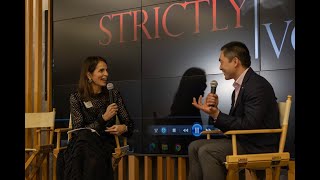
In this on‑stage interview, Sequoia partner Alfred Lin discusses how Sequoia has maintained its market‑leading position for five decades, emphasizing a long‑term, risk‑adjusted investment mindset. He reflects on the firm’s high‑profile loss on the FTX/Alameda investment, describing the due‑diligence process, the limited board representation, and how the loss is viewed in the context of the fund’s overall size. Lin addresses concerns from limited partners (LPs) about the fallout, explaining Sequoia’s internal questioning, the importance of avoiding fear‑based decision‑making, and the firm’s willingness to adapt governance and transparency. He outlines Sequoia’s crypto fund strategy, noting a $600 M raise, disciplined deployment, and continued belief in blockchain’s trust‑building potential despite a market downturn. The conversation moves to Sequoia’s philosophy of holding public‑market stocks for the long run, using “temporal arbitrage” and focusing on ten‑year value rather than short‑term price swings. Lin offers practical advice to founders navigating a recession: return to basics, clarify mission, monitor cash runway, and run discounted cash‑flow analyses under higher interest rates. Finally, he shares thoughts on generative AI, citing OpenAI as a portfolio company and stressing that AI will become a core productivity layer for all businesses, even those not directly in the AI space. Throughout, Lin balances candid acknowledgment of past missteps with confidence in Sequoia’s enduring investment principles.
Chapters
So, guys, thank you all for coming, and let's offer a warm welcome to Alfred Lynn, who I'm so excited is here. Also, Alfred, I have to apologize. These chairs were my idea, and they're gonna, like, swallow us whole.
It'll be fine.
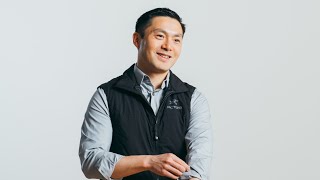
So everyone here knows who you are, and they're excited to see you. But just in case, I have a friend's son, for example, who's here, who's a senior in high school, may not know you. Alfred, famously was an operator at Link Exchange, and tell me. And Zappos, two of those operations with your Harvard classmate, the wonderful, widely beloved Tony Hsieh. As it happened, Zappos was backed by Sequoia Capital. And unsurprisingly, Sequoia thought that you knew what you were doing when it came to company building, brought you in more than 12 years ago, which is kind of amazing. It kind of goes by quickly. And now you're on the boards. You represent Sequoia on the boards of Airbnb, Doordash, a really interesting company called Dolls Kill for misfits and mislegits. And also a company that I hope we have a time to talk about, about today, the global market maker Citadel securities, which I think is interesting. It's kind of funny because I've. I mean, I know who you are, and I believe we've talked in the past, but I've never met you in person. I feel like I do know you because you've been so prominent.
We haven't met a lot of people in person in the last three years.
Right, right, the last three years.
Right.
We'll subtract those out. But, I mean, I feel like I was aware of you even before you went to Sequoia, but now you're with, you know, you've been with Sequoia. Sequoia is this incredible firm. When you think about it. I mean, Sequoia has been crushing it for 50 years, which is really, you know, phenomenal when you think about the firms that were started in the late 60s and early 70s. Most of them are gone or they're unrecognizable today. So, you know, I want to talk to you, really, about how the firm maintains its kind of pole position over time. But before we get there, we. We have to talk about the elephant in the room.
Tx, do we have to?
I know. I'm sorry. So, I mean, what's funny about FTX especially is that you were the Forbes list, the number one person on the Forbes list in 2021. So it's amazing because of, you know, Airbnb and Doordash and some of your other investments. And then things were going along pretty well this year, and then, you know, blammo or I guess in November last year. So, I mean, I don't think it's probably overstating it to say that this turns out to be like, one of the worst investments in the history of venture capital. I mean, which is, you know, very unfortunate. I think people are wondering, obviously, how did this happen?
Well, we work in a business where 30% of the time we strike out. So it's going to happen. It's. We've reflected on it. We looked at the diligence package again and again on whether what we missed, we do extensive research and diligence when we make an investment. This happened for this investment as well. And I think in retrospect, we looked at a bunch of things, but we were sort of reflecting on it. We believe we were misled for a variety of situations, and we'll find out when the court documents and the investigations happen a lot more closely.
I mean, I guess. And also, you know, you are a math whiz. You studied applied mathematics and statistics. Were you given fake numbers? I mean, what did you have to look at?
We looked at balance sheets. We looked at organizational charts of where the subsidiaries were. We looked at how much Alameda was a percentage of FTX's volume. We looked at a variety of things. The company Alameda we knew was a hedge fund. We knew that they were trading on FTX, but it was not on any of FTX's organizational charts. So we thought that they were. When we asked, are these two companies independent? And we were told that they were. So.
And I think another thing that obviously shocked everybody was that there was no board and you invested something like $200 million across a couple of funds. In retrospect, was that a responsible decision? Was it ever that you wanted to be on the board and they said you can't be part of the deal in that case, or what was that discussion like?
Well, we were investing in a late stage round. We owned less than 1% of the company. It was less than 3% of our private fund, Global Growth Fund 3. So we invested $150 million out of that fund. We invested another 60 million or so out of our hedge fund, and it was less than 1% of the assets of the hedge fund. So in some sense, yes. Should we have asked for more board representation? We could have, but at the same time, they didn't think that we deserved to be on the board because we own less than 1% of the company.
Yeah, that's really. I mean, it's stunning in retrospect, but that's a great point.
You know, it is stunning, but as. So, if you just. And look, there was a lot of money that was lost, but if you just take on the private side, $150 million investment, which was done over three rounds, we invested 125 million to start 150 million out of a $6.3 billion fund. If you lop off some zeros, 1 0, it would be $15 million out of a $630 million fund. And if you look at it that way, which is how we looked at it from a risk management standpoint for Global Growth Fund 3, you'd be like, fine, we can take a $15 million loss out of a $630 million venture fund. And that's how we kind of looked at it from a risk management standpoint. The fact that you multiply a zero to it makes the quantum look large. It doesn't make the percentage look large. And that is the thing that we had to wrestle with. Did we do what we could to manage risk? Did we make a good investment? Did we do our diligence? And then if it goes wrong, it goes wrong. We work in a business again with 30% of the time, we're just wrong. We're going to lose money 30% of the time. This is more painful because of the quantum. And I, you know, it doesn't feel good.
Sure. I mean, and it's hard because it was such a high profile company. Sam Bankman Fried was literally plastered all over San Francisco and many other cities. So it's, you know, going to be in the headlines for a while. And obviously the SEC is very interested in it as well. I'm wondering. They are reportedly talking to investors about their due diligence. I assume they're talking to you since you are one of the highest profile firms, although there are many, many people involved in this. To your point about, you know, your ownership percentage, do you think they understand what you're telling me now?
I think the SEC has a lot of smart people. They'll get to the bottom of this. There's a lot of forensic accounting that is being looked at, and I'm sure they'll get to the bottom of it.
I think the concern for some is something like this happens and then, you know, people start making proposals. Right now, the SEC is apparently looking at ways to strip away, I guess, some of the investor protections. If they're accused of bad behavior. Sort of better enabling investors to come after them, I guess. It's not just VCs, but hedge funds, private equity funds, certain real estate funds. This according to political store story that said it was kind of like imminent. The proposal is almost done. I'm just wondering, what do you think that would do to the industry?
I don't, I haven't read the proposal, so I don't know. But we're gonna all have to follow the regulation. And if the regulation is good, well, whether it's good or not, we have to follow it, and we want the regulation to be good. So we'll, as an industry, we'll have to talk to the SAC about what controls and mechanisms do we want in the system.
I guess. Do you think there's room for improvement in terms of due diligence and the way, that, you know, VCs and other investors communicate with their LPs and the transparency that they offer?
There's always room for improvement. The world moves forward. We learn from our mistakes. We don't have. Just like historically, the institutions that have been created in the United States have been great institutions, institutions that copied around the world, whether it's the Federal Reserve, the sec, et cetera. So there's always room for improvement. And every time something like this happens, we learn from it and we get better. So I'm hoping that we. You know, there was a lot of commentary about the crypto industry wanting more clarity around regulation. I'm hoping that we do get that right.
I know I was. I've told people that the crypto industry actually has been asking for this for quite some time. I do want to just ask on a personal level what your impressions were of Sam Bankman Fried. And relatedly, in retrospect, if you feel like there were signs that you missed or not.
I thought he was very smart. I thought he was quite a good. In terms of, like, answering questions very logically. He answers questions very logically and very succinctly. And the question is, could we have spotted any tells? Yeah.
Were there any tells?
In retrospect, I don't know if we, if I, you know, there's what I know today and what I knew at the time. If I knew at the time, we wouldn't have invested. So today I think the thing that gets me to reassess is that it's not that we made the investment, it's the year and a half working relationship afterwards that I still didn't see it. And that is difficult. And the one Thing I think about is in the venture industry, it's a trust business. And yes, we need to trust and verify, and we try to verify what we can, but we start from a position of trust because if we don't trust the founders that we work with, why would you ever invest in them?
And I wonder. So that is hard because you have a relationship with this person over a year and a half. I don't know how often you saw him, but I guess, do you have any sympathy for him now?
Sympathy for a person who is as smart as he is? So let's put aside, we lost a lot of money for a person who is as smart as he is. If the allegations are true by the sec, these allegations go back past when we invested. If those allegations turn out to be true, and it's not just simply, I levered too much, I made a mistake, the crypto market turned against him. I feel like it's not sympathy, it's. I feel bad for him that he had to sort of resort to the type of things that he did to either raise money or prop up the company, etcetera, Because I think he could have done it in a much more legit way.
Yeah, I mean, he also seems to still be a little bit, I don't know, diluted. I mean, obviously there's a lot of facts that still have to come to the surface, but you probably saw that he struggled, started a substack today, sort of.
Yeah, I read that when I woke up this morning. The best part about this country is we presume innocence until proven guilty, and so we should give him that. He's going to have his day in court and he's going to be judged by a jury and we'll see what the evidence that both sides present.
In the meantime, Sequoia finds itself in a very unusual position of, you know, being affiliated with a company that's, you know, in the headlines for all the wrong reasons. And I did talk to some LPs ahead of our sit down and of course, they are very happy with Sequoia on the whole, but they have concerns about this. You know, one, one said, I, who cares? Nobody cares. It was, you know, just a minute, part of the, you know, overall funding picture. But another said, you know, it's not about the money. It really is just that for the first time ever, their faith is, like, slightly shaken in Sequoia. This is not something that I don't. I think they would tell you because they, you know, respect you and I think they fear you. Fear the firm A little bit. But what do you say to those, those LPs or that LP?
I think it's good to question, and we question ourselves. They don't need to tell us that because we're thinking about that internally all the time. There's two things that I was taught when I first joined the venture industry, one of which is if you start your career with fear, and there's two sets of fear, is you're not going to be a very good investor. One is the fear of missing out because you're going to be chasing what other people are chasing. So you're not going to differentiate yourself against others because you're just going to invest in what everybody else is investing in. The second is the fear of looking stupid. And again, back to the fact that 30% of the time we lose money, you're going to look stupid sometimes you just can't look stupid all the time.
That's great advice. You know, I will say a separate LP told me something interesting that I wasn't aware of. And they said that Sequoia really does like, when things are not maybe going quite as well as they might hope, or maybe the market's down, that they really do try to accommodate the LPs, including maybe charging them for capital invested versus capital under management or capital committed. Is that accurate?
Well, I think just going back to, like, when things are not going well, we focus on the long run. And we've survived 50 years and every single downturn because we're focused on the long run. And this is a not so fun year. Last year was not not so fun year. This year may probably will probably be a not so fun year. The not so fun years are the best times to invest because all of the tourists are gone, both the tourist entrepreneurs as well as the tourist investors. Because it gets hard. And those are good times to build because your competitor is not going to have an easy time investing. So if you're really, really good, you have real insights and you have real products that you're building that solve real problems, you're going to shine. And so these are great times to invest. In terms of. You're talking about, there are two funds where we just decided to charge only invested capital. That's both the crypto fund and our ecosystem fund.
Okay, okay. So, so quickly talking about those funds. You know, I did want to talk to you more broadly about the evolution of Sequoia. I think these new, two new initiatives are especially interesting. The crypto fund and the fact that Sequoia decided that it wants to manage money or the investments sort of for a longer period when the companies go public. So going back to the crypto fund, again, unfortunate timing seemingly. I think the LPs I talked to said, and I think this is kind of common throughout the industry. The VCs here could probably attest to it. But sometimes when they have new funds, there's like a little bit of the hope that the LPs are going to invest across funds. So I think some of them, even though they maybe had discrete investments in crypto funds, sort of felt like we should put some money in the crypto fund. That apparently not working out quite so well right now. My question is, will you continue on with this strategy? Sorry for that very long winded question.
The crypto fund, I mean the fund is still. We raised $600 million for the fund. We've invested 10% of it. We're pretty disciplined about it and we're, there's no plan we're going to continue with that fund. And just so you know, I think the. Just again, back to the. When times are bad, I think there are still crypto founders who are building for the future and the need for some of the technology that is needed for crypto, the thesis of it, which is to be able to create trust when trust doesn't exist through a blockchain, that's still true. Just because prices, asset prices have come down, that investment thesis still holds. And we may be going through a slower time, we'll invest through a slower time, but we will continue to invest. We are long term optimistic in crypto and in a variety of other sectors.
Were you surprised though? I guess by how kind of interrelated and co dependent some of these companies were or are on one another. Was that a revelation to you?
The whole economy is interrelated. The reason why asset prices have come down is because interest rates are higher. So the world is more interrelated than we would like to think. We think in discrete terms and it turns out the world is quite correlated.
Speaking of correlations, I guess public, private markets, everything's down. But again, just seemingly unfortunate timing. Launching the strategy of hanging onto companies or holding onto stock longer than you would have. It's been reported, oh, if Sequoia had gotten rid of Robinhood or Snowflake or, you know, other things, they would have, you know, captured billions of dollars more for their LPs. You know, if you could rewind the clock 18, 24 months, would you do anything differently?
No, because we're investors for the long run. So if you believe in these companies. The only question we ask is whether you think these companies are going to be worth more 10 years from now than today. Not any short term, any three month period. One month period, One year period. So the companies that are in the Sequoia Capital Fund that we've distributed into the Sequoia Capital Fund are companies like Airbnb and Doordash and Snowflake. I'm pretty sure those company unity. I'm pretty sure those companies have long lasting value that can be created. They're run by builders, they're building their product and service and they serve massive amounts of customers. They all have real revenue and they're building for the long run. And if you had decided to sell Amazon in 1999 at a high, yes, you would have done better than holding onto it until 2001, but I think you'd be doing worse than holding it on until today. So it just depends on your view of these companies. And we really pride ourselves on not looking at interim prices because you have the luxury in the private market as not having to look at prices every single day and somehow the company becomes public and you want to look at them every single day. Seems a little silly. And it doesn't if you believe in the long run. One of the best advantages of holding is something called temporal arbitrage. You're just arbitraging people's nerves because they don't like seeing volatility,
you know, so obviously the VCs in this room have in most cases the luxury of kind of waiting out the market. Meanwhile, founders are very, very nervous. I think a lot of them turn to Sequoia for advice on how to weather a sustained downturn, which is something that many, many of them have not seen previously. So can you maybe talk for a few minutes just about mistakes that you see them making? And you know, well, instead of mistakes,
it's time to get back to basics and assess your business. And what is, what is your mission? What is the problem that you're really solving? And just go back to basics. If you have a great product or service and you're continuing to build for your customers, you'll do great. This is a time where it may be a bit rainy outside, but this is a time when you can surpass all of your competition if you play your cards right. And so the advice we give them is just be really, really judicious about what problem you're solving for your customers in terms of navigating this time. Understand your cash, your cash Runway and your unit Economics. And that's the side that we forgot for a while, which is eventually all of these things have to be real businesses. One of the exercises I give some of our founders is just plot out your free cash flow and do a discounted cash flow of what? Interest? Because interest rates have risen 4 to 5%. What does that do to your DCF? It's really illuminating because it's shocking what compound interest does.
Alfred, we're almost out of time. I did want to ask you. So one of your investments is. Is an OpenAI, which is supposed to be a huge company. You're interested in generative AI more broadly. It sounds from the headlines right now like this is going to be so disruptive to everything. I wonder how that's impacting how you think about your other investments.
Well, I think that there are a few things, one of which is we talked about this a lot recently and you know, when you go back to 1999 and you ask people what is the Internet? They would have said, well, it's this disruptive thing and it's probably going to be bigger than anybody imagined. But there was a lot of hype in a period of time from 1998, 99, the valuations were a little nutty and companies that just added.com to their company name and the public markets went up by 300%. That's not sustainable. And so we're going through a period where there's going to be some great companies that are built right now and then there are some companies that will not really sustain. It's one of those situations where you have to understand that a bunch of things are going to change and within three months, what's interesting will change. If we had the AI discussion and you're going to hear from Sam, what he. What was interesting, Tim, three months ago is not interesting anymore because the technology has advanced so much. You have to keep up with the accelerating change. But at the same time, what is not going to change, Those things that are not going to change is the stuff that you can build a great business around. Great software. Can you build great software with ChatGPT? Yes. So a lot of our companies are just playing with tools and playing with models so that they can increase their productivity for themselves. They may not be in the AI space, but they're going to. They know that they need to keep up with the increase in productivity, similar to with the Internet. We know that when the Internet happened, you needed to become a web company. We knew that when mobile came around, you needed to start get on mobile. We knew that when cloud came along. Every single company will need to have a strategy around AI and ML, even if you're not an AI ML company. And then there's going to be situations where three months from now whatever you thought was interesting was not. And I think you should ask Sam when he thinks. Any of these technologies can actually win the International Math Olympia competition, because that requires a different thought process than reiterating what has been said in the past in the corpus of what is searchable on the Web. And I think his answer will surprise you. It's much faster than you think.
I think he will say it's much faster than what do you think? How far are we from AGI?
I don't know. That's a question you can ask him.
That is dissatisfying. Alfred, thank you so much for joining us.
Thank you.
You're wonderful.
Thank you so much.
More from Alfred
Sequoia’s Alfred Lin explains why your startup should focus on being different rather than “better”

Alfred Lin from Sequoia Capital | Advice for founders, future of consumer social, and more