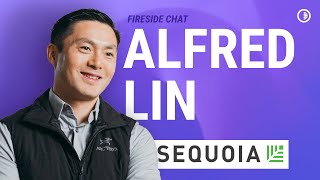
E750: LAUNCH Angel Summit: Alfred Lin Sequoia on mission-driven founders, seed stage strategies, AI
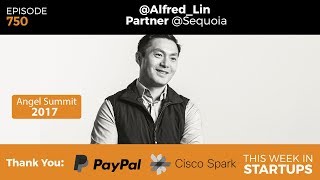
In this Week in Startups episode recorded at the Launch Angel Summit, Sequoia partner Alfred Lin sits down with host Jason Calacanis to discuss his early venture experience, the evolution of seed investing, and emerging trends. Lin recounts how he and co‑founder Tony Hsieh launched the Venture Frogs seed fund in 1999, investing $27 million across 27 companies—including Zappos, OpenTable, and Tellme Networks—at an average of $1 million per deal. He describes Zappos’ growth from a 10‑person startup to a 3,000‑employee business and its 2009 sale to Amazon for roughly $1.2 billion in stock, which later appreciated to about $9 billion. Lin explains Sequoia’s philosophy on exits, emphasizing founder motivation, the role of secondary markets, and the importance of holding onto “winners” such as Google. He outlines Sequoia’s seed‑stage strategy: focusing on high‑conviction, mission‑driven founders, de‑emphasizing price in early rounds, and using a partnership‑wide decision process. The conversation delves into the Scouts program—founders given capital to make angel investments that feed Sequoia’s pipeline—and its global expansion across the US, China, India, and Israel. Lin shares his view that AI will become a universal layer for all companies, distinguishing AI, machine learning, and data science, and advises aspiring angels to concentrate on a few high‑conviction bets aligned with their skill set. The episode also touches on market dynamics such as the inflation of Series A valuations, the rise of super‑angel incubators, and the competitive yet collaborative nature of venture capital, with a particular admiration for Jeff Bezos’s mission‑driven leadership.
Chapters
This week in Startups is brought to you by PayPal. PayPal is awarding three businesses with $10,000 and a makeover from one of their partners. Believe you have what it takes. Visit paypal.com twist to learn more and enter by July 30th and Cisco Spark get video meetings, team messaging, digital whiteboarding, file sharing and calling all in one secure app. Visit ciscospark.com to learn more and sign up for free. In today's episode, filmed at launch Angel Summit, Sequoia partner Alfred Lin talks with Jason about backing mission driven founders, seed stage strategies, the future of AI and more.
So, Alfred, I met you when I believe we met for the first time when you were working with Tony Hsieh building Zappos. When did you first get involved in Zappos?
So we got involved with Zappos, sort of a fluke. We raised a small seed fund from friends and family of Link Exchange and started investing.
And we said, was that called Venture Frogs?
Venture Frogs, incredible branding. People confuse it with venture fraud. Right. We had a friend, Kami Hayashi, who we really wanted to recruit to run the incubator for Venture Frog and she loves frogs and she said she wanted, we dared her like, we'll name it, we'll name the firm Venture Frogs if you join and run the incubator. And so that's how we got, we recruited her. And you know, Venture Frogs is actually kind of a cool name. It's green, it hops from lily pad to lily pad.
It, you know, it's certainly memorable.
Certainly memorable. Yeah. So we started investing and one of the companies that we invested in was Zappos. And so that's how we got started. We started this fund in 1999. It was probably the worst time to start a fund. Partly today you have, it may be very heated in terms of valuation, but there's a lot more support back then. If you're going to run a seed fund, you're going to have to help the company get from seed, help them company build, help them recruit and get them funded with very little support from anybody else. There's not a band of angels back then as there is as much as there is today. So we made 27 investments. One of them was ASKGS, one of them was OpenTable, one of them was tell me Networks where Todo and I worked for a period of time. And one of them was Zappos. The reason we, you know, we ran the fund for a year. It was supposed to be a three year fund. We ran the fund for a year and we just basically invested the whole fund made 27 investments. And when 2000, 2001 happened, when you know, sort of the, the Internet was overhyped, it caused us to sort of look at our portfolio and say which companies can we help? Which companies are going to not do well regardless of how much we helped? And the two companies we thought we could help a lot was tell me Networks and Zappos. So that's how we got involved with both companies. Tell me was losing $60 million a year. I went to that company first, Tony went to Zappos and then I joined Zappos in 2005.
How big was that fund in 1999? Venture Frogs. And how much did you invest in the top companies?
Range wise, the fund was $27 million. We so on average we made 27 investments. On average was a million dollars per company. So it was a high conviction concentrated that fund. It wasn't a we're going to make 50 or 100 investments and hope that some of them will do well and then double down from there. We were very targeted and specific. The range of investments were 100,000 to for Zappos it was 2 million.
And how did that fund wind up doing, I'm curious?
Well, I think in 1999 the if you look at the Cambridge study, if you return capital you are in the top decile. That's pretty bad performance in my opinion. We returned 7 1/2 8x after fees. And Carrie, Wow.
So then you work with Tony at Zappos. How many employees when you guys jumped on board there and then you left at some point, like I think shortly after the sale or before the sale, I can't remember.
So Zappos was about 20 people when we invested or probably 10. 10 people. 10 to 20 people when we invested. Tony joined them probably when they were around 30 people. And when I joined it was about 300 people doing about 300 million in sales. And when we sold the company when the deal was done, it was 1.6 billion in gross sales and about 3,000 people.
3,000 people?
Yeah, well, most of the people, 75%, 80% of the employees were on the floor of the distribution center and call center.
Got it. And how did the sale occur? Because Bezos at the time I don't think was the most acquisitive of founders. He was a kind of build it himself type CEO. How did that sale go down and when did you first meet Jeff and did he directly do the deal or how did that all happen?
The sale was convoluted he. So just a little history about Amazon. In the 99, 2000 era, Amazon did make a few acquisitions. Most of them did not work out. They paid high prices and so for a long time they didn't do any acquisitions at all. And he came down probably in 2005 and came with his team. With it was Jeff Bezos, Jeff Blackburn and Russ Reminietti. I believe it might be one or two other people, but I think that was it. We didn't want to meet at Zappos headquarters. So we went to a hotel nearby in a hotel room and our contribution was we brought two pizzas for his famous two pizza team thing. And we started talking and what we wanted to do at the time was we were having fun running the company. We wanted to continue to run the company, but he wanted to buy the company as opposed to partner. So that was the first interaction. Didn't go anywhere from there. And then the second time it just kind of happened naturally because we had been talking for some period of time. Peter Kravitz, who is the VP of Corp Dev at Amazon, mainly did the deal. When we sort of decided to do the deal, we actually had dinner with Peter and Jeff Blackburn and we started talking. We started talking about like, we really still want to run the business separately from Amazon. Would they be okay with that? We talked about our culture being different from Amazon. We talked about a brand being different from Amazon. There was a lot of negotiation around the structure before we even talked about price.
And it sold for a billion or two.
I can't remember exactly 1.2 billion on the day it closed in stock. And if you have kept the stock,
this is the question I was going to ask. Thank you. Kept the stock?
Yes. It would be worth 9 billion.
It would be worth 9 billion, yeah. Did you keep the stock?
Did I keep the stock?
You kept some of it.
I kept some, yeah.
But what is it?
So I think it's a. It's a interesting sort of question about like, why when do you sell? Because if we had kept Zappos, the company would be probably four times as big as well, so didn't grow as fast as Amazon stock. So the right choice was sell the company and keep the stock. If you could grow nine times as much, then you keep the company.
How does this inform your approach now being a venture capitalist at Sequoia, I've heard that on a dollar basis, the people who held onto Google did better than when it was a private, better when it was a public company than was a private company. I Don't know if that's exactly true, but tell me how this informs how Sequoia looks at selling companies, you know, and holding shares.
Well, in fact, the question is interesting because it really has nothing to do with the venture capitalists being on the board. It, it really has to do with the founder. Does the founder want to sell or not?
So to be clear, you're not okay with it, but you're going to bite your tongue and say, I have no choice but to be okay with it. You want them to keep going.
In most situations, if you believe you picked the right company, you have the right team, you're in the right markets, a lot of the questions around, you know, do you have the why now? Are the trends in your favor? You should keep going. And you, you could. You know, it's easy for me to say this, but if you had a portfolio approach, you can. Your winners will way, way pay for all the losses.
So ride the winners.
Google, like, you know, to all the, the winners. If you just hang on to them like Amazon, they will just pay for all the other losses. But I, I can say that as a person who manages a small but still a portfolio of investments versus a founder who only has one asset. And so I think there is the risk reward element. That's why secondaries have become an element of conversation. Some investors don't like it. Why, why should the founders take some money off the table? Well, it allows them to keep going, otherwise you would have the exits a lot earlier, which benefits the investor from a liquidity standpoint. But if you believe you have a great asset on your hands, you should just keep going and hold onto it.
Let me tell you about one of my favorite partners. That's PayPal. Yes, PayPal is doing an amazing award. They're giving three businesses that they think have major potential, $10,000 and a makeover from one of their partners. Yes, PayPal believes in the power of entrepreneurship. Just like me, angel investor Jason Calacanis. And the future of your business starts here. You have a chance to earn some cash flow for your business and you can take your business to the next level, reaching your full potential. And you have great potential. You know that if you're listening to this podcast. Three grand prizes each from PayPal. A $10,000 cash prize, one on one payments, consultation and one of the following. A website makeover by Shopify. Amazing. They're a great PayPal partner. And a 12 month hosting subscription. 10 hours of one on one support with a Shopify special. Amazing. That is priceless. And a back office makeover by Xero. Yes, that's right. Another PayPal partner. They make great stuff. 12 months of accounting software and advisory services for free. And the prize also includes priceless publicity for your business. Now, I'll probably be talking about it in a, in a PayPal spot in the future, so blog posts and video profiles highlighting your makeover experience and you're going to be shared on the PayPal website, which gets a ton of visits and all their social media. Just visit paypal.com twist to learn more about this amazing contest and you can win that 10, $10,000 in a business makeover. No purchase is necessary, it's subject to some rules, void where prohibited, and you must be 18 years old and a resident of one of the fine 50 United States states or DC to enter. Enter by July 30th. That URL for this amazing startup makeover is paypal.com/paypal.com twist Go ahead and enter that contest and win the makeover and 10 dimes. All right, thank you PayPal, for supporting
independent media like this week in Startup.
Let's get back to this amazing episode.
In the initial days of the secondary market, this was a split decision. At Sequoia and other places, people were not exactly sure if secondary would actually hurt founders, motivation, et cetera. So how do you approach a secondary offering, like let's say in a series B or a series C when they tend to come up, how do you put parameters around it so you don't have the founder have so much money that they start buying four homes and have to manage the four homes instead of the business? Because that is the fear, right? That they have the fu money and they stop working.
So that is a fear. And you have to sort of, if you go back to the motivation of a founder, if they're on a mission, as Chantal was saying, they're not going to like, suddenly have a little bit of money and then not want to be on the mission. If they're a mercenary, they might have enough money and say, screw this, I can become an investor, an angel investor, start a fund. I'm going to have a better life. And they stop working. Look, we all know people who stopped working when they made their first million. Is that enough to really retire? No. And you know people who like, stop working when they made their first 10 million. Is that enough to retire after taxes? If you have 10 million, you don't want to live in the Bay Area. It's probably, probably enough. Then we know people who like, keep working when they have billions of dollars. Why does Elon work? He's running two companies. Mars, sure, but he's on a mission. Mars, but he's on a mission. If you're the type of person that is going to want some level of money and comfort and that's it, then you're done. I do think some of the secondary sales are. The numbers are silly or ridiculous. So when you take up more than $10 million off the table, I do think that gets the silliness land.
If you were forced to leave Sequoia tomorrow and I said, you have to now be an angel investor, take a minute to think about it. You now have your. You have to place 50 bets over the next three or four years, build a little 50, 25 or 50 investment portfolio. What would your approach be? Where would you look for opportunity in terms of stage and in terms of markets? If you were forced to go back to the venture frog days and have even half that amount of money, 10, 15 million to invest in 50 companies, think about what your approach would be for a second and then tell us.
Well, let's start with what I wouldn't do.
Good.
So when we started, we started because it was fun and it was a hobby and it's fine. If you want to do it as a hobby, that's perfectly fine. There are plenty of people who brew beer and they make wine and it's a hobby for them. They're not in it to make money. And there are people who want to run a microbrewery to make money, and then there are people who run wineries to make money. The analogy is somewhat similar because there's so many people in the angel business that are in it to say that they're an angel investor, that they're in this company or that company, etc. I think if you want to be a good angel investor, I don't know if 50 is the right number. You want to think about that. I think having high conviction around a few select companies and then helping those companies is a much more leveraged way of using your talents and also using just simple sort of concentration of good companies over bad companies. I don't believe in indexing when it comes to, if you index entrepreneurship, you're going to lose 80, 90% of the time. I don't think most of you would invest in a fund that had a loss ratio of 80, 90%. If they sort of said if the fund says their loss ratio is 80 or 90%, you wouldn't invest in that company. That fun. So if you sort of apply some first principles, you'd go back to, okay, what do I know? What are my skill sets? What can I learn? Because my skill sets don't always apply to the next generation of stuff. And where are the areas that I would like to work with and what skills do I bring to those, those founders and those, those companies. And I think, you know, in those situation, I, you know, up, up, going from the bottom up, I would say I'm an operator. I'm going to look for people who are technologists and product people. Most of people in here would probably say the same thing. But I can really help sort of put operations in place, run, help them run and think through running a company. And then so I look for those founders and I look for founders who are on a mission, but also thoughtful, very, very detailed about exactly why they want to go change the world in this particular area. And I think some founders, they have very surface answers on why they think that this is a good market, but they really don't go deep. And so now that people know to come to angel investors, seed investors, venture capitalists with a story of why they're on this mission, you really need to dig to see exactly how deeply they've looked into the industry and why they think they can disrupt it. My sort of comment there is not product market fit, but founder market fit. Does a founder fit this market? And then in terms of trends, it's very obvious to a lot of us here that AI is going to change the world. AR VR is going to change the world. Security is going to become a bigger issue. Those are areas that I would certainly look at. Marketplaces continue to be more and more powerful because more and more people come online. Marketplaces is an interesting sort of thing because the thesis is if you, once you connect disconnected, dumb things together and somehow they become smart and they can transact. Airbnb is an example. Those bed and breakfast were not connected. They couldn't market to the whole world. I can only if you're just by yourself, you're disconnected. You can only market locally. That's not as powerful of a business because most locals don't need to stay at the Airbnb. And so now when you connect them, you can advertise that bed and breakfast globally, then that business model makes a ton more sense.
How does a firm like Sequoia, which has the best track record of anybody, look at the seed space? Now you have a lot more competitors. You have funds that have come in and said, we're going to be Price insensitive like Andreessen Horowitz. And we're just going to put $20 million on any valuation. When you send a term sheet and they're going to try to outbid you. And we saw that happen, actually. You guys have been outbidded by them and then those companies have blown up, in some cases, just massive overfunding of the space. And then this emerging class of super angels, incubators kind of running amok in the early stage. And so many companies, it's not like 10 years ago when there were, you know, five people on Sand Hill every week. Now you've got 150 people coming out of incubators, you know, every class or 50 or 10. How does Sequoia stay ahead of the curve? What's the strategy there in terms of when you'll do a Series A and the Scouts program? How do you look at seed? What have you learned from the Scouts program?
That's multiple questions and one question, as usual, Jason. So we've been investors from early to IPO and beyond since 1972. We've learned a lot. There's a lot of tribal knowledge in the partnership. It gets passed down from generation to generation. And I think one of the things that makes Sequoia Sequoia is that we have a variety of people from in different levels of experience in investing, a variety of people from different backgrounds, from sales to operations to finance to marketing around the table. So when we sort of bring that to the table, we look at the world in a way that we hopefully get a 360 degree view of what's going on. And so you have people who are in their 50s that have great advice about everybody says this time is different. I've heard this X number of times that this time is different. Tell me why now? The question is not this time is different, every single time is different. But why now? Is this technology going to be transformative? The smartphone, you know, that screen that you have there, was actually invented in 1972. People have been trying to get the touch screen to work since 1972. Until it got to that form factor, people don't really care. And it's pretty interesting how long sometimes technology take. Yes, there's going to be hype in certain cycles and then overhype in other cycles. But sometimes technology just takes a long time to play itself out. So you want that historical history and knowledge. And so what do we bring to the. So how do we think about the seed ecosystem? We, we are active in seeds, just like we've have been. We, we were in seed investors in Airbnb and Dropbox and Palo Alto Networks. It's incubated, so our check size start from zero. We incubate companies, we have entrepreneurs we work with, they, they work with us in our offices. We do seeds just as selectively as we do Series A's. And we do get outbid. And you have to think through the risk reward. I would in general say that price is less important in the early stage than it is in the growth stage. Entry valuations, if it's going to be a billion or 2 billion or $10 billion, company getting in a 10 million valuation or 20 million valuation or 100 million valuation doesn't matter. The difference is if your fund is constructed so that your entry valuation is supposed to be $30 million and suddenly you're paying 60 million, you have half the number of shots. And you just have to be conscious of that. What does that mean for your portfolio? You're supposed to be a. Constructing a portfolio, supposed to average out some risks. Do you feel comfortable with that? If you feel comfortable and you have that much conviction that this company is going to do that, well, we will invest and we have a partnership for that reason. They're going to be people who are going to be the sponsors and there are going to be people who are going to be the skeptics. And we make decisions based off of unanimity. So everybody has to agree because we want it to be a Sequoia company, not a, you know, a Doug investment or Alfred investment or Rule off investment or Brian investment. We, we think that's kind of corrosive for the culture of the company, of the firm. And it's bad for the, for the companies you work with because you only get access to that partner as opposed to the whole partnership. And, you know, the strategy is, in some ways know that the world is competitive. There are people who are going to be your competitors one day and your co investors the next day, it's coopetition. We're going to work together in certain situations as friendlies, and we're going to be in situations we're going to compete. And in some ways we play our own games, adjusting, given our sort of tribal knowledge, and adjust to things as the market moves.
Hey, everybody. I'm super excited about our latest partner on this week in startups. It's called Cisco Spark from Cisco. You know Cisco, of course, you know Cisco. Cisco Spark is a new meeting platform and a communication platform for teams. And we're using it here at this Week in startups. And it is life changing to make working together so easy, so pleasant. And in this package, for one low price of free, you get. Yes, that's right, free. You get video meetings, team messaging, like chat. You know how that works? Digital whiteboarding. I'm going to get into that in a minute. File sharing and calling all of this together in one secure app that works on any of your devices. Android, tablet, iPad, iPhone, desktop. You get the idea. And it's the fastest way to host and join meetings. And it works with industry leading video systems like ah yes, the Cisco Spark board. I have the Cisco Spark board and this is a touch based all in one device where literally I click and I say, everybody who's in this room, you know, like a chat room, everybody in this Cisco Spark room, I want you to join this video conference. Somebody could be at home, another person could be in a hotel or on the road, on their phone, on the bart. Two people could be in the New York office, two people could be in the San Francisco office. All of a sudden we're all in one space on the Cisco Spark board with all of our files from that chat room and we can then pick an image like we did for the launch festival and start drawing on it and saying, hey, let's move these tables here. It is amazing. And the Cisco Spark board comes in 55 inches or 70 inches. It's kind of like an all in one touchscreen whiteboard camera with amazing microphones where if you're in the back of the room it picks you up perfectly. And the video quality, it makes you feel like you're in the same room without having to spend what used to be, I think a quarter million dollars or $50,000 to outfit a room. You can now do it for low thousands of dollars. It's pretty amazing. I love my Cisco Spark board and on this very program this week in startups, we're going to start putting Cisco Spark boards in other cities so that entrepreneurs and investors from say New York, Los Angeles, maybe London, Berlin, Hong Kong, Tokyo, Seoul can then video conference into the show and start doing remotes with startups from around the world. How exciting is that? All powered by Cisco Spark and the Cisco Spark board. If you want to see all this exciting stuff and try the Software, go to ciscospark.com ciscospark.com to learn more and sign up for free. Thanks for joining the team, Cisco. Let's get back to this amazing program.
How do you look at the Scouts program now six or seven years in? Did you start As a Scout, too?
Yes, I started as a Scout.
We were both Scouts.
You did?
Yep.
I did Uber. You did Uber. You did also Airbnb. As a Scout or as investment?
I did Uber, Flipboard, a few others. I don't remember.
But so we were in the first class. First class before you actually joined full time. So how do you look at that Scouts program? Everybody's copying it now. It's not very public, but there's at least five people who have copied it in the venture community.
At least. Maybe. Maybe every single firm has one now.
Yeah. How do you, how do you look, explain what the Scouts program is and how you guys look at it now?
Well, originally the Scouts program was just an extension of Sequoia. And we have founders who had said to us, hey, we get pretty good deal flow. I'm just sending it to you. And there is too many companies that are going through our CEOs and founders, but they couldn't take any action because they're 100% committed to their company and their whole net worth is tied up to the. To that company. So we sort of created this program. Ruloff Boito sort of came up with the idea of just giving a select group of founders and CEOs in our network an allocation to invest in angel company, sort of seed and angel level companies. And. And the CEO or the founder will work with those companies and at the right time tell us that they're raising their next seed round or they're raising an A round and we would be able to jump on those companies at the right time. It worked pretty well. Number of companies came through you, Jason, like thumbtack. What others you've made, you probably have made the most.
It was, I think I made 19.
19. Yeah. Scout Investments.
Well, and that led to me having my own fund.
Right.
Eventually the training wheels came off.
Yeah. So we trained you and then you have your own fund. Yeah. So we created a competitor, but a friendly one.
A friendly competitor. Coopetition. Okay, let's take a question or two from the audience and thank you for being so honest about it and everything
you guys are doing.
But questions from our angels in the audience. Certainly somebody has a question. Talk about some of the ones you passed on.
I passed on.
You are the firm companies you passed on and what you learned from it. The anti portfolio, as we say.
For a long time I was really pissed. I passed on this company and the day I started, and I'll tell you the company later, but the day I started, Mike Moritz sat me down and told Me, this is a really humbling business. I'm like, yeah, I can imagine. But why he's done so well, he can't be humbled by this business. He said, well, I don't know many sort of businesses where you can be right about the investment thesis and still lose a shitload of money, or you can be wrong about the investment thesis, completely wrong, and you can make a shitload of money. Tell me which world that comes from. It's worse than gambling in Vegas. If you like, place shitty strategy at blackjack, you will lose all your money and you play well, you will still likely make money, but not a lot. But there's not many games, gains or professions where that's true. And it reminds me of the situation in 1999 when we were, when we were seed investing. There's this company called Confinity that came by and this guy came named Peter and Luke that wanted to beam money from Palm Pilot to Palm Pilot. So the reason I'm saying this is because the name was Confinity. They wanted to beam money from not that many devices to not that many devices. So could you imagine like, our reaction was like, the person to person payment is really interesting. But why, why Palm Pilots? How many people have Palm Pilots? Maybe a thousand back then, maybe 10,000 somewhere in that order. Why don't you use email? We actually told them, why don't you use emails? Like, no, that's not an inelegant solution. Then it's not secure, it's harder to secure, et cetera. And they went off and we passed because our investment thesis was that payment to payment, person to person payments is interesting, but this method of distribution was not okay. So they go on. There's a company called X.com that sort of starts with this idea of email. And so the Confinity guys are like, well, I guess we have to do that email product. They put it, they start it and then they're like, yeah, it's just a side project. We'll just, we'll just leave it alone and see how it does. And they're focused on their Palm Pilot to Palm Pilot beaming of money. And then they see that this is like, this keeps growing and growing and growing. And they discover that the email product is way better. And so if you had the vision to see that a company could pivot in that same space to something different, you would have invested and you would have made a lot of money. And if you didn't have the vision to see that they could pivot and merge and dominate the space and power all of ebay's power sellers. And you would have been wrong.
Okay, Any questions? Got one question we'll run a microphone over. And that became obviously PayPal and that was Elon at X. And that's brutal. That's like a $50 million mistake.
Oh, I think more $100 million mistake.
$250 million. I got it.
Okay, let's only sell.
It's like 4G.
It depends on whether you held the stock or not. Again.
Oh, right. Because eBay went 20x from there.
Right.
Hold your winners is going to be a theme here, Asher. Good.
So question on the scout program. So out of curiosity, is that something you're only doing in Palo Alto or do you think of doing that in other cities? Or what's your thought on that? We're doing it primarily in the Bay Area and some in New York.
How do you think about India and China? You guys have. Has that gone well for you there or has it gone okay? Or I think you also have Israel, right?
Yeah. So we have a global platform. We believe in cross learning globally but investing locally. So I work on the US fund and we have partners, they have similar structures. We have similar ways of communicating, similar systems. We use the same formats for memos and one pagers. But locally our China team does runs their business, invest locally. Our India business does the same. Israel business does the same. The returns have been great and the cross learning has been great. And the ability to help a company in the US get into China is great. The ability to get a Israeli technology out of Israel to the US where into China has been great. India and China are collaborating more than ever before because they have problems that are very similar with large populations and the rising middle class. So they, they would invest in things that we wouldn't invest in the US as much with the sort of thinking of sort of the trend of the rising middle class. So it's been great.
Great. Let's take a final question. Use the microphone.
They'll turn it on.
We're just start talking.
Can you talk about the future of
venture capital and major trends you see happening? Like what, what do you see happening to VC firms over the next five years? Great question.
I. I don't know. I think the, the venture space has, has largely not changed all that much. I think there's a lot of money coming on the seed, but there's not a lot of venture firms being created. And so this idea that angel firms will disrupt venture firms, there's a possibility of doing that. We think about that all day long. Because if entrepreneurs only want cheap money and a network, if you get a band of angels together, you get a seed firm together with their band of angels. They have a network, they have power. And venture firms, RSR Value Add is helping with the 10 year journey. And I think in terms of coopetition, you kind of want both, you want the seed ecosystem to help a company get off the ground, give them a chance and provide them with the best chance of hiring a few people to get the products made, introductions so that they can validate a product need and then we, then we go from there. And so maybe the venture firms take less risk because the companies are a little bit more mature. And if you maybe it's fine because we don't have to have as high of a loss ratio as we did before. We have to pay in at a higher valuation and it could be just perfectly fine. I think the ecosystem, it's like you graduate from seed to venture, you graduate from venture to growth, you graduate from growth to late stage growth that has existed for many decades. And I think it will preserve the players and how we play in each level maybe very different and evolve as the world evolves, as we all have to evolve.
It seems like a lot of the Series A's feel like what were Series B's back in the day. And the syndicate deals in these three, four million dollar rounds were what we would consider Series A's just seven, eight years ago.
Yeah, the term sheet that link exchange got was it was $2.75 million for 25% of the company. And then you know, we made Sequoia 17x in 17 months. Which to Sequoia it's like Mike Moritz is like whatever because he's on the board of Google and at the time or Yahoo. But you know, those deals don't get done even at the seed level. Forget about Series A's. That was our Series A. 25% for 2.75 million. You probably 2.75 million will probably get you 15, maybe 20, maybe, maybe first seed with no product. And we had a product, we had members, it was off the ground. Our friends and family round was $100,000. We had to make $100,000 work to get a product made and working. And back then you didn't get to just go on AWS and pay aws, you had to rack your own servers. So the world has changed significantly and it will continue to change. The one thing I would say about, you know, AI, that since Topher was talking about AI and there was a debate, I think it's going to change the world too. And you know, we had this wave of Internet only companies that changed the world. Lots of companies had to get online, then we had the mobile companies. Lots of companies had to get onto mobile. I think every single company will not only need to be a software company, as a lot of people have said, they will need to be an a AI company to survive. And that is an interesting world. And so then you just have to sort of ask the question like, what makes an AI only company? There's going to be a lot of AI first. There's going to be like, we need to leverage AI. What's an AI only company? What's its business? And I think if you sort of can answer that question, that's probably the, the company to go invest in.
How do you answer that question for Airbnb? What's the AI only version of hospitality? How would you see that coming together?
No, no, I think, I think it's a. You wouldn't start there today. It's like not a company that you would start, only you would apply AI. They apply AI all the time to fraud, to account takeovers, to figuring out whether a listing is going to be a good match for someone else. So, you know, in some ways we use the word artificial intelligence and we mistake it with machine learning and with data science. Those three things have more distinct definitions underneath them. But almost every single company uses machine learning and data science. I think every single company will start to use AI as well. And then my bet is that I agree with you on the, the easy money on is to bet on Google for AI. They have the compute, they have the people and they have the data and the algorithms. By the way, in my mind, the algorithms in this day and age get out open source. They get open source and they get out competed very quickly. When someone knows that you have a different algorithm, it's working really fast and they know it's possible they can reverse engineer it fairly quickly. That's been a lesson in the hedge fund industry for many, many years. So the algorithm only sort of funds, they do fine, but they don't outperform. But you do all need all four, to todor's point, and they have all four. But in terms of who I least want to compete with, I least want to compete with Jeff Bezos.
What is it about him as a competitor? Because you know him. What is it about him as a competitor? Is there just because there was that New York Times story where they were Just like he. All these people. We talked to 100 people. They all felt like they were tortured by Amazon. And then there's tens of thousands of people who work at the company who will never leave, who are loyal to him. So there seems to be some sort of, I don't know, cult of Jeff Bezos there, or samurai culture. I don't know what kind of culture it is, but it's obviously a little bit polarizing. What is it about him as a leader, do you think, that makes him. That you would never want to compete against him? You said that right? Like you'd never want to compete against him. What is it about him?
He's really smart. He's on a mission, and he's committed. This is his life's work and his capacity to look through a problem and get to the root cause or the issue at hand. The first order issue at hand, it's just lightning. He just gets to the issue very, very fast.
And
he's a fierce competitor, and I have enormous respect for him. Going back to the people with billions and billions, none of these people who run these companies have to work. They all work extremely hard.
Okay, let's hear it for Aphrod Lin.
Am
it.
More from Alfred

Sequoia’s Alfred Lin explains why your startup should focus on being different rather than “better”


Alfred Lin from Sequoia Capital | Advice for founders, future of consumer social, and more