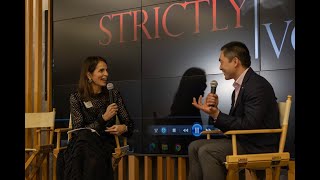
Fireside chat with Alfred Lin (Sequoia Capital) & Bambi Francisco (Vator)

Sequoia partner Alfred Lin discusses his path from founder to investor, contrasting seed investing in the late 1990s with today's hyper-competitive landscape. He breaks down term-sheet mechanics using Zappos and Airbnb as examples, admits Sequoia missed early Uber, and explains why Airbnb's network effects made it a clear winner. Lin covers mobile-app distribution challenges, regulatory navigation, and how new funds can differentiate in crowded seed markets.
Chapters
Alfred, welcome.
Thank you. Thank you for having me.
It's always a pleasure to interview. Alfred is one of the most sincere, genuine and self effacing people I know. And he has such an impressive track record. He doesn't seek out the press or interviews, but so humble. And so I'm sure you're going to enjoy a lot of his stories about his experience as an entrepreneur, successful entrepreneur and an investor, and with just a great track record. I want to start with a story that many of you have probably heard of. I heard it first from Tony Hsieh, his partner in many ventures and they met at Harvard. Tony sold pizzas. How many people know this story about the pizza and the slice? Okay, well, I've known this story for quite a while, but I didn't really know the story. So I want him to share it again. Because when I first heard the story, when Tony told the story about Tony selling pizzas, whole pizzas at Harvard and Alfred buying the whole pizzas and then selling them by the slice, I thought, wow, this guy's a shrewd businessman. And then when I spoke to Alfred, I finally realized why he was doing it. And I think it gets to the heart of entrepreneurship. You don't do something just to be a shrewd businessman. Yes, you should make money. But he actually started it as a service. So I wanted him to share the real story about the pizza and the slices.
I don't know whether it's a real story or not. Tony loves sharing this story because that's how we met. Always an entrepreneurial person. So he decided that in his, not his senior year, but his upcoming junior year, he was going to buy the rights to the grill in our dorm and he was going to own it for two years. And then that's the only way that he could capitalize the cost of having a pizza oven in our dorm. Because most of the grill, they just serve hamburgers or fries and milkshakes, which wasn't really high margin. And he had this, he was always very entrepreneur and had this concept of selling pizzas. A large college running group. So I went downstairs and bought pizza for him every single day. And I would just get a discount because I bought it every single day. And I would buy pies, one or two pies every single day, and I would bring it upstairs. And the pizza per slice downstairs was $2. He gave me a discount. So it's probably $1.50 or $1.25 per slice. And I asked my roommates for $1.50 or $1,25 back and I would always get two bucks. And I was like, curious why this was happen that, oh, the quarters were too important of a commodity for them to give up their quarters. And it's an interesting lesson because college quarters were a price commodity because we needed them for washing machines, drying machines, vending machines, arcade games. And people did want to go walk in the cold to the bank and get quarters and bring them home and then giving them away. So it was an interesting business lesson that even a commodity like a quarter can be valued more than a quarter, which is what happens.
And he started his service, then he ended up making 50 cents a pizza per slice. So.
And then Tony was very upset that we calculated how much we made per hour. And I technically made more than him per hour than he was doing all this hard work. And I'm like, come on, you made more money at the grill than I did because all I did was every night go downstairs and pick up a pie and bring it upstairs.
But from there grew this amazing friendship because you've done a lot with Tony. And you started venture frags in 1999. And that was you and I spoke earlier and you said, when I asked you, like, how was that starting a venture fund? Right, in 1999, a year before the bubble burst. And you told me that was the worst time ever to start a venture fund. And I want to ask you a question again, whether now is not such a good time to start a venture fund. We heard the audience heard earlier. First Republic bank had a report out that said 300 venture firms or institutional funds have emerged in the last since 2009 to invest in the early stages. But now the market is a little frothy. We're not seeing too much. You know, there's a bit of lack of discipline in the market. So is now a good time to start a venture fund?
I think if you're starting anything, whether it's a venture fund or a seed fund or a company, if you're thinking about doing it for the long term, it really doesn't matter. Is this the best time to start a fund?
I don't know.
Probably not, because valuations are high. But that doesn't matter if you're going for the long term. And I think one. I think we're just think about not one or two years or a moment in time. If you're building something enduring and it's going to last decades or generations, you're going to face lots of ups and downs anyway, and you might as well just start Learning today as opposed to kicking the can down the road. It only gets more competitive. It never gets less competitive in this world. So in some ways, in a macro sense, is this the best time in this one or two year period? Maybe it's not the best time, but if you're going to wait three or four or five years, it's still going to be more competitive three or four, five years down the line than it is today, in my opinion.
Yeah, it was definitely competitive. I remember last year on this stage, Peter Thiel, I asked him, I asked him whether seed stage investing was harder or easier since he had invested in Facebook in 2004. He said it was actually harder because it was so competitive now with so much of this new capital. And yet if you talk to Josh Koppelman, he will say that it's actually easier because a lot of the startups are, you know, have far more traction. And you and I have talked before and you said, well, there's a lot more opportunity. So is, is it harder or easier than when you were, when you first started seed Stage investing over 10 years ago?
It's both. I think it's the best of times and the worst of times and I think you can't play the same game you played in 1999 or 2000, 2001, 2002. I think the game is just different. So if you're trying to intuitively figure out something, whether a market is going to take off or a product is going to take off, that doesn't work. Because back then there might be only five or 10 or 15 companies that you can see and you can see all of them. You can play with all the products. Today there's probably five or 10 or 15 of them being produced in a day. The scope of innovation is, is much broader. So you can't do the same thing you used to do. You have to be smarter about it and you have to use different tools. Back then, was there any like, measurement ability for companies to figure out whether you were like having great traction? No. Today you have App Annie. You can go look up how the rankings, you have public rankings and you can go into app annity to get even more detailed about how well the app is doing, whether it's downloads or engagements. There's just a lot more information that you can absorb that you can use into your decision making. And so does that make it harder? In some ways it makes it harder, but the access to that information is easier. I'd also point out that back then there were maybe, you know, millions of people that were on the Internet. Today you have billions of people. And so that makes a huge difference. And it also allows you to be wrong every now and then and still get to a soft landing as opposed to back then. I think you probably, it didn't work. You just, it probably just crashed and burned.
It's harder now because you have, you have a lot more competitors. I mean you have, you're investing in One company and five other VCs are investing in the same company, a different company, but in the same industry. And so that requires you to then potentially put in more money into that company so they can compete with the other companies. I mean, do you feel that that seems to make it a lot, lot harder regardless of the opportunities and all of the transparency that you have?
Well, I wasn't, you know, I think you should ask people who have been in this business for long periods of time and they probably would all say every, every year, every decade. The amount of money back then seemed like an incredible amount of money being invested at that time. And I think that's been true, you know, for the last, I don't know, 20 years, whether I was an entrepreneur or as an investor. And you could thank the Fed for that. Right? The Fed has kept interest rates for over the last two decades at clearly close to zero. So can't really make money in the bond market. So therefore people like who used to invest in bonds invest in corporate bonds. And then because the corporate bonds don't have to pay as much because the risk free bonds, the government bonds don't pay as much, the corporate bond people now invest in stocks. The people who invest in stocks invest in the growth rounds at the private rounds. The growth investors invest all the, the way to series B companies that are just getting some good level of traction and trying to pick them off because they feel like that's where you can make money as a growth investor. And then the traditional venture investors are going down all the way to the C level. And so I think it's always been hard to, when you see that happen, it's always been hard and it going to continue. Good thing is, I think there's a bit more rationality. Today the Fed is about to raise interest rates. Many predict that next year they're going to raise interest rates once a quarter and basically interest rates will go back to some level of norm and there'll be less money chasing all the way down the spectrum. And so people, there'll be some level of normalization that's, that's a good news and a bad news at the same time. And I think it's also going to bring a little bit more rationality. The good news about this is there's no catalyst in the system that will cause a financial meltdown. Not like 2009, 2008, 2009.
I want to talk about the. I mean, well, if you. I didn't want to talk about valuations and bubbles at this point, but you just mention something. So Mark Cuban does say that he thinks this time is actually worse than the 99 and 2000 because now the valuations are. The frothiness is happening in the private markets where there's no liquidity at all. So he actually thinks there's going to be a bigger downturn.
I don't agree with that because I think the people who are investing in these companies, most of them have long term views and they're willing to invest for long periods of time. More than, and I'll speak for Sequoia, I can't speak for everyone, but our LPs are foundations and charities and institutions that are trying to survive in perpetuity. They have a very long view on when they need to get a return. And so long as that's true, I think the institutional investor doesn't need to rush to an exit.
You don't need to get out.
We don't need to get out. The institutional investors don't need to get out. Individual investors, do they need to get out? I think they're seeing some level of liquidity with secondaries. So, you know, some of these companies that have these, what are called deca unicorn or unicorn valuations, some of that comes with this, a secondary where they, they buy out early investors and early shareholders. And to that level that's not going public, but it's kind of like going public.
Yeah, of course.
So there is liquidity. We just don't measure it that way. We don't see a company go public. We don't. In the past you see company going public and that's liquidity. You see them being sold and that's liquidity. I think it would be interesting to see how much secondary has actually flowed back to early shareholders and early employees of some of these companies.
So I want to talk about the most of the investors here. Again, seed to early stage investors, a lot of them trying to figure out what their early stage stage investment strategy is. And one of the things that we've been seeing a lot of is because you're saying a lot of these, a lot of these traditional VCs are now also investing a lot in seed. There's 300 new venture funds that have formed, some of them going to seed, post seed. And what the result has been has been this increased proliferation of the strategy of option buying. Not really knowing, not really doing your due diligence, following on with someone, with a friend or so. But what is the upside and downside to that? I mean the upside is great, some of these entrepreneurs get funded, but what are the upside and the downside to all of this option buying that everyone's doing?
I think the negative way to paint that is either you call it option buying or because you just don't know and therefore you want to buy all the sort of companies in this. You think this category is interesting. I don't know which one of these companies will succeed. I'm going to invest a little bit in all of them and then next round I'll invest in the next round. That's the option buying idea. There's no guarantee that you get to invest in the next round. That's the only question. And I think that's the negative side. If you're option buying, it's much better to pick in my opinion. If you have a long tail, a parallel distribution, it's much better to pick. And even if you have to pick a little later, you get the right one because most of them are going to fail. So if you believe the parallel distribution will continue to exist in venture, then I don't think the option buying or more negatively spraying and praying methodology works. On the flip side, if you believe that the market in technology investing is mature and you still don't know which one it is, then there is a lot of theory in just creating an index and creating an index have worked in the public markets. And the question is, will it work in the private markets? I think it will if the distribution is not as parallel distributed as it has been in the past. And that's a debate that people can have. We at Sequoia still believe that it's going to be a parallel distribution and we like to pick even if it's a seed, our partners partnership. Each partner makes on average one to two investments per year and some years it's zero. And some years it could be three or four per partner. And the reason for that is we believe in trying to really understand the market, get to know the people that we invest in and then pick.
Yeah, and I think that the. I like the way you put that by the way, I think that's going to be a new euphemism it's not diversification. We're creating an index fund. It's a good way to look at that investment strategy in that way. But you mentioned that if you're, if you don't lead a seed, you do seed, you do about three to six, as you said. But if you don't lead a seed, you'll do series A, one or two to a year. And some of the companies out there who do pull these funds together without a lead with just, you know, hey, we raised $2 million with, you know, half a dozen people throwing in $250,000. It's a bad signaling sign for you, even though to me it sounds like they're being scrappy, they're trying to raise money. Sure, they weren't able to get a lead, but they were able to get, they were able to get a syndicate together. But for you, why isn't that scrappy? Why do you think that's a bad sign and something you wouldn't actually look at?
Well, I don't, I'm not, I don't. It's not a good or bad black or white kind of thing. It's nuanced. If you, if you believe the market is well capitalized and you can get money from lots of people, then you should pick the people that are going to bring you the most value and then you want to give them enough ownership in the company that allows them to want to work on your behalf. And so we kind of think of it as an interesting play. If they're only investing 100 or 200,000 out of a fund that's 100 million, that's not going to really move the needle. If it's 100 or 200,000 and the person's net worth is a million or two, that's a big statement. So I don't really have a judgment on the 100,000 or 200,000. I have a judgment on whether someone really is going to make an impactful, an impactful sort of contribution to my company if I were the one raising the money.
So when you do a seed round, you actually take, you take the majority. Well, I mean, you take a big stake in the company. You would never go in and around and you basically want to lead those seed rounds.
We generally, if we are interested in making a seed investment, we generally like to lead the round or partner with someone. It probably would take one to two million dollars of the round.
So I want to talk about the seed rounds and what it takes to get the round as well as a series A because most. How many people here are trying to raise a series A?
Fair number of people.
Fair number. So when you raised money for link exchange, I don't remember when that was 15 years ago or so you raised for your Series a, it was 2.75 million you raised for series A. And today that 2.75 million would be basically a seed round. So regardless of what we name it, what kind of proof points did you need to get a series to get 3 million? Then what does it take today? What kind of proof points does this startup need to raise $3 million today?
Yeah, the sort of change from whether what's an A today versus what's an A back then or what's a C back then. And so we had link Exchange started with 100,000 seed. It was a friend and a family member and we had to figure out how to build out data centers in a colocation facility. This is not like AWS time where you could just go, so we had to build a data center. And so it was pretty quite interesting that today's seeds are anywhere between 1 to 4 million dollars and Series A's
are up to 25 million.
One of my partners called that vanity sizing in the venture business. And so I think the proof points are pretty much the same as it was back then for investing in a Series A. We're looking for, you know, we're looking for founders that are rare, breed, they're creative spirits, they're the underdog, they're the resolute, they're independent, thinking it's on our website. What we look for. Another way to summarize it is they're relentless and just don't give up. They have unique insight into their market and why they the world should be different and why they can win. And the way they've gotten to that unique insight is to keep asking why, why has this industry been created this way? And where are all the assumptions that don't make sense anymore? And finally, you know, they're just people that sort of want to sort of change the world. So that's on the founder side, on the market. Most venture capitalists will tell you that they're looking for a large market, which is always true. We're always looking for a large market. I think the concept of the market is more nuanced than that. Just like the sort of what we find to be a great founder is more nuanced than, you know, you're unstoppable. And the sort of nuances are no market is perfect, but we Would like a large, growing, non competitive market and those are not always going to be the same. So it's very nuanced. Are you in a large market, but it's not growing anymore. Are you in a large market but it's hyper competitive? Are you in a smaller market but it's growing really quickly and there's no competition. Are you in a market where the trend are favoring your company versus the incumbent because of the changes in technology or the changes in a business model or changes in a service? And so there's a whole nuance to our sort of understanding of the market. We're looking for a product or service that customers and clients really love and they're willing to pay for.
Does that mean that they have to have revenue? I mean, you're doing 4 million to 25 million Series A rounds, you're writing out checks. As little as 4 million? Probably not. You know, probably on average 10 to 15 million dollars. Does the this you talked about sort of the traits that an entrepreneur needs. The market size, it has to be quite large. But what about the traction and where do they have to be? Do they have to be generating revenue? Do they have to have a certain number of customers?
I don't have to have any specific number. I think it's, I think, I think if you're on the enterprise side, you certainly need to have some pilots and some ability to show that those pilots have converted. So that's much more important. On the enterprise side and consumer side, obviously there's lots of freemium version, freemium models and you can show, you don't have to show a lot of revenue. You can show a lot of users and a interesting conversion rate to paid and the amount, the number of paid means still be small and all the way to companies that have great traction, great retention, but no monetization. I think the challenging part of building an app today is that it's very, very hard to get into the top 100 apps. And so you're going to have to figure out how to do that. And so one way do they have
to be, if you're investing in an app company, do they have to be in the top 100 when we invest,
the dream is that they are an important application today, mobile application today. So yeah, the dream would be that they're going to be the top one to 50.
You at Sequoia, you guys looked at Uber for their Series A. They certainly had an entrepreneur with a lot of conviction and personality and a big market. Why did you guys say no?
Yeah, that was a big failure on our part. Seriously. I think sometimes we were too smart for our own good, and that's an example of being too smart for our own and good. I think we sort of looked at the market, first of all, we looked at the service, and we loved it. So a product and service that we really like. We looked at the entrepreneur, and he's obviously a relentless original thinker. What we got stuck on was the market, and the original pitch in the Series A was that it was going to be a black car service. We did not dream with Travis and what we call dreaming with the founder on what this could be. And I think if we had dreamed with him that this could transform transportation, I think we would have gotten there more easily than thinking that it was going to be a black car service.
Was he trying to get you to dream and think bigger and you guys just kept thinking, black car, black car, or was he talking black car? And maybe both sides should have had a bigger vision. And his vision came after his Series
A. I don't know. It was five years ago. Both sides probably rewrite history to some degree, but we left thinking that it was going to be a black car service and it was going to be very hard to get into taxi. He probably said, I'm going to go into black car because it was unregulated and taxi is regulated and we'll eventually figure out the taxi. He didn't have a solution like UberX at the time, or even talking about it to the degree that he had, but he certainly was thinking broader than the black car service.
Well, you're an investor personally in uber. You invested $30,000. You clearly had the vision, but as you said correctly and rightly so, that it's easier to write a $30,000 check than it is to write several million dollars. And you have to have a lot more conviction at that point. But Peter T. Was on the stage last year, and he's an investor in Lyft. He disclosed that, but he definitely did. He felt that Uber was overvalued at the time, I guess we was. $40 billion. And so you're an investor. I'm sure you're a big fan. Explain to us here why Uber, you know, what is the opportunity now for Uber? $40 billion. Seems, you know, why. Why should it be $100 billion?
I think if you take the point of view it's a commodity service and that it's. Look, I have a lot of respect for Peter Thiel. I think he views it as a commodity service. That it doesn't really, really have powerful network effects. It may have local network effects. It's a street fight for every single city that you go into. I think if you take that point of view, then maybe it is overvalued. But you can also take the point of view that their traction has shown that they have some secret playbook that has. They've been able to go into markets where others have been dominant and out execute them. And then you start thinking, thinking maybe they will have a global brand and a global network, which then allows you to think about all sorts of other things that could happen. This could transform transportation, it could transform logistics. That's the dream scenario. And I don't know where the ultimate sort of end game will come out. I certainly hope for Uber that they're successful. I would just point out that, that there are a lot of companies that you could write off as commodity companies, but they have figured out a playbook that no one else has in the past. And E commerce is one of those areas. I think you have Amazon that is worth multiple hundreds of billions now that you could have said it's a book business or it's just a. It's in a competitive market, it's serving it's a low sort of commodity value by moving product from point A to point B, taking orders on one side, getting suppliers inventory and then sending it out. It is a competitive market. It's not a zero to one sort of company, as Peter Thiel would call it, in my opinion. And so does that make it not a good investment if it turns out to be so competitive that you can't establish market leadership? Maybe it's not a good investment, but Amazon was able to figure out market leadership. Uber seems to be figuring out market leadership, at least in the United States. Questions still, jury's still out whether they can be globally dominant. And so we'll see.
Well, I want to ask you questions about Airbnb too, because you're on the board and you're an investor. Since what, the series. Since the 7 million series. A Sequoia invested back in 2010. In Airbnb. In Airbnb. Oh, that's right. The $600,000 seed round as well in 2009. But I also want to mention that we are taking questions as well. So do we have the microphones over there? So if anybody wants to ask a question, please feel free to just walk up to those mics. They're on the side of the side on the aisles. So I want to ask you a question. I don't know if I'm sure a lot of people here read about, read Mike Moritz's essay. Your partner at Sequoia, he wrote an essay about subprime, subprime unicorns. And he basically said that investors, they're basically. These prices are illusory. They are basically the investors are. What did he say exactly? I will tell you. He says that the investors have structured their investments as debt in all but name, meaning they still stand at profit if the company is far less. So I'm assuming he's referring to liquidation preferences and just wondering, is this a warning sign to entrepreneurs out there? Are they, are they sitting down with investors and just demanding higher valuations and not understanding that at the end of the day, the VCs call the shots when it comes to the terms and they may not be that good for them?
Well, I don't know if we call the shots because the entrepreneurs are demanding higher and higher valuations on what Michael was talking about. His notion, basically, he calls it. It's structured almost like debt and it's only in name in equity. Equity only is his notion of multiples of liquidation preferences or ratchets. And I think most people would tell, would advise entrepreneurs to avoid those. And I think the reason to avoid those is it's in an unfair situation because as an entrepreneur, you raise money, I don't know, call it three or four or five times in your company's life and maybe you're part of three or four companies and so maybe that's 10 times in your lifetime. That's not a lot of experience on dealing with things like ratchets or liquidation preferences. And so to the extent you want to just plate plain vanilla, just ask for clean terms and ask for let the market price the valuation to the extent you don't think that that's the right value for the company and you think you have more information and therefore you think there is more upside to your company than the market is giving you? Yes. Entrepreneurs have asked that we give them a higher valuation in exchange for downside protection. And I think the unfairness of that is investors have done this more times than you have, and they probably understand the downside better than you do. And so my advice to entrepreneurs is to, if you're going to entertain that because you want the headline number of whatever number the valuation is that you really think about the downside and what happens in the downside. And truth to be to be told, Zappos is one of those companies where we actually took a liquidation preference that's more than 1x on purpose because we wanted to leverage that liquidation, the valuation. We believe in the company so much that we could leverage the higher valuation to get more debt financing for the company. And so there are good reasons to do that. And in the end, it was very interesting when we did the analysis because Tony and I went back to the emails. The deal that Sequoia would have given us on plain terms basically ended up being about the same as the terms with the higher liquidation preference.
With the higher valuation, you were able to attract more. You wanted the high valuation to attract other investors.
I mean, we were, we were using the higher valuation to attract debt investors. So we raised, we raised a fair amount of debt to finance the company as well.
But today it's even tougher. I mean these, these entrepreneurs are hearing these markdowns by like Fidelity. So not they're getting a high valuation, but now they're stuck with terms that aren't so favorable. And potentially they could see their valuations marked down.
Yeah, but you can also look at, on the flip side, they raise a large round at a high valuation and they have the cash. So.
Okay, and so you're, so you're saying that if you truly believe in your company, then great, go, go for the high valuation, get the 1x liquidation preference. That's common though, right? 1x.
I think most entrepreneurs obviously believe in their company, so their natural inclination is to ask for the higher valuation with these terms. But my counsel is to really understand what happens in the downside scenario of those terms. Also puts.
What happens in the downside scenario?
Well, if it's a ratchet, the next round, if you, a full ratchet means that all the stock that you raise at a high valuation gets repriced to the lower valuation. So you really didn't raise money at the higher valuation. So I don't, I think you just have to understand the downside. And the downside is, you know, if you have a, let's just call it just an extreme case. If you had, if you had an investor who have a 3x liquidation preference or 4x liquidation preference on your company, the day they invest in their company, they would make 4x. The next day they would make 4x if they liquidated the company, guaranteed. So they're not actually on your side to help you build a company for the long run unless they could, they could dramatically overcome the 4x. And so I think that that's something you just really have to consider very carefully.
Yeah, let's. Does anyone have any questions? I don't think anybody walking up to those microphones, I mean, this is a great opportunity to ask Alfred a question. He's been a three time, four time entrepreneur, has sold all of his companies. I'm sorry, they didn't sell them. They were acquired for several hundred million, including Zappos for 1.2 billion. Now he's a successful investor. So I do. There's one person right there. That a question?
Yeah, sure. I just to want to ask, since you did invest in Airbnb, what did you see there about the future vision that you didn't see in Uber? Because they both seem sort of early on like small markets, I think we can't. So I wasn't at the firm when we invested in Airbnb. I joined a little later. But Airbnb, I think if you asked the partnership, they would have said that they came with a much more prepared mind because they had been looking at the vacation rental market for a lot longer and seeing how that would work. Airbnb also has this interesting sort of phenomenon that most people don't talk about. It is one of the rare global network effects companies in commerce. And so that was something that we got our minds around as a proprietary defensible thing, an advantage. And one of the things that we always look for in a company that we invest in is some form of proprietary advantage that allows you to win. And they could be technology advantages, they could be network effects. It could be a disruptive business model. And it had both a disruptive business model and a network effect. And bringing the technology to bear on a service like a bed and breakfast, which lots more people than you might think would use, was very interesting to the firm.
So on that note, Airbnb has incredible network effects. It has very unique inventory, unlike, let's say, maybe Uber, which is just simply cars. Why? And I don't know how they're doing financially, but. But why is it valued at $25 billion and Uber is 50% more?
I don't know. I don't invest at those valuations, so you should ask the people who do.
But you've invested in the. In all the rounds for Airbnb.
Sure, we invest in all the rounds. I don't know if it's as easy to explain valuations too rationally, but I think, I think Airbnb will continue to grow at a nice pace. It's a little harder in Airbnb's case to buy supply than just can't buy supply. I'm like, hey, can you go just, can we rent out Your room. It's a lot harder to do that than to get people to drive their cars. So the growth rates are very healthy. I don't think they've disclosed what the growth rates are, but they're probably not, they're not growing as quickly as Uber.
Well, I wanted, you know, the Uber and, well, you're an investor in Airbnb, Doordash, Instacart, These are all part of the sharing economy. So I want to ask you a question about how do you think about the newer opportunities in the sharing economy? But we have a question right there. You were asked earlier about whether this
is a good time to start a new fund. And you said, hey, you know, maybe it's not the best year or two, but if you're in it for the long haul, you might as well get going. If someone were going to get going right now in this environment, 300 micro BCE seed stage, postseed stage firms, what would make a new fund look differentiated? What would help it stand out from 300 others? What's the raise of starting? Well, I think if you were to ask potential LPs that invest in seed funds, I think they would just sort of want to know, since there are so many of them, what's your unique proprietary advantage? Just like we ask companies, what's your unique proprietary advantage? And if you can answer that well and crisply, or you have a sector that nobody else has looked at and you have real conviction on why that sector is going to take off and you're going to specialize in that sector and you have real insights into that sector, I think people will still look to invest in that fund. Thank you. Thank you.
So back to that sharing economy question and just what you're looking at. And I know that's something that you like to, you like to, you're very involved in consumer and. Or that's what you like anyway, that area. So when it comes to, I mean, you can't say you don't like the sharing economy companies because you've invested in so many of them. But I know there are a lot of people here, a lot of entrepreneurs who like to think, who are trying to think about other opportunities. And so how do you think about that? And I know you need to think about it as a vc, I know you're also getting a lot of entrepreneurs who are just approaching you and just sharing their ideas. But what goes into your head to kind of figure out what the next opportunity is?
If you're asking what areas we are looking at, I wouldn't Be a very good investor if I told everyone what I'm looking at right now. But the way I think about the sharing economy is how do you generate network effects and make it much more of a marketplace than just a bunch of people moving product around? And if you can answer that question, it's probably. You've probably iterated into the business that makes a lot more sense and has a lot more proprietary advantage than just the quote, unquote, sharing economy.
Well, I mean, you don't have to specifically tell us what you're looking at, but I mean, can you, you know, an industry, perhaps, you know, health care, education.
I will tell you that one of the areas that battle baffles my mind that there's not more innovation. It has nothing to do with the sharing economy. But right this second, that if you look at the top apps in the app store, all those Companies have high LTVs and therefore they can pay their way to being in the top apps. Almost all of them, they're either, you
know, they can pay their way to be as top app, they can pay
their way into the top apps because the people who are up there are. They have high LTVs. Lots of gaming companies have high LTVs. Casino slot games have high LTVs. Showtime, sort of the entertainment apps have high LTVs. And so the question for the entrepreneurial community is how do you figure out how to disrupt that? Because mobile distribution is now very, very hard for a startup. Almost every single startup cannot pay their way into it. So they need to figure out some viral hook, they need the engagement, they start to monetize and then they can pay their way into it. But even then it's a long ways off. So the question is, how do you create a mobile distribution network that is much more powerful than the current system? And I think that's a very, very interesting vein to sort of look at.
So is this an area you'd be interested in?
It's an area that I think we'd be interested in investing in. It's an area that I think lots of our companies would actually use. It's an area that I think can benefit all sides right now.
So distribution platform for mobile apps. Okay. It's not really the sharing economy, but it's an idea. Okay, I think there's a question over there.
Hi. They're running their own startup and I was wondering how you view this type of space being. Sorry, can you speak more into the mic? Yeah. So here in Dubai, I have a question regarding your thesis and your. How do you view these types of opportunities when you have a hardware play and you also have an environment. Regulation is affecting
something about regulation.
Well, so I think there are two separate questions. I think on hardware, how do we view hardware? Well, if it's just hardware, unless you have the margins up front, it's generally not a. It's generally not a. It's a hard business. So we shy away of just hardware companies unless there's some ability to provide software or services on top. And to be able to charge for that on regulation, that's more nuanced. I think. Obviously, a lot of the companies that we've backed have challenged regulation to some degree. I think as a startup, you have to challenge start regulation in a smart way or you have to figure out a way around it. And, you know, Obviously companies like YouTube had some regulatory problems with copyright, and they have to figure out a way to sort of go get around it. Airbnb has regulatory issues that it has to go around. Uber has to. And then there's this question of whether those regulations get enforced or not. So in copyright, it gets enforced later. You have some time to figure it out. In Airbnb or Uber's case, it also got enforced later. If something is being enforced immediately upon you, it's generally a hard area to sort of get around. And it's not a rich area for you to sort of innovate around unless you figure out a way completely around it. Great.
Look, let's get this guy here so we can get two more questions. Sure.
Sounds good. You were talking about LTV and sharing economies. So we're sharing economy with a primarily kind of recurring model. We have six months of cohort data. So at what point do you see, like, if people are paying, you know, 19 bucks a month on the system, at what point do you see that? Like, this is really something that's, you know, that you would take a look at, have a high LTV that competes with the rest of the businesses that you're talking about. You have nine months of data. That's more than enough. Send us the data. So we have like 80, like, 3% retention after six months, 19 bucks a month. Like, is that. Is that something that, like, at what point do you say, like, oh, this is high recurring model? It's like kind of. We're startups, so we have relatively newer, well, subscription businesses. We tend to see increasing. It's like negative churn. You want to subscription businesses with negative churn. So that's. So I think the numbers are just different depending on if it's a freemium service. 80% retention is amazing. Thank you. Question about if you raised a rep in the past, didn't work out, you pivoted and you got into something that is working stage wise back into age where like settings for a day. What's your feeling on those kind of businesses if the metrics work? My sense from markets is often we pity them service to kind of hustle about getting out and making it work. But it seems to me that often it's easier to, to raise that, that rank if you, if you start to get scratch and not have baggage. I think that's probably true that it's easier to just start from scratch. People can get their head around that. It's a new company, it's a new business, they don't anchor to the wrong thing, which is all the sort of time that you spend doing the old business if you pick the right investor. I also think they won't care. I think we've backed a number of companies where they're walking the woods for a period of time. They figured something out and we invested in them. I think the challenge that you have to face with your founders and your board and your investors is, you know, it's really a new series A company and you've already have a series A. What are you going to do to the cap table to make it palatable for a new investor to come in? And if you don't have a good answer to that, I think it makes it very, very difficult because then you're asking us to be the bad guy and we're going to cram down other investors to make the cap table work. Like you should have that conversation before coming, going out and raising the investment.
I think that's all we have time for. We have to wrap it up. But I think Alfred is sticking around, so let's give him a hand. Thank you, Alfred.
More from Alfred
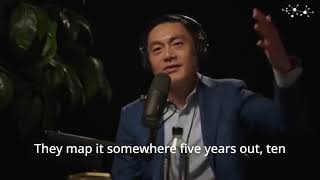

Sequoia’s Alfred Lin explains why your startup should focus on being different rather than “better”



Alfred Lin from Sequoia Capital | Advice for founders, future of consumer social, and more