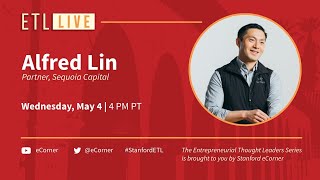
In this interview, Alfred Lin contrasts mission‑driven founders with mercenary ones, arguing that true mission‑oriented entrepreneurs stay committed even after achieving wealth, while mercenary founders may abandon their ventures once they have enough money. He cautions against excessive secondary sales, noting that cashing out large sums can lead to frivolous behavior. When asked how he would approach angel investing if forced to start a new portfolio, Lin outlines what he would avoid and what he would prioritize. He rejects the idea of broad, indexed investing in startups, favoring a concentrated, high‑conviction approach that leverages his operational expertise. Lin emphasizes investing in technologists and product‑focused founders who have a clear, deeply‑thought‑out mission, and he stresses the importance of digging into a founder’s understanding of their market and the depth of their commitment before backing them.
Chapters
If you go back to the motivation of a founder, if they're on a mission, as Chantal was saying, they're not going to, like, suddenly have a little bit of money and then not want to be on the mission. If they're a mercenary, they might have enough money and say, screw this, I can become an investor, an angel investor, start a fund. I'm going to have a better life. And they stop working. Look, we all know people who stopped working when they made their first million. Is that enough to really retire? No. And you know people who, like, stop working when they made their first 10 million. Is that enough to retire after taxes? If you have 10 million, you don't want to live in the Bay Area. It's probably enough. Then we know people who, like, keep working when they have billions of dollars. Like, why does Elon work? He's running two companies. Mars, sure, but he's on a mission.
Mars, but.
But he's on a mission. If you're the type of person that is going to want some level of money and comfort and that's it, then you're done. I do think some of the secondary sales are. The numbers are silly or ridiculous. So when you take up more than $10 million off the table, I do think that gets the silliness land.
If you were forced to leave Sequoia tomorrow and I said, you have to now be an angel investor, take a minute to think about it. You have now have your. You have to place 50 bets over the next three or four years, build a little 50, 25 or 50 investment portfolio. What would your approach be? Where would you look for opportunity in terms of stage and in terms of markets? If you were forced to go back to the venture frog days and have, you know, even half that amount of money, 10, 15 million to invest in 50 companies, think about what your approach would be for a second and then tell us.
Well, let's start with what I wouldn't do.
Good.
So I start. When we started, we started because it was fun and it was a hobby, and it's fine. If you want to do it as a hobby, that's perfectly fine. There are plenty of people who brew beer and they make wine, and it's a hobby for them. They're not in it to make money. And there are people who want to run a microbrewery to make money, and then there are people who run wineries to make money. The analogy is somewhat similar because there are so many people in the angel business that are in it to say that they're an angel investor that they're in this company or that company, et cetera. I think if you want to be a good angel investor, I don't know if 50 is the right number. You want to think about that. I think having high conviction around a few select companies and then helping those companies is a much more leveraged way of using your talents and, and also using just simple sort of concentration of good companies over bad companies. I don't believe in indexing when it comes to, if you index entrepreneurship, you're going to lose 80, 90% of the time. I don't think most of you would invest in a fund that had a loss ratio of 80, 90%. If they sort of said if the fund says their loss ratio is 80 or 90%, you wouldn't invest in that company. That fun. So if you sort of apply some first principles, you'd go back to, okay, what do I know? What are my skill sets? What can I learn? Because my skill sets don't always apply to the next generation of stuff, and where are the areas that I would like to work with and what skills do I bring to those, those founders and those, those companies? And I think, you know, in those situation, I, you know, up, up, going from the bottom up, I would say I'm an operator. I'm going to look for people who are technologists and product people. Most of people in here would probably say the same thing. But I can really help sort of put operations in place, run, help them run and think through running a company. And then so I look for those founders, and I look for founders who are on a mission, but also thoughtful, very, very detailed about exactly why they want to go change the world in this particular area. And I think some founders, they have very surface answers on why they think that this is a good market, but they really don't go deep. And so now that people know to come to angel investors, seed investors, venture capitalists with a story of why they're on this mission, you really need to dig to see exactly how deeply they've looked into the industry and why they, they think they can disrupt it.
Let me tell you about one of my favorite partners. That's PayPal. Yes, PayPal is doing an amazing award. They're giving three businesses that they think have major potential. $10,000 and a makeover from one of their partners. Yes, PayPal believes in the power of entrepreneurship, just like me. Angel investor Jason Calacanis. And the future of your business starts here. You have a chance to earn some cash flow for your business and you can take your business to the next level, reaching your full potential. And you have great potential. You know that if you're listening to this podcast. Three grand prizes each from PayPal, a $10,000 cash prize, one on one payments, consultation, and one of the following. A website makeover by Shopify. Amazing. They're a great PayPal partner. And a 12 month hosting subscription. 10 hours of one on one support with a Shopify specialist. Amazing. That is priceless. And a back office makeover by Xero. Yes, that's right. Another PayPal partner. They make great stuff. 12 months of accounting software and advisory services for free. And the prize also includes priceless publicity for your business. Now I'll probably be talking about it in a in a PayPal spot in the future, so blog posts and video profiles highlighting your makeover experience. And you're gonna be shared on the PayPal website, which gets a ton of visits and all their social media. Just visit paypal.com twist to learn more about this amazing contest and you can win that dol. In a business makeover, no purchase is necessary, it's subject to some rules, void where prohibited, and you must be 18 years old and a resident of one of the fine 50 United States, states or D.C. to enter. Enter by July 30th. That URL for this amazing startup makeover is paypal.com/paypal.com/ Go ahead and enter that contest and win the makeover and 10 dimes. All right, thank you PayPal for supporting independent media like this week in Startup. Let's get back to this amazing episode.