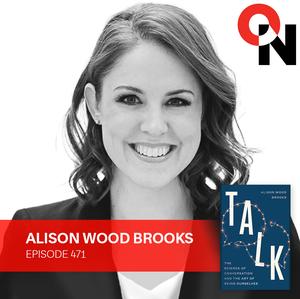
275. Raising Confident + Conversational Kids with Dr. Alison Wood Brooks
3 Mar 2025 · 57 min
In this episode of the Herself podcast, hosts Amy and Abby interview Dr. Alison Wood Brooks, an O'Brien Associate Professor at Harvard Business School and author of Talk: The Science of Conversation and the Art of Being Ourselves. The conversation explores how anxiety and uncertainty are built into everyday conversation, leading Dr. Brooks to develop the TALK framework (Topics, Asking, Levity, Kindness) as a teachable skill set for both adults and children. The hosts discuss when to start nurturing conversational abilities in kids, offering concrete strategies for anxious or introverted children (topic preparation, bullet‑point prompts) and for extroverted children (self‑restraint, reading the room, balancing talk). They examine group conversation challenges at family dinner tables, active‑listening techniques, and how to manage turn‑taking. The dialogue moves to handling difficult conversations, emphasizing preparation, rehearsing responses, and adopting a “receptiveness” mindset that prioritizes learning over persuasion. Apologies are highlighted as a powerful, vulnerable tool; the episode outlines why people resist apologizing, how effective apologies work, and alternative phrasing for those uncomfortable with the word “sorry.” Throughout, Dr. Brooks stresses the role of parents as conversational role models, the influence of peers and other adults, and the importance of creating a home environment that models good conversational habits. The episode concludes with resources for listeners to learn more about Dr. Brooks’ work.
Chapters
And baked into every conversation that you study are these moments or the very persistent feeling of anxiety for most people, because conversation is a very uncertain environment and you don't have control over how your partner interacts with you. So it's like the perfect recipe for anxiety is uncertainty, not knowing what's gonna happen next, and lack of control.
I'm Amy.
And I'm Abby. And as women, we are constantly comparing ourselves to others. But your life isn't supposed to look like hers. Being your best self means standing firm in your decisions and always being willing to grow with a purpose.
We get vulnerable and real with an honest look into the challenges and triumphs we all face. Every woman listening gets the opportunity to choose what life looks like for her. Today on the podcast, we have Dr. Alison Wood Brooks, who is the O'Brien Associate Professor of Business Administration and Hellman Faculty Fellow at the Harvard Business School, where she created and teaches a course called TALK. So this conversation is really all about conversation And we made it so that we're talking about, of course, as adults, the art of conversation, but really how to teach kids how to be good conversationalists. We touched on if you have extroverted kids, teaching them how to balance that and make sure they let other people participate in conversations. And then if you have introverted kids, how do we help them to come out of their shells and participate in conversations so that they can make really good friends and participate in school. So this is a really balanced conversation. It ends with talking about apologies and why they are so hard for some people, but why they are so, so important in relationships. So we are covering all things conversation with the author of Talk: The Science of Conversation and the Art of Being Ourselves.
Dr. Alison, what we've learned about you is that your work actually started out focusing on anxiety, but then it led you down this different path about the science of conversation. So just start by talking about how these two are connected, and then what made you so passionate about these topics?
Oh, I— yes, I started studying people's emotions, especially anxiety, when I was in grad school. I was so Intrigued by the idea that, like, everybody feels anxious all the time, but psychologists had mostly focused on very high levels of anxiety, people who needed treatment or medication. And I was sort of like, but everybody feels anxious a lot of the time. Can we study anxiety in that way? And what can we do to help people feel less anxious in their lives? And then when I finished grad school and came to Harvard, I had this epiphany that all of the strategies I'd been studying to manage our anxiety were focused on how we talk about our feelings in conversation with other people. And that was really intriguing to me. I think I'd always been pulled in that direction because we all do so much work in our conversations to manage our feelings and try and sort of express ourselves and try and manage other people's feelings. And realizing that's how I had been studying emotions and anxiety in particular, led me to this realization of like, oh my God, we have whole fields of communication and social psychology, but nobody's really studied at large scale how people really talk to each other at all, not just about our feelings, but about everything. And so it led me to be part of this sort of revolution of studying human-to-human conversation, real conversations, transcripts at very large scale. And baked into every conversation that you study are these moments or the very persistent feeling of anxiety for most people, because conversation is a very uncertain environment and you don't have control over how your partner interacts with you. So it's like the perfect recipe for anxiety is uncertainty, not knowing what's gonna happen next, and lack of control.
Well, I was kind of smiling because I felt that deeply when we first started this podcast 5 years ago, because I think in our heads it was really our job to control the conversation. But over the years, we learned that the guest only gives you so much control, and they're a large part of the conversation. So there is some uncertainty in each one of these conversations.
Of course, every conversation is sort of this push and pull. Of who's in charge, who's leading, who's following, who's leading now, who's going to take us somewhere else, am I going to follow? That's true of all conversations, but particularly for a podcast like this. In theory, the host is in charge, but you can only sort of wrangle a guest so much and, and sort of need to let them uncover what they're going to, to share with you.
Absolutely. And I think one cool thing about having children— Abby and I each have 3, and a lot of our listeners have kids— is that we're kind of seeing the need for some of these lessons because we do have kids. And so what we know is that there are some kids and it seems like they just came out and they were ready to be outgoing, to have conversation, whether it's with another child or an adult. They feel very comfortable having conversations. And then there's other kiddos that seem like a lot more reserved, a lot more introverted, to the point where I think their parents worry a little bit. So we are going to cover it all today with you because what we learned from reading your book is that you believe that conversation is a learnable skill. So we wanted to start by saying, at what age should we start working with our kids to become more conversational, and why is that so important?
I love this question, you guys. You found your right gal. I also have 3 kids. They are 9, My middle guy just turned 8, and then I have a little girl who's 5. As a psychologist for a very long time, I thought that everything about being a human was learnable or trainable or malleable, but being a mom has really flown in the face of that. You realize that each of these little tiny humans comes out and they're just remarkably different from each other. So like a lot of parents out there, I too And so I see this push and pull between nature and nurture. And even among my 3 kids, there are staggering differences in their strengths and weaknesses and in their personalities. I have 2 kids who are really gregarious and chatty and one who is so quiet, incredibly unique, sort of introspective person. That's been really illuminating to me as a scientist too, and as a teacher and as a parent.
Yeah.
I think you're always trying to figure out what is this balance between nature and nurture. So as parents, you're back to your question of when can we start working with our kids to make sure that they're developing their conversation as a skill? And I guess like, to what extent is it even malleable and learnable? In some way, I think as parents, we need to sort of say it's a little bit outside of our control because babies start learning language as as they're born, right? So they're learning. It's not just learning language for the sake of like knowing and understanding language, but then very soon in their lives around, you know, 1, 1 and a half, they start actually interacting with other people, with you. I think almost your entire lifetime you spend having these successful moments of conversation and then sort of miscommunications and, and flops. And I think it's worthwhile from moment one when they're babies and toddlers, and probably for the rest of our lives, to think of conversation as a skill that we should always be working to improve. And certainly as parents and as teachers, thinking of conversation as a skill— when kids go to school, we often are like, oh yeah, they're there to learn math and they're there to learn reading and writing and all of these— science and history. Which is true, but all the while they are also learning the skill of conversation in parallel by talking to each other and talking to their teachers, talking to their coaches, talking with their parents. All the while, conversation is this sort of underlying skill that they're learning by watching other people have conversations, by having conversations themselves. And so as parents, if we can take this mindset of, oh, I'm an important person in their life, they're gonna watch me having a lot of conversations over time, and we're going to have a lot of direct conversations over time. I think that's a very healthy mindset to have, is to realize that conversation is one of the many skills that we're role modeling and teaching to our kids all the way along.
And even as you say that answer, there are so many parts that are so simple with it, but then also so many parts that are complex with it. So I was following along and it's like, okay, well, it is around, you know, 1 year old, a little bit older, you're starting to talk back, and then you might I love you instead of I lick you, and just figuring out what the other person is thinking that you're saying versus what you're actually saying. And that still happens to this day. I mean, Amy and I will have conversations and I hear something totally different than what she said, probably because my mind isn't connecting in that moment or the synapses aren't working. But I think it was so just illuminating, just light bulbs went off when you started talking in your book about T-A-L-K and just laying the groundwork for conversation. So can you explain just each of those pieces to our listeners and then why it's meaningful? For conversation.
Yes. Well, Amy, you're not alone. We all spend all of our lives having these little moments of misconnection and misunderstanding. It's, it's okay. Sometimes it's because your mind is wandering. Sometimes it's because you're not interested. Sometimes it's because you literally just misunderstand the words that somebody else is using to refer to a certain thing. You're not alone. Yes, TALK is an acronym. It stands for— T is for topics. A is for asking, L is for levity, and K is for kindness. And I designed this acronym, it was a sort of inductive and deductive process as I was conducting research on conversation. The goal of this acronym was to take this incredibly, shockingly complicated task that we all do, which is conversation, even though we do it all the time and start learning to do it when we're toddlers, when you look under the hood, it's a really complicated coordination task that people do with each other. And so I felt like we needed a really simple framework to try and wrap our arms around it and approach it with more confidence and skill.
Okay. One thing I mentioned earlier is that some people have children that tip towards being a little bit more anxious and/or introverted. And I do think parents worry that when they go off to school, they might not be able to make friends as easily, or they might not be participating in class as much as would be good for them. So if you have a child and they do tip towards that more, what we might label shy personality, is there anything that we can do to support them to come out of their shell?
What a great question. Yes, I think the part, the sort of secret mission of this whole book is to help people, whether they're children or adults, people who feel social anxiety or are introverted or shy or just uncomfortable. Around other people to help them feel a bit more empowered and confident, knowing what to do before they talk to people, while they talk to people, after they've talked to people. So there's so many strategies in this book that will help with that anxious kid. Let me give you some concrete ideas about— so for these anxious kids, the T. So within T is for topics. One of the key takeaways is the idea of topic prep. And so once you get into a conversation, it's a very cognitively overwhelming activity. There's so much uncertainty, there's so much going on. You have to be listening to everything that your partner is saying while also sort of formulating what you might say next. And so that can be very depleting on your brain, especially for people who might feel anxious already. They're spending a lot of cognitive load on like managing their anxiety, let alone paying attention to what's happening in conversation. So one thing that can help tremendously for people who feel anxious is to think about the conversation just a little bit ahead of time. And you don't have to plan out a script. You don't need to even devote that much time or effort into your prep, but just 2 or 3 bullet points of ideas of things that you could talk about with somebody is tremendously helpful. It makes you feel less anxious once you're in the conversation. You don't have those little mini panics where like, you know, there's a lull in conversation and you know you need to change to a new topic, but you don't know where to go. So you kind of have this little panic. All of that goes away because you know you have a direction to go next kind of sitting in your back pocket, and then you can just go there. It reduces what we call disfluencies, which is like ums, uh, stutters, awkward silences. It means that you're more likely to land on topics that Everybody actually finds interesting. Because when you reflect about people when you're not with them, you're more likely to be like, oh yeah, what do they—
what did I—
what meme did I see that this person would like? Or like, what was this person up to the last time we talked? Or what's going on in their life? It kind of pushes you to think about them and what they might find interesting. Or, hey, what's something that happened in my life that I think they would find exciting or interesting? So just thinking a little bit about that before the conversation's underway. can go so far once it's off and running. The best finding about topic prep is that it just makes things more fun. It just makes the conversation much more enjoyable for everybody involved.
I don't identify as introverted, but I do identify as being anxious. And I also can say that I do that— Amy makes fun of me— where I'll say, hey, we're going for a walk or a rollerblade, and I'll be like, our agenda for today's rollerblade, or our agenda for today, for this afternoon when we're decluttering your house. And it's mostly for that last I love that point of having it be fun because these are all the things that I've seen that would be so much better said in person than over a text message or even over a voice note. I also find it to be really helpful when you haven't seen a friend for a long time and you want to make the most of that conversation instead of just talking about your kids or just having a conversation full of complaints. It makes it so much more fun and positive if you can think a little bit ahead.
Definitely. So there's this enjoyment thing on one hand, but also efficiency on the other, which is like when you know your time is limited together, you want to talk Talk about stuff that is productive and enjoyable and bonding and achieving all of the goals. And so people who already do it should lean into it. It's a great habit. Actually, it's okay to talk about it. Like, it's a sign that you are thinking about somebody when you're not together and that you care about them. I think a lot of people feel like, ooh, this is like this nerdy thing that I do that I shouldn't share with people. But so many high-powered, great conversationalists, extroverts, this is kind of part of their secret sauce of what they're doing. That makes their conversations seem really natural and smooth once they're together with people is that they've thought ahead about it.
And let's actually go into those extroverts because you had mentioned at the beginning that you had 2 kiddos that were gregarious and 1 kiddo that was just, you know, very much inward. I have a mix of both as well. And our daughter, for instance, our firstborn, she could talk anyone's ear off. She wants to be the star of the show. She comes in and she comes with an agenda already created, whether she's planned it ahead of time or makes it up. Right on the spot, no one will ever know. But it's also hard because we want to make sure that she's letting other people talk as well, or she's being equal in conversation and she's not just hogging the entire conversation or having people think, gosh, I wanted to say something as well. So she's almost 9 at this point. Do we talk about speaking kindly? Do we bring up a different kind of strategy? And then when does this start, or is it literally just something that kids, teenagers, adults will learn over time?
I think for extroverts or for Chatty Cathys, this is an apex skill that they need to work on. It actually does take a lot of self-restraint to hold back, to give space for other people, particularly when they feel like they have expertise or something exciting to share, or they're just an excitable person. It actually takes a lot of self-control and reading of the room, right? Like figuring out when is it a value add for me to be sharing my perspective, and when do I need to give space for other people to share their perspectives. So reading the room is a phrase that we heard a lot. We don't talk about it a lot with kids about what that means and how to do it better and how to sort of hone that as a skill. Reading the room is sort of 3 pieces. One is fostering an awareness of yourself a little bit more of like, what's your energy? What are your goals? What are you trying to achieve? Then the second piece is reading your partner. So like, what do they want out of the conversation? What do they care about? What do they need? That's huge to be able to try and figure that out and to be thinking about it at all, especially for kids, is not natural. Children only learn that other people have their own perspectives around age 7. So for your 9-year-old, or a chatty 9-year-old, like she's just now getting to a place where she might begin to be able to Say, oh yeah, like other people might want to get in too. They might not want to hear me all the time. Let me see if I can pull back and give them that space. And then the third piece is about literally reading the room, which is being aware of the context all around you. It's the who, what, where, when, why, how. What's the lighting? What room are we in? Are we at school or are we at basketball practice? Are we at home? Are we— what family members are there? It's being able to keep your finger on the sort of temperature gauge or the pulse of everything that's happening around you to make these judgments about what's appropriate, what's fun, what's productive. And that's true for every conversational behavior— swearing, humor, question asking, raising spicy topics. It all depends on the context, what's going to serve the needs of the people who are in the room.
Yeah. And I think parents worry a little bit about dulling their child's shine. Like, this is who she is. This is how she came out. I don't want to take that away from her. But in my experience as a natural-born leader, I had to hone those leadership skills. And if it were not for my coaches to be like, hey, you got to talk nicer to your teammates. Yes, you're trying to get them to get you to a goal, but You have to deliver that nicer. We have to learn how to communicate with each other. So it's not that you're wanting to take that away from her. It's just that we're trying to hone it so that she's able to be, you know, in really good relationship with others.
Yeah, harness it. You want to channel it in a way so that it actually is the superpower that it is. Life is a series of conversations that there are real other people on the receiving end of them. So we need to take that Put it in a format that actually lands well with other, with other people. Absolutely.
Let's pause this episode to bring up one of our partners, Symbiotica. As you know, Amy and I are having a really gentle start to the year, and we encourage you to as well. We are not getting any younger, and we have a lot on our plate. And because of that, we want to do things that are good for our health, That are also easy to fit into our routine. And that's where Symbiotica comes in. So let me tell you about just one or two products that we're loving that we know you're going to love as well. So for starters, the magnesium spray. Just spritz some on your chest, on your legs or feet right before you go to bed, and it feels like you're at the spa. Yes, you might be in your bedroom with a whole bunch of kids around, but it feels like you just got done with the most luxurious yoga session. You're sitting at a spa with your girlfriends, or you're just having the most relaxing night of your life. It is so good and it's so refreshing. It just helps you relax and just ease into the bedtime routine. And then the B12. So B12 and B6 are really important for energy, mood, and heart health. So I take this as a little energy boost in the afternoon and dang, if it's not like a cup of coffee, just with that instant energy boost, I mean, it is so good. So those would be 2 products that I would recommend trying right away. And you can get 20% off your first order by going to symbiotica.com/alisonwoodbrooks. Again, that's 20% off your first order and free shipping by going to symbiotica.com/herself. Can't wait to see what products you try.
A big part of conversation is the ability to be a really good listener. And we've probably all been in conversations where we feel like the other person isn't listening to us. Right now at our dinner table, we're able to eat dinner together every night as a family, and we've got 3 little boys and they cannot wait to talk. They're all school-aged, so they all want to talk about their days and they have trouble taking turns and we have a lot of interrupting. And Drew and I are working to coach them to understand, you know, like taking turns. But we also want to make sure that they do become really good active listeners. So I want to know, from your perspective and expertise, how do we help them to become active listeners and good listeners that don't always just want to talk?
There's 2 hard things going on in the story you described. One is that listening is a really tough skill— we're gonna get there in a sec— that takes a long time to learn. And as we know, many adults still have a lot to work on with their listening. The second piece is that at a family dinner table, especially in a family of 5 with 3 kids, that's a very complicated group conversation. Group conversation is sort of categorically different in terms of turn-taking and listening and conversational management compared to one-on-one. If you took any one of your kids and you're talking one-on-one, it doesn't really matter if they're like dying to just like talk over you or talk over their partner or they have so much to share. Where it gets complicated is at the family dinner table because there's too many people cutting each other off and it's total chaos. Do you do anything to try and manage that chaos?
Well, we give them prompts, but then they can't wait to get their answer out. So that's kind of interesting. But what you were saying before about being in different settings. So I went on a walk with my middle child yesterday, and when he had the platform, like he was talking the entire walk around our hill and it was so endearing. I'm like, he has so much to say, but he's got such a limited space to be able to say it because he's sandwiched between 2 big talkers. So that was really sweet. But yeah, if you have any ideas for the actual dinner time, that would be awesome.
Amazing. I think it's interesting to think about like, what are the contexts where kids are most comfortable sharing?
Yeah.
And often it's like you described it, like on a walk with your mom one-on-one is probably a likely place where a lot of kids would talk. For parents who are struggling with kids who are like overexuberant and chatty, or parents that are struggling with quiet kids and you're just dying to understand what's going on in their mind, and everything in between is very, very normal. With listening, in terms of parenting, I do feel like I'm just constantly on them. If you see them interrupting each other during your dinner ritual and you're giving them prompts, we do the— we do like peek and pit at dinner. And just like your kids, like they're all excited to go. And so they often like have a hard time waiting and listening and engaging with the person who's going before them. And so we just have, you know, it's a constant game of like, are we being good listeners? Are we listening? Hey, Grady, you're walking away. Why are— where are you going? Are we listening? Just the constant sort of reminder of like, this is what good behavior should be. I do think as parents, we role model that for them, right? So like, you shouldn't wander away and you should, If your child shares something with you, you should ask follow-up questions and really engage and get excited and sort of feel honored that they shared with you, even the chatty kids. And I think that's really the best you can do, right, is just— but giving them feedback when you see their lapses in listening and role modeling good listening in front of them. Of course their listening is going to be bad as kids because the human mind was built to wander and to be self-centered, right? So especially as a kid, you don't have those like politeness reflexes where, you know, you need to sort of dutifully wait your turn and listen to what other people are saying. You're just sort of like, I want to get my thing out and I want to talk about me. And so we ran some studies about mind wandering in live conversations where we had people have conversations, we interrupted them every 5 minutes. This was adults, but like interrupted them every 5 minutes and asked, were you just listening intently to your partner or were you— your mind wandering? And people self-reported that their minds were wandering a quarter of the time.
Wow.
24% of the time, which we suspect is even an underestimate because people know that you should be listening during your conversations. I suspect that number is remarkably higher for children, right? So I think what maybe could be helpful is a reframe of like, instead of getting annoyed when they're not good listeners, maybe we feel really grateful and amazed when they do listen to each other or they do listen to you or they ask any follow-up question or show any sort of interactive dialogue with other children is such an amazing accomplishment and certainly cannot be maintained all the time.
Well, and even praising the times that they do that, I mean, when you can point out, that was such good listening, oh my goodness, that was a really good follow-up question, I'm so glad that you asked, feels a lot better than saying, are you kidding me? You didn't hear that question? You weren't listening? It never feels good.
Totally.
So you had mentioned a few times in this interview about different topics, and one topic that we want to bring up is the idea of really hard conversations. And we know at our kids' ages— so all 3 of us have kids that are about the same age right now— the really difficult conversations are starting to happen between peers, and we know that they're just going to continue. They're going to get a little bit more difficult, they're gonna get a little bit more deep. And I think even for us as adults, we have a hard time approaching these difficult conversations because there's this fear that comes along with it. How is the other person going to react? Am I going to say the wrong thing? Should I do anything beforehand to help the conversation go more easily? Should I do follow-up afterwards? So as an expert in this, what are some of your strategies that you could share with us for not only ourselves but also for our kids to help approach these hard conversations that are obviously inevitable?
Yeah, it's a great question. So I think this idea of topic prep is even more helpful in difficult or fraught conversations than, than in normal ones. And I got great advice when I was in graduate school that I think you could use in your life as well, and kids could use certainly. Imagine that you have to give a big presentation at school and you're so worried about the questions that they're going to ask you and that you'll panic and freeze and all of this scary stuff, or that you're going to get feedback from a coach and that's terrifying, or that your friend is mad at you and you know it, but you really want to talk to them and try and smooth it over. In all of these situations, something that can help is think about exactly the sort of questions or scenarios that are keeping you up at night. Like, what's scary about this? And try and write that down. So don't just ruminate about it. What if you wrote it down, sort of face that fear ahead of time, and then think about what a response could look like in the moment, right? So literally facing your nightmare scenario from your coach who says, hey, you just don't seem like you're to snuff. I don't know if you're going to make the team next year. Write that down on the paper and then really reflect about what would my ideal response sound like in that moment. You can write tons of different versions of it. You can work on iterating and revising until you get to a point where it's pithy and feels like you. And then you can actually practice saying it out loud, right? Often in those moments when those things really happen in real life, if someone asks you a really hard question, for example, often the— a great way to respond with an open-ended question in response, like, what's on your mind when you're asking me that question? Or how do you feel when you're giving me that feedback? Is a good way to sort of manage that tricky moment. But this idea of prep and saying it out loud, I think for people especially who are like terrified of these hard conversations, can be really empowering. And then when you go into the conversation, it either goes better than you think and you never have to use those responses, or maybe they do ask you those hard questions or give you that hard feedback, and then you're totally ready for it. You're unruffled. You don't need to be defensive. You don't get upset. It's really, really helpful. So that's like some work you can do ahead of time. And then of course there's lots you can do during the conversation itself.
Dr. Alison, there's been a lot of times where I should have done that in conversations, but one time that I did do it that it was super helpful is before every job promotion or when we were doing our big review at the end of the year. I remember the first couple just did not go well. And so I started being like, Okay, they could say this, they could say this, they could say this, and then having a good follow-up from it. And it was helpful because it usually ended up being better than I thought. I think that probably like set the standard though, where I'm always trying to think of what's the worst-case scenario, which I could do a better job of that in just day-to-day life. But that prep beforehand really can help.
It can help, and it can also force you to think about the sort of threatening things about the situation. But you can also focus on the good things, like here are some things they could possibly say that could be amazing. And that reframe of focusing on the opportunities can be empowering in a sort of different way, because it feels like, oh, this isn't going to be as bad as I thought it was going to be. In the book, we talk about when you do confront unexpected moments of difficulty in conversation, there's some really great research about what psychologists call receptiveness, so the receptiveness recipe. And it's any time that you stumble on these fleeting moments of difficulty or disagreement, which, by the way, don't just happen in feedback sessions and negotiations for a salary. Like, they actually happen all the time in our conversations with our kids, with friends, or with family members, or with colleagues. Conversations that seem like they should be easy can get tricky at any moment. That's kind of part of why conversation's so hard, is like this uncertainty. And in those moments, there is predictable language that good conversationalists use to keep the conversation from getting overheated or from getting too defensive. And it's focusing on staying open to an opposing viewpoint and focusing on learning, learning from their perspective, learning everything about what's in their mind rather than coming from a place of persuasion where you immediately are like, I want to persuade you to agree with me. The best conversationalists are actually able to let go of that persuasion mindset completely and really focus on learning everything they can about their partners. Psychology, what's going on, what are they thinking about? And ironically, if you're able to do that and stay open to the other person and learn as much as you can about them, ultimately those people are more persuasive when they do come around to saying like, what if we thought about it from a different angle? Or like, what could I do to confront this? At the end of the conversation, you're more likely to persuade the other person because they don't think that you're irrational and unreasonable and angry and defensive. Which is, I think, so empowering and in a way sort of counterintuitive.
Well, yeah, I mean, the climate of America right now seems like you need to be defensive, double down, and smash people over the head with your points. And what I'm hearing is that's actually the exact opposite and does the opposite of what your goal is if you're trying to get someone to see your point or change their mind. Another approach where you're trying to stay open would be a better play.
Yeah, a lot of what you see in public discourse is not actual conversation, right? It's, it's in these public arenas where, like, for example, let's say politicians are debating with each other. That's not a conversation. That's like theater with millions of viewers. And it really doesn't resemble what a one-on-one conversation, private conversation looks like at all. We also see a lot of animosity and sort of hate in public nowadays. I think it's the thing that bothers me the most is that it's bad role modeling of good conversational behavior for adults and kids alike, for how persuasion and collaboration and progress and decision-making, any goal that we want to achieve, it's bad role modeling of how that actually works in private discourse.
Yeah.
Which from our research suggests that you need play, you need playfulness, you need kindness, you need focusing on the other person, you need patience, you need to not be defensive. You do not need to be hitting people over the head with your arguments and trying to be right. In fact, that's a very fast way to turn people off and get them to not listen to you anymore.
Yeah, just like some idea of also what your own tendencies are. Like, I know I have the tendency to be defensive, so when I'm going into a really important conversation to myself, I have that on my radar. I know I get defensive. Okay, you know, she might say this and that makes you feel defensive. Just acknowledging that we all have things like that.
Oh my God, if you're human, you have something you're defensive about for sure. I like that that's part of your prep. It's almost this mindset of like, I know this about myself. If I start feeling that way physiologically or mentally, I'm gonna do so. And what do you do in that moment?
Well, the thing is, I'm also very quippy and very quick with arguments, so I know that I've got to I'm like, okay, I'm not trying to necessarily win the argument. Like, I'm trying to, in collaboration, get to a better place. So I have to slow down because I can be fast to say something that I know is a very good point but not necessarily helpful to a productive conversation. So for me, it's about slowing down and not getting defensive.
When you slow down, do you ever actually propose that you break away from the conversation and sort of walk away and come back to it later in the day or later or another day? Or is it in that moment you're trying to slow down and let— give them more space?
So my husband and I have gotten so good. When we were younger, it was almost like we thought we had to finish the fight in real time or the argument. And now as we've aged, we understand to like— there are times where both people are too heated to come to a good place. And if we give each other time, we're actually going to come back and be more level-headed and hear each other better. Whereas when we tried to force through when we were both heated, that did not work for us. And we could even say things that we didn't necessarily mean.
Definitely. I think this is actually an interesting litmus test of People who are in healthy relationships, I think, have often figured this out.
Yeah.
Where you realize, oh, and it's not just both of you. If either person gets heated and are upset or defensive, it's very hard to continue the conversation in a way that feels productive. So taking a break, stepping away, coming back to it later in the day or another time always works out so much better. There are so many smart people who love each other so much who haven't realized this, and so they just keep When they confront their conflicts, which will always happen, they sort of feel like they need to resolve it in that moment. And to those couples, I would suggest that you try taking a break. I wonder if there's a line, like a script you could use, like, okay, I feel us getting overheated. Let's take a break and come back to this later.
Yeah. Abby's husband always says, I can't keep going. I'm going to say something I don't mean. Totally.
In the book, we call it snowballing, where like a lot of people have this tendency 'Cause you do, you say things you don't mean, but, or maybe you do mean them, but it's related to something completely outside of the conversation.
Yeah.
And so you're just adding fuel to the fire and snowballing in a way that becomes much more damaging and unproductive. But in that moment, it feels so good. Like the argument started about, who knows, I don't know, making soup that day. And all of a sudden you're like, and you're always doing, you know, you're always so bad and you never get the laundry done. And you're, ah, right? Like you're just adding all the things in and it's— Like, wow, what a way for a conversation to go off the rails quickly.
Well, yeah. And I've shared this on the podcast before, but I never thought I would be able to go to bed mad. I would make Drew stay up and I'd be crying and like wanting to come to a resolution. Who even knows what the fight was about at that point? But I learned from my therapist, I had to be able to find a way to self-soothe and just based on the way that each of us grew up, like, there might be something there where conflict meant unsafe. But in my marriage, actually, it's not unsafe. Like, he's never been like, I'm leaving, or anything like that at all. So it's like, it's actually okay. So that was huge because once we stopped fighting till 1 AM, that was really helpful for our health and happiness. And honestly, I know some people that still do that won't believe it, but you wake up And it does not feel like it was as big of a deal as it did in that moment.
Yeah, I think this advice of like never go to bed mad has probably done a lot of damage to a lot of relationships.
Absolutely.
Let's take a break from this episode to bring up a new partner that we know is going to help so many Herself listeners and their families. And we know this because we have been reading the Team Supercrew books in our own families, and our kids have been loving them. So think of it this way. Team Supercrew books—they're different from other emotional learning books because they're backed by science, and they meet kids where they are developmentally and based on their age. Oftentimes, emotional learning resources—they're text heavy. They go straight into teaching techniques and tools without engaging the kids, and then this means that children will have a hard time applying these tools. schools because they won't understand them and they can't use them in their daily lives. But Team Supercrew is different. What we have found is that our kids want to read these books over and over again. They love the characters. They want to collect the plush toys. The capes that come along with them are so fun. And it's even better because you can start to relate to the characters. So Benny the Brave, Keisha the Kind, Chloe the Calm, Gen the Grit— these are all characters in the books that our kids have learned to love And they bring them up in daily conversation. So if you want to help your kids through these big emotions and reduce the meltdowns and tantrums, please check out Team Supercrew and find out what parents and educators are raving about. And right now, Herself listeners get 10% off and a free gift. This free gift is a step-by-step reading imaginary play guide, and it's going to help you and your child learn these really important emotional regulation skills. All you have to do is go to teamsupercrew.com and use code HERSELF. This will get you that wonderful free gift and 10% off any purchase you make. Again, teamsupercrew.com and use code HERSELF. A quick break from our partner Element. I wanted to read this DM that came in from Instagram because it just shows that We're not the only ones that talk about Element all day long. Others are loving it too. So this is what our follower had to say. I have to take a moment to thank both of you for advertising Element. I decided to finally try it about a month ago. It has completely changed things for the better. I got diagnosed with MS in August of 2021, and the main thing I am hit with is dizziness and brain fog. Element completely erases both symptoms. It is amazing. Oh my goodness! It has also made me drink more water and made me want water. I am floored by the results. I just cannot thank you enough for the recommendation. I mean, Element is one of those things that it's so easy to take because we just pour it right into our water. They also have sparkling cans, and it really helps with hydration. It helps with balancing electrolytes. And you can head to drink element dot com backslash herself, and it gives you a free trial pack so you can taste all the different flavors. Again, that's drinklmnt.com/herself to try all the different flavors. We can't wait to see which flavor you like the best and to see what type of amazing benefits you get from one of our favorite drinks. Okay, back to our show.
But what we do know about conversation is that we are going to sometimes say things that we don't mean, or we say things in a way where I didn't mean for it to come off that way, but I hurt your feelings and now I do owe an apology. But some people, because maybe the way they were raised, they really feel like an apology is negative. Like they're thinking it shows incompetence or guilt on their part. But we want to know from you, what is the actual power that apologies have?
Oh my gosh. If you were raised to feel that way, or you just feel that way, that an apology is an admission of Blameworthiness. It's an admission of weakness. It's an admission of incompetence. You're not alone. I think most people feel that way because an apology is a very vulnerable thing to do. You're saying, I acknowledge that you were hurt. I want to figure out what my role in this was and take responsibility for it, which tracks so much psychological research that suggests that couples that are in healthier relationships apologize more frequently and they apologize better than couples who are in rockier relationships. But if you can make your partner feel understood and seen and sort of acknowledge their harm and take accountability for it, you won't even need to apologize. Everybody is so hungry for feeling understood by other people, particularly your partner. And for other people to take responsibility for it. That's what we're all looking for. What is so amazing about apologies is that it's the shortcut to do it. That's the linguistic, the conversational shortcut. We can say, look, I realize you've been hurt, and I want to take some accountability for it. That's what an apology, a good apology does. So there, there is some research suggesting that some apologies— so for example, if someone accuses you of an integrity violation that denying it is better than apologizing for it. But that style of research is mostly built on scenarios and like experimental games. When you look at research that's looked at real conversations between real couples having disputes, there's no research to suggest that refusing to apologize or neglecting to apologize is ever better than just apologizing. And these apologies are so powerful precisely because they— of the vulnerability, right? Like, it's not just saying I love you, it's literally showing someone that you love them. You're willing to make yourself vulnerable and risk looking incompetent, risk looking weak, risk looking wrong, because you care so much about them and their feelings and your relationship that it's worth it to make yourself vulnerable in that way.
Apologies. There's so much, and Amy knows what I'm about to say here, but it's the part that Colin and I disagree on the most and the part that's missing the most in our marital challenges. So even though the things that we're apologizing about are small, it's taking the accountability and it's seeing the other person. And I think those literally are just 2 of the smallest pieces. It seems so small and it can be done in less than 10 seconds. But in that moment, if those steps aren't taken, defenses come up.
Excuse me.
Conversation gets heated and it does not end well.
And you start chewing on your resentments. You chew on your resentment that they didn't apologize, right? Like, that itself is really frustrating and makes you even more mad. You continue chewing on your resentments about whatever the little issue was of like, well, like, this wasn't resolved and I'm— I don't trust that it's going to change in the future. So what's so funny about day-to-day life is that the things that Mm-hmm. Warrant apologies, it's never really about the thing itself, right? Like, oh, they put your sweater, your cashmere sweater in the dryer, or like you're feeling frustrated because you picked up the kids more than they have. Whatever the thing is that makes us feel upset, what we really need in that moment is for someone who cares about us to say like, I see your point. You're right. You— it makes sense that you feel upset about this thing. And I am a part of the system of circumstances and people that led to this injustice in the universe, right? And it's not saying like, I solely am to blame for this. It's just saying I'm part of it. And when we refuse to apologize or don't apologize, it feels like you're saying, I'm not part of the problem, or like, I don't understand, or I'm gonna invalidate how you feel about it. Like, it doesn't make sense that you would feel upset about this. And often it does seem a little crazy, right? Like the little things in our lives that make us feel upset or frustrated or angry at each other are on their surface insane. They're like tiny little things accumulating over time or like a little thing that's bugging you about somebody.
But it's that accumulation and the accumulation of failing to apologize or to feel seen and understood and connected that Yeah, it's this constant battle of, okay, Abby, don't sweat the small stuff, but also, okay, I really want to feel validated in this moment. And it's just this balance of, okay, what's going to win right now? I'm meeting fire with fire right now, or I'm going to take a step back and it's okay.
For people, I'm guessing including your husband, who don't like saying the words I'm sorry because it's hard and it feels like you're claiming too much of the blame or the credit, An alternative phrase that can be helpful is just the first piece of validating your feelings. And just by saying, it makes sense that you feel frustrated about whatever the thing is, that's a really good first step towards this position. If they don't even want to say like, I'm part of it, I'm part of the problem, they could also just say like, how can I help you? What do you need right now? So that question can be really, really helpful. But all of these little pieces are what apologies do in one very quick sweep, which is saying, I'm so sorry you feel frustrated about this. Like, how can I help? What can I do? Or, I promise to be better about this in the future. Promises to change are, in our research, we found incredibly powerful because nobody really wants to dwell on what's already happened. What they care about is like, is this going to be better in the future? Do you see that this was a problem? And like, what are you willing to do about it to make it better?
This is so interesting to me because my husband and I, we're best friends with them, right? So like, we, we really care for them. We love them so much. Like, we want them to be so happy and healthy. And both of us are like, why doesn't he just say sorry? Like, that seems like the faster, easier. But I do think it's really hard. And we have another friend too, who her husband also has a really hard time apologizing. And yeah, it's just one of those things. Here's where we get a little tied up is like, then we're also not modeling it to our kids. And so are we going to have another generation of people that can't apologize coming out of this family?
I know. And it does persist generationally. Like, children are learning all of your conversational behaviors, including apologetic intentions. And I think as a, as a mom, that's probably part of what's so frustrating is like, I don't want my kids to pick up the things that bug me about you either. Like, if I really believe that something you're doing is not optimal, I don't want my kids picking up on it too. This is something that's so hard about conversation is that you don't have control over other people. You can't force someone to apologize. You can't force someone to ask you questions. And sometimes pointing it out to them saying like, you didn't ask me any questions, or are you gonna ask me anything? Or you haven't, you're refusing to apologize. It's making me really upset. You don't know how people are gonna react to that. They might just dig in their heels and get defensive themselves, right? Especially if the conversation's already heated, probably piling on direct feedback is like, maybe that's not the right moment to do it. So I think you could wait for a quiet time when it's not heated and there's like no strife. And you could say like, you know, I've really been thinking a lot about the meaning of apologies and how that plays into my life and how important it is to me, or how important it is in my relationships with other people. What do you think about it? Right? Like just a more open-ended, unthreatening sort of let's talk about this. That apologies chapter, I think people read as the most controversial for these reasons. Like, people have very strongly held personal beliefs about when you should apologize, why you should apologize, when you should refuse to apologize. And there hasn't been a lot of public discourse about the positive power of apologizing. Instead, we often hear a lot about the power of being unapologetic. Though I think often there's the opposite, which is saying like, refuse to apologize. That's what strength is. But it's important to draw a distinction. On one hand, it's amazing to be unapologetic about your competence and your views and your belief, well-informed beliefs, and like things you deeply and profoundly believe in that are based on amazing evidence. On the other hand, there's conversational apologies, which is like, what are we saying to each other when someone has clearly been hurt. And in that moment, you should not be bringing that same spirit of being unapologetic into your personal relationships and saying like, I'm going to be unapologetic about my choice about the laundry. Like, those two things are not the same. When somebody that you know and care about is frustrated and mad, whether you had a role in it or not, an apology is going to help you move forward and help them tremendously. So, I think separating those 2 ideas is really important.
I think our children provide a mirror for the way that we communicate inside of our houses. And so, you'll see our kids say thank you so much because, for example, my husband says thank you to me a lot. So, I do think there's this idea of We wanna demonstrate what we want our kids to do. And it's an inspiring way to look at it. Like we all have room to grow in communication, and now we have these little mirrors and they're gonna show us the ways that we do communicate. So it's really interesting.
Can I tell you, as a mom, I ruminate about this a lot. I think in many ways our kids are mirrors and you see these little micro moments where they pick up great things and you're like, oh my God, yes, that's like me, that they're parroting what I said or did or whatever. There are also times when you're like, who are you?
Really?
Like, what? Where did you learn to yell at your sister like that? Or, I just heard you like curse to your friends. Like, you would never hear mom and dad say that to each other. And so I think fostering a little bit of patience to realize that kids in particular are constantly experimenting with, again, like the skill of reading the room, of like pushing boundaries, trying to figure out what works well to achieve their goals, what works well to help other people achieve their goals, what's going to get a laugh, what's going to get them in trouble. They're constantly pushing boundaries and trying to figure this all out. So in the moments when your kids are doing things that are appalling or mortifying, or you feel terrible for them. Like, how did they possibly learn to do this? They're not just copying their parents or just doing what they're told. They're also often pushing boundaries to learn and run these little experiments of like, how is this gonna go?
Well, yeah, that was a really interesting part of having school-aged children is all of a sudden, I mean, they do spend a ton of time outside of your house and with their friends. And our kids watch a little bit of YouTube and like we do have less control than Sometimes we would hope, but also demonstrating good things inside of our house is always a good idea.
Realizing where you do have control, which is in your house with your family, the way you talk to each other, that you're role modeling, and realizing— I think this is— there was some studies on like who has the most influence over your kids, and often it's their friends and then the parents of their friends. That's where this comes from, right? It's like they're learning conversation from so many different role models in so many different places. school, at playdates, at sports practice, at band practice, at robotics, whatever. And you realize like, okay, I'm going to get a lot of touches on the ball here because they're going to spend a lot of time under my roof. And when I have them here, that's where I can have influence and be the role model that I want to be, even in like silly, very brief encounters with them. But also they're a real person who's learning from other role models too.
Absolutely. Well, we have learned so much during this conversation. So we want you to tell our listeners where they can find more of you.
Amazing. Thank you, guys. You can visit alisonwoodbrooks.com. There's an events page there. You can follow all of the news articles and events related to my book tour. The book is called Talk: The Science of Conversation and the Art of Being Ourselves. And I hope everybody picks up a copy and checks it out. There's a— it's just chock-full of good stuff for parents, teenagers, and all Thank you so much for being a guest on our show today.
And to the Herself listeners, make sure to go follow those resources. Definitely things that can help you not only today, but for months and years to come. And if you aren't following us on Instagram, Amy and I take these conversations so much deeper Monday through Friday. So go follow us over at Herself Podcast and see all the great posts and stories that we have for you. All right everyone, we'll talk to you next week. Bye.